Plug-In: The funeral of Tyre Nichols -- grief, prayers and more calls for police reform

Plug-In: The funeral of Tyre Nichols -- grief, prayers and more calls for police reform

It seems appropriate that Weekend Plug-in should be “Livin’ on a Prayer“ this time around.

That’s especially true this past week as Bon Jovi’s classic single topped 1 billion views on YouTube. As Christianity Today’s Kate Shellnutt put it, “Oo-oo he's all the way there.”

Enjoy the music as we get down to business, reviewing the top headlines and best reads in the world of faith.

What To Know: The Big Story

Tyre Nichols: In Memphis, Tennessee, loved ones celebrated the 29-year-old police beating victim’s life — and called for reforms — Wednesday at Mississippi Boulevard Christian Church.

“We have come with heavy hearts that can only be healed by the grace of God, full transparency, accountability and comprehensive legislative reform,” the Rev. J. Lawrence Turner said, as reported by the Commercial Appeal’s Lucas Finton, Katherine Burgess and Laura Testino.

The funeral featured messages of faith from Vice President Kamala Harris and the Rev. Al Sharpton, Religion News Service’s Adelle M. Banks notes.

Grief and goals: RNS’ Banks talks to faith leaders about Nichols’ death.

At Christianity Today, Russell Moore writes that “Scriptures denounce officials who abuse their authority to harm rather than protect the people they serve.”

‘No excuse’: As a teen, longtime Memphis minister and politician John DeBerry Jr. witnessed the Rev. Martin Luther King Jr.’s final speech before his 1968 assassination. I interviewed DeBerry about Nichols’ death:

“I think it is a systemic issue and that it is not a new issue. While we focus on violations of law and protocol and civil rights, and we especially focus on it when it crosses racial lines, this is especially concerning to a lot of us because all five of these officers (charged with murder) are Black.


Please respect our Commenting Policy

Prayer in the NFL? The powers that be worry about this complex, controversial subject

Prayer in the NFL? The powers that be worry about this complex, controversial subject

Super Bowls create media storms, but many journalists and sports executives thought what happened in 1988 was totally out of bounds.

The establishment was shocked when players and coaches from Denver and Washington, D.C., held a prayer meeting on the eve of this NFL rite. The powers that be worried that "fraternization" of this kind could damage this clash between gridiron warriors.

To make matters worse, players from competing teams soon began kneeling in post-game, on-field prayer huddles as a symbol of unity and, often, shared concerns about injured players. Players waved off league efforts to stop the prayer circles.

"For the NFL, this was a corporate thing," said historian Paul Putz, of Baylor University's Faith & Sports Institute. Executives are "fine with prayer, as long as it isn't tied to anything controversial or a specific brand of religion. …

"The NFL didn't mind prayers that were out of sight, maybe in locker rooms with chaplains. But then things started happening on television. That was too much."

That was then. The electric wave of prayer that swept America after Buffalo Bills safety Damar Hamlin's heart-stopping injury was, he said, a "critical mass" moment and a sign of changing times -- maybe.

The key was that this drama happened on "Monday Night Football," with anguished players from both teams huddled around Hamlin near midfield, many visibly praying, as first responders fought to save his life.

It was natural for broadcasters to acknowledge the explosion of social-media commentary from athletes, coaches and others -- including fervent calls for prayer. All 32 NFL teams soon posted #PrayForDamar appeals.

"We have never seen anything like this before," said Putz. It became clear that it "was OK to tweet messages that went way beyond the usual thoughts and prayers."

The question, added Putz, is what happens next.


Please respect our Commenting Policy

(Still) thinking about Americans wanting other people's religion to stay out of politics

(Still) thinking about Americans wanting other people's religion to stay out of politics

How old does a “think piece” need to be for people to stop thinking about it?

Let me state that another way: What if a “think piece” is a year old and I am still thinking about it?

Part of my logic, in this case, is that discussion of certain topics linked to this particular Religion in Public blog piece have, if anything, only heated up in the 12 months since it was published. Consider the urgent push for reporting, publishing and polling about “Christian nationalism,” which has almost turned into an industry of its own, especially in certain niche corners of the press.

Oh, has the Associated Press ruled on whether the “n” in that term is upper- or lower-case? If this is a movement, it really needs its own website and corporate headquarters, or is that like asking for official contact information about the Mafia?

Anyway, this brings me to a really interesting piece by researcher Paul A. Djupe of Denison University, who is best known in these parts as a frequent co-writer with Ryan Burge, a contributor to this website. Here is the headline: “Congregations are Doing Acceptable Amounts of Political Engagement.”

The question at the heart of the essay: Do people who claim to want churches to stay out of politics include their own for of organized religion (and maybe unorganized sort-of religion)? Djupe is reacting, in part, to a Pew Research study posted online with this headline: “Americans Have Positive Views About Religion’s Role in Society, but Want It Out of Politics.”

So here is the first major chunk of material that readers — journalists especially — need to think about.

In October 2020, at the height of the voting phase of the presidential election, we asked 1,306 worship attenders about the level of political engagement in their house of worship, soliciting whether the congregation needed to be less political, more political, or had just the right level of political engagement. The (weighted) response is almost the exact opposite of the Pew result from a few years ago — 60 percent believe their congregation was just right or should be more political, while 40 percent say it should be less (or way less) political.


Please respect our Commenting Policy

Podcast: Behold! ChatGPT has interesting, haunting thoughts on religion-beat questions

Podcast: Behold! ChatGPT has interesting, haunting thoughts on religion-beat questions

It is highly likely, at this point, that most news consumers have heard of the ChatGPT website.

If not, click here to surf through the 56,100,000 reports currently about at Google News about this artificial intelligence (AI) project. Some would prefer to spend several months watching videos on the subject at YouTube. Good luck using the actual ChatGPT site — odds are high that you will have to wait in a long cyber-line to get access.

Journalists are concerned about ChatGPT because it offers a vision of what could be ahead in newsrooms, with computers “reporting” background reports on news events and even trends. And ChatGPT is a big deal in higher education, since it’s highly effective at faking all or significant chunks of term papers. The bot recently passed the U.S. Medical Licensing exams.

I was curious to know what ChatGPT thought about (#DUH) religion-news coverage. The results provided the hook for this week’s “Crossroads” podcast (CLICK HERE to tune that in). For example, I asked: “What does the website GetReligion.org do?” The response:

GetReligion.org is a media criticism blog that focuses on examining the way religion is covered by the mainstream news media. It aims to provide analysis and commentary on news stories that deal with religious topics and to point out instances of inaccurate or biased reporting.

Not bad. That’s part of what we do here. We also provide as many, or more, think pieces, Q&As and memos about topics linked to religion-beat work, care of patriarch Richard Ostling, chart-master Ryan Burge and others. We also, from time to time, praise high-quality reporting from mainstream newsrooms.

Oh, I also confess that I asked ChatGPT about that Terry Mattingly guy and — on my birthday, no less — received a kind report on my work that also (#shudder) implied that I am dead.

Terry Mattingly was an American journalist and religion reporter known for his writing on religion and culture. He was a syndicated columnist and founder of the website "GetReligion", which analyzed religion news coverage in the media.


Please respect our Commenting Policy

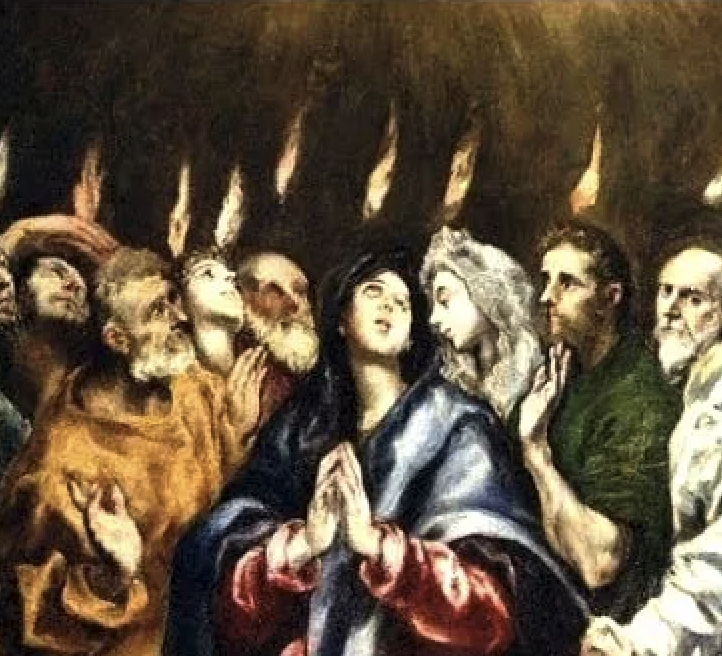
Pentecostalism from soup to nuts: A (near) complete history of this movement in America

Pentecostalism from soup to nuts: A (near) complete history of this movement in America

In early January, The Conversation, an academically oriented website affiliated with Religion News Service, ran an explainer with this headline: “What is Pentecostal Christianity?”

That’s a big, complicated question. While I appreciated the article’s emphasis on how Pentecostals are a little-noticed component in American Christianity, it was very much a Cliffs Notes version of a complex, 123-year-old movement. And it didn’t even mention the Charismatic Renewal movement, a massive spiritual shift in the 1960s that brought millions of mainline Protestants and Roman Catholics into the wider Pentecostal fold.

Pentecostalism has hit the news in recent years with revelations of the “Trump prophets,” but their rise has a long back story that few journalists understand. For many years, pentecostals have been seen as evangelicalism’s crazy sister and media coverage has hardly been incisive.

Thus, tmatt suggested that we post the following comprehensive look at the history of the movement here in the United States. I wrote this as a backgrounder for a meeting of religion reporters at the University of Maryland in 2000. I have updated it twice because the movement keeps on shifting. Some of this will sound very basic, but it’s important to know who the main players have been.

———

Without a doubt, the portion of Christianity known as Pentecostalism was — by far — the fastest-growing movement of the 20th century, going from zero members on Jan. 1, 1901 to 644 million adherents worldwide now. It is the primary expression of Christianity in the Global South. It is the one form of Christianity to mount a serious challenge to the growth of Islam, mainly because of its appeal to the very poor and its reliance on the miraculous.

During my travels in places like India and Egypt years ago, I was told by religious leaders that the heavy hitters in evangelism in Hindu and Muslim contexts were the Pentecostals. When I was in Israel researching a piece on the country’s messianic Jews, my sources told me half of them, at least, were charismatic. The world’s largest churches in Korea and Nigeria are Pentecostal.


Please respect our Commenting Policy

News hooks abound: How will religious faith shape the 'birth dearth,' and vice versa?

News hooks abound: How will religious faith shape the 'birth dearth,' and vice versa?

Two January headlines a week apart signal that the past generation’s “population explosion” worries have reversed.

Observers fretted as China announced its population began to shrink last year as its birth rate reached a record low. Japan’s Prime Minister Fumio Kishida warned parliament that a declining birth rate means the rapidly aging nation is “on the verge of whether we can continue to function as a society.”

Then last Saturday a New York Times op-ed asserted that unfair burdens on wives and mothers created a “birth strike” and “marriage strike” that are “killing South Korea.” The nation has posted the world’s lowest fertility rate the past three years and deaths now outnumber births.

Such realities provoked the ever-interesting Times columnist Ross Douthat to ask whether “the defining challenge of the 21st Century” will be climate change decried by so many analysts or, instead, the globe’s accumulating “birth dearth” a.k.a. “baby bust” or “population implosion.”

The second trend could well undercut societies’ “dynamism and innovation” and pit “a swollen retired population” against the “overburdened young,” he warned, while listing geopolitical factors in the coming “age of demographic decadence.”

Attention newsroom managers: This is an apt time for media to consider U.S.-focused big-think pieces on how religious communities are shaping population trends and, vice versa, how those trends affect religion.

Pro-procreation government programs appear to have limited impact in boosting birth rates, which instead reflect cultural values regarding marriage and children, and complex individual decision-making. . Articles might examine related abortion policy.

Traditionally, all religions cherish children and favor reproduction, notably in the case of the Catholic Church, as The Guy discussed here a year ago (though today there’s little difference in fertility between U.S. Catholics and Protestants). On the other side of that equation, there’s universal acknowledgment that married couples raising children have been a pivotal constituency drawn to religious involvement.


Please respect our Commenting Policy

Concerning Pope Francis, hockey, Pride night and putting 'scare quotes' around 'beliefs'

Concerning Pope Francis, hockey, Pride night and putting 'scare quotes' around 'beliefs'

I have no idea if Pope Francis follows professional hockey — but that really isn’t what this post is about.

This post starts with some fascinating “scare quotes” in a headline with a Reuters report about another Pride Night controversy in the National Hockey League.

The use of “scare quotes” is a topic that, to put it mildly, consistently pushes buttons for GetReligion readers. Once again, here is a Merriam-Website definition of that term:

scare quotes …

: quotation marks used to express especially skepticism or derision concerning the use of the enclosed word or phrase

This brings us to that Reuters headline: “Rangers back right to 'beliefs' after Pride Night jerseys absent from warm-ups.” Actually, based on the context, that should have been “religious beliefs” — because it’s clear that this reference refers to centuries of religious doctrines, in several faiths.

What happened here? New York Rangers players were scheduled to take part in pre-match warm ups, as part of the team’s seventh annual Pride Night festivities, with Pride-themed jerseys and hockey sticks. That didn’t happen, which made headlines. Here is a key part of that Reuters story, which I will note did not contain “scare quotes” around the controversial term.

… one player told the New York Post … that he saw only his standard jersey hanging in his locker when he went to get ready and did not know why the alternate top was not available.

"Our organization respects the LGBTQ+ community and we are proud to bring attention to important local community organizations as part of another great Pride Night," Rangers said in a statement.

"In keeping with our organization’s core values, we support everyone’s individual right to respectfully express their beliefs."

I guess it is possible that a professional athlete could have “political” beliefs that were relevant in this case. There may even be Seinfeld-ian “compelled speech” issues here (Click here for classic clip on YouTube). In light of recent news, it’s clear the headline writer’s “scare quotes” nod refers to centuries of Christian doctrine on marriage and sex.


Please respect our Commenting Policy

Plug-In: Listening to the voices of Holocaust survivors -- while we still can

Plug-In: Listening to the voices of Holocaust survivors -- while we still can

Good morning, my friends!

I’m your Weekend Plug-in columnist, and I need to let you know I’ve checked all my files. I didn’t find any classified documents from that time I toured the White House. Whew!

So let’s dive right into the top headlines and best reads in the world of faith.

What To Know: The Big Story

It’s Jan. 27, which is International Holocaust Remembrance Day.

Today’s commemoration marks the 78th anniversary of the 1945 liberation of Auschwitz-Birkenau.

The United Nations “urges every member state to honor the six million Jewish victims of the Holocaust and millions of other victims of Nazism.”

Telling their stories: Toby Levy, now 89, was one of only 31 survivors in the town of Chodorow — then a part of Poland, now Ukraine.

“Like my father said, ‘God needed witnesses’” to the horror, Levy tells the Washington Times’ Mark A. Kellner. “That’s why I don’t say ‘no’ to anybody, as tired as I am,” she says of opportunities to relate her experience.

Like Levy, David Schaecter, 93, knows he is running out of time, Religion News Service’s Yonat Shimron reports:

So this week he agreed to a weeklong recording of his life story using a new technology that will allow future generations to interact with a hologram-style likeness of him.

That story will form the base of an exhibit at Boston’s future Holocaust museum, which is scheduled to open in 2025.


Please respect our Commenting Policy