
Tamie Ross
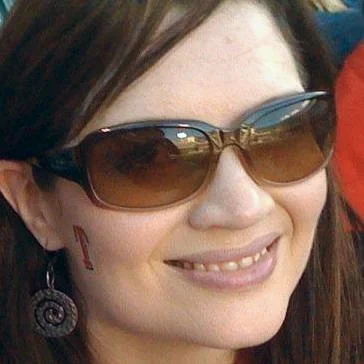
Tamie's introduction post from Oct. 1, 2013
Some folks get annoyed when they read a news story with holes, a piece with errors, prose with pockmarks. Me? I see it as an opportunity to learn and to teach. And when there's nothing to fix, when all angles are covered and no questions remain by the ending, I rejoice and join in the celebration of good journalism. Everyone wins!
That's part of why GetReligion captivates me, and it's a big reason why I'm thrilled by the opportunity to join this stellar group of religion news hounds.
I've been reading this site for years, since my husband Bobby Ross Jr. turned me on to its efforts to shine a bright light on the dimly lit ghosts of secular religion coverage. I've always thought the Almighty has a sense of humor, and the commentary here affirms that for me. I love journalism, too, and that's what this blog is all about.
Besides loving a good laugh, though, who am I really? A good friend calls me Jobette, the feminine form of the Bible's most prolific yet long-suffering man. I think that's much better that being called Sarah/Sarai, though, because that wing of the house is firmly closed.
I ended my 20-year career in journalism in 2012 after a trio of as-yet-untamable autoimmune diseases made it impossible to stay vertical for even moderate periods of time, much less type, travel or transcribe notes. During my byline years, however, I worked as religion editor for The Oklahoman, promoted up from copy editor and assistant features editor. I've also done freelance work for The Associated Press and United Methodist News Service. My most recent gig was with The Christian Chronicle, which truly was a homecoming for me, as I interned there during my college years at Oklahoma Christian University.
I ended my 43-year career as my mother's favorite (and only) daughter just three weeks ago after she suffered a massive heart attack and died 48 hours later. I sat with my dad in a different heart hospital three days after her memorial service and listened as he described for doctors numbness, tingling and pain I had never heard about before. (My own ticker seems to be keeping excellent time at the moment, in spite of its brokenness.)
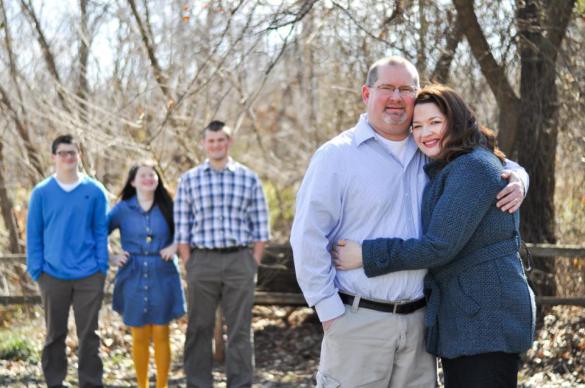
Over the last year, I've tried to focus on getting well. I read voraciously and work hard at making memories with my family, which also includes sons Brady, 20, and Keaton, 16; and daughter Kendall, 14. For reasons I have yet to understand, I'm tolerated well by my spiritual family, too, at the Edmond Church of Christ. Like Bobby, I'll generally step aside from commenting here about any stories relating to the Stone-Campbell Movement, but know that Stone, Campbell and their Restoration Movement friends will continue to be dinner conversation here at Casa Ross for sure.
As the only female contributor here (at least for now), expect me to both give and get a hard time from this group of constantly leapfrogging Alpha Males. I'm no M.Z. Hemingway sadly, and would never attempt to try and walk in her ever-so-stylish boots/flats/kicky sandals. But I'm thrilled to be here, to join in this dialogue. Thanks for the warm welcome I know will be forthcoming.
Actor Tom Hanks brought to life (on screen) the fictional Harvard University "symbologist" Robert Langdon, the hero of Dan Brown's fanciful novels "The Da Vinci Code" and "Angels and Demons."
If there actually were a "symbologist" floating around, it might be useful to page them -- or Tom Hanks -- to help interpret a Vatican-linked bit of commentary about, of all things, American politics, the late Rev. Dr. Norman Vincent Peale and President Donald Trump's chief White House strategist Steve Bannon.
Put all THAT in your word processor, Dan Brown! Can't you almost see the trailer for that movie, releasing perhaps in time for Campaign 2020?
Instead, we are, fortunately. in the capable hands of Rachel Zoll, religion writer for the Associated Press, and Rod "Friend of this Blog" Dreher. Each approaches the subject in a professional manner. Dreher, of course, has his opinions, which we'll get to in a moment.
Let's start with the AP, via Maine's Portland Press Herald. Take a gander at this longish excerpt, published under the headline "Pope confidant sees unholy U.S. alliance," to see what's causing all the fuss:
More than two weeks after the horrendous mudslide in Oso, Wash., news coverage is taking a different turn. Gone are the frenetic rescue stories and the first profiles of those lost, and in their place are more broad-based stories about those who will help residents recover long-term. From the Seattle Times comes this piece about the faith community, both local and transplanted, in the wake of the tragedy. While we would expect this type of coverage at this stage in the developing story, this report seems different. Not only is it well-sourced, but it moved me to empathy in a way I didn’t really expect.
People of faith, ministers and chaplains have responded to the deadly March 22 mudslide as a calling. They’re on the ground in Oso, Darrington and Arlington, trying to help shocked survivors pick up and go on. The transition from overwhelming loss to healing will be slow and difficult, they say.
“I’ve been ordained 38 years, so I’ve seen a lot, but I’ve never been a part of something this dramatic and all-encompassing,” said the Rev. Tim Sauer, pastor at the Immaculate Conception Catholic Church in Arlington and St. John Vianney in Darrington.
There’s no such thing as bad publicity — at least that’s how the saying goes. I beg to differ when it comes to the late Fred Phelps, Westboro Baptist Church and promoting your business.
From my home state today comes this front-page story in The Oklahoman. Take a moment to read it so we’re all on the same billboard, er … page.
Now then, let’s talk about what constitutes newsworthiness and how that differs from creating news.
At some point, coming-out stories about faith-claiming celebrities, musicians, politicians — anyone in the public eye — will cease to be newsworthy. Until then, we put up with the half-written attempts by news outlets and magazines to tell their stories. I say half-written because rarely do these pieces come close to a proper attempt at reconciling the subjects’ claims of sexual orientation with their faith backgrounds in any meaningful way. (For the record, that includes comment from someone representing the denomination with which the newly heralded LGBT identifies himself/herself.)
The latest example is Rolling Stone’s narrative on alternative rock group Neon Trees’ lead singer Tyler Glenn. Glenn, a lifelong member of the the Church of Jesus Christ of Latter-day Saints, tells the magazine he is gay and has known since he was 6 that he was attracted to men. He also describes his first date with another man, indicating he will pursue that type of relationship in the future.
Glenn also says that he still considers himself a Mormon, although the church’s doctrinal position on homosexuality is clear: Sexual activity should only occur between a man and a woman who are married.
Churches offering free items, services or even doughnuts to their neighbors isn’t news. When they offer 25 long guns and shotguns as door prizes, however, people (and the press) take notice.
The Kentucky Baptist Convention and the Lone Oak Baptist Church in Paducah are making headlines this week for doing just that: inviting 1,000 or so unchurched, mostly young men to a free steak dinner and gun giveaway Thursday night labeled as a “Second Amendment Celebration” in hopes of “luring them to Christ.”
The Louisville Courier-Journal reported on the Southern Baptist-affiliated event in its weekend edition a few days ago, and since then several news outlets have picked up the story.
British writer and editor W.E. Hickson popularized this quotation in the 1870s, and I’m dusting it off today for our friends at The Dallas Morning News. Why, you ask? I’m guessing they haven’t thought of applying the concept to sourcing stories, particularly ones that demand a balanced treatment. On the heels of a federal judge’s ruling striking down Texas’ ban on same-sex marriage, I looked to the Lone Star State’s outstanding collection of newspapers for what I expected to be top-notch coverage. Instead, I came across this news/feature piece, which fell flat on its one-sided backside.
After 53 years, Jack Evans will finally get hitched to his life partner George Harris on Saturday, believed to be the first public same-sex wedding in Dallas officiated by a United Methodist minister.
The union has qualified religious acceptance. There’s open debate in the United Methodist Church, which officially views homosexuality as ”incompatible with Christian teaching.”
“Beer with Jesus” might have fallen off the country music charts, but the trend has legs — er, foam — apparently. You may remember the other half of our resident husband-wife team, GetReligionista Bobby Ross Jr., writing a post in November on the subject. In summary, he looked at reports on churches offering services in pubs and bars and the successes and failures in each.
We have a new twist to the story now, and it comes to us from the country music capital of the world, Nashville Tenn. It also involves music, but not of the hometown variety.
The Tennessean invites us to pull up a barstool and join the Beer and Hymn Sing Group in this report:
When my oldest son was a Boy Scout, the entire experience was couched in church settings. His pack meetings took place in church halls, and ceremonies were scheduled in church sanctuaries and auditoriums. His pack leaders often doubled as congregational lay leaders, and the boys were asked once a year to don their uniforms and lead a special “Scout Sunday” worship. When the boys recited the oath, the “Under God” portion no doubt resonated within their surroundings.
I was surprised, then, by The Associated Press’ story on new statistics released Wednesday that show a 6 percent membership decline in the last year — a year during which new rules were put in place to accept and protect openly gay Scouts, from Cubs to Eagles.
The story had a Dallas dateline, undoubtedly tied to the organization’s national headquarters in nearby Irving, Texas. Beyond that obvious connection, what better area in the country to find a wide array of faith groups willing and able to speak intelligently about the impact of the change on troops with which they might have alliances or sponsorship?
My 14-year-old daughter sits next to me as I type. Kendall often does this, curious about the day’s subject matter. More often than not, she is interested (and I like to think it’s more than the caramel lattes I make us). She can identify with and wants to learn more about the issues and stories of today. But beyond that, she sees relevance as we talk about people and news and faith issues. Even before society will allow her to drive or vote, she knows she is permitted to think and reason and form opinions, changing them as she matures. That, as she would say, “is really cool.”
I’m thrilled by her interest in media, especially its coverage of religion and related topics. But a larger question looms when I think of her generation. And mine, and my mother’s and grandmothers’: Are we doing right by women when it comes to religion coverage, on both sides of the press? Does our industry have enough female Godbeat writers, and are we as women spending a proportionate amount of time reading and discussing stories with religious themes or context?
GetReligion has been blessed with a number of extraordinary writers during its 10-year history, and I walk in the oh-so-stylish shoes of some gifted female journalists. Mollie Ziegler Hemingway, Sarah Pulliam Bailey and Elizabeth Eisenstadt-Evans come immediately to mind because of the questions they asked during their time here and the myriad ways in which they made religion news coverage better.
Half a world away from my Oklahoma home, an experiment just concluded in Australia. An atheist and a Christian who are friends agreed to trade places for a month and document the experience, with the summary promised later this week.
According to a brief in online news’ The Blaze, believer Bentley Browning and non-believer Simon Capes gave up their respective belief systems for the other’s in January, “in the hopes of coming to understand one another’s views more fully.” They’re calling it Faith Swap.
To be specific, each adopted the other’s daily rituals, or lack thereof, including prayer, Bible reading, worship, sacraments or any other related activities.
It’s difficult, if not impossible, to separate the subject of a story from its journalistic merits. You can try, of course. You can look for proper attribution and treatment, context and clarity. Fairness.
But when your head still can’t get around the topic by the story’s end, something still might be missing.
In this case, I suppose it’s the why. And I’ll explain why in just a bit.
Every year about this time, we face a blitz of profile stories of coaches, athletes, owners, fans and even pets preparing to square off on Super Bowl Sunday (I’m a huge fan of Puppy Bowl, by the way). The big story in advance of the 2014 human installment: the frigid temperatures and whether or not the Seattle Seahawks vs. Denver Broncos matchup can attract a proper crowd within the confines of New Jersey’s undomed MetLife Stadium.
Second to that, we’re being treated to a lineup of features on the teams, faith angles and other more spiritual sides of the Sunday offering.
Some stories, like some Super Bowl pairings, are better than others.