
Ira Rifkin
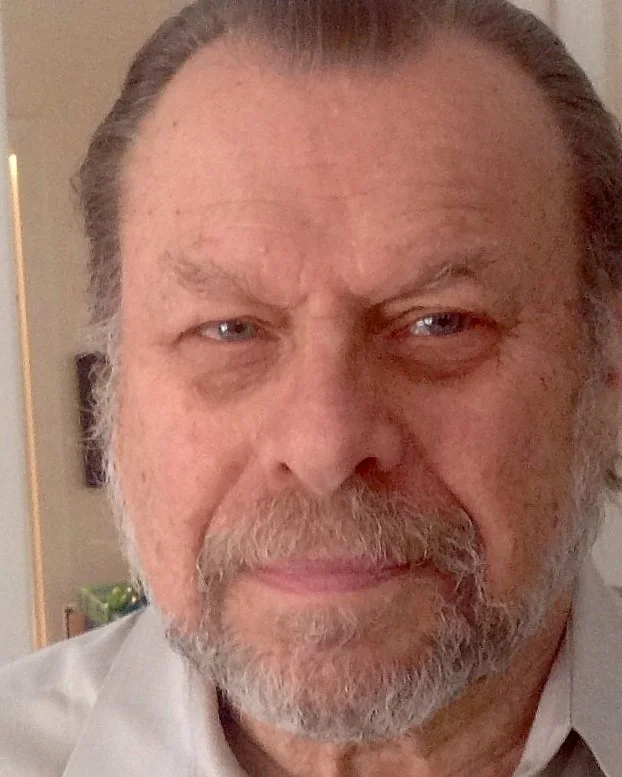
Ira Rifkin is an award-winning journalist, author, educator and media consultant specializing in issues relating to religion and culture, with special emphasis on the Middle East, the American Jewish and Muslim communities, Eastern religions, new religious movements, interfaith dialogue, and globalization. He currently is a public speaker on religion and globalization and leads structured protocol dialogue groups on Middle East issues. He is also a certified English as a Second Language instructor.
Ira is the author of Spiritual Perspectives on Globalization: Making Sense of Economic and Cultural Upheaval (SkyLight Paths, 2003; 2nd Edition, 2004) and the editor of Spiritual Leaders Who Changed the World: The Essential Handbook to the Past Century of Religion (SkyLight Paths, 2002; 2nd Edition, 2008). He has received awards from both the Associated Church Press (1995, 1996, 1997) and the American Jewish Press Association (1991, 1992, 2006). He has also won awards from the Religion Newswriters Association (1996) and the Society of Professional Journalists (1984, 1990, 1994).
Previously, he served as an adjunct journalism professor at the University of Maryland at College Park, as an adjunct at the Washington Semester Journalism Program at American University, and as a lecturer in environmental journalism at the State University of New York at New Paltz. Ira formerly was News Director of Beliefnet. com, a multi-faith Web magazine, and a Washington-based National Correspondent for Religion News Service. He has contributed to three college textbooks on journalism; to a professional manual for religion journalists, Guide to Religion Reporting in the Secular Media: Frequently Asked Questions; and to Media Guide to Islam, a Website for journalists writing about Islam produced by the Center for Integration and Improvement of Journalism at San Francisco University.
Ira wrote The Search for the Historical Jesus for Microsoft's Encarta CD-ROM Encyclopedia. He has worked as a staff writer and editor for the Los Angeles Daily News, United Press International in New York and San Francisco, the Baltimore Jewish Times, and other newspapers and magazines in New York, California and Nebraska, and has reported from the former Soviet Union, Cuba, Peru, Ecuador, Panama, Mexico, and Israel/Palestine.
He has also done media relations work in India for the International Transpersonal Association, and has consulted to the Center for Strategic & International Studies, Frontline/Helen Whitney Productions, The Pew Charitable Trusts, Religion Newswriters Foundation, Center for Contemplative Mind in Society, Church World Service, The Interfaith Alliance, STAR (Synagogues: Transformation and Renewal), Institute for Christian & Jewish Studies (Baltimore), Rabinowitz/Dorf Communications, Goldring Family Foundation, United Jewish Communities, Jewish Lights Publishing, Beyond Pesticides, Maryland Pesticide Network, InnerSource: A Center for Psychotherapy and Healing (Annapolis, MD), Chabad of California, and others. Additionally, he has been a private editorial consultant and ghostwriter.
Ira has been an Advisory Council member for the Buxton Initiative, a Washington think tank promoting interfaith discussion, and Lead Editorial Advisor to the online Journal of Inter-Religious Dialogue.
He has also been a guest speaker at Berea College, Northwestern University, Chautauqua Institution, Grace Cathedral (San Francisco), University of Baltimore, Mt. St, Mary's College (Emmitsburg, MD), Rivier College, Marywood University, Georgia Perimeter College, Bergen College, New Jersey City University, San Jacinto College, Maricopa College, Temple Adat Elohim (Thousand Oaks, CA), the American Council for the Study of Islamic Societies, the U. S. Department of State Office of International Visitors, the Humphrey International Fellowship Program (UMd College Park), MICA-Interfaith Programs & Spiritual Diversity (UMd College Park), Baltimore County (MD) Public Schools, and elsewhere.
He has contributed to a variety of newspapers, magazines, Websites, and news services. They include MSNBC.com, The Jerusalem Report, The Washington Post, Los Angeles Times, The Baltimore Sun, The Washington Times, People, Spirituality&Health, The Jerusalem Post, Teacher Magazine, Mindful.org, The Village Voice (NY), Common Boundary, Moment, National Catholic Reporter, Sightings (Univ. of Chicago Divinity School), New York Jewish Week, the Forward, On Faith (washingtonpost.com), Common Ground News Service, SojoMail.net, Sokka Gakkai International Quarterly, Detroit News, United Methodist News Service, Los Angeles Jewish Journal, New Jersey Jewish News, JTA (Jewish Telegraphic Agency) news service, MyJewishLearning.com, Jbooks.com, Faith&Values.com, New Age Journal, Media & Values, Religious Socialism, Emmy Magazine, Catholic Library World, The Lutheran, Omaha World-Herald, Omaha Sun, The Capital (Annapolis, MD), and the Peruvian Times and Latin American Economic Report (Lima, Peru).
Ira has a BA in Journalism from New York University (1965). He was a 2007 fellow at the Religion & Globalization Summer Seminar at Boston University's Institute on Culture, Religion & World Affairs.
He has also worked as a set dresser and script consultant in feature film production (San Francisco) and as an importer of Central American (Guatemala and Panama) native textiles and artifacts. Additionally, he curated a show on Panama's Cuna Indians at Omaha's Joslyn Art Museum (1975).
He chaired the United Synagogue of Conservative Judaism Seaboard Region's Israel Affairs Commission (2007-2009) and served for more than a decade on the Board of Congregation Kol Shalom, Annapolis, where he heads its Israel Affairs Committee, and for which he has conducted numerous structured dialogue and panel discussions on Middle East issues.
Ira is married to Ruth Berlin, a psychotherapist and environmental activist, has two sons and two grandchildren, and divides his time between Annapolis, MD, and Marina del Rey, CA.
I’ve been a contributor to GetReligion since 2015, when founder Terry Mattingly recruited me over salad at an Annapolis mall eatery. I’m grateful that he did.
Seven years is, for me, a hefty professional run. But nothing lasts for ever. Change is constant. In short, this is my last regular GetReligion post.
During my time here I’ve noticed what I consider an imbalance in the stories GetReligion bloggers generally choose to critique. It is this: The underwhelming and frequently inaccurate religion news coverage too often offered by “mainstream media” is criticized at GetReligion on a near-daily basis. The ignorance of important religion details and the coverage’s overall poor quality are often attributed to mainstream journalists’ “secular,” or “progressive,” worldviews.
Another regular criticism is that mainstream media journalists view everything through a zero-sum political lens. This, goes the argument, renders them incapable of understanding or communicating religious complexity as it’s actually lived by believers living outside the blue-state mindset. Politics is all that really matters, is the trope.
hese broadsides are standard GetReligion fare. Importantly, the accusations are generally on target. It’s more than a coincidence that the GetReligion team members behind this website have decades of experience in the mainstream press.
Religion journalism has suffered greatly in this Internet era. Relatively few news outlets ever invested in upping their religion coverage. Today, even fewer do. Blame that on journalism’s downward economic spiral brought about by the World Wide Web explosion — a major theme here at GetReligion.
However, what’s too often missed here is criticism of the similar lackluster coverage originating in clearly conservative media. At GetReligion, conservative-market media more often than not get a pass. This is, in part, because conservative media’s most popular content is offered by right-wing commentators who make little to no effort to hide their biases and whose stock in trade is pure opinion.
We tend to pay attention to news that impacts us most directly. So for Americans, the culture war playing out between religious (and some non-religious) traditionalists and social progressives is most compelling.
Half-way around the world, however, another ongoing war about religion and culture has heated up yet again. This one has direct international ramifications and has the potential to negatively impact global religious-political alignments perhaps as much or more than America’s nasty cultural war.
It also contains an important lesson about the possible consequences of governments employing divisive culture war tactics for political gain (more on this theme below.) I do not think it absurd to fear that our homegrown culture war could become just as bad, or worse.
I’m referring to India, a constitutionally secular nation wracked by inter-religious conflict between majority Hindus and minority Muslims (Christians have been caught in this imbroglio, too, but put that aside for the duration of this post).
Here’s a recent overview of India’s situation from The Washington Post. And here’s the top of that report:
Let’s step back from the news coverage for a moment to consider some underlying dynamics and their impact on journalism.
The Holocaust devastated European Jewry. The most strictly religious among them — the mystical-oriented Hasidic followers of historic rabbinic lineages and the mitnagdim, Hasidism’s more intellectually focused religious critics — suffered some of the worst losses.
Their insularity and suspicion of the larger world served them poorly at a time when maneuverability and adaptability might have helped them flee Nazi Europe for safety. Instead, they turned their noses up at non-Orthodox Jews and avoided dealing with non-Jews as much as possible.
This was true for both Hasidic and mitnagdim Jews, who are often lumped together by outsiders under the rubric “ultra-Orthodox.”
It’s a label many of them reject; they argue there’s nothing “ultra” about them and that they’re only adhering closely to what they think of as “normative” rabbinic Judaism.
In Hebrew, they’re called Haredi or Haredim, the plural. That’s how I’ll refer to them in this post.
Samuel Heilman, an American academic expert on Haredi life, wrote the following on the subject for a PBS show on Hasidic Jews.
David Ben-Gurion, the secular Jewish Zionist leader who was Israel’s first prime minister, was convinced that circumstances following World War II would further depress Haredi numbers. Back then, the Haredim comprised just 5 percent of Mandatory Palestine’s pre-state Jewish population.
However to gain United Nations backing for an independent Jewish state, Ben-Gurion believed he had to show full Jewish unity for such a move. That included Haredi support.
Organized American Judaism — not unlike other American faith traditions — is in the midst of a shakeup. The latest evidence of this was the recent announcement that Reform Judaism’s first rabbinic seminary, in Cincinnati, will soon cease ordinations at the end of the 2026 academic year.
Nothing about this strikes me as shocking or even unusual. I view religious bodies as bureaucratic extensions of living traditions in which evolutionary change is both normal and inevitable. They’re shapeshifters and those institutions that do not accommodate changes in worship style are bound to calcify over time.
This is not to deny that change can be wrenching. We tend to become deeply attached to the familiar. As a species, we anchor our livelihoods, identities and emotional equilibrium in what we like to think of as comforting routine. We want to know what’s expected of us so we may reap the rewards we think our efforts should bring.
The devil we know is preferable to the devil we do not know.
So as one might expect, the recent news from Hebrew Union College’s board of governors that its Ohio campus, opened in 1875, will cease ordaining new rabbis did not go down easy for those whose religious and professional lives are most directly impacted by the decision.
But what of ordinary North American Reform Jews (Canada is jurisdictionally connected to Reform’s U.S. institutions)? My sense is that most individual Reform congregants, if they’re even aware of the closing, are far less troubled.
Why? Because declining rabbinic student applications coupled with shrinking congregational memberships have been cited as the twin reasons for the HUC decision. The Israeli newspaper Haaretz explained this as follows:
In August 1991, I visited Ukraine, then still a captive state within the Union of Soviet Socialists Republics. The USSR was on its last legs and western media pundits, academic experts and gloating politicians predicted its full collapse at any moment.
History was about to explode in risky and unpredictable ways. But that wasn’t my prime concern. I didn’t go there to cover a political revolution.
Rather, I was in Ukraine for two weeks to write about the historic Jewish community of Odessa, the Black Sea port city that was once one of the Russian empire’s Crown Jewels. Sadly, as I write, Odessa faces what’s likely to be a large-scale Russian military assault. Just don’t call it a war in the streets of Moscow.
My employer back then was the Baltimore Jewish Times. The paper sent me to Ukraine because Baltimore and Odessa were “sister cities.” (Meaning the Baltimore Jewish community committed itself to financially assisting Odessa’s then-largely poverty stricken Jews and to rebuilding Jewish community institutions largely destroyed under, first, the Nazis, and then the Soviet. To this day, Baltimore has maintained its commitment.)
The first story I wrote for the Jewish Times ran under the headline, “An Uncertain Future for the Jews of Odessa.” The headline (sorry, but I can’t find a working link to this story) reflected the situation as I experienced it.
One might say that it was also prescient, given the horrific situation there today. The current Russian invasion has reduced “uncertain” to a sad understatement.
My guess is most GetReligion readers have followed the Ukraine crisis closely. If so, I assume you’ve also noted the slew of sidebars about Ukraine’s Jewish population.
Why emphasize this angle when the Ukraine story has so many larger implications? Some historical background will help.
Prior to the start of the current civilian refugee exodus, Ukrainian Jews numbered an estimated 100,000-200,000 individuals, down from nearly a half-million in 1989. That’s quite a spread. But even if the actual number is at the estimate’s low end it still means Ukraine has one of the five largest Jewish communities in Europe.
Ahad Ha’am, considered the father of “cultural Zionism,” is quoted as saying: “More than Jews have kept Shabbat (Hebrew for “sabbath”), Shabbat has kept the Jews.”
Ha’am’s comment is a recognition of the cohesive power inherent in widely shared group traditions and tribal memories. Call it positive re-enforcement.
But similar sentiments have been expressed about anti-Semitism’s influence on Jews. In short, do communal fears over anti-Semitism also keep Jews connected to this day? After all, the enemy of my enemy is my friend — even if I utterly reject my newfound ally’s particular expression of Jewish religion, politics or lifestyle. Call it negative re-enforcement, if you will, but fear of persecution, and certainly death, is a powerful motivator of group cooperation.
Switching lanes now, here’s a journalistic question about anti-Semitism. Does giving anti-Semitism extensive coverage — warranted though it may be — prompt more anti-Semites to act out publicly? Does publicity embolden and thus spark potential copycat anti-Semitism?
I have no doubt that the current global upswing in reported anti-Semitic incidents — some deadly, some just irritating — requires heavy coverage.
Journalists have a responsibility to alert authorities to anti-Semitism’s illegal expression, to warn Jews about the dangers they face, and to try to educate those media consumers who know little about anti-Semitism’s impact and incubators.
This responsibility, of course, extends beyond Jews to cover all groups suffering discrimination or persecution. Hatred of Jews may be, as has been said, the oldest hatred, but all hatred is equally wrong and personally and communally destructive.
As journalists, we don’t just report the news. We help shape it, and civilization, by what we report.
Do elite international athletes have a moral responsibility to publicly comment or act in a way that acknowledges their awareness of oppressive — or worse — political conditions in nations in which they compete?
Do societal moral standards require them to speak up, even when criticism and confrontation jeopardize their ability to compete and may threaten to derail an entire career?
The Beijing Winter Olympics — scheduled to begin in early February in and around China’s capital city — makes this a timely question.
Several democratic nations have announced “diplomatic” boycotts of the Beijing competition. They include the United States, Australia, Britain, Canada, Denmark, and Japan. (To be clear: democratic claims alone do not necessarily stifle a nation’s darker impulses and render it “moral.”)
That means that no political office holders from the the boycotting nations will attend these Games, but qualifying athletes are free to make their own choices about competing.
The following paragraphs from the above linked Washington Post article explain the limits on free speech China is demanding (with International Olympic Committee acquiescence).
Globalization has been a decidedly mixed bag.
On the plus side, it’s managed to knit diverse people together economically and, to a lesser degree, culturally. But it’s also further divided others along religious, political, race, and class lines.
It’s introduced us to a myriad of once exotic consumer products at relatively cheaper prices (cheaper for many Westerners, that is). Globalization has also brought us fresh ideas and life choices that — while I certainly don’t agree with every new view put forth — has enormously enriched my own life experience.
On the negative side — and this is huge — it’s allowed multi-national corporate boards (and shareholders) to escape the full weight of responsibility for the enormous environmental degradation their decisions have produced in exploited regions thousands of miles distant from their posh corporate headquarters.
Also, let’s not forget the foreign workers, including child laborers, exploited by unscrupulous employers trying to satisfy their Western customers insatiable demands for rock bottom prices.
For the United States and other Western nations, globalization’s complex outcomes has produced still another key Gordian Knot dilemma. I’m referring to the vast numbers of desperate human refugees heading, most often without proper documentation, to the United States, Europe, Australia — and even to neighboring countries that may be only relatively better off.
The latter group includes situations American news media rarely cover. They include Nicaraguans fleeing to Costa Rica and South Africa’s burgeoning refugee population comprised of hopeful immigrants from a variety of sub-Saharan African nations.
Is it any surprise to anyone with a working knowledge of Homo sapiens that we demand globalization’s creature comforts without us wanting to deal with those actual Homo sapiens that globalization has negatively impacted.
It’s that time of year again.
We’re talking about The Holidays, the season when Thanksgiving and Christmas bookend America’s annual celebration of its history of Christian influences, even if today’s mass-media crush obscures that. It’s a season of family gatherings, annual notes to far-flung friends and acquaintances, garish holiday-themed sweaters designed to provoke smiles, and, for some, even a few religious services.
It’s a big deal journalistically, too, of course. Editors/producers and reporters/content providers seek out warm-and-fuzzy, feel-good features meant to remind media consumers of the genuine goodness individual humans are capable of showing others, including strangers.
We call it the holiday spirit and, except for the rampant consumerism, I appreciate the seasonal goodwill. And why not? Upbeat news is a welcome change from the disconcerting stories we’re usually fed. It’s good for the soul, and I need not subscribe to the traditional beliefs for it to warm my heart.
It’s also a time when journalists seek to probe the theological aspects of our holiday narratives, often to the distaste of those news consumers who prefer the comforting familiarity of traditional tellings or even the more sobering messages of traditional Christian faith in Advent and Christmas.
Such stories — here’s one example from a few years back that ran in the Guardian — are tricky, requiring solid sourcing and clear, even-handed and respectful explanations.
Another category of holiday stories addresses the consequences of past Christian actions that a reporter can link to the season, even if the link is indirect at best. Take this recent Washington Post story — “This tribe helped the Pilgrims survive for their first Thanksgiving. They still regret it 400 years later” — on how the indigenous tribe, the Wampanoag, that first encountered the Pilgrims in what is now Massachusetts were decimated by the encounter. Here’s a large bite of it: