
Jim Davis
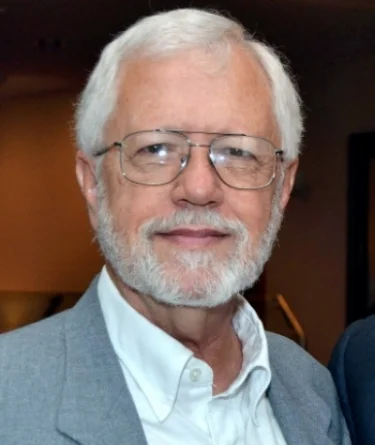
I worked for years until November 2012 with the South Florida Sun Sentinel, Fort Lauderdale, most of it as religion editor. Most of my work focused on the local level, covering the unbelievably rich mix of religions that is South Florida.
Among the stories I produced were two in-depth articles on Holocaust Revisionism, which were cited in a book by the American Jewish Committee; religious groups’ roles in recovery efforts after hurricanes Andrew and Wilma; three appearances of the Dalai Lama, his first-ever to South Florida; the founding of the Jewish Museum of Florida, and in-depth features on Hindus and Muslims in South Florida.
However, I have covered national-level news as well. They have included conferences of United Methodists, rabbis, evangelicals, religious broadcasters and two U.S. tours of Pope John Paul II. I covered the centennial meeting of the Parliament of the World’s Religions in Chicago. And I wrote several stories on Heritage U.S.A., before and after Jim Bakker was ousted.
Since leaving the Sun Sentinel, I’ve been working mostly with The Florida Catholic, both stories and photo galleries of art in churches. I’ve edited two academic studies for the University of Florida and a study guide for a series of devotional films. And in the 2014-2015 academic year, I helped publicize the Jewish Studies Initiative at Florida International University, Miami.
Besides my paid gigs, I do some volunteer work. I run the Faith and Values page on Facebook. I write God Online, an occasional media review blog. I gave a how-to seminar for Catholic reporters. I'm a judge for the annual contest of the Associated Church Press. And I'm on a project to scan all the religion archives of historical societies around South Florida.
Quirkier stuff: I've judged a sand castle contest by a church and preached a Sabbath sermon for Sukkot. I’ve emceed two interfaith concerts for World Religion Day, produced by a local Baha’i leader. And I took part in an interfaith panel at Florida Atlantic University on faith-based humor, titled “My Religion is Funnier Than Your Religion." (I filled the role of The Baptist.)
Finally, some personal stuff: I was born in New Jersey but moved to South Florida as a boy of 6. I earned a degree in journalism from the University of Florida and took a short fellowship in religion and media in 2000 at Vanderbilt. My wife, Angela, is a retired nurse. Our son, Matthew, is a software developer who lives in Sapporo, Japan.
My personal likes include cats, Narnia, photography, awful puns, science fiction, Colombian coffee, the Lord of the Rings, carrot cake (with walnuts, please), and jazz and fusion music. Not necessarily in that order.
We used to joke that the religion beat is sometimes known as the sex beat because of all the peccadilloes and crimes that some religious personalities find themselves in.
But yesterday’s story by Reuters about the theft of some boudoir photos supposedly commissioned by Liberty University President Jerry Falwell Jr. raises that designation to a new level.
Personally, I will never understand anyone who allows sexually intimate photos of any kind to be taken of them — in this case, apparently photos of a husband and/or wife. These things have ways of getting into the hands of people who don’t wish you well. Ask Jeff Bezos to explain this to you if you don’t already know.
I should add that Falwell has denied the Reuters report in an interview with Fox News commentator Todd Starnes. But why didn’t he tell Reuters the same thing?
Read on for my nominee of Weird Religion Story of the Week.
Other parts of this taped conversation made the news a week ago (see above video). Why it took this long for reporters to pick up on the Falwell connection puzzles me. The mind goes in odd places trying to imagine just what is in these photos, if this story is true.
Here’s some other questions journalists might want to ask, in addition to valid questions about Jerry Jr. and a Trump lawyer: Who leaked the photos and/or stole them? Is blackmail still a crime? Is there any possibility that some kind of crime has been committed, a crime in which the Falwell family has been wronged?
The Knoxville News-Sentinel hasn't had a religion writer, at least in my memory, for some time. But it did manage to produce a church-dumps-gay-couple story in pretty short order after said couple started making the rounds of newspapers and TV stations.
The setting is bucolic Blount County, a rural area south of Knoxville that sits in the foothills of the Smoky Mountains. I vacationed there in 2014 and found it refreshingly distant from an interstate highway.
Now, this is an area that's very conservative and it's full of churches, which is how our story begins.
Part of me wonders: Is this really a news story?
Maybe, because the newspaper had previously reported that Faith Promise is one of the country’s fastest-growing churches. But if an attendee had complained to the newspaper about being shut out of full membership for any other reason, would the newspaper have run it?
"The same God? That's for a school to say?"
That comment atop a Facebook post by my friend Jim Davis, a former GetReligion contributor, caught my attention.
Davis linked to a story from The Courier-News, an Elgin, Ill., hometown newspaper that is a part of the Chicago Tribune family. The story concerned a protest by some Christians over an assignment at a local public school.
The lede:
Last month, the same school board heard from religious leaders with a different perspective, as the newspaper noted then:
For more than two and a half years, I've been honored in more than one way to write for GetReligion, a feisty but literate blog on matters of faith in mainstream media. I thank tmatt for the opportunity and for his seasoned guidance. Now I'm taking leave to go local, eliminate a few deadlines and maybe smell a few flowers.
During my time with GetReligion I've learned a lot about media critiquing. I think I've always been good at critical thinking, but tmatt has distilled the tools via a few catchwords: Kellerisms, religious "ghosts," the Frame Game, Scare Quotes, Sources Say, the Two Armies approach. And, of course, his version of the Golden Rule: "Report unto others as you would want them to report unto you." I've learned much as well from the wise, incisive coverage of my fellow GetReligionistas.
Looking back, I think I've been drawn especially to some themes.
One has been persecution of Christians, especially in Kenya, Nigeria, Pakistan, Iraq and Syria. I used to call it one of the most under-reported topics in journalism. But major media, from Reuters to the New York Times to the Los Angeles Times to Agence France-Presse, have finally put the matter on their radar -- though much is left undone.
In the United States, a big focus of mine has been religious liberty, in all its forms. That's consistent with the editorial slant at this blog, with is radically pro-First Amendment (both halves it it). When legislators from Mississippi to Indiana to North Carolina have tried to pass religious exemption laws, they’ve drawn fierce opposition from the expected libertarian and gay rights groups -- but often from secular media, where journalists have often taken sides under a thin veil of reporting.
Clashes between Christians and atheists, whether the secular type or under the brand of Satanism, have also been interesting.
The banging pots and honking horns have faded on Miami's Calle Ocho, where Cuban-Americans noisily celebrated the death of Fidel Castro. Thus, it's time for some reflection on what it means for peace and freedom -- including freedom of religion.
So the Associated Press shows the right instinct in its Sunday story out of Miami on the aftermath of El Comandante's death. Yet it largely leaves ghostly trails in what could have offered some spiritual insights on the story.
We get early warnings of a scattershot story:
Cuba, as you may or may not know, is on the watch list of the United States Commission on International Religious Freedom. USCIRF's 2016 report tells of increased surveillance, harassment, closure and destruction of churches there -- on a level with the likes of Russia, Malaysia, Turkey and Afghanistan.
But here is AP's version of the religious facet in this story:
Come with us now to Bloomington, Ind., where Mayor John Hamilton has announcement. He says the city's 700 employees will get two paid days off: Fall Holiday and Spring Holiday.
Don’t recognize those holy days? You may know them as Columbus Day and Good Friday. Hamilton wielded his mayoral power to rechristen them.
To be blunt about it, this is a story built for mainstream media. As usual, though, much of the mainstream news coverage is better at citing the secular side than the religious opposition.
You know, like the New York Daily News:
Like other accounts, the newspaper also gives a rundown on the meaning behind Columbus Day and Good Friday.
That's nice, but how about some religious voices on the latter? How do church leaders feel about the safe, pastelized reference to Good Friday? It's not like journalists couldn't find local people of faith -- not with Google listing 20 congregations in several denominations in the Bloomington area. Can you say, "Google"?
The issue has even drawn attention abroad. The BBC's version sprouts so many partial quotes, it read almost like sarcasm:
The religious crazies are at it again in Indiana, trying to use the state version of the Religious Freedom Restoration Act for their aberrant behavior. This time, it's a guy who's trying to get out of paying taxes.
And once again, the Indianapolis Star has managed to run a religion story without talking to any religious people.
One Rodney Tyms-Bey says that "paying his state taxes is a burden on his religion," the newspaper says:
The case is two years old, but oral arguments were scheduled for appellate court today -- showing how tangled matters of church and state can get. We GR folk have scrutinized reports on RFRA and its state versions for a couple of decades -- from gay marriage in Mississippi to Santeria sacrifices in Florida -- but Tyms-Bey's case seems like an enormous reach.
A woman is shot in the back, and her unborn twins die. She mourns them for months as her deceased babies, but local law says they weren't old enough to be considered alive.
What an anguishing clash of views of humanity: one religious/spiritual, the other rigidly legal. It's a topic ripe for exploring, yet the Washington Post manages to avoid doing so. The 1,500-word feature doesn't even include the words "faith" or "church."
LaKira Johnson's story -- with its implications for the public view of abortion and life in the womb -- has gained much media attention ever since she was caught in an apparent revenge shooting among thugs. And the Post has stayed on top of the case ever since it broke the story in September.
But its follow-up story, on Johnson's ordeal, leaves the spiritual dimensions as half-viewed ghosts.
The print headline offered enormous promise: "An enormous tragedy with the tiniest of victims." So did the subhead: "A woman is shot, and her unborn babies die. But is it homicide?"
So does some of this week's feature:
Geez, the months-long fracas with Cambridge Christian School lends new meaning to the term "political football."
And like a hotly contested game, much of the coverage has moved the ball up and down the field, without a goal.
At least an NPR outlet in Florida has spelled out the basic constitutional conflict that could affect freedoms for the rest of us. With a few glaring omissions, which we'll get into later.
The immediate issue is over prayer. As a Christian school, the Tampa-based Cambridge does a lot of it. So does its football team, the Lancers, including over stadium sound systems.
That brought them toe to toe after regional playoffs in December. Just before the championship game at Camping World Stadium in Orlando (aka the Citrus Bowl), the Lancers wanted their amplified prayer time. The Florida High School Athletic Association said no. Now the matter is in court.
What's new in the NPR story is clarity: having an outside expert explain the clashing values in the nation's founding document: