
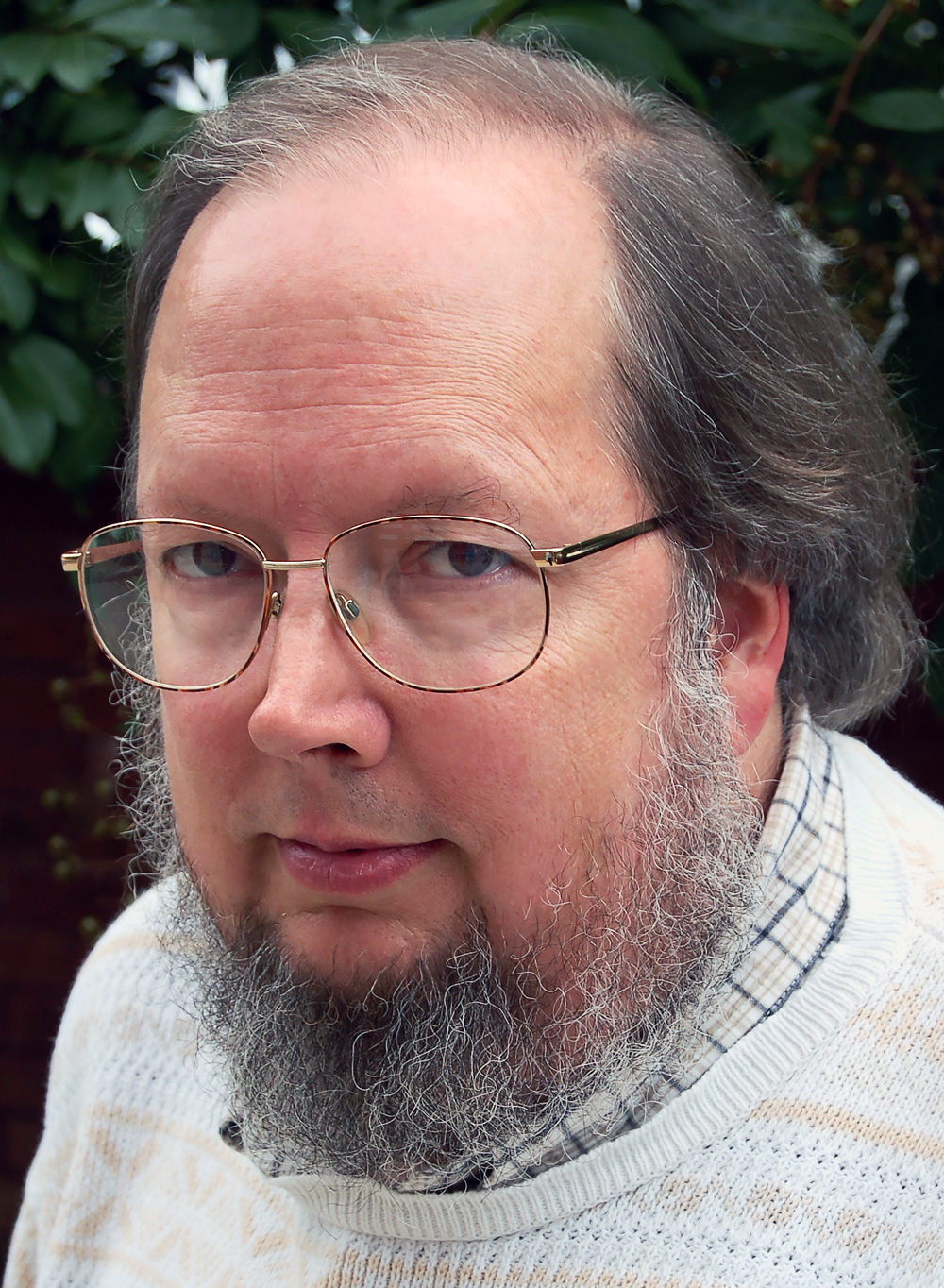
Terry Mattingly, editor
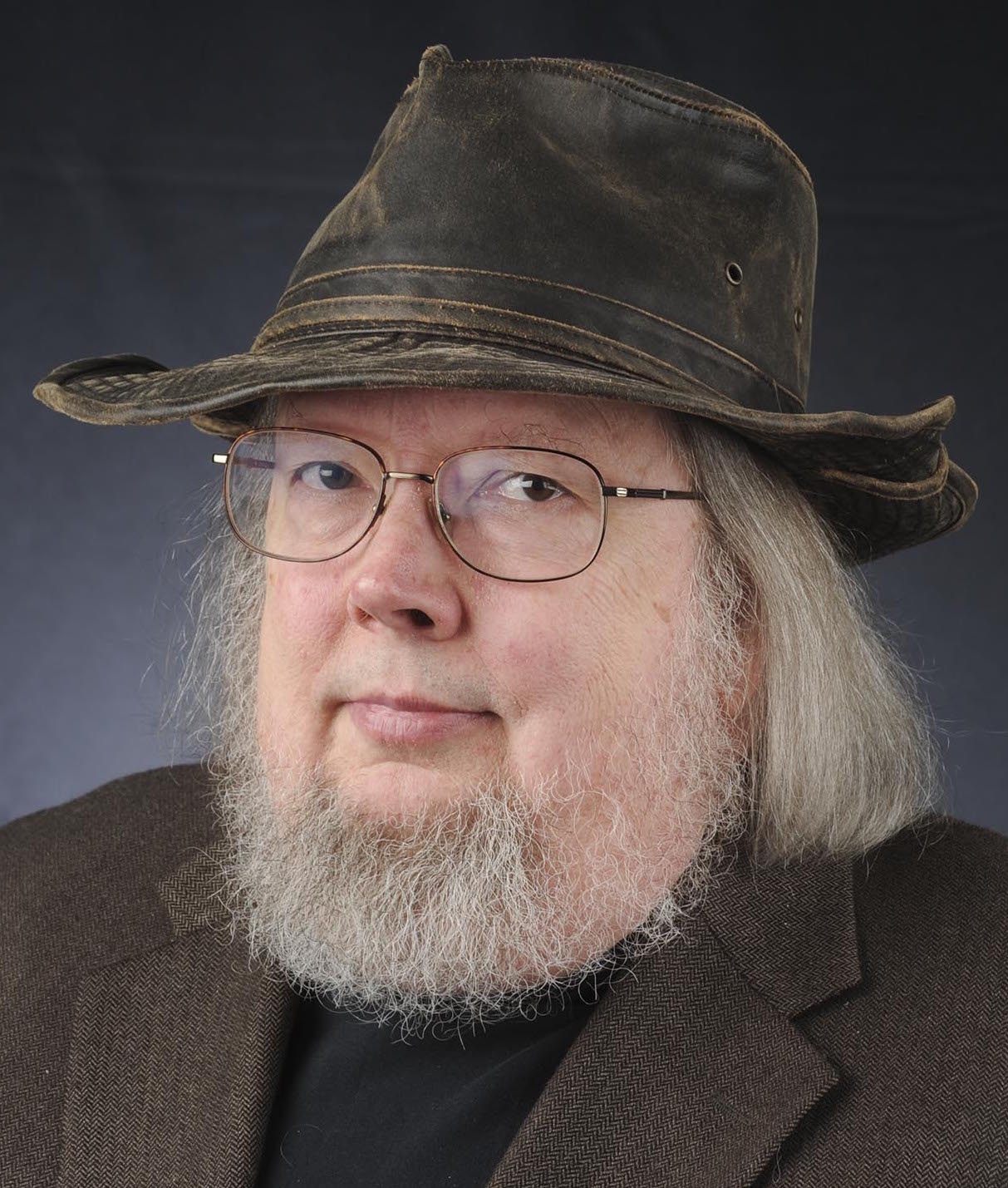
Terry Mattingly (tmatt.net) writes the nationally syndicated “On Religion” column for the Universal syndicate and is a senior fellow at the Overby Center at the University of Mississippi, focusing on religion, news and the First Amendment. He was the founder of the Washington Journalism Center at the Council for Christian Colleges and Universities.
Mattingly’s father was a pastor and his mother a language arts teacher. Thus, it’s no surprise that Mattingly is a journalist and teacher who focuses on religion and that he continues to study both writing and religion. He double-majored in journalism and history at Baylor University and then earned an M.A. at Baylor in Church-State Studies and an M.S. in communications at the University of Illinois in Urbana-Champaign.
He has worked as a reporter and religion columnist at the Rocky Mountain News in Denver and the Charlotte Observer and the Charlotte News. In 1991, Mattingly began teaching at Denver Seminary. While teaching, he has continued to write the weekly “On Religion” column for Universal, which is sent to about 350 newspapers in North America. He is the founder and editor of the GetReligion website that critiques the mainstream media’s coverage of religion news.
In addition to his classroom duties, Mattingly has lectured at Gordon-Conwell Theological Seminary in South Hamilton, Mass., the Torreys Honors Program at Biola University, the School of Journalism at the University of Nebraska at Lincoln, Baylor University in Waco, Texas, The King’s College in New York City and in other settings across the nation.
Mattingly is a prodigal Texan who has never met a mountain that he didn’t love. He is a music fanatic whose interests range from Celtic acoustic guitar to Russian chant. His wife, Debra Bridges Mattingly, is a public librarian and they have two grown children, Sarah Jeanne Wagner, and Frye Lewis Mattingly. The Mattinglys are members of St. Anne's Orthodox Church in Oak Ridge, Tenn.
If you know anything about world religions, then you know that Easter is a big deal in Christianity.
In Eastern Orthodox churches, the Big Idea is stated this way, over and over, in rites for Pascha (Easter): “Christ is risen from the dead, trampling down death by death, and upon those in the tombs bestowing life” (see this flash mob celebration in Lebanon).
I don’t bring this up as a matter of evangelism or some other #triggerwarning behavior. I am noting that this is an essential fact about Christianity, the world’s largest religious faith. Easter isn’t a “bunny” thing.
This brings us to one of the more unusual “religion ghosts” we spotted several times during the 20-year history of GetReligion. Here’s a case study at Newsweek and another at Facebook news. However, the classic version of this ghost appeared in the holy (in journalism terms) pages of The New York Times in this 2014 feature: “Hoping War-Weary Tourists Will Return to Israel.” Here is the key passage:
Now, what’s unusual about that? Well, it helps to know that the printed version said:
It’s all about the word “is,” isn’t it?
Inquiring minds wanted to know: Was there anyone in the editorial chain at the world’s newspaper of record who knew the essential fact that traditional Christians don’t believe Jesus is buried anywhere? It’s that whole “Easter” thing.
Questions. Yes, we have some final (sort of) questions about journalism and religion news.
One one level, this week’s “Crossroads” podcast (CLICK HERE to tune that in) focused on all those headlines about the red ink and devastating layoffs in elite newsrooms such as Sports Illustrated, the Los Angeles Times and the Washington Post. For a quick summary of the drama, see this mini-report at Axios.
The news is staggering for people like me who have spent decades in journalism education — encouraging students to seek careers in traditional and online newsrooms at the local, regional and national level.
Thus, it’s hard to cheer about these disasters in the lives of many professionals. However, millions of millions of Americans — especially in red zip codes — have given up on the mainstream press. What about them? Should they cheer as major news organizations implode?
This week’s podcast is the last one that will be featured here at GetReligion, as we close a week from today, on this weblog’s 20th birthday. However, future episodes of Crossroads will continue to be available through the podcast page at the GetReligion.org archive, at my own Tmatt.net, the Religion Unplugged website, Lutheran Public Radio and the Apple podcasts page.
In this (sort of) finale, it was obvious to ask: Does the current newsroom employment crisis have anything to do with decades of journalism leaders failing to, you know, “get” religion when covering one of the most complex religious cultures in the Western world?
After recording the podcast, I had a flashback to a story that Rod “Live Not By Lies” Dreher shared about his years at the Dallas Morning News. Then, lo and behold, Dreher retold key parts of the story in a new Substack post (“Journalism Continues To Crash, Burn”).
A few of his colleagues were worried about the increasingly liberal — in terms of religion, culture and politics — product that the News was producing for the region it served.
One more time.
For years, Bobby Ross, Jr., and I have written lots of posts about religion-shaped holes in mainstream sports coverage. Apparently, very few GetReligion readers were interested in this topic (as opposed to, let’s say, the American audience for a prime NFL game).
But we soldiered on. This brings me — one last time — to a curious case study involving my Baltimore Ravens (who are still in the Super Bowl hunt, at this point).
Recently, a commentator on one of the dozens of NFL commentary shows asked an interesting question: Why don’t we talk more about the ongoing success of John Harbaugh, the Ravens head coach since 2008? No one had a good answer.
But I will ask a related question: After the Raven’s 34-20 playoff victory over the Houston Texans, which video clip was easier to find? The one (a) with Harbaugh showing his dad-style dancing moves in the joyful locker room or the one (b) in which he opened his press conference, with a very serious tone of voice, with a favorite Bible quote?
Click those Google links and you will see that, once again, the role that Christian faith (Catholic, to be specific) plays in the life and work of this future Hall of Fame coach is a “conservative” news story. Period. The viral dancing moves are much more important.
Which element of these two elements of Harbaugh’s personality is the most important in his life and work? The most accurate answer is “BOTH.”
However, I suspect that Harbaugh would say that his faith is more important. This brings me to the point that Ross and I have tried to make about the faith-shaped hole in most sports news coverage (and Clemente Lisi has noted this in global soccer coverage, as well). We are not stating that it is automatically news when sports personalities talk about their faith. It is new when they consistently cite their faith as a crucial factor how and why they do what they do in their career and life.
In this case, Fox News (naturally) went with the basic facts: “Ravens head coach John Harbaugh recites Bible verse to open press conference after playoff win.”
May I have a brief moment, please, to ask a question to my fellow religion-beat reporters?
I have a style question for you folks. Has the ever-evolving Associated Press stylebook addressed the issue of whether the news beat on which we work is also called the “God beat,” the “Godbeat,” the “godbeat” or maybe the “gods beat”?
Just asking. I asking that question because many GetReligion readers may have seen the Religion News Service piece by Bob Smietana that ran with this double-decker headline:
In that news piece for mainstream newspapers, Smietana went with “ ‘God beat’ specialists” when describing religion-beat professionals. That’s interesting, since I have always seen “Godbeat” as the official nickname (at least for old-timers like me).
I should stress that Smietana and I talked for 90 minutes for this piece, after quite a few long conversations over the years. It’s a remarkably kind piece, although I really wished some other GetReligionistas had been quoted.
I was glad that Smietana did this story. Last year, the media-ethics pro Aly Colon of Washington and Lee University asked me to nominate some speakers for a pair of Poynter seminars to help journalists who, while they don’t work on the religion beat, their work frequently veers into religion territory. Smietana was one of the first reporters I mentioned, stressing that “while Bob and I have argued about lots of things for many years” he is a “pro’s pro on the beat who knows his stuff and he needs to be there.”
In this RNS feature, Smietana wrote:
Editor’s note: While preparing for this week’s podcast (“Carefully entering the hall of mirrors created by the 'God Made Trump' video”) I emailed a former GetReligionista who is way smarter than me about the Byzantine Beltway world. That would be “Mark — Mark Hemingway.” If you get that reference, you know that @Heminator knows a few things about mass-media satire. Here is his response, with slight editing.
—————
I haven't seen anything that establishes it's satire; but it's so over the top I also can't imagine anyone took it seriously.
I would only note that there's a very, very fine line for the "meme magic" online right between satire and stuff calculated to "trigger the libs." Basically, if the left is outraged by something, the idea is that they're going to lean so hard into it so as to make the issue pervasive enough that the criticism for doing what is unacceptable loses its sting.
Why? Because the left holds tremendous cultural power in setting the boundaries for what is acceptable and unacceptable discourse. That was always a power that the left abused by applying double standards and political correctness to their advantage; but it was mostly done around the margins because of a general consensus on the First Amendment as an important value.
However, in the last decade or so with critical theory/wokism/cancel culture finally obtaining some sort of critical mass in among institutional leadership that the First Amendment consensus is really no more, at least among a lot of cultural gatekeepers, and they've just been moving the goalposts randomly as it suits their purposes.
I will not apologize for the fact that this week’s “Crossroads” podcast (CLICK HERE to tune that in) contains lots of questions and few answers.
In a way, the whole “God Made Trump” video ruckus is a house of mirrors full of questions.
Nevertheless, you cannot follow what Americans call “politics” without pondering the role that religious language is playing these days. At the same time, it’s impossible to ignore the role of humor — including brutal satire — in all of this. Put religion and humor together (with a dash of AI) and all hades breaks loose.
The New York Times offered a straight-faced news story about a trend that is a threat to democracy when used by conservatives and, in particular, the MAGA Orange Man Bad team. What about the satire on the other side, which is usually offered by billion-dollar platforms in mainstream media and late-night entertainment? That isn’t relevant. Meanwhile, here’s that double-decker Times headline:
The big question here that the Times team never asks: To what degree is the “God Made Trump” video satire or a wink-wink salute to a certain tribe of Trump supporters in some pews? Hold that thought, because asking that question leads to those hall-of-mirrors questions.
This Times piece is all serious all the time. Here is a key byte of that:
If you pay close attention to the details, it’s clear that your GetReligionistas are already preparing to close our doors on Feb. 2.
Look at the masthead, for example. We have inserted “2004-2024” under the name and the original first post — “What we do, why we do it” has turned into a “History” link. I’m already working on the “Why we did what we did” final piece.
Like I said the other day, we are closing — but some GetReligion features will continue in other places.
The religion-beat patriarch Richard Ostling will keep writing some form of news “Memo” for Religion Unplugged, where his editor will be our own Clemente Lisi. I will continue the “Crossroads” podcast with our partners at Lutheran Public Radio and they will be available here at the GetReligion archive (see the new logo on the right sidebar), Tmatt.net and the podcast pages at Apple. We’re talking about some form of Q&A podcast or video. The GetReligion feed on X will remain open. I’m pondering a Substack newsletter — “Rational Sheep” — on religious faith and mass culture.
But the main thing that is going on is that we are working to turn this massive website into a searchable archive for people — journalists, book writers, etc. — who want tons of information, URLs and commentary about the past two decades of religion-beat news (with a heavy emphasis on First Amendment issues). It helps to remember that I am married to a reference librarian who started working on computer networks when she was a University of Illinois at Urbana-Champaign graduate student in the late 1970s.
One of the things we will do, on the “Search” page, is offer some suggestions for search terms to find some classic GetReligion work. I have, for technical and legal reasons, been reading my way back through the history of of this blog and, the other day, I hit 2013.
Let’s just say that i urge readers to do a search for these terms — “Hemingway,” “Gosnell,” “trial,” 2013 — and dig into what they hit.
Bishop Martin Mtumbuka of Malawi pulled no punches when passing judgement on the Vatican's stunning declaration that Catholic clergy could bless couples living in "irregular relationships," such as same-sex unions.
This "looks to us like a heresy, it reads like a heresy, and it affects heresy," he said. "We cannot allow such an offensive and apparently blasphemous declaration to be implemented in our dioceses" in southeast Africa.
The Fiducia Supplicans ("Supplicating Trust") document triggered debates around the world, but negative reactions have been especially strong in Africa, with strong protests from bishops' conferences in Malawi, Zambia, Cameroon, Ivory Coast, Rwanda, Angola and other nations.
"The Church of Africa is the voice of the poor, the simple and the small," wrote Cardinal Robert Sarah of Guinea, the former head of the Vatican's Congregation for Divine Worship and the Discipline of the Sacraments. "It has the task of announcing the Word of God in front of Western Christians who, because they are rich, equipped with multiple skills in philosophy, theological, biblical and canonical sciences, believe they are evolved, modern and wise in the wisdom of the world."
Cardinal Sarah endorsed the declarations from African bishops and added: "We must encourage other national or regional bishops' conferences and every bishop to do the same. By doing so, we are not opposing Pope Francis, but we are firmly and radically opposing a heresy that seriously undermines the Church, the Body of Christ, because it is contrary to the Catholic faith and Tradition."
These tensions resemble doctrinal fault lines seen during the 2015 Synod of Bishops on the Family, noted historian Philip Jenkins, the author of "The Next Christendom: The Coming of Global Christianity" and "Fertility and Faith: The Demographic Revolution and the Transformation of World Religions" and many other books.
"Religious faith and fertility are linked and it's easy to see that around the world," said Jenkins, reached by Zoom.
I realize that I have used this Anglican-wars anecdote before on this website. But, hey, GetReligion is closing its doors in a few weeks and this will almost certainly be my last chance to use it here.
To be honest, this parable from the Rt. Rev. C. FitzSimons Allison of South Carolina — an evangelical Anglican scholar who is now in his mid-90s — was the perfect way to summarize the issues covered during this week’s “Crossroads” podcast (CLICK HERE to tune that in).
Host Todd Wilken and I were discussing two important news reports about the escalating Catholic doctrinal wars about same-sex blessings, and this pulled us back to some themes from our top stories of 2023 podcast. One of the new stories was from The New York Times (“Blessing of Same-Sex Couples Rankles Africa’s Catholics”) and the other from the Associated Press (“How to deal with same-sex unions? It’s a question fracturing major Christian denominations”).
Like I said, these were must-read reports, but there were “ghosts” in them worth exploring. This brings us to the aforementioned Allison anecdote from several decades ago:
The big question: What does it mean when journalists say that a church or religious movement is “growing”?
Usually, this is a reference to mere membership statistics. But notice that this is not how that African bishop defined church life in his growing corner of the Anglican world.
I have to admit that I experienced a sense of excitement, mixed with dread, when I saw the following headline this weekend, care of the Gannett wire here in Tennessee: “Why is Three Kings Day celebrated? Epiphany? And what does Rosca de Reyes have to do with king cakes?”
Most of the time, the contents of The Knoxville News Sentinel is dominated by University of Tennessee sports, coverage of bad Republicans doing bad things and updates about business and real-estate news in downtown neighborhoods favored by hip readers.
Coverage of the Feast of Epiphany — which follows the oft forgotten 12 days of Christmas — had the potential to offer unique details about traditions in local churches. But stories about Christian holy days are hard for many newsrooms, since they involve lots of picky facts about, you know, “religious stuff.”
OK, so what is wrong with this lede?
That lede could have said “Christians” and that would be vague, but OK. But, “people”?
Let’s keep reading, because things get a bit better and also rather strange at the same time.
The Hispanic reference is helpful, since Día de Los Reyes is a big deal and it’s totally appropriate in many zip codes to stress that. But what, in heaven’s name, is the point of this: “For those of the Christian and Catholic sects, it is known as the Epiphany.”
Think about that for a second. Catholicism is a “sect,” as opposed to being the world’s largest ancient Christian communion? And what are the other “sects” we are talking about here?
The U.S. State Department churns out many newsworthy reports, a few of which make news while the rest vanish into circular files.
In July [1997], the state department finally released its first report on religious persecution in 78 nations. A spokesperson reminded reporters that it was Congress that mandated the 56- page document's emphasis on the persecution of Christians. The state department, stressed John Shattuck, doesn't view this "as more important than other topics involving religious freedom."
On Capitol Hill, critics noted that the report was six months overdue and came weeks after pivotal congressional votes on Most Favored Nation status for China. It created a few media ripples, then vanished. The Religion Newswriters Association did name the state department report as its eighth most important news story of 1997.
On Nov. 16, there was another newsworthy event – a global day of prayer on behalf of the persecuted church. About 8 million Americans in 50,000 Protestant and Roman Catholic congregations took part, pledging themselves to keep praying and to seek changes that would help persecuted believers.
This event received even less news coverage than the state department report. The end-of-the-year ballot mailed to religion-news specialists didn't even mention it.
"That's astonishing. It's quite depressing, actually," said retired New York Times editor A.M. Rosenthal. "That state department report was nothing – it was a non-story. It was patched together out of old information and then they delayed it as long as possible to minimize its impact. The only reason that report even existed was because of the movement against religious persecution and all of the pressure it has been putting on Congress. That's the story."
The day of prayer was even perfectly timed to justify major news coverage.
Does anyone remember fax machines?
This week’s “Crossroads” podcast (click here to tune that in) focused on a sad, but very old reality in mainstream news coverage — the lack of mainstream news coverage of the massacres that take place year after year in Nigeria at Christmas.
To put this trend in context, I backed up to an “On Religion” column that I wrote in 1996 that opened like this, focusing on a tragedy that was unfolding in Sudan:
A Jewish activist, Michael J. Horowitz of the Hudson Center, faxed my column to the legendary A. M. Rosenthal, the retired editor of the New York Times and a former foreign correspondent who won a Pulitzer Prize for reporting. This led to many “On My Mind” columns at the Times, including one in which Rosenthal noted that Horowitz “screamed me awake” on the undercovered reality that is religious persecution.
That fax contact led to some conversations — via email and telephone — in which Rosenthal and I talked about the journalism realities behind a global story that was shamefully undercovered then and that remains the case to this day.
When Rosenthal died in 2006, I wrote a column (“Rosenthal refused to remain silent”) that noted:
Christmas is complicated, if you sweat the details. At the gym I frequent here in Oak Ridge, the management took down all of the Christmas decorations on December 26th.
I asked why. I was told: “Christmas is over.” I asked if they had heard of the “12 days of Christmas.” A staffer said, “Yes,” but assumed that was before the 25th. Another staffer quietly said that she would leave the decorations up until January 6th. It’s safe to assume that she attends the local Catholic parish or another liturgical church.
Hang in there with me. I am working my way toward a stunningly one-sided CBS News report that ran with this headline: “Ukraine snubs Russia, celebrates Christmas on Dec. 25 for first time.”
The key is that America has shopping-mall Christmas and then liturgical-calendar Christmas. Several years ago, I wrote an “On Religion” column noting that when Siri is asked, “When is Christmas?”, an Apple iPhone answered: "Christmas is on … December 25, 2012. I hope I have the day off." Then I asked, “When is Advent?” That led to this “conversation.”
This morning, I asked Siri: “When is Orthodox Christmas.” I was told that Christmas Day is on January 7th.
Ah, but that isn’t accurate in most Orthodox Churches in America. Why? That’s complicated and the fine details are relevant to the CBS News report about Ukraine.
Many people are aware that the Orthodox follow the ancient Julian calendar, instead of the Western Gregorian calendar. However, in many lands shaped by European culture, the Orthodox (this includes my parish) follow a modified Julian calendar that manages to put Christmas on December 25th, but Pascha (Easter) remains on the date that fits the Julian calendar.
Trust me, there is much more that can be said. But here is the key: This is basically a collision between cultures shaped by European culture and those shaped by eastern Orthodox culture.
Here is a fact from life on the religion beat. Several times a year, a religion-beat reporter is going to be approached by an editor who wants him or her to make a photo-assignment for a religious holiday or a story with some kind of religion hook.
They don’t want Southern Baptists in gray suits (or even megachurch tropical shirts). They don’t want Pentecostal believers in church clothes with their hands in the air. (Well, if there were snake-handlers in urban zip codes near elite newsrooms, they’d be big hits with newsroom photo-desks.)
Reporters know what editors want — pictures of Catholic rites. Catholics photograph well. That’s why there are 100 movies about Catholics for every one movie about run-of-the-mill Protestants. (Episcopalians will do, every now and then, especially since they always are several decades ahead of Rome on the historic “reforms,” such as female bishops, etc.)
This brings me, belatedly (I’ve had other things on my mind), to Fiducia Supplicans and what makes that complex and, I would argue, intentionally confusing document so newsworthy and historic.
This was a papal chess move that, in the fine print, stressed that its creators did NOT want to produce photo ops that looked like same-sex marriages. But the big news is that it did precisely that in the media that matter the most — newspapers and television networks in New York City and other deep-blue media environments.
It’s all about the staged visuals. If you look at Fiducia Supplicans from a photo-op perspective, the key New York Times story was perfect. The headline: “Making History on a Tuesday Morning, With the Church’s Blessing.”
These blessing rites had been taking place in Europe for several years now (and privately, we can assume, in North America). The elite press ignored those events, even though — from a church history perspective — they were just as important as blessing rites In. New. York. City.
But anything in New York City, with America’s most important (and Pope Francis favored) priest in a starring role is obviously more important than something in Germany. Right? Now it’s time to celebrate.
Parents in pews rarely turn to Rolling Stone for advice about pop-culture morality.
But the magazine's expose about "The Idol," a summer HBO series about a romance between a pop starlet and an edgy cult leader, produced waves of viral quotes. Production staffers called it a "rape fantasy" that verged on "sexual torture porn." One said the series about a young woman "finding herself sexually" evolved into "a show about a man who gets to abuse this woman, and she loves it."
The network cancelled "The Idol," even though a public-relations statement cited "strong audience response" to "one of HBO's most provocative" dramas.
Thus, HBO landed on the Parents Television and Media Council "naughty list" for 2023. The citation noted: "HBO has led the charge towards marketing explicit, adult content to children and teens, introducing the sexually explicit The Idol to viewers this past summer, quietly adding Naked Attraction featuring uncensored fully naked contestants, and extending teen-targeted Euphoria for another season of drugs and depravity."
National Public Radio hailed "Euphoria" as "thrilling, daring, disquieting and compelling," as well as "a parent's worst nightmare" with its focus on high-school students who have "problems handling an excess of drugs, drink and sex" and "always seem to make the worst choices."
While stressing that PTMC is secular, it's obvious that today's digital screen culture -- delivered through smartphones, tablets, laptops and, every now and then, televisions -- is raising issues that religious leaders cannot ignore, said Melissa Henson, the organization's programming director.
"Unquestionably, COVID accelerated a shift in media consumption patterns. … We're not talking about the end of traditional television, but there is no question that the audience is becoming more and more fragmented," said Henson, in a telephone interview.
"This is making it harder for parents to be aware of what their children are watching, of course. Also, the online world isn't controlled by the kinds of forces that affected TV or even cable TV, such as the desires of advertisers."
Doug LeBlanc clicked “publish” on the original GetReligion website on February 2, 2004, and the GetReligion team has published at least one piece of new content every day ever since.
That streak will end in just over a month, on our 20th anniversary. The website will close, although some of our features will live on — to one degree or another — on other websites. We will share more details before we close, so hold that thought.
The plan is to keep GetReligion.org online as a massive archive of Godbeat life over a stunningly complex 20 years in the news business, as the realities of the digital age have rocked the landscape of hard-news journalism. The goal is to find a reference-materials home with an academic institution that values the study of religion, mass culture and the First Amendment.
We want to keep this archive online as a way of stressing the three goals that led to the creation of GetReligion.org in the first place. We have tried to:
(1) Promote religion-news reporting in the mainstream press, arguing that journalists on this beat deserve the respect given to those covering other complex topics in the public square. If newsroom managers want to improve religion-beat coverage, they can use ordinary journalism logic — hiring experienced (maybe even award-winning) religion-beat reporters and then letting them do their work.
(2) Note that far too many journalists (especially those at political desks) tend to miss obvious religion angles in important stories, often mangling basic facts and history in the process. The result is news coverage “haunted” by what we call “religion ghosts.” Why does this happen? As the liberal journalism icon Bill Moyers once told me, many journalists are "tone deaf" to the music of faith in public life.
(3) Defend the traditional “American Model of the Press,” with its emphasis on professional standards that stress accuracy, fairness and even balance. Many journalists seem to believe that these old-school standards do not apply to coverage of hot-button subjects linked to religion, morality and culture. After all, politics is real. Religion? Not so much.
Why close GetReligion now? I will admit that I have, in recent years, struggling to accept the many ways in which the digital age has changed the business model for the mainstream press. What we have here is a classic example of the mass-media doctrine that “technology shapes content.”
The Hamas surprise attack on Israeli citizens was selected as the year's most important international story by religion-beat journalists, in part because it led to "spikes in Islamophobia and antisemitism" when Israel launched its massive counterattack on Gaza.
Members of the Religion News Association echoed that decision when voting to select the top 2023 religion story in America.
"Incidents of hate against Jews and Muslims skyrocket after the Oct. 7 attack by Hamas against Israel, and Israel's military assault in Gaza," noted the RNA, in its poll. "In Illinois, a Palestinian-American boy is killed, and his mother wounded in an alleged hate attack. The conflict prompts numerous protests, and college campuses see fierce debate about the war and the boundaries of free speech."
The generational nature of the U.S. debates was underlined in a Harvard-Harris poll in which 60% of respondents aged 18-24 agreed that the "Hamas killing of 1200 Israeli civilians and the kidnapping of another 250 civilians can be justified by the grievances of Palestinians." In that poll, 67% of participants in that same age group affirmed that "Jews as a class are oppressors and should be treated as oppressors," as opposed to 9% of respondents older than 65.
The Anti-Defamation League reported 2,031 antisemitic incidents in the United States between October 7 and December 7. The Council on American-Islamic Relations, noted CNN, reported 2,171 U.S. claims of Islamophobic "bias or requests for help" between October 7 and December 2.
For many years, the RNA published one annual list of the world's most important religion-news events and trends. For the second year in a row, the organization produced separate American and global lists. The next few American selections were:
* Legislative and legal battles continued after he 2022 Supreme Court ruling overturning Roe v. Wade, with numerous states banning or restricting abortion and others solidifying access to abortions. U.S. Sen. Tommy Tuberville blocked hundreds of military job nominations and promotions, while protesting a White House policy that allowed U.S. soldiers to travel to obtain abortions in states where these procedures are more easily available.
* At least 25% of United Methodist congregations left America's second-largest Protestant denomination, following decades of conflict about biblical authority and ancient doctrines on marriage and sexuality, including the ordination of noncelibate LGBTQ+ clergy.
My history with computers and journalism is long and complex.
Back in 1978, soon after the cooling of the Earth’s crust, I held a newsroom copy-desk job that required me to memorize (OK, I had a filing-card cheat sheet) the manual codes to control all of the fonts and text sizes for news stories, headlines, photo credits, cutlines, etc. I used to have nightmares in which I would mess one up.
A few years later, everyone had work stations tied to a newsroom mainframe. Then there were giant portable computers for the sports reporters and political-desk pros (the people who wrote copy that really mattered). Then there were tiny Radio Shack laptops.
I know, I know. Jurassic journalism territory.
But this brings me to what I think is a must-read online commentary about the Pope Francis decision to allow — some would now say require — priests to bless same-sex couples and/or their relationships. There have been many worth noting (see this essential Clemente Lisi post), but I think a tweetstorm from Ross Douthat looms over the debate, because he writes for The New York Times.
But how to embed all those tweets without making readers jump over hurdles of repeated material? I confess that I do not have the technical skill to do that. Thus, I did a cut-and-paste “think piece” — with Douthat’s leaping off post embedded at the very top.
It’s a quick read, but offers much to think about.
Am I alone in thinking that leaders of the Religion News Association probably wish that they could have delayed shipping the ballots for their poll to select this year’s top religion-news events and trends?
The bombshell Vatican document encouraging priests to bless same-sex couples (and other Catholics in “irregular” marriages and relationships) would have ranked very high in the list of the Top 10 international stories. As you would imagine, this was one of the main topics in this week’s “Crossroads” podcast (CLICK HERE to tune that in).
A hint of what was coming could be seen in the fourth item in the global RNA results:
Ah, the ongoing progressive reformation in Germany. Hold that thought.
Meanwhile, the Vatican’s Congregation for the Doctrine of the Faith insisted that its move was pastoral and will not change ancient Catholic teachings about the sacrament of marriage. However, the press coverage fueled waves of confusion in which activists on the Catholic left and right noted that the symbolic nature of these rites will be completely impossible to ignore or control. Scan the 20,000+ news stories, if you wish.
Only one question remains: Who will the Vatican discipline? The German bishops who push on with their attempts, via the Synod on Synodality, to change church teachings on this matter or the doctrinal conservatives in the Global South and elsewhere who reject this document altogether? I wonder that Cardinal Raymond Burke and Bishop Joseph Strickland will say about that?
Let’s back up for a moment. The top stories in both the International and U.S. lists were linked to the hellish Hamas attack on Israeli civilians and then Israel’s attempts to crush the terrorists who, as always, were based in Gaza locations shielded by helpless Palestinians.
Another day, another religious and-or political statue destroyed.
This is the age in which we live. In this case, however, the act of vandalism has received national coverage in the mainstream press, since this event was — with good cause — unique and controversial.
The Associated Press headline, for those who who have ignored this media storm: “Former Mississippi House candidate charged after Satanic Temple display is destroyed at Iowa Capitol.” Here is the overture:
Yes, there are important “equal access” angles attached to this story. If Iowa created a law allowing temporary placement of religious symbols in its facilities, then — once again — the law should apply equally to all groups without “viewpoint discrimination.” Yes, this was the topic of last week’s “Crossroads” podcast here at GetReligion.
There are some angles to this latest Satan worship story that are rather interesting and worthy of further investigation by journalists. Let me list a view:
* The Des Moines Register story about the crime included an important detail about the attacker. Read to the end of this chunk of that story:
Early in the premier of Norman Lear's sit-com "Sunday Dinner," the beautiful environmentalist T.T. Fagori raised her eyes to heaven and, with a sigh, entered a spiritual minefield.
"Chief?", she asked God. "You got a minute?"
In addition to praying out loud in prime time, this character offered a theological reverie at dinner while meeting the family of her fiancé, a 56-year-old widower nearly three decades her elder. The problem: His granddaughter heard Fagori mention God during a science lecture.
"You see, I talk about extending 'love thy neighbor' to include animals, plants, stuff like that. I say that the natural world is the largest sacred community to which we all belong," Fagori explained. "I talk about cosmic piety because the same atoms that form the galaxies are in all of us and it's the universe that carries the deep mysteries of our existence within itself.
"You see how all that sounds pretty spiritual. … So, when the kids hear me say these things, some of them think they hear the word 'God,' but they don't. I don't actually mention it. Interesting, huh?"
This 1991 comedy flopped, but it was an important statement from Lear, whose December 5 death at 101 years of age closed his career as lightning rod in popular culture and politics.
For decades, Lear described himself as a cultural Jew who didn't practice any traditional form of faith. He also founded People for the American Way, an old-school liberal advocacy group on church-state issues. But this television icon became more and more intrigued with religious faith, both as a force in American life and as a topic ignored by Hollywood.
What we have here is a news-you-can-use explainer on a controversial topic that comes from a source that, for some readers, will automatically be controversial.
The headline: “Why terrorists aren’t freedom fighters.” The source is the Ethics and Religious Liberty Commission of the Southern Baptist Convention, America’s largest non-Catholic religious body.
Ah, but if you follow SBC politics, you know that many on the political and cultural right now believe that the ERLC is kind of “woke” when it comes to issues of this kind. For other readers, the SBC is the SBC and that is that. I would suggest that it helps to contrast the ERLC staff’s material with, let’s say, “just war” thoughts from the Catholic left (care of the Jesuits at America magazine).
Also, the “one person’s terrorist is another’s freedom fighter” debate looms over the results of this year’s “top stories” poll from the Religion News Association (Bobby Ross, Jr., summary here).
Here a view clips from the ERLC thinker. It’s always interesting when Southern Baptists get involved in debates that include Latin terms (“jus ad bellum”). Thus, let’s jump down to the section on the “moral requirements for going to war.” This isn’t the whole list of conditions, of course:
The primary difference is how they align with the criteria of the just war tradition. First, let’s measure them against the jus ad bellum, the moral requirement for going to war:
How long to sing this song? Audible sigh.
How often, during GetReligion’s nearly 20 years online, have your GetReligionistas critiqued church-state stories about public schools, libraries and other state-funded facilities in which officials were wrestling with “equal access” guidelines — but it was clear that journalists didn’t know (or didn’t care) that they were covering an “equal access” story?
That was the Big Idea that loomed (once again) over this week’s “Crossroads” podcast (CLICK HERE to tune that in). Before we jump into this new case study, let’s do a flashback into a few recent “equal access” headlines at GetReligion:
* “Washington Post looks at 'school choice' bills, and (#surprise) omits 'equal access' info.”
* “Another SCOTUS win for 'equal access,' whether most journalists realized this or not.”
* “Fellowship of Christian Athletes wins an 'equal access' case, even if LATimes missed that.”
* “Reminder to journalists (again): Private schools — left, right — can defend their core doctrines.”
For starters, what are we talking about here? Let’s flash back to a summary that I have used in posts more than once. Sorry for the echo-chamber effect, but that’s kind of the point of this post:
Once again, the Bill Clinton era wasn't about throwing red meat to the Religious Right. Instead, you had old-school First Amendment liberals trying — more often than not — to find ways to prevent “viewpoint discrimination” in the use of public funds and facilities.
Every now and then, religion-beat readers are granted a visitation from the ghost of church-state past.
In this case, we are dealing with a Washington Times report by former GetReligionista Mark Kellner, who has spent enough time inside the D.C. Beltway to understand that mass transit is the true public square for most citizens.
Thus, spot the classic church-state ghost in this headline: “Christian group, ACLU sue Metro over rejected bus ads featuring a praying George Washington.”
Need a hint? Who were some of the major players in the broad coalition that backed the near-unanimous votes in the U.S. Congress for the Religious Freedom Restoration Act in 1993?
OK, here is Kellner’s overture:
Wait a minute. The ACLU and a conservative Christian group are on the same side in a First Amendment free speech/religious liberty case?
Of course, there was a time when this kind of broad church-state coalition was common, as in the RFRA era. But, these days, it’s tempting to think that this kind of First Amendment logic can only be achieved with the help of a time machine (or a case involving a small, sympathetic religious minority group).
If you have been following the horror shows at Ivy League schools, you know how agonizing this situation has become for old-school First Amendment liberals.
Are the tropes of anti-Semitism still protected forms of speech? Back in the 1970s, ACLU lawyers knew the painful answer to that question when Nazis wanted to legally march through Skokie, Illinois, a Chicago-area community containing many Holocaust survivors.
America has come a long way, since then. Today, the illiberal world considers a stunning amount of free speech to be violence, except in myriad cases in which speech controls are used to prevent “hate speech” and misinformation/disinformation in debates when one side controls the public space in which free debates are supposed to be taking place.
Clearly, death threats, physical intimidation and assaults are out of line. But what about a slogan such as, “From the river to the sea, Palestine will be free”? Is that automatically a call for genocide? The Associated Press has this to say:
Ah, but what does Hamas say? The same AP report notes:
The key is that Hamas opposes a two-state solution allowing Israel to continue as a Jewish homeland. How is Israel eliminated without the eliminating, to one degree or another, millions of Jews?
This brings us back to the Ivy League. At this point, I think that it’s time for someone to ask if other minorities on Ivy League campuses have — in recent decades — experienced severe limitations on their free speech and freedom of association. To what degree are other minorities “ghosts” on these campuses? Do they barely exist? Has the rush to “diversity” eliminated many religious and cultural points of view?
Ah, but the Ivy League giants are private schools. They have rights of their own.
On his way to becoming a Hollywood superstar, Bill Murray demonstrated great skill at delivering rants that blurred the line between lunacy and pathos.
In the 1988 flick "Scrooged," he belted out lessons learned from visits with the ghosts of Christmas past, present and future, as well as occupying his own coffin in a crematorium.
"I'm not crazy. It's Christmas Eve. It's the one night when we … share a little more. For a couple of hours, we are the people we always hoped we would be. It's really a miracle because it happens every Christmas Eve," proclaimed Murray's character, a greedy, arrogant TV executive.
"If you waste that miracle, you're gonna burn for it. I know. … There are people that don't have enough to eat and who are cold. You can go and greet these people. Take an old blanket out to them or make a sandwich and say, 'Here!' l get it now. … I believe in it now."
"Scrooged" is a fascinating Tinseltown take on the Charles Dickens novella "A Christmas Carol" because of what the film contains and what it leaves out, said English literature professor Dwight Lindley of Hillsdale College in Michigan.
This dark comedy contains miracles, ghosts, angels, sin, judgment, penance, purgatory, damnation, the Grim Reaper and eternal life. What it lacks is any meaningful role for God or a Holy Babe in a manger.
"Scrooged" is as "far as some people in Hollywood can go with Dickens," by "domesticating his message and making it more comfortable," said Lindley, who is teaching a six-lecture online course about this 1843 text.
The class, he added, was created for "anyone who loves the story, but doesn't know how to dig deeper into it than what they have seen in the somehow superficial versions that are around. … Some people have a sense that there is something deeper, something moving underneath the surface."
For many, watching "A Christmas Carol" on video is a holiday ritual. These movies usually include the basic story, while ignoring the narration in which Dickens frames his parable.
In 2021, the Fellowship For Performing Arts in New York City — which produces “theatre and film from a Christian worldview” — released an ambitious movie with a title that made no attempt to hide its religious content.
To no one’s surprise, “The Most Reluctant Convert: The Untold Story of C.S. Lewis” was popular with the vast audience that reads and supports the work of the Oxford don who was one of the 20th Century’s most influential Christian apologists.
However, FTA founder Max McLean — who played the older Lewis in the film — also received support from a source that many would consider surprising. Here’s a key quote:
The email came from Hollywood legend Norman Lear and his wife, Lyn.
Lear’s death at age 101 has received waves of mainstream news coverage, all of it deserved. The question, explored in this week’s “Crossroads” podcast (CLICK HERE to tune that in), was whether this coverage explored Lear’s complex relationship with the role that religion plays in American life and culture.
Lear considered himself a cultural Jew with no ties to the practice of a traditional religious faith. In response to the rise of the Religious Right, he also founded People for the American Way — a liberal think tank and advocacy group on church-state issues.
However, in the final decades of his long life and career, Lear wrestled with the powerful role that religion played in mainstream American life and was intrigued with the fact that faith issues and stories seemed to be anathema to the powers that be in mass media.
In other words, Lear was an unbeliever who was both appalled and intrigued with people of faith and he wrestled with why liberal forms of faith seemed to have little appeal with ordinary Americans. These tensions could be seen in one of his final, failed attempt at a new sit-com, the six episodes of “Sunday Dinner.” Hold that thought.
This matters, in large part, because the legend of Norman Lear is based on the valid praise he received for dragging real-life issues into American entertainment, especially with his trailblazing TV comedies.
Anyone who has been paying attention to the pop-culture marketplace during 2023 knows that even the most secular business analyst would be tempted to think that the Walt Disney Company has done something to provoke the wrath of whatever Supreme Being the Mouse lords are willing to acknowledge.
Marvel at this Inside the Magic headline, if you will: “Disney Chief Predicts Total Disaster for Studio Before End of Year.”
That’s a take that will awaken even the most woke studio boss.
This brings is the the latest Disney box-office flop — “Wish.” At the time I wrote this post, I could not even get any of the “Wish” links to work at the Rotten Tomatoes website — which is never a good sign. If you’re interested in the tomato-past details, see this story at Screen Rant: “7 Reasons Wish's Rotten Tomatoes Score Is So Divisive.”
Is there a “religion ghost” in this drama? Not if you read Variety. This latest Disney nightmare is simply another example of Disney+ being overextended and the American movie audience suffering from lingering COVID-19 fears. Here’s that headline: “Disney’s Bleak Box Office Streak: ‘Wish’ Is the Latest Crack in the Studio’s Once-Invincible Armor.”
Hold that “religion ghost” thought for a moment. Here is the stunning overture of the Variety piece, showing the wider context of the “Wish” crash:
There was a time, long ago, when it was easy to pinpoint the beginning and end of the "Christmas season."
In cultures linked to centuries of Christian tradition, the feast of Christmas -- the Nativity of Our Lord Jesus Christ or Christ Mass -- was on December 25, the start of a festive 12-day season that ended with the Feast of the Epiphany. Many Eastern Orthodox churches continue to use the ancient Julian calendar, celebrating Christmas on January 7.
Then there is the "Christmas season" for the whole culture. One big change occurred on December 26, 1941, when President Franklin D. Roosevelt -- focusing on Christmas shopping -- signed a joint resolution of Congress defining Thanksgiving as the fourth Thursday in November. That established an official starting line for the dash to Christmas.
By the early 1960s, the name "Black Friday" was attached to the day after Thanksgiving, with armies of shoppers heading to downtown stores and, eventually, the shopping malls that replaced them. This brand of Christmas opened with a bang, with throngs gathering before dawn to grab "Black Friday" bargains, with police present to control the inevitable pushing and shoving.
Then came the Internet, with more changes in the size and shape of the commercial steamroller known as the "Holidays."
"It's safe to say that Black Friday has become a concept, not an event. We have ended up with Black Fridays all the way down" the calendar during November, said Jeremy Lott, managing editor for publications at the Competitive Enterprise Institute and former editor of the Real Clear Religion website.
"Basically, we're talking about Black Friday after Black Friday everywhere, world without end. Amen," he added, in a telephone interview.
Let me stress something right up front.
The following is not a fundraising effort for The Pillar, the alternative Catholic news source that I think (and I believe Clemente Lisi is raising his hand as well) has become a must-read item in this age of crazy Catholic news events and trends. OK, news that is even crazier than NORMAL on that front.
We all struggle, in this age in which the Internet has debundled our news world and readers who really care about specific subjects — think Catholic news — have myriad options to choose from. The problem is figuring out which ones to support with, you know, money.
How many Substack options does one reader have the time to read? How many can said reader wave a credit card at, month after month?
Anyway, this week I received an email missive from The Pillar — “This is all a choice” — that was clearly a reminder to readers about the factors of time and money that I just mentioned.
But it was also a meditation by Ed Condon on one of the most painful realities in our splinted, niche-media world. Repeat after me: News is expensive. Opinion is cheap.
Thus, I want to point readers to sections of this letter that were valid “think piece” material for news-consumers who care about the digital religion beat. The “JD” is, of course, a reference to scribe J.D. Flynn.
Let’s start with a news event. Try to guess which one: