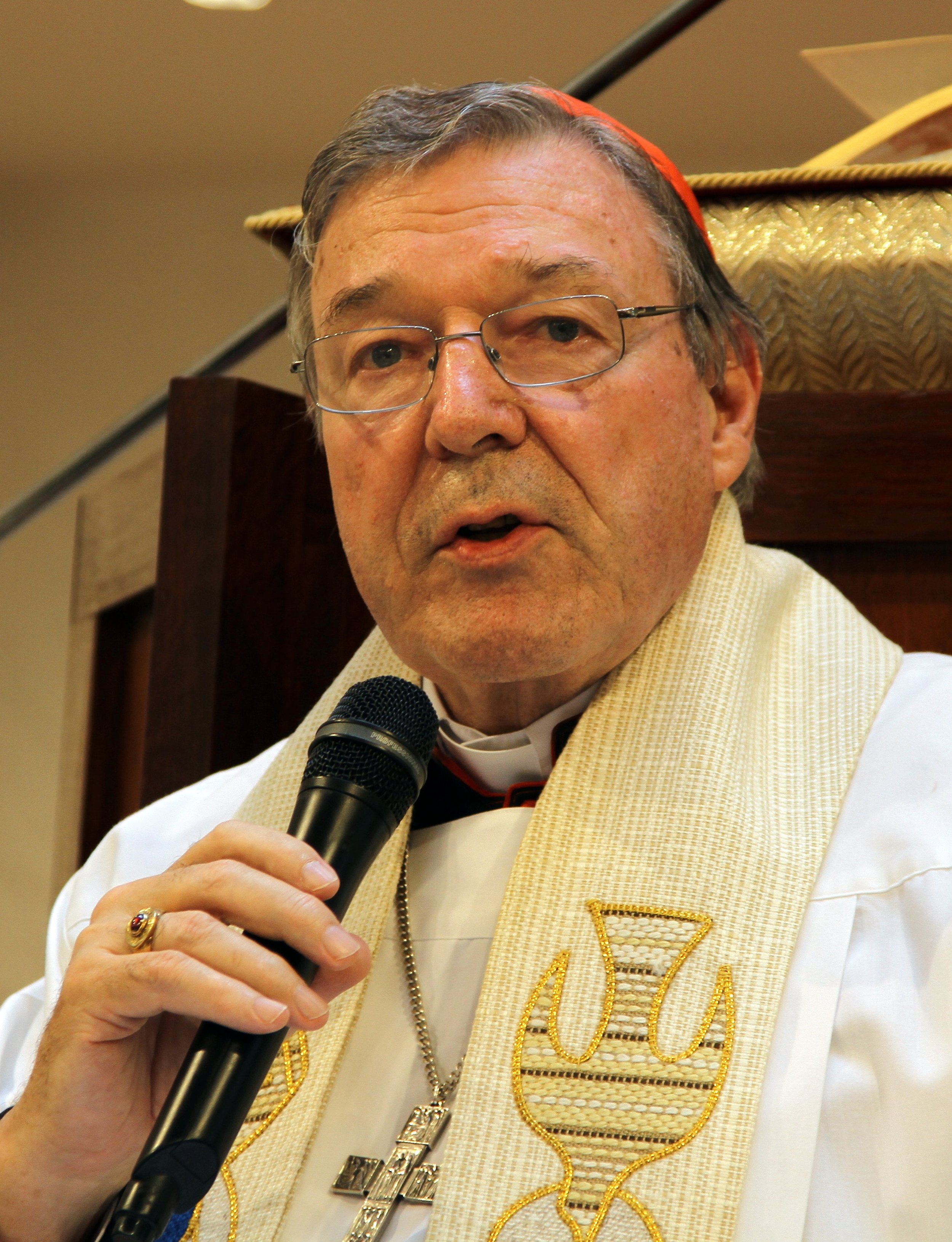
Cardinal Pell's final sermon quietly echoed themes from his fierce attacks on Pope Francis

Cardinal Pell's final sermon quietly echoed themes from his fierce attacks on Pope Francis

Cardinal George Pell had no way to know, as he rose to preach during a spiritual retreat in southern Italy, that this was his last sermon -- opening with the biblical cry, "Repent, because the Kingdom of God is near."

Catholics should stay focused on truths proclaimed during the reigns of St. John Paul II and Pope Benedict XVI, he said, at the Shrine of St. Padre Pio in San Giovanni Rotondo.

These popes "were missionaries of the truth. We don't build the truth. We don't have the ability to change the truth. We can only acknowledge the truth, and sometimes the truth isn't all that pretty. Sometimes the truth is disconcerting, difficult," said Pell, three days before his death on January 10, after routine hip surgery.

"These two Popes did not affirm that the teaching of Jesus was conditioned by the time, by the Roman Empire, by the pagans. They did not claim that the essential and central teaching should be updated, radically changed. They didn't say: 'We don't know what Jesus said because there were no tape recorders.' … As for them, and also for us, Jesus remains the way, the truth and the life."

On this day, the burly 6-foot-4 cardinal faced a gathering of Catholic charismatics, not an audience of Vatican power brokers. Nevertheless, this final sermon -- translated from Italian by Inside the Vatican magazine -- touched on themes in his recent writings that fueled raging debates about Pope Francis and the modernization of Catholic doctrines and worship.

In that sermon, Cardinal Pell offered only one nod to Pope Francis, while noting the potential for future popes from Africa, Asia and the Global South. "Today we have a Pope from South America -- praiseworthy and good," he said.

But after Pell's death, Italian journalist Sandro Magister revealed that the Australian cardinal -- using the pseudonym "Demos" -- had written a fierce March memo circulated to members of the College of Cardinals focusing on issues that loom over the next conclave to select a pope.

The Francis pontificate has been "a disaster in many or most respects; a catastrophe," this memo claimed.
Please respect our Commenting Policy

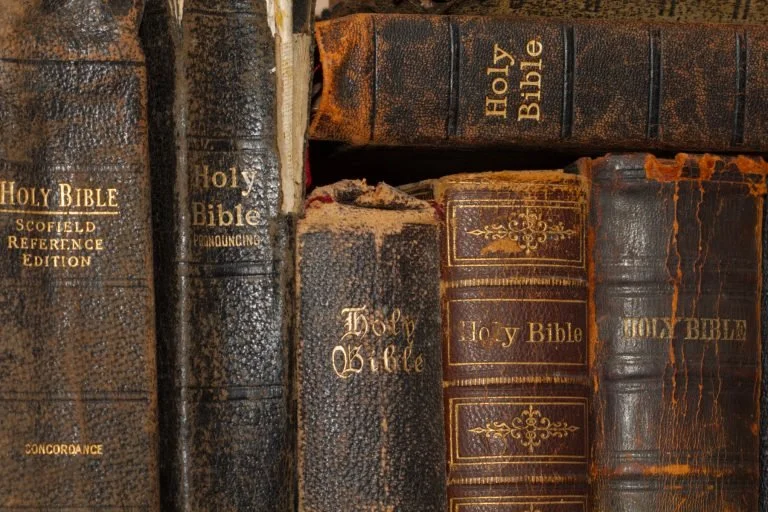
Tradition, custom, religious law: How should worn-out Bibles or Qurans be disposed of?

Tradition, custom, religious law: How should worn-out Bibles or Qurans be disposed of?

THE QUESTION:

How should worn-out Bibles or Qurans be disposed of?

THE RELIGION GUY’S ANSWER:

Due to occasional news about Muslim riots when a copy of the Quran is believed to be mistreated, you’re probably aware that Islam takes very seriously the way its sacred book is handled, about which more below.

But The Guy has rarely if ever heard of such discussion about a printed Bible and therefore was intrigued this past week when Joe Carter (a GetReligion alumnus) responded online on behalf of the Gospel Coalition to a reader who asked, “How do you dispose of a worn-out Bible? Is there a protocol like with a flag?”

As the question indicated, federal law states that an American flag “in such condition that it is no longer a fitting emblem for display should be destroyed in a dignified way, preferably by burning.” Patriotic groups often provide public boxes to collect discarded flags that are then burned in formal ceremonies.

As for the Bible, the book itself contains no rules on proper disposal, so the Coalition regards this as “a matter of personal preference.” But many people naturally feel that respect for Scripture rules out simply tossing the holy book into the trash alongside cookie wrappers and egg shells.

As a conservative Protestant resource, the Coalition warns against any “unconscious sense that the printed pages of a Bible gain something of the spiritual essence of God’s Word,” which “could easily slip into a superstitious, or even idolatrous, view of print Bibles.”


Please respect our Commenting Policy

Podcast: 60 Minutes visits Lourdes and asks (some) very good questions about 'miracles'

Podcast: 60 Minutes visits Lourdes and asks (some) very good questions about 'miracles'

Back in the 1980s, I wrote a profile of a remarkable Episcopal priest in Colorado who was approaching his 100th birthday. He had been raised in pre-World War II Japan — the son of a samurai.

As a young man he became terribly ill and slipped into a coma. At one point, doctors said he flatlined — but they were able to restart his heart. When he awakened, he reported having a near-death experience in which a man in white robes told him that he would live and that there was much work for him to do.

The young man knew almost nothing about Christianity, other than a brief exposure to the New Testament in an English-language class. Nevertheless, he truly believed that this man was Jesus. This led to his conversion, the priesthood and a journey to America. During the war, the U.S. government put him in an internment camp — a painful episode in a long and amazing life.

Now, here is a question linked to this week’s “Crossroads” podcast (CLICK HERE to tune that in). Was this man’s transformation during his NDE a “miracle”? That was the term he used when he described it.

Actually, his vision took place during a life-and-death medical drama that was unusual — but these things happen. Was there a way to test his claims in a laboratory? No. Near-death experiences happen.

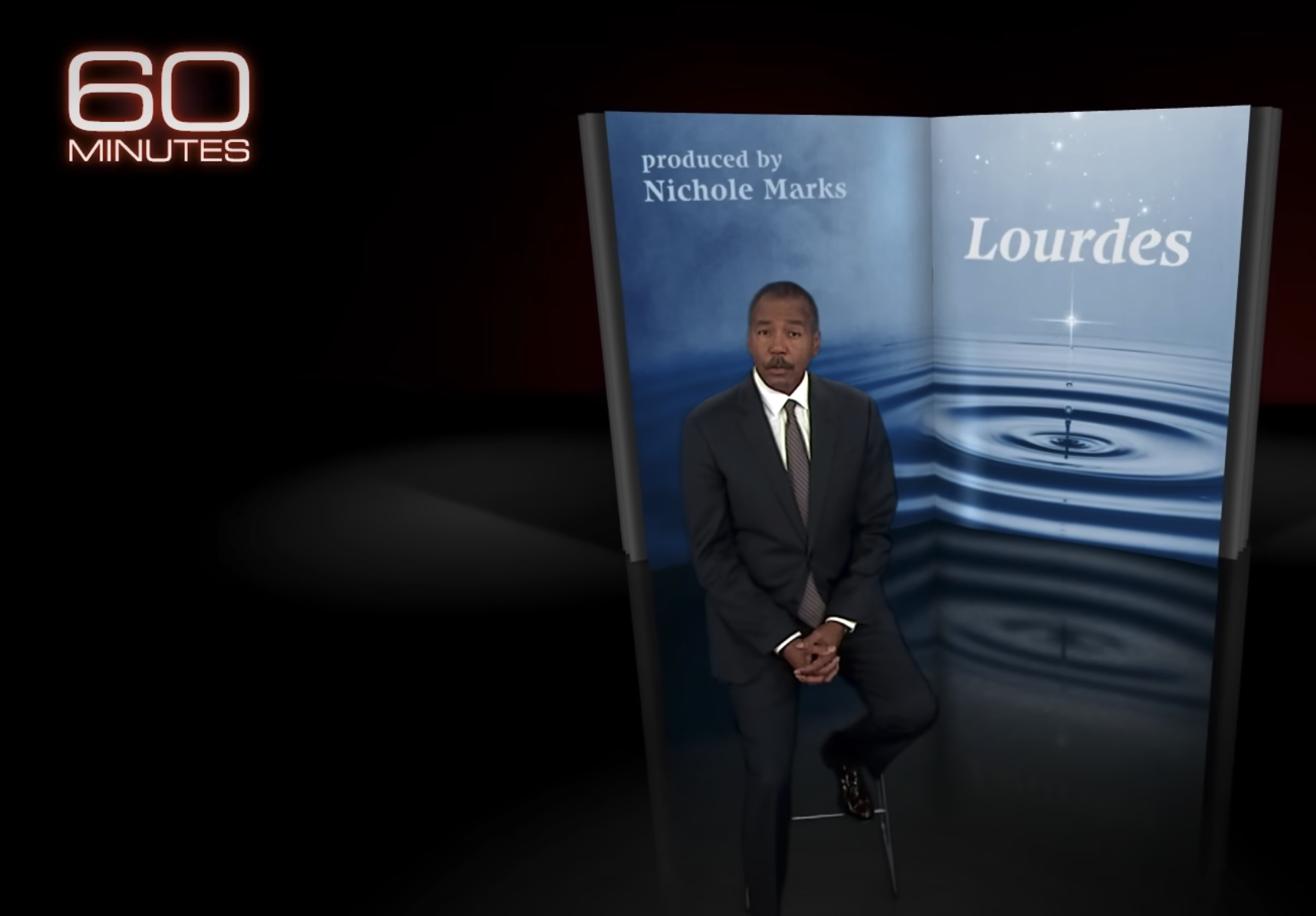
What is a “miracle,” anyway? This brings us to a recent 60 Minutes report that, on the CBS website, was given this headline: “France's Sanctuary of Our Lady of Lourdes — Where 70 medical miracles have been recognized by church officials.”

This must-see-TV report ventures into complicated territory where faith, science and centuries of church tradition overlap. The best thing about it is that it allows people to share their beliefs as well as information that, well, can be studied in a laboratory. The visuals are stunning, as thousands of pilgrims visit the site seeking healing for infirmities of body, mind and soul.

The Roman Catholic Church has, in the 160-year history of Lourdes pilgrimages, studied thousands of reports about miracles linked to the shrine. This brings us to the heart of this report:

Stories of inner peace and acceptance don't meet the bar for the Office of Medical Observations, and with just 70 medical miracles recognized in 160 years, you'd have better odds playing the lotto. Yet, thousands of faithful line up at the baths and at this grotto — where the first miracle is said to have occured.


Please respect our Commenting Policy

OK, we get it: That whole 'Christian nationalism' thing is hot, right now. But what is it?

OK, we get it: That whole 'Christian nationalism' thing is hot, right now. But what is it?

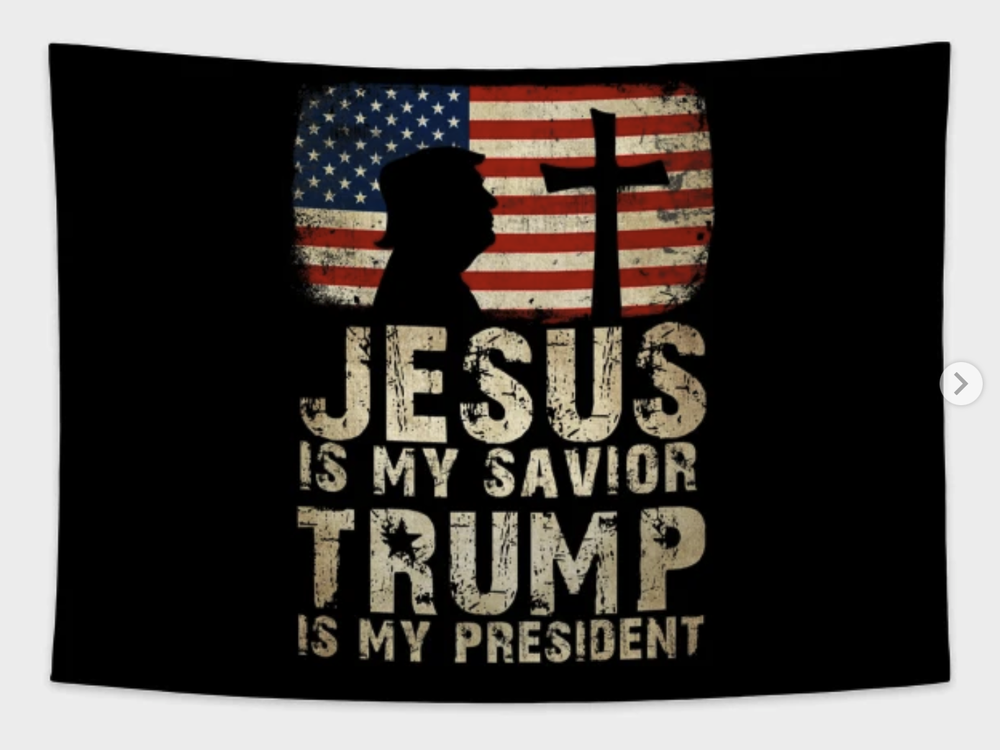
By all indications, urgent warnings against “Christian nationalism” (CN) will continue as a major media theme through Election Day 2024.

Journalists will need to be careful with a tricky label that’s mostly shunned by supposed participants in the CN movement and employed by opponents (as with “fundamentalist” or “ultra-“ or “cult”). How complex is the fighting about this term? Click here to tune in some of the YouTube debates.

Critics’ typical definition comes from attorney Amanda Tyler, who leads Christians Against Christian Nationalism (with a large “N”) and the proudly progressive Baptist Joint Committee for Religious Liberty. She says CN “seeks to merge American and Christian identities, distorting both the Christian faith and America’s constitutional democracy.” Its “mythological” view of founding of a “Christian nation” means America is singled out “to fulfill God’s purposes on earth.” Further, CN “demands a privileged place for Christianity in public life, buttressed by the active support of government at all levels.”

Writers could pursue this sort of theme sideways by reviewing or collecting pro and con reactions to “How to Be a Patriotic Christian: Love of Country as Love of Neighbor,” the latest book by middle-roading evangelical Richard Mouw of Calvin University, formerly president of Fuller Theological Seminary.

Otherwise, here's a rundown to guide journalists on some of the notable CN chatter since The Guy took a whack at the definition issue last year year at GetReligion.

Hang on, because this gets complex. For starters, ambiguity abounded in an October Pew Research survey.

Some 60% of adults think -- yes -- the founders intended the U.S. to be a “Christian nation,” and 45% think it actually “should be” such, though for many that means only generalized moral guidance while only 18% think the phrase indicates Christian-based governance. Importantly, a 54% majority had never even heard of CN.

That belief the U.S. “should be” a Christian nation was favored by fully 65% of Black Protestants (compared with e.g. only 47% of Catholics). Yet University of Texas political scientist Eric McDaniel wrote for TheConversation.com that CN believes the only “true” Americans are “white, Christian and U.S.-born and whose families have European roots.”


Please respect our Commenting Policy

That timely AP interview: What, precisely, did Pope Francis say about homosexual 'sin'?

That timely AP interview: What, precisely, did Pope Francis say about homosexual 'sin'?

Let’s say that Pope Francis decides to sit down for an Associated Press interview, thus guaranteeing coverage that will appear in the maximum number of mainstream publications around the world.

The basic headline is generic, but points to newsworthy topics: “Pope discusses his health, critics and future papacy.” As you would expect, editors just love a papal interview addressing the potential for a political horse race before a Vatican election (with armies of dangerous right-wing “critics” in the wings).

Now, what angle of this interview would you expect to immediately jump into headlines and social media? Maybe something like, “The AP Interview: Pope says homosexuality not a crime.”

Obviously, the reaction have been different if AP editors had used this accurate headline (written by me), based on this interview: “The AP interview — Pope says homosexual acts are sins, not crimes.”

Hold that thought. First of all, I would like to know more about the backstory for this interview. The timing is interesting, in light of recent news linked to the death of Pope Benedict XVI (“Pope Francis meets Benedict's top aide as memoir rattles Vatican") and yet another powerful conservative leader (“Cardinal Pell authored controversial memo critical of Pope Francis, journalist reveals”).

It is also possible that the timing of this interview is linked to headlines such as this one, at The Telegraph: “ ‘Gay clubs’ run in seminaries, says Pope Benedict in posthumous attack on Francis: New book by the late pontiff makes extraordinary claims about the Catholic Church under his progressive successor.”

Say what? You haven’t seen coverage of this story in your local newspapers or on evening newscasts? Here is a sample of that report:

In a blistering attack on the state of the Catholic Church under his successor’s papacy, Benedict, who died on Dec 31 at the age of 95, said that the vocational training of the next generation of priests is on the verge of “collapse”.

He claimed that some bishops allow trainee priests to watch pornographic films as an outlet for their sexual urges.


Please respect our Commenting Policy

Cardinal Pell's death puts spotlight on his words and arguments about Catholicism's future

Cardinal Pell's death puts spotlight on his words and arguments about Catholicism's future

The Catholic church recently lost a giant. The death of Cardinal George Pell on Jan. 10 at the age of 81 was the literal loss of a giant — he stood at a towering 6-foot-6 and was once an Australian Rules Football player in his youth. But he was also a man who attracted both controversy and consternation.

Many remember Pell for what took place in the last chapter of his life — that of being found guilty of child sexual abuse in 2018. The cardinal won on appeal two years later, the convictions quashed by Australia’s High Court.

Pell also had some very real disagreements with Pope Francis regarding theology and the direction of the church in recent years — something that earned him headlines after his death calling him “divisive” and “controversial.”

Nearly two weeks after his death, Pell continues to be written about in both the secular and Catholic press. A lot of this coverage has been thin on reporting and loaded with commentary, conjecture and analysis. In fact, Pell’s death wasn’t only a reflection of the past, but where the church is headed in the future and what Francis’ papacy means.

It’s within this context — and some of the juicier revelations to come out once Pell died — that has kept journalists busy. Once again, the coverage is skewed heavily towards familiar arguments whether the church should stay true to beliefs regarding marriage and sex that go back 2,000 years or look to the future in order to mesh with the mores of the present.

It is through that prism that Pell has received coverage, especially after a secret memo Pell had penned was made public just days after his death.


Please respect our Commenting Policy

Gay Pride vs. Russian Orthodoxy: NHL star takes stand and journalists pounce in social media

Gay Pride vs. Russian Orthodoxy: NHL star takes stand and journalists pounce in social media

Let’s face it, the Ivan Provorov story had everything that Big Tech-era social warriors could have wanted — Gay Pride, religion, big-time sports, Russia and waves of hot-headed social-media commentary by journalists covering the story.

What it didn’t have, unless I missed it in my reading and search-engine work, was journalists connecting a few dots and spotting a possible role for a true villain — as in Russian ruler Vladimir Putin. Hold that thought.

If you missed this drama, here is the top of the Associated Press story what probably made it into many local newspapers with a headline something like this: “Flyers’ Provorov cites religion for boycott on Pride night.”

Flyers defenseman Ivan Provorov cited his Russian Orthodox religion as the reason he did not participate in pregame warmups when the team wore Pride-themed jerseys and used sticks wrapped in rainbow Pride tape.

The 26-year-old Provorov didn’t take part in the pregame skate with his teammates before their game against Anaheim … , when the Flyers celebrated their annual Pride night in celebration and support of the LGBTQ community. He played nearly 23 minutes in Philadelphia’s 5-2 victory.

“I respect everybody’s choices,” Provorov said after the game. “My choice is to stay true to myself and my religion. That’s all I’m going to say.”

Provorov declined to answer follow-up questions about his decision.

Flyers coach John Tortorella said Provorov “was true to himself and to his religion.”

“It’s one thing I respect about Provy, he’s always true to himself,” Tortorella said.

The AP story, quoting Flyers player Scott Laughton, hinted that the story probably wasn’t over.

Laughton said there would be more conversations ahead with Provorov, who moved from Russia to the United States as a teenager. He signed a six-year, $40.5 million contract before the 2019 season and won the Barry Ashbee Trophy as the Flyers’ outstanding defenseman in his rookie season, the youngest Philadelphia player to receive the honor.

Yes, Eastern Orthodoxy (I am a convert to this ancient Christian communion) defends centuries of Christian teachings and tradition when it comes to the sacrament of marriage and all forms of sex outside of marriage. This frequently creates clashes with the ever-evolving doctrines of the Sexual Revolutions.

These clashes draw relatively little ink, in part because Orthodoxy isn’t a major player, yet, in the marketplace of American religion news. However, Putin’s hellish invasion of Ukraine has changed that to some degree.


Please respect our Commenting Policy

Plug-In: Yes, the March For Life faithful gathered, marking a new era after fall of Roe

Plug-In: Yes, the March For Life faithful gathered, marking a new era after fall of Roe

Good morning, Weekend Plug-in readers! We open with Dolly Parton, who celebrated her 77th birthday Thursday and gave the world a gift — a new song.

“I had a dream about God standing on a mountain, looking down on us, saying ‘Don't make me have to come down there,’” she said of her inspiration.

Give it a listen as we dive into the top headlines and best reads in the world of faith.

What To Know: The Big Story

Yes, opponents of abortion gathered for the annual March for Life on Capitol Hill in Washington, D.C. Click here to see a research file on the mainstream coverage of this year’s event.

Fifty years after Roe v. Wade — and seven months after its overturning — the anti-abortion movement has “multiple reasons to celebrate — and some reasons for unease.”

That’s the assessment of The Associated Press’ David Crary. The movement has reached a crossroads, as The New York Times’ Ruth Graham notes. And since last year’s ruling, the fight has moved to statehouses, as noted in this report from Religion News Service.

Stand for Life: A new organization with Southern Baptist ties “will bridge anti-abortion groups … as the larger movement redirects focus in a major way,” The Tennessean’s Liam Adams points out.

More: In Missouri, religious leaders who support abortion rights filed a lawsuit Thursday challenging the state’s abortion ban, AP’s Jim Salter reports. At the same time, Indiana’s top court is weighing a challenge to that state’s abortion ban.

Power Up: The Week’s Best Reads

1. Family slain in Utah: “The seven caskets sat in a neat row at the front of the quiet chapel.”

That’s how The Salt Lake Tribune’s Courtney Tanner begins her sensitive, nuanced coverage of the funeral for a Latter-day Saint family — five children, their mother and their grandmother.

The man who killed his family had been investigated two years prior for child abuse, according to AP’s Sam Metz.


Please respect our Commenting Policy

Holy water and Orthodox memories of a mysterious vase of fresh flowers

Holy water and Orthodox memories of a mysterious vase of fresh flowers

After the Christmas season and before Lent, Orthodox priests have -- for centuries -- rushed to visit church-members' homes to bless them with prayers and splashes of holy water flung about with a foot-long brush or handfuls of basil.

Droplets of blessed water end up on beds and bookshelves, TVs and toys, potted plants and paintings, along with everything else.

"It's a chance to start over," said Father John Karcher of St. Nicholas Orthodox Church in Portland, Oregon. "We clean out the cobwebs of sin. … Then we make mistakes and muck it all up again. But we do this every year because God doesn't give up on us."

These rites flow out of the Feast of Theophany, which many Orthodox churches in America celebrate on January 6, or on January 19th for those using the ancient Julian calendar year-round. In addition to house blessings and liturgies, Orthodox clergy bless bodies of water -- rivers, lakes and oceans. In some parts of the world this requires man-sized holes cut into ice.

The feast's central message, said Karcher, is that "when Christ was baptized, he went into the waters and the waters didn't cleanse him -- it was the other way around. He blessed the waters and through them all of creation. … It's a beautiful thing. God responds to our prayers that he sanctifies the waters -- again."

In one rite, priests pray that the blessed water will provide "a fountain of incorruption, a gift of sanctification, a loosing of sins, a healing of sicknesses, a destruction of demons" so that worshippers will experience "the cleansing of souls and bodies, for the healing of sufferings, for the sanctification of homes and for every useful purpose."

The mysterious nature of these rites hit home a decade ago when Karcher led St. Innocent Orthodox Church in the Bay Area in northern California.


Please respect our Commenting Policy