Baptists

Plug-In: From Loretta Lynn to Aaron Judge, the week's top nine religion newsmakers

Plug-In: From Loretta Lynn to Aaron Judge, the week's top nine religion newsmakers

A country music queen. A home run king.

A former White House press secretary. A current U.S. Supreme Court plaintiff.

They are among nine key religion newsmakers who made headlines this past week (in alphabetical order):

Bart Barber: I’m showing a little bias here because I wrote this week’s Associated Press profile of Barber, a small-town Texas pastor and rancher elected to lead the 13.7 million-member Southern Baptist Convention at a time of major crisis. Barber will be featured Sunday night in a “60 Minutes” interview with Anderson Cooper.

Chris Jones and Sarah Huckabee Sanders: Jones is the Democrat and Sanders the Republican in Arkansas’ gubernatorial race. “With two preachers’ kids and a pastor in the race, Arkansans are poised to elect a governor who can sing hymns by heart and quote Scripture from memory,” the Arkansas Democrat-Gazette’s Frank Lockwood writes as he delves into faith and politics. (Sanders served as former President Donald Trump’s White House press secretary from 2017 to 2019.)

Aaron Judge: The New York Yankees star made history when he hit his 62nd home run of the season Tuesday night. Prayer and faith played a key role during Judge’s chase, reports the Deseret News’ Ryan McDonald.

Loretta Lynn: The country music superstar and Kentucky coal miner’s daughter died Tuesday at age 90. “She really was serious about her faith and a devout member of the church,” retired minister Terry Rush, who maintained a close friendship with Lynn, told me.

John Henry Ramirez: The Texas killer fought all the way to the U.S. Supreme Court to have his pastor lay hands on him and pray during his execution. “Just know that I fought a good fight, and I am ready to go,” Ramirez said before his death by lethal injection Wednesday, as noted by The Associated Press’ Juan A. Lozano and Michael Graczyk.

Lorie Smith and Jack Phillips: The two claim in an opinion piece for USA Today that Colorado is trampling on their First Amendment rights as Christian artists, and they’re fighting back. Website designer Smith’s case is headed to the U.S. Supreme Court, the Deseret News’ Kelsey Dallas reports.

Please respect our Commenting Policy

Plug-In: 'Faith-based FEMA' -- religious groups rush to help others after Hurricane Ian

Plug-In: 'Faith-based FEMA' -- religious groups rush to help others after Hurricane Ian

Over the years, I’ve covered the faith-based response to quite a few hurricanes.

I traveled to New Orleans after Katrina, Houston after Harvey, the Florida Panhandle after Michael and Puerto Rico after Irma and Maria. No doubt I’m forgetting a few.

Inevitably, those watching the disturbing images on television or social media want to help immediately. But typically, assessing the needs requires a bit of time.

That leads us to Hurricane Ian, the megastorm setting its sights on South Carolina’s coast after causing catastrophic damage in Florida.

“The best way to help after Hurricane Ian is to give financially to established organizations responding to the disaster,” said Jamie Aten, co-founder of Spiritual First Aid and co-director of the Humanitarian Disaster Institute at Wheaton College in Illinois.

“Reach out to those you know who have been impacted to ask how you might help,” Aten added. “Our research shows that providing spiritual support and attending to basic needs helps reduce distress in the face of disasters.”

At Christianity Today, Aten and Kent Annan provide a “free spiritual and emotional toolkit for Hurricane Ian.”

President Joe Biden on Thursday praised Federal Emergency Management Agency workers mobilizing to help. The federal government’s response is, of course, crucial after a natural disaster.

But so is that of the “faith-based FEMA” — from Mennonite chainsaw crews to Southern Baptist feeding teams to Seventh-day Adventist warehousing experts adept at collecting, organizing and logging relief supplies, as I’ve written previously.


Please respect our Commenting Policy

Podcast: Are sweaty men exercising at dawn (then praying) a New York Times story?

Podcast: Are sweaty men exercising at dawn (then praying) a New York Times story?

Anyone who watches advertisements during football games knows that American men are doing just great, these days.

There appear to be gazillions of racially diverse circles of thin men out there — roughly 30-50 years of age — who get together all the time in sports bars with loads of disposable income to spend on beer and mountains of chicken wings in a wide variety of flavors. Others travel all over the place in their rad sports vehicles or those pick-up trucks that are part troop-carriers, part luxury vehicles.

There are some rotund, middle-aged, often bald, White losers out there, of course, but their family members or lovers are still around to laugh at their misadventures.

Yes, this screed from an elderly guy (on a diet, even) is directly connected with this week’s “Crossroads” podcast (CLICK HERE to tune that in). This week’s program focused on a fine, fascinating New York Times piece by religion-beat pro Ruth Graham. The double-decker headline on this piece proclaimed:

For Suburban Texas Men, a Workout Craze With a Side of Faith

In Katy, outside Houston, many men have taken up F3, a no-frills fitness group where members push themselves physically but also bond emotionally.

I heard from several readers praising this story (and followed buzz on Twitter) and people kept saying: What inspired the Gray Lady to do a positive story about a bunch of evangelical men (one with a “Republic of Texas” tattoo) bonding through exercise, fellowship, service and prayer?

The first answer: The story was written by a veteran religion reporter, not someone off the political or strange cultures desk. The men talk, they tell their own stories. They are not walking straw men ready for a beating. By the way: It also looks like F3 groups, or at least the one in this feature, are pretty diverse in terms of race. Hold that thought.

I think the crucial statement is at the top of the article and it isn’t the lede. Here is the note from the editors:

We’re exploring how America defines itself one place at a time. In a Houston suburb, men have been flocking to a workout group that promises more than just a sweat session; together, they aim to ease male loneliness.

Note the touch of humility: “We’re exploring how America defines itself one place at a time (I added the bold type). The goal here is to let Americans outside describe their own lives, as opposed to the Times doing that for them?


Please respect our Commenting Policy

This just in! Southern Baptists are still very conservative on issues of marriage and sex!

This just in! Southern Baptists are still very conservative on issues of marriage and sex!

Let’s face it, it’s rather hard for a congregation to be “removed from fellowship” — that’s Baptist-ese for “kicked out” — from the Southern Baptist Convention.

After all, are we talking about ties being cut to the local association, a state convention (some states, for doctrinal reasons, have more than one) or the various programs linked to the national SBC? Then there are, for extra-conservative or extra-progressive congregations, alternative “fellowship” networks that have their own vague relationships with the larger SBC ship.

Finally, if a church is “removed from fellowship” and any or all of these levels of voluntary association, it may simply become an independent autonomous Baptist church, as opposed to an autonomous SBC church. Most local folks will never know the difference and independent, often nondenominational, congregations are the fastest growing sector of American religious life.

But if you dig into the Google search in my first paragraph, you will see that churches have been pushed out the exit door of SBC life for several reasons and that this is nothing new. However, it is true that these churches are being kicked out for reasons that many (not all) journalists may consider more worthy of coverage than others. Think “politics.”

Consider this summary material from a New York Times piece last year that ran with this headline: “Southern Baptists Expel 2 Churches Over Sex Abuse and 2 for L.G.B.T.Q. Inclusion.”

The Southern Baptist Convention is the nation’s largest Protestant denomination and has been increasingly divided in recent years over a variety of cultural and political issues, including racism, sexuality and white evangelicals’ embrace of former President Donald J. Trump. …

[A]n increasingly influential conservative wing of the denomination accuses those leaders of prioritizing “social justice” over biblical truth. They denounce the encroachment of “critical race theory” — an academic framework intended to capture the deep influence of racism — and accuse the S.B.C.’s national leadership of being out of step with the rank and file.

It’s pretty easy to spot the subjects that would leap into headlines, right?

There is, for example, nothing new about “progressive” Baptist congregations veering to the doctrinal left on issues linked to gender and sexuality.


Please respect our Commenting Policy

Ryan Burge at RNS: Thinking about the impact of political sermons, on left and right

Ryan Burge at RNS: Thinking about the impact of political sermons, on left and right

Hey churchgoers: How long has it been since you heard a political sermon?

Wait. We need to pause and discuss what a political sermon might sound like. For example, I think everyone would agree that an open endorsement of a political candidate from the pulpit would be “political.”

But what if a congregation or a denomination invited a political leader to speak in a worship service or some other event? This is something that happens on the political left and right. For generations, to name one example, Democrats have accepted warm, strategic invitations to speak — or perhaps simply exchange greetings — in African-American churches. It makes headlines when GOP leaders address major evangelical bodies (think Vice President Mike Pence and the Southern Baptist Convention).

More questions: What if a bishop or a preacher addresses issues that are clearly both doctrinal AND political, such as right-to-life concerns or threats to the environment? What about a conference focusing on ways religious groups can defend First Amendment rights, such as freedom of speech, freedom of association and freedom of religious practice? Is a liberal rally on abortion more “theocratic” than one organized by believers on the doctrinal right?

I ask these questions because of a piece GetReligion contributor Ryan Burge, he of the omnipresent charts and info on Twitter, wrote for Religion News Service. Here’s the newsy headline “When preachers get political, do they change minds? Preachers tend to risk political speech only when they know it will receive a warm reception.” The overture:

One of the most important and difficult questions among those who study religion and politics is just how important a pastor, rabbi, imam or other religious leader is when it comes to shaping the worldviews of their congregation. These figures get a weekly chance to dominate the attention of the people who come to listen to their sermons. They have a nearly unique opportunity to mold their congregants’ view of the theological, social and political world around them.

How often do pastors actually use that opportunity to speak out about the pressing issues of the day? Some new data gives us a look.

A Pew Research Center poll fielded in March of 2021 asked people if they had heard sermons that contained references to the fallout from the 2020 presidential election in the previous month. The survey asked about four topics specifically: the possibility that the 2020 election was rigged, former President Donald Trump’s inaccurate statements about election fraud, as well as support for or opposition to those who stormed the U.S. Capitol on Jan. 6, 2021.

That is certainly a rather Donald Trump-era dominated list, but that reflects several years of headlines. Meanwhile, it’s safe to say that President Joe Biden is in the White House, in large part, because of support from voters in Black churches during several primaries. But I digress.


Please respect our Commenting Policy

Podcast: Are Brigham Young sports controversies about sports, religion or politics?

Podcast: Are Brigham Young sports controversies about sports, religion or politics?

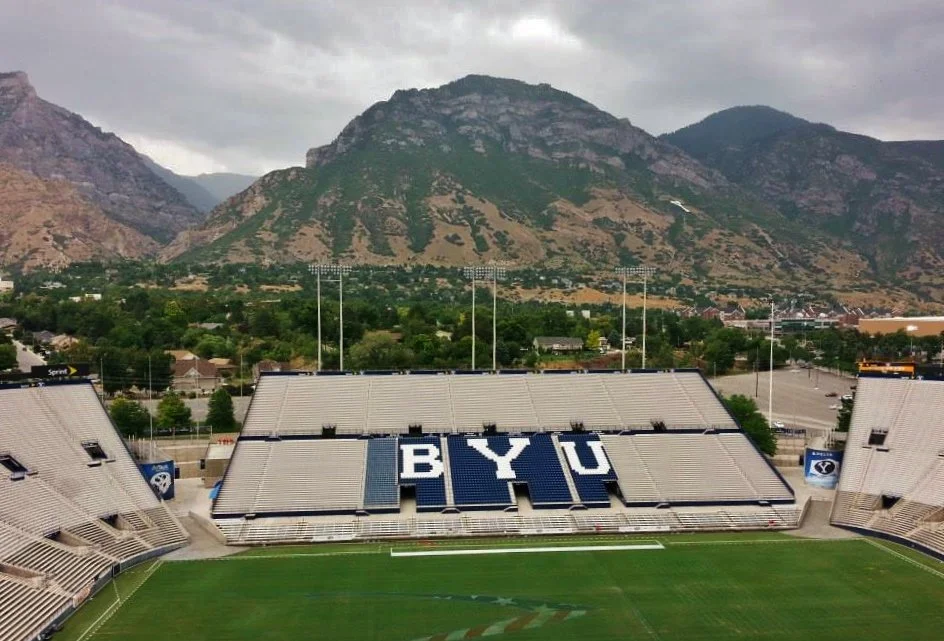
I have a journalism question, one that will require some time travel. Let’s flash back to the 2021 football game between the Brigham Young Cougars and the Baylor Bears, which was played in Waco, Texas, an interesting city known to many as “Jerusalem on the Brazos.”

After the first BYU score, a significant number of Baylor students are heard chanting “F*** the Mormons!” over and over. Or maybe, since we are talking about folks from a Baptist university, the chant is “Convert the Mormons!” The chant doesn’t focus on the “Cougars,” but on BYU’s obvious heritage with the Church of Jesus Christ of Latter-day Saints.

The chants were strong enough to be heard on broadcast media and, within minutes, there are clear audio recordings posted on social media.

My question, a which I asked during this week’s “Crossroads” podcast (CLICK HERE to tune that in): Would this nasty, crude event be considered a valid news story? In national coverage, would the religious ties of the two schools — soon to be rivals in the Big 12 — be discussed? In other words, would this be a religion-news story, as well as a sports story?

I think it’s pretty obvious that the answers would be “yes” and, again, “yes.”

This brings us, of course, to two BYU sports stories from recent weeks — one that received massive national coverage and the other that, well, didn’t get nearly as much ink. I think it’s valid to ask "Why?’ in both cases.

Before I share some links to coverage of the two stories, let’s pause and consider this related Religion News Service report: “Nearly 200 religious colleges deemed ‘unsafe’ for LGBTQ students by Campus Pride.” Here is the overture:

Dozens of religious universities across the country, including Seattle Pacific University in Washington and Brigham Young University in Utah, were listed as unsafe and discriminatory campuses for LGBTQ students by Campus Pride, a national organization advocating for inclusive colleges and universities.

Fewer than 10 of the 193 schools on the list released Thursday (Sept. 8), were not religiously affiliated or did not list a religious affiliation, according to Campus Pride.

The lengthy Campus Pride report on BYU opens with this statement (the shorter Baylor item appears here):

Brigham Young University has qualified for the Worst List because it has an established and well-documented history of anti-LGBTQ discrimination that endangers victims of sexual assault and has resulted in a call for it to not be included as a Big 12 school.

The key word, of course, is “endangers.”


Please respect our Commenting Policy

Reminder to journalists (again): Private schools -- left, right -- can defend their core doctrines

Reminder to journalists (again): Private schools -- left, right -- can defend their core doctrines

Back in the late 1970s, during the cornerstone seminar in Baylor University’s Church-State Studies program, my major professor made an interesting prediction while reviewing some documents that would eventually surface with the Bob Jones University v. United States ruling at the Supreme Court in 1982.

That case pivoted on questions of racism and claims linked to religious doctrine. At some point in the future, my professor said, the high court would face similar cases in which centuries of religious doctrine would clash with beliefs at the heart of the modern Sexual Revolution.

The U.S. Supreme Court would be challenged to equate the facts of racism with the mysteries of sexual identity (or words to that effect). At that point, traditional forms of Christian education would be at risk.

Anyone who has followed American politics in recent decades has watched this conflict march through religious and educational structures and into the headlines. The question, all along, would be if “progressive” thinkers — the word “liberal” is problematic — would find a way for the Sexual Revolution to trump existing legal standards defending free speech, freedom of association and freedom of religion.

Thus, Julia Duin wrote a recent post describing coverage of SCOTUS moves linked to clashes between the modern Orthodox Judaism of Yeshiva University and LGBTQ groups on its New York campus. See this post: “New York Times pursues ultra-Orthodox yeshivas in massive story that raises (some) Jewish ire.

One of the stories she discussed was a Jewish Telegraphic Agency piece with this headline, linked to an earlier stage in this legal struggle: “Yeshiva U can block LGBTQ club for time being, Supreme Court says.” This case provides, Duin noted, an:

… interesting counterweight on what’s happening in Christian colleges across the country. Last week a group called Campus Pride released a list on what it considers “the absolute worst, most unsafe campuses” for LGBTQ students. Not surprisingly, Yeshiva University is one.

She then stressed this crucial passage in the JTA report:

Yeshiva University’s case could be complicated by the fact that it removed religion from its charter, essentially the text that gives it permission to operate in New York State, in 1967 in an effort to secure more state funding.


Please respect our Commenting Policy

Plug-In: A 50-year TV flashback -- Why 'The Waltons' wasn't afraid of religious faith

Plug-In: A 50-year TV flashback -- Why 'The Waltons' wasn't afraid of religious faith

During the pandemic lockdown, I rediscovered “The Waltons” and watched all 221 episodes.

Somewhere along the way, I learned that the classic TV show about a Depression-era family in rural Virginia made its prime-time debut on Sept. 14, 1972.

That’s 50 years ago.

I started emailing myself notes about religion references in specific episodes — those with titles such as “The Sinner”, “The Sermon” and “The Baptism” — and marked the anniversary date on my calendar. Journalists are always looking for a story, don't you know?

I pitched a piece to The Associated Press. To my delight, Global Religion news director David Crary and news editor Holly Meyer let me write it. This isn’t hard news, but I hope it’s interesting.

Speaking of AP friends, Matt Curry and I worked together in the Dallas bureau from 2003 to 2005. Curry later left journalism and attended Brite Divinity School at Texas Christian University. He's a big fan of “The Waltons,” and his family’s experience became the lede for my feature:

The Rev. Matt Curry’s parents were children of the Great Depression, just like “The Waltons” — the beloved TV family whose prime-time series premiered 50 years ago.

When Curry was growing up on a farm in northern Texas, his carpenter father and teacher mother often argued playfully over who had a poorer childhood.

“The Depression was the seminal time of their lives — the time that was about family and survival and making it through,” said Curry, now a 59-year-old Presbyterian pastor in Owensboro, Kentucky. “My dad used to talk about how his dad would go work out of town and send $5 a week to feed and clothe the family.”

So when “The Waltons,” set in 1932 and running through World War II, debuted on CBS on Sept. 14, 1972, the Currys identified closely with the storylines.

I enjoyed interviewing two stars of “The Waltons”: Richard Thomas (John-Boy Walton) and Kami Cotler (Elizabeth Walton).

The story explores how the series delved into spiritual themes at a time when the TV networks tended to avoid them.


Please respect our Commenting Policy