Richard Ostling

Question for journalists to mull: What will America's religious life look like in 50 years?

Question for journalists to mull: What will America's religious life look like in 50 years?

Scribes in the U.S. press snapped to attention last year when the Gallup Poll announced that as of 2020 less than half of Americans held religious memberships for the first time in its eight decades of asking the question. Only 47% of Americans said they belonged to a church, synagogue, mosque or other house of worship, a dramatic loss from the 70% as recently as 1999.

Now comes the Pew Research Center with a related pulse-pounder issued last week.

Pew figures that currently 64% of Americans (including children) identify as Christians in some sense, compared with 6% for other religions and a hefty 30% for “nones” and “nothing in particulars” — those without religious affiliation. Then we’re told that 50 years from now the Christian percentage may well fall to a modest 54% or even to a remarkable 35% in the worst-case scenario, while the non-religious population rises to somewhere between 34% and a slim majority of 52%.

Understandably, the Pew numbers became spot news for, among others, CBS, National Public Radio, the Washington Examiner and Washington Post, both newspapers in faith-focused Salt Lake City, USA Today, Britain’s The Guardian and a host of religious outlets.

This remains a good spot story for media that haven’t yet reported Pew’s basics. But even media that have reported the topline numbers could return to the theme with illustrative anecdotes and reactions from area religious leaders. And for sure journalists and religious analysts will want to give the full report some careful thought.

Pew emphasizes that its numbers are only “possibilities,” not “predictions of what will happen,” and comments that such a future would have “far-reaching consequences for politics, family life and civil society.” For example, also consider the multiple social science surveys that associate religious involvement with psychological and medical well-being and positive life outcomes for youths. Also, there is the impact of religious charity, not only effective huge organizations but private person-to-person interactions. Also, religions strengthen community in our “Bowling Alone” culture.

Pew calculated four future scenarios based largely upon the rates at which Americans may switch in or out of Christian identification and in or out of religious “none” status.

Please respect our Commenting Policy

An old question that's back in the news: Why can’t non-Muslims visit Mecca and Medina?

An old question that's back in the news: Why can’t non-Muslims visit Mecca and Medina?

THE QUESTION:

Why does Islam ban non-Muslims from the holy cities of Mecca and Medina?

THE RELIGION GUY’S ANSWER:

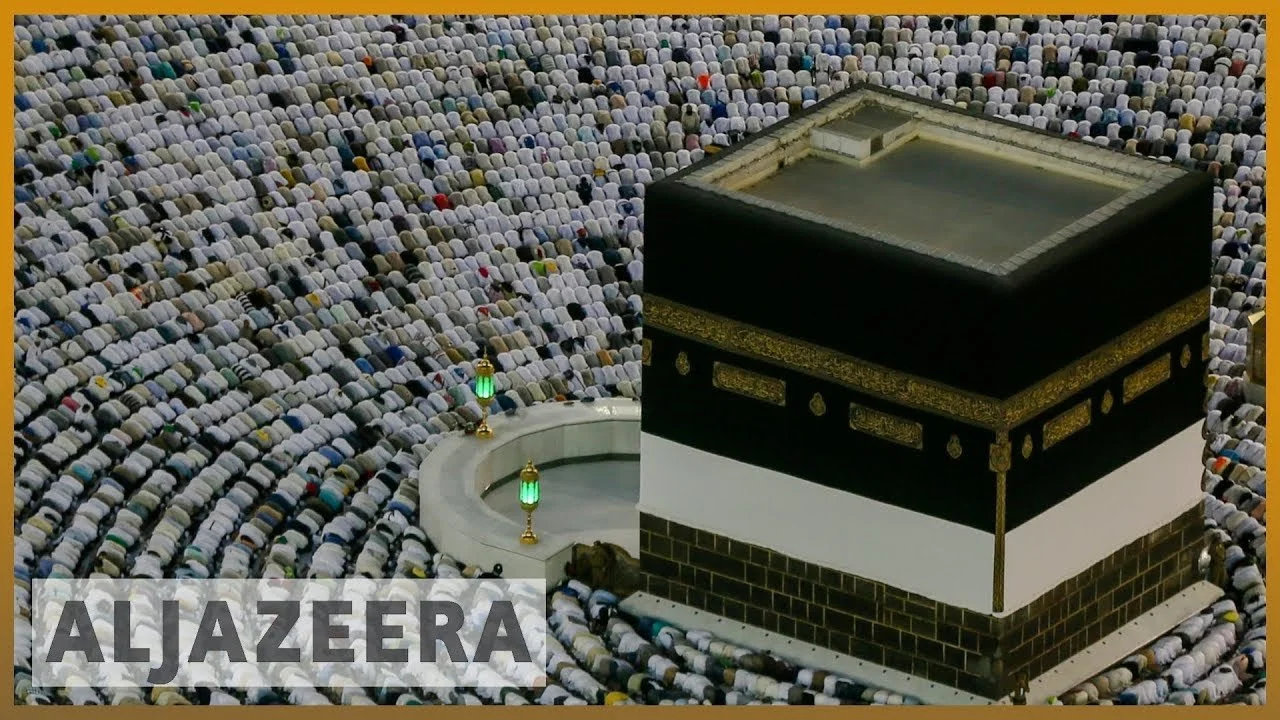
Daniel Pipes of the Middle East Forum is among the last people Saudi Arabians might want to listen to. Yet he penned a Wall Street Journal op-ed last month urging Crown Prince Mohammed bin Salman to end Islam’s long-standing ban against non-Muslims entering the faith’s two holiest locations, Mecca, where the Prophet Muhammad issued the Quran and founded the religion 14 centuries ago, and Medina, where he led the first Muslim regime.

This prohibition hit the news when Gil Tamary, an American Jew and TV journalist in Israel, illicitly slipped into Mecca to record material and broadcast a much-hyped 10-minute travelogue. Muslims have enforced the ban so carefully, Pipes reports, that only 18 non-Muslims are known to have ever entered Mecca, including Tamary and two others in recent decades.

The violation of sacred space provoked an international furor among not only Muslims but Israelis and westerners who feared a rise in hostility. The regime has filed criminal charges against Tamary and his Saudi driver. Tamary apologized and said his intent was to “showcase the importance of Mecca and the beauty of the religion” and thereby foster religious tolerance. Guess again.

But cheerleader Pipes thinks Tamary “boldly challenged an archaic status quo that the world unthinkingly accepts. Bravo to him for breaking a taboo. . . . He deserves respect, not condemnation.” Pipes even wants unspecified international organizations to lobby for open access with the Saudis.

Pipes did not mention another exclusionary policy noted in the U.S. State Department’s 2022 religious freedom report. Saudi Arabia strictly forbids all non-Muslim houses of worship nationwide, though private or secret Christian gatherings are known to occur.


Please respect our Commenting Policy

Here's a solid religion information source for office, home libraries and (of course) newsrooms

Here's a solid religion information source for office, home libraries and (of course) newsrooms

Here are some interesting facts about war-ravaged Ukraine you might not have heard:

* The nation was 97% Christian in 1900, slumped to 60% when atheistic Soviet Communists held power, and has rebounded to 86%. But in one survey only 20% of Ukrainians said religion is “very important” for them.

* The Orthodox Church historically under the Moscow Patriarchate has 13.5 million members. But even before the current Russian invasion, the young rival Orthodox Church of the independent Kyiv Patriarchate had gained a bigger following of 16 million.

* Evangelical, Pentecostal and Charismatic Protestants, though a small minority, have so thrived since national independence in 1991 that Ukraine is known as Eastern Europe’s “Bible Belt.” Pentecostal believers who once survived in the underground church are now a force in civic affairs.

* Despite electing the first Jewish president, anti-Semitic incidents still occur.

* Regarding morals, “domestic violence is a massive problem,” especially in COVID-19 times, with complaints up 40% in the first half of 2020 compared with 2019.

Why mention these newsworthy pieces of information?

That’s a sampling of the sort of data about each of 233 countries you’ll find in the brand-new “Global Christianity: A Guide to the World’s Largest Religion from Afghanistan to Zimbabwe” (Zondervan Academic, $29.99 paperback). This valuable and inexpensive resource updates key information from the 2019 edition of the invaluable “World Christian Encyclopedia” (Edinburgh University Press, list price $270 with discounts online).

The new book’s editor is Gina Zurlo — https://ginazurlo.com; gzurlo@gordonconwell.edu) — co-editor of the “Encyclopedia” and co-director of the independent agency that produces it, the Center for the Study of Global Christianity at evangelical Gordon-Conwell Theological Seminary.


Please respect our Commenting Policy

Is celebrity culture eroding American evangelicalism? This publishing insider says 'yes'

Is celebrity culture eroding American evangelicalism? This publishing insider says 'yes'

Evangelical Protestantism, by most accounts the largest camp in American religion, has run into various troubles lately, as The Guy and many others have chronicled.

Now there’s ample Internet buzz about Katelyn Beaty’s diagnosis of one factor in a new book from a major evangelical publisher that’s well worth coverage: “Celebrities for Jesus: How Personas, Platforms, and Profits are Hurting the Church.”

Make that hurting the “White Evangelical” church.

The type of personality cults she describes are pretty much absent in “mainline” Protestantism, Black Protestantism (there are some glaring exceptions in the health-and-wealth world), Catholicism and other U.S. religious bodies. By coincidence, Rodney Palmer, an American Baptist who teaches preaching at Palmer Theological Seminary, echoed her concerns just last week in an article for the progressive Baptist News Global website.

Inevitably, Beaty has much to say about the media that we practitioners and consumers should ponder.

She’s a well-marinated evangelical as author, former print managing editor of flagship Christianity Today magazine and currently a New York-based acquisitions editor with Baker Publishing Group, one of the majors whose Brazos Press division published “Celebrities.” (Note the company’s other book imprints: Baker Books, Baker Academic, Bethany House, Chosen, Revell.)

For this reason, The Guy finds especially newsworthy — and gutsy — Beaty’s chapter treating the evangelical book industry, which is said to pour “jet fuel” on the type of fandom, branding and marketing she decries.

The bottom line, here: This bite-hand-that-feeds angle alone offers a strong story theme that journalists could draw from this book.


Please respect our Commenting Policy

What will American Protestantism look like after the wars inside the 'Seven Sisters' are done?

What will American Protestantism look like after the wars inside the 'Seven Sisters' are done?

Over decades, the map of U.S. Protestantism has been redrawn by splits over the authority and interpretation of the Bible that eventually focused on the LGBT dispute. Now we have a major case study that journalists will need to cover at the local, regional, national and global levels.

A balanced coalition of leaders in the large United Methodist Church (UMC) developed a treaty for mutually respectful separation — the Reconciliation and Grace Through Separation protocol — for that’s currently degenerating into a wasteful fight like other groups have suffered.

Reporters and concerned readers will want to dive into these commentaries and news stories:

* Look at a United Methodist timeline: Why are conservatives going nuclear with lawsuits?

* What happened to United Methodists’ proposal to split the denomination?

* Time is Running Out for Traditionalist United Methodists!

* For United Methodists, the center is not holding

* Special sessions of United Methodist annual conferences 2022

* United Methodist Church bishops mount defense amid conservative attacks (paywall protected)

* Liberal Bishops Have Redefined United Methodist Polity

The current maneuvers by the North American UMC establishment may well limit the number of dropouts joining the Global Methodist Church. Its vision has been to unite a million or more U.S. Methodist evangelicals with the growing Methodist churches in Africa and Asia, creating an effective and innovative international denomination dedicated to defending current Methodist doctrines. This could help counteract some U.S. conservatives’ drift into Christian nationalism. Is that still feasible?


Please respect our Commenting Policy

A religion, academic and business story: Is there a 'best' Bible to use and quote?

A religion, academic and business story: Is there a 'best' Bible to use and quote?

RACHAEL ASKS:

Is there a Bible that’s the most accurate?

THE RELIGION GUY’S ANSWER:

Almost all the varied 20th and 21st Century English translations on sale are sufficiently accurate and can be relied upon, though debates will never end on some details.

The first and fundamental aspect of accuracy is experts’ shared consensus on the best available texts in the original languages of Hebrew and Greek that underlie all translations, based upon a far richer body of surviving manuscripts than we have for other ancient writings. Here’s a somewhat over-simplified rundown.

Hebrew versions of the Jewish Bible or Tanakh, which Christians call the Old Testament, employ Judaism’s authoritative Masoretic Text. The ancient Hebrew language did not use written vowels, so medieval scholars known as Masoretes added “vowel points,” markings that standardized oral traditions on the correct readings of the words. This led to the 9th Century Aleppo Codex, corroborated by the 11th Century Leningrad Codex and other rabbinical manuscripts.

These carefully preserved texts are virtually identical in wording, though with some variations in pointing, and provide the basis for Jewish and Christian Bibles. The 15th Century emergence of printed Bibles further standardized the Hebrew text. The 20th Century rediscovery of biblical books among the 2,000-year-old ”Dead Sea Scrolls” added certain variations that translators consider.

With the New Testament, thousands of Greek manuscripts and fragments from Christianity’s early centuries exist. Today’s translators work from a standard “eclectic” Greek version formulated from these by specialists in “textual criticism” who decide which variants are closest to the original writings. Technical note: “earliest” does not necessarily mean “best” manuscript.

The resulting shared resource for translations is the German Bible Society’s continually updated text with all important variations, most recently the 2017 “Nestle-Aland Greek New Testament, 28th Edition, with Critical Apparatus.” Major translations undergo periodic tweaking based on this ongoing work. A prominent evangelical, the late Bruce Metzger of Princeton Theological Seminary, was the American leader in this international project.

Modern English Bibles provide candid footnotes that alert readers to important textual variants, which rarely affect basic biblical doctrines.


Please respect our Commenting Policy

Is America's religion cup half-empty or half-full? Two new takes on the omnipresent 'nones'

Is America's religion cup half-empty or half-full? Two new takes on the omnipresent 'nones'

The uber-trend in 21st Century American religion is the increase in “nones” who cite no religious affiliation or identity when pollsters phone. Last December, the Pew Research Center reported that 29% of the adult population currently self-describes as either atheist, agnostic or — by far the biggest category — “nothing in particular” regarding religion.

Thus the media and religious professionals will want to examine two new assessments of the situation.

Religion’s cup looks half-empty, a familiar scenario, in the book “Reorganized Religion: The Reshaping of the American Church and Why It Matters” by Bob Smietana. But the cup is half-full for a team at Baylor University’s top-flight Institute for Studies of Religion, whose findings are summarized in a (paywalled) Wall Street Journal item. For access to the full academic report on "nones" research (Interdisciplinary Journal of Research on Religion, volume 18, article 7), contact the institute at ISR@baylor.edu or 254 -710-2841.

Smietana is a well-positioned veteran guide as a Religion News Service national reporter, formerly with the Nashville Tennessean and Christianity Today magazine. His book is especially useful for journalists new to the religion beat as he surveys this generation’s dire data of decline, mingled with interviews of assorted dropouts and questers.

His over-all theme is that America and Americans depend on what’s called “organized religion,” actual face-to-face gatherings now weakened by both COVID and societal undertow. Organized secularism simply cannot offer a substitute for building and serving communities. Pointed questions are posed by Eboo Patel, the founder of Interfaith America raised Ismaili Muslim, summed up as follows by Smietana.

“What would happen if all the religious and faith-based institutions in your community disappeared? All the churches and schools, the hospitals and medical clinics, homeless shelters and food pantries, all the tutoring programs and benevolence funds. Who would pick up the slack? Who would tutor kids, resettle refugees, run shelters for battered women, and devote themselves to the whole host of charitable activities, large and small, that faith groups do?”

That doesn’t even touch help to individuals that nobody notices or the religious aspect of religion, the inherent need to worship, the sense of wholeness and purpose within a puzzling cosmos that faith can provide, or the resulting emotional and even physical well-being demonstrated in many secular studies.


Please respect our Commenting Policy

Latter-day Saints' incremental changes on doctrine add up to a solid religion story

Latter-day Saints' incremental changes on doctrine add up to a solid religion story

It’s commendable — and all too infrequent — when pundits admit mistakes.

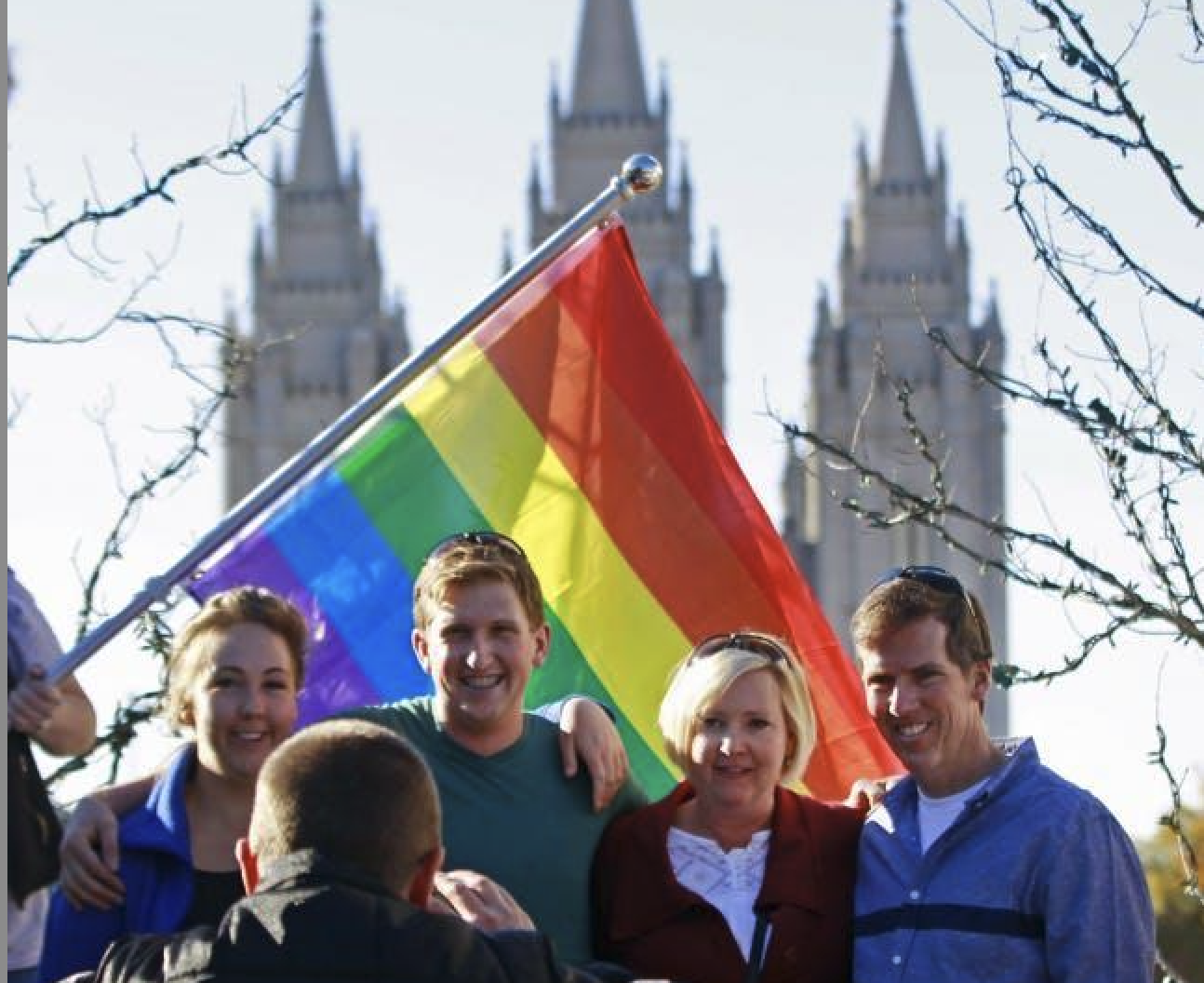
So let’s send a hosanna or two toward Religion News Service columnist Jana Riess, who specializes in her own faith, The Church of Jesus Christ of Latter-day Saints (long nicknamed “Mormons”). Her column reviewing the four years under renowned heart surgeon Russell M. Nelson as LDS president admitted that “if I was guilty of expecting little from a nonagenarian company man, I’ve had cause to repent.” (Everybody else was saying the same.) She’s now “very glad to have been wrong.”

Riess’s latest look — “Oh, now I get it: Purging the word ‘Mormon’ is a bid for the mainstream” — does complain about one move (see below). But she hails 10 developments under Nelson, who turns 96 today. Taken together they form a solid story theme others could pursue. Given the faith’s 21st Century growth alongside setbacks elsewhere in American religion, national and regional media could combine the changes with how the LDS empire has fared during and after the COVID-19 crisis.

A summary of the top 10 items in this change-resistant faith, interpreted in terms of Riess’s policy preferences:

* Though she says “mountains of work” remain, 2019 reversal of a 2015 policy ended automatic excommunication of same-sex couples and allows baptisms and blessings for their children.

* Also in 2019, there was “a little progress” on women. The status of biblical Eve was elevated in the central secret “endowment” ritual, in which wives no longer vow to “hearken” to their husbands. Also, girls and women are now allowed as official witnesses to ordinances.

* Though white Americans continue to dominate global leadership, for the first time in LDS history Nelson’s two newly named apostles were from neither North America nor Europe. Choices for lower ranks are also more diverse.

* Young adult missionaries can contact families weekly rather than twice a year, and their access to mental health services has improved.

* With the demise of Boy Scout ties, the church’s overhauled youth program has equal spending on girls.


Please respect our Commenting Policy

What is 'Fundamentalism'? Name 666 or so examples from recent news coverage ...

What is 'Fundamentalism'? Name 666 or so examples from recent news coverage ...

THE QUESTION:

What is “Fundamentalism?”

THE RELIGION GUY’S ANSWER:

After the Presbyterian Church in America decided in June to depart from the National Association of Evangelicals, The Religion Guy wondered in print whether some “evangelicals” are becoming “fundamentalists.” That raises how to define these two similar and historically interrelated versions of conservative Protestantism.

Back in 2019, a New York Times Book Review item by a Harvard Divinity School teacher called Jehovah’s Witnesses “fundamentalists” several times. Well, Witnesses do share certain “fundamentalistic” traits with actual “fundamentalists,” but the label was mistaken because it ignored Witnesses’ beliefs.

If the Ivy League theological elite and such an influential newspaper don’t understand the definition, we have a problem.

Yes, “fundamentalist” can apply in a generic sense to any old group with a certain hard-core outlook. But in any religious context it should designate only a specific movement of orthodox Protestants, prominent especially in the United States. The religious F-word should be applied carefully because, as The Associated Press Stylebook correctly cautions, it has “to a large extent taken on pejorative connotations.”

So here is the Big Idea: The AP advises, “in general, do not use fundamentalist unless a group applies the word to itself.”

The Church of Jesus Christ of Latter-day Saints is irritated when offshoots that perpetuate its founding prophet Joseph Smith Jr’s polygamy doctrine are called “Mormon fundamentalists,” and now seeks to abolish its own “Mormon” nickname. Scholars of Islam similarly reject the common “Muslim fundamentalist” label for terrorists and political extremists.

Back to Protestants.


Please respect our Commenting Policy