Race

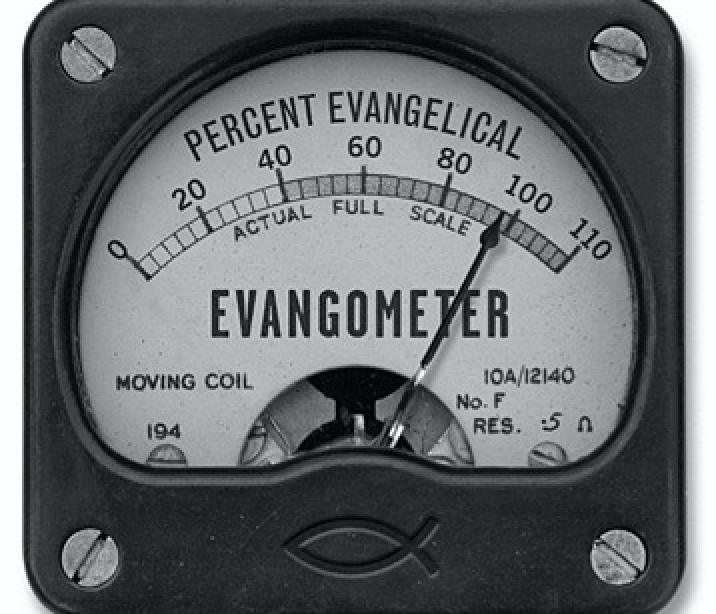
Here we go again: What ails U.S. evangelicalism and where is this movement headed?

Here we go again: What ails U.S. evangelicalism and where is this movement headed?

It's hard to imagine a print article more eye-catching than a lead item in The New York Times Sunday Review that sprawls over three pages, or to imagine a more prominent scribe than columnist David Brooks. The February 6 Brooks opus lionized "the dissenters trying to save evangelicalism."

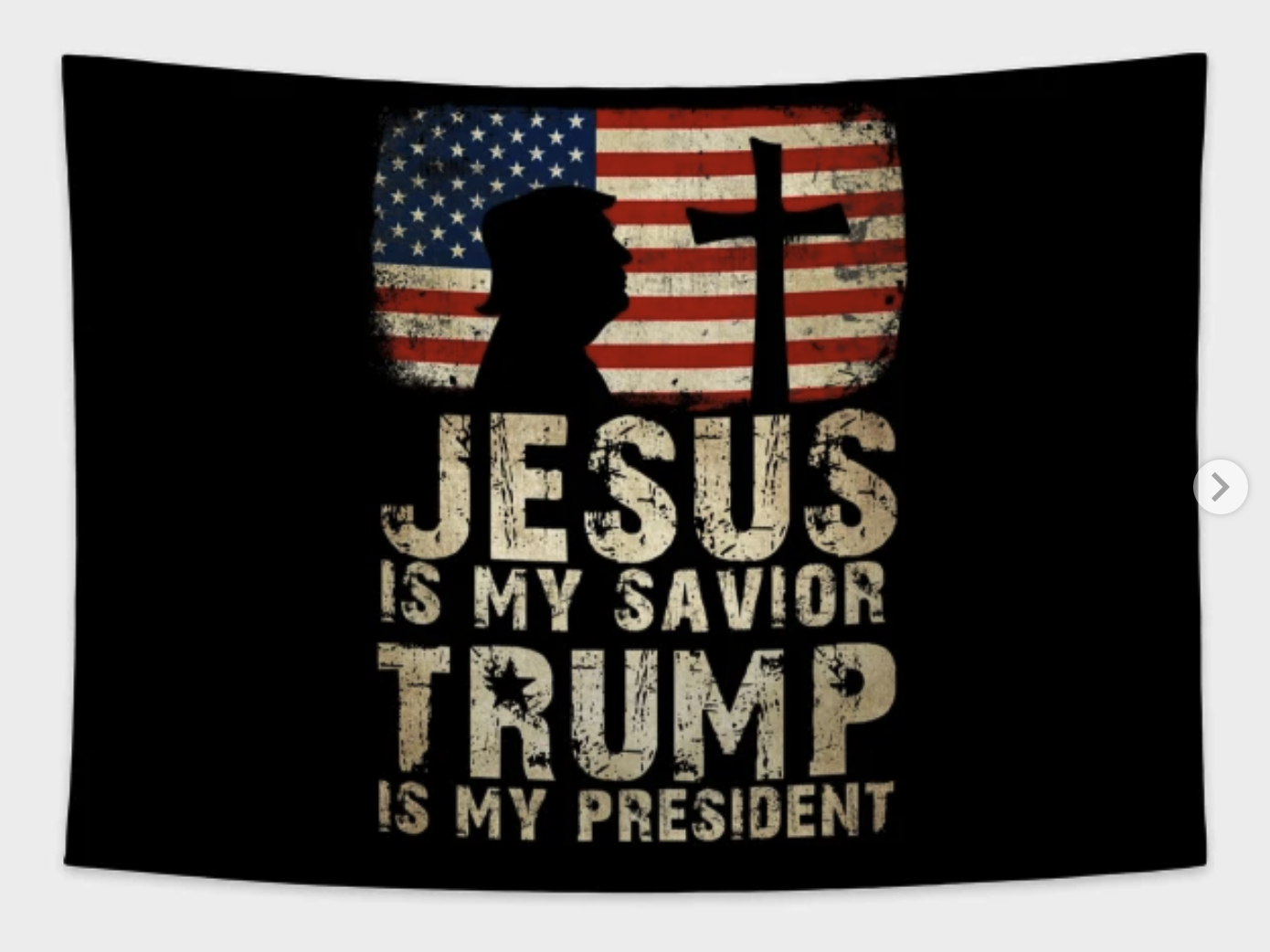
Save from what? "Misogyny, racism, racial obliviousness, celebrity worship, resentment, and the willingness to sacrifice principle for power" — that last phrase targeting disciples of Donald Trump.

We're at the publicity apex for what Brooks, and movement outsiders and insiders, are calling a "crisis" for this conservative Protestant movement. In recent months The Guy has, less elegantly, pondered a "crack-up. Thus:

* “Are we finally witnessing the long-anticipated (by journalists) evangelical crack-up?

* “Latest angles on Trump-era 'evangelicals,' including questions about the vague label itself.”

* “Concerning evangelical elites, Donald Trump and the press: The great crack-up continues.”

* “Journalism tips on: (1) Evangelical crack-ups, (2) campus faith fights, (3) COVID exemptions.”

This struggle will continue to need fair-minded journalistic attention, simply because this loosely-organized and variegated movement remains the largest and most dynamic segment of American religion. To a considerable extent, as evangelicalism goes, so goes the nation. Both are polarized, troubled and scandal-ridden.

On this topic it's always necessary to remember we're talking about WHITE evangelicals because Black Protestants, though often evangelical in style and substance, form a distinctly separate subculture (which "mainstream" media typically ignore alongside their fixation on the white variety).

A related preliminary point: What is an "evangelical" anyway?

Please respect our Commenting Policy

Podcast: Reporters who ask the right questions will find lots of NFL religion stories

Podcast: Reporters who ask the right questions will find lots of NFL religion stories

Several days before former Miami Dolphin head coach stunned the National Football League with his class-action lawsuit alleging racial discrimination and other sins, I read a very interesting profile at The Athletic about one of my sports heroes.

The headline summed things up: “Bears Hall of Famer Mike Singletary is hungry for a second chance to be an NFL head coach, but will it ever come?”

Singletary was a legend in Chicago and, before that, at Baylor University — where I met him because of a mutual friend. Singletary was a highly articulate preacher’s kid from Houston with a voice that sounded like he was auditioning to be the next James Earl Jones. He was a leader from Day 1 at Baylor and demonstrated all the characteristics that made him the face, brain and soul of the greatest defensive unit in NFL history.

This is where the Singletary feature became relevant during this week’s “Crossroads” podcast (CLICK HERE to tune that in), which focused on why journalists struggle to spot “religion ghosts” in so many sports stories, such as the life of Los Angeles Rams superstar Cooper Kupp (“Emerging NFL superstar — Cooper Kupp — puts his faith on his hat, not that reporters notice”) and the beliefs that appear to be putting the steel in the spine of Flores.

Why hasn’t Singletary had a second shot at being an NFL head coach, after his tumultuous tenure in San Francisco (not the best city for his views on faith and culture)? It may have something to do with Singletary trying to “stand for what he had been preaching” with the 49ers. Read this long passage carefully:

… 49ers owner John York, CEO Jed York, director of player personnel Trent Baalke and other executives called Singletary to a meeting. They had a trade in place with the Steelers for Ben Roethlisberger, who had recently been accused of sexual assault. Singletary vetoed the deal. …

“I had been telling the team I wanted a team of character,” he says.


Please respect our Commenting Policy

Saving urban churches: Associated Press feature dances around several important issues

Saving urban churches: Associated Press feature dances around several important issues

When I arrived at The Rocky Mountain News (RIP) in the fall of 1984, one of the first things I did was take a long walk in downtown Denver — taking notes about the religious sanctuaries that were nearby.

Most of the urban churches were, as you would expect in a Western city, linked to Mainline Protestant denominations and there were several Roman Catholic parishes, as well.

All of the mainline churches were in decline, with shrinking and aging congregations housed inside large buildings dating back to the glory days of previous decades. The one exception was a United Methodist congregation led by an evangelical pastor who was reaching out to families, single adults and all kinds of people in nearby neighborhoods — Blacks, Latinos, Asians, etc.

Meanwhile, conservative churches were growing in the suburbs, with a mixture of nondenominational, Baptist, Pentecostal and alternative Presbyterian flocks leading the way.

My point is that there were several stories going on in downtown Denver at the same time. But it was already clear — four decades ago — that lots of those old, big churches would eventually be empty or up for sale. It was also obvious that some of them would seek income from other sources to help keep their doors open, renting space to other flocks or social ministries.

Major news organizations keep bumping into stories linked to these trends, in part because big newsrooms tend to be in central urban zones and, in my experience, quite a few journalists (religion-beat pro included) have liberal Protestant or Catholic backgrounds or remain active in those traditions. Thus, here at GetReligion, it’s common to see posts with headlines such as these: “More news about old churches being sold and flipped: Does it matter why this is happening?”, “Churches for sale: New York Times visits a sexy former Catholic sanctuary in Quebec” and “Wait just a minute: Fading Lutherans (ELCA) in Waco sold their lovely building to Anglicans?” Or how about this one? “Why is a church shrinking or closing? Reporters: Brace for complex and heated debates.”

This brings me to a new Associated Press report about this old topic: “Historic city churches find new life as neighborhood centers.” Once again, there are glimpses of the trends behind this news hook, but very little information examining the larger issues looming in the background.


Please respect our Commenting Policy

Reporting on white Christian nationalists? Try talking with some of these Americans in person

Reporting on white Christian nationalists? Try talking with some of these Americans in person

“White Christian nationalism” (WCN) has become quite the bogeyman in contemporary religion coverage, even though few reporters seem to have spent much time actually engaging with people in the flocks led by said nationalists.

Instead, journalists read their social media, watch their YouTube videos and talk with sources drawn from a rather predictable list of activists and experts who oppose the bogeyman.

But that does not a complete story make. Readers end up with, at best, half of a debate.

One outlet that’s building or staking its reputation on WCN continuing to be a thing is Religion News Service, which has been rolling out stories on the topic since last September, thanks to a grant from the Pulitzer Center. The latest story in its “White Christian Nationalism since the Jan. 6 Attack” series ran Jan. 26 here. It began:

When supporters of former President Donald Trump rallied near the White House on Jan. 6 of last year, a boisterous pocket of young men waving “America First” flags broke into a chant: “Christ is King!” It was one of the first indications that Christian nationalism would be a theme of the Capitol attack later that day, where insurrectionists prayed and waved banners that read “Proud American Christian.”

It also announced the presence of followers of Nick Fuentes, a 23-year-old white nationalist and former YouTube personality who was subpoenaed this month by the U.S. House of Representatives committee investigating the Capitol attack. …

“Christ is King” is not controversial in itself: The phrase is rooted in Christian Scripture and tradition. But Fuentes’ supporters have given it a different connotation. They have chanted it at anti-vaccine protests and the anti-abortion March for Life, some of them holding crucifixes aloft. It was heard in March, at an America First conference, where Fuentes delivered a speech saying America will cease to be America “if it loses its white demographic core and if it loses its faith in Jesus Christ.” Fuentes also declared the country “a Christian nation.”

There are a bunch of academics and other sources quoted here but what appears to be the central thesis –- that WCN is bleeding into the mainstream institutions and life of conservative Christianity –- was not proven by a long shot.


Please respect our Commenting Policy

Anglicans are wrestling with 'climate change' in their pews: Will they adapt and survive?

Anglicans are wrestling with 'climate change' in their pews: Will they adapt and survive?

Journalist Michael Kinsley famously added a twist to American politics when he redefined a "gaffe" as when "a politician tells the truth -- some obvious truth he isn't supposed to say."

As the Rev. Neil Elliot of the Anglican Church of Canada discovered, this term also applies to religious leaders.

After seeing 2018 General Synod reports, the denomination's research and statistics expert produced an analysis that included this: "Projections from our data indicate that there will be no members, attenders or givers in the Anglican Church of Canada by approximately 2040."

Reactions to his candor varied, to say the least.

"I think of it very much like … people's responses to climate change," said Elliot, updating his earlier remarks in a video posted by Global News in Canada.

Signs of church "climate" change? In the early 1960s, Anglican parishes in Canada had nearly 1.4 million members. But that 2018 report found 357,123 members, with an average Sunday attendance of 97,421. The church had 1,997 new members that year, while holding 9,074 burials or funerals.

Canada's national statistics agency reported that 10.4% of all Canadians were Anglicans in 1996, but that number fell to 3.8% in 2019.

People have one of three reactions when faced with these kinds of numbers. The first "is denial. People are saying, 'We're, we're … It's not happening,' " said Elliot, while counting the options on one hand. "Then there's people who say, 'We can stop it.' And then there's people who say, 'We can adapt.'

"The adapt language is much more rare and I'm only starting to hear it on the media in the last few months. … That's what I'm trying to get us to do within the Anglican church. It's, 'How do we adapt to it?' not, 'How do we stop it?' or … people burying their heads in the sand."


Please respect our Commenting Policy

Ask this: Why did many flocks survive or thrive in pandemic, while others were hit hard?

Ask this: Why did many flocks survive or thrive in pandemic, while others were hit hard?

Does anyone remember typewriters?

Long ago, I took my very first reporting class at Baylor University. The legendary Jprof David McHam ran this lab as a mini-newsroom. McHam would sit in the “slot” of a U-shaped desk, working with students as we turned in our rough drafts.

I heard him say this many times: “The story is all here, but you wrote it in the wrong order,” or words to that effect. McHam would take his copy-desk pica pole (the birthday cake cutter of choice in newsrooms) and rip our typewriter copy into multiple horizontal pieces, before putting them in a new order, secured with a long strip of clear tape. Then he would say: “Go write the story in that order.”

More often than not, the wise Jprof found crucial information and pulled it higher in the story — if not into the lede itself. In many cases, this was information that created a tension with a simple version of the “news” in the lede. In other words, he was pushing us to acknowledge that many stories were more complex than we wanted to think they were.

With that in mind, let’s look at an important COVID-tide story from the Associated Press: “At many churches, pandemic hits collection plates, budgets.”

Note the word “many” in that headline. I think many readers would assume that the coronavirus pandemic has caused disasters in pews and pulpits and that is that. The evidence, in this story, is more complex than that — especially with a little bit of cutting and pasting. Here is the overture:

Biltmore United Methodist Church of Asheville, North Carolina, is for sale.

Already financially strapped because of shrinking membership and a struggling preschool, the congregation was dealt a crushing blow by the coronavirus. Attendance plummeted, with many staying home or switching to other churches that stayed open the whole time. Gone, too, is the revenue the church formerly got from renting its space for events and meetings.


Please respect our Commenting Policy

Is America really threatened by civil war? What is religion's role in these tensions?

Is America really threatened by civil war? What is religion's role in these tensions?

American Civil War talk is all the rage this New Year.

No, not that war, the one that cost 620,000 lives and was evoked by President Biden to castigate Senate Democrats and Republicans who are blocking passage of new election-ballot rules. Rather, The Guy refers to the drumbeat of warnings that the disunited United States may in the near future face an internal legal and economic cold war or some kind of hot war.

National Public Radio's Ron Elving reports that "not long ago the idea of another American Civil War seemed outlandish. These days, the notion has not only gone mainstream, it seems to suddenly be everywhere." He summarized anxiety-producing polls that show a polarized nation, and noted that 434,000,000 firearms are in civilian hands.

Then there's New Yorker Editor David Remnick's article "Is a Civil War Ahead?" New York Times columnist Michelle Goldberg likewise wonders, "Are We Really Facing a Second Civil War?" A Times op-ed by former National Security Council staffers Jonathan Stevenson and Steven Simon offers "the worst case scenario" in which "the United States as we know it could come apart at the seams" with "insurrection, secession, insurgency and civil war."

New January books include "The Next Civil War: Dispatches From the American Future" by novelist Stephen Marche, who sees virtually inevitable doom, and the slightly more upbeat "How Civil Wars Start and How to Stop Them" by Barbara F. Walter of the University of California San Diego. (Is it mere coincidence that The Atlantic's London writer Tom McTague is just out with "How Britain Falls Apart"?)

One typical forecaster is all the more interesting because he's Canadian. Thomas Homer-Dixon of Royal Roads University issued a New Year's Eve alarm in the influential Globe and Mail. He believes that as soon as 2025 "American democracy could collapse, causing extreme domestic political instability, including widespread civil violence. By 2030, if not sooner, the country could be governed by a right-wing dictatorship."

Outlandish?


Please respect our Commenting Policy

Plug-In: A fascinating look back at the last year in the life of the Rev. Martin Luther King, Jr.

Plug-In: A fascinating look back at the last year in the life of the Rev. Martin Luther King, Jr.

Today is Martin Luther King Jr. Day, a day of remembrance for the influential civil rights leader.

Adelle M. Banks, longtime national reporter for Religion News Service, marks the holiday with a fascinating look back at King’s last full year of life.

Among the details that Banks uncovered in a review of RNS’ 1967 archives: The Baptist pastor’s “growing outspokenness against the Vietnam War and his advocacy for the poor, while it garnered support from celebrities such as Dr. Benjamin Spock, drew criticism from evangelist Billy Graham and others.”

Banks, a 27-year RNS veteran, spearheaded an exceptional 2018 project on the 50th anniversary of King’s April 4, 1968, assassination.

Those stories, still worth a read, include:

Remembering King’s last sermon with renewed hope

A faithful journey from cotton field to White House: Q&A with a sanitation worker

Three Memphis sites key to King’s legacy draw visitors

Power up: The week’s best reads

1. Why the Catholic Church Is losing Latin America: “The rise of liberation theology in the 1960s and ’70s, a time when the Catholic Church in Latin America increasingly stressed its mission as one of social justice, in some cases drawing on Marxist ideas, failed to counter the appeal of Protestant faiths,” report the Wall Street Journal’s Francis X. Rocca, Luciana Magalhaes and Samantha Pearson.

“Or, in the words of a now-legendary quip, variously attributed to Catholic and Protestant sources: ‘The Catholic Church opted for the poor and the poor opted for the Pentecostals.’”

The Journal’s story from Brazil follows The Associated Press’ recent trend piece (highlighted in last week’s Plug-in) on a surge of evangelicals in Spain, fueled by Latin Americans.


Please respect our Commenting Policy

Return of a Godbeat F-bomb: The 'curse of Ham,' Twelve Tribes history and a Colorado fire

Return of a Godbeat F-bomb: The 'curse of Ham,' Twelve Tribes history and a Colorado fire

Let’s start with a journalism question about the news coming out of Colorado about possible links between the Marshall Fire and a controversial religious group known as the Twelve Tribes.

The New York Times has used that popular journalism F-word — “fundamentalist” — in a major story that ran with this headline: “Colorado Wildfire Inquiry Focuses on Christian Sect.” The read-out under that headline states: “Investigators are looking at the possibility that a fire that destroyed more than 900 homes started on property owned by a fundamentalist Christian sect known as Twelve Tribes.”

Once again, we need to talk about what the word “fundamentalist” means and what it does not mean. Let me ask this question, before we proceed: Is the “Twelve Tribes” movement a “fundamentalist Christian” group in the same sense that Black or White independent Baptist churches found in many or most American cities are accurately described, in doctrinal terms, as “fundamentalist”?

Perhaps the crucial question for journalists covering this story is whether the Twelve Tribes movement is a “sect” or, in sociological terms, an actual “cult”? Hold that thought.

First, here is the overture of the Times story, showing the context for this religion-beat F-bomb:

Investigators looking into the cause of a colossal wildfire in Colorado that forced the evacuation of tens of thousands of people are focusing on a property owned by a Christian fundamentalist sect, after witnesses reported seeing a structure on fire there moments before the blaze spread with astonishing speed across drought-stricken suburbs.

Sheriff Joe Pelle of Boulder County said at a news briefing … that the property owned by Twelve Tribes, which was founded in Tennessee in the 1970s, had become a target of the inquiry after investigators ruled out the possibility that downed power lines might have sparked the fire.

With that in mind, let’s return to the pages of the journalism bible know as the Associated Press Stylebook (h/t to Bobby Ross, Jr., for checking the evolving online edition).

Let us attend.

fundamentalist The word gained usage in an early-20th-century fundamentalist-modernist controversy within Protestantism. In recent years, however, fundamentalist has to a large extent taken on pejorative connotations except when applied to groups that stress strict, literal interpretations of Scripture and separation from other Christians.

In general, do not use fundamentalist unless a group applies the word to itself.


Please respect our Commenting Policy