With alarming new reports on American youth, what should religious leaders be doing?

With alarming new reports on American youth, what should religious leaders be doing?

Religion writers, like many other Americans, doubtless find a February report on the well-being of American teens from the federal Centers for Disease Control (.pdf here) nothing short of alarming.

There are religion-beat angles in these numbers. The question is whether religious leaders have figured that out yet. As we say here at GetReligion: Hold that thought.

Meanwhile, many news reports focused on the reported plight of teen-aged girls. The CDC survey in 2021 found that 57% persistently feel hopeless and sad, a 60% increase over the past decade and double the rate for boys, while 31% considered taking their own lives. The incidence of girls suffering sexual violence increased 20% in just the four years since 2017. Also, attempted suicide afflicted 22% of “LGBQ+” students.

Meanwhile, the media have lately put new emphasis on the troubled situation of boys and men.

Last August, Psychology Today said young and middle-aged men are more lonely than they’ve been in generations. A major consideration is that men are typically “happier and healthier” when married or “partnered.”

Internet dating is now a huge source of romantic connections, but 62% of users are men because “women are increasingly selective.” Men’s lack of “relationship skills” is said to produce less dating, more singleness, and thus less contentment.

That’s buttressed by a February 22 article from The Hill: “Most young men are single. Most young women are not.” New York University psychology professor Niobe Way’s view contrasts with the CDC, saying young adult men’s “social disconnect” means their suicide rate is quadruple that for women. And we all know distressed teen and young adult men are responsible for much of the national epidemic of mass shootings.

Young women, better-educated than men, “are getting more choosy” and are less likely to settle for problematic mates. Meanwhile, millions of young men have great relationship skills — with their digital screens.


Please respect our Commenting Policy

Got news? Concerning a boring AP story that ignored info about controversial cardinal

Got news? Concerning a boring AP story that ignored info about controversial cardinal

Want to read a really boring Associated Press news story?

You know, the kind of short hard-news, nothing-but-facts AP report in which an important person — Pope Francis, in this case — releases a list of appointees to some inside-baseball this or that, people who are either unknown or vaguely familiar to a dozen or so readers who are into that kind of thing?

In this case, one ends up with a boring headline — sure to appear in a few newspapers — that reads like this: “Pope renews cabinet of cardinal advisers, adds new members.” Here’s the riveting overture:

ROME (AP) — Pope Francis has renewed his cabinet of cardinal advisers from around the world, naming a handful of new members Tuesday and reconfirming others to help him run the Catholic Church.

Francis instituted the Council of Cardinals one month into his papacy, on April 13, 2013, with a primary goal of advising him on the reform of the Vatican bureaucracy. After nearly a decade of consultation, Francis issued a new blueprint for the Vatican bureaucracy last year.

Nevertheless, the Jesuit pope clearly appreciated the regular opportunities to consult with a small number of hand-picked cardinals representing the church on nearly every continent, and decided to keep the cabinet alive, albeit with some new members.

Now, would that story be a bit more interesting — “newsy” even — if it noted that one of the new members of this papal “inner ring” was a cardinal who, at this moment in time, may be the world’s most controversial prince of the church?

I mean, in this case we are talking about a cardinal who said the following, in an interview with KDA, a German news agency:

"The Church's positions on homosexual relationships as sinful are wrong. … I believe that the sociological and scientific foundation of this doctrine is no longer correct. It is time for a fundamental revision of Church teaching, and the way in which Pope Francis has spoken of homosexuality could lead to a change in doctrine. …


Please respect our Commenting Policy

Mainstream outlets ignore anti-Catholic angles in Merrick Garland's Senate testimony

Mainstream outlets ignore anti-Catholic angles in Merrick Garland's Senate testimony

It’s almost always news when a public official testifies before a congressional committee. Such was the case when Attorney General Merrick Garland faced the Senate Judiciary Committee. 

As expected, it was an important, and often heated, four hours of testimony that was highlighted by the back-and-forth exchanges between Garland and Republican senators on the panel. You can read Garland’s opening remarks on the DOJ website. 

Beyond his prepared remarks, there were plenty of potential storylines tied to religion that surfaced in the hearing. However, depending on which news organizations one follows, these storylines either made it into the news coverage or they were never mentioned. 

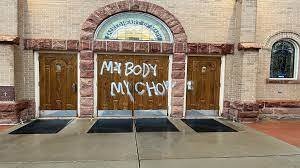
The Garland hearing comes at a time of heightened polarization, something made worse by the Supreme Court decision that rolled back the 1973 Roe v. Wade decision that legalized abortion. The aftermath of that decision has resulted in increased vandalism of Catholic churches, pro-life pregnancy centers and even a now-retracted FBI memo that targeted some traditional Catholics

The content of the coverage of the questions asked and the contents of Garland’s responses depended on what reporters, editors and news organizations deemed important. This has been the case for decades, but the shift has changed dramatically in more recent years as news organizations divide themselves into political camps depending on the beliefs of their faithful audiences

Did valid religion angles, especially those involving Catholics, make it into the coverage of national legacy media outlets? 

Here is a hint: Prayers by protestors at abortion facilities appear to be considered much more dangerous, and thus newsworthy, than vandalism, or even arson, at Catholic churches and crisis pregnancy centers. News coverage of this Senate hearing seemed to have been produced by journalists living in parallel universes. Once again, this is the dominant news trend in the Internet age.

Here is the top of the New York Times report on the Garland hearing: 

WASHINGTON — Republicans subjected Attorney General Merrick B. Garland to a four-hour grilling before the Senate Judiciary Committee on Wednesday, a harbinger of the fights that loom ahead as the party targets the Justice Department in the months leading up to the 2024 election. 


Please respect our Commenting Policy

EV charging sites at churches: Which denominational brands will get government $$$?

EV charging sites at churches: Which denominational brands will get government $$$?

Let me open this post with a confession: I am part of a growing flock of folks (some say “cult”) that attracts lots of nasty social-media commentary from a fascinating coalition of left-wingers and right-wingers.

In other words, I drive an electric car.

Wait. Anger from left-wingers? Remember these four words: Elon. Musk. Bought. Twitter.

Anyway, I have spent quite a bit of time reading about efforts to build EV-charging networks. Things were totally bonkers during the year or two that the Joe Biden White House was refusing to utter the word “Tesla” and seemed poised to pour billions of tax dollars exclusively into networks that are infamous for the stunningly high percentage of time their chargers are broken.

Now, what does this inside-baseball discussion have to do with religion-beat news?

Maybe you saw this Religion News Service headline that ran the other day: “Could churches be prime locations for EV charging stations? One company thinks so.

You see, EV charging stations require (#DUH) empty parking spaces, and it helps if these slots are in convenient urban and suburban locations — frequently near a highway exit or two. This leads to the totally logical overture for this timely RNS piece:

As more drivers make the decision to switch from gas-powered cars to electric vehicles, places to power them remain few and far between in large parts of the country. And with the Inflation Reduction Act of 2022 incentivizing clean energy and electric cars, as well as providing investments for green technology, the demand will only increase.

Churches, with their large parking lots that often sit empty during the week, could help provide a solution.

Now, imagine yourself driving through a typical American city. In your mind’s eye, where do you see empty church parking lots?

Basically, you will find two different kinds of lots and they tend to be located in rather different kinds of places. This is where I see a potential news hook or two.


Please respect our Commenting Policy

Plug-In: No Separation Of Church And State? New York City Mayor Sparks A Furor

Plug-In: No Separation Of Church And State? New York City Mayor Sparks A Furor

Good morning, Weekend Plug-in readers!

Among the religion news happening now, Catholics in Los Angeles are remembering slain Auxiliary Bishop David G. O’Connell. See photos by Los Angeles Times staff photographer Francine Orr from Thursday’s vigil Mass, before the funeral Mass the next day.

As always, we have a bunch of best reads and top headlines in the world of faith to highlight. Let’s jump right in.

What To Know: The Big Story

Big Apple, big controversy: “Don’t tell me about no separation of church and state. State is the body. Church is the heart. You take the heart out of the body, the body dies.”

New York City Mayor Eric Adams said that at an interfaith breakfast this week — remarks called “unhinged and dangerous” by a rabbi quoted by the New York Times’ Dana Rubinstein.

More from the New York Times:

He went on to suggest that his path to the mayoralty was divinely ordained, saying that when he implements policies, he does so in a “godlike approach.”

At another point, Mr. Adams seemed to suggest that it was a mistake for the Supreme Court to ban mandated prayer in public schools, as it did in 1962. “When we took prayers out of schools, guns came into schools,” he said.

The phrase “separation of church and state” is not in the Constitution, but the First Amendment’s statement that “Congress shall make no law respecting an establishment of religion, or prohibiting the free exercise thereof” has been widely interpreted to dictate such a separation.

‘God bless Mayor Adams’: But not everyone criticized the comments.

In fact, Adams won “a new group of fans: Orthodox Jews and evangelical Christians, whose leaders lauded the liberal Democrat,” according to the Washington Times’ Mark A. Kellner.


Please respect our Commenting Policy

Archbishop of Canterbury offers to stand down, as England OKs gay-union blessings

Archbishop of Canterbury offers to stand down, as England OKs gay-union blessings

In England, proclaiming God's blessing on same-sex relationships has become the new orthodoxy for clergy with established ties to the powers that be.

But not in Nigeria and the Global South, where Anglican leaders have urged the Church of England to consider the impact of its actions on believers facing conflict with Jihadi terrorists.

"I am genuinely torn by this," said Archbishop of Canterbury Justin Welby, about an appeal for General Synod leaders to consult with Anglican primates around the world before proceeding. "It isn't just about listening to the rest of the world -- it's caring. Let's just be clear on that. It's about people who will die, women who will be raped, children who will be tortured.

"So, when we vote, we need to think of that. It's not just about what people will say -- it is about what they will suffer."

But after years of tense dialogues and visiting war zones, Welby told the synod to proceed. Thus, the General Synod bishops, clergy and laity voted 250-181 to offer blessing rites for same-sex couples married by the state -- while retaining church doctrine that marriage is between a man and a woman.

"For the first time, the Church of England will publicly, unreservedly and joyfully welcome same-sex couples in church," said Welby and Archbishop of York Stephen Cottrell, in their Feb. 9 statement. Anglicans have "deep differences on these questions which go to the heart of our human identity."

This move angered LGBTQ activists who said mere "blessings" were not enough, while leaders of giant Anglican churches in Africa and Asia also rejected the compromise.

Welby said he had little or no choice, when addressing a Feb. 12 meeting of the Anglican Consultative Council in Accra, Ghana.

After the synod vote, he said, "I was summoned twice to Parliament and threatened with parliamentary action to force same-sex marriage on us, called in England 'equal marriage.'"


Please respect our Commenting Policy

Thinking about God and Hollywood: Raquel Welch became a faithful Presbyterian?

Thinking about God and Hollywood: Raquel Welch became a faithful Presbyterian?

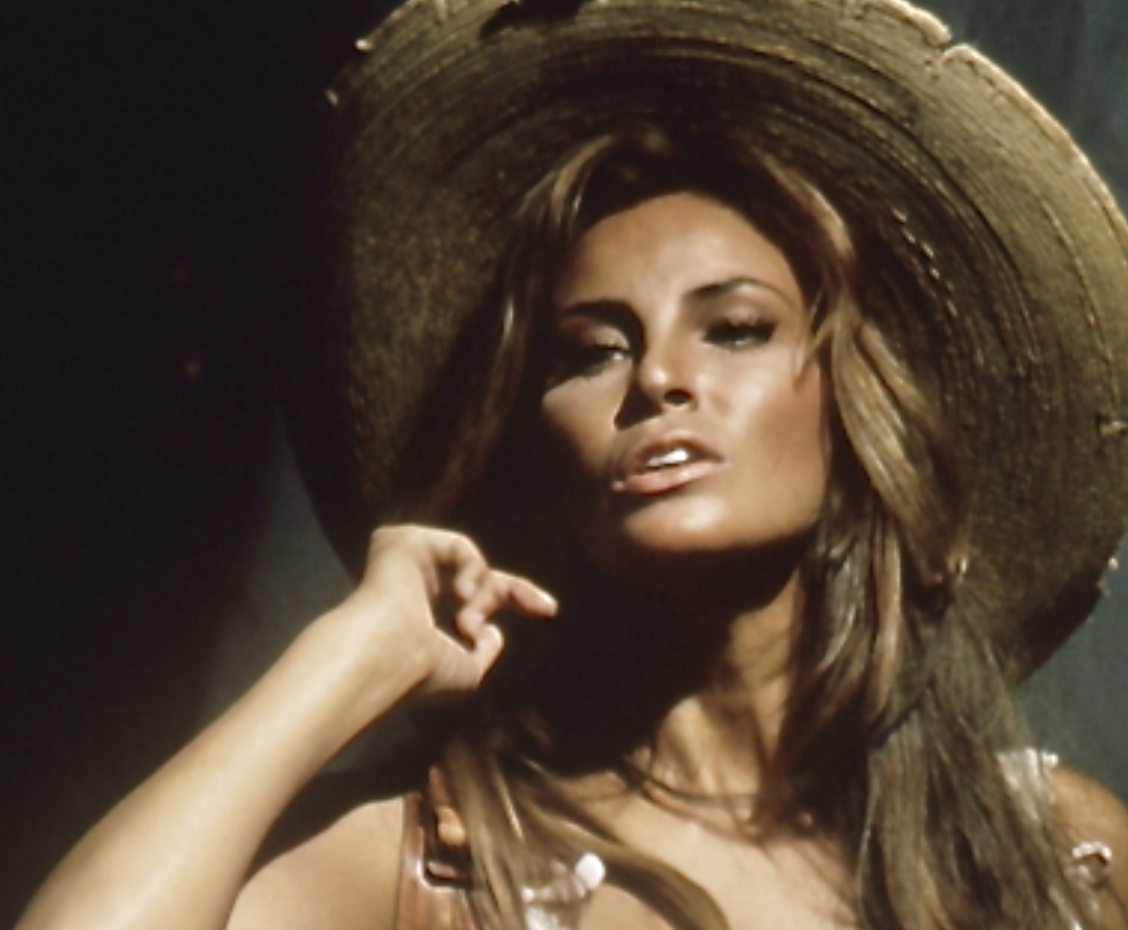
I have to admit that it never would have entered my mind to think there were religion “ghosts” in the life, career and death of Raquel Welch, who would have to be on anyone’s list of the iconic bombshell beauties in Hollywood history.

Then I started getting some emails.

Who knew that Welch evolved into a churchgoing and, by all reports, quite modest and mature Presbyterian church lady. In particular, people pointed me toward The Aquila Report, a blog for “conservative, orthodox evangelicals in the Reformed and Presbyterian family of churches.” The headline: “A Tribute to Raquel Welch’s Life and Testimony — She was a wonderful lady and a fine Christian.” Here is a sample of that feature:

As with many, her faith grew more serious and practical with age. It’s often true that the most important things become the most important to us as we’ve matured personally. That’s just to say that spiritual and personal maturity are often coincident age and life experience.

Second, she fully embraced the Reformed and Presbyterian faith as described in the Westminster standards. She would never burden others that they must because she did — but that she did isn’t really a question. She was of the old, rugged faith. She never felt the need to pressure anyone in regard to matters of faith but she also didn’t have a great deal of patience for cute or pop cultural theological moods. This was part of her strength.

Third, she was just another lady of the church. She didn’t put on airs or expect special attention (although she could hardly avoid even with the best of intentions being the most glamorous person in the room). And she often advised churches and ministries on practical and business matters because she was brilliant in those things. You didn’t think she survived and thrived 60+ years in the public eye by just being a pretty face?

There was one more point that I found interesting, because it linked to material I had encountered through the years about some “conservative” superstars.

It helps to know that my favorite actor of all time is the late Jimmy Stewart and I’ve read quite a bit about his life. I was set up to interview him, years ago, at the Presbyterian church he attended, but he came down with the flu and had to cancel.

Anyway, the Aquila Report piece noted that Welch’s faith journey was linked to her friendships with “other conservative Presbyterians Jimmy Stewart, Ron Reagan and Chuck Heston.” Interesting.


Please respect our Commenting Policy

Podcast: Zero elite press coverage of 'heresy' accusations against an American cardinal?

Podcast: Zero elite press coverage of 'heresy' accusations against an American cardinal?

The question at the heart of this week’s “Crossroads” podcast (click here to tune that in) was not whether Springfield (Ill.) Bishop Thomas Paprocki was on target with his First Things essay that all but accused San Diego Cardinal Robert McElroy of heresy.

The question was not whether Cardinal Jean-Claude Hollerich of Luxembourg — a strategic leader in the Vatican’s Synod on Synodality — was right when he said the church's teaching on homosexuality are “no longer correct,” and added, “I think it is time for a fundamental revision of the doctrine."

The question was not whether Chicago Cardinal Blase Cupich was correct when he suggested, in print, that priests should absolve Catholics who come to Confession, allowing them to receive Holy Communion, even if these individuals refuse to repent of behaviors that Catholic doctrine insists are sin.

The question was not what Pope Francis meant when he told bishops in the Congo, “Always. Always forgive in the Sacrament of Reconciliation” — even if there is confusion about whether penitents are repenting of their sins or not.

No, the journalism question discussed during this podcast was this: Why are these developments — especially that stunning “Imagining a Heretical Cardinal” essay by Paprocki — receiving (as of this morning) zero coverage in the mainstream press?

By the way, it’s important that Bishop Paprocki is the chairman-elect of the Canonical Affairs and Church Governance Committee of the United States Conference of Catholic Bishops.

It may also be relevant that, in 2017, Paprocki and McElroy clashed — in print — over the Springfield bishop’s decision not to allow Catholics to receive Holy Communion if they are openly living in same-sex marriages and, thus, rejecting centuries of Catholic doctrines on marriage and sex.

Why the lack of coverage? I have several theories.


Please respect our Commenting Policy

When writing about Iran, women and hijab, stress the Islamic roots of it all.

When writing about Iran, women and hijab, stress the Islamic roots of it all.

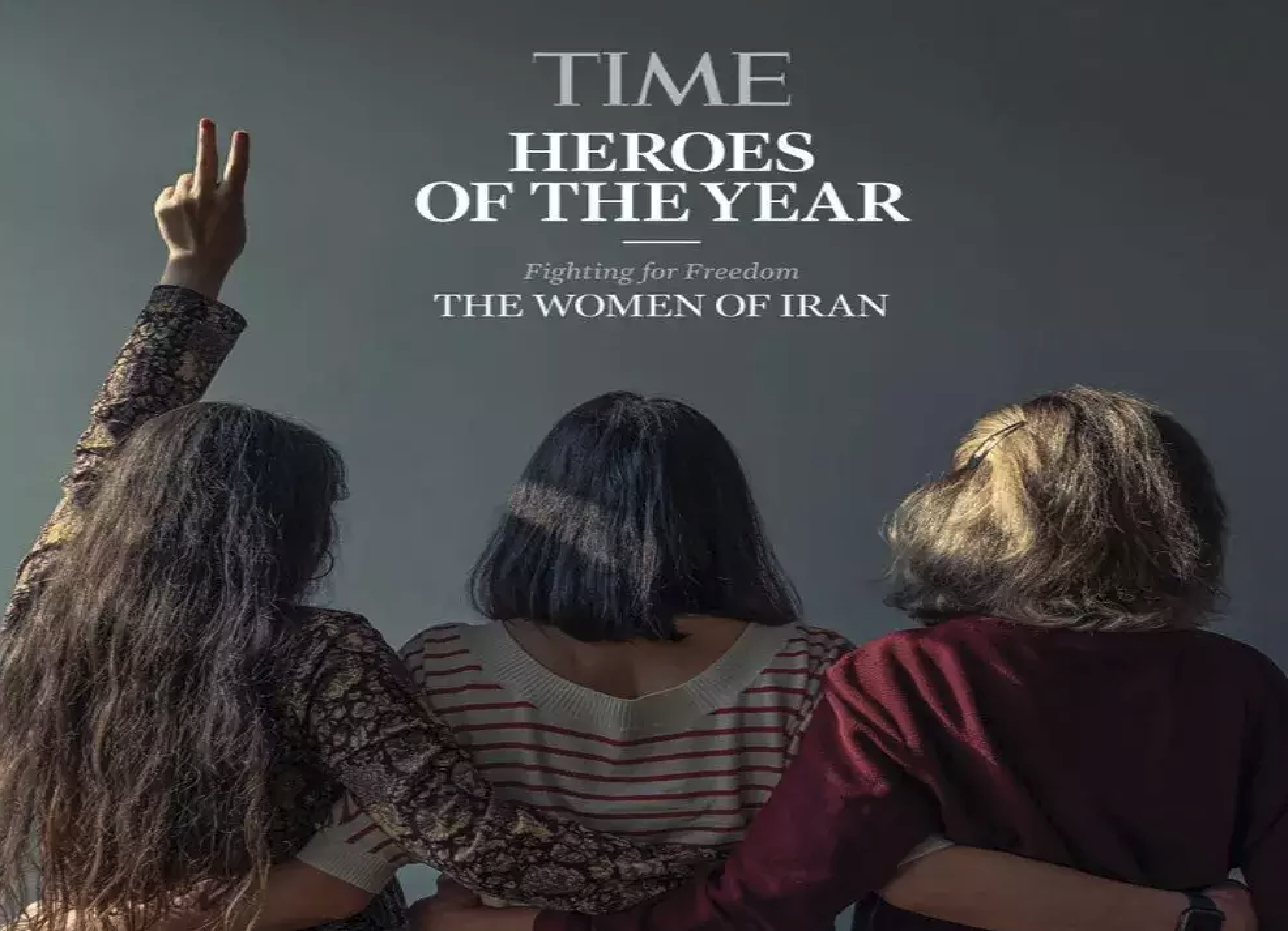
The female protestors in Iran have received a lot of positive press recently. Not only did they win Time magazine’s 2022 Person of the Year reader poll, they were also named the magazine’s 2022 Heroes of the Year.

Their bravery, even in the face of death — a number of them are being tortured and killed — has gained the attention of the world.

Recenty, the New York Times did a piece on how so many women are ditching their head coverings, the police aren’t bothering to arrest them. The issue here at GetReligion, of course, is whether journalists are coving the role that debates about specific Islamic traditions and laws are playing in all of this.

An engineer strode onstage at an event in Tehran, wearing tight pants and a stylish shirt, and clutching a microphone in one hand. Her long brown hair, tied in a ponytail, swung freely behind her, uncovered, in open defiance of Iran’s strict hijab law.

“I am Zeinab Kazempour,” she told the convention of Iran’s professional association of engineers. She condemned the group for supporting the hijab rules, and then she marched offstage, removing a scarf from around her neck and tossing it to the floor under a giant image of Iran’s supreme leader, Ayatollah Ali Khamenei.

The packed auditorium erupted in cheers, claps and whistles. A video of Ms. Kazempour went viral on social media and local news sites, making her the latest champion for many Iranians in a growing, open challenge to the hijab law.

Something has cracked wide open in the consciousness of Persian women.

Recently I’ve been fascinated by the refusal by Iranian women to wear head coverings. I’ve checked out Iranian activist Masih Alinejad’s “The Wind in My Hair” and Maryam Rostampour and Marziyeh Amirizadeh’s “Captive in Iran,” the latter about these two Christian women’s 259-day stay in Evin, Iran’s most notorious prison, to get a feel for what women experience in this sad and terrifying country.

Both give a snapshot of what it’s like to live in a real-life “Handmaid’s Tale” society.


Please respect our Commenting Policy