Hurrah! Associated Press report mentions Clinton-era religious liberty principles (updated)

Hurrah! Associated Press report mentions Clinton-era religious liberty principles (updated)

Back in my Baylor University days, my favorite European history professor had a symbolic gesture he would use when discussing absurd, paradoxical moments in events such as the French Revolution.

“What a world!” he would exclaim, with a cynical laugh, while striking his forehead with the heel of his palm — his own variation on the classic “face palm” gesture.

This is the gesture I would like readers to imagine as I congratulate the Associated Press for a few important examples of basic journalism in a story with this headline: “West Virginia GOP majority House OKs religious freedom bill.”

For starters, the term “religious liberty” wasn’t framed with “scare quotes” in the headline. What a world! Might this have something to do with the First Amendment?

Let’s walk through this AP story and look for what appear to me to be ordinary examples of news coverage. However, in this day and age, basic acts of journalism should be celebrated. Here is the AP overture:

CHARLESTON, W.Va. (AP) — West Virginia’s GOP supermajority House of Delegates passed a bill Monday that would create a test for courts to apply when people challenge government regulations they believe interfere with their constitutional right to religious freedom.

The bill passed after several Democrats expressed concern that the proposal could be used as a tool to discriminate against LGBTQ people and other marginalized groups. Democratic Del. Joey Garcia also asked whether the proposed law could be used to overturn West Virginia’s vaccine requirements, which are some of the strictest in the nation.

A sign of progress? Note that the lede states that the bill created a “test for courts to apply” — not a mandate of some kind. This is a sign of things to come.

Let’s read on.

One of the legislation’s co-sponsors, Republican Del. Todd Kirby, said those questions would be up to the courts to decide — the bill only provides a judicial test for interpreting the law.


Please respect our Commenting Policy

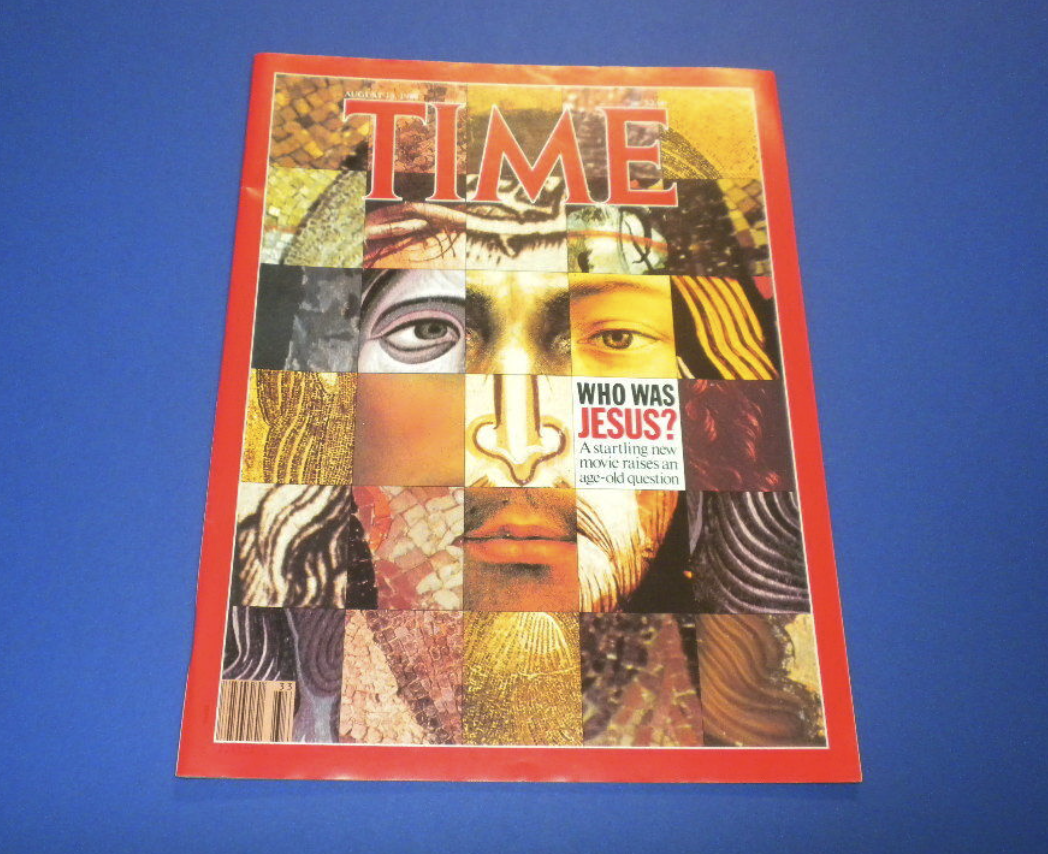
100 years ago this week, feisty Time magazine began changing the news game

100 years ago this week, feisty Time magazine began changing the news game

Friday, March 3, marks 100 years from the first issue date of Time magazine, self-described as “The Weekly News-Magazine.”

The feisty New York-based newcomer brought journalistic inventions that redefined what’s news and how it’s presented. When Time and other Time Inc. magazines were up for sale in 2018, an article in the rival New York Times bade farewell to “the pre-eminent media organization of the 20th Century.”

Here is a very obvious point of disclosure and personal privilege: The Guy worked there 1969-1998 as a field correspondent and Religion section writer.

Looking back, the magazine’s 75th anniversary spectacle converted Radio City Music Hall across the street into a banquet venue and invited every living person who’d ever appeared on its cover. The Rev. Billy Graham, say hello to Joe DiMaggio. President Bill Clinton, meet Lauren Bacall. You get the picture.

The current ownership, however, is low-key about the centennial. But Time’s survival is noteworthy in today’s harsh environment for print media, albeit with reduced circulation, budget, staffing and publishing frequency.

Then there is another important angle about the impact of Time in the news marketplace. News flash: Religion makes news!

Missionary Kid Henry Luce was the co-founder, and Time carried a religion news section each week, alongside other specialized “back of the book” sections like Press and Law -- subject areas that many dailies only covered with depth decades later.

Attention-grabbing Time covers, coveted real estate for all fields, added renown to numerous religious writers and thinkers (e.g. C.S. Lewis, 1947), bureaucrats (Eugene Carson Blake, 1961) and activists (Mother Teresa, 1975).

Some readers may recall one cover in particular — the much-misunderstood black-hued “Is God Dead?” Holy Week cover in 1966, written anonymously (no bylines in those days) by John Elson. This talented scribe, a churchgoing Catholic, was not undermining faith but asking whether there were any limits to the era’s “theological strip-tease” among liberal Protestants and post-Protestants. That cover was, in other words, ahead of its time.


Please respect our Commenting Policy

Wait! Did this New Jersey news team mean to hint that Catholics are not 'Christians'?

Wait! Did this New Jersey news team mean to hint that Catholics are not 'Christians'?

Long ago, there was this radio and television superstar named Art Linkletter.

How long ago? Well, I thought of him as an old guy when I was a kid. In particular, I remember chatter about his bestseller — 50-plus years ago — with this title: “Kids Say the Darndest Things.” The idea was to collect things that children say that sound cute or even silly but, the more you think about them, these statements turn out to offer insights into life as we know it.

Why bring this up? Every now and then — once a month, maybe — I get an email from a reader offering a link to something strange that ran somewhere in a mainstream news or commentary publication (readers struggle to discern the difference, these days).

Often, the reader shares the material and then asks something like: “Are journalists really this stupid?” or “Do journalists really hate ________ this much?” The blank space in that equation will be filled with one of several different terms, such as “religious people,” “conservative Christians,” “traditional Catholics” or something else.

The link to Art Linkletter is that, from time to time, a reader — either wise, patient or cynical — will suggest that a specific example of journalists failing to “get religion” could simply be worth a chuckle, kind of a “Journalists Say the Darndest Things” take. But some readers will then pause and wonder if there is something else going on.

This brings us a recent feature at NJ.com that ran with the headline, “Ash Wednesday 2023: Can you eat eggs or meat? Can you drink coffee? A guide to fasting.” This website connects the work of several news organizations, such as The (Newark) Star-Ledger, The Times of Trenton, The South Jersey Times, etc. Here is the overture for this “news you can use” story:

On Ash Wednesday, you might see a Christian or a Catholic wearing smudged ashes on their forehead.

Maybe you are a practicing Christian and are fasting this Ash Wednesday, and you are wondering what you can and cannot eat on the first day of Lent. Here is what you need to know about this first day of Lent in most Christian denominations and the rules of fasting.

Read that first sentence again.


Please respect our Commenting Policy

Plug-In: Latest Asbury revival is big news, from the New York Times to Christianity Today

Plug-In: Latest Asbury revival is big news, from the New York Times to Christianity Today

Good morning, Weekend Plug-in readers!

It’s the one-year anniversary of Russia’s invasion of Ukraine.

This week’s roundup features news about former President Jimmy Carter’s faith and Saddleback Church’s exit, for now, from the Southern Baptist Convention.

But we start with a story Plug-in already covered last week.

I explain why in 3, 2, 1 …

What To Know: The Big Story

Asbury revival, again: When the New York Times, Christianity Today and Terry Mattingly (IYKYK) all jump on the same story, it must be a big deal.

Such is the case with the spiritual phenomenon that drew thousands to a small Christian college in Kentucky.

The spontaneous, 16-day gathering that ended Thursday was like “‘Woodstock’ for Christians.” So declares Times religion writer Ruth Graham’s front-page story today.

Behind the scenes: “Chocolate chip cookies. ‘All the Chick-fil-A.’ Meetings in a storage closet. Flow charts.”

Christianity Today’s Daniel Silliman goes in depth to explore how Asbury University officials tried to “honor what is happening.”

‘Like deja vu all over again’: In his “On Religion” column for the Universal Syndicate, Mattingly delves into the history of past Asbury revivals.

They go all the way back to 1908, as alumnus and professor Stephen A. Seamands notes in Mattingly’s column:

“The wildness of these events is that they’re actually un-wild. The atmosphere is serene, deep and at times rather quiet,” he said. “It’s like a veil is pulled back and students see Jesus for the first time — Jesus manifested in a new and powerful way.”


Please respect our Commenting Policy

What is happening with the 'revival' at Asbury University? Only time will tell

What is happening with the 'revival' at Asbury University? Only time will tell

The atmosphere in Hughes auditorium was electric as Asbury students -- many in tears -- streamed to the altar to pray, while worshippers sang hymns, mixed with Bible readings, testimonies and public prayers of repentance.

Administrators cancelled classes, grasping that this ordinary chapel service was the start of something bigger -- a 144-hour wave of worship that drew thousands to Wilmore, Kentucky, while similar revivals began on other Christian and secular campuses across the nation.

The year was 1970.

Then again, revivals rocked Asbury College -- now a liberal-arts university -- in 1908, 1921, 1950, 1958 and on other occasions. Historians will now add 2023.

The revival that began on February 8 is "like deja vu all over again," said Stephen A. Seamands, who was a senior in 1970 and returned to teach for nearly 40 years at Asbury Theological Seminary.

"The wildness of these events is that they're actually un-wild. The atmosphere is serene, deep and at times rather quiet," he said. "It's like a veil is pulled back and students see Jesus for the first time -- Jesus manifested in a new and powerful way."

Outsiders may assume that this two-week revival "is over," after Asbury leaders announced that services would be moved off campus, with students moving toward a regular academic and chapel schedule. At one point, as many as 20,000 people had flocked to central Kentucky.

"Never in my life will I forget this," said Asbury University President Kevin J. Brown, in a public statement. "Never in my life have I been so proud to say that I am a part of Asbury University. I write this with tears. The people here are so special."

Seamands said it "will take 30 years or so" to discern what happened. Revivals, he explained, begin with an awakening inside a Christian community -- that's stage one. True revivals, throughout history, have led to evangelism, missions and "efforts for social justice" at the national and global levels.

"It's also clear that this Asbury revival is about Gen Z and its hunger for genuine worship," said Seamands, referring to Americans born in the Internet age.


Please respect our Commenting Policy

Loaded question: Is gambling evil? That's a religion-beat hook in many states

Loaded question: Is gambling evil? That's a religion-beat hook in many states

THE QUESTION:

Is gambling evil?

THE RELIGION GUY’S ANSWER:

Analysts anticipated a record high cash haul from the Super Bowl with the explosion in legalized online sports betting. The big weekend produced several interesting articles about the pros and cons, the inroads and innovations, of America’s gambling industry.

The Wall Street Journal’s Barton Swaim mulled religious aspects under the arresting headline “Would Jesus Bet on the Super Bowl?” He said that for Jews and Christians the Bible is “less than explicit” in warnings and yet its moral teachings do raise questions about gambling.

Swaim sympathizes with theologians who oppose the desire to “get something for nothing,” accompanied by the attitude that work to earn necessary income “is a mostly unhealthy activity best avoided.” But he admitted that’s also the case when we inherit assets or the value of property increases regardless of our own efforts.

For Swaim, the key moral aspect is what gambling “reveals about the gambler,” especially desire or lust for wealth. The last of the Ten Commandments (Exodus 20:17) even forbids private inward thoughts of material desire or coveting, and Jesus warned in the Sermon on the Mount that “you cannot serve both God and money” (Matthew 6:24).

Yet another moral problem for Swaim is the fact that a certain portion of gamblers “will end up addicted and in financial and moral ruin.” More on that below.

Looking at Judaism, a Super weekend survey in The Forward noted that the late Rabbi Joseph Soloveitchik, the prime thinker for the “modern Orthodox” movement, denounced casino attendance and that’s the view of “pretty much every other authority” on Jewish law, before and since. Even the rabbis of Judaism’s liberal Reform branch have called gambling  “non-productive and threatening to the social fabric.” A noted Jewish  therapist says even seemingly innocent small bets can be a gateway to addiction.

Among Christians, there’s a notable split between tolerant Catholics and Protestants, who’ve been mostly hostile.


Please respect our Commenting Policy

Podcast: Women in ministry remains a hot topic in SBC life, especially at the pulpit level

Podcast: Women in ministry remains a hot topic in SBC life, especially at the pulpit level

Any controversy linked to the Rev. Rick “Purpose Driven Life” Warren is, by definition, going to be a big news story. I mean, that mega-bestseller has been translated into 100-plus languages and is so omnipresent that it’s most famous quote ended up in a Marvel Comic Universe movie.

Meanwhile, any controversy that involves conservatives opposing the ordination of “moderate” or “progressive” Baptist women is going to be a big news story, because — for most mainstream journalists — that is a good vs. evil story, and that’s that.

Thus, it’s no surprise that there has been quite a bit of ink about the vote by the Southern Baptist Convention’s executive committee declaring that the giant Saddleback Church, founded by Warren, is no longer “in friendly cooperation” with America’s largest non-Catholic flock.

Yes, that’s SBC lingo. We are dealing with a “convention” of autonomous congregations, not a “denomination,” and it’s primary source of national giving/income is called the “Cooperative Program.” So, has Saddleback been “ousted,” “expelled” or “kicked out” of SBC life for good? We will see.

GetReligion readers will not be surprised that we ended up discussing all of these issues during this week’s “Crossroads” podcast (CLICK HERE to tune that in). The good news, in this case, is that the most important stories about this case were written by experienced religion-beat pros. Here’s the top of the Associated Press report:

The Southern Baptist Convention … ousted its second-largest congregation — Saddleback Church, the renowned California megachurch founded by pastor and best-selling author Rick Warren — for having a woman pastor.

The vote by the convention’s Executive Committee culminates growing tension between the nation’s largest Protestant denomination — which officially opposes women as pastors — and a congregation whose story has been one of the biggest church-growth successes of modern times.

The committee cited Saddleback’s having “a female teaching pastor functioning in the office of pastor,” an allusion to Stacie Wood, wife of the current lead pastor of Saddleback, Andy Wood.

But the controversy began in 2021, when Warren ordained three women as pastors, prompting discussions within the denomination about possibly expelling the megachurch.

What is going on here? There are several important clues in that material.


Please respect our Commenting Policy

With her newsworthy 'firsts,' don't ignore religion angles in Nikki Haley v. Donald Trump

With her newsworthy 'firsts,' don't ignore religion angles in Nikki Haley v. Donald Trump

As a woman and as a child of immigrants from India, new presidential candidate Nikki Haley has scored notable career “firsts.”

But the media shouldn’t ignore that her life story is more religiously intriguing than any of the 16 Republicans on CNN’s list of other potential challengers to Donald Trump. She’s been regularly subjected to questions about conversion from her parents’ Sikh religious faith to Christianity at age 24.

Moreover, Haley right now has a link to a huge 2023 story, the global split in the United Methodist Church. Haley and family are members of Mt. Horeb church in Lexington, South Carolina’s largest UMC congregation with 5,000-plus members.

Mark your calendars: On February 26 the congregation meets to decide whether to leave the denomination after 132 years due to progressive trends in the denomination’s doctrines and discipline that conservatives believe will undermine the Bible’s authority, including on “sexual ethics.” Local coverage here: “SC’s largest United Methodist Church prepares to leave denomination.” Two-thirds approval will be needed to depart.

This doctrinal dispute may not matter in Republican primaries, but it’s easy to imagine Democrats highlighting religious affiliation and LGBTQ concerns if underdog Haley manages to win the Republican nomination for president or vice president.

Already, LGBTQNation and People For the American Way’s Right Wing Watch are on the warpath. Note the targeting of Haley’s friend Pastor John Hagee, who prayed at her campaign launch. As a candidate, she will need strong support from cultural conservatives, which will require clear stands on issues linked to parental rights, religious liberty and abortion.

Born Nimrata Nikki Randhawa and raised in Sikhism, Haley was encouraged by her parents to visit varied churches and understand the surrounding culture. She married husband Michael in both Sikh and Methodist ceremonies and soon after converted to Christianity.


Please respect our Commenting Policy

Yo, journalists: It's time for a big update (or two) on the old, old Anglican wars timeline

Yo, journalists: It's time for a big update (or two) on the old, old Anglican wars timeline

Scribes who have been covering the Anglican Communion wars since, oh, the late 1970s or so (there are a few of us Jurassic journalists left) know that this has been a long, complicated road.

In most recent elite-press coverage, this timeline has been radically truncated, turning battles over a wide range of doctrines and church-history issues into a simple good vs. evil clash over LGBTQ rights. In this version of history, this global doctrinal war began in 2003 with the consecration of a non-celibate gay bishop in the tiny, shrinking Diocese of New Hampshire here in America.

Here at GetReligion, I have long referred to this fallacy as “Anglican timeline disease.” Hold that thought, because we will come back to it.

The key, right now, is that journalists need to radically update this timeline, in the wake of some major global developments that are receiving little elite coverage. Here is the dramatic double-decker headline for the major report in The Wall Street Journal:

Conservative Anglican Leaders Call for Break With Church of England Over Same-Sex Blessings

Archbishops from Africa and elsewhere repudiate the Archbishop of Canterbury’s historic role as spiritual leader of Anglicans worldwide

The overture for this solid story included several bites of information that are worth noting:

Conservative Anglican archbishops on Monday said the Church of England had forfeited its traditional leadership role in the worldwide Anglican Communion by approving the blessing of same-sex relationships earlier this month, opening a historic rift in one of the world’s biggest Christian denominations. 


Please respect our Commenting Policy