Podcast: Is Colorado Springs covered by a 'fundamentalist' blanket of hate?

Podcast: Is Colorado Springs covered by a 'fundamentalist' blanket of hate?

At this point, there are many, many crucial facts that journalists do not know about the horrible Club Q massacre in Colorado Springs.

This lack of facts has done little to shape the coverage. We do not, for example, know if Mx. Anderson Aldrich is sincere when claiming, in case documents, to be nonbinary. It will, in the meantime, be interesting to see if many mainstream newsrooms choose to deadname Aldrich in their coverage, perhaps by striving to avoid pronouns altogether.

We do know that the alleged shooter was raised in a broken home with multiple mental-health and violence issues. Consider, for example, the father — an ex-con MMA fighter turned porn star (and a Republican, of one form or another).

At this point, it does appear that some journalists — while searching for the “why” in the “who, what, when, where, why and how” formula — have decided to place the city of Colorado Springs on trial and, perhaps, the whole state of Colorado. This was the primary topic discussed in this week’s “Crossroads” podcast (CLICK HERE to tune that in).

The key: A return of that dreaded journalism F-word — “fundamentalist.” For more background on this religion-beat disease, please see this GetReligion post by Richard Ostling (“What is 'Fundamentalism'? Name 666 or so examples from recent news coverage”) and this On Religion column (“Define ‘fundamentalist,’ please”) that I wrote in 2011.

Here is the key material from a USA Today story that, in my opinion, goes completely over the top while claiming that, to be blunt, a kind of hate cloud covers Colorado Springs. The headline: “Colorado Springs worked to change its anti-gay image — then its sole LGBTQ nightclub was targeted.”

Most notably, in 1992, religious fundamentalists from Colorado Springs wrote Amendment 2, a measure seeking to amend Colorado's constitution by making it illegal to ban discrimination based on sexual orientation. The measure was approved by Colorado voters that November, earning Colorado the nickname of the "Hate State," according to the Colorado Springs Pioneer Museum. Amendment 2 was ultimately struck down by the U.S. Supreme Court in 1996.

The city is also the headquarters of Focus on the Family, a fundamentalist Protestant organization whose founder James Dobson is known for his stances against gay and trans rights.

Please respect our Commenting Policy

Eastern University changes its doctrines on marriage, which is a totally valid news story

Eastern University changes its doctrines on marriage, which is a totally valid news story

OK, I know that it has only been two months since I wrote about this topic and that recent post’s headline even included a nod to the fact that this is a topic I have addressed before.

Sue me. That headline stated: “Reminder to journalists (again): Private schools – left, right – can defend their core doctrines.”

You see, as a former professor on several Christian campuses, and the graduate of the Baylor University Church-State Studies graduate program (which, alas, closed a decade ago), this is the kind of subject that matters to me. And since this is Thanksgiving, I really need to find a way to frame this quick post as a Thanksgiving offering.

So here goes. I am thankful for the First Amendment and I am thankful that, at this point, it still protects the believers on both the left and the right, in terms of the freedom to exercise their beliefs in the real world.

This First Amendment reminder was inspired by a recent Religion News Service story with this headline: “Eastern University on hold from CCCU after dropping ban on LGBTQ faculty.” I should state, right up front, that I am a former founder and director of the Washington Journalism Center program at the Council for Christian Colleges and Universities and, what do you know, I once interviewed for a proposed faculty slot at Eastern, where it was clear that I was not a good fit, doctrinally speaking.

There is nothing all that unusual about this RNS story. As one would expect, there is zero attempt in this “news” report — as opposed to an analysis piece — to represent small-o orthodox voices in this debate about life on a campus that has, as the story notes, been headed to the doctrinal left for several decades. This niche-news, advocacy journalism approach has, alas, become the norm on this topic. Here is the overture:

Eastern University, a Christian school affiliated with the American Baptist Churches USA, has amended its policies to allow for the hiring of LGBTQ faculty and to add sexual orientation to its non-discrimination statement.

As a result, its membership with the Council for Christian Colleges and Universities has been put on hold during the 2022-23 academic year, and the school is no longer listed online among the 150 U.S. and Canadian schools that belong to the Christian higher education association.


Please respect our Commenting Policy

Celebrities rule: How should reporters assess the name fame game in religion?

Celebrities rule: How should reporters assess the name fame game in religion?

As of the 2022 midterms, the United States had 49 million registered Democrats and 39 million registered Republicans, according to estimates from WorldPopulationReview.com.

Recent National Basketball Association and National Football League annual attendance combined came to 39 million. And last week, a religious leader named Timothy P. Broglio took charge of a U.S. organization with 67 million members.

Timothy who? That would be the archbishop who is the newly elected president of the National Conference of Catholic Bishops, who will lead the church in the U.S. through the 2024 election season and on the 2025. If you think his task is placid, note this liberal jeremiad — care of National Catholic Reporter — about his election.

Weeks before, Kristen Waggoner became a prime culture wars figure.

Kristen who? This evangelical attorney is the new president of the Alliance Defending Freedom, a legal non-profit that represents religious conservatives in matters like LGBTQ disputes, as in this critique of the Democrats’ marriage act. Her ADF is branded a “hate group” by the equally controversial Southern Poverty Law Center.

Point being that important leaders within segments of American religion are generally far less prominent than athletes, entertainers, politicians or tech billionaires. Publicity usually falls to clergy who run purchased-time broadcasts, utter political sound bites or are trapped in scandals.

Think Pat Robertson.

Things were different not so long ago when Billy Graham, and Martin Luther King Jr. and other civil rights leaders, were titanic cultural and media personalities. In an earlier time (so to speak), Time magazine would devote a cover story to Christian thinkers C.S. Lewis (1947) or Reinhold Niebuhr (1948, written by Whittaker Chambers). Presbyterian bureaucrat Eugene Carson Blake (“Can Protestants Unite?”, 1961) or U.S. Catholic Cardinals Spellman (1946) or Cushing (1964).

Since the media and the Internet are meshuga over lists (is this David Letterman’s doing?), how about a well-reported article, not about our American era’s Top 10 religious celebrities, but which ones exercise the most influence, seen or unseen?


Please respect our Commenting Policy

Who is covering this big story? The exodus of the Donald Trump faith advisors

Who is covering this big story? The exodus of the Donald Trump faith advisors

An interesting wrinkle in religion news came up the other day when a bunch of news organizations did some digging and found out that former President Trump’s once loyal religious base had evaporated.

Perhaps one of the most shattering admissions of this loss came from one of his advisors who called the former president a “little elementary school child.”

Clearly a lot has changed on the Trump train faith-team front. Let’s start with this Religion News Service story:

WASHINGTON (RNS) — When Donald Trump launched his 2020 reelection bid in Orlando, Florida, three years ago, the event was riddled with faith-speak. Both Trump and then-Vice President Mike Pence repeatedly referenced God, arguing the Almighty had blessed America. Trump’s closest evangelical adviser, Florida pastor Paula White-Cain, opened up the event with a passionate invocation in which she insisted the “hand of God” would work for Trump.

But when Trump announced yet another White House bid from his Mar-a-Lago resort in Florida on Tuesday (Nov. 15), he did so with a speech devoid of overt religious references. It was unclear if the event included an invocation, and while some of Trump’s stalwart evangelical supporters were seen milling about the resort’s carpeted floors Tuesday evening — namely, conservative commentator Eric Metaxas, pastor Mark Burns and MyPillow CEO Mike Lindell — many of the former president’s longtime religious defenders were nowhere to be seen.

Which brings up a question I’ve been wondering for some months: Where is the Rev. Paula White and was she at this Mar-a-Lago gathering? If not, why not?

Why ask? She has turned over the reins of her Orlando-area church to her son, so she’s not tied down with ecclesiastical responsibilities.

Instead, most have remained silent about his new campaign, while others have hinted at allegiances to other potential 2024 presidential contenders such as Pence and Florida Gov. Ron DeSantis.


Please respect our Commenting Policy

AP soft-pedals big story: USA progressives winning (sort of) the United Methodist war

AP soft-pedals big story: USA progressives winning (sort of) the United Methodist war

If you have followed the half century of United Methodist Church warfare over the Bible, marriage and sex — I started covering this story in the early 1980s — you know the debates have consistently contained activists in three different camps. Here’s that line-up, for newcomers:

(1) The doctrinal right fighting for enforcement of the doctrines and rules in the church’s Book of Discipline.

(2) The North American establishment that has insisted that it could find a way to tweak the status quo — doctrine would change from zip code to zip code — so that everyone could stay in the same big financial tent, including LGBTQ activists in UMC seminaries and agencies.

(3) The candid doctrinal left — think West and Northeast — that openly proclaims the need to change 2,000 years of Christian tradition to fit the doctrines of the Sexual Revolution.

These divisions only became more complex as the United Methodists evolved into a truly global denomination that included booming churches in Africa and Asia — a form of diversity that made the denomination’s shrinking North American establishment more and more nervous.

In global meetings, a small-o orthodox coalition — most of the Global South plus a conservative U.S. minority — kept winning vote after General Conference vote to defend current doctrines. However, COVID-19 prevented crucial global meetings, allowing the U.S. establishment (Camp 2) several years to steer the ship.

This brings me to a new Associated Press report that does a great job, if that was the goal, of soft-pedaling recent victories by the establishment and candid left. The headline: “LGBTQ-friendly votes signal progressive shift for Methodists.” The overture:

The United Methodist Church moved toward becoming more progressive and LGBTQ-affirming during U.S. regional meetings this month that included the election of its second openly gay bishop. Conservatives say the developments will only accelerate their exit from one of the nation’s largest Protestant denominations.

Each of the UMC’s five U.S. jurisdictions — meeting separately in early November — approved similarly worded measures aspiring to a future of church where “LGBTQIA+ people will be protected, affirmed, and empowered.”

How would these aspirations come to pass?


Please respect our Commenting Policy

Latter-day Saints back proposed same-sex marriage law, but other flocks remain concerned

Latter-day Saints back proposed same-sex marriage law, but other flocks remain concerned

More than a decade ago, I wrote a piece for Christianity Today headlined, “Should the marriage battleground shift to religious freedom?”

In that article, University of Virginia law professor Douglas Laycock made the case that Christian conservatives who opposed same-sex marriage should shift their focus to fighting for their First Amendment religious-liberty rights.

I was reminded of that discussion when The Church of Jesus Christ of Latter-day Saints — in what the Salt Lake Tribune characterized as “a stunning move” — “gave its support to a proposed federal law that would codify marriages between same-sex couples.”

The story by the Tribune’s Tamarra Kemsley and Peggy Fletcher Stack notes:

The Utah-based faith’s doctrine “related to marriage between a man and a woman is well known and will remain unchanged,” the church stated in a news release. “We are grateful for the continuing efforts of those who work to ensure the Respect for Marriage Act includes appropriate religious freedom protections while respecting the law and preserving the rights of our LGBTQ brothers and sisters.”

At Religion News Service, Bob Smietana traces the Latter-day Saints’ surprise backing of the federal law to the fallout from the church’s 2008 support for Proposition 8. That California ballot measure was aimed at banning same-sex marriage.

Smietana writes:

Voters narrowly approved Proposition 8, but their victory proved short-lived. A California court ruled that any ban on same-sex marriage was unconstitutional.

The church’s public image took a beating, said Benjamin Park, a scholar of Mormonism at Sam Houston State University. “Church leaders recognized the writing on the wall,” said Park.

The defeat led LDS leaders to back the Respect for Marriage Act, a bill that would protect same-sex marriage that Congress is now expected to pass this week with bipartisan support. In Wednesday’s 62-37 vote in the U.S. Senate to end debate on the bill and advance it, Republican Sen. Mitt Romney of Utah was among the yeas.


Please respect our Commenting Policy

Irish priest dares to preach on sex and sin -- creating a hellish media firestorm

Irish priest dares to preach on sex and sin -- creating a hellish media firestorm

For centuries, Irish Catholics heard priests deliver sermons about sin, hell, repentance, grace and heaven.

Times have changed and an 80-year-old priest in County Kerry didn't get the memo.

"How will people know that God wants to forgive them if we don't tell them?", said Father Sean Sheehy, preaching as a substitute priest at St. Mary's Church, Listowel. "How will people who are lost, be found, if we -- as God's people -- don't call them and say, 'Look, God loves you. He has come to call sinners. But he wants you to have life, and to have it to the full'? …That's what he wants. He wants you to live life to the fullest."

The problem was that Sheehy's October 30 sermon stressed ancient Catholic doctrines on behaviors many modern Catholics refuse to call "sins."

This caused a media storm, including this Irish Times headline: "Fr Sheen Sheehy's Listowel sermon was an uncomfortable reminder of who we really were." Also, Kerry Bishop Ray Browne apologized, after 20-plus parishioners walked out of the rite, and barred Sheehy from saying Mass until the parish priest returns to the altar.

During his sermon, Sheehy fiercely condemned core doctrines of the Sexual Revolution, while defending Catholic teachings on marriage and sex.

"What is so sad today is you rarely hear about sin but it's rampant. It's rampant," he said. "We see it, for example, in the legislation of our governments. We see it in the promotion of abortion. We see it in the example of this lunatic approach of transgenderism. We see it, for example, in the promotion of sex between two men and two women.

"That is sinful, that is mortal sin and people don't seem to realize it. … And we need to listen to God about it -- because if we don't, then there is no hope for those people."

In his public statement about the furor, Bishop Browne said it's crucial for Catholics to have "total respect for one another" and it was wrong for Sheehy to address these issues during a weekend Mass.

"I apologize to all who were offended," he said. "The views expressed do not represent the Christian position."


Please respect our Commenting Policy

Thinking about Olasky's 2016 blast at Donald Trump, as journalists prepare for 2024

Thinking about Olasky's 2016 blast at Donald Trump, as journalists prepare for 2024

So, I heard that former President Donald Trump made some kind of announcement the other day. That means (#SIGH) that we have to think, again, about that whole elite-media thing with 81% of White evangelicals adoring Orange. Man. Bad.

But readers who scan this Google file on that subject will find plenty of reminders that — when White evangelicals had a GOP choice in the 2016 primaries — many provided core support for Trump while just as many voted for other candidates.

With that in mind, consider this National Review headline: “Can DeSantis Win the Evangelical Vote?” That leads to this summary:

… (I)fDeSantis does intend to challenge Trump, he must convince conservative Christians — particularly white Evangelical Protestants, who made up almost half of the GOP electorate in the 2012 and 2016 primaries — to support his cause.

DeSantis would seem well-suited to the task. He has taken a strong stance on many of the social issues that matter most to Evangelicals: This year alone, he stood up against LGBTQ indoctrination in schools and signed a bill banning abortion after 15 weeks of gestation (in a state where 56 percent of adults say abortion should be legal in all or most cases); most recently, at his urging, state medical boards banned puberty blockers and transgender surgery for minors. …

And all of this ignores character. Between his three marriages, his lewd comments about groping women, and his friendship with Hugh Hefner, Trump was always an odd champion for the Moral Majority. DeSantis, on the other hand, has avoided scandal so far and cultivated a family-man public image that Evangelicals might find appealing.

OK, it would be good to take a flashback to a crucial moment in this drama.

As candidate Trump ramped up in 2016, one of America’s most consistent voices on religious, moral and cultural issues — Marvin Olasky — wrote and published a World magazine essay with this headline: “Unfit for power — It’s time for Donald Trump to step aside and make room for another candidate.

Any journalist who wants to cover the next two years of American politics needs to read this essay, which Olasky recently re-upped on Twitter.


Please respect our Commenting Policy

Podcast: New York Times dwells (#surprise) on right-wing politics in the Latin Mass wars

Podcast: New York Times dwells (#surprise) on right-wing politics in the Latin Mass wars

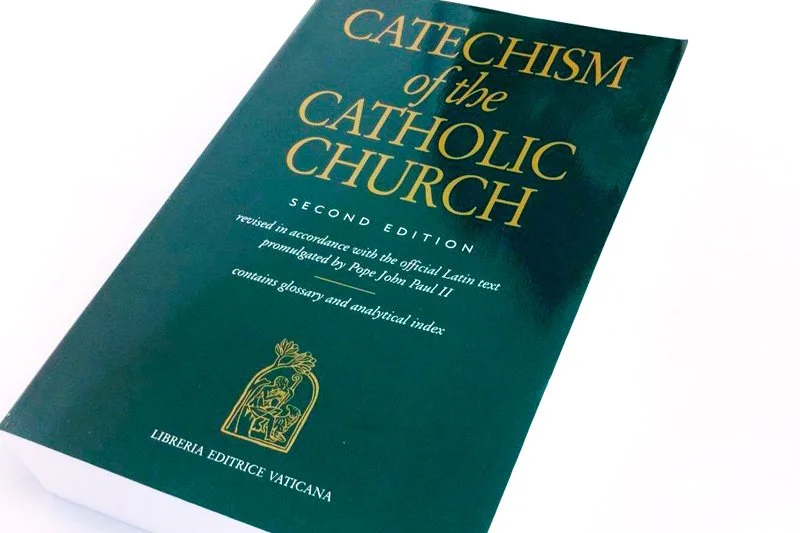
What do you call a Roman Catholic who believes the church’s teachings on centuries of moral theology, as in doctrines stated in great detail in the church’s official, and easily available, Catechism?

For journalists who do not trust the U.S. Conference of Catholic Bishops at this moment in time, here is the Vatican website copy of the Catechism.

According to the New York Times these pro-Catechism Catholics are part of a “rising right-wing strain within American Christianity as a whole” (I added bold text).

Then again, they might simply be “socially conservative and tradition-minded” folks. Or they may be people who support a “brand of new hard-right rhetoric and community” found in nasty corners of the Internet.

Then (yet) again, they may — this is the important part — be Donald Trump supporters.

But one thing they are not is normal Catholics. People who defend the stated teachings of the church are strange Catholics.

I raise this question because of a fascinating recent Times report that gained traction online for some obvious reasons. This feature was the hook for this week’s “Crossroads” podcast (CLICK HERE to tune that in). Here is the double-decker headline on what was, for me, a interesting but at times bipolar story:

Old Latin Mass Finds New American Audience, Despite Pope’s Disapproval

An ancient form of Catholic worship is drawing in young traditionalists and conservatives. But it signals a divide within the church.

What makes this story so strange?

First of all, it offers some interesting information and images about the waves of people — including many, many large young families — who are embracing the ancient Latin Mass. I would, however, note that just as many or more of these believers are choosing Catholic churches that use the modern Novus Ordo rite, but offer services packed with chants, incense, processions, traditional prayers and, yes, even the Latin form of the Vatican II text. Someone should check and see how many people are requesting Eastern Rite Catholic parishes, as well.

In other words, the current campaign by the Vatican and strategic cardinals (in some blue American zip codes, for example) against the Tridentine Mass and, in some cases, other traditional forms of worship, may be part of a broader story.


Please respect our Commenting Policy