Thinking about forced marriages (with the Forward), but also happy Catholic moms with lots of kids

Thinking about forced marriages (with the Forward), but also happy Catholic moms with lots of kids

At first glance, this weekend’s two “think pieces” appear to clash.

But readers (and viewers) who dig deeper will find two radically different looks at important and valid stories linked to marriage and family life in very different traditional religious communities — Jewish, fundamentalist Protestant and Islamic.

There is much here for religion-news professionals, and news consumers, to ponder.

One story is dark and hellish, looking at the reality of forced marriages in a few religious groups. The other glows with positive images and voices, as mothers in the United Kingdom share stories from their lives in large, traditional, Catholic families.

First, let’s look at this piece from Simi Horwitz at the Forward: “In 21st century America, where arranged child marriages remain a scourge.” The overture:

Kate Ryan Brewer’s “Knots: A Forced Marriage Story” is one disturbing, though important, documentary, one that grows increasingly unsettling as three articulate and intelligent young women matter-of-factly recount their belittling, exploitive, and ultimately dehumanizing experiences in forced marriages. Mercifully each has escaped and forged successful, independent lives; one has become a recognized outspoken activist on behalf of victims.

The filmmakers assert that the practice of arranged marriages, often involving brides who are 15 or younger, continues almost unchecked and unchallenged. In fact, the only states that require the marrying parties to be at least 18 are Delaware, New Jersey, Minnesota and Pennsylvania. Between 2000 and 2010, nearly 250,000 children in the U.S. were married, and 77 per cent were young girls wedded off to much older men. In some cases they were forced to marry their rapists in order to salvage their reputations and the family’s honor.

Please respect our Commenting Policy

New podcast: Among waves of Tulsa Massacre ink, a fine AP religion story pointed forward

New podcast: Among waves of Tulsa Massacre ink, a fine AP religion story pointed forward

The 100th anniversary of the Tulsa Race Massacre is one of those stories that punches every button that can be pushed in news coverage today, especially after months of news about the complex Black Lives Matter movement and its impact on American life.

Obviously, this is a story about history and the voices of the few survivors who are alive to talk about the impact of this event on their lives and their community. In many parts of America, this is a story that can be linked to similar horrors from the past. For starters, there were the Red Summer riots of 1919 here in Knoxville, Tenn., and elsewhere.

Obviously, this is a legal and political story right now as efforts continue to pull the details of the Tulsa Massacre into the light of day. Consider the top of this remarkable multi-media report from The New York Times: “What the Tulsa Race Massacre Destroyed.”

Imagine a community of great possibilities and prosperity built by Black people for Black people. Places to work. Places to live. Places to learn and shop and play. Places to worship.

Now imagine it being ravaged by flames.

In May 1921, the Tulsa, Okla., neighborhood of Greenwood was a fully realized antidote to the racial oppression of the time. … Brick and wood-frame homes dotted the landscape, along with blocks lined with grocery stores, hotels, nightclubs, billiard halls, theaters, doctor’s offices and churches.

Yes, many of the 13 churches in Greenwood were destroyed or damaged, as 35 square blocks were burned down. No one truly knows how many people died, but the estimate of 300 is almost certainly low, with reports of mass graves and bodies tossed in the Arkansas River. As many news reports noted, no one has ever been prosecuted the crimes linked to the massacre in and around what was known as America’s Black Wall Street.

Did the major news coverage of the anniversary — some of it staggering in its complexity and depth — cover the many religion angles of this story? Yes and no. As always, political voices and news hooks received the most attention.

But there was one Associated Press story in particular — “Tulsa pastors honor ‘holy ground’ 100 years after massacre” — that we discussed, and praised, during this week’s “Crossroads” podcast (click here to tune that in).


Please respect our Commenting Policy

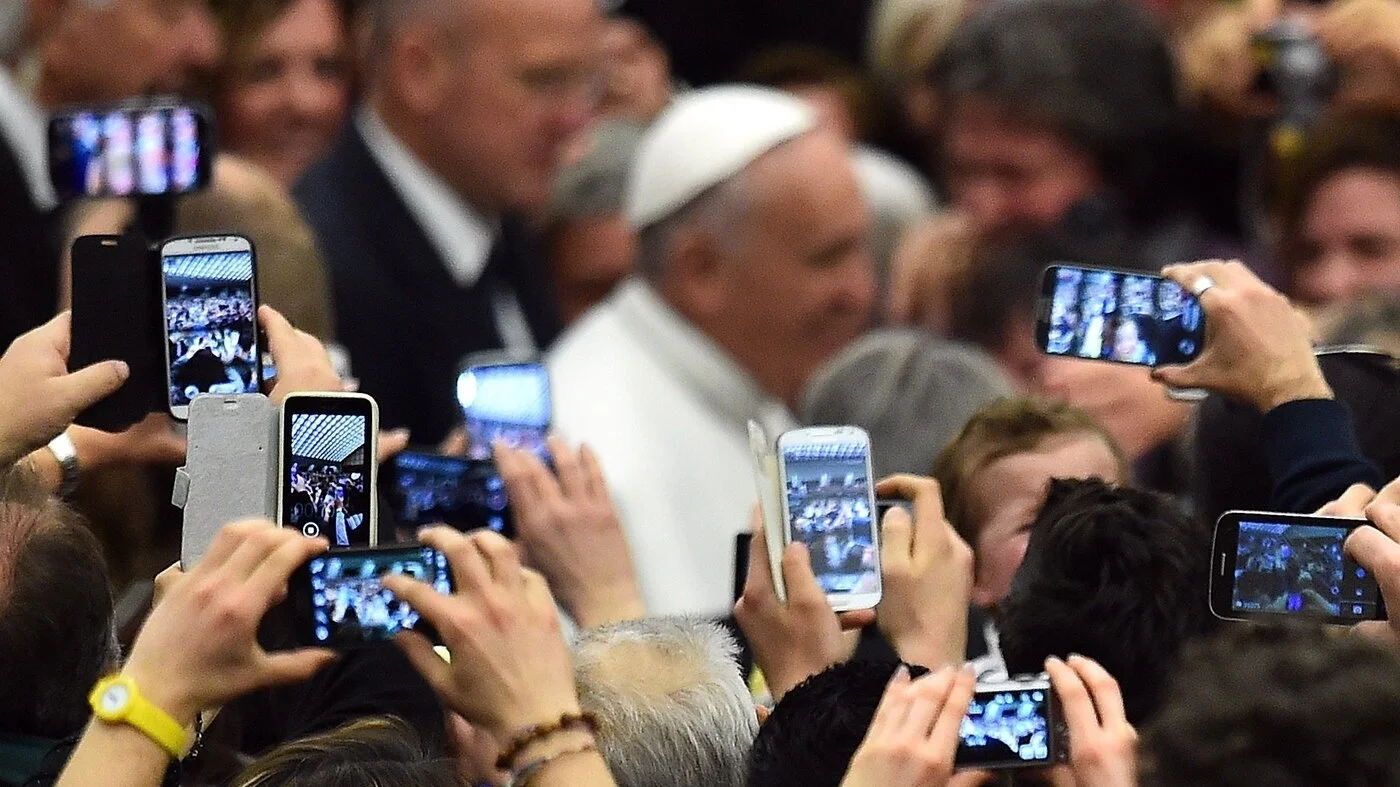
Pope Francis questions the purpose of official Vatican media: Does he have a point?

Pope Francis questions the purpose of official Vatican media: Does he have a point?

The year was 2012 and then-Pope Benedict XVI, yearning to “encounter men and women wherever they are, and begin dialogue with them” sent out his first tweet.

The papal Twitter account in English — and associated accounts in different languages — continue to this day under Pope Francis. For the leader of the world’s 1.3 billion Roman Catholics, it remains a way to evangelize through the computer, especially during the pandemic.

It did not go unnoticed when Francis — paying a visit on May 24 to the Dicastery of Communications to mark the 90th anniversary of Vatican Radio and the 160th anniversary of the Vatican’s newspaper L’Osservatore Romano — used the occasion to call the Vatican’s in-house media to stay relevant during a challenging media landscape.

The Associated Press, in its news story, noted the following:

Francis has vowed not to fire anyone to offset the economic crisis created by COVID-19 and the pandemic-related shuttering of one of the Holy See’s main sources of revenue, ticket sales from the Vatican Museums.

But in a warning of sorts to the Vatican communications staff, he opened his unscripted remarks Monday with a pointed question.

“There are a lot of reasons to be worried about the Radio, L’Osservatore, but one that touches my heart: How many people listen to the Radio? How many people read L’Osservatore Romano?” Francis asked.

He said their work was good, their offices nice and organized, but that there was a “danger” that their work doesn’t arrive where it is supposed to. He warned them against falling prey to a “lethal” functionality where they go through the motions but don’t actually achieve anything.

In dealing with Vatican-run media, journalists need to ask several questions:

* Why has Pope Francis questioned his own media?


Please respect our Commenting Policy

Boris Johnson's Catholic wedding: Why didn't the New York Times consult a Canon lawyer?

Boris Johnson's Catholic wedding: Why didn't the New York Times consult a Canon lawyer?

When preparing news reports about a chess match, it really helps if reporters quote one or more experts on the rules of chess.

The same thing is true when covering the FIFA World Cup. At some point, it would help to have an expert define “offsides” and some of soccer’s other more complicated rules.

When covering the U.S. Supreme Court, it helps to have a reporter on the team with a law degree and some serious experience covering debates in elite courtrooms.

This brings me that New York Times article the other day about that eyebrow-raising wedding at Westminster Cathedral between the current prime minister of England and his latest of many lady friends. The double-decker question covered many essential facts:

Why Could Boris Johnson Marry in a Catholic Church?

The British prime minister was married twice before, but the church didn’t recognize those unions because they were not Catholic.

Now, this article did some things very well, including offering a crisp, clear summary of Johnson’s complicated history as a husband and lover. Read that, if you wish.

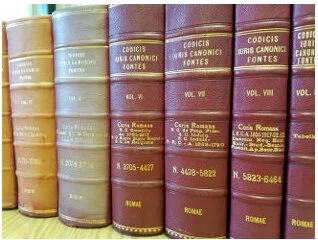
However, I was struck by two words that were missing in this article — that would be, “Canonical” and “form” — even though discussions of this legal term was all over Catholic Twitter once the secret wedding was made public.

What, pray tell, is “Canonical form”? We will get to that in a moment.

In terms of journalism basics, the crucial point is that it really would have helped if the Times team had interviewed one or two Catholic Canon lawyers who understand this term and the history behind the church’s teachings on this subject. As things turned out, readers ended up knowing more about how this rite offended the sensibilities of Catholic LGBTQ activists than the specifics of the church laws that allowed the wedding to take place.


Please respect our Commenting Policy

Demographics make news: How will religion shape the oncoming Birth Dearth and vice versa?

Demographics make news: How will religion shape the oncoming Birth Dearth and vice versa?

A Newsweek magazine feature back in 1975 was headlined "The Cooling World." (Journalists beware: The supposed 1977 Time magazine cover story "How to Survive the Coming Ice Age" is among the countless frauds that infest the Internet.)

Eventually, cultural concern shifted instead to "global warming" (which was then rebranded as "climate change").

Seven years before Newsweek's freeze alarm, Stanford University biologist Paul Ehrlich published his apocalyptic "The Population Bomb," which sold in the millions and updated Thomas Malthus's dire demographic predictions from 1798. Ehrlich warned, for example, that due to global overpopulation, in the 1970s "hundreds of millions of people are going to starve to death." He then helped found the Zero Population Growth organization (since rechristened Population Connection).

Now comes The New York Times with a major page-one May 23 feature headlined "Long Slide Looms for World Population, With Sweeping Ramifications." We're told fertility rates are falling most everywhere except Africa south of the Sahara Desert, and that experts project the first population decline in world history will take hold by the end of this century. Click here for tmatt’s podcast and first take on some of the religion hooks in that story.

Stagnant and shrinking populations will thrill a segment of environmentalists, but these trends also destabilize society — which creates news. Whether with the shared responsibilities families have always assumed, or modern-day governments' social security systems, humanity must have enough younger workers carrying older people to sustain itself.

To keep the population stable, a society needs 2.1 children in the average nuclear family. A survey in The Lancet last year predicted that 183 of the world's 195 nations and territories are on a path to fall below that mark.

The particulars are staggering. The United States is well below that replacement number, and India and Mexico are nearly there, but South Korea has plummeted to a remarkable 0.92.


Please respect our Commenting Policy

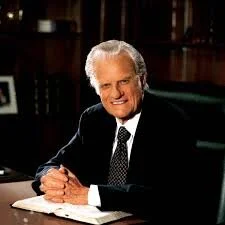
PBS special on Billy Graham claims the famous evangelist was always a political animal

PBS special on Billy Graham claims the famous evangelist was always a political animal

The best way I can describe the recent PBS special on the nation’s most famous evangelist is to say it’s a woke version of the life of Billy Graham.

It’s not only that the cast of commentators departs from the ranks of Graham’s largely white, male biographers to a mélange of scholars, several of whom are female or black and whose expertise on Graham remains unclear.

It’s how the nearly two-hour special that puts a political lense on everything — yes, everything — Graham did in his life and career. The show is barely a minute old when it comes up with the following quotes:

ANTHEA BUTLER, HISTORIAN: Billy Graham is like the Protestant pope.

WILLIAM MARTIN, BIOGRAPHER: There was a war between ambition and humility. He wrestled with that throughout his life.

REV. DR. JOHN HUFFMAN: Billy was attracted to political power like a moth is attracted to flame.

RANDALL BALMER, HISTORIAN: He was drawn to politicians. It was almost like a narcotic for him.

UTA A. BALBIER, HISTORIAN: The closer he moved Christianity to politics, the more he opened up the opportunity for Christianity being used to polarize, to politicize.

UTA A. BALBIER, HISTORIAN: He opened Pandora's box the second he stepped into the Oval Office for the very first time.

So, it’s simple to grasp right off the bat where this show is going. And the show’s director admitted the main idea was the explore the mix of politics and religion, curiously right after an era when conservative politics and conservative religion were bedfellows all four years of the Trump administration. Am I being skeptical in noticing the timing of this show?


Please respect our Commenting Policy

Thinking with Ryan Burge: Concerning young Latter-day Saints, third parties and life post-Trump

Thinking with Ryan Burge: Concerning young Latter-day Saints, third parties and  life post-Trump

There are times, when you are reading Ryan Burge on Twitter (which journalists should, of course, be doing) and you see signs that he has read some religion-news related item somewhere that has caused him to do that thing that he does — sift through lots of poll numbers looking for a new angle.

What we have here is a pair of tweets linked to a Christian Sagers think piece at The Deseret News that I had missed. The headline: “Are Latter-day Saint voters turning blue?”

That’s blue as in learning toward the Democratic Party, not feeling sad or depressed. That would be a huge news story hinting at other possible changes among centrists on moral and cultural issues.

Burge send me this comment containing what he thinks is the key question about this possible news twist.

The big question is: have younger LDS really abandoned the Republican Party? I don't think that we will ever know for sure until Trump is off the ballot completely.

So where to begin? Here is the overture in Sager’s piece, noting that a recent:

Cook Political Report concludes that all four of Utah’s congressional districts are among the most Democratic-trending in the country. Latter-day Saint voters in Arizona doubled their Democratic turnout from 2016.

Meanwhile, a Democratic activist group with whom I spoke recently is optimistic about converting Latter-day Saint women, traditionally Republican, who it believes to be rejecting the GOP in greater percentages than other religious demographics.

That candidate Donald Trump fared so poorly among members of The Church of Jesus Christ of Latter-day Saints in 2016 was met with astonishment in national media coverage and a flurry of conjectures that Latter-day Saints were up for grabs.

And yet, the political status of the Latter-day Saint voting bloc doesn’t fit into a tidy narrative. Yes, there are signs that some Latter-day Saints are reconsidering the modern GOP, but at the same time there are suggestions that Latter-day Saints remain reliably Republican.

Sure enough, there are other complications that need to be considered when looking at conservatives in this Donald Trump-warped political age.


Please respect our Commenting Policy

Plug-In: Tulsa Massacre centennial -- focusing on repentance, reconciliation, reparations

Plug-In: Tulsa Massacre centennial -- focusing on repentance, reconciliation, reparations

TULSA, Okla. — Today marks the 100th anniversary of the Tulsa Race Massacre, a truly dark moment in America’s history.

At the centennial, a prayer room at a downtown Tulsa church focuses on the sins of 1921 while asking God to bring healing, as I report here at ReligionUnplugged.com.

In separate dispatches for The Christian Chronicle, I explain how faith drives two leading advocates fighting for massacre justice and detail the racial unity effort by two Tulsa-area ministers — one Black, one White.

New Associated Press religion writer Peter Smith reports from Tulsa on how houses of worship commemorated the massacre Sunday.

At The Oklahoman, longtime faith editor Carla Hinton and her colleagues offer in-depth coverage, including a compelling story on how a modern-day Moses helped rebuild Tulsa’s Mount Zion Baptist Church.

A strong narrative piece by AP’s Aaron Morrison opens with a scene from Vernon African Methodist Episcopal Church, a congregation involved in a massacre reparations lawsuit that Religion News Service’s Adelle M. Banks highlights.

Check out the Tulsa World, too, for the latest developments, including a last-minute cancellation of a planned centennial event featuring John Legend and Stacey Abrams.


Please respect our Commenting Policy

'On Religion' flashback to 1998: Ten years of reporting on a church-state fault line

'On Religion' flashback to 1998: Ten years of reporting on a church-state fault line

Back in the 1980s, I began to experience deja vu while covering event after event on the religion beat in Charlotte, Denver and then at the national level.

I kept seeing a fascinating cast of characters at events centering on faith, politics and morality. A pro-life rally, for example, would feature a Baptist, a Catholic priest, an Orthodox rabbi and a cluster of conservative Methodists, Presbyterians, Episcopalians and Lutherans. Then, the pro-choice counter-rally would feature a "moderate" Baptist, a Catholic activist or two, a Reform rabbi and mainline Methodists, Presbyterians, Episcopalians and Lutherans.

Similar line-ups would appear at many rallies linked to gay rights, sex-education programs and controversies in media, the arts and even science. Along with other journalists, I kept reporting that today's social issues were creating bizarre coalitions that defied historic and doctrinal boundaries. After several years of writing about "strange bedfellows," it became obvious that what was once unique was now commonplace.

Then, in 1986, a sociologist of religion had an epiphany while serving as a witness in a church-state case in Mobile, Ala. The question was whether "secular humanism" had evolved into a state-mandated religion, leading to discrimination against traditional "Judeo-Christian" believers. Once more, two seemingly bizarre coalitions faced off in the public square.

"I realized something there in that courtroom. We were witnessing a fundamental realignment in American religious pluralism," said James Davison Hunter of the University of Virginia. "Divisions that were deeply rooted in our civilization were disappearing, divisions that had for generations caused religious animosity, prejudice and even warfare. It was mind- blowing. The ground was moving."

The old dividing lines centered on issues such as the person of Jesus Christ, church tradition and the Protestant Reformation. But these new interfaith coalitions were fighting about something even more basic – the nature of truth and moral authority.


Please respect our Commenting Policy