Did Winston Churchill believe in God? Why did Churchill urge his nation to pray?

Did Winston Churchill believe in God? Why did Churchill urge his nation to pray?

THE QUESTION:

Did Winston Churchill believe in God?

THE RELIGION GUY'S ANSWER:

Sorta. Maybe. Depends what you mean.

The question and that answer are raised in the new book "Duty & Destiny: The Life and Faith of Winston Churchill" (Eerdmans) by Grove City College historian Gary Scott Smith, whose prior works include "Faith and the Presidency from George Washington to George W. Bush."

It's fair to say that during World War Two Churchill saved the United Kingdom and with that the broader prospects for democracy and the defeat of tyranny. In the prior century, the Civil War President Abraham Lincoln had saved the United States and the very possibility of democracy. These two great statesmen, the subjects of an immense number of books, are rather similar -- and similarly mysterious -- when it comes to religious faith.

Lincoln's story is well told in "Abraham Lincoln: Redeemer President" (also from Eerdmans) by Princeton Professor Allen Guelzo. Never a baptized church member and a youthful skeptic, Guelzo wrote, Lincoln when leading the nation through unprecedented crisis experienced a spiritual turn. This convinced him that only a moral revolution to end slavery could bring meaning to the war's horrid slaughter.

Thus he wrought the Emancipation Proclamation, announced in 1862 and proclaimed in 1863 and then, definitively, the 13th Amendment, which abolished slavery as of December 6, 1865, after he had been assassinated.

Churchill (1874-1965) underwent conventional baptism and confirmation in the Church of England. In the upper-crust mode, his neglectful and non-religious parents left his upbringing to boarding schools (with their mandatory chapels) and especially to his beloved nanny. Elizabeth Everest, a devout Christian, immersed the lad in prayer and study of the Bible, which through life he would quote at length by memory.


Please respect our Commenting Policy

New podcast: New York Times still ignoring religion ghosts in 'demographic winter' trends

New podcast: New York Times still ignoring religion ghosts in 'demographic winter' trends

I could, without breaking a sweat, create a list of important religion-beat news stories that are, to some degree or another, connected to the sinking birth rates in the Unites States and around the world.

Clashes between Chinese leaders and Muslims inside their borders? Decades of declining numbers of men seeking Catholic priesthood? The sharp decline in the power of “mainline” Protestant churches? American political clashes between red-zip code and blue-zip code regions, usually seen as tensions between rural and urban life. Tensions between Orthodox and progressive Jews. Soaring numbers linked to anxiety and loneliness. And so forth and so on.

So when I saw this headline in The New York Times — “Long Slide Looms for World Population, With Sweeping Ramifications“ — I immediately thought to myself, “Here we go again.” I also figured that this would be the topic for this week’s “Crossroads” podcast (click here to tune that in).

Sure enough, this new feature was the global version of a Times story several years ago that led to a GetReligion post with this headline: “New York Times asks this faith-free question: Why are young Americans having fewer babies?” As I wrote at that time:

In a graphic that ran with the piece, here are the most common answers cited, listed from the highest percentages to lowest. That would be, "Want leisure time," "Haven't found partner," "Can't afford child care," "No desire for children," "Can't afford a house," "Not sure I'd be a good parent," “Worried about the economy," "Worried about global instability," "Career is a greater priority," "Work too much," "Worried about population growth," "Too much student debt," etc., etc. Climate change is near the bottom.

The economic and cultural trends are all valid, of course. But they also point toward changes in how modern people in modern economies define and look for “meaning in life” and the beliefs that define those choices.

Think birth, marriage, vocation, death. We are talking about topics that, for several billion people on this planet, are linked to religious faith.

So what did the Times have to say?


Please respect our Commenting Policy

Where will American religious groups fit into the newly electrified abortion debate?

Where will American religious groups fit into the newly electrified abortion debate?

The U.S. Supreme Court's agreement to review Mississippi's strict abortion law means that the public argument on this unending dispute will be the most intense in many years -- with a ruling due right in the midst of the 2022 election campaign.

Despite the Court's increased conservative majority, there's no certainty it will clamp new restrictions on abortion. Yet it's also possible that the Court might overthrow its own 1973 Roe v. Wade decision, which legalized most abortions nationwide in 1973.

If so, the impact will be momentous but not quite as apocalyptic as "pro-choice" advocates suggest. Abortion would remain widely available because decision-making would simply be returned to democratically elected state legislatures and many would maintain liberal policies. Charities might aid women in the "pro-life" states needing travel for out-of-state abortions.

For those covering the religion beat, the coming year is a major defining moment as America's variegated denominations state what they now believe about the morality of abortion and why.

After the Roe ruling, the 1976 conventions of the two major political parties began setting opposite stances. The Democrats' platform acknowledged that many Americans had "religious and ethical" concerns but opposed a Constitutional amendment to bar abortions. Similarly, the Republicans' platform stated that some in the party favored the Supreme Court's edict, but advocated such an amendment "to restore protection of the right to life for unborn children."

Religion writers well know how that basic split hardened and reshaped religious voters' political alignments. There's been less attention to the way the advent of open abortion turned around the Social Gospel thinking of Protestant liberals.


Please respect our Commenting Policy

Another trial by media: In defense of Mother Teresa and why she is a saint, not a 'cult leader'

Another trial by media: In defense of Mother Teresa and why she is a saint, not a 'cult leader'

Historical figures are going through another mass-media reckoning. They have been for some time. Some with good reason.

Christopher Columbus? Understandable given what was unleashed by his arrival from Europe.

Thomas Jefferson? A paradox that’s worth examining given his ability to pen the Declaration of Independence and also own slaves. In some cases, there is evidence that he fathered children with them.

Other figures haven’t been so obvious. Following the tragic murder of George Floyd last May, many statues were toppled or removed across the United States, including those of 18th century Spanish priest Junipero Serra, Abraham Lincoln and Mahatma Gandhi. These weren’t so obvious to explain. I’m not sure those who damaged them knew either.

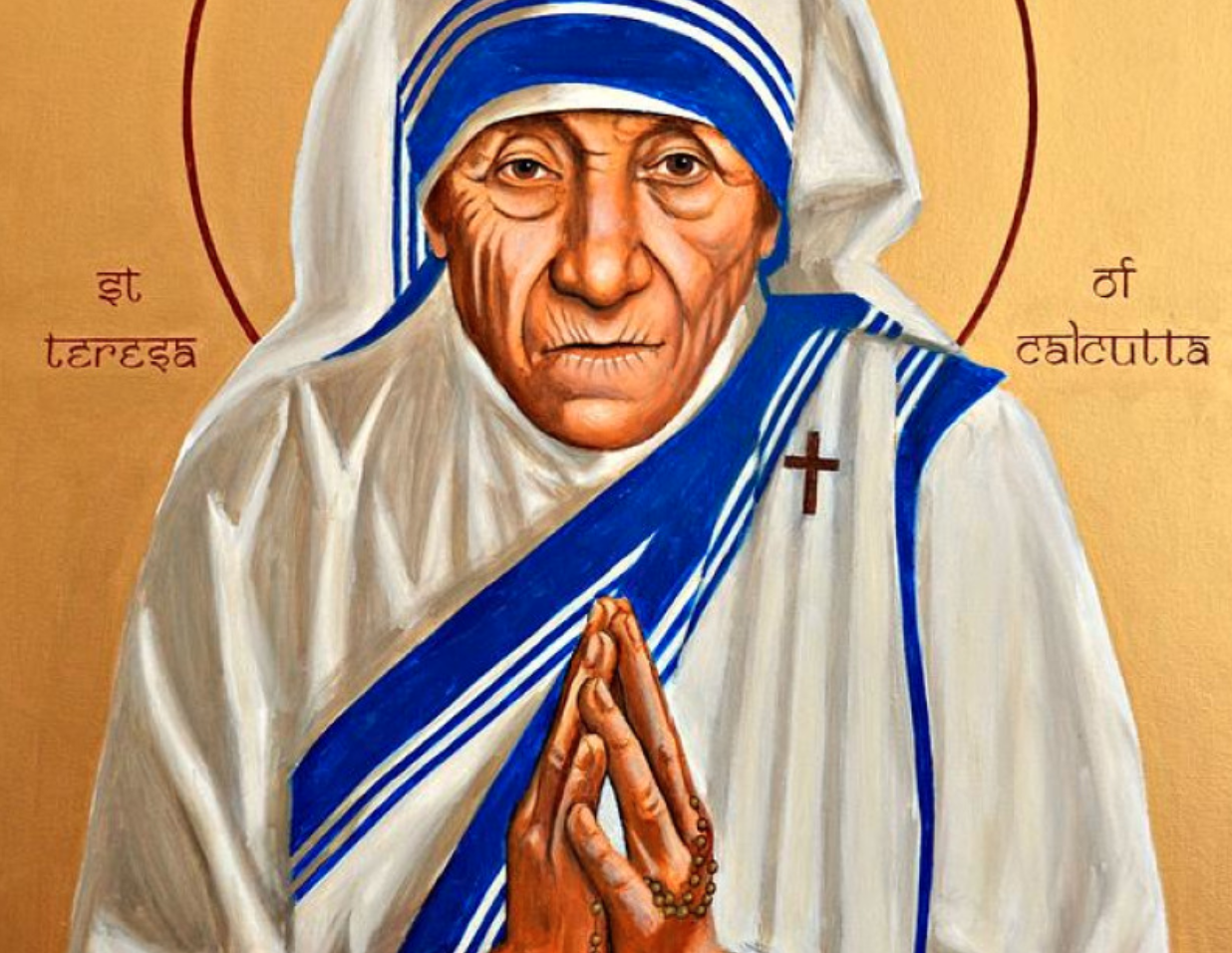
This takes me to the latest reckoning: Mother Teresa, now known as Saint Teresa of Calcutta.

Yes, that Mother Teresa. The diminutive woman who dedicated her life to helping “the poorest of the poor” in India. And the same one who was awarded the Nobel Peace Prize in 1979 and Pope Francis canonized a saint in 2016. Turns out she was a cult leader.

Michelle Goldberg penned an opinion piece in The New York Times, which ran Saturday on its website, under the headline: “Was Mother Teresa a cult leader?”

With a headline like that, is it possible the thesis will be that she wasn’t?


Please respect our Commenting Policy

Are religious and culturally conservative groups silenced on the Internet?

Are religious and culturally conservative groups silenced on the Internet?

Not all religious believers are conservatives.

I get that. But many are and not a few in this group have seen their posts frozen out of Facebook and other social media simply because some moderator thinks they’re spreading hate speech (which is usually posts defending centuries of Christian doctrine).

Big Tech has gotten reamed on this by members of Congress (which they seem to ignore) on the grounds of crushing political dissent. But what about religious views?

The National Catholic Register recently posted this thoughtful story about how the silencing of religious views (and the morality that emanates from them) affects Catholics who number some 51 million U.S. citizens or one-fifth of the population. This is not a small group. Here’s how the feature begins:

Lila Rose is no stranger to the tactics social-media giants Facebook and Twitter employed in banning former President Donald Trump from their platforms.

As head of the pro-life group Live Action, Rose has seen the organization she founded permanently banned from Pinterest, barred from advertising on Twitter and its entire TikTok account temporarily removed for unnamed “community violations.”

Rose gained some fame for her sneaking into abortion clinics as a teenager, posing as a girl seeking an abortion while recording everything with a video camera in her backpack to later accuse Planned Parenthood of looking the other way on statutory rape. She’s pictured with this post.

In remaining engaged on social media, where she and Live Action have a combined total of 5 million followers, Rose said she sticks to her message and tries to follow each platform’s guidelines. When an issue arises, she attempts to determine whether it was the result of a misunderstanding or mistake before pursuing a challenge.

“If you don’t have a clear case, saying you do when you don’t is not helpful,” she said. “I would caution people that just because your post is not getting a lot of shares or likes or you lost followers doesn’t mean it’s a nefarious scheme to destroy you. It’s important to have a lot of common sense and be thoughtful and discerning about whether this is truly the case.”

Still, for Catholics and others with conservative views, examples of Big Tech’s heavy hand abound, providing plenty of reasons to be concerned about access to social media.


Please respect our Commenting Policy

tmatt is far, far from his office desk: But the other GetReligionistas will carry on this week

tmatt is far, far from his office desk: But the other GetReligionistas will carry on this week

Let’s see.

How do I do this?

I need to channel the online style of Bobby Ross, Jr., the master of the short, punchy post in which a few short sentences quickly lead into tweets, photographs and bullet points.

So, the point of this little post is that I am gone for a week, or as gone as the Internet allows me to me. I am not even going to write an “On Religion” column for the Universal syndicate.

But GetReligion will stay open and you will see familiar bylines here all week. I may post a think piece at some point.

But let me offer some visual clues as to my location.

So I have departed my home in these lovely mountains:


Please respect our Commenting Policy

Plug-In: What 'Never Trumper' Russell Moore's departure from ERLC means for SBC

Plug-In: What 'Never Trumper' Russell Moore's departure from ERLC means for SBC

Religion News Service national writer Bob Smietana picked up one Moore big scoop this week.

Back in March, Smietana broke the internet with news of Beth Moore no longer identifying as a Southern Baptist.

This week, Smietana — one-time “longhaired, hippy wannabe songwriter” turned highly content religion reporter — was the first to confirm the embattled Russell Moore leaving the Southern Baptist Convention’s Ethics and Religious Liberty Commission.

The ERLC’s president since 2013 will join Christianity Today, the influential evangelical magazine founded by the late Rev. Billy Graham in 1956. He’ll “serve as a full-time public theologian for the publication and … lead a new Public Theology Project.”

At the Washington Post, religion writers Sarah Pulliam Bailey and Michelle Boorstein point out that Russell Moore “blasted former president Donald Trump and his evangelical fans.” His ERLC resignation prompts questions about the SBC’s future:

Moore’s departure from the convention’s Ethics & Religious Liberty Commission (ERLC) follows other high-profile exits from the denomination, including popular Bible teacher Beth Moore (no relation) and Black pastors. Some evangelicals are wondering what their departures signal about the direction of the convention, which has included louder voices on the far right in recent years.

Read additional coverage from The Tennessean’s Holly Meyer, the Wall Street Journal’s Ian Lovett and GetReligion’s Terry Mattingly.

Also, if you can’t get enough of Smietana and the Southern Baptists, check out this piece on “the grievance studies hoaxer and atheist” who is “on a crusade against what he sees as a ‘woke’ invasion of the nation’s largest Protestant denomination.”


Please respect our Commenting Policy

Bob Dylan turns 80, while Dylanologists keep arguing about signs of faith in his art

Bob Dylan turns 80, while Dylanologists keep arguing about signs of faith in his art

Night after night, Bob Dylan's 1979 Gospel concerts at San Francisco's Warfield Theatre made news for all the wrong reasons, according to angry fans.

The November 11th show opened with Dylan roaring into "Gotta Serve Somebody" from "Slow Train Coming," the first of what Dylanologists called his "born-again" albums.

"You may be a businessman or some high-degree thief," he sang. "They may call you doctor, or they may call you chief, but you're gonna have to serve somebody. … Well, it may be the Devil, or it may be the Lord, but you're gonna have to serve somebody."

To add insult to injury, these concerts included fiery sermons by Dylan, while he avoided classic songs that made him a legend.

"I was 19 years old and that was my first Dylan concert," recalled Francis Beckwith, who teaches Church-State Studies at Baylor University. "The atmosphere was highly charged. Some people booed or walked out. … There were people shouting, 'Praise the Lord!', but you could also smell people smoking weed."

Beckwith kept going to Dylan concerts, while following years of reports about whether the songwriter was still a Christian, had returned to Judaism or fused those faiths. These debates will continue as fans, critics, scholars and musicians celebrate Dylan's 80th birthday on May 24th.

With a philosophy doctorate from Fordham University in New York and a law degree from Washington University in St. Louis, Beckwith is certainly not a conventional music critic. He made headlines in 2007 when -- while president of the Evangelical Theological Society -- he announced his return to Catholicism.

To mark that birthday, Beckwith is publishing online commentaries on what he considers Dylan's 80 most important songs. The Top 10: "Like a Rolling Stone," "My Back Pages," "Stuck Inside of Mobile With the Memphis Blues Again," "Mr. Tambourine Man," "Visions of Johanna," "Tangled Up in Blue," "Blowin' in the Wind," "Precious Angel," "It's Alright, Ma (I'm Only Bleeding) and "Desolation Row."

Beckwith considered three factors -- popularity, lasting cultural significance and, finally, whether each song was "something I could listen to over and over." He stressed that Dylan's entire canon includes images and themes rooted in scripture and faith.


Please respect our Commenting Policy

Still thinking about (trigger alert) a scary Twitter topic -- Elizabeth Bruenig and motherhood

Still thinking about (trigger alert) a scary Twitter topic -- Elizabeth Bruenig and motherhood

At this point, I am a bit confused. What is the latest Twitter firestorm about Elizabeth Bruenig, the latest New York Times talent to hit the exit door for one reason or another? I may have missed a controversy or two in recent weeks.

You see, I am still stuck on the furor that greeting that essay published (May 7) just before she left the Gray Lady, the one with that terrifying headline: “I Became a Mother at 25, and I’m not Sorry I Didn’t Wait.”

I’ve been thinking about that one ever since and, thus, I have decided to treat it as a weekend think piece. But part of me still wants to argue that there was some kind of news feature that could have been written about that whole affair.

Yes, it was another example of folks in the blue-checkmark tribe losing their cool because someone triggered the urban, coastal principalities and powers. Can you say “fecundophobia”? However, this essay was also linked to some huge trends in postmodern America, especially crashing fertility rates and declines in the number of people getting married. There was news here, of some kind.

First, here is the Bruenig overture:

If someone had asked on the day of my college graduation whether I imagined I would still be, in five years’ time, a reliable wallflower at any given party, I would have guessed so. Some things just don’t change. What I would not have predicted at the time is that five years hence I would be lurking along the fringes of a 3-year-old’s birthday party, a bewildered and bleary-eyed 27-year-old mom among a cordial flock of Tory Burch bedecked mothers in their late 30s and early 40s who had a much better idea of what they were doing than I ever have.


Please respect our Commenting Policy