Terry Mattingly

AP covers the new Pentecost in United Methodist life, without mentioning Ms. Penny Cost

AP covers the new Pentecost in United Methodist life, without mentioning Ms. Penny Cost

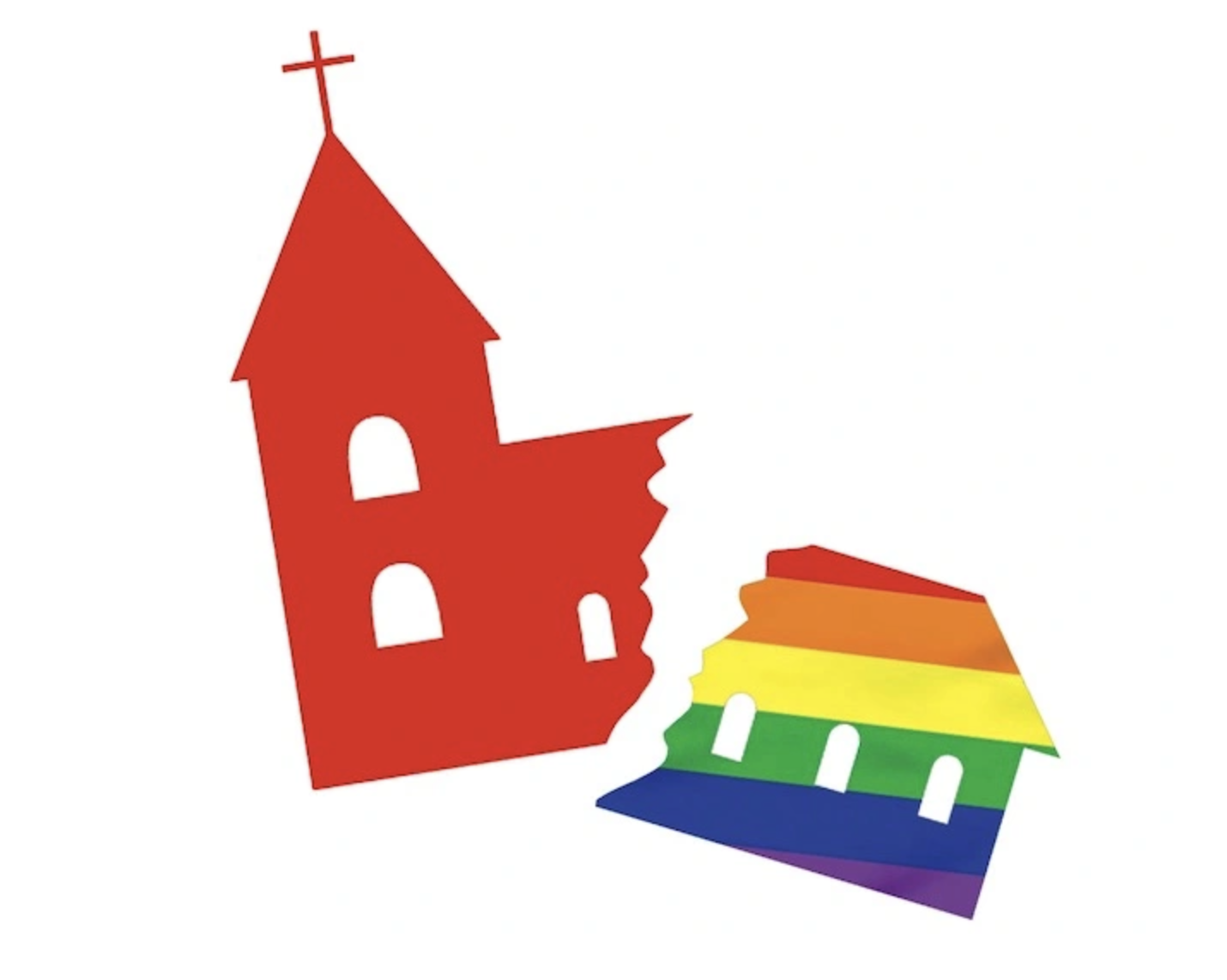
As I have stressed many times, I totally understand the challenges that religion-beat professionals face when attempting to do short, balanced, accurate hard-news stories about the 40 years of warfare inside the United Methodist Church over issues of marriage, sex, biblical authority and some core Christian doctrines about salvation and Christology.

I understand because I have been covering this story since my arrival at the old Rocky Mountain News (#RIP) back in 1983, with the church-discipline case of an openly gay UMC pastor, the Rev. Julian Rush. The progressive Rocky Mountain Annual Conference backed Rush and, well, the rest is history.

The biggest challenge in this story is helping readers understand why the Methodists who are defending the UMC Book of Discipline have decided to hit the exit doors, even though they have — for several decades — been winning the key votes at the global level of the denomination.

The problem is that the church establishment here in North America is actually running the show and the center-left leaders want to tweak the Discipline to allow more freedom for doctrinal progressives, while assuring mainstream Methodists that nothing will change at the local level unless their congregation wants it to change. See this recent post: “Why are United Methodists at war? Readers need to know that sexuality isn't the only fault line.”

The Associated Press recently shipped a long feature that tries To Explain It All, and there is much to praise in this piece. Here is the stating-it-mildly headline: “United Methodists are breaking up in a slow-motion schism.” Here is a long, long, essential piece of this feature that shows the complexity of these issues:

In annual regional gatherings across the U.S. earlier this year, United Methodists approved requests of about 300 congregations to quit the denomination, according to United Methodist News Service. Special meetings in the second half of the year are expected to vote on as many as 1,000 more, according to the conservative advocacy group Wesleyan Covenant Association.

Scores of churches in Georgia, and hundreds in Texas, are considering disaffiliation. Some aren’t waiting for permission to leave: More than 100 congregations in Florida and North Carolina have filed or threatened lawsuits to break out.

Those departing are still a fraction of the estimated 30,000 congregations in the United States alone, with nearly 13,000 more abroad, according to recent UMC statistics.

But large United Methodist congregations are moving to the exits, including some of the largest in Arkansas, Georgia, Louisiana, Oklahoma and Texas.

The flashpoints are the denomination’s bans on same-sex marriages and ordaining openly LGBTQ clergy — though many see these as symptoms for deeper differences in views on justice, theology and scriptural authority. The denomination has repeatedly upheld these bans at legislative General Conferences, but some U.S. churches and clergy have defied them.


Please respect our Commenting Policy

Yes, Southern Baptists are talking about '60 Minutes' (while Ryan Burge keeps doing the math)

Yes, Southern Baptists are talking about '60 Minutes' (while Ryan Burge keeps doing the math)

One thing is certain, if you follow political scientist Ryan Burge on Twitter. You are going to read quite a few things that you agree with and quite a few things with which you will disagree.

Here’s the key to that statement: It really doesn’t matter who “you” are. You can be a liberal mainline Protestant and you will read things that please you and things that infuriate you. Ditto, if you are Southern Baptist Convention leader.

If you are a religious “none,” in Pew Research Center terms, then Burge is mapping your life and beliefs, one chart after another. If you are a nondenominational, independent evangelical/charismatic leader, Burge was one of the first researchers who grasped that your world is now the fastest growing corner of the marketplace of American religion.

Burge makes many Southern Baptists mad. He also makes many Episcopalians and liberal mainliners mad, even though Burge is, himself, a progressive Baptist pastor/thinker as well as a political science professor at a state university. I would imagine, however, that leaders on the right and the left are learning that they are going to have to study the trends shown in all of those Burge charts on Twitter (and in his books).

To be honest with you, I can’t remember when I spotted Burge’s byline and I’m not sharp enough, in terms of computer skills, to spot the oldest item in the nearly 4,000 items that show up in a Google search for “Ryan Burge” and “Terry Mattingly.” I’m guessing 2018 or so. However, Burge has been cooperating with GetReligion for several years now, with me retweeting, oh, hundreds of his tweets with a “Yo. @GetReligion” slug. He also has allowed me to re-publish some of the essays he has written for the Religion in Public weblog (and for Religion Unplugged).

I bring all of this up for two reasons.

(1) Many news consumers who continue to follow legacy media may have seen him featured last night in a “60 Minutes” feature about the Rev. Bart Barber, the new president of the Southern Baptist Convention.

(2) Burge and I recently agreed on the format for a new GetReligion feature that we will call “Do the Math,” in which he will take four or five of his data-backed tweets and then connect them to spotlight trends that journalists need to follow.


Please respect our Commenting Policy

Will religious groups face questions linked to America's declining marriage stats? (Part II)

Will religious groups face questions linked to America's declining marriage stats? (Part II)

It's a message young people in the Church of Jesus Christ of Latter-day Saints hear early and often: You should get married, because marriage is wonderful and family life is at the heart of the faith.

The problem is that church leaders haven't grasped the power of cultural trends in technology, education and economics that are fueling sharp declines in statistics linked to dating, marriage and fertility, said Brian Willoughby of the Brigham Young University School of Family Life.

"The key word is 'tension,' " he said. Among the Latter-day Saints, these numbers are "not falling as fast" as in other groups, "but our young people are feeling tensions between the patterns they see all around them and what they hear from their parents and religious leaders.

“We are seeing the same changes -- only moving slower. The average age of people getting married is rising. Fertility rates are declining. … We can no longer assume that religious young people are some kind of different species."

It's urgent, he added, for congregations to "start making a more explicit case for marriage and family. Our young people know that marriage is important, but they don't know specific reasons for WHY it's important."

The result is what some researchers call the "marriage paradox." Young people continue to express a strong desire to "get married at some point," but they place an even higher priority on other "life goals," said Willoughby.

"Marriage becomes a transition in which they fear they will lose freedom or success. … They hear everyone saying: 'You go to these schools and get these degrees. You get job one that leads to job two. Don't let anything get in your way or get you off track.' With this kind of head-down approach, serious relationships can be a distraction on the path to success. … The heart isn't as important."

Thus, marriage isn't disappearing, but the population of young adults choosing marriage is shrinking -- especially among those with little or no commitment to religious life.


Please respect our Commenting Policy

Thinking about online temptations: Maybe Catholics should log off now and then?

Thinking about online temptations: Maybe Catholics should log off now and then?

If you know anything about religion and social-media, you know that Catholic Twitter can be a wild place.

Niche digital religion is really something. I mean, if Elon Musk decided to swim the Tiber, all of the Big Tech servers would probably turn to pillars of salt. If he became an evangelical Protestant this White House might resort to nuclear weapons.

The question many Catholic priests, and other mainstream religious folks, have asked is rather basic: Is something like Twitter a good, safe, worthy place to invest their talents? Or should they consider it a dangerous waste of time?

I’ve read some interesting essays on topics related to this question and, this time, I will share one as this weekend’s think piece. The headline at RealClearReligion.org is rather blunt: “Catholics, Log Off.” The author is Jack Butler, an editor at National Review Online and a fellow at the Institute for Human Ecology at the Catholic University in America.

Let’s start with the obvious: What would Satan tweet?

The fight against Lucifer was going pretty well — until the devilish enginery appeared. As John Milton depicts the battle of Satan's rebellious angels against the forces of Heaven in his epic poem "Paradise Lost," the demons were on the backfoot, until they devise "implements of mischief" that will "dash/To pieces, and orewhelm whatever stands/Adverse, that they shall fear we have disarmd/The Thunderer of his only dreaded bolt."

Not all artifices are inherently evil. But if the prayer to St. Michael the Archangel is true and demons "prowl about the world, seeking the ruin of souls," they can show up in our devices, too. William Peter Blatty suggests this in his novel "The Exorcist." The demon Pazuzu, having possessed a young girl, is asked if it minds being recorded. "Not at all," the demon says. "Read your Milton and you'll see that I like infernal engines. They block out all those damned silly messages from him."

But what does it mean for technology to obstruct our path to God?

To put this in small-o “orthodox” theological terms, technology is merely another development in a world that is both glorious and fallen.


Please respect our Commenting Policy

Loretta Lynn: A tough, trailblazing woman whose edgy art included doses of grit and faith

Loretta Lynn: A tough, trailblazing woman whose edgy art included doses of grit and faith

If you know Nashville, then you probably know that there is nothing new about major country music stars also being Christian believers. In fact, it’s probably worthy of a headline or two if and when superstars send signals that they’re NOT at home in the Bible Belt.

That being said, I am still amazed when journalists produce stories about country artists and edit out the details in their lives and music that point toward faith. It happens all the time.

I’m not just talking about musicians putting a gospel song or two in their set lists when touring, as a kind of music-history exercise. I’m talking about reporters missing revelations in autobiographies, social-media statements to fans or mini-sermons on stage. I’m talking about passing up chances to talk with pastors who have known performers for years.

This brings me to the death of honky-tonk angel herself, Loretta Lynn — the matriarch for a generation or more of female artists in guitar town. As you would expect, the obits following her death stressed — with good cause, let me stress — her daring hit songs about blue-collar American life, with strong doses of reality about hard times, troubled homes, cracked marriages and lots of other sobering subjects.

Which is why, to cut to the chase, it’s even more important that this legend turned to Christian faith as an adult, in the midst of all that gritty stuff. Hold that thought. Here is a chunk of the Associated Press report that will appear in most American newspapers:

The Country Music Hall of Famer wrote fearlessly about sex and love, cheating husbands, divorce and birth control and sometimes got in trouble with radio programmers for material from which even rock performers once shied away.

Her biggest hits came in the 1960s and ’70s, including “Coal Miner’s Daughter,” “You Ain’t Woman Enough,” “The Pill,” “Don’t Come Home a Drinkin’ (With Lovin’ on Your Mind),” “Rated X” and “You’re Looking at Country.” ...

Lynn knew that her songs were trailblazing, especially for country music, but she was just writing the truth that so many rural women like her experienced.

“I could see that other women was goin’ through the same thing, ‘cause I worked the clubs. I wasn’t the only one that was livin’ that life and I’m not the only one that’s gonna be livin’ today what I’m writin’,” she told The AP in 1995.

All true.


Please respect our Commenting Policy

Faith, family, dating and the looming marriage crisis in America (Part I)

Faith, family, dating and the looming marriage crisis in America (Part I)

For decades, viewers have enjoyed the Japanese reality-TV series "Old Enough!" in which preschool children venture into the streets alone to run errands for their parents.

What if American women asked their live-in boyfriends to stop playing videogames, leave their couches and run errands? In the Saturday Night Life sketch "Old Enough! Longterm Boyfriends!" guest host Selena Gomez asked her helpless boyfriend of three years, played by cast member Mikey Day, to buy her eyeliner and two shallots.

This man-baby ends up in tears with a big bag of onions and "a blush palette for African-American women." The frustrated girlfriend says she may need a mid-morning glass of wine.

There was wisdom in that comedy, for pastors willing to see it, said sociologist W. Bradford Wilcox, director of the National Marriage Project at the University of Virginia.

"There's a whole class of young men who are not flourishing personally and professionally. … The systems have broken down that help raise up attractive, successful men. Churches used to be one of those support systems," he said, reached by telephone.

"The future of the church runs through solid marriages and happy families. The churches that find ways to help men and women prepare for marriage and then encourage them to start families are the churches that will have a future."

The crisis is larger than lonely, under-employed and Internet-addicted men. Rising numbers of young women are anxious, depressed and even choosing self-harm and suicide.

The coronavirus pandemic made things worse, but researchers were already seeing danger signs, noted San Diego State psychology professor Jean Twenge, in a recent Institute for Family Studies essay.


Please respect our Commenting Policy

Podcast: Are sweaty men exercising at dawn (then praying) a New York Times story?

Podcast: Are sweaty men exercising at dawn (then praying) a New York Times story?

Anyone who watches advertisements during football games knows that American men are doing just great, these days.

There appear to be gazillions of racially diverse circles of thin men out there — roughly 30-50 years of age — who get together all the time in sports bars with loads of disposable income to spend on beer and mountains of chicken wings in a wide variety of flavors. Others travel all over the place in their rad sports vehicles or those pick-up trucks that are part troop-carriers, part luxury vehicles.

There are some rotund, middle-aged, often bald, White losers out there, of course, but their family members or lovers are still around to laugh at their misadventures.

Yes, this screed from an elderly guy (on a diet, even) is directly connected with this week’s “Crossroads” podcast (CLICK HERE to tune that in). This week’s program focused on a fine, fascinating New York Times piece by religion-beat pro Ruth Graham. The double-decker headline on this piece proclaimed:

For Suburban Texas Men, a Workout Craze With a Side of Faith

In Katy, outside Houston, many men have taken up F3, a no-frills fitness group where members push themselves physically but also bond emotionally.

I heard from several readers praising this story (and followed buzz on Twitter) and people kept saying: What inspired the Gray Lady to do a positive story about a bunch of evangelical men (one with a “Republic of Texas” tattoo) bonding through exercise, fellowship, service and prayer?

The first answer: The story was written by a veteran religion reporter, not someone off the political or strange cultures desk. The men talk, they tell their own stories. They are not walking straw men ready for a beating. By the way: It also looks like F3 groups, or at least the one in this feature, are pretty diverse in terms of race. Hold that thought.

I think the crucial statement is at the top of the article and it isn’t the lede. Here is the note from the editors:

We’re exploring how America defines itself one place at a time. In a Houston suburb, men have been flocking to a workout group that promises more than just a sweat session; together, they aim to ease male loneliness.

Note the touch of humility: “We’re exploring how America defines itself one place at a time (I added the bold type). The goal here is to let Americans outside describe their own lives, as opposed to the Times doing that for them?


Please respect our Commenting Policy

This just in! Southern Baptists are still very conservative on issues of marriage and sex!

This just in! Southern Baptists are still very conservative on issues of marriage and sex!

Let’s face it, it’s rather hard for a congregation to be “removed from fellowship” — that’s Baptist-ese for “kicked out” — from the Southern Baptist Convention.

After all, are we talking about ties being cut to the local association, a state convention (some states, for doctrinal reasons, have more than one) or the various programs linked to the national SBC? Then there are, for extra-conservative or extra-progressive congregations, alternative “fellowship” networks that have their own vague relationships with the larger SBC ship.

Finally, if a church is “removed from fellowship” and any or all of these levels of voluntary association, it may simply become an independent autonomous Baptist church, as opposed to an autonomous SBC church. Most local folks will never know the difference and independent, often nondenominational, congregations are the fastest growing sector of American religious life.

But if you dig into the Google search in my first paragraph, you will see that churches have been pushed out the exit door of SBC life for several reasons and that this is nothing new. However, it is true that these churches are being kicked out for reasons that many (not all) journalists may consider more worthy of coverage than others. Think “politics.”

Consider this summary material from a New York Times piece last year that ran with this headline: “Southern Baptists Expel 2 Churches Over Sex Abuse and 2 for L.G.B.T.Q. Inclusion.”

The Southern Baptist Convention is the nation’s largest Protestant denomination and has been increasingly divided in recent years over a variety of cultural and political issues, including racism, sexuality and white evangelicals’ embrace of former President Donald J. Trump. …

[A]n increasingly influential conservative wing of the denomination accuses those leaders of prioritizing “social justice” over biblical truth. They denounce the encroachment of “critical race theory” — an academic framework intended to capture the deep influence of racism — and accuse the S.B.C.’s national leadership of being out of step with the rank and file.

It’s pretty easy to spot the subjects that would leap into headlines, right?

There is, for example, nothing new about “progressive” Baptist congregations veering to the doctrinal left on issues linked to gender and sexuality.


Please respect our Commenting Policy

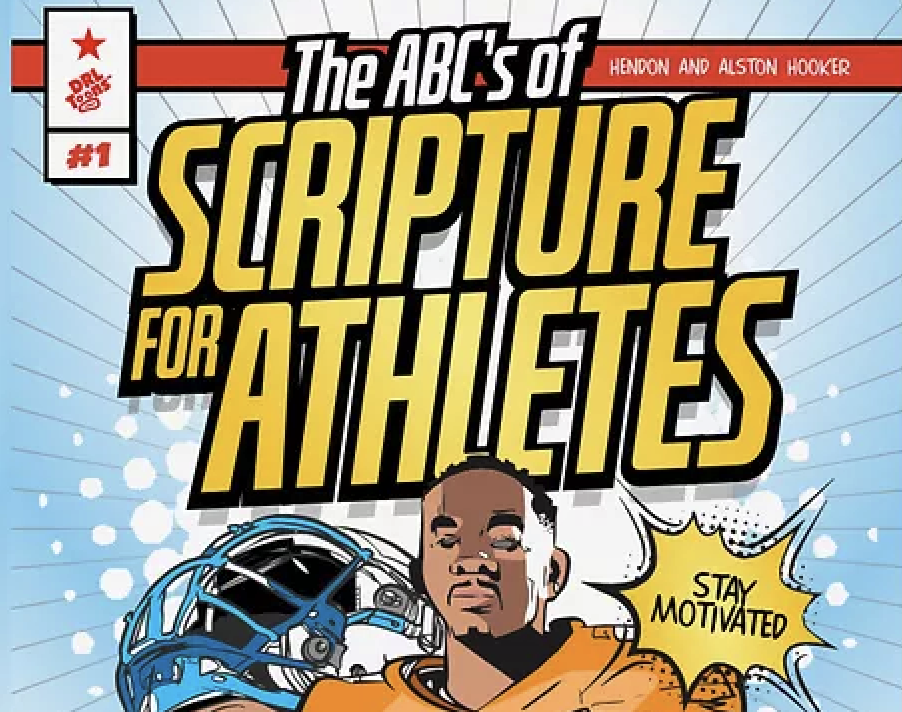
It's hard to miss the facts about faith, and scripture, in Tennessee QB Hendon Hooker's life

It's hard to miss the facts about faith, and scripture, in Tennessee QB Hendon Hooker's life

This post has nothing to do with the game in which the University of Tennessee Volunteers hung on to defeat the Gators of the University of Florida (click here for highlights).

Well, there is some connection. But the goal here is, once again, to urge sports journalists to listen to what many athletes have to say when asked questions about what makes them tick — as people and as leaders in their sports communities. I’ve written a hundred or so posts (it seems) on this subject during the past 18 years or so.

Consider this a refresher memo on that topic, since Vols senior quarterback Hendon Hooker — after the post-game shows this past weekend — has officially entered the Heisman Trophy chatter zone.

In this case, Hooker isn’t the stereotypical athlete who uses vague God-talk during sideline interviews or in his post-game press conferences. While that kind of language can be important, I have always thought that journalists need to look for deeper signs of faith — in friendships, family ties and concrete actions in daily life.

Thus, let me note a story of two in East Tennessee media that spotted crucial faith facts about this calm, steady quarterback and worked them into a sports-page basic — the pre-game rituals feature. The headline at the Knoxville News Sentinel read: “How Hendon Hooker will calm his nerves before Tennessee football plays Florida.” The faith issue even made it into the overture:

Neyland Stadium will be rocking before Tennessee football plays Florida … , but Hendon Hooker will go into slow-jam mode and lean on his faith.

ESPN’s College Gameday will rev up the crowd. Checker Neyland will create quite a scene. And the sellout crowd will shake the stadium moments before the Vols run through the Power T.

A few lines later there is this basic quote:

“I just go into meditation mode and put my gospel playlist on,” Hooker said Monday. “I really just listen to a lot of slow jams and really just relax. I kind of go through the locker room and dap up everyone, just to make sure that I’m ready to roll. And they give me the reassurance back by the look in their eyes that they’re ready to roll too.”


Please respect our Commenting Policy