Scriptures

Hillbilly Thomists: Dominican brothers singing about the Americana ties that bind

Hillbilly Thomists: Dominican brothers singing about the Americana ties that bind

With its sobering lyrics and a droning country-blues riff, "Holy Ghost Power" by the Hillbilly Thomists is a song with zero chance for Christian radio success.

The jilted protagonist has been "living off of grits, whiskey and Moon Pies." His man cave offers no refuge: "A hundred channels of nothing on the TV at 10. It's like Diet Coke and original sin. … Now it's a zombie town, there's a lot of undead. They wander around looking underfed."

But the chorus offers hope: "He makes a rich man poor; He makes a weak man strong. No more going wrong just to get along. I felt the force of the truth when they pierced His side. I saw the war eagle dive and I could not hide."

It wouldn't shock old-school country fans if this was a Johnny Cash song. But it was written by a banjo-playing Dominican from Georgia who has an Oxford theology doctorate and now leads the Pontifical University of Saint Thomas Aquinas. Writing to the National Reso-Phonic Company, Father Thomas Joseph White said he likes to play this classic blues guitar "in my office looking out at the Roman Forum that's 2,700 years-old."

That makes sense in the Hillbilly Thomists, a "musical collective" of Dominicans, most of whom have Bible-belt roots. The band recently staged a concert in the Grand Ole Opry and, over the past decade, has recorded three albums of music that would sound at home at Appalachian fairs, but not in most church halls.

There's a vital tie linking these songs to the life and work of this band of priests and brothers, said Father Simon Teller (who plays fiddle). Whether singing Appalachian hymns or their own original songs, the Hillbilly Thomists -- dressed in the white habits of their order -- keep returning to images of suffering, sorrow, eternity, hope, grace and redemption.

"We're priests in the Dominican order and that kind of states our vision of the world and the faith and everything we do," he said. "In our day job, we're working a lot with people who are dealing with very concrete situations and have a lot of very concrete questions."

"Holy Ghost Power," for example, is "not sung from the voice of a clergyman. It's sung with the voice of a man who's living a very ordinary life that is going off the rails in a very ordinary way," said Teller. "There's a malaise there and he's unsatisfied by the things of this world."


Please respect our Commenting Policy

Podcast: Journalists should ask if faith-based schools clearly state their doctrines on sexuality

Podcast: Journalists should ask if faith-based schools clearly state their doctrines on sexuality

I forget who originally came up with the term “Romeaphobia.”

This can be defined as the hatred or fear of all things that can be viewed as links to Roman Catholicism or the early church in general. Obviously, this affects issues linked to worship and church governance. However, in my experience (I grew up in Texas), many evangelicals (especially Baptists) have a fear of clear, authoritative doctrinal statements that, you know, might be interpreted as “Roman” creeds. All together now: We are “Bible Christians” and that’s that.

I am not saying this to take a shot at my heritage (I am very thankful for the deep faith and examples of my family and my father was a Southern Baptist pastor). The reason I mention this up is because, in my opinion, this anti-creedal Romeaphobia is playing a major role in an important news story all over America. This was the hook for this week’s “Crossroads” podcast (CLICK HERE to tune that in).

Does this USA Today headline sound familiar? It should, for readers from sea to shining sea: “Christian Florida school tells parents gay and transgender students must 'leave immediately'.”

My goal here is to offer advice to reporters who want to do accurate, fair-minded coverage of these church-state skirmishes (let’s hope there are some out there). I’m also offering press-relations advice to terrified leaders of Christian schools at all levels, from kindergartens to colleges. The Romeaphobia angle? That takes us into legal nuts-and-bolts questions about these conflicts.

Let’s start with the rather familiar USA Today overture:

A Florida-based Christian school sent out an email informing parents that LGBTQ-identifying students "will be asked to leave the school immediately."

According to the email obtained by NBC News, the top administrator of Grace Christian School in Valrico, Florida, Barry McKeen, sent the email to the families for the kindergarten-grade 12 school on June 6. He later confirmed and doubled down on the policy in an Aug. 18 video on the school's official Facebook page.

The June email read: "We believe that any form of homosexuality, lesbianism, bisexuality, transgender identity/lifestyle, self-identification, bestiality, incest, fornication, adultery and pornography are sinful in the sight of God and the church. Students who are found participating in these lifestyles will be asked to leave the school immediately."

For starters, private schools — liberal and conservative — have First Amendment rights, including the right to clearly state their foundational doctrines and, thus, disciplines that apply to staff, faculty and students. Tip No. 1 for reporters and church leaders: Get to know the details of the UNANIMOUS 2011 U.S. Supreme Court decision commonly referred to as the Hosanna Tabor case.

But we need to figure out what actually happened in this Florida case.


Please respect our Commenting Policy

Look at a United Methodist timeline: Why are conservatives going nuclear with lawsuits?

Look at a United Methodist timeline: Why are conservatives going nuclear with lawsuits?

The slowly evolving trainwreck that is the disunited United Methodist Church is an unbelievably complicated story and I have lots of sympathy for journalists who are being asked to cover it — week after week — in normal-length news reports.

I have some right to say this, since I have been covering this story since 1984 or earlier.

For starters, there is no one United Methodist Church and there hasn’t been one for decades. See this flashback column that I wrote a few years ago: “Old fault lines can be seen in the ‘seven churches’ of divided Methodism,” which was followed by “Doctrinal debates that define the divided United Methodists.

The bottom line, once again: This war has always been about biblical authority and a host of other doctrinal clashes, with battles about homosexuality grabbing the headlines.

Anyway, I was reading another update from The Nashville Tennessean the other day — “United Methodists grapple with schism as 300-plus churches leave across U.S.” (high paywall) — and something hit me (other than the fact that “schism” still isn’t an accurate word for what is happening here). The key was looking at several key events on a timeline.

First, let’s plug in a key fact from a recent Religion News Service report about the doctrinally conservative UMC congregations who are trying to hit the denominational exit doors in Western North Carolina and Florida. The lawyers trying to sue the UMC establishment are, you see, are working on a deadline

A lawyer for the Western North Carolina Annual Conference, which has more than 1,000 congregations, responded … saying it would not comply since the request does not follow the disaffiliation plan approved by a special session of the United Methodist Church’s General Conference in 2019.

That plan allows churches to leave the denomination through the end of 2023. They can take their properties with them after paying two years of apportionments and pension liabilities.

Tick, tick, tick.

That 2019 General Conference was, of course, the watershed event in which a coalition of growing Global South churches and some conservative Americans infuriated the shrinking UMC establishment by passing the “Traditional Plan,” while also (#TriggerWarning) urging enforcement of “Book of Discipline” doctrinal stands on marriage and sexuality.


Please respect our Commenting Policy

Plug-In: Why my old school district pulled 41 books from libraries -- including the Bible

Plug-In: Why my old school district pulled 41 books from libraries -- including the Bible

I don’t remember the Keller Independent School District making national headlines when I was a student here in the 1980s. Even back then, this North Texas community — which began with a railroad extension from Fort Worth in the 1850s — was growing.

But in my time at Keller High School, then the district’s only high school, Keller was still more farm town than burgeoning suburb. We had one grocery store along U.S. 377 and no McDonald’s — I drove to nearby North Richland Hills to flip Quarter Pounders my junior and senior years.

An old gray water tower that proclaimed “Keller: Home of the Indians” greeted visitors to our town, referring to the school mascot. I edited the student newspaper The Wigwam, played sousaphone in the marching band and graduated 23rd in a class of about 300 in 1986. The next year, our former drum major, Michelle Royer, won the Miss USA Pageant — the biggest news I recall from those days.

My parents still live in the area, so I visit frequently and have witnessed Keller’s explosive growth, including multiple exits along Interstate 35.

This week, I’ve watched with interest as the Keller school district’s decision to remove 41 books from its libraries, including the Bible and an illustrated version of “Anne Frank’s Diary,” has made headlines everywhere from the Texas Tribune to the New York Times. What in the world is happening?

Basically this: The national culture wars have come to the local school board. And not just in Keller.

A previous Plug-in highlighted stories by the Fort Worth Star-Telegram’s Emily Brindley and The Tennessean’s Liam Adams on school board candidates campaigning on Christianity and conservatism.

Each of the books pulled in Keller — including the Bible — was challenged by a parent, lawmaker or other community member in the last year, USA Today’s Jeanine Santucci reports.

The Washington Times’ Mark A. Kellner points out:

“Anne Frank’s Diary: The Graphic Adaptation” is an illustrated version of the bestselling classic written by a young Jewish girl in the Netherlands as she and her family hid from Nazi occupation forces. The story ended when the Franks were captured and sent to concentration camps; Anne and her sister Margot died, most likely of typhus, in the Bergen-Belsen camp. Her father Otto survived and published the diary, which had been hidden by his secretary, after the war.


Please respect our Commenting Policy

Some trends in global Anglican Communion are starting to look rather Black and White

Some trends in global Anglican Communion are starting to look rather Black and White

There was nothing unusual about Nigerian Archbishop Henry Ndukuba leading the 2021 dedication rites for Holy Trinity Cathedral Church, which was packed with Nigerian Anglicans and a dozen or so bishops.

But this historic service was held in Houston and the cathedral is not part of the Diocese of Texas or the U.S. Episcopal Church. Some clergy at this Church of Nigeria North American Mission event were recognized as Anglicans by the Archbishop of Canterbury. Some were not.

This puzzle became more complicated recently during Lambeth 2022, which Nigeria boycotted, along with the churches of Uganda and Rwanda. Other Global South bishops, during Lambeth standoffs with Archbishop of Canterbury Justin Welby over the status of doctrines on marriage and sex, declined to receive Holy Communion with openly gay and lesbian bishops.

"There is a profound asymmetric quality to the Anglican Communion, where the voice of the bulk of its membership is either absent or muted," said the Rev. David Goodhew of St. Barnabas Church in Middlesborough, England. He is the author of a series of articles about African Anglicanism for Covenant, the weblog of The Living Church, an independent Anglican publication founded in 1878.

"If one adds up the number of bishops who didn't share Holy Communion at Lambeth … that is a very large number," he said. "I have been startled by the number of descriptions that said this Lambeth was a success. I don't know how one makes that claim when it would appear the bulk of the Anglican Communion's bishops couldn't come together to receive Communion. That looks like a disaster."

Bottom line: Global South Anglicans are experiencing a "volcano of growth" and remain "at loggerheads" with the shrinking churches of the United Kingdom, North America and other western nations. While most Global South bishops serve growing flocks -- roughly 75% of active worshipers in the 77-million-member Anglican Communion -- many western bishops lead what Goodhew called "micro-dioceses" with under 1,000 active members or "mini-dioceses" with fewer than 5,000.

The Church of Nigeria, meanwhile, claims 17 million members and the Center for Global Christianity at Gordon-Conwell Seminary, near Boston, estimates active participants at 22 million. The other churches skipping Lambeth 2022 were Uganda, with 10 million members, and Rwanda, with 1 million members.

The Church of England remains Anglicanism's power hub. It has 26 million members, but 2019 weekly attendance was about 679,000 -- before the COVID-19 crisis.


Please respect our Commenting Policy

A religion, academic and business story: Is there a 'best' Bible to use and quote?

A religion, academic and business story: Is there a 'best' Bible to use and quote?

RACHAEL ASKS:

Is there a Bible that’s the most accurate?

THE RELIGION GUY’S ANSWER:

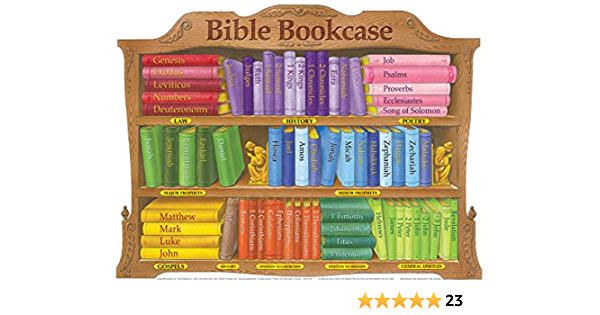
Almost all the varied 20th and 21st Century English translations on sale are sufficiently accurate and can be relied upon, though debates will never end on some details.

The first and fundamental aspect of accuracy is experts’ shared consensus on the best available texts in the original languages of Hebrew and Greek that underlie all translations, based upon a far richer body of surviving manuscripts than we have for other ancient writings. Here’s a somewhat over-simplified rundown.

Hebrew versions of the Jewish Bible or Tanakh, which Christians call the Old Testament, employ Judaism’s authoritative Masoretic Text. The ancient Hebrew language did not use written vowels, so medieval scholars known as Masoretes added “vowel points,” markings that standardized oral traditions on the correct readings of the words. This led to the 9th Century Aleppo Codex, corroborated by the 11th Century Leningrad Codex and other rabbinical manuscripts.

These carefully preserved texts are virtually identical in wording, though with some variations in pointing, and provide the basis for Jewish and Christian Bibles. The 15th Century emergence of printed Bibles further standardized the Hebrew text. The 20th Century rediscovery of biblical books among the 2,000-year-old ”Dead Sea Scrolls” added certain variations that translators consider.

With the New Testament, thousands of Greek manuscripts and fragments from Christianity’s early centuries exist. Today’s translators work from a standard “eclectic” Greek version formulated from these by specialists in “textual criticism” who decide which variants are closest to the original writings. Technical note: “earliest” does not necessarily mean “best” manuscript.

The resulting shared resource for translations is the German Bible Society’s continually updated text with all important variations, most recently the 2017 “Nestle-Aland Greek New Testament, 28th Edition, with Critical Apparatus.” Major translations undergo periodic tweaking based on this ongoing work. A prominent evangelical, the late Bruce Metzger of Princeton Theological Seminary, was the American leader in this international project.

Modern English Bibles provide candid footnotes that alert readers to important textual variants, which rarely affect basic biblical doctrines.


Please respect our Commenting Policy

Podcast: Concerning the right-wing rosary attack -- was that Atlantic feature really 'news'?

Podcast: Concerning the right-wing rosary attack -- was that Atlantic feature really 'news'?

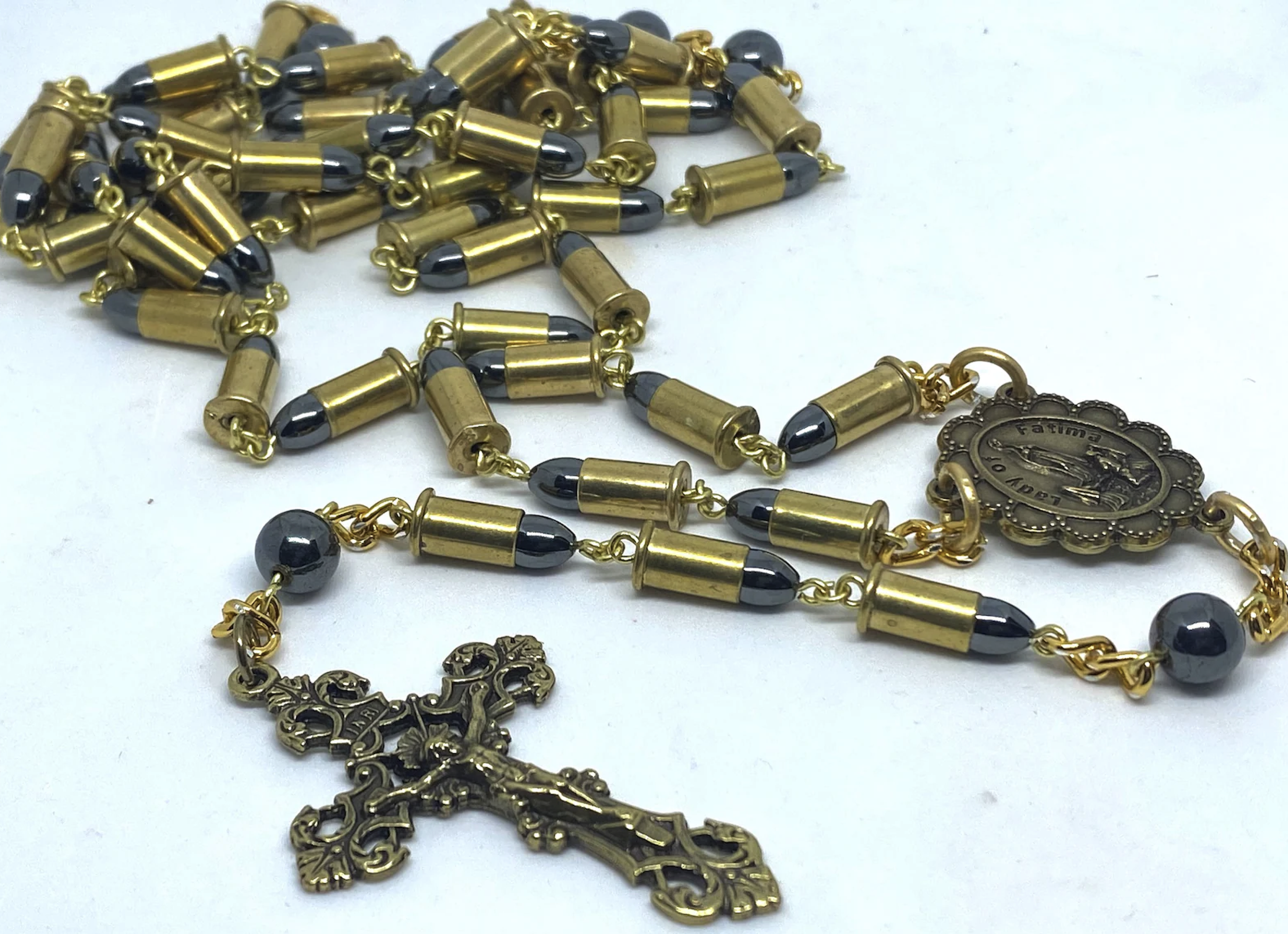
No doubt about it. The early favorite for the wild headline of 2022 has to be “How the Rosary Became an Extremist Symbol” atop that viral feature from The Atlantic. And that now-deleted graphic with the rosary made of bullet holes? That will show up in media-bias features for years (maybe decades) to come.

Yes, I know that the editors tried to tone that down with a replacement headline — but it’s the original screamer that perfectly captured the article’s thesis. Oh, and the editors updated a mistake in the second line of the original headline with that new sub-headline: “Why are sacramental beads suddenly showing up next to AR-15s online?”

Attention Atlantic editors: Here is a quick guide to the seven Roman Catholic sacraments. Correction, please.

So here was the first question in this week’s “Crossroads” podcast (CLICK HERE to tune that in). It’s a question your GetReligionistas have been asking more often in the past decade (even before Orange Man Bad): What WAS this thing? A news feature? A piece of blunt analysis? An opinion screed? And here’s the question I saw several people ask: Did the Atlantic editors set out to publish an anti-Catholic classic?

Here’s my hot take: I think the Atlantic editors thought they were publishing a PRO-Catholic piece that set out to defend GOOD Catholics who want to change centuries of church teachings from the BAD Catholics who want to defend those teachings, especially orthodox doctrines on marriage, sexuality, abortion, etc.

Why do I think that? Here is the crucial part of the article, from my point of view, starting with the overture:

Just as the AR-15 rifle has become a sacred object for Christian nationalists in general, the rosary has acquired a militaristic meaning for radical-traditional (or “rad trad”) Catholics. On this extremist fringe, rosary beads have been woven into a conspiratorial politics and absolutist gun culture. These armed radical traditionalists have taken up a spiritual notion that the rosary can be a weapon in the fight against evil and turned it into something dangerously literal.

Their social-media pages are saturated with images of rosaries draped over firearms, warriors in prayer, Deus Vult (“God wills it”) crusader memes, and exhortations for men to rise up and become Church Militants.


Please respect our Commenting Policy

At Lambeth 2022, many Anglican bishops could not 'walk together' to the altar

At Lambeth 2022, many Anglican bishops could not 'walk together' to the altar

While Canterbury is urging Anglicans to keep "walking together," the 2022 Lambeth Conference demonstrated that many of the Anglican Communion's bishops can no longer even receive the Eucharist together.

Doctrinal conflicts over biblical authority and sexuality have raged for decades, with growing churches in the Global South clashing with the shrinking, but wealthy, churches in England, America and other Western regions. During this 12-day conference, which ended Sunday (August 8), conservatives from Africa, Asia and elsewhere declined to receive Holy Communion with openly gay and lesbian bishops. Several provinces -- including the massive Church of Nigeria -- boycotted Lambeth 2022 altogether.

"For the large majority of the Anglican Communion the traditional understanding of marriage is something that is understood, accepted, and without question, not only by bishops but their entire church," said Archbishop of Canterbury Justin Welby, in a mid-conference address. "To question this teaching is unthinkable, and in many countries would make the church a victim of derision, contempt and even attack."

Bishops in the Anglican minority, he added, "have not arrived lightly at their ideas. … They are not careless about Scripture. They do not reject Christ. But they have come to a different view on sexuality after long prayer, deep study and reflection on understandings of human nature. For them, to question this different teaching is unthinkable."

Throughout Lambeth 2022, the Global South Fellowship of Anglican Churches -- representing about 75% of Anglican church attendance -- pushed to reaffirm a 1998 Lambeth resolution that "homosexual practice" is "incompatible with Scripture," while also urging Anglicans to "oppose homophobia." It stressed centuries of doctrine that "sexuality is intended by God to find its rightful and full expression between a man and a woman in the covenant of marriage, established by God in creation, and affirmed by our Lord Jesus Christ." That earlier resolution passed with 526 votes in favor, 70 opposed and 45 abstentions.

Writing to Lambeth participants, Welby said the "validity" of that resolution "is not in doubt" and that the "whole resolution is still in existence."

However, the archbishop did not allow a vote on the issue and he said he would not, as requested by Anglican primates in the past, discipline the unorthodox.


Please respect our Commenting Policy

Traditional Latin Mass feud news remains scarce: How reporters can grasp what's at stake

Traditional Latin Mass feud news remains scarce: How reporters can grasp what's at stake

What’s the deal with all the emotional meltdowns about the traditional Latin Mass? I mean, no one speaks Latin anymore.

It sounds like a line that could have come out of the mouth of comedian Jerry Seinfeld during one of his stand-up acts. It isn’t part of his act, but it is a more than symbolic question that Catholics have been pondering over the past year.

It was last summer when Pope Francis signed a motu proprio — Latin for a papal document personally signed by the pope to signify his special interest in a topic — on this very subject. In the July 16, 2021, decree, the pope approved clarifications regarding restrictions on the traditional Latin Mass in an effort to ensure that liturgical reform is “irreversible” and that bishops strive to enforce changes made after the Second Vatican Council.

Specifically, bishops were told to ban ordinations of priests and confirmations using the old rite. They also were instructed to limit the frequency of rites by priests who have managed to receive a dispensation to celebrate Mass in Latin.

What’s the deal with the traditional Latin Mass? It turns out a lot.

The Novus Ordo Mass, which has been celebrated since 1965, is the norm among Catholic churches in this country and around the globe. Coverage, particularly last year, of the Traditional Latin Mass took on a political twinge in the pages of The New York Times. This is how their story from July 16 of last year framed the debate:

Pope Francis took a significant step toward putting the Roman Catholic Church’s liturgy solidly on the side of modernization on Friday by cracking down on the use of the old Latin Mass, essentially reversing a decision by his conservative predecessor.

The move to restrict the use of an old Latin rite in celebrating Mass dealt a blow to conservatives, who have long complained that the pope is diluting the traditions of the church.

Francis placed new restrictions on where and by whom the traditional Latin Mass can be celebrated and required new permissions from local bishops for its use.

The key words to look for in mainstream news reports are “modernization” and “conservative,” as if this pope was doing something positive and that Pope Benedict XVI had been somehow stuck in the past.


Please respect our Commenting Policy