Mainline

The rise of nondenominational churches, a big news trend that's really hard to cover

The rise of nondenominational churches, a big news trend that's really hard to cover

Maybe the biggest story in American Christianity over the last 40 years is the incredible rise in
the share of Americans who identify as nondenominational Protestant Christians.

In the 1970s, they were just a rounding error in the religious landscape. That was then.

Today it’s impossible to ignore the number of nondenominational churches — the vast majority of which are evangelical or Pentecostal — that have sprouted up in every city, suburb and rural area in the United States.

There are likely more nondenominational Protestants in the United States today than Southern Baptists and mainline Protestants combined. Yet, they are somewhat of an enigma to those reporters who cover religion.

Why? Because it’s impossible to make a lot of generalizations about this movement. It’s hard to pin them down, even when doing basic research.

The religious groups that are part of this non-movement movement don’t have annual meetings that are easy to track and for journalists to cover. They don’t have national spokespersons.

What makes it even more difficult is that many of these churches are, to some degree, still aligned with a denomination, but don’t publicize that on their websites or make mention of that in worship services.


Please respect our Commenting Policy

Politicos and Scripture: What does biblical religion teach about forgiving loans?

Politicos and Scripture: What does biblical religion teach about forgiving loans?

THE QUESTION:

What does biblical religion teach about forgiving loan debts?

THE RELIGION GUY’S ANSWER:

President Joe Biden’s pre-election executive order to limit or erase college students’ loan debts is still in the news this week. The non-partisan Congressional Budget Office issued its “highly uncertain” estimate that the plan will cost at least $420 billion, the first federal lawsuits filed against it argued that only Congress can legally enact spending, and the Department of Education scaled back the numbers who get this benefit.

The president claims the power to bypass Congress under the “HEROES Act,” passed after the 9/11/01 attacks, which allows forgiveness in case of a “military operation or national emergency.” Biden interprets the COVID pandemic as such an emergency; critics call that a stretch.

Biden says that now “people can start to finally crawl out from under that mountain of debt to get on top of their rent and their utilities, to finally think about buying a home or starting a family or starting a business.” But a Wall Street Journal editorial considered cancellations “unfair to Americans who repaid their loans or didn’t go to college” and accused Biden of “the biggest executive usurpation of Congress in modern history.”

As all this plays out, does the Bible, which has so long shaped moral judgments on public policy, have anything to say on such matters?

Liberal Protestant blogger John Pavlovitz chided Christians who oppose Biden, saying they ignore that “their entire professed religion is based on the idea of a cancelled debt. Way to lose the plot, kids.”

Podcaster Allie Beth Stuckey responded for World magazine that “the debt is sin, and Jesus, God made flesh, voluntarily paid it on our behalf through his death on a cross” so that “we are reconciled to God forever.”

One wording of history’s most-recited prayer asks God to “forgive us our debts as we forgive our debtors.”


Please respect our Commenting Policy

AP covers the new Pentecost in United Methodist life, without mentioning Ms. Penny Cost

AP covers the new Pentecost in United Methodist life, without mentioning Ms. Penny Cost

As I have stressed many times, I totally understand the challenges that religion-beat professionals face when attempting to do short, balanced, accurate hard-news stories about the 40 years of warfare inside the United Methodist Church over issues of marriage, sex, biblical authority and some core Christian doctrines about salvation and Christology.

I understand because I have been covering this story since my arrival at the old Rocky Mountain News (#RIP) back in 1983, with the church-discipline case of an openly gay UMC pastor, the Rev. Julian Rush. The progressive Rocky Mountain Annual Conference backed Rush and, well, the rest is history.

The biggest challenge in this story is helping readers understand why the Methodists who are defending the UMC Book of Discipline have decided to hit the exit doors, even though they have — for several decades — been winning the key votes at the global level of the denomination.

The problem is that the church establishment here in North America is actually running the show and the center-left leaders want to tweak the Discipline to allow more freedom for doctrinal progressives, while assuring mainstream Methodists that nothing will change at the local level unless their congregation wants it to change. See this recent post: “Why are United Methodists at war? Readers need to know that sexuality isn't the only fault line.”

The Associated Press recently shipped a long feature that tries To Explain It All, and there is much to praise in this piece. Here is the stating-it-mildly headline: “United Methodists are breaking up in a slow-motion schism.” Here is a long, long, essential piece of this feature that shows the complexity of these issues:

In annual regional gatherings across the U.S. earlier this year, United Methodists approved requests of about 300 congregations to quit the denomination, according to United Methodist News Service. Special meetings in the second half of the year are expected to vote on as many as 1,000 more, according to the conservative advocacy group Wesleyan Covenant Association.

Scores of churches in Georgia, and hundreds in Texas, are considering disaffiliation. Some aren’t waiting for permission to leave: More than 100 congregations in Florida and North Carolina have filed or threatened lawsuits to break out.

Those departing are still a fraction of the estimated 30,000 congregations in the United States alone, with nearly 13,000 more abroad, according to recent UMC statistics.

But large United Methodist congregations are moving to the exits, including some of the largest in Arkansas, Georgia, Louisiana, Oklahoma and Texas.

The flashpoints are the denomination’s bans on same-sex marriages and ordaining openly LGBTQ clergy — though many see these as symptoms for deeper differences in views on justice, theology and scriptural authority. The denomination has repeatedly upheld these bans at legislative General Conferences, but some U.S. churches and clergy have defied them.



Please respect our Commenting Policy

This time, will U.S. Supreme Court finally clarify rights of same-sex marriage dissenters?

This time, will U.S. Supreme Court finally clarify rights of same-sex marriage dissenters?

The U.S. Supreme Court’s 2021-2022 term produced biggies on abortion, religious freedom and the separation of church and state. The term that opens October 3 will bring another blockbuster — if the high court finally settles the unending clashes over LGBTQ+ rights versus religious rights.

Newsroom professionals will want to watch for the date set for the oral arguments in 303 Creative v. Elenis (Docket #21-476).

In this six-year dispute, graphic designer Lorie Smith is suing Colorado officials over the state’s anti-discrimination law, seeking to win the right to refuse requests to design websites that celebrate same-sex marriages, which she opposes, based on the teachings of her faith. She does not reject other work requests from LGBQ+ customers.

As currently framed, the case involves Smith’s freedom of speech rather than the First Amendment Constitutional right to “free exercise” of religion. The U.S. Supreme Court sidestepped the religious rights problem in 2018 (click here for tmatt commentary) when it overturned Colorado’s prosecution of wedding cake baker Jack Phillips (who is still enmeshed in a similar case per this from the firm that also represents Smith). Nor did the high court rule on religious freedom aspects when it legalized same-sex marriage in the 2015 Obergefell decision.

Last month, the Biden Administration entered 303 Creative (.pdf here) on the side of Colorado and LGBTQ+ interest groups. Essentially, the Department of Justice argues that as enforced in Colorado or elsewhere, “traditional public accommodations laws ... burden no more speech than necessary to further substantial government interests — indeed, compelling interests of the highest order.”

Smith has support from 16 Republican-led state governments and 58 members of Congress, while 21 Democratic states and 137 Congress members take the opposite stance alongside e.g. the American Bar Association.

The issue will face the U.S. Senate after the November elections as Democrats try to “codify” Obergefell into federal law but for passage may need to accept a Republican religious-freedom amendment. The Equality Act, which won unanimous support from House Democrats but is stalled in the Senate, would explicitly ban reliance on federal religious-freedom law in discrimination cases, include crucial laws passed by a broad left-right coalition during the Bill Clinton administration.


Please respect our Commenting Policy

Ryan Burge at RNS: Thinking about the impact of political sermons, on left and right

Ryan Burge at RNS: Thinking about the impact of political sermons, on left and right

Hey churchgoers: How long has it been since you heard a political sermon?

Wait. We need to pause and discuss what a political sermon might sound like. For example, I think everyone would agree that an open endorsement of a political candidate from the pulpit would be “political.”

But what if a congregation or a denomination invited a political leader to speak in a worship service or some other event? This is something that happens on the political left and right. For generations, to name one example, Democrats have accepted warm, strategic invitations to speak — or perhaps simply exchange greetings — in African-American churches. It makes headlines when GOP leaders address major evangelical bodies (think Vice President Mike Pence and the Southern Baptist Convention).

More questions: What if a bishop or a preacher addresses issues that are clearly both doctrinal AND political, such as right-to-life concerns or threats to the environment? What about a conference focusing on ways religious groups can defend First Amendment rights, such as freedom of speech, freedom of association and freedom of religious practice? Is a liberal rally on abortion more “theocratic” than one organized by believers on the doctrinal right?

I ask these questions because of a piece GetReligion contributor Ryan Burge, he of the omnipresent charts and info on Twitter, wrote for Religion News Service. Here’s the newsy headline “When preachers get political, do they change minds? Preachers tend to risk political speech only when they know it will receive a warm reception.” The overture:

One of the most important and difficult questions among those who study religion and politics is just how important a pastor, rabbi, imam or other religious leader is when it comes to shaping the worldviews of their congregation. These figures get a weekly chance to dominate the attention of the people who come to listen to their sermons. They have a nearly unique opportunity to mold their congregants’ view of the theological, social and political world around them.

How often do pastors actually use that opportunity to speak out about the pressing issues of the day? Some new data gives us a look.

A Pew Research Center poll fielded in March of 2021 asked people if they had heard sermons that contained references to the fallout from the 2020 presidential election in the previous month. The survey asked about four topics specifically: the possibility that the 2020 election was rigged, former President Donald Trump’s inaccurate statements about election fraud, as well as support for or opposition to those who stormed the U.S. Capitol on Jan. 6, 2021.

That is certainly a rather Donald Trump-era dominated list, but that reflects several years of headlines. Meanwhile, it’s safe to say that President Joe Biden is in the White House, in large part, because of support from voters in Black churches during several primaries. But I digress.


Please respect our Commenting Policy

Reminder to journalists (again): Private schools -- left, right -- can defend their core doctrines

Reminder to journalists (again): Private schools -- left, right -- can defend their core doctrines

Back in the late 1970s, during the cornerstone seminar in Baylor University’s Church-State Studies program, my major professor made an interesting prediction while reviewing some documents that would eventually surface with the Bob Jones University v. United States ruling at the Supreme Court in 1982.

That case pivoted on questions of racism and claims linked to religious doctrine. At some point in the future, my professor said, the high court would face similar cases in which centuries of religious doctrine would clash with beliefs at the heart of the modern Sexual Revolution.

The U.S. Supreme Court would be challenged to equate the facts of racism with the mysteries of sexual identity (or words to that effect). At that point, traditional forms of Christian education would be at risk.

Anyone who has followed American politics in recent decades has watched this conflict march through religious and educational structures and into the headlines. The question, all along, would be if “progressive” thinkers — the word “liberal” is problematic — would find a way for the Sexual Revolution to trump existing legal standards defending free speech, freedom of association and freedom of religion.

Thus, Julia Duin wrote a recent post describing coverage of SCOTUS moves linked to clashes between the modern Orthodox Judaism of Yeshiva University and LGBTQ groups on its New York campus. See this post: “New York Times pursues ultra-Orthodox yeshivas in massive story that raises (some) Jewish ire.

One of the stories she discussed was a Jewish Telegraphic Agency piece with this headline, linked to an earlier stage in this legal struggle: “Yeshiva U can block LGBTQ club for time being, Supreme Court says.” This case provides, Duin noted, an:

… interesting counterweight on what’s happening in Christian colleges across the country. Last week a group called Campus Pride released a list on what it considers “the absolute worst, most unsafe campuses” for LGBTQ students. Not surprisingly, Yeshiva University is one.

She then stressed this crucial passage in the JTA report:

Yeshiva University’s case could be complicated by the fact that it removed religion from its charter, essentially the text that gives it permission to operate in New York State, in 1967 in an effort to secure more state funding.


Please respect our Commenting Policy

Here's a solid religion information source for office, home libraries and (of course) newsrooms

Here's a solid religion information source for office, home libraries and (of course) newsrooms

Here are some interesting facts about war-ravaged Ukraine you might not have heard:

* The nation was 97% Christian in 1900, slumped to 60% when atheistic Soviet Communists held power, and has rebounded to 86%. But in one survey only 20% of Ukrainians said religion is “very important” for them.

* The Orthodox Church historically under the Moscow Patriarchate has 13.5 million members. But even before the current Russian invasion, the young rival Orthodox Church of the independent Kyiv Patriarchate had gained a bigger following of 16 million.

* Evangelical, Pentecostal and Charismatic Protestants, though a small minority, have so thrived since national independence in 1991 that Ukraine is known as Eastern Europe’s “Bible Belt.” Pentecostal believers who once survived in the underground church are now a force in civic affairs.

* Despite electing the first Jewish president, anti-Semitic incidents still occur.

* Regarding morals, “domestic violence is a massive problem,” especially in COVID-19 times, with complaints up 40% in the first half of 2020 compared with 2019.

Why mention these newsworthy pieces of information?

That’s a sampling of the sort of data about each of 233 countries you’ll find in the brand-new “Global Christianity: A Guide to the World’s Largest Religion from Afghanistan to Zimbabwe” (Zondervan Academic, $29.99 paperback). This valuable and inexpensive resource updates key information from the 2019 edition of the invaluable “World Christian Encyclopedia” (Edinburgh University Press, list price $270 with discounts online).

The new book’s editor is Gina Zurlo — https://ginazurlo.com; gzurlo@gordonconwell.edu) — co-editor of the “Encyclopedia” and co-director of the independent agency that produces it, the Center for the Study of Global Christianity at evangelical Gordon-Conwell Theological Seminary.


Please respect our Commenting Policy

Is celebrity culture eroding American evangelicalism? This publishing insider says 'yes'

Is celebrity culture eroding American evangelicalism? This publishing insider says 'yes'

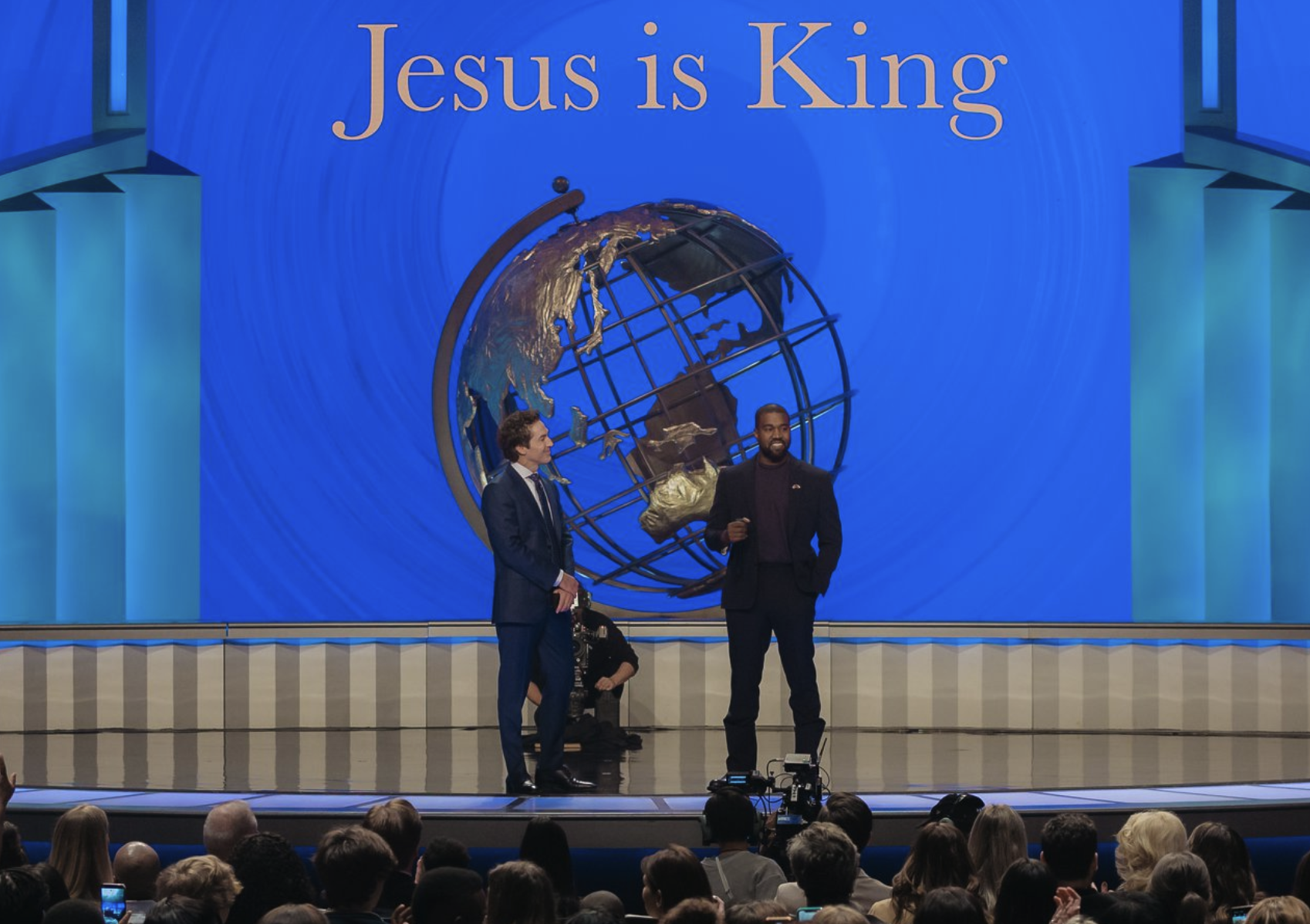
Evangelical Protestantism, by most accounts the largest camp in American religion, has run into various troubles lately, as The Guy and many others have chronicled.

Now there’s ample Internet buzz about Katelyn Beaty’s diagnosis of one factor in a new book from a major evangelical publisher that’s well worth coverage: “Celebrities for Jesus: How Personas, Platforms, and Profits are Hurting the Church.”

Make that hurting the “White Evangelical” church.

The type of personality cults she describes are pretty much absent in “mainline” Protestantism, Black Protestantism (there are some glaring exceptions in the health-and-wealth world), Catholicism and other U.S. religious bodies. By coincidence, Rodney Palmer, an American Baptist who teaches preaching at Palmer Theological Seminary, echoed her concerns just last week in an article for the progressive Baptist News Global website.

Inevitably, Beaty has much to say about the media that we practitioners and consumers should ponder.

She’s a well-marinated evangelical as author, former print managing editor of flagship Christianity Today magazine and currently a New York-based acquisitions editor with Baker Publishing Group, one of the majors whose Brazos Press division published “Celebrities.” (Note the company’s other book imprints: Baker Books, Baker Academic, Bethany House, Chosen, Revell.)

For this reason, The Guy finds especially newsworthy — and gutsy — Beaty’s chapter treating the evangelical book industry, which is said to pour “jet fuel” on the type of fandom, branding and marketing she decries.

The bottom line, here: This bite-hand-that-feeds angle alone offers a strong story theme that journalists could draw from this book.


Please respect our Commenting Policy