Lawsuits

Are lawyers 'ministers?' Unanswered questions plague Union Gospel Mission coverage

Are lawyers 'ministers?' Unanswered questions plague Union Gospel Mission coverage

Last week, the Supreme Court turned down a very interesting case that has gotten comparatively little media coverage outside the Pacific Northwest, which is where it originated. It was Woods v. Seattle’s Union Gospel Mission (UGM) and it’s an important milestone in allowing gay employees to be employed at evangelical Christian organizations.

I wish the high court had taken the case, as it would have gone a long way toward explaining if all employees at religious organizations are counted as “ministers,” or only the ones with spiritual-sounding titles.

It’s a battle that’s going to keep on being fought and I’m guessing that leaders at evangelical and Catholic groups are not taking the Court’s silence on this case as good news.

The Seattle Times’ account of the Court’s rejection is below, although I would’ve liked to have seen a more balanced headline than: “U.S. Supreme Court won’t hear Seattle’s Union Gospel Mission’s anti-LGBTQ+ hiring policies case.” The kind of gives you an idea of where the article is going, doesn’t it?

Assuming the Times reporters did read some of the arguments from UGM, they would have known the subject was not just some anti-gay organization, but that UGM also had problems with this employee’s lack of clear Christian commitment.

The U.S. Supreme Court announced … that it will not review a case involving Seattle’s Union Gospel Mission, which was sued in 2017 over its anti-LGBTQ+ hiring policy after it declined to hire a bisexual lawyer who applied for a job.

Justice Samuel Alito and Justice Clarence Thomas agreed with the decision not to hear the case at this stage. But according to The Associated Press, they said that “the day may soon come” when the court needs to confront the issue the case presents.

The Seattle-based Christian organization filed a petition in August 2021, asking the Supreme Court to decide a case in which the Washington Supreme Court ruled in favor of the plaintiff, attorney Matt Woods, in March 2021.

I covered this in December for Newsweek (of course it helps that I live driving distance from UGM’s headquarters), and believe me, UGM helps the folks who no one else wants to help.
Please respect our Commenting Policy

Never forget: There are more than two strategic camps in the global United Methodist war

Never forget: There are more than two strategic camps in the global United Methodist war

It’s time for another religion-beat journey beyond “whataboutism” and the basic assumption that all controversial subjects have “two sides,” and that’s basically that.

Of course, we live in an age in which many elite newsrooms decline to cover “one side” of a story if, according to newsroom doctrines, it’s already obvious which side is good and which side is bad. Here at GetReligion we have a term for this — “Kellerism,” a nod to candid remarks once made, on the record, by former New York Times editor Bill Keller.

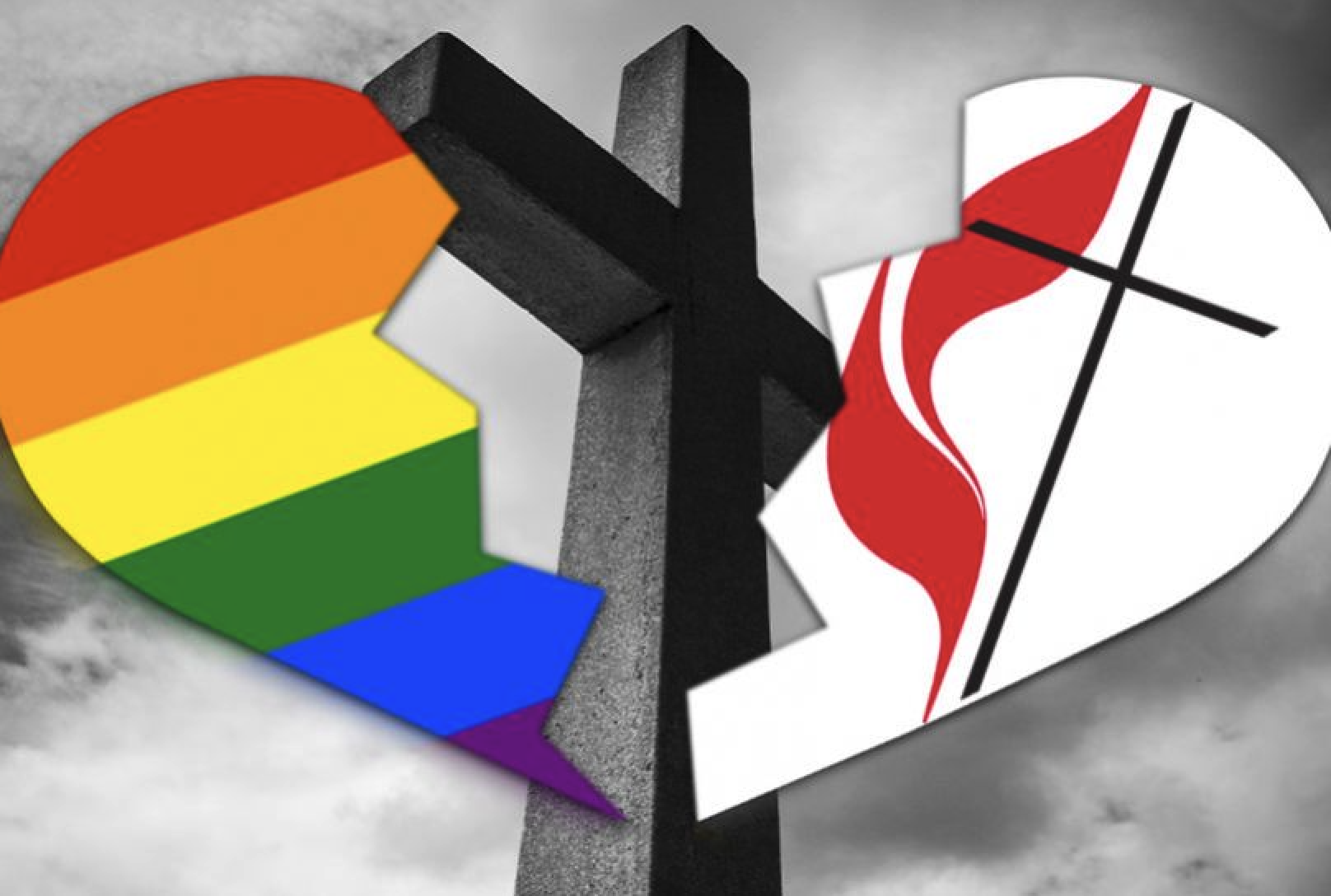
In this case, we are looking at a religion-beat superstory at the local, regional, national and global levels — the break-up of the United Methodist Church, the second largest Protestant denomination in America.

To get the big picture, please see this recent GetReligion post by Richard Ostling: “The latest United Methodist bombshell will create news throughout 2022 and beyond.” To see how long this battle has been going on, check out this “On Religion” column that I wrote in 1998: “United Methodists — Breaking up is hard to do” and two more on a related topic, “Old fault lines can be seen in the ‘seven churches’ of divided Methodism” (and then part II).

Here are Three Big Ideas for today. Remember that I have, as a reporter, been wrestling with this ongoing story since the early 1980s.

(I) Never forget the unique element of this story, which is that the United Methodist Church has a GLOBAL structure that includes the growing churches of Africa and Asia, as well as the splintering (and usually shrinking) congregations in the United States. Readers should question news reports that fail to mention — or even stress — the racial and cultural diversity of the global conservative United Methodism coalition.

(II) While fights about LGBTQ issues make headlines, the United Methodist wars have — behind the scenes — included clear divisions on basic, even credal, issues in Christian theology. In addition to clashing views of biblical authority, we’re talking about splits on salvation, sin, heaven, hell, the Resurrection and the very nature of Jesus Christ. Reporters need to ask questions about issues other than sex.

(III) There are, at the very least, three major groups involved in this story. Let’s call them the “candid left,” the “establishment left” and then the “traditional” United Methodists, as in the defenders of the existing laws and doctrines in the United Methodist Book of Discipline. However, there are subgroups on the right. Never assume that the global conservatives have precisely the same views as their American counterparts.

To see that these issues look like “in the wild,” consider this recent Religion News Service story: “Vote delayed again, some United Methodists say they quit. Now what?”


Please respect our Commenting Policy

Podcast: What's the SCOTUS story? New Colorado case focuses on free speech, not religious liberty

Podcast: What's the SCOTUS story? New Colorado case focuses on free speech, not religious liberty

Here we go again?

That’s a logical question, in light of the news that — once again — church-state activists on left and right are preparing for more U.S. Supreme Court arguments involving the state of Colorado, a traditional Christian believer, LGBTQ rights and the First Amendment.

That was the news hook for this week’s “Crossroads” podcast (CLICK HERE to tune that in). But to understand that conversation, it really helps to dig into a key passage or two in the majority decision in that 2019 SCOTUS case focusing on Masterpiece Cakeshop and the Colorado Civil Rights Commission (full text .pdf here).

So, all rise. The writer is, of course, then Justice Anthony Kennedy:

The laws and the Constitution can, and in some instances must, protect gay persons and gay couples in the exercise of their civil rights, but religious and philosophical objections to gay marriage are protected views and in some instances protected forms of expression. While it is unexceptional that Colorado law can protect gay persons in acquiring products and services on the same terms and conditions as are offered to other members of the public, the law must be applied in a manner that is neutral toward religion.

The result was one of those narrow decisions much beloved by Chief Justice John Roberts.

Then, what you hear in this next passage is the sound of Kennedy punting the crucial religious-liberty decision in this First Amendment case into the mists of the future:

The outcome of cases like this in other circumstances must await further elaboration in the courts, all in the context of recognizing that these disputes must be resolved with tolerance, without undue disrespect to sincere religious beliefs, and without subjecting gay persons to indignities when they seek goods and services in an open market.


Please respect our Commenting Policy

What role will religion play in current U.S. Supreme Court nomination intrigue?

What role will religion play in current U.S. Supreme Court nomination intrigue?

When President Biden soon chooses a successor to Supreme Court Justice Stephen Breyer, journalists will need to keep in mind highly contentious religious issues, not just on matters like abortion but over how much to limit First Amendment claims of religious freedom, as in same-sex disputes, and where to draw lines on church-state separation.

Liberal, secularist and separationist voices are quick out of the gate with warnings to Biden about the Court's 6-3 conservative majority. Americans United for Separation of Church and State wants a new justice who'll be "a bulwark against the court's ultra-conservative majority, who seem set on redefining religious freedom as a sword to harm others instead of a shield to protect all of us." This lobby asserts that "our democracy depends on it."

A must-read from the cry-of-alarm forces is the analysis of numerous recent Supreme Court religion rulings from Ian Millhiser — Vox.com's specialist covering law and "the decline of liberal democracy." He asserts that a religion "revolution" is the "highest priority" of the Court's six Republican appointees, who are "rapidly changing the rules of the game to benefit" religious interests.

However, Kelsey Dallas at Salt Lake City's Deseret News tabulates that Breyer, in tandem with fellow liberal Justice Elena Kagan, voted with conservative justices in nine out of the 13 Court's decisions from 2006 to 2020 that backed religious-freedom claims.

The most illustrative example of the Jewish justice's thinking came in 2005 with two apparently contradictory rulings about Ten Commandments displays on public property. Beyer formed a 5-4 majority to permit the display on the Texas state Capitol grounds (Van Orden v. Perry) but then switched to create a 5-4 majority that outlawed displays in two Kentucky courtrooms (McCready County v. A.C.L.U.)

How come? Breyer advocated the "fullest possible" religious liberty and tolerance to avoid societal conflict.


Please respect our Commenting Policy

Podcast: Reporters who ask the right questions will find lots of NFL religion stories

Podcast: Reporters who ask the right questions will find lots of NFL religion stories

Several days before former Miami Dolphin head coach stunned the National Football League with his class-action lawsuit alleging racial discrimination and other sins, I read a very interesting profile at The Athletic about one of my sports heroes.

The headline summed things up: “Bears Hall of Famer Mike Singletary is hungry for a second chance to be an NFL head coach, but will it ever come?”

Singletary was a legend in Chicago and, before that, at Baylor University — where I met him because of a mutual friend. Singletary was a highly articulate preacher’s kid from Houston with a voice that sounded like he was auditioning to be the next James Earl Jones. He was a leader from Day 1 at Baylor and demonstrated all the characteristics that made him the face, brain and soul of the greatest defensive unit in NFL history.

This is where the Singletary feature became relevant during this week’s “Crossroads” podcast (CLICK HERE to tune that in), which focused on why journalists struggle to spot “religion ghosts” in so many sports stories, such as the life of Los Angeles Rams superstar Cooper Kupp (“Emerging NFL superstar — Cooper Kupp — puts his faith on his hat, not that reporters notice”) and the beliefs that appear to be putting the steel in the spine of Flores.

Why hasn’t Singletary had a second shot at being an NFL head coach, after his tumultuous tenure in San Francisco (not the best city for his views on faith and culture)? It may have something to do with Singletary trying to “stand for what he had been preaching” with the 49ers. Read this long passage carefully:

… 49ers owner John York, CEO Jed York, director of player personnel Trent Baalke and other executives called Singletary to a meeting. They had a trade in place with the Steelers for Ben Roethlisberger, who had recently been accused of sexual assault. Singletary vetoed the deal. …

“I had been telling the team I wanted a team of character,” he says.


Please respect our Commenting Policy

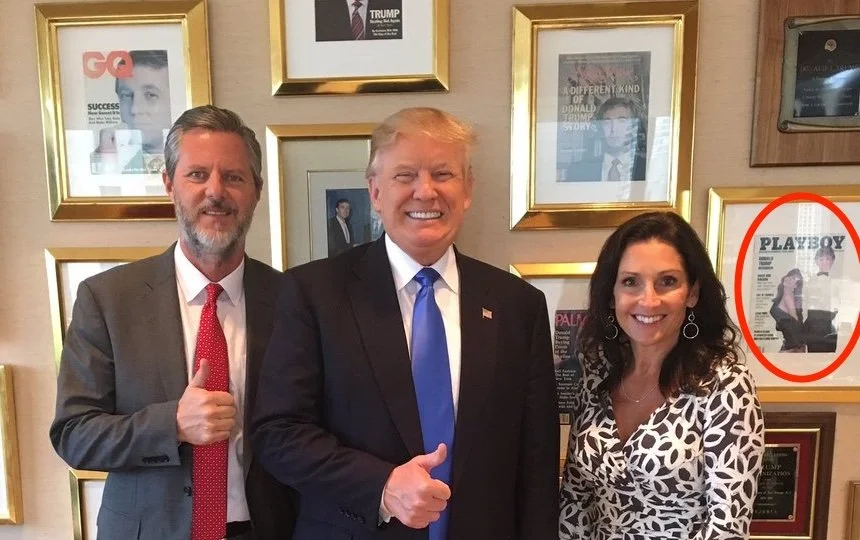
Podcast: As it turns out, it was totally logical for Jerry Falwell, Jr., to embrace Donald Trump

Podcast: As it turns out, it was totally logical for Jerry Falwell, Jr., to embrace Donald Trump

When reading That. Vanity. Fair. Article, it will help to focus on the obvious answer to the big question that will immediately pop into your head (especially if you happen to be a journalist).

The question: Why did Jerry Falwell, Jr., choose to talk to a magazine with a solid footprint on the American cultural and journalistic left?

The answer: Falwell is a lawyer who, at the moment, has a number of pressing legal issues in his life. To put this in D.C. Beltway lingo, he appears to be “hanging a lantern” on his problems. Here is one online definition of that term:

"Hang a lantern on your problem” was entered into the political lexicon in the 1980s by Chris Matthews, a former chief of staff to Speaker of the House of Representatives Tip O’Neill. Matthews explained “hang a lantern on your problem” to the New York (NY) Times in 1987: “The first step is, admit you have a problem; that gives you credibility. The second step is to use that credibility to redefine your problem, or use the problem for your own purposes.”

As I explained during this week’s “Crossroads” podcast (CLICK HERE to tune that in), it is interesting to read the Vanity Fair piece and, with a mental highlighter pen (a real one if you get the analog magazine), mark the questions that Falwell chooses to answer and the ones that he declines to answer. Then, repeat the process with the questions that are answered and rejected by other key voices — think Giancarlo “pool boy” Granda and legal representatives for Liberty University.

This process will yield insights into two of the most obvious plot lines in this soap-opera mess, as in its steamy Miami-angle sex scandal and the ugly legal wars between Jerry Falwell, Jr., and the shamed leaders of Liberty University.

Once you’ve done that, you’re read to dig into the deeper elements of this story, which are clearly visible in the long, long, long second deck of it’s double-headline:


Please respect our Commenting Policy

New podcast: Are some SCOTUS justices asking, 'Are all religious schools equal in Maine?'

New podcast: Are some SCOTUS justices asking, 'Are all religious schools equal in Maine?'

Let’s say that, in the state of Maine, there are two very different “Lutheran” schools. You could, in this hypothetical case, also say “Episcopal,” or “Presbyterian” or “Congregational.”

Leaders at one of these schools insist that their school is in “the Lutheran tradition,” and it may retain ties to a doctrinally liberal flock. The school has a chapel, but attendance is optional since its students (it may be an elite boarding school) come from all kinds of religious faiths or have no stated faith at all. Classes on hot-button moral issues — sexuality, for example — stress this church’s progressive doctrines.

Academic life is very different at the other Lutheran school, which draws most of its students and financial support from a conservative Lutheran body. Chapel attendance is required and classes linked to moral theology are quite countercultural — defending 2,000 years of Christian tradition.

The question, in the latest church-state case at the U.S. Supreme Court, is whether the state of Maine has the power to say that the first school is eligible for tuition support — using tax dollars — because it’s policies do not clash with those in public schools. Students at the conservative school are not eligible, because its beliefs are “sectarian.”

This is tricky territory and church-state experts on the Religious Right would certainly disagree with experts from the Religious Left and secular think tanks. The question discussed in this week’s “Crossroads” podcast (click here to tune that in) is whether journalists covering this case allowed readers a chance to understand the views of activists on both sides.

Let me state, right up front, that my dueling Lutherans illustration is based on “equal access” church-state principles that emerged from a left-right coalition during the Bill Clinton administration. The big idea: If state officials create policies that affect nonprofits, they cannot back secular groups while discriminating against religious organizations. States could, however, deny aid to both. In other words, religious faith is not a uniquely dangerous form of speech or activity.

Let me state this another way. Under the separation of church and state, officials are not supposed to use tax dollars to back state-approved forms of religion. Ah! But what if some religious groups have doctrines that are consistent with state policies, while others clash with the doctrines of the state?


Please respect our Commenting Policy

As the news media churn, two rising religion muckrakers belong on your source list

As the news media churn, two rising religion muckrakers belong on your source list

It's the worst of times for the American media, with vanishing newspapers and magazines, shrinking staffs and budgets with what's left, the heavy-handed slant on cable TV "news" and polls showing record lows for consumer confidence in the accuracy and honesty of work done by journalists.

But the religion beat offers one ray of hope with gutsy investigative journalism from within evangelical Protestant ranks that sets the standard for other media -- and is one reason this movement so dominates religious news.

For years, Christianity Today and World magazines have bravely lifted rocks regarding what's been called the "evangelical industrial complex.". One can hope World will persist after its recent shakeup (click here for GetReligion post on that topic).

This Memo spotlights two muckrakers who belong on source lists of religion writers and religious organizations: Julie Roys of "The Roys Report" and Warren Cole Smith of "Ministry Watch."

Alas, there's much muck for them to rake. Religion-watchers are unlikely to miss any newsworthy scandals if they subscribe to free listserves and monitor their original reporting, alongside pick-ups such as this $600,000 mystery at THE Houston superchurch or this academic fuss at Cornerstone University.

By coincidence, both editors, who are resolutely conservative in terms of religious beliefs, jumped into the scene in 2019. Either or both would make for a good story, as would Roys' "Restore 2022" conference May 20-21 at Judson University in Elgin, Illinois.

Roys, a Wheaton and Medill School alumna, was a newswriter and reporter for Chicago TV stations. She took 13 years off to raise her three children and then, for a decade, hosted Moody Radio Network's "Up For Debate" show. She then exposed "corruption and mission drift" at the sponsoring Moody Bible Institute on her personal blog, which evolved into the "Report," with a special focus on #ChurchToo sexual exploitation scandals. She is even a watchdog of watchdogs, catching the president of the Evangelical Council for Financial Accountability in resume-padding.


Please respect our Commenting Policy

Just how big is the Mississippi abortion case at U.S. Supreme Court? Well, THIS BIG

Just how big is the Mississippi abortion case at U.S. Supreme Court? Well, THIS BIG

“The most important abortion case in decades” is how the New York Times’ Adam Liptak describes it.

“The most significant abortion case in a generation,” agree the Wall Street Journal’s Jess Bravin and Brent Kendall.

“The biggest challenge to abortion rights in decades,” echo The Associated Press’ Mark Sherman and Jessica Gresko.

It’s not hyperbole: Roe v. Wade, the 1973 U.S. Supreme Court decision that legalized abortion nationwide, faces its biggest test yet. The Washington Post’s Robert Barnes explains:

The Supreme Court on Wednesday signaled it is on the verge of a major curtailment of abortion rights in the United States, and appeared likely to uphold a Mississippi law that violates one of the essential holdings of Roe v. Wade established nearly 50 years ago.

Whether the court would eventually overrule Roe and its finding that women have a fundamental right to end their pregnancies was unclear.

But none of the six conservatives who make up the court’s majority expressed support for maintaining its rule that states may not prohibit abortion before the point of fetal viability, which is generally estimated to be between 22 and 24 weeks of pregnancy.

At Christianity Today, Kate Shellnutt reports that “pro-life evangelicals who had rallied for the cause for decades were encouraged that the conservative-leaning court appeared willing to uphold a contentious Mississippi law that bans abortion after 15 weeks.”

Other helpful religion coverage:

How faith groups feel about this major abortion case (by Kelsey Dallas, Deseret News)

Before there was Roe: Religious debate before high court’s historic ruling on abortion (by Adelle M. Banks, Religion News Service)

Religion abortion rights supporters fight for access (by Holly Meyer, The Associated Press)


Please respect our Commenting Policy