LGBTQ

At Lambeth 2022, many Anglican bishops could not 'walk together' to the altar

At Lambeth 2022, many Anglican bishops could not 'walk together' to the altar

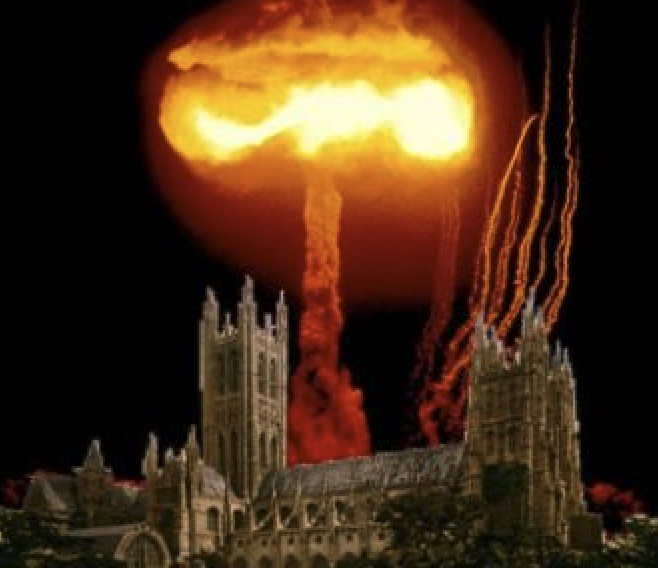
While Canterbury is urging Anglicans to keep "walking together," the 2022 Lambeth Conference demonstrated that many of the Anglican Communion's bishops can no longer even receive the Eucharist together.

Doctrinal conflicts over biblical authority and sexuality have raged for decades, with growing churches in the Global South clashing with the shrinking, but wealthy, churches in England, America and other Western regions. During this 12-day conference, which ended Sunday (August 8), conservatives from Africa, Asia and elsewhere declined to receive Holy Communion with openly gay and lesbian bishops. Several provinces -- including the massive Church of Nigeria -- boycotted Lambeth 2022 altogether.

"For the large majority of the Anglican Communion the traditional understanding of marriage is something that is understood, accepted, and without question, not only by bishops but their entire church," said Archbishop of Canterbury Justin Welby, in a mid-conference address. "To question this teaching is unthinkable, and in many countries would make the church a victim of derision, contempt and even attack."

Bishops in the Anglican minority, he added, "have not arrived lightly at their ideas. … They are not careless about Scripture. They do not reject Christ. But they have come to a different view on sexuality after long prayer, deep study and reflection on understandings of human nature. For them, to question this different teaching is unthinkable."

Throughout Lambeth 2022, the Global South Fellowship of Anglican Churches -- representing about 75% of Anglican church attendance -- pushed to reaffirm a 1998 Lambeth resolution that "homosexual practice" is "incompatible with Scripture," while also urging Anglicans to "oppose homophobia." It stressed centuries of doctrine that "sexuality is intended by God to find its rightful and full expression between a man and a woman in the covenant of marriage, established by God in creation, and affirmed by our Lord Jesus Christ." That earlier resolution passed with 526 votes in favor, 70 opposed and 45 abstentions.

Writing to Lambeth participants, Welby said the "validity" of that resolution "is not in doubt" and that the "whole resolution is still in existence."

However, the archbishop did not allow a vote on the issue and he said he would not, as requested by Anglican primates in the past, discipline the unorthodox.

Please respect our Commenting Policy

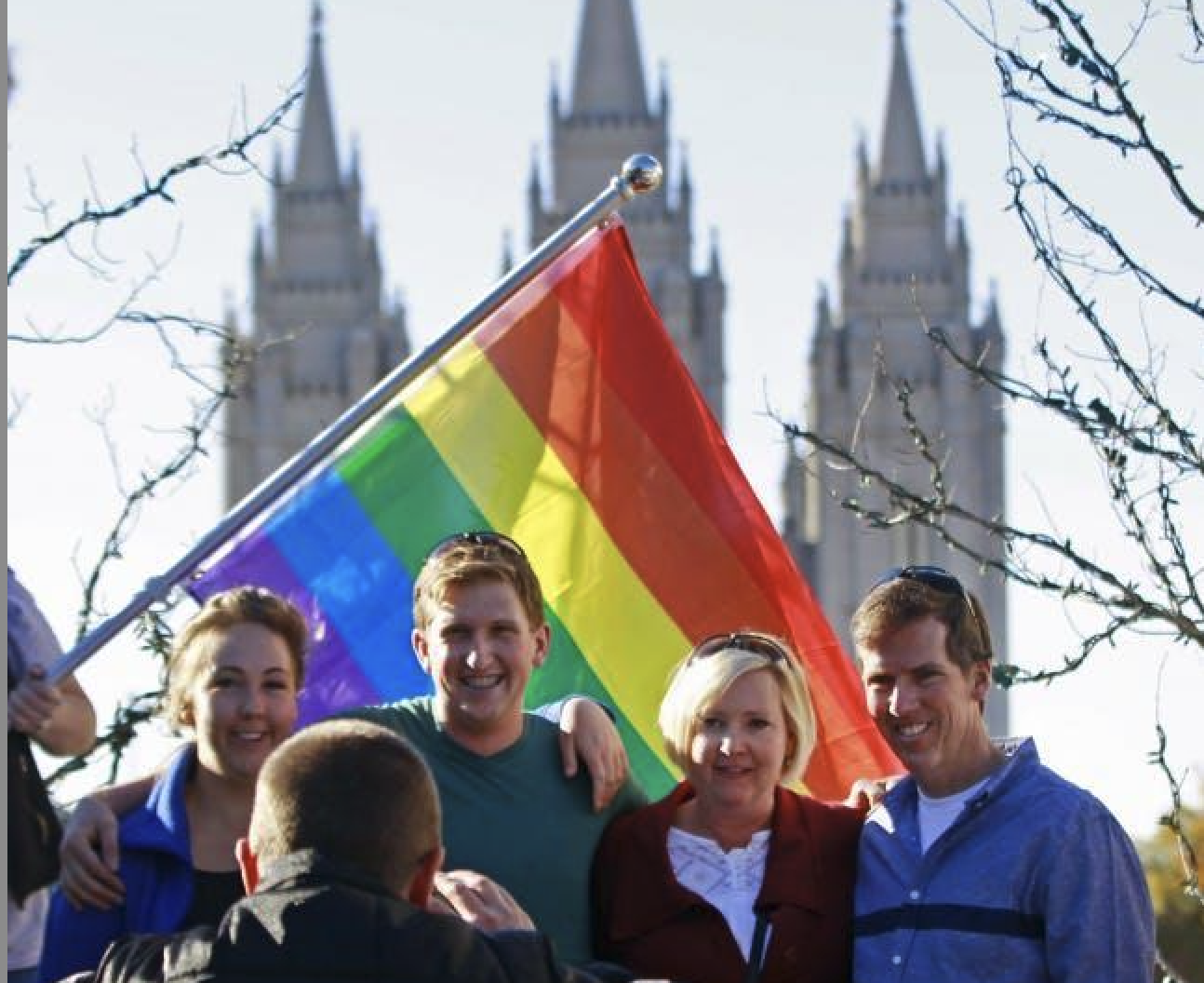
Latter-day Saints' incremental changes on doctrine add up to a solid religion story

Latter-day Saints' incremental changes on doctrine add up to a solid religion story

It’s commendable — and all too infrequent — when pundits admit mistakes.

So let’s send a hosanna or two toward Religion News Service columnist Jana Riess, who specializes in her own faith, The Church of Jesus Christ of Latter-day Saints (long nicknamed “Mormons”). Her column reviewing the four years under renowned heart surgeon Russell M. Nelson as LDS president admitted that “if I was guilty of expecting little from a nonagenarian company man, I’ve had cause to repent.” (Everybody else was saying the same.) She’s now “very glad to have been wrong.”

Riess’s latest look — “Oh, now I get it: Purging the word ‘Mormon’ is a bid for the mainstream” — does complain about one move (see below). But she hails 10 developments under Nelson, who turns 96 today. Taken together they form a solid story theme others could pursue. Given the faith’s 21st Century growth alongside setbacks elsewhere in American religion, national and regional media could combine the changes with how the LDS empire has fared during and after the COVID-19 crisis.

A summary of the top 10 items in this change-resistant faith, interpreted in terms of Riess’s policy preferences:

* Though she says “mountains of work” remain, 2019 reversal of a 2015 policy ended automatic excommunication of same-sex couples and allows baptisms and blessings for their children.

* Also in 2019, there was “a little progress” on women. The status of biblical Eve was elevated in the central secret “endowment” ritual, in which wives no longer vow to “hearken” to their husbands. Also, girls and women are now allowed as official witnesses to ordinances.

* Though white Americans continue to dominate global leadership, for the first time in LDS history Nelson’s two newly named apostles were from neither North America nor Europe. Choices for lower ranks are also more diverse.

* Young adult missionaries can contact families weekly rather than twice a year, and their access to mental health services has improved.

* With the demise of Boy Scout ties, the church’s overhauled youth program has equal spending on girls.


Please respect our Commenting Policy

Religious Left returns to RFRA: Washington Post explores a crucial Florida abortion showdown

Religious Left returns to RFRA: Washington Post explores a crucial Florida abortion showdown

For 18 years, GetReligion has argued that mainstream news organizations need to pay more attention to the Religious Left. Yes, I capitalized those words, just like the more familiar Religious Right.

The Religious Right has been at the heart of millions news stories (2,350,000 or so Google hits right now, with about 61,600 in current news). The Religious Left doesn’t get that much ink (322,000 in Google and 2,350 or so in Google News), in part — my theory — because most journalists prefer the word “moderate” when talking about believers in the small, but still media-powerful world of “mainline” religion.

But there is a church-state legal story unfolding in Florida that cries out for coverage of liberal believers — with an emphasis on the details of their doctrines and traditions, as opposed to politics. Doctrines are at the heart of a story that many journalists will be tempted to cover as more post-Roe v. Wade politics.

I suspect, if and when this story hits courts (even the U.S. Supreme Court), journalists will need to do their homework (#FINALLY) on the Religious Freedom Restoration Act of 1993. The big question: What does religious liberty (no “scare quotes”) look like from a Unitarian point of view? Hold that thought.

First, here is the headline on a long Washington Post feature: “Clerics sue over Florida abortion law, saying it violates religious freedom.” Here is the overture:

When the Rev. Laurie Hafner ministers to her Florida congregants about abortion, she looks to the founding values of the United Church of Christ, her lifelong denomination: religious freedom and freedom of thought. She taps into her reading of Genesis, which says “man became a living being” when God breathed “the breath of life” into Adam. She thinks of Jesus promising believers full and abundant life.

“I am pro-choice not in spite of my faith, but because of my faith,” Hafner says.

She is among seven Florida clergy members — two Christians, three Jews, one Unitarian Universalist and a Buddhist — who argue in separate lawsuits … that their ability to live and practice their religious faith is being violated by the state’s new, post-Roe abortion law. The law, which is one of the strictest in the country, making no exceptions for rape or incest, was signed in April by Gov. Ron DeSantis (R), in a Pentecostal church alongside antiabortion lawmakers such as the House speaker, who called life “a gift from God.”

The lawsuits are at the vanguard of a novel legal strategy arguing that new abortion restrictions violate Americans’ religious freedom, including that of clerics who advise pregnant people.


Please respect our Commenting Policy

Podcast: More Americans are losing faith in God, but press should dig for deeper details

Podcast: More Americans are losing faith in God, but press should dig for deeper details

When looking for commentary on trends in Gallup poll numbers about religion, it never hurts to do a few online searches and look for wisdom from the late George Gallup, Jr.

Reporters should also consider placing a call to John C. Green, a scholar and pollster who has followed trends in religion and politics for decades. Of course, it always helps to collect files of charts from political scientist Ryan Burge, a GetReligion contributor who is an omnipresent force on Twitter (and buy his latest book, “20 Myths about Religion and Politics in America”).

Gallup, Green and Burge (#DUH) played prominent roles in this week’s “Crossroads” podcast (CLICK HERE to tune that in), which focused on a Religion News Service story (via the Washington Post) about a now-familiar trend in America’s public square. That headline: “Poll: Americans’ belief in God is dropping.” The overture:

Belief in God has been one of the strongest, most reliable markers of the persistence of American religiosity over the years. But a new Gallup Poll suggests that may be changing.

In the latest Gallup Poll, belief in God dipped to 81 percent, down six percentage points from 2017, the lowest since Gallup first asked the question in 1944.

This raises an obvious question: Who is losing faith in God?

This news report links the trend to politics (#DUH, again) and makes a very interesting connection, in terms of cause and effect. Read this carefully:

Belief in God is correlated more closely with conservatism in the United States, and as the society’s ideological gap widens, it may be a contributor to growing polarization. The poll found that 72 percent of self-identified Democrats said they believed in God, compared with 92 percent of Republicans (with independents between at 81 percent).

In recent years there has been a rise in the number of Americans who acknowledge being Christian nationalists — those who believe Christian and American identities should be fused.

“It could be that the increase in the number of atheists is a direct result of Christian nationalism,” said Ryan Cragun, a sociologist at the University of Tampa who studies the nonreligious.

I’ll provide some additional details in the rest of the post to back up what I’m about to say. The big idea in this story, interpreting these latest Gallup numbers, appears to be this: Lots of young people in liberal and progressive forms of religion are so upset about the rise in vaguely defined Christian nationalism that they openly declaring that they are atheists and agnostics.

Say what?


Please respect our Commenting Policy

New York Times: LGBTQ rights are a key factor in Ukraine (even if many Ukrainians disagree)

New York Times: LGBTQ rights are a key factor in Ukraine (even if many Ukrainians disagree)

When I was a sophomore at Baylor University (soon after the cooling of the earth’s crust) the great journalism professor David McHam had an interesting pre-computer way of demonstrating what he wanted to see when a student prepared a second draft of a news story.

Taking a metal straight edge (think pica pole), he would tear the copy into horizontal blocks of text. Then he would rearrange these into a different order, locking them in place with clear tape. Then he would say something like this: “You buried some of the most important information. Go rewrite the story in this order.”

This brings me to a New York Times story about religion, culture, politics and war in Ukraine. There’s a lot of interesting material here, but readers who want to know some crucial basic facts will need to be patient — because they are buried deep in this report. The double-decker headline offers the basic framework:

War Spurs Ukrainian Efforts to Legalize Same-Sex Marriage

The role of gay soldiers, the lack of legal rights for their partners, and the threat of Russia imposing anti-L.G.B.T. policies have turned the war into a catalyst for change in Ukraine.

Now, before I go any further, let me note that, yes, I am Orthodox and I attend a parish that includes Slavic believers, as well as lots and lots of American converts. Also, my two visits to Kiev left me convinced Ukraine is — as the Soviets intended — a tragically divided nation. My views are identical to those of Alexander Solzhenitsyn, on that subject.

When Russian began its evil invasion, I posted a note on Facebook that ended with this:

EU-USA was arrogant enough to think they could — with money, culture and military tech — turn Eastern-Russian Ukrainians into Europeans. Will Putin be arrogant enough to think he can, with blood, turn Western-European Ukrainians into Russians?

I raise this issue because, at a crucial point deep in this Times story, I believe it is relevant. Hold that though.

The anecdotal lede for this story focuses on the fears of a young Ukrainian combat medic named Olexander Shadskykh. That leads to the thesis statement:


Please respect our Commenting Policy

News-media theater? Seattle Pacific University sues state attorney general in LGBTQ fracas

News-media theater? Seattle Pacific University sues state attorney general in LGBTQ fracas

Well, at least the Seattle Times ran the piece atop A-1.

The topic: Leaders at Seattle Pacific University, an evangelical Christian campus, had sued Washington State Attorney Gen. Bob Ferguson, essentially for interfering with their religious rights.

Bob Ferguson, for those of you who don’t live in Washington state, is an attack dog for the legal and cultural left. This is the guy who went after the owner of Arlene’s Flowers, the florist shop in south-central Washington that faced years of litigation after the owner declined to arrange flowers for a gay friend’s wedding. Ferguson went after owner Barronelle Stutzman like she was the devil incarnate, suing her professionally and personally in a case that bounced back and forth between the Supreme Court and lower courts, finally getting settled late last year.

Sensing they were in his crosshairs, SPU decided to strike first. From the Seattle Times this past Saturday:

Seattle Pacific University has filed suit against state Attorney General Bob Ferguson, charging that his investigation into possible hiring discrimination against LGBTQ+ people violates the school’s constitutionally protected right to religious freedom.

“The attorney general is wielding state power to interfere with the
religious beliefs of a religious university, and a church, whose beliefs he disagrees with,” reads the 22-page complaint, filed Wednesday in U.S. District Court in Tacoma.

Ferguson fired back in a Friday statement that SPU’s lawsuit “demonstrates that the university believes it is above the law to such an extraordinary degree that it is shielded from answering basic questions from my office regarding the university’s compliance with state law.”

SPU has been in the news recently because of a large group of students who’ve been holding a sit-in on campus this past spring to protest the school’s refusal to hire actively gay faculty. The school’s policy is that employees must confine their sexual activity within heterosexual marriage, thus honoring the school’s doctrinal statement of identity.

In a militantly secular and pro-gay city like Seattle, that’s an open declaration of war. The fact that SPU is a private religious institution that should be allowed to defend its belief system never comes across in the articles I’ve been reading about this controversy.


Please respect our Commenting Policy

Podcast: Anglicans in liberal West and conservative Global South face broken communion -- again

Podcast: Anglicans in liberal West and conservative Global South face broken communion -- again

This week’s “Crossroads” podcast was recorded (live on radio and then edited) this past Wednesday afternoon and it is already a bit out of date (CLICK HERE to tune that in).

You see, this episode was intended as a kind of “walk-up” feature about press issues at the 15th Lambeth Conference of Anglican bishops from around the world (July 26-Aug. 8) in Canterbury. At that point, there wasn’t much coverage to critique, other than some reports the Guardian, as in: “Justin Welby forced to allow Anglican bishops to reject statement on sexuality.” Since then, Religion News Service has released this: “Same-sex marriage sparks divisive debate at twice-delayed Lambeth Conference.”

As you can see, the coverage — so far — has been shaped by a familiar template in which decades of Anglican warfare is reduced to a rather political fight over homosexuality, as opposed to church doctrines about biblical authority and sex outside of traditional marriage.

The twist in this old, old story is that most of the heroes in the press coverage are White progressives from rich First World nations and the villains are People of Color from the Global South (think Africa and Asia). Does that framework sound familiar to many news consumers? Hold that thought.

The podcast argued that sexuality is the popular news hook for the Anglican wars, but that the doctrinal issues at stake run much deeper. Thus, I would like to place the unfolding Lambeth 2022 drama in the context of what your GetReligionistas have long called “Anglican timeline disease.

With that in mind, let’s flash back to 1992 — that’s three decades, for those keeping score. Here is the top of the 1999 “On Religion” column I wrote about this behind-the-scenes event: “The time for broken communion?” This is long, but essential:

It's been seven years since Bishop C. FitzSimons Allison faced the fact that some of his fellow bishops worship a different god than he does.

The symbolic moment came during an Episcopal House of Bishops meeting in Kanuga, N.C., as members met in small groups to discuss graceful ways to settle their differences on the Bible, worship and sex. The question for the day was: "Why are we dysfunctional?"

"I said the answer was simple — apostasy," said Allison, a dignified South Carolinian who has a doctorate in Anglican history from Oxford University. "Some of the other bishops looked at me and said, 'What are you talking about?'"


Please respect our Commenting Policy

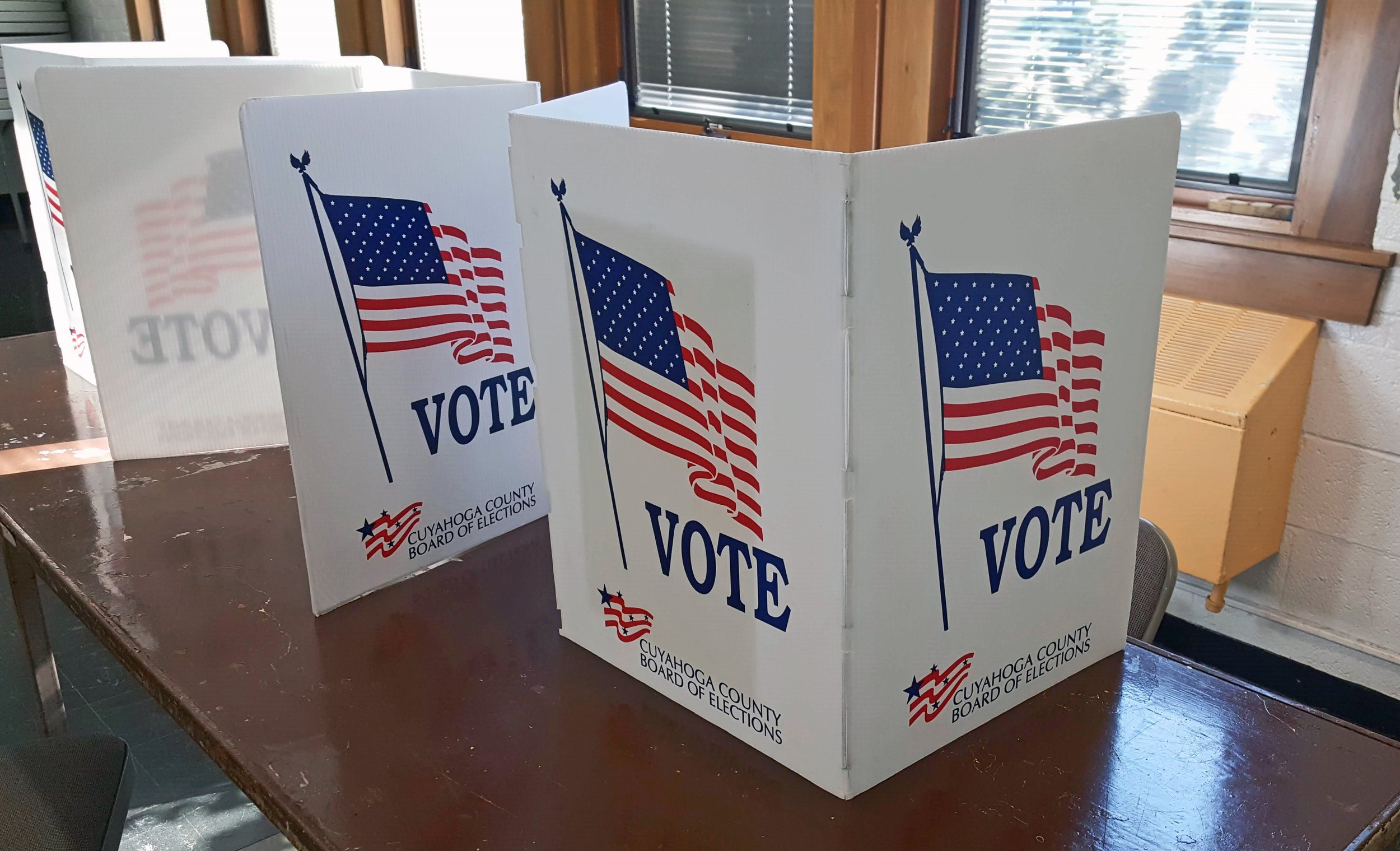
Looking beyond the polls to find Catholic news hooks in stories about 2022 midterms

Looking beyond the polls to find Catholic news hooks in stories about 2022 midterms

Political news coverage is, in part, guided by polls.

There are dozens of them that come out every few days in reporters’ email inboxes trying to gauge the temperature of the electorate on any given politician or policy decisions. This is especially true in a presidential election year. it’s also true during the midterms, which will arrive on Nov. 8.

While mainstream pollsters took a hit for being inaccurate when Donald Trump won the White House in 2016, the polls roll on as the experts put them out, pundits dissect them and news coverage reports on what they mean.

Often lost in this horse-race coverage of who’s up and who’s down are the views of real people about issues that are, in many cases, larger than partisan politics.

However, an EWTN/RealClear Opinion poll, released on July 15, took a snapshot of what Catholics are thinking, at this point in time. I wrote about its major findings for Religion Unplugged. However, there was more to this survey than a one-day headline.

There are plenty of nuggets of data that could serve as a jumping off point for news coverage in the coming weeks and months.

Overall, the survey found, in the words of Matthew Bunson, executive editor of EWTN News:

This new EWTN News/RealClear Opinion Research poll finds that Catholics — like the majority of Americans — are dissatisfied with the direction of the country, have largely negative views about most of the institutions of government save for the Supreme Court, and are deeply concerned about attacks and vandalism against churches and pro-life clinics.


Please respect our Commenting Policy

Podcast: Are many Bible Belt military families losing faith in the U.S. armed services?

Podcast: Are many Bible Belt military families losing faith in the U.S. armed services?

On Feb. 1, 2004, GetReligion co-founder Doug Leblanc opened the digital doors here at GetReligion and our first post went live. The headline: “What we do, why we do it.

I tweaked that post a bit in 2019, but left the main point intact. The key was that GetReligion was going to try to spot what I called religion “ghosts” in hard-news stories in the mainstream press. What, precisely, was a religion “ghost”? I raise this issue once again because this week’s “Crossroads” podcast (CLICK HERE to tune that in) focused on a “ghost” question in a very important topic in the news. Hold that thought.

That first post opened with Americans sitting down to read their newspapers or watch television news.

They read stories that are important to their lives, yet they seem to catch fleeting glimpses of other characters or other plots between the lines. …

One minute they are there. The next they are gone. There are ghosts in there, hiding in the ink and the pixels. Something is missing in the basic facts or perhaps most of the key facts are there, yet some are twisted. Perhaps there are sins of omission, rather than commission.

A lot of these ghosts are, well, holy ghosts. They are facts and stories and faces linked to the power of religious faith. Now you see them. Now you don’t.

This brings us to a recent Associated Press report with this headline: “Army cuts force size amid unprecedented battle for recruits.” There are zero references to religion in this report, which is kind of the point.

Is there a religion “ghost” somewhere in this story? Here are some crucial paragraphs:

With just two and a half months to go in the fiscal year, the Army has achieved just 50% of its recruiting goal of 60,000 soldiers, according to Lt. Col. Randee Farrell, spokeswoman for Army Secretary Christine Wormuth. Based on those numbers and trends, it is likely the Army will miss the goal by nearly 25% as of Oct. 1. …


Please respect our Commenting Policy