Evangelicals

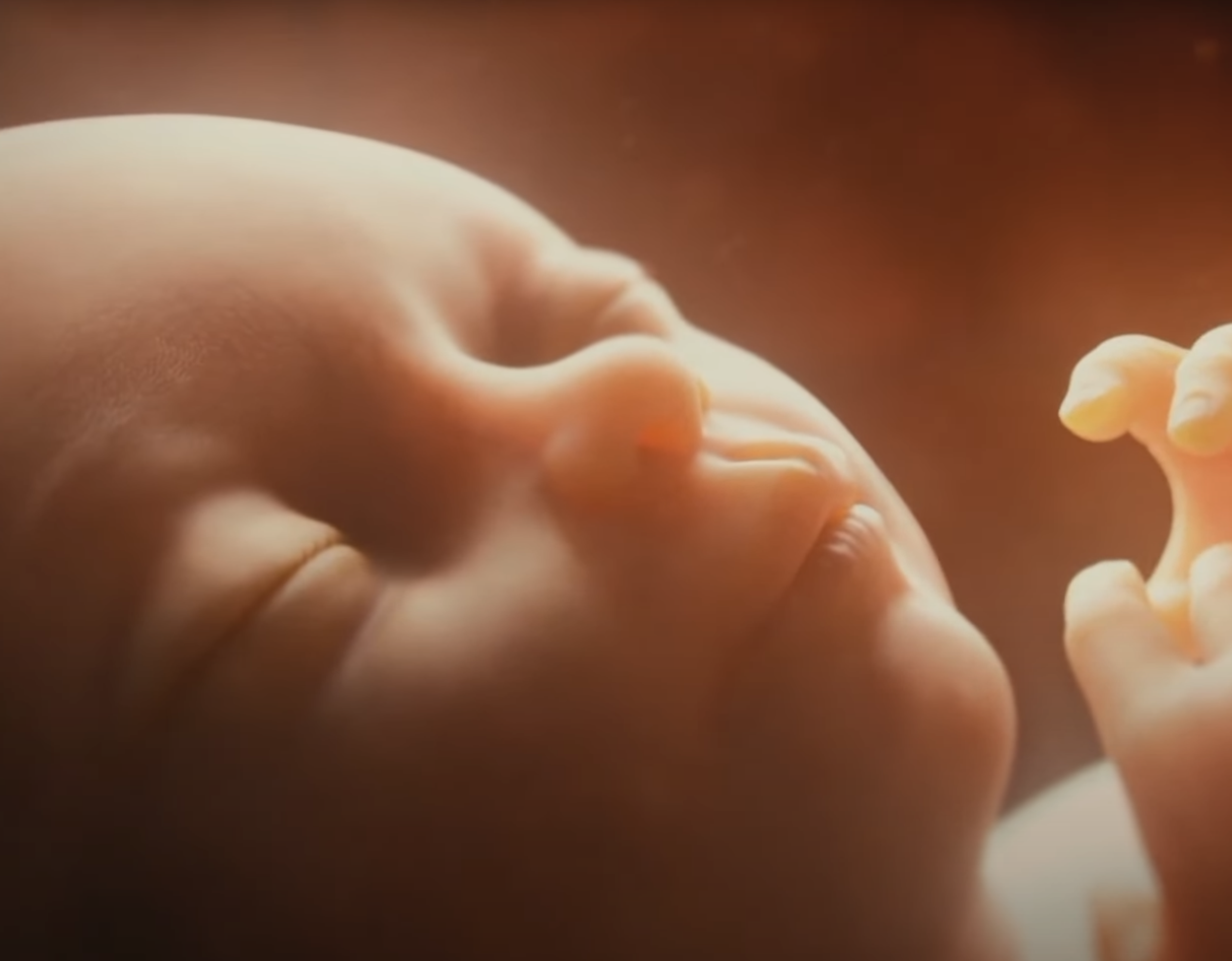
Podcast: Talking fetus scene in 'Blonde' has created another media storm about abortion

Podcast: Talking fetus scene in 'Blonde' has created another media storm about abortion

Ask any pastor about times when Americans tend to take stock of their religious commitments and it’s likely you will hear something like the following.

For most people, but especially for those who are married or/or have children, there are obvious gateways from one stage of life to another and, frequently, there are religious teachings and rites that go with them. Think birth, baptism, marriage, children, aging and, finally, death. In many lives, there are moments of conversion or doubt, as well as life-threatening illnesses and tragedies. Divorce? Broken relationships with children? Yes, more symbolic gates.

Clergy know they will have to help women and men deal with these gates. I have always argued, in discussions with editors, that these gateways are often linked to important trends and news events. Changing a prayerbook or hymnal, for example, may threaten doctrines and symbols that, for the devout, are linked to rites that frame these life events.

This brings us to this week’s “Crossroads” podcast (CLICK HERE to tune that in), which focuses on some news and commentary about the life of one of Hollywood’s greatest superstars — Marilyn Monroe. The problem is that the controversial, lurid new movie “Blonde” includes events and images that clearly link abortion to other life-defining events, especially horrors such as rape and other forms of sexual and emotional abuse.

Abortion can lead to grief and may be viewed as a form of violence against women? That pushes several hot buttons at the same time, and not just for right-wing Christians in the Bible Belt. Consider the symbolism of mourners visiting the famous Garden of Unborn Children in Japan.

As always, let me stress that abortion is a topic that, for many, raises religious issues — as well as moral, legal and political questions. This raises challenges for journalists and artists alike.

First, let’s look at the obvious news hook — that Planned Parenthood officials needed to react to this brutal NC-17 movie, a flick that is creating Oscar buzz surrounding the work of actress Ana de Armas.

The headline at The Hollywood Reporter proclaims, “Planned Parenthood: ‘Blonde’ Is “Anti-Abortion Propaganda.”

Please respect our Commenting Policy

Plug-In: 'Faith-based FEMA' -- religious groups rush to help others after Hurricane Ian

Plug-In: 'Faith-based FEMA' -- religious groups rush to help others after Hurricane Ian

Over the years, I’ve covered the faith-based response to quite a few hurricanes.

I traveled to New Orleans after Katrina, Houston after Harvey, the Florida Panhandle after Michael and Puerto Rico after Irma and Maria. No doubt I’m forgetting a few.

Inevitably, those watching the disturbing images on television or social media want to help immediately. But typically, assessing the needs requires a bit of time.

That leads us to Hurricane Ian, the megastorm setting its sights on South Carolina’s coast after causing catastrophic damage in Florida.

“The best way to help after Hurricane Ian is to give financially to established organizations responding to the disaster,” said Jamie Aten, co-founder of Spiritual First Aid and co-director of the Humanitarian Disaster Institute at Wheaton College in Illinois.

“Reach out to those you know who have been impacted to ask how you might help,” Aten added. “Our research shows that providing spiritual support and attending to basic needs helps reduce distress in the face of disasters.”

At Christianity Today, Aten and Kent Annan provide a “free spiritual and emotional toolkit for Hurricane Ian.”

President Joe Biden on Thursday praised Federal Emergency Management Agency workers mobilizing to help. The federal government’s response is, of course, crucial after a natural disaster.

But so is that of the “faith-based FEMA” — from Mennonite chainsaw crews to Southern Baptist feeding teams to Seventh-day Adventist warehousing experts adept at collecting, organizing and logging relief supplies, as I’ve written previously.


Please respect our Commenting Policy

Podcast: Are sweaty men exercising at dawn (then praying) a New York Times story?

Podcast: Are sweaty men exercising at dawn (then praying) a New York Times story?

Anyone who watches advertisements during football games knows that American men are doing just great, these days.

There appear to be gazillions of racially diverse circles of thin men out there — roughly 30-50 years of age — who get together all the time in sports bars with loads of disposable income to spend on beer and mountains of chicken wings in a wide variety of flavors. Others travel all over the place in their rad sports vehicles or those pick-up trucks that are part troop-carriers, part luxury vehicles.

There are some rotund, middle-aged, often bald, White losers out there, of course, but their family members or lovers are still around to laugh at their misadventures.

Yes, this screed from an elderly guy (on a diet, even) is directly connected with this week’s “Crossroads” podcast (CLICK HERE to tune that in). This week’s program focused on a fine, fascinating New York Times piece by religion-beat pro Ruth Graham. The double-decker headline on this piece proclaimed:

For Suburban Texas Men, a Workout Craze With a Side of Faith

In Katy, outside Houston, many men have taken up F3, a no-frills fitness group where members push themselves physically but also bond emotionally.

I heard from several readers praising this story (and followed buzz on Twitter) and people kept saying: What inspired the Gray Lady to do a positive story about a bunch of evangelical men (one with a “Republic of Texas” tattoo) bonding through exercise, fellowship, service and prayer?

The first answer: The story was written by a veteran religion reporter, not someone off the political or strange cultures desk. The men talk, they tell their own stories. They are not walking straw men ready for a beating. By the way: It also looks like F3 groups, or at least the one in this feature, are pretty diverse in terms of race. Hold that thought.

I think the crucial statement is at the top of the article and it isn’t the lede. Here is the note from the editors:

We’re exploring how America defines itself one place at a time. In a Houston suburb, men have been flocking to a workout group that promises more than just a sweat session; together, they aim to ease male loneliness.

Note the touch of humility: “We’re exploring how America defines itself one place at a time (I added the bold type). The goal here is to let Americans outside describe their own lives, as opposed to the Times doing that for them?


Please respect our Commenting Policy

Ryan Burge at RNS: Thinking about the impact of political sermons, on left and right

Ryan Burge at RNS: Thinking about the impact of political sermons, on left and right

Hey churchgoers: How long has it been since you heard a political sermon?

Wait. We need to pause and discuss what a political sermon might sound like. For example, I think everyone would agree that an open endorsement of a political candidate from the pulpit would be “political.”

But what if a congregation or a denomination invited a political leader to speak in a worship service or some other event? This is something that happens on the political left and right. For generations, to name one example, Democrats have accepted warm, strategic invitations to speak — or perhaps simply exchange greetings — in African-American churches. It makes headlines when GOP leaders address major evangelical bodies (think Vice President Mike Pence and the Southern Baptist Convention).

More questions: What if a bishop or a preacher addresses issues that are clearly both doctrinal AND political, such as right-to-life concerns or threats to the environment? What about a conference focusing on ways religious groups can defend First Amendment rights, such as freedom of speech, freedom of association and freedom of religious practice? Is a liberal rally on abortion more “theocratic” than one organized by believers on the doctrinal right?

I ask these questions because of a piece GetReligion contributor Ryan Burge, he of the omnipresent charts and info on Twitter, wrote for Religion News Service. Here’s the newsy headline “When preachers get political, do they change minds? Preachers tend to risk political speech only when they know it will receive a warm reception.” The overture:

One of the most important and difficult questions among those who study religion and politics is just how important a pastor, rabbi, imam or other religious leader is when it comes to shaping the worldviews of their congregation. These figures get a weekly chance to dominate the attention of the people who come to listen to their sermons. They have a nearly unique opportunity to mold their congregants’ view of the theological, social and political world around them.

How often do pastors actually use that opportunity to speak out about the pressing issues of the day? Some new data gives us a look.

A Pew Research Center poll fielded in March of 2021 asked people if they had heard sermons that contained references to the fallout from the 2020 presidential election in the previous month. The survey asked about four topics specifically: the possibility that the 2020 election was rigged, former President Donald Trump’s inaccurate statements about election fraud, as well as support for or opposition to those who stormed the U.S. Capitol on Jan. 6, 2021.

That is certainly a rather Donald Trump-era dominated list, but that reflects several years of headlines. Meanwhile, it’s safe to say that President Joe Biden is in the White House, in large part, because of support from voters in Black churches during several primaries. But I digress.


Please respect our Commenting Policy

Question for journalists to mull: What will America's religious life look like in 50 years?

Question for journalists to mull: What will America's religious life look like in 50 years?

Scribes in the U.S. press snapped to attention last year when the Gallup Poll announced that as of 2020 less than half of Americans held religious memberships for the first time in its eight decades of asking the question. Only 47% of Americans said they belonged to a church, synagogue, mosque or other house of worship, a dramatic loss from the 70% as recently as 1999.

Now comes the Pew Research Center with a related pulse-pounder issued last week.

Pew figures that currently 64% of Americans (including children) identify as Christians in some sense, compared with 6% for other religions and a hefty 30% for “nones” and “nothing in particulars” — those without religious affiliation. Then we’re told that 50 years from now the Christian percentage may well fall to a modest 54% or even to a remarkable 35% in the worst-case scenario, while the non-religious population rises to somewhere between 34% and a slim majority of 52%.

Understandably, the Pew numbers became spot news for, among others, CBS, National Public Radio, the Washington Examiner and Washington Post, both newspapers in faith-focused Salt Lake City, USA Today, Britain’s The Guardian and a host of religious outlets.

This remains a good spot story for media that haven’t yet reported Pew’s basics. But even media that have reported the topline numbers could return to the theme with illustrative anecdotes and reactions from area religious leaders. And for sure journalists and religious analysts will want to give the full report some careful thought.

Pew emphasizes that its numbers are only “possibilities,” not “predictions of what will happen,” and comments that such a future would have “far-reaching consequences for politics, family life and civil society.” For example, also consider the multiple social science surveys that associate religious involvement with psychological and medical well-being and positive life outcomes for youths. Also, there is the impact of religious charity, not only effective huge organizations but private person-to-person interactions. Also, religions strengthen community in our “Bowling Alone” culture.

Pew calculated four future scenarios based largely upon the rates at which Americans may switch in or out of Christian identification and in or out of religious “none” status.


Please respect our Commenting Policy

DeSantis as 'culture warrior' or theocrat: Coverage depends on a newsroom's worldview

DeSantis as 'culture warrior' or theocrat: Coverage depends on a newsroom's worldview

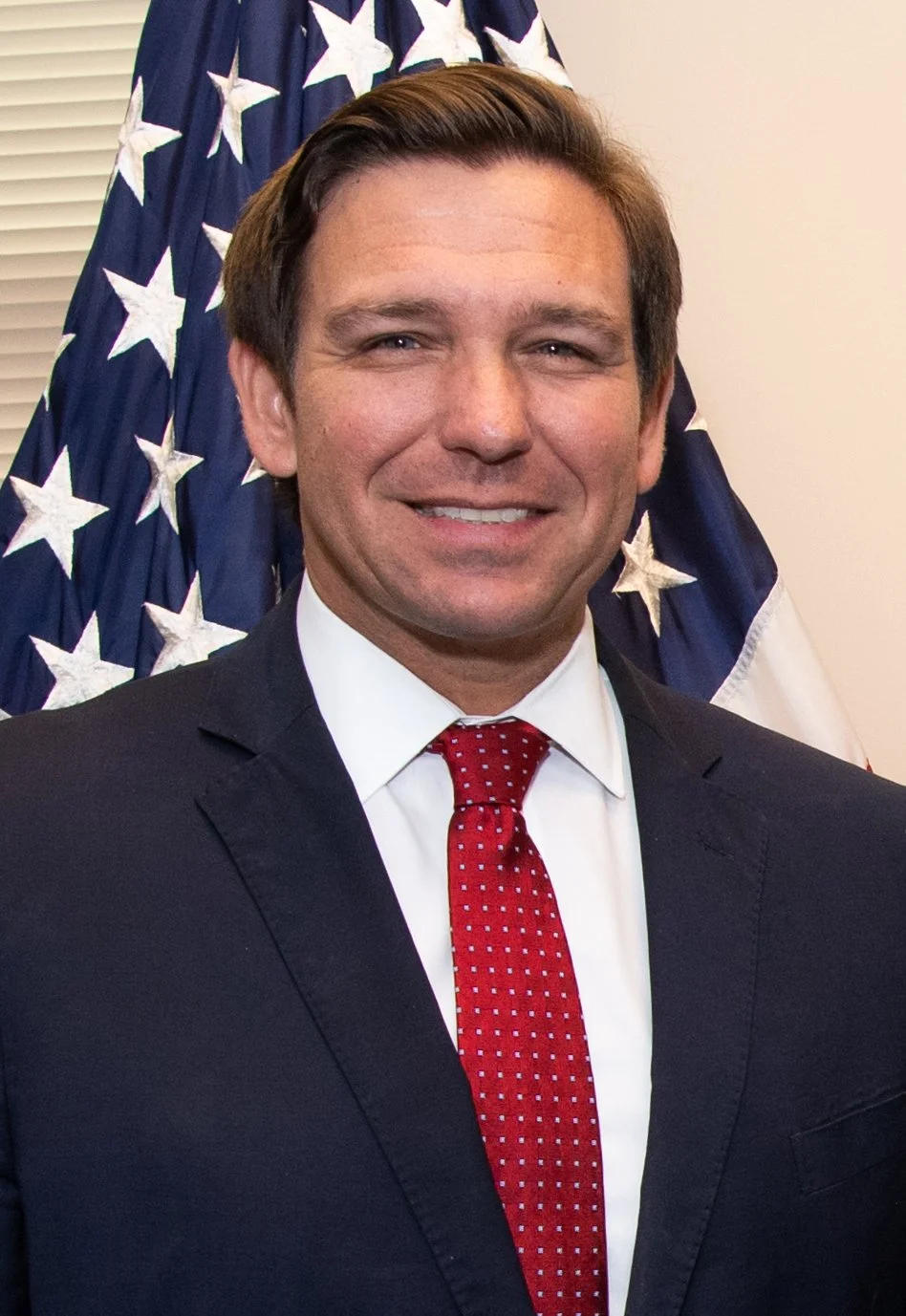
A Republican politician with presidential aspirations visits a Christian college. What happens next, in terms of the way the event is covered by the mainstream press, is predictable — during this era of niche news, with stories written to appeal to the beliefs of specific political flocks.

The politician in question is Florida Gov. Ron DeSantis and the school is Hillsdale College in Michigan. The visit took place this past February and was used as an example in a recent Miami Herald article of DeSantis’ mingling of faith and politics.

This is how the paper opens its Sept. 13 piece:

While visiting a private Christian college in southern Michigan that wields influence in national politics, Gov. Ron DeSantis rephrased a biblical passage to deliver a message to conservatives.

“Put on the full armor of God. Stand firm against the left’s schemes. You will face flaming arrows, but if you have the shield of faith, you will overcome them, and in Florida we walk the line here,” DeSantis told the audience at Hillsdale College in February. “And I can tell you this, I have only begun to fight.”

The Republican governor, a strategic politician who is up for reelection in November, is increasingly using biblical references in speeches that cater to those who see policy fights through a morality lens and flirting with those who embrace nationalist ideas that see the true identity of the nation as Christian.

That’s followed by the thesis:

He and other Republicans on the campaign trail are blending elements of Christianity with being American and portraying their battle against their political opponents as one between good and evil. Those dynamics have some political observers and religious leaders worrying that such rhetoric could become dangerous, as it could mobilize fringe groups who could be prone to violence in an attempt to have the government recognize their beliefs.

The article has no problem finding experts who warn of impending danger.


Please respect our Commenting Policy

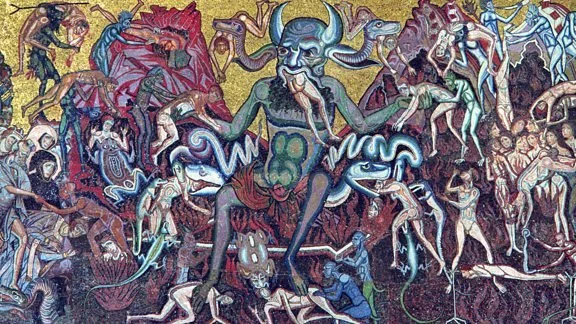
NBC News promotes its own Satanism-scare report, which is itself a kind of scare-news device

NBC News promotes its own Satanism-scare report, which is itself a kind of scare-news device

I have always found it interesting when major news organizations conduct a public-relations blitz — primarily with messages to other journalists — promoting one of their own news reports.

Obviously, the message to other journalists is this: We deserve praise for doing this story. The implied message is usually: We were brave to do this story. Now, all you other newsroom folks should follow our courageous example and cover this story, too.

In this case, we are talking about an NBC News press release with this dramatic double-decker headline:

NBC NEWS: SATANIC PANIC IS MAKING A COMEBACK, FUELED BY QANON BELIEVERS AND GOP INFLUENCERS

Baseless Accusations Are Branding People As Satanist Pedophiles At The Speed Of The Internet — Just Ask A GOP Prosecutor Who Recently Lost Re-Election.

There are several levels to This. Big. Story.

(1) There is a totally valid story about Internet-based attacks against a progressive Republican — David Leavitt, the prosecuting attorney for Utah County — attempting to smear him with wild stories about Satanic, cannibalistic attacks on children. Leavitt is active in the Church of Jesus Christ of Latter-day Saints and the younger brother of a former Utah governor, Mike Leavitt.

(2) There is a valid, and by now very familiar, story about QAnon, politicians, pedophiles, cannibalism, pizza and, of course, the work of Satan in one form of another (hold that thought). If you have followed GetReligion, you know that we think the world of QAnon conspiracy theories is important and worthy of tight, fact-based coverage.

(3) There are some, repeat “some,” Republicans on the right fringe who now rush to connect Satanic worship to all kinds of trends in the free-for-all that is modern American culture. These politicos have been known to blur the line between organized, public Satanic religious groups and the secret world (it’s hard to know the size of this phenomenon) of people attempting to practice dark arts of various kinds.

(4) There are many conservative, and very mainstream, religious believers who openly state their beliefs that incarnate evil — as in the biblical Satan — is at work, on one level or another, in activities including child abuse, domestic violence, terrorism, warfare, etc. Yes, some believe that using permanent forms of gender-transition surgery and puberty blockers on children fall into this category.

It’s important to note, however, that someone like Pope Francis saying that he sees Satanic forces at work in our world is not the same thing as people making accusations against, for example, the specific and official Church of Satan. Yes, Pope Francis has probably used more Satan-based language than any pope in several generations, including on some issues linked to the Sexual Revolution.

This NBC News report takes the important story at level (1) and links it to level (2) — which is valid. The problem, from my journalistic point of view, is that NBC News then attempts to take some poll-based information about questions at level (3) and even (4) and then blend that material with (2) Qanon and the (1) attacks on someone like Leavitt, arguing that belief in the reality of incarnate evil (a mainstream Christian belief, as in this Catholic Catechism reference) is creating a wider trend that threatens American democracy, or words to that effect.


Please respect our Commenting Policy

Here's a solid religion information source for office, home libraries and (of course) newsrooms

Here's a solid religion information source for office, home libraries and (of course) newsrooms

Here are some interesting facts about war-ravaged Ukraine you might not have heard:

* The nation was 97% Christian in 1900, slumped to 60% when atheistic Soviet Communists held power, and has rebounded to 86%. But in one survey only 20% of Ukrainians said religion is “very important” for them.

* The Orthodox Church historically under the Moscow Patriarchate has 13.5 million members. But even before the current Russian invasion, the young rival Orthodox Church of the independent Kyiv Patriarchate had gained a bigger following of 16 million.

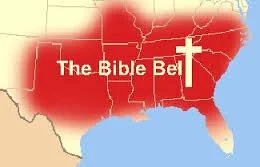
* Evangelical, Pentecostal and Charismatic Protestants, though a small minority, have so thrived since national independence in 1991 that Ukraine is known as Eastern Europe’s “Bible Belt.” Pentecostal believers who once survived in the underground church are now a force in civic affairs.

* Despite electing the first Jewish president, anti-Semitic incidents still occur.

* Regarding morals, “domestic violence is a massive problem,” especially in COVID-19 times, with complaints up 40% in the first half of 2020 compared with 2019.

Why mention these newsworthy pieces of information?

That’s a sampling of the sort of data about each of 233 countries you’ll find in the brand-new “Global Christianity: A Guide to the World’s Largest Religion from Afghanistan to Zimbabwe” (Zondervan Academic, $29.99 paperback). This valuable and inexpensive resource updates key information from the 2019 edition of the invaluable “World Christian Encyclopedia” (Edinburgh University Press, list price $270 with discounts online).

The new book’s editor is Gina Zurlo — https://ginazurlo.com; gzurlo@gordonconwell.edu) — co-editor of the “Encyclopedia” and co-director of the independent agency that produces it, the Center for the Study of Global Christianity at evangelical Gordon-Conwell Theological Seminary.


Please respect our Commenting Policy