Books

Podcast: Why are churches closing? There are many forces at work, but doctrine still matters

Podcast: Why are churches closing? There are many forces at work, but doctrine still matters

For years, there was a simple answer to the old question: Why do some churches grow, while others shrink?

You simply bought a copy of the 1972 book “Why Conservative Churches Are Growing: A Study in Sociology of Religion” by the late National Council of Churches leader Dean M. Kelley and that provided information answering lots (but not all) of the big questions. It was crucial that this groundbreaking book was written by a mainline Protestant insider, as opposed to a Southern Baptist or Assemblies of God leader.

Of course, everyone knew that some churches grew because of location, location, location. Also, there were always a few liberal churches that grew because of talented preachers or other strengths. Like I said: Kelley answered lots of church-decline questions, but not all of them.

What about 2022 in post-pandemic church life? For starters, many churches will never be post-pandemic — because many congregations (and maybe denominations or communions) were changed forever and we will see more evidence of that in the next few years.

All of this is an overture to this week’s “Crossroads” podcast (CLICK HERE to tune that in) which focuses on a must-read feature story by Godbeat veteran Bob Smietana. The headline at Religion News Service: “For a small Chicago church, closing down was an act of faith.” This was a personal, heartfelt story for Smietana, since this was a congregation that he once called home.

Like so many pastors around the United States, the Rev. Amanda Olson has kept one eye on the Bible and another on the evolving religious landscape.

She knew change was coming to the church in America.

Yet she hoped her congregation might be spared the worst of it.

“Everyone thinks that churches are going to close,” said Olson, the longtime pastor of Grace Evangelical Covenant Church on Chicago’s North Side. “But nobody thinks it is going to be their church.”



Please respect our Commenting Policy

Plug-In: Why faith still matters -- Bob Smietana on how religion is getting reorganized

Plug-In: Why faith still matters -- Bob Smietana on how religion is getting reorganized

Religion reporter Bob Smietana’s “aha!” moment came a few years ago while covering a hurricane.

When a tornado, flood or other disaster occurs, so-called faith-based FEMA organizations typically play a crucial role in the relief effort.

“Usually, a bunch of church folks and other religious folks show up,” explained Smietana, a Religion News Service national reporter. “They cook meals, they clear trees, and they help people rebuild their houses and put their lives back together.”

But given the decline of organized religion in America, might those helpers — at some point — disappear? And if so, what might that mean for the nation’s social fabric? Such questions came to Smietana during his “aha!” moment.

“Something in my head went, ‘Oh, wait. All those people doing this faith-based disaster relief are usually older church folks, and most of them are White,’” he told me, noting the shrinking proportion of White Christians in America.

Reflecting on the hurricane volunteers, he realized, “There’s no one in the pipeline to replace those folks when they’re gone.”

The veteran Godbeat pro shared that anecdote as we talked about the ideas behind his insightful new book, “Reorganized Religion: The Reshaping of the American Church and Why It Matters”, which releases tomorrow.

Here’s how Worthy Publishing describes Smietana’s book: “A look at the ways the Christian church has changed in recent years — from the decline of the mainline denominations to the megachurchification of American culture to the rise of the Nones and Exvangelicals — as well as a hopeful vision for reimagining what the church might look like going forward.”

My own take: The 200-plus pages of “Reorganized Religion” certainly are timely, delving into long-term demographic trends while exploring challenges such as the COVID-19 pandemic and post-2020 political division.


Please respect our Commenting Policy

What if mass media can't get rid of misinformation (or agree on what the term means)?

What if mass media can't get rid of misinformation (or agree on what the term means)?

Panelists on the final episode of the media-analysis show “Reliable Sources,” axed after three decades by CNN’s incoming management, gave voice to widespread angst about America’s news and information environment.

Rampant misinformation is among the top concerns these days. Social media have blocked COVID discussions regarded as misleading. The Biden Administration launched an Orwellian-sounding Disinformation Governance Board under the Department of Homeland Security, but quickly shelved the effort.

By the way, “misinformation” means incorrect knowledge of any sort, whereas “disinformation” is false knowledge that’s spread deliberately.

One commentator recommends that we all chill.

Only sheer “arrogance” could create “confidence that we can accurately and productively root out misinformation,” contends Isaac Saul, who heads up www.ReadTangle.com, an online newsletter that offers non-partisan summaries of the best arguments from various sides of political issues. (Check it out.) He titled a July article “Misinformation Is Here To Stay (And That’s OK).

The Guy does not necessarily embrace all of Saul but considers his contentions important for media toilers, critics and consumers to ponder. Thus this Memo condenses the essence as follows.

For starters, Saul cleverly notes that many things each of us believes right will prove “utterly wrong” and history proves it. As recently as a century ago, doctors believed in bloodletting cures using leeches or scalpels. U.S. women had just obtained the vote over against the common belief they were too emotional. The Milky Way was the outer limit of the universe.

Only two decades ago, experts were telling us mass opioid prescriptions were safe and that switching from paper to plastic bags would save trees and thus help the environment. More recently, Twitter and Facebook barred accurate New York Post reportage on Hunter Biden’s loaded (in several senses of that word) laptop, and established sources branded as a conspiracy theory COVID’s origin in a China lab leak, now regarded as possible or even likely. Add your own examples.


Please respect our Commenting Policy

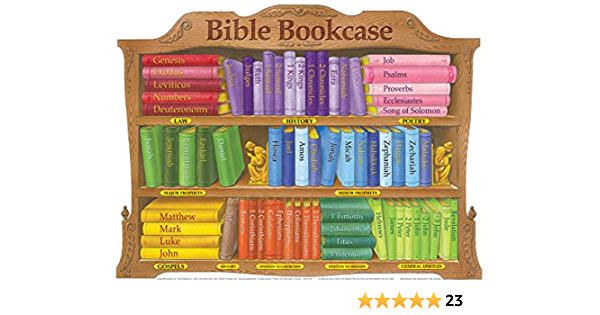
Plug-In: Why my old school district pulled 41 books from libraries -- including the Bible

Plug-In: Why my old school district pulled 41 books from libraries -- including the Bible

I don’t remember the Keller Independent School District making national headlines when I was a student here in the 1980s. Even back then, this North Texas community — which began with a railroad extension from Fort Worth in the 1850s — was growing.

But in my time at Keller High School, then the district’s only high school, Keller was still more farm town than burgeoning suburb. We had one grocery store along U.S. 377 and no McDonald’s — I drove to nearby North Richland Hills to flip Quarter Pounders my junior and senior years.

An old gray water tower that proclaimed “Keller: Home of the Indians” greeted visitors to our town, referring to the school mascot. I edited the student newspaper The Wigwam, played sousaphone in the marching band and graduated 23rd in a class of about 300 in 1986. The next year, our former drum major, Michelle Royer, won the Miss USA Pageant — the biggest news I recall from those days.

My parents still live in the area, so I visit frequently and have witnessed Keller’s explosive growth, including multiple exits along Interstate 35.

This week, I’ve watched with interest as the Keller school district’s decision to remove 41 books from its libraries, including the Bible and an illustrated version of “Anne Frank’s Diary,” has made headlines everywhere from the Texas Tribune to the New York Times. What in the world is happening?

Basically this: The national culture wars have come to the local school board. And not just in Keller.

A previous Plug-in highlighted stories by the Fort Worth Star-Telegram’s Emily Brindley and The Tennessean’s Liam Adams on school board candidates campaigning on Christianity and conservatism.

Each of the books pulled in Keller — including the Bible — was challenged by a parent, lawmaker or other community member in the last year, USA Today’s Jeanine Santucci reports.

The Washington Times’ Mark A. Kellner points out:

“Anne Frank’s Diary: The Graphic Adaptation” is an illustrated version of the bestselling classic written by a young Jewish girl in the Netherlands as she and her family hid from Nazi occupation forces. The story ended when the Franks were captured and sent to concentration camps; Anne and her sister Margot died, most likely of typhus, in the Bergen-Belsen camp. Her father Otto survived and published the diary, which had been hidden by his secretary, after the war.


Please respect our Commenting Policy

A religion, academic and business story: Is there a 'best' Bible to use and quote?

A religion, academic and business story: Is there a 'best' Bible to use and quote?

RACHAEL ASKS:

Is there a Bible that’s the most accurate?

THE RELIGION GUY’S ANSWER:

Almost all the varied 20th and 21st Century English translations on sale are sufficiently accurate and can be relied upon, though debates will never end on some details.

The first and fundamental aspect of accuracy is experts’ shared consensus on the best available texts in the original languages of Hebrew and Greek that underlie all translations, based upon a far richer body of surviving manuscripts than we have for other ancient writings. Here’s a somewhat over-simplified rundown.

Hebrew versions of the Jewish Bible or Tanakh, which Christians call the Old Testament, employ Judaism’s authoritative Masoretic Text. The ancient Hebrew language did not use written vowels, so medieval scholars known as Masoretes added “vowel points,” markings that standardized oral traditions on the correct readings of the words. This led to the 9th Century Aleppo Codex, corroborated by the 11th Century Leningrad Codex and other rabbinical manuscripts.

These carefully preserved texts are virtually identical in wording, though with some variations in pointing, and provide the basis for Jewish and Christian Bibles. The 15th Century emergence of printed Bibles further standardized the Hebrew text. The 20th Century rediscovery of biblical books among the 2,000-year-old ”Dead Sea Scrolls” added certain variations that translators consider.

With the New Testament, thousands of Greek manuscripts and fragments from Christianity’s early centuries exist. Today’s translators work from a standard “eclectic” Greek version formulated from these by specialists in “textual criticism” who decide which variants are closest to the original writings. Technical note: “earliest” does not necessarily mean “best” manuscript.

The resulting shared resource for translations is the German Bible Society’s continually updated text with all important variations, most recently the 2017 “Nestle-Aland Greek New Testament, 28th Edition, with Critical Apparatus.” Major translations undergo periodic tweaking based on this ongoing work. A prominent evangelical, the late Bruce Metzger of Princeton Theological Seminary, was the American leader in this international project.

Modern English Bibles provide candid footnotes that alert readers to important textual variants, which rarely affect basic biblical doctrines.


Please respect our Commenting Policy

Is America's religion cup half-empty or half-full? Two new takes on the omnipresent 'nones'

Is America's religion cup half-empty or half-full? Two new takes on the omnipresent 'nones'

The uber-trend in 21st Century American religion is the increase in “nones” who cite no religious affiliation or identity when pollsters phone. Last December, the Pew Research Center reported that 29% of the adult population currently self-describes as either atheist, agnostic or — by far the biggest category — “nothing in particular” regarding religion.

Thus the media and religious professionals will want to examine two new assessments of the situation.

Religion’s cup looks half-empty, a familiar scenario, in the book “Reorganized Religion: The Reshaping of the American Church and Why It Matters” by Bob Smietana. But the cup is half-full for a team at Baylor University’s top-flight Institute for Studies of Religion, whose findings are summarized in a (paywalled) Wall Street Journal item. For access to the full academic report on "nones" research (Interdisciplinary Journal of Research on Religion, volume 18, article 7), contact the institute at ISR@baylor.edu or 254 -710-2841.

Smietana is a well-positioned veteran guide as a Religion News Service national reporter, formerly with the Nashville Tennessean and Christianity Today magazine. His book is especially useful for journalists new to the religion beat as he surveys this generation’s dire data of decline, mingled with interviews of assorted dropouts and questers.

His over-all theme is that America and Americans depend on what’s called “organized religion,” actual face-to-face gatherings now weakened by both COVID and societal undertow. Organized secularism simply cannot offer a substitute for building and serving communities. Pointed questions are posed by Eboo Patel, the founder of Interfaith America raised Ismaili Muslim, summed up as follows by Smietana.

“What would happen if all the religious and faith-based institutions in your community disappeared? All the churches and schools, the hospitals and medical clinics, homeless shelters and food pantries, all the tutoring programs and benevolence funds. Who would pick up the slack? Who would tutor kids, resettle refugees, run shelters for battered women, and devote themselves to the whole host of charitable activities, large and small, that faith groups do?”

That doesn’t even touch help to individuals that nobody notices or the religious aspect of religion, the inherent need to worship, the sense of wholeness and purpose within a puzzling cosmos that faith can provide, or the resulting emotional and even physical well-being demonstrated in many secular studies.


Please respect our Commenting Policy

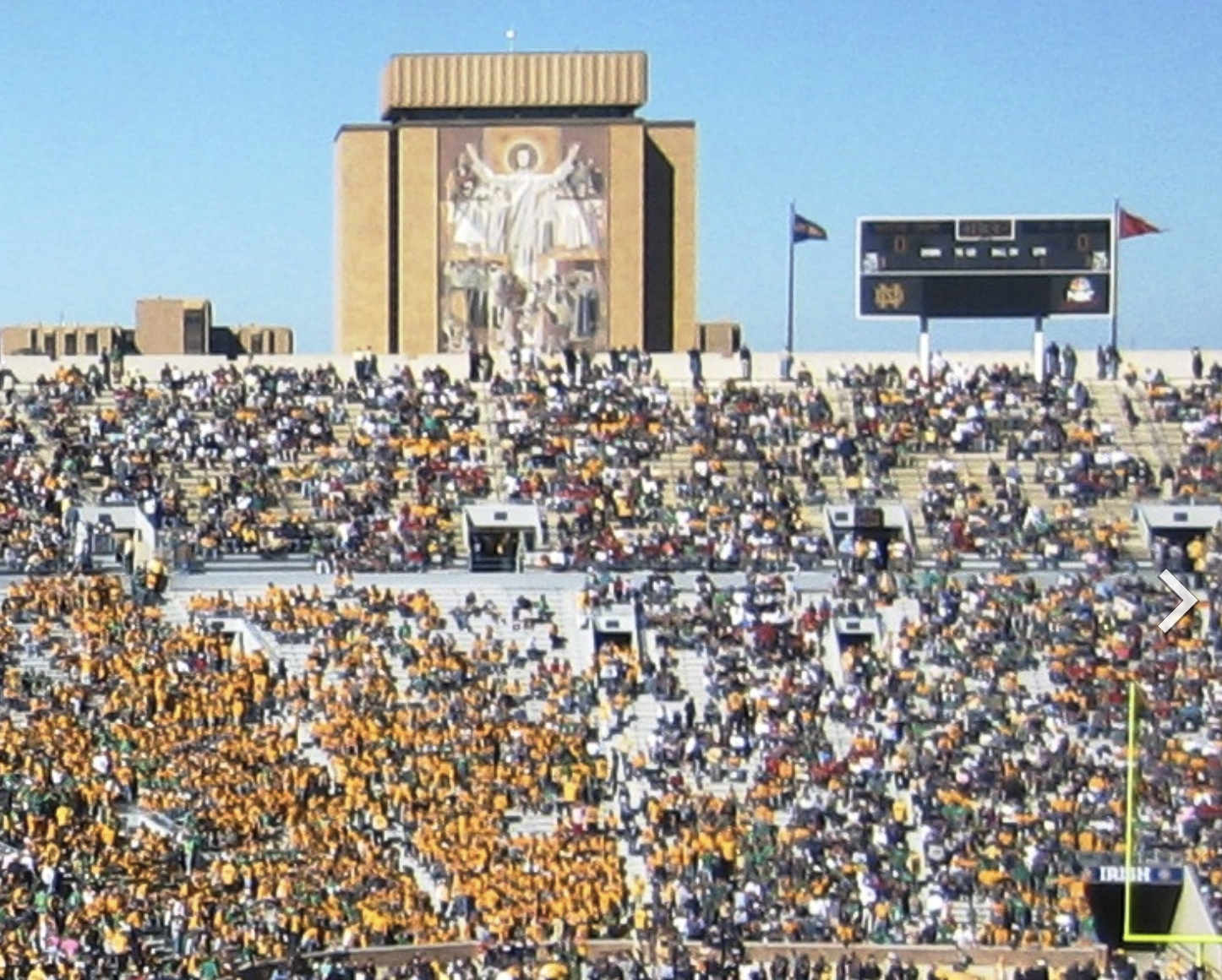
Sports, passion, faith: The ties that bind are always there, even if journalists miss them

Sports, passion, faith: The ties that bind are always there, even if journalists miss them

Sports, in so many ways, are almost like a religion for many people. Like religion, sports can convey important lessons about culture and values. From the times of the Ancient Greeks, athletes were sometimes accorded the status of gods.

Not much has changed since ancient times. Modern society has given god-like status to many athletes. Lebron James, Tiger Woods and Lionel Messi are just three athletes who garner such adulation on a global scale.

The question here at GetReligion is how this relationship shows up in news stories about sports, especially stories in which religious faith is — according to the athletes themselves — a key element in their lives and their success.

A new book by Randall Balmer, a historian who holds the John Phillips Chair in Religion at Dartmouth University, called “Passion Plays: How Religion Shaped Sports in North America” (University of North Carolina Press) explores the relationship between sports and religion. It will be available starting Sept. 20. For journalists and news readers, this book can be a door into some important topics in the news.

Balmer is an academic, not a journalist. Yet, he is on to something here -- something most sports writers miss altogether when they cover games or write player features. This is a book about subjects that religion-beat pros need to consider, since so few sports pros appear willing to do so.

GetReligion hasn't shied away from sports in the past and how it often intersects with faith and religion, as seen in this Google search for “GetReligion,” “sports” and “ghosts.”

For years, GetReligion has noted God-sized gaps in sports stories. We refer to these holes as "holy ghosts." Consider the titles of these posts: “Tragic death of NBA coach's wife Ingrid Williams and a missing element in the news,” “God credited with shrinking figure skater's brain tumor, but otherwise terrific story haunted by ghost” and “Haunted house Olympics: How many of the faith-driven stories did you see in Rio coverage?

Balmer writes in the introduction that the book “examines how the history of religion across North America connects in fascinating ways to the emergence of modern team sports.” He also argues, very persuasively, that modern sports have “evolved into a phenomenon that generates at least as much passion as traditional religion.”

I can relate to Balmer’s general argument.


Please respect our Commenting Policy

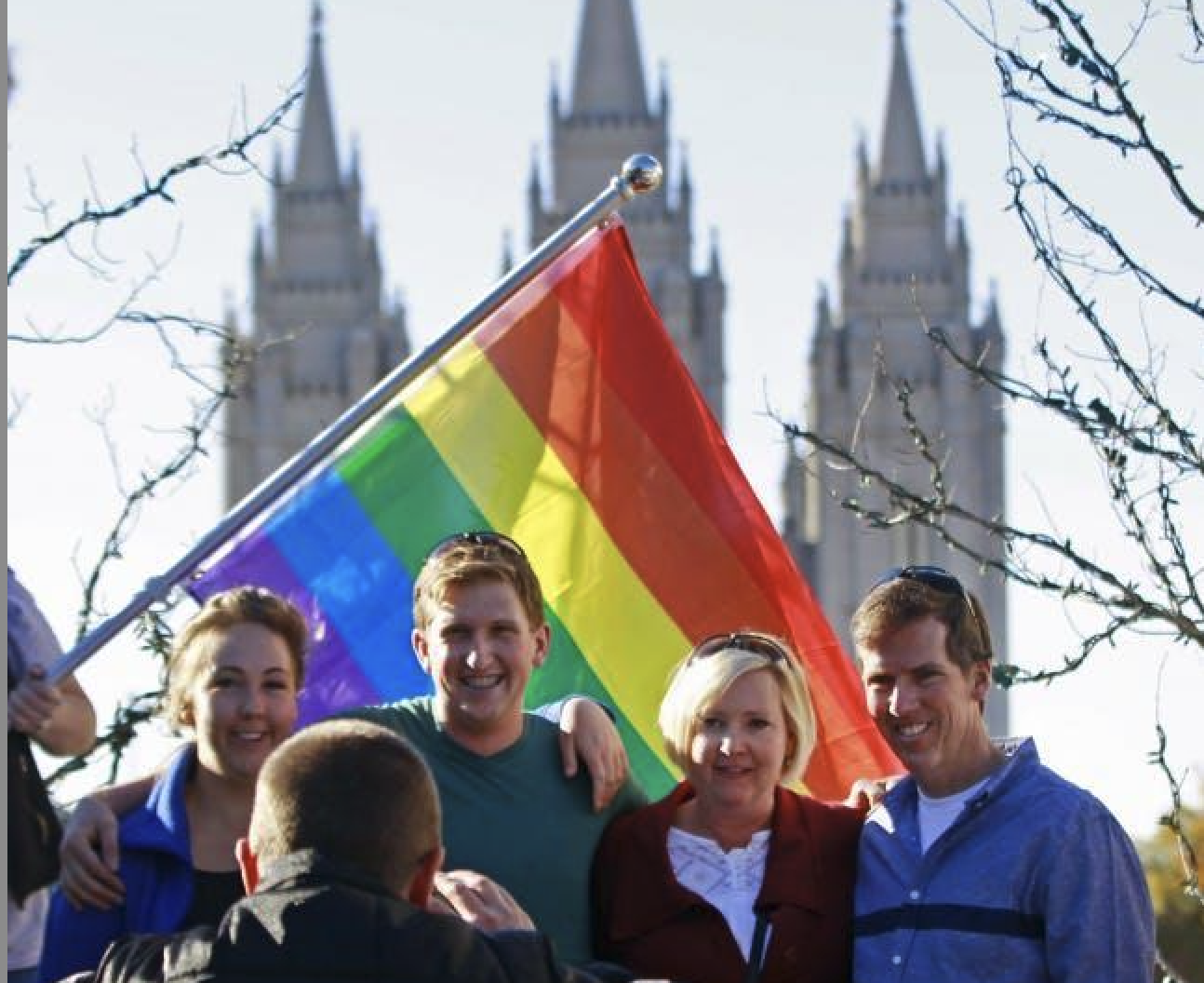
Latter-day Saints' incremental changes on doctrine add up to a solid religion story

Latter-day Saints' incremental changes on doctrine add up to a solid religion story

It’s commendable — and all too infrequent — when pundits admit mistakes.

So let’s send a hosanna or two toward Religion News Service columnist Jana Riess, who specializes in her own faith, The Church of Jesus Christ of Latter-day Saints (long nicknamed “Mormons”). Her column reviewing the four years under renowned heart surgeon Russell M. Nelson as LDS president admitted that “if I was guilty of expecting little from a nonagenarian company man, I’ve had cause to repent.” (Everybody else was saying the same.) She’s now “very glad to have been wrong.”

Riess’s latest look — “Oh, now I get it: Purging the word ‘Mormon’ is a bid for the mainstream” — does complain about one move (see below). But she hails 10 developments under Nelson, who turns 96 today. Taken together they form a solid story theme others could pursue. Given the faith’s 21st Century growth alongside setbacks elsewhere in American religion, national and regional media could combine the changes with how the LDS empire has fared during and after the COVID-19 crisis.

A summary of the top 10 items in this change-resistant faith, interpreted in terms of Riess’s policy preferences:

* Though she says “mountains of work” remain, 2019 reversal of a 2015 policy ended automatic excommunication of same-sex couples and allows baptisms and blessings for their children.

* Also in 2019, there was “a little progress” on women. The status of biblical Eve was elevated in the central secret “endowment” ritual, in which wives no longer vow to “hearken” to their husbands. Also, girls and women are now allowed as official witnesses to ordinances.

* Though white Americans continue to dominate global leadership, for the first time in LDS history Nelson’s two newly named apostles were from neither North America nor Europe. Choices for lower ranks are also more diverse.

* Young adult missionaries can contact families weekly rather than twice a year, and their access to mental health services has improved.

* With the demise of Boy Scout ties, the church’s overhauled youth program has equal spending on girls.


Please respect our Commenting Policy

Memory eternal, Ron Sider: An evangelical thinker caught in political crossfire for decades

Memory eternal, Ron Sider: An evangelical thinker caught in political crossfire for decades

It was the kind of Pope John Paul II quotation that was powerful and prophetic -- but hard to print on a political bumper sticker.

"America will remain a beacon of freedom for the world as long as it stands by those moral truths which are the very heart of its historical experience," he said, during his 1999 U.S. tour. "And so, America: If you want peace, work for justice. If you want justice, defend life. If you want life, embrace truth -- the truth revealed by God."

One American activist who paid close attention was Ronald J. Sider, a Mennonite theologian who was already several decades into a career built on asking Americans to ponder precisely that equation.

Politicians on left and right would cheer as John Paul attacked the modern world's "culture of death," said Sider. But, in private, Democrats and Republicans would groan.

"People on the left will love what he had to say about the death penalty and racism and caring for the poor," said Sider, when I reached him by telephone. "But many liberals are going to squirm because he ties these issues directly to traditional Christian teachings on abortion and euthanasia and family life. Meanwhile, some people on the right will squirm because the pope made it very clear that he links these pro-life issues to the death penalty and poverty, sickness, hunger and even the environment."

Sider added: "We live in an age of incredible relativism in this society and even in the church. We live in a land that seems to have lost its way."

These kinds of tensions defined Sider's own struggles as a hard-to-label political activist and ecumenical leader. He died on July 27 at the age of 82.

Christianity Today listed Sider's classic "Rich Christians in an Age of Hunger" as one of the 20th century's most influential religion books. The flagship evangelical magazine also ran this headline with a cover story about Sider's career -- "Unsettling Crusade: Why does this man irritate so many people?"


Please respect our Commenting Policy