Baptists

New podcast: Sex, marriage and babies are now topics too hot for preachers to handle?

New podcast: Sex, marriage and babies are now topics too hot for preachers to handle?

Hey religion-beat reporters (and even pros who cover politics): Want to find some really interesting stories?

Ask this question: What are the subjects that clergy are afraid to address in the pulpit? This was the big idea looming in the background during this week’s “Crossroads” podcast (CLICK HERE to tune that in).

For example, lots of people interpreted the silence of many super-preachers on the ethics and affairs of Donald Trump as evidence of support for him. It is much more likely (see some of the info in this “On Religion” column) that they knew the people in their pews were divided on this topic.

Thus, they were afraid to discuss it. They didn’t want to start a war.

Here’s another case study, one so old that my reporting on it predates the Internet. But I addressed the topic in this 2016 post here at GetReligion. Remember the “True Love Waits” phenomenon?

Anyway, I realize that for many people the whole "True Love Waits" thing was either a joke or an idealistic attempt to ask young people to do the impossible in modern American culture. …

What fascinated me was that, according to key "True Love Waits" leaders, they didn't struggle to find young people who wanted to take vows and join the program. What surprised them was that many church leaders were hesitating to get on board because of behind-the-scenes opposition from ADULTS in their congregations.

The problem was that pastors were afraid to offend a few, or even many, adults in their churches — even deacons — because of the sexual complications in many lives and marriages, including sins that shattered marriages and homes. Key parents didn't want to stand beside their teens and take the program's vows.

This brings me to some amazing Gallup Poll data that —as far as I can tell — didn’t receive any news coverage when it came out in 2020. There was a Twitter flurry about it the other day, which led to some people re-upping this “story” that wasn’t a “news story.”

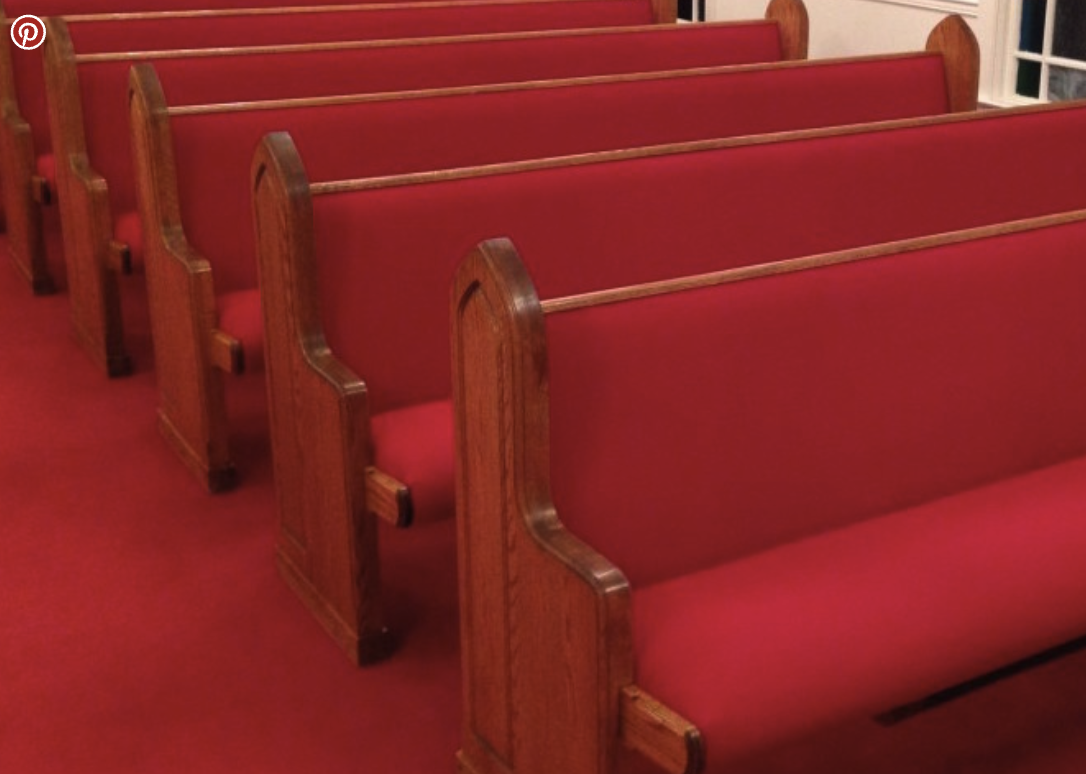
The headline on the feature at Gallup: “Is Marriage Becoming Irrelevant?” Here is a chunk of the information that should have raised eyebrows, for reporters and preachers — including clergy who face people sitting in “red,” “conservative” pews.



Please respect our Commenting Policy

Ask this: Why did many flocks survive or thrive in pandemic, while others were hit hard?

Ask this: Why did many flocks survive or thrive in pandemic, while others were hit hard?

Does anyone remember typewriters?

Long ago, I took my very first reporting class at Baylor University. The legendary Jprof David McHam ran this lab as a mini-newsroom. McHam would sit in the “slot” of a U-shaped desk, working with students as we turned in our rough drafts.

I heard him say this many times: “The story is all here, but you wrote it in the wrong order,” or words to that effect. McHam would take his copy-desk pica pole (the birthday cake cutter of choice in newsrooms) and rip our typewriter copy into multiple horizontal pieces, before putting them in a new order, secured with a long strip of clear tape. Then he would say: “Go write the story in that order.”

More often than not, the wise Jprof found crucial information and pulled it higher in the story — if not into the lede itself. In many cases, this was information that created a tension with a simple version of the “news” in the lede. In other words, he was pushing us to acknowledge that many stories were more complex than we wanted to think they were.

With that in mind, let’s look at an important COVID-tide story from the Associated Press: “At many churches, pandemic hits collection plates, budgets.”

Note the word “many” in that headline. I think many readers would assume that the coronavirus pandemic has caused disasters in pews and pulpits and that is that. The evidence, in this story, is more complex than that — especially with a little bit of cutting and pasting. Here is the overture:

Biltmore United Methodist Church of Asheville, North Carolina, is for sale.

Already financially strapped because of shrinking membership and a struggling preschool, the congregation was dealt a crushing blow by the coronavirus. Attendance plummeted, with many staying home or switching to other churches that stayed open the whole time. Gone, too, is the revenue the church formerly got from renting its space for events and meetings.


Please respect our Commenting Policy

Is America really threatened by civil war? What is religion's role in these tensions?

Is America really threatened by civil war? What is religion's role in these tensions?

American Civil War talk is all the rage this New Year.

No, not that war, the one that cost 620,000 lives and was evoked by President Biden to castigate Senate Democrats and Republicans who are blocking passage of new election-ballot rules. Rather, The Guy refers to the drumbeat of warnings that the disunited United States may in the near future face an internal legal and economic cold war or some kind of hot war.

National Public Radio's Ron Elving reports that "not long ago the idea of another American Civil War seemed outlandish. These days, the notion has not only gone mainstream, it seems to suddenly be everywhere." He summarized anxiety-producing polls that show a polarized nation, and noted that 434,000,000 firearms are in civilian hands.

Then there's New Yorker Editor David Remnick's article "Is a Civil War Ahead?" New York Times columnist Michelle Goldberg likewise wonders, "Are We Really Facing a Second Civil War?" A Times op-ed by former National Security Council staffers Jonathan Stevenson and Steven Simon offers "the worst case scenario" in which "the United States as we know it could come apart at the seams" with "insurrection, secession, insurgency and civil war."

New January books include "The Next Civil War: Dispatches From the American Future" by novelist Stephen Marche, who sees virtually inevitable doom, and the slightly more upbeat "How Civil Wars Start and How to Stop Them" by Barbara F. Walter of the University of California San Diego. (Is it mere coincidence that The Atlantic's London writer Tom McTague is just out with "How Britain Falls Apart"?)

One typical forecaster is all the more interesting because he's Canadian. Thomas Homer-Dixon of Royal Roads University issued a New Year's Eve alarm in the influential Globe and Mail. He believes that as soon as 2025 "American democracy could collapse, causing extreme domestic political instability, including widespread civil violence. By 2030, if not sooner, the country could be governed by a right-wing dictatorship."

Outlandish?


Please respect our Commenting Policy

Plug-In: A fascinating look back at the last year in the life of the Rev. Martin Luther King, Jr.

Plug-In: A fascinating look back at the last year in the life of the Rev. Martin Luther King, Jr.

Today is Martin Luther King Jr. Day, a day of remembrance for the influential civil rights leader.

Adelle M. Banks, longtime national reporter for Religion News Service, marks the holiday with a fascinating look back at King’s last full year of life.

Among the details that Banks uncovered in a review of RNS’ 1967 archives: The Baptist pastor’s “growing outspokenness against the Vietnam War and his advocacy for the poor, while it garnered support from celebrities such as Dr. Benjamin Spock, drew criticism from evangelist Billy Graham and others.”

Banks, a 27-year RNS veteran, spearheaded an exceptional 2018 project on the 50th anniversary of King’s April 4, 1968, assassination.

Those stories, still worth a read, include:

Remembering King’s last sermon with renewed hope

A faithful journey from cotton field to White House: Q&A with a sanitation worker

Three Memphis sites key to King’s legacy draw visitors

Power up: The week’s best reads

1. Why the Catholic Church Is losing Latin America: “The rise of liberation theology in the 1960s and ’70s, a time when the Catholic Church in Latin America increasingly stressed its mission as one of social justice, in some cases drawing on Marxist ideas, failed to counter the appeal of Protestant faiths,” report the Wall Street Journal’s Francis X. Rocca, Luciana Magalhaes and Samantha Pearson.

“Or, in the words of a now-legendary quip, variously attributed to Catholic and Protestant sources: ‘The Catholic Church opted for the poor and the poor opted for the Pentecostals.’”

The Journal’s story from Brazil follows The Associated Press’ recent trend piece (highlighted in last week’s Plug-in) on a surge of evangelicals in Spain, fueled by Latin Americans.


Please respect our Commenting Policy

Return of a Godbeat F-bomb: The 'curse of Ham,' Twelve Tribes history and a Colorado fire

Return of a Godbeat F-bomb: The 'curse of Ham,' Twelve Tribes history and a Colorado fire

Let’s start with a journalism question about the news coming out of Colorado about possible links between the Marshall Fire and a controversial religious group known as the Twelve Tribes.

The New York Times has used that popular journalism F-word — “fundamentalist” — in a major story that ran with this headline: “Colorado Wildfire Inquiry Focuses on Christian Sect.” The read-out under that headline states: “Investigators are looking at the possibility that a fire that destroyed more than 900 homes started on property owned by a fundamentalist Christian sect known as Twelve Tribes.”

Once again, we need to talk about what the word “fundamentalist” means and what it does not mean. Let me ask this question, before we proceed: Is the “Twelve Tribes” movement a “fundamentalist Christian” group in the same sense that Black or White independent Baptist churches found in many or most American cities are accurately described, in doctrinal terms, as “fundamentalist”?

Perhaps the crucial question for journalists covering this story is whether the Twelve Tribes movement is a “sect” or, in sociological terms, an actual “cult”? Hold that thought.

First, here is the overture of the Times story, showing the context for this religion-beat F-bomb:

Investigators looking into the cause of a colossal wildfire in Colorado that forced the evacuation of tens of thousands of people are focusing on a property owned by a Christian fundamentalist sect, after witnesses reported seeing a structure on fire there moments before the blaze spread with astonishing speed across drought-stricken suburbs.

Sheriff Joe Pelle of Boulder County said at a news briefing … that the property owned by Twelve Tribes, which was founded in Tennessee in the 1970s, had become a target of the inquiry after investigators ruled out the possibility that downed power lines might have sparked the fire.

With that in mind, let’s return to the pages of the journalism bible know as the Associated Press Stylebook (h/t to Bobby Ross, Jr., for checking the evolving online edition).

Let us attend.

fundamentalist The word gained usage in an early-20th-century fundamentalist-modernist controversy within Protestantism. In recent years, however, fundamentalist has to a large extent taken on pejorative connotations except when applied to groups that stress strict, literal interpretations of Scripture and separation from other Christians.

In general, do not use fundamentalist unless a group applies the word to itself.


Please respect our Commenting Policy

Religion news 2021: Which story was No. 1? Return of Taliban or Jan. 6 riot at U.S. Capitol?

Religion news 2021: Which story was No. 1? Return of Taliban or Jan. 6 riot at U.S. Capitol?

For journalists who braved the chaos, the Jan. 6th riot on Capitol Hill offered a buffet of the bizarre -- a throng of Proud Boys, QAnon prophets, former U.S. military personnel and radicalized Donald Trump supporters that crashed through security lines and, thus, into history.

Many protestors at Trump’s legal "Save America" rally carried signs, flags and banners with slogans such as "Jesus is my Savior, Trump is my president" or simply "Jesus 2020." In this context, "Jesus saves" took on a whole new meaning.

Some of that symbolism was swept into the illegal attack on the U.S. Capitol.

In its poll addressing major religion events in 2021, members of the Religion News Association offered this description of the top story: "Religion features prominently during the Jan. 6 assault on the U.S. Capitol by pro-Trump insurrectionists. Some voice Christian prayers, while others display Christian or pagan symbols and slogans inside and outside the Capitol."

Consider, for example, Jacob Anthony Chansley -- or Jake "Yellowstone Wolf" Angeli. With his coyote-skin and buffalo-horns headdress, red, white and blue face paint and Norse torso tattoos, the self-proclaimed QAnon shaman, UFO expert and metaphysical healer became the instant superstar of this mash-up of politics, religion and digital conspiracy theories.

"Thank you, Heavenly Father … for this opportunity to stand up for our God-given inalienable rights," he said, in a video of his U.S. Senate remarks from the vice president's chair. "Thank you, divine, omniscient, omnipotent, omnipresent Creator God for filling this chamber with your white light and love. Thank you for filling this chamber with patriots that love you and that love Christ. …

“Thank you for allowing the United States of America to be reborn. Thank you for allowing us to get rid of the communists, the globalists and the traitors within our government."

That was one loud voice. A big question that must be answered, in future trials and the U.S. House investigation, is whether it's true -- as claimed by the New York Times -- that the "most extreme corners of support for Mr. Trump have become inextricable from some parts of white evangelical power in America."


Please respect our Commenting Policy

Plug-In: Best religion-news writing of 2021, as volunteered by scribes coast to coast

Plug-In: Best religion-news writing of 2021, as volunteered by scribes coast to coast

This week, I’m sipping hot chocolate and watching Christmas movies.

Rather than pick the best reads and top headlines in the world of faith, as I normally do, I asked some of the nation’s top religion writers to share the favorite story they wrote during 2021.

It’s a holiday week, so I didn’t catch up with everybody. But I sure appreciate my Godbeat colleagues who responded.

P.S. The Religion News Association announced its top religion stories of 2021 this week. Check out the RNA list.

Power Up: The Year’s Best Reads

Journalists who write about religion pick their top story of 2020.

Liam Adams, The Tennessean: Inside the Southern Baptist Convention's battle over critical race theory and what it says about the denomination, published Dec. 13.

Sarah Pulliam Bailey, Washington Post: Caught in a culture war, this multiracial family navigates a predominantly White evangelical world, published June 1.

Cheryl Mann Bacon, Christian Chronicle: Afghan mission becomes a race to save lives, published Sept. 14.

Adelle M. Banks, Religion News Service: 9/11 became a catalyst for interfaith relations and cooperation, published Sept. 9.

Deepa Bharath, Orange County Register: ‘It’s about finding a way,’ mourners say as they’re forced to change rituals amid coronavirus pandemic, published Jan. 29.


Please respect our Commenting Policy

Yet another theodicy news story: Where was God in the Mayfield tornado disaster?

Yet another theodicy news story: Where was God in the Mayfield tornado disaster?

Words fail to convey the emotions in Mayfield, Kentucky, after last weekend’s devastating tornado.

Let’s try anyway, directly from the mouths of those relying on their faith in the EF4 twister’s aftermath.

It’s another “theodicy” story: It would appear that God is on trial.

“My little girl asked me, ‘Why would God let this happen?’ … I had to look at my little 8-year-old girl, who looks to me for answers, and I had to say … ‘I don’t know. I don’t know.’” — the Rev. Wes Fowler, senior pastor of First Baptist Church in Mayfield (via Associated Press story by Holly Meyer)

"Thanks be to God the parts of the building that came down didn’t come down on us. I realized it might be the last few moments of my life on this earth. … All I care about is the fact that the most valuable possessions in my life, my wife’s life, my children, they’re all safe. Everything else is replaceable." — the Rev. Joey Reed, lead pastor of First United Methodist Church in Mayfield (via Louisville Courier-Journal story by Christopher Kuhagen)

"As a parent, it's like there's only so much you can say or do to take the fear out of your children. The girls' room was — I say 'was' because, obviously, if you come in here and look around, there's no walls anymore; there's no ceiling. I mean, they know how much of it's in our hands and how much of it's, you know, up to the storm and up to God. ... We lost everything, but we didn't lose everything. I mean, everything that we have that is worth anything was in that closet." — Joseph Tyler, Mayfield resident who survived with his family in the closet and worships at His House, a local church (via CNN story)

“God is not in the devastation. He’s not in the destruction. He was not in the storm. But he’s in the response, and that’s where we are. That’s what we’re trying to be. We’re trying to amplify the response that is happening from the survivors and victims of the tornado.” — Susan Montalvo-Gesser, director of Catholic Charities of the Diocese of Owensboro, Kentucky (via America magazine story by Michael J. O’Loughlin)

"It's awful. It's tragic. People who have lost loved ones, there is no way to take that pain away. I think you just have to embrace the pain and pray that God will guide you as you overcome it." — the Rev. Milton West, senior minister of First Christian Church in Mayfield (via WLKY story by Marvis Herring)


Please respect our Commenting Policy

So what is 'Christmas,' anyway? These days, Siri knows more than many believers

So what is 'Christmas,' anyway? These days, Siri knows more than many believers

This question rocks the Internet year after year: Is "Die Hard" a "Christmas movie"?

How about "Frosty the Snowman," "Home Alone," "Elf" or "A Bad Moms Christmas"? Is "A Christmas Story" really a "Christmas" story? What about those Hallmark Channel visions of romance, complicated families and wall-to-wall holiday decorations?

The answer to these questions, and many others, hinges on how Americans answer another question: What is "Christmas"?

Ask that question to an iPhone and Siri will quote Wikipedia: "Christmas is an annual festival commemorating the birth of Jesus Christ, observed primarily on December 25 as a religious and cultural celebration among billions of people around the world."

Most people know that much of the story, according to a new survey by Lifeway Research in Nashville. Nearly 75% of Americans say Jesus was born more than 2,000 years ago in Bethlehem and even more believe that Jesus is the Son of God the Father.

After that, things get fuzzy.

"Lots of people celebrate Christmas, but some have no interest in celebrating the birth of Jesus Christ," said Scott McConnell, executive director of Lifeway. "But even some of the people who do take the Christmas message seriously don't understand what it means. …

"This is a story that hasn't changed for 2,000 years, yet many people struggle to tell the story and get the details right. Many don't know why Jesus was born."


Please respect our Commenting Policy