Concerning that 'Barbie' sermon about what it means to be incarnated as a woman

Concerning that 'Barbie' sermon about what it means to be incarnated as a woman

Hollywood worships big movie franchises, so fans can expect "Barbie" sequels.

One plot proposal quickly emerged from an unlikely source -- Sister Mary Joseph Calore of the Society Devoted to the Sacred Heart of Jesus in St. Cresson, Pennsylvania.

"'Barbie becomes a nun' would be a great sequel," she wrote, on the X platform. Her post contained this pitch to Warner Bros. executives: "Dissatisfied by endless parties and user friends, an eating disorder, spending addictions with clothes and shoes, and cohabitating with the shallow & unemployed playboy Ken, Barbie's sportscar has been parked more and more at an adoration chapel. She is seriously giving thought to draining the pool, putting her condo on the market, cutting her hair and donning the religious habit."

That would be a twist, after a cinematic manifesto arguing that life as a real woman is painful and complicated, but it's better than being an iconic plastic doll.

"This movie should have been silly and fun, but it ended up being preachy and earnest," said Barbara Nicolosi Harrington, a former Catholic nun who became a screenwriter and Hollywood script doctor. "I mean, how far can you go with a story about Barbie?"

Writer-director Greta Gerwig's previous work has been impressive, stressed Harrington, who teaches at Regent University in Virginia Beach, Virginia. With "Little Women," Gerwig showed the ability to offer a fresh take on a familiar story. Now, "Barbie" will draw intense scrutiny, since she will direct at least one movie in the upcoming Netflix take on "The Chronicles of Narnia" novels by the Christian apologist C.S. Lewis.

"Barbie" contains ambitious attempts to mix serious, even if tongue in cheek, social commentary with pop-culture mythology -- such as a shot-for-shot homage to Stanley Kubrick's legendary dawn-of-consciousness scene in "2001: A Space Odyssey."

The big "Barbie" question, noted Other Feminisms writer Leah Libresco Sargeant, is stated in a soundtrack ballad -- "What Was I Made For?"

Please respect our Commenting Policy

Thinking about religion in Russia: Orthodox Christianity has declined, but also grown?

Thinking about religion in Russia: Orthodox Christianity has declined, but also grown?

“Religion” is a complicated word, as I have noted many times at GetReligion.

Put the word “Byzantine” in front of “religion” or “Christianity” and things get really complicated, as in this secondary definition of that adjective: “ … excessively complicated, and typically involving a great deal of administrative detail.”

Frame Byzantine Christianity with the history of Russian culture and the complications are compounded. Toss in centuries of history — complex, bloody, mysterious and sacred — shared by the Slavic giants Russia and Ukraine and, well, you get the picture.

This weekend “think piece” comes from the Orthodox Christianity news website. This is an information source that, from the American point of view, is extremely conservative. This doesn’t mean that mainstream journalists should ignore it.

Why is that? Because it consistently offers direct links to online sources — documents, speeches, quotable analysis — that the vast majority of reporters and editors would not know about otherwise. This includes, for example, lots of material representing the leadership of the Ukrainian Orthodox Church. That’s the historic church of Ukraine that is current caught up — along with millions of its Ukrainian members — in a violent collision between the regime of Russian President Vladimir Putin and Ukraine’s current government, which is backed by the United States, the European Union and the tiny, but symbolic, Orthodox church in Istanbul led by Ecumenical Patriarch Bartholomew I.

It’s easy, these days, for journalists to get government approved material from Moscow and Kyiv. The ancient Orthodox church being crushed by the two armies? Not so much. Thus, it helps to follow the Orthodox Christianity feed on X (the digital platform previously known as Twitter).

Consider the complex realities represented in this recent post: “Percentage of Orthodox is Down in Russia, but Percentage of Practicing Orthodox is up — Survey.” Read this carefully:

According to a new survey from the All-Russian Public Opinion Research Center, the overall percentage of Orthodox Christians has decreased in Russia in recent years, while the percentage of those who actively practice the faith is up.


Please respect our Commenting Policy

Podcast: Searing Free Press commentary on autism haunted by true religion ghosts

Podcast: Searing Free Press commentary on autism haunted by true religion ghosts

If you look up the term “mash-up” in an online dictionary, you will find lots of definitions — including various mass-media riffs. For example: “a movie or video having characters or situations from other sources.” Or maybe: “a Web service or application that integrates data and functionalities from various online sources.”

This week’s “Crossroads” podcast (click here to tune that in) is a kind of GetReligion mash-up.

Let me explain. As a rule, this website focuses on critiques — positive, negative and in between — of mainstream coverage of religion news or other hard-news stories that are “haunted” by religion “ghosts” that journalists either missed, ignored or messed up.

However, we also run various kinds of “think pieces” drawn from the work of political scientist Ryan Burge and a variety of other news sources that address trends that affect news coverage. And religion-beat patriarch Richard Ostling writes Memos in which he looks ahead at newsy religion events and trends.

This week’s podcast focused on a painful, blunt, first-person essay that ran at the important news and commentary website known as The Free Press. It was written by a non-journalist — National Council on Severe Autism President Jill Escher — and the double-decker headline proclaimed:

The Autism Surge: Lies, Conspiracies, and My Own Kids

Rates of autism are skyrocketing. The question isn’t just why — but what we need to do about it right now, and what’s holding us back.

This commentary wasn’t “news,” but it contained waves of information that news-consumers would want to see. This wasn’t a feature that directly addressed religious issues or themes, but I was struck by how many questions it raised that are already affecting religious believers and institutions.

The bottom line: America’s mental-health crisis will inevitably crash into religious congregations, schools, medical institutions, etc. The decisions that these religious groups make, or refuse to make, will create important news stories for religion-beat journalists.

The podcast, and this post, are a kind of tmatt Memo about the stories that are ahead. I wrote this, in part, because I have already seen the importance of this topic in the lives of many people that I know and love in religious congregations that I know well.


Please respect our Commenting Policy

Russell Moore on Christians who are switching churches or hitting exit doors -- period

Russell Moore on Christians who are switching churches or hitting exit doors -- period

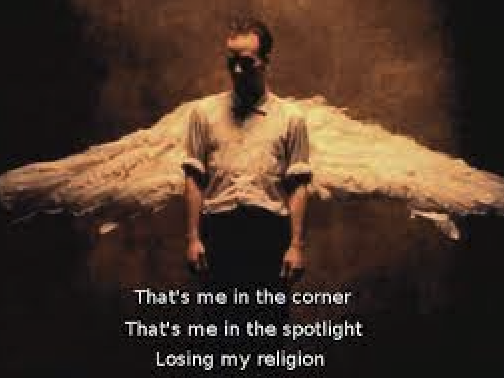
“Book of the Month” is certainly an appropriate label for Russell Moore’s “Losing Our Religion: An Altar Call for Evangelical America,” released July 25 by Sentinel. I am borrowing that label, of course, from that venerable subscription club and corporate partner during The Guy’s days working with the old Time Inc.

The bottom line: Pretty much every religious professional will want to take a look at what this central figure has to say.

Ditto for journalists who write about religion.

Moore is, yes, controversial and opinionated but also thoughtful and knowledgeable, so it’s worth absorbing his latest plea for a thorough overhaul of this sprawling and complex Protestant movement (with some pertinence for Catholics, too).

This might be the right time for religion-beat pros to offer yet another broad look at evangelical pitfalls and prospects. The Twitter (er, X) traffic on this new Moore book will continue to be lively.

There’s a possible peg when Moore chats with Beth Moore (no relation), another prominent exile from the Southern Baptist Convention (SBC), in Houston on August 9, which will be live-streamed (details at www.russellmoore.com).

Moore famously opposed Donald Trump’s 2016 candidacy on moral grounds when many other evangelical thinkers carefully kept their qualms private. His 2020 private admonition to executives of the SBC, which later leaked, depicted years of “the most vicious guerilla tactics” against him, especially his activism on issues linked to sexual abuse cases and cover-ups and mishandled race relations. He’s now one of seven ministers at Immanuel Church in Nashville, a congregation with ties to evangelicals in several denominations (including Anglicanism) and part of the Acts 29 network (www.acts29.com).


Please respect our Commenting Policy

Question looming over America's future: Are 'pew gap' issues hurting military recruiting?

Question looming over America's future: Are 'pew gap' issues hurting military recruiting?

I know it will be hard, but for a moment try to forget the growing stack of Donald Trump indictments and the messy details of Joe Biden’s telephone conversations, while serving as vice president and point-person for Ukraine policies, with a Ukrainian oligarch. Apparently, these friendly chats were about the weather, as opposed to son Hunter Biden’s career and financial needs.

You see, there’s another big story lingering in the back pages of news publications, a story about hard facts that could affect all kinds of conflicts around the world — especially if China’s leaders gaze at Taiwan and get ambitious.

This is a story GetReligion has discussed several times, including in this podcast-post: “Are many Bible Belt military families losing faith in the U.S. armed services?

Now, it’s totally understandable that — in today’s preach-to-the-choir journalism ecosphere — that elite progressive outlets like National Public Radio, The Washington Post and The New York Times are not asking pushy cultural and, yes, religious questions about the dangerous trends in U.S. military recruiting.

Ah, but what about niche-media on the other side of “political” aisle?

This leads to a Daily Mail story that ran under one of that newspaper’s long, long headlines (and I didn’t include the three subheadlines): “Public confidence in the US military hits lowest point in two decades — with only 60% of Americans saying they have a 'great deal' of confidence in the armed forces, new survey finds.”

This leads to the overture:

Public confidence in the US military has reached its lowest point in 25 years with 40 percent of Americans now saying they don't have much faith in the forces, a poll found.

The survey said only 60 percent of people have 'a great deal' or 'quite a lot' of confidence in the military. It's the lowest it's been since 1997, according to Gallup, which conducted the poll.

The national decline is being fueled by a massive slump in the confidence amongst Republicans.

That’s logical. However, did any Daily Mail editors wonder if there’s additional content hidden in that safe political word “Republican”?


Please respect our Commenting Policy

Time to dig into World Religions 101: Does Vivek Ramaswamy's Hinduism shape his politics?

Time to dig into World Religions 101: Does Vivek Ramaswamy's Hinduism shape his politics?

Vivek Ramaswamy — and his Hindu background — is the hot new flavor in religion reporting this week, with pieces coming out in Rolling Stone and Religion News Service. The New York Times did a piece earlier in July.

Yet, the outlet asking the best questions on this relevant topic may be Globely, a website that tracks international news. We will get to that in a moment. Ramaswamy

For those of you who don’t yet know, Ramaswamy is running for president — the second Hindu to do so since Tulsi Gabbard ran in 2020. In terms of interviewing actual Hindus, RNS came out on top.

Their numbers in this country are about 1% of the populace — 3 million maybe — and they are overwhelmingly first-generation immigrants, educated and majority male. According to this Pew Research data, they aren’t particularly observant religiously and they tend to be well-off.  

Let’s dig in.

First, a gripe: As someone who’s studied the false, independent Christian prophets who swore up and down that Donald Trump would be re-elected president in 2020, it’s beyond annoying when publications choose those folks to represent the beliefs of mainstream Christianity.

Not only did RNS do this in Monday’s story, but sadly, Rolling Stone does the same in their recent story.

Quoting Omaha, Neb., pastor Hank Kunneman — one of the prophets who got it wrong — and applying terms like “Christian nationalist” to anyone to the right of President Joe Biden is giving a big megaphone to this extreme wing of Christianity.

Rolling Stone proclaims:

VIVEK RAMASWAMY IS getting a hard look by Republicans willing to entertain alternatives to Donald Trump, especially as Ron DeSantis continues to flounder. The 37-year-old biotech entrepreneur has surged into third place in several national polls, ahead of prominent Republicans like Mike Pence, Nikki Haley, and Tim Scott.

Ramaswamy is also a practicing Hindu, and though he has been campaigning as an anti-abortion religious conservative, his non-Christian faith is a major stumbling block for many in the GOP’s evangelical base. He’s been on a charm offensive with these evangelical audiences, but the outreach appears to be backfiring, at least among the Christian nationalist set.


Please respect our Commenting Policy

Washington Post fires distress rockets about another religious liberty vs. LGBTQ+ case

Washington Post fires distress rockets about another religious liberty vs. LGBTQ+ case

Yes, here we go again. The first time I read through this Washington Post story — “Firing of gay Catholic school teacher could test latest Supreme Court ruling” — I thought it was another botched mainstream press story about a case in which a doctrinally defined academic community (in this case a Catholic school) fired a teacher who could not affirm the school’s doctrines (think Catholic Catechism).

That’s part of what is happening here. Once again, the journalists involved in reporting and editing this story failed to mention whether the school did or did not require teachers, staff and students to sign a covenant in which they affirmed Catholic teachings or, at the very least, agreed not to take public actions that rejected them.

That’s a classic “ministerial exception” case. The key issue is whether administrators have clearly stated the role that a doctrinal covenant plays in the life of their school. Hold that thought.

But this story has another goal — which is to fire distress rockets that the U.S. Supreme Court’s recent 303 Creative decision could strengthen the case of religious school leaders that want to employ faculty members and staff who affirm the teachings of their faith. The key word here is “bolster,” as in this secondary definition: “support or strengthen; prop up.” Look for that in the Post overture:

When Lonnie Billard announced on Facebook in October 2014 that he was engaged to his partner of 14 years, he knew not everyone in his social circles would celebrate the news. Same-sex marriage had only been legal in his home state of North Carolina for two weeks.

“If you don’t agree with this,” he wrote, “keep it to yourself.”

He received only congratulations in reply. But two months later, while the substitute teacher and his fiancé were celebrating Christmas with one of his colleagues at Charlotte Catholic High School, Billard mentioned that he hadn’t heard from the school about filling in during her post-holiday vacation.

That’s when Billard learned he was no longer being employed by the Catholic school because he was marrying a man. Billard sued the school for sex discrimination and won in 2021. That decision is being challenged by a nonprofit firm involved in multiple high-profile fights on behalf of religious conservatives, which says last month’s U.S. Supreme Court decision in favor of a web designer who did not want to work for gay couples bolsters its case.

In other words, the 303 Creative case might strengthen the already established First Amendment right of doctrinally defined religious institutions — think voluntary associations and private schools — to hire and fire personnel based on doctrinal standards. That would be bad. There is no need for the Post to consider how these First Amendment cases would defend the rights of progressive believers.


Please respect our Commenting Policy

Plug-In: The Saturday Night Live protest by Sinéad O'Connor was a sign of anger to come

Plug-In: The Saturday Night Live protest by Sinéad O'Connor was a sign of anger to come

After a busy day of flying from Oklahoma City to Los Angeles and then driving to San Diego, I filed this week’s newsletter a bit late.

Confession time: I forgot how slowly everything moves in Southern California, from baggage claim to the rental car line to the clogged highways. I just ran out of time Friday before needing to take care of more important matters.

Without further delay, let’s jump right into our weekly roundup of the top headlines and best reads in the world of faith. We start with Wednesday’s death of Sinéad O’Connor at age 56.

What To Know: The Big Story

Sinéad O’Connor’s protest: The Irish singer-songwriter — who famously ripped up Pope John Paul II’s photo on “Saturday Night Live” in 1992 — condemned clergy sex abuse early, but America didn’t listen, the New York Times’ Liam Stack recounts.

In her native country, O’Connor was a lonely voice for change until Ireland changed with her, according to the NYT’s Ed O’Loughlin.

The Catholic Church’s abuse scandals “made Ireland more secular, and more understanding of her criticisms,” O’Loughlin’s story notes.

Career-altering flashpoint: The Associated Press’ Holly Meyer examines O’Connor’s legacy:

More than 30 years later, her “Saturday Night Live” performance and its stark collision of popular culture and religious statement is remembered by some as an offensive act of desecration. But for others — including survivors of clergy sex abuse — O’Connor’s protest was prophetic, forecasting the global denomination’s public reckoning that was, at that point, yet to come. O’Connor, 56, died Wednesday.


Please respect our Commenting Policy

The bottom line: The 'pew gap' remains a powerful reality in American political life

The bottom line: The 'pew gap' remains a powerful reality in American political life

As an emerging American voice, the Rev. Jerry Falwell visited South Carolina in 1980 to promote his new Moral Majority network, while urging evangelicals to back Ronald Reagan, instead of President Jimmy Carter, a Southern Baptist.

Then Furman University professor John C. Green was intrigued by mixed reactions on three Baptist campuses in Greenville -- his own "moderate" Baptist school, a mainstream Southern Baptist college and the proudly fundamentalist Bob Jones University. For example, Bob Jones, Jr., called Falwell the "most dangerous man in America today," because of his efforts to unite religious groups in political activism.

This potent blend of politics and religion was an obvious topic for political-science research. Colleagues agreed, but one said they needed to act fast, "since these kinds of trends burn out quick," Green recalled, laughing. "Here we are in 2023 and arguments about religion and politics are hotter than ever."

From the start, experts tried to show a clash between religion and secularism, noted Green, author of "The Faith Factor: How Religion Influences American Elections."

The reality is more complex than a "God gap." By the late 1980s, researchers learned that -- while most Americans remain believers -- it's crucial to note how often voters attend worship services. The more fervently Americans support religious congregations with their time and money, the more likely they are to back cultural conservatives.

This "religiosity gap" remains relevant. A new Pew Research Center analysis noted that, in 2022 midterms: "The gap in voting preferences by religious attendance was as wide as it's been in any of the last several elections: 56% of those who said they attend religious services a few times a year or less reported voting for Democratic candidates in the 2022 midterms. … But GOP candidates were the favorite among those who attend services monthly or more by more than two-to-one (67%, vs. 31% who voted for Democratic candidates)."

Meanwhile, Protestants supported the "GOP by nearly two-to-one." White evangelical support for Republicans hit 86%, while white Catholics "favored Republican candidates by 25 points, whereas Hispanic Catholics favored Democratic candidates by an even greater margin (34 points)." Jewish voters preferred Democrats -- 68% to 32%. Atheists, agnostics or "nothing in particular" voters remained loyal to the Democrats, with 72% supporting that party, and 27% backing Republicans.

In 2012, Green was part of the Pew Research team behind the landmark "Nones on the Rise" study, which documented the stunning growth of the "religiously unaffiliated."


Please respect our Commenting Policy