New question in the worship wars: Why have many worshippers stopped singing in church?

New question in the worship wars: Why have many worshippers stopped singing in church?

Anyone who has visited a shopping mall understands the Big Idea behind a food court.

"If you want Mexican food, you go here. … If you want pizza, you go over there," said Kenny Lamm, the worship ministry strategist for the Southern Baptist state convention in North Carolina. "Then we sit together and eat whatever we want. …

“The question is whether a food-court approach works if you are seeking unity while leading worship in a church."

In the latest wrinkle in what researchers have long called the "worship wars," some church leaders are asking a blunt question about the decision to trade traditional hymnals for contemporary Christian music. That question: Has the typical Sunday service become a semi-professional concert instead of a communal worship experience for all believers?

As part of his work, Lamm hears from many pastors, musicians and church members. One recent letter -- which he posted while keeping the writer anonymous -- combined many hot-button issues in this debate.

After four weeks of visiting a church, the writer noted that he was constantly distracted during worship by "haze machines," "programmable lights that blind the audience," concert-level darkness in the auditorium, as well as musicians wearing "ball caps," skinny jeans, "Chuck Taylor" tennis shoes and other "stage" apparel.

Many of the new songs seemed to confuse the congregation.

"The melody is unmemorable. Very few in the audience seem to know the songs either; indeed as we looked around during one of the songs, we did not see one person singing -- not one," noted this visitor. "Some of the songs are so high I cannot sing them. I wish the leaders would consider the average singer! … Why does just about every praise and worship song go up an octave and double in volume halfway through, then die back down at the end?"
Please respect our Commenting Policy

Thinking about AI and faith: Can a computer 'get' what it means to be truly human?

Thinking about AI and faith: Can a computer 'get' what it means to be truly human?

Every now and then, I get an email from Ira Rifkin, who for many years wrote “Global Wire” posts for GetReligion about journalism issues in international events and trends. He signed off about half a year ago with an edgy post called, “Ciao, GetReligion: Thanks, all, for my tenure. Critic that I am, though, here are some final thoughts.”

With his unique mix of Jewish and Buddhist disciplines, Rifkin was also a keen observer of new ideas and concepts linked to what mass media tends to call “spirituality,” as opposed to more conventional forms of religious faith.

Several weeks ago, he send me a URL for a Los Angeles Times feature that ran with this headline: “Can religion save us from artificial intelligence?

I immediately put it into my “think piece” file, but held on to it for a while to put some cushion between it and my podcast/post with this title: “When is preaching a 'news' story? Ah, the temptation of ChatGPT sermons.” Here is a byte of that:

Right now, one of the hot topics in the public square is the rise of artificial intelligence and, to be specific, the ChatGPT website. Thus, this week’s “Crossroads” podcast (click here to tune that in) focused on several “newsy” angles of the recent Associated Press story that ran with the headline, “Pastors’ view: Sermons written by ChatGPT will have no soul.”

During the podcast, I riffed on the whole issue that different kinds of technology can shape the content of communications in different ways. If ChatGPT sermons have a sense of “soul,” it would be a “soul” that is defined by the creator of the software and the tech platform.

The Los Angeles Times story that Rifkin sent me opens with an AI sermon hook — but the issue at the heart of the story is much, much bigger than that.

Nevertheless, it helps to start this “think piece” recommendation with that feature’s overture:

Sometimes Rabbi Joshua Franklin knows exactly what he wants to talk about in his weekly Shabbat sermons — other times, not so much. It was on one of those not-so-much days on a cold afternoon in late December that the spiritual leader of the Jewish Center of the Hamptons decided to turn to artificial intelligence.


Please respect our Commenting Policy

Podcast: Was the attack on a conservative Presbyterian school in Nashville a religion story?

Podcast: Was the attack on a conservative Presbyterian school in Nashville a religion story?

Was the attack on the elementary school at Nashville’s Covenant Presbyterian Church a religion-news story?

Of course it was, for at least four reasons that we discussed during this week’s “Crossroads” podcast (click here to tune that in).

(1) It was an attack on a conservative Christian school at a conservative Presbyterian church in a city that is often called the buckle fn the Bible Belt (although locals know that the Nashville establishment, especially in media, is left of center).

(2) Religious groups have played a major role in Tennessee debates about parental rights, education and LGBTQ issues. What does that have to do with the shooting? Hold that thought.

(3) Religious groups have played a major role in discussions of gun-control legislation in Tennessee and, in this case, it is important to avoid political labels such as “liberal” and “conservative” in that discussion.

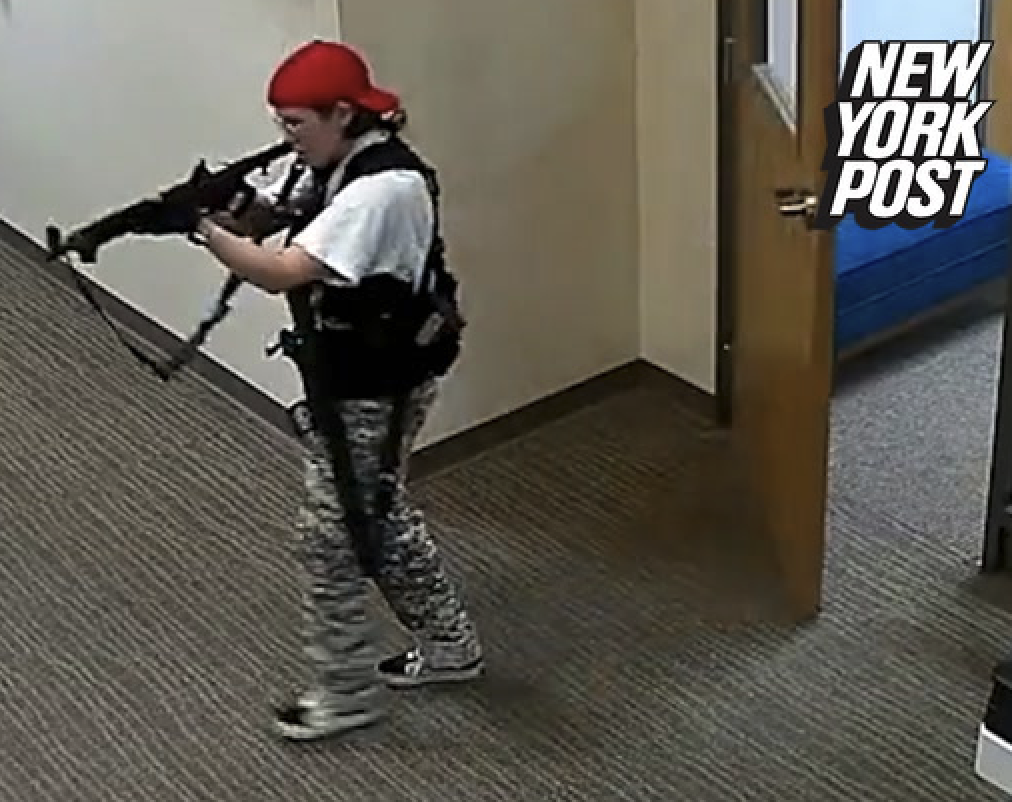
(4) The young adult who attacked the Covenant School was a former student there. Audrey Hale had recently identified as Aiden Hale in social media, with male pronouns. Hale was still living in a conservative Christian home, with a mother who both was a strong advocate of gun control and on the staff of Village Chapel in Nashville.

What else do news readers know about the shooter? That depends — in this new age of partisan, advocacy media — on which news organizations a reader follows. In most mainstream coverage, even in Nashville, questions about the life and beliefs of the shooter have all but vanished.

Consider this short paragraph late, late in a Religion News Service follow-up report: “Grief, fear haunt Nashville as residents gather to mourn in wake of Covenant shooting.”

Very little is known about the shooter, a former student at Covenant who was killed by police. The shooter reportedly left a manifesto that has not been made public. 

Really? “Very” little?


Please respect our Commenting Policy

America in spiritual decline: Is it true what the Wall Street Journal poll is saying?

America in spiritual decline: Is it true what the Wall Street Journal poll is saying?

It was certainly an attention-getting headline in the Wall Street Journal the other day: “America Pulls Back from Values that Once Defined It.”

“Patriotism, religion and hard work hold less importance,” the subhed ran.

But is the story true? There are critics of the poll, and we will get to that.

Meanwhile, does any other country relentlessly poll and examine itself as much as the United States of America? Was 1,019 people a large enough sample size to draw conclusions about how 332 million Americans are thinking?

The story is this: Compared with how people responded to the same poll 25 years ago, America is slipping fast into a European-style secular state with little religious observance, less work ethic (four-week work days anyone?) and less care for the motherland. Maybe parts of Eastern Europe and the Russians are the only ones headed in the opposite direction these days. Here’s how the Journal summarized it all:

Patriotism, religious faith, having children and other priorities that helped define the national character for generations are receding in importance to Americans, a new Wall Street Journal-NORC poll finds.

The survey, conducted with NORC at the University of Chicago, a nonpartisan research organization, also finds the country sharply divided by political party over social trends such as the push for racial diversity in businesses and the use of gender-neutral pronouns.

Some 38% of respondents said patriotism was very important to them, and 39% said religion was very important. That was down sharply from when the Journal first asked the question in 1998, when 70% deemed patriotism to be very important, and 62% said so of religion.

These aren’t just tiny signs of movement; these are huge drops in nearly every category.

The share of Americans who say that having children, involvement in their community and hard work are very important values has also fallen. Tolerance for others, deemed very important by 80% of Americans as recently as four years ago, has fallen to 58% since then.


Please respect our Commenting Policy

Heeding the Nashville shooter's own voice: Do journalists want the 'manifesto' released?

Heeding the Nashville shooter's own voice: Do journalists want the 'manifesto' released?

Once again, we return to that mantra from old-school journalism — “who,” “what,” “when,” “where,” “why” and “how.”

When covering the murders at Nashville’s Covenant Presbyterian Church private school, journalists already know that the shooter wanted the public to know the answer to the “why” question.

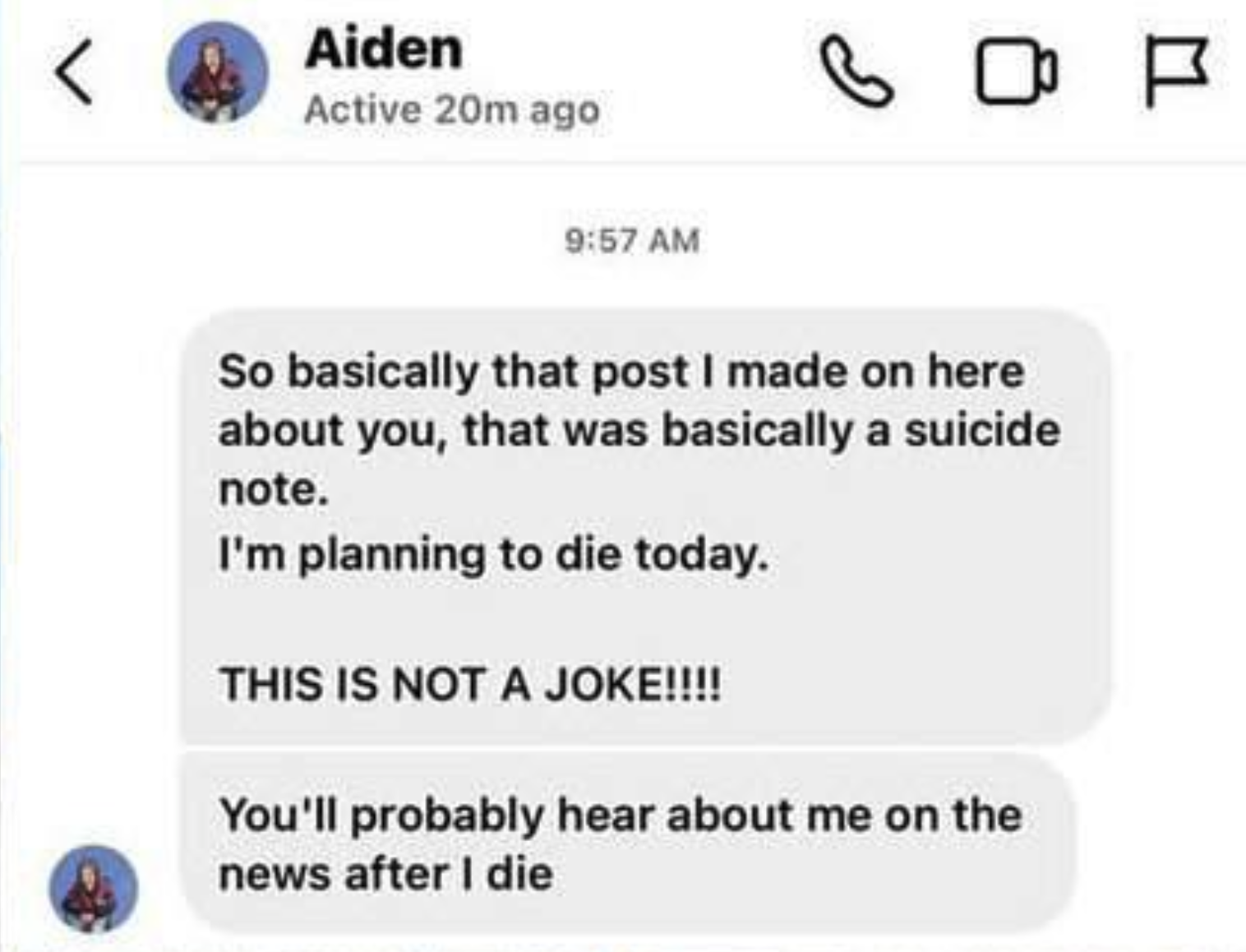
Moments before shooting open the school’s doors, the person previously known as Audrey Hale, who chose the name “Aiden” in social media, sent a haunting and strategic message to a friend. Some timelines suggest that the shooter sent this message while parked in the church’s parking lot.

The contents of the message are highly relevant to news coverage of the shootings. Readers: Have you seen these words quoted in your local, regional and national news sources? Hale wrote:

“This is my last goodbye.

“I love you (heart) See you again in another life Audrey (Aiden)”

Later, Hale added:

“My family doesn’t know what I’m about to do

“One day this will make more sense. I’ve left more than enough evidence behind

“But something bad is about to happen.”

Public officials have made it clear that the shooter left behind a “manifesto,” as well as highly detailed plans for the attack on the school (school leaders have said Hale attended 4th and 5th grade there). The manifesto text is almost certainly what Hale was describing with the words, “One day this will make more sense. I’ve left more than enough evidence behind.”

Under normal circumstances, journalists would be doing everything that they can to answer the “why” question in this case, including calling for the release of Hale’s manifesto text and other materials linked to the attack. But these are not normal circumstances.


Please respect our Commenting Policy

Time to step up the mainstream coverage of transgender debates within U.S. religion

Time to step up the mainstream coverage of transgender debates within U.S. religion

News about transgender issues tends to deal with women’s athletic competitions and shelters, pronouns, girls’ locker rooms, public school sex education, competing rights claims (with parents on both sides of the dates) and resulting political and legal disputes.

There’s been less coverage of medical morality, especially concerning under-aged youths, and hardly any about how various religious groups understand gender and why.

Journalists should take notice when four vigorous arguments on the religious aspect appear in the space of just six days, as follows.

March 20: The leaders of the U.S. Conference of Catholic Bishops authorized publication (.pdf here) of an important but little-reported transgender policy. It declares that Catholic health-care agencies “must not” perform or help develop chemical or surgical procedures to transform a person’s bodily characteristics into those of the opposite sex.

The stated reasons are theological and moral. Key quotes: “We did not create human nature; it is a gift from a loving Creator,” so human dignity requires “genuine respect for this created order.” Sexual differentiation is a reality “willed by God” and a “ fundamental aspect of existence as a human being.”

Therefore, surgical and chemical techniques to switch a patient’s sexual characteristics, or puberty blockers to halt youths’ natural development, “are not morally justified.” To the bishops, such interventions are “injurious to the true flourishing of the human person” and violate doctors’ basic moral maxim to “do no harm.”


Please respect our Commenting Policy

'The Nuns Who Left Brooklyn' -- How many religious details did this Times story need?

'The Nuns Who Left Brooklyn' -- How many religious details did this Times story need?

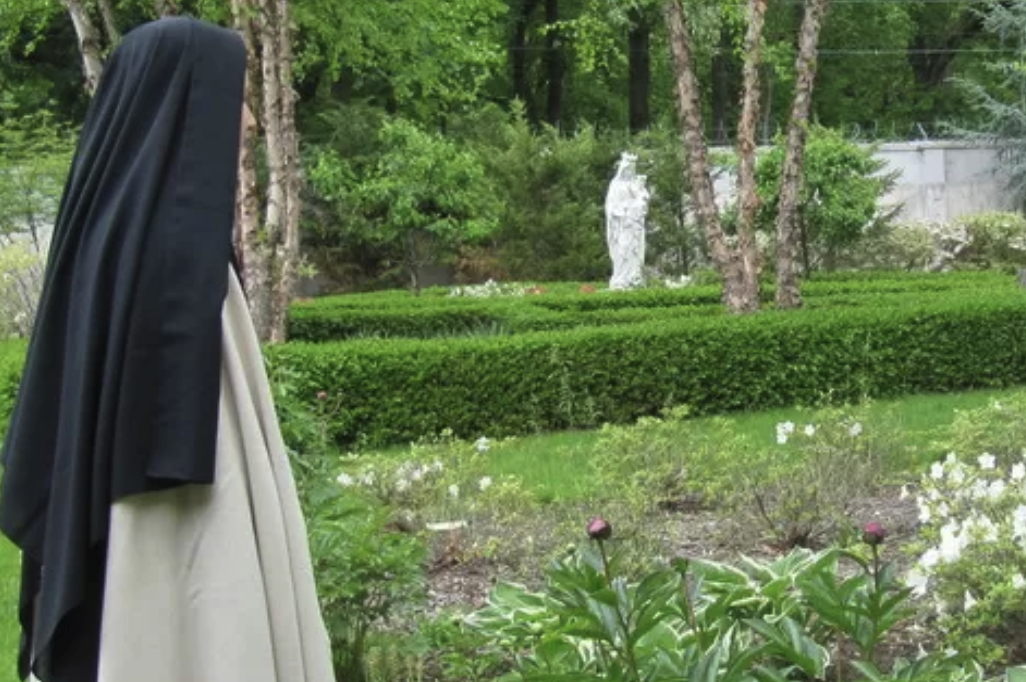
The headline of this New York Times story was totally “religion story” — “The Nuns Who Left Brooklyn.

Thus, I heard from people who wanted to know what your GetReligionistas thought of this religion story.

The content of this news feature was, quite frankly, totally “metro desk” (people who have worked in newsrooms will understand that term). This is, let me stress, not a complaint. The Times story is packed with relevant, even colorful local news details about a sad situation that developed in Brooklyn.

Also, religion-beat pros will not that it is hard to do a story about the details in the lives of cloistered Catholic women religious, since they are not going to sit down for interviews and talk about the details of their lives and beliefs. The story has some crucial details provided by others that tell readers some of what they need to know.

Would I have appreciated a few more details about this order and where it fits into the current drama of Catholic monastic life in America? Sure. Was that an essential part of this particular story? I’ll admit that the answer to that is: “Not really.” Hold that thought. Meanwhile, here is the overture:

The 10 Carmelite nuns of Cypress Hills, cloistered in Brooklyn for almost 20 years, decided to leave New York City after much contemplation.

As much as they tried, the sisters of the Monastery of Our Lady of Mount Carmel and St. Joseph, devotees of silence and prayer who rarely left the confines of the cloister, could no longer ignore what was going on outside. The loud celebrations in an adjacent park became a bit too much. And when a beloved lay volunteer was murdered, the sisters were shaken deeply.

The last straw came in 2020, that first pandemic summer, with the explosion of late-night partying on their street involving cars with powerful speakers, said Mother Ana Maria, who spoke on behalf of the monastery, which used to be on Highland Boulevard.

“Our walls shook and our windows shattered,” she said. The sisters wondered whether the blaring music well past midnight was aimed directly at them.

Shattered windows? That’s some loud partying. That leads to a poignant detail, care of the mother superior who spoke for the nuns.

Mother Ana Maria, who, along with her sisters, begins each day at 5 a.m. The nuns pushed their beds away from the walls of their cells — the small rooms where they slept — but still felt unsafe, she said.


Please respect our Commenting Policy

Plug-In: For two billion Muslims, the fasting season of Ramadan has begun

Plug-In: For two billion Muslims, the fasting season of Ramadan has begun

Good morning, Weekend Plug-in readers.

I’m back home in Oklahoma after a fulfilling time at the Religion News Association annual meeting in the Washington, D.C., area.

Who’s ready to check out the top headlines and best reads in the world of faith?

What To Know: The Big Story

Islam’s holy month: The new crescent moon Thursday marked the start of Ramadan, as the Washington Post’s Morgan Coates and Adela Suliman report:

Almost 2 billion Muslims around the world will observe a month of abstaining from food, drink, smoking, gossip and sexual relations during daylight hours — from dawn to dusk.

Pregnant, breastfeeding or menstruating women are exempt from fasting, as are the sick, elderly or those traveling. Children are also not expected to fast.

The Associated Press explains:

For the next 30 days, Muslims will refrain from eating or drinking anything — even the tiniest sip of water — from sunrise to sunset. Many will strictly observe prayers, read the Quran and donate to charity as they seek to draw closer to God. Family and friends will gather for joyful nightly feasts.

An important time: Ramadan began “as parts of the Middle East approached crucial junctures in high-stakes peace negotiations during the holy month, traditionally a time of reconciliation,” AP’s Jack Jeffery notes.

Schools and sports: Across the U.S., Muslim students are pushing to designate Eid al-Fitr, the festival that marks the end of Ramadan, as a school holiday, Religion News Service’s Alejandra Molina reports.

Meanwhile, two English sports leagues are helping Muslim athletes observe Ramadan this year, according to the Deseret News’ Kelsey Dallas.

Two more Ramadan reads: CNN’s Saeed Ahmed provides an etiquette guide for non-Muslims. The Deseret News’ Mya Jaradat asks, “Is corporate America ready for Ramadan?”


Please respect our Commenting Policy

Debates in England about free speech and religion veer into 'thoughtcrimes' zone

Debates in England about free speech and religion veer into 'thoughtcrimes' zone

Wherever he goes, Father Sean Gough prays for the people he encounters -- sometimes out loud and often silently.

This isn't unusual, since he is a priest in the Catholic Archdiocese of Birmingham, England. Gough was praying silently when he was arrested near an abortion facility in a Public Spaces Protection Order protected zone, while holding a "Praying for free speech" sign. His car was parked nearby, with a small "unborn lives matter" bumper sticker.

The priest was charged with "intimidating service users," although the facility was closed at the time. The charges were later dropped.

Officers also raised questions about his clothing.

"When interrogated by police for silently praying in the censorship zone, they challenged me for wearing a cassock," said Gough, on Twitter. "When do I normally wear one? Don't I realize it'll be perceived as intimidating? These are not questions a person should be asked under caution in a democracy!"

Clause 11 of a recent Public Order Bill -- waiting to be signed into law -- would criminalize all forms of "influence" inside a 15-meter "buffer zone" around every abortion facility in England and Wales. An amendment to permit silent prayer and consensual conversations failed by a 116-299 vote in Parliament.

After years of debates about religious liberty and freedom of speech, recent events in England have veered into what activists and politicos have described as "thoughtcrimes," a term used in George Orwell's dystopian novel "1984" to describe thoughts that violate ruling-party dogmas.

In the U.S. House of Representatives, eight Republicans circulated a letter claiming it's "imperative that the U.S. speak boldly and clearly to its friend when the U.K. has failed to protect unalienable rights." The document condemned policies that "persecute Christians and other pro-life citizens for thoughtcrimes."


Please respect our Commenting Policy