Plug-In: Religion-beat highlights -- Religion News Association presents its annual awards

Plug-In: Religion-beat highlights -- Religion News Association presents its annual awards

What a fun night!

The Religion News Association presented its 2022 Awards for Religion Reporting Excellence in a hybrid ceremony Wednesday at Columbia Journalism School in New York City.

Among the highlights:

Sarah Pulliam Bailey, religion writer for The Washington Post, won for Excellence in Religion News Analysis, including a piece on “Preachers and their $5,000 sneakers.” Even better, Bailey brought her new baby with her to celebrate.

Tom Gjelten, retired religion correspondent for NPR, won for Religion Story of the Year for his piece “An inconvenient genocide: Why we don’t know more about the Uyghurs” for Moment magazine. (Last week’s Plug-in highlighted the other finalists.)

Julia Duin, a veteran religion journalist, including her work here at GetReligion, won for Excellence in Religion Reporting at Online-only News Outlets and placed in two other categories. Duin was honored for stories she wrote for National Geographic, Politico and Newsweek. The headline on that Politico piece: “The Christian Prophets Who Say Trump Is Coming Again.”


Please respect our Commenting Policy

FitzSimons Allison: Bookish Episcopal bishop who dared to say 'apostasy'

FitzSimons Allison: Bookish Episcopal bishop who dared to say 'apostasy'

It has been three decades since the Rt. Rev. C. FitzSimons Allison took his first step away from his life as one of the Episcopal Church's strongest evangelical voices.

That tentative move took place in a small-group discussion during an Episcopal House of Bishops meeting in Kanuga, N.C., during his final year serving as the 12th bishop of the historic Diocese of South Carolina. The topic that day was, "Why are we dysfunctional?"

Allison attacked Episcopal priests and seminary professors who were openly proclaiming their faith in an ancient, erotic, divine spirit "older and greater" than the God of the Bible. There was, Allison said, a clear, ancient word for that -- "apostasy."

Other bishops said they had no problem accepting clergy who were testing the boundaries of ancient Christian doctrines.

After that clash, Allison remained in his pew and declined to share the consecrated bread and wine during a Holy Eucharist with the entire House of Bishops. He didn't publicly discuss this act of broken Communion for several years, but his silent protest was a poignant symbol of early cracks forming in the global Anglican Communion.

Now the 95-year-old bishop has officially resigned his status as an Episcopal bishop, making his departure official. Two weeks ago, he wrote U.S. Presiding Bishop Michael Curry to clarify that he had been received into the Anglican Church in North America -- a body recognized as valid by many Anglican bishops in Africa, Asia and the Global South, but not by the Archbishop of Canterbury or leaders in the U.S. Episcopal Church.

"Some people said that I didn't need to do this, because everyone knows where I stand," said Allison, reached by telephone. "But I felt, the way things have been going, that I still needed to make things official. That's just the way I am."


Please respect our Commenting Policy

Doctrine and fashion: As Iran protests persist, what women's clothing does Islam require?

Doctrine and fashion: As Iran protests persist, what women's clothing does Islam require?

THE QUESTION:

As Iran protests persist, what women’s clothing does Islam require?

THE RELIGION GUY’S ANSWER:

The facts are these. On September 13, Iran’s morality police arrested 22-year-old Mahsa Amini for violating the legally required Muslim dress code for women. She was wearing the mandatory head scarf (hijab), but apparently it did not correctly conceal all of her hair. Three days later, Amini died while still in police custody. The government blames a heart attack, but suspicions that she was abused run rampant.

In the spontaneous uproar that resulted, refusal to wear the hijab became a symbol of resisting oppression as protests across the nation targeted not only restrictions for women but expressed over-all rejection of the harsh theocratic regime that has ruled revolutionary Iran the past 43 years. At this writing, at least 200 Iranians have reportedly been killed and 1,500 demonstrators arrested.

Azadeh Moaveni of New York University wrote in The New York Times that resentment boiled over in part because women in Tehran’s wealthy and politically-connected elite flagrantly ignore the Muslim dress laws without arrest.

There’s always been vigorous discussion of the complexities about exactly what attire is properly modest and thus faithful to Islam.

Responding to events in Iran, Deina Abdelkader at the University of Massachusetts Lowell contends that clothing rules “have nothing to do with Islamic tenets” while Muslim countries have imposed — or forbidden — forms of women’s attire in order to proclaim their ideology, whether secular or scrupulously religious.

Islam’s fundamental concern here is not unique, since religions normally advocate modesty and propriety. In particular, Jewish tradition associates attire as part of a general admonition in the Torah (Deuteronomy 23:15, JPS translation): “Let your camp be holy; let Him [God] not find anything unseemly among you and turn away from you.”


Please respect our Commenting Policy

Podcast: 'Culture Wars' again, as Muslims protest LGBTQ advances in public schools

Podcast: 'Culture Wars' again, as Muslims protest LGBTQ advances in public schools

If you read newspapers or magazines in America, you have heard the term “culture wars.”

If you have read GetReligion for any time at all, then you probably know that, in the work of sociologist James Davison Hunter, the term “culture wars” was given a very specific definition that rarely shows up in news coverage.

In the early 1990s, Hunter published a bestseller entitled, “Culture Wars: The Struggle To Control The Family, Art, Education, Law, And Politics In America.” The term leapt into news jargon and, as often happens, it became totally politicized.

What was Hunter talking about? Hold that thought, because we will come back to it. We will need to apply it to a story that’s in the news right now, a story that many will describe as a “culture wars” fight. We discussed all of this during this week’s “Crossroads” podcast (CLICK HERE to tune that in).

Let’s start with this local headline from the Detroit Free Press: “LGBTQ and faith communities struggle for unity in Dearborn, Hamtramck.” What we have here is one of those stories in which conservative religious parents are making a stand in protest LGBTQ education efforts — and some other gender trends — in their local schools.

Sound familiar? But there’s a twist. This time, the evangelical Protestants have what journalists clearly consider some unlikely parters. Here is the (long) overture to the Detroit story, which went national:

The protest began with a prayer.

On a Sunday afternoon last month in Dearborn, Nagi Almudhegi took the stage to address the crowd gathered outside Henry Ford Centennial Library to demonstrate against some LGBTQ books in Dearborn Public Schools' libraries.

"I'd like to start off first of all with a prayer," Almudhegi said. "And I'm going to read, recite the chapter on Fatiha (opening of Quran) in Arabic and then I will read the English translation."

As he spoke, some in the crowd held up signs denouncing books and educational materials in the public schools that they believe are too explicit for children.


Please respect our Commenting Policy

Could secular feminism and some kind of religion converge in a Sexual Revolution rethink?

Could secular feminism and some kind of religion converge in a Sexual Revolution rethink?

Attention journalists: Here are some chapter headings from the latest advice book on sex:

“Men and Women Are Different”

“Some Desires Are Bad”

“Loveless Sex Is Not Empowering”

“Violence Is Not Love”

“People Are Not Products”

“Marriage Is Good”

“Sex Must Be Taken Seriously”

“Listen to Your Mother”

To which geezers in The Guy’s swiftly passing generation can only respond with something that, today, would be #DUH.”

Yet Americans who’ve grown up since the blitz of the 1960s Sexual Revolution have been immersed in a culture that promotes and expects commitment-free hook-ups and casual sex, even very early in a relationship.

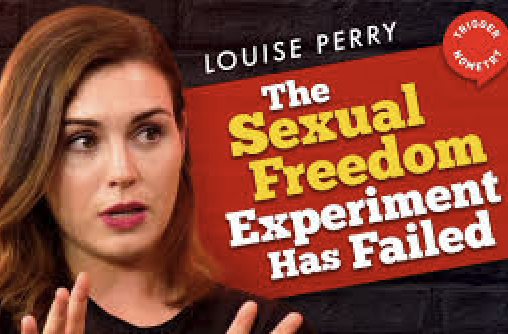
Turns out women feel disheartened, dishonored and coerced by this supposed “freedom,” and have good reason to be, says Britain’s Louise Perry in her spirited book “The Case Against the Sexual Revolution: A New Guide to Sex in the 21st Century” (Polity Press). She assails so-called “liberal feminism” for routinely handing countless women a raw deal.

Her preachments will be routine common sense for folks who resist fierce cultural pressure and remain guided by religious teachings of the past few thousand years.

What might especially intrigue reporters is that Perry, a fellow journalist with the Daily Mail and the New Statesman and an anti-rape crusader, makes a thoroughly secularized case that nonetheless coincides at many points with a religious tradition toward which she expresses zero trace of fondness.


Please respect our Commenting Policy

Bobby Ross, Jr., tweets and tweets and tweets bonus coverage of that new SBC president

Bobby Ross, Jr., tweets and tweets and tweets bonus coverage of that new SBC president

Just a note from tmatt, even though the byline on this piece says Bobby Ross, Jr.

There’s a good reason for that.

The Rev. Bart Barber has certainly been in the news, of late — “Yes, Southern Baptists are talking about '60 Minutes' (while Ryan Burge keeps doing the math)” — and, as it turns out, chart-master Ryan Burge wasn’t the only GetReligionista who has been talking with him or about him.

Bobby wrote a profile piece on Barber the other day for the Associated Press (this has been happening more often, methinks) and, as it turns out, he had material left over from that interview that he put in lots, and lots, and lots of tweets.

A Bobby Ross tweetstorm?

You got it.

All of these short punchy sentences, in Ross style, means it’s time to let the tweet-storm begin.

Roll tweets, in this bonus Ross piece.

Ready?


Please respect our Commenting Policy

Catholic voters and the midterm elections: Mainstream news blitz ignores major voter bloc

Catholic voters and the midterm elections: Mainstream news blitz ignores major voter bloc

We are in the middle of another election season and in full mud-slinging mode.

Elections are an annual occurrence, to one degree or another, but the vote that will dominate this Nov. 8 are known as the midterms. It’s when a majority of seats in both the House and Senate are up for grabs, allowing for the party in the minority (in this case the Republicans in both chambers) to potentially becoming the majority. Midterm elections are also traditionally viewed as referendums on presidents.

This takes us to the Catholic vote and its impact on the outcome. This is a topic that is receiving little or no mainstream press coverage. As we say here at GetReligion: “Hold that thought.”

While inflation and crime will certainly be on the minds of most as they cast ballots, “culture war” issues are very much alive and well. Abortion, especially after this June’s Supreme Court decision that once again made it a state issue after Roe v. Wade was rolled back, will certainly be an issue.

There have been many, many news stories about how the abortion issue will motivate those on the political left to come out and vote following the Dobbs decision. The Washington Post, on Oct. 8, reported on the issue in a news feature that appeared under the headline, “Women powered Democrats in the 2018 midterms. Will they again in 2022?”

After opening with two Colorado women, Robin Kupernik and Elizabeta Stacishin, who had joined forces in 2016 to combat Donald Trump, who was elected to the presidency that year. This is the feature’s thesis:

In the 2018 midterm elections, women like Kupernik and Stacishin were part of a women-led army that changed politics. Women who had never been particularly active politically worked phone banks, wrote postcards and sent text messages to voters. They were repulsed by Trump and determined to do something about it.

They met in small groups, marched in the streets and went door-to-door to encourage people to vote for Democrats. Their passions were palpable. Many of the congressional candidates they were supporting flipped Republican-held seats, all part of a political tide strong enough to flush the GOP from control of the House, dealing Trump a major defeat. The Pew Research Center has estimated that 62 percent of White women with college degrees backed Democrats for the House four years ago.

That has become the major press-coverage storyline of the midterms.


Please respect our Commenting Policy

Journalism question for these times: When are death threats 'real' death threats?

Journalism question for these times: When are death threats 'real' death threats?

Here is a journalism question for you: When is a death threat an actual “death threat”?

Let me state that another way: When do words that clearly communicate a death threat represent a “real” or legitimate death threat in the eyes of journalists, local police and (wait for it) the Department of Justice?

We can add another question I received via email from a religion-beat veteran: In what sense is a death threat “pro-choice”?

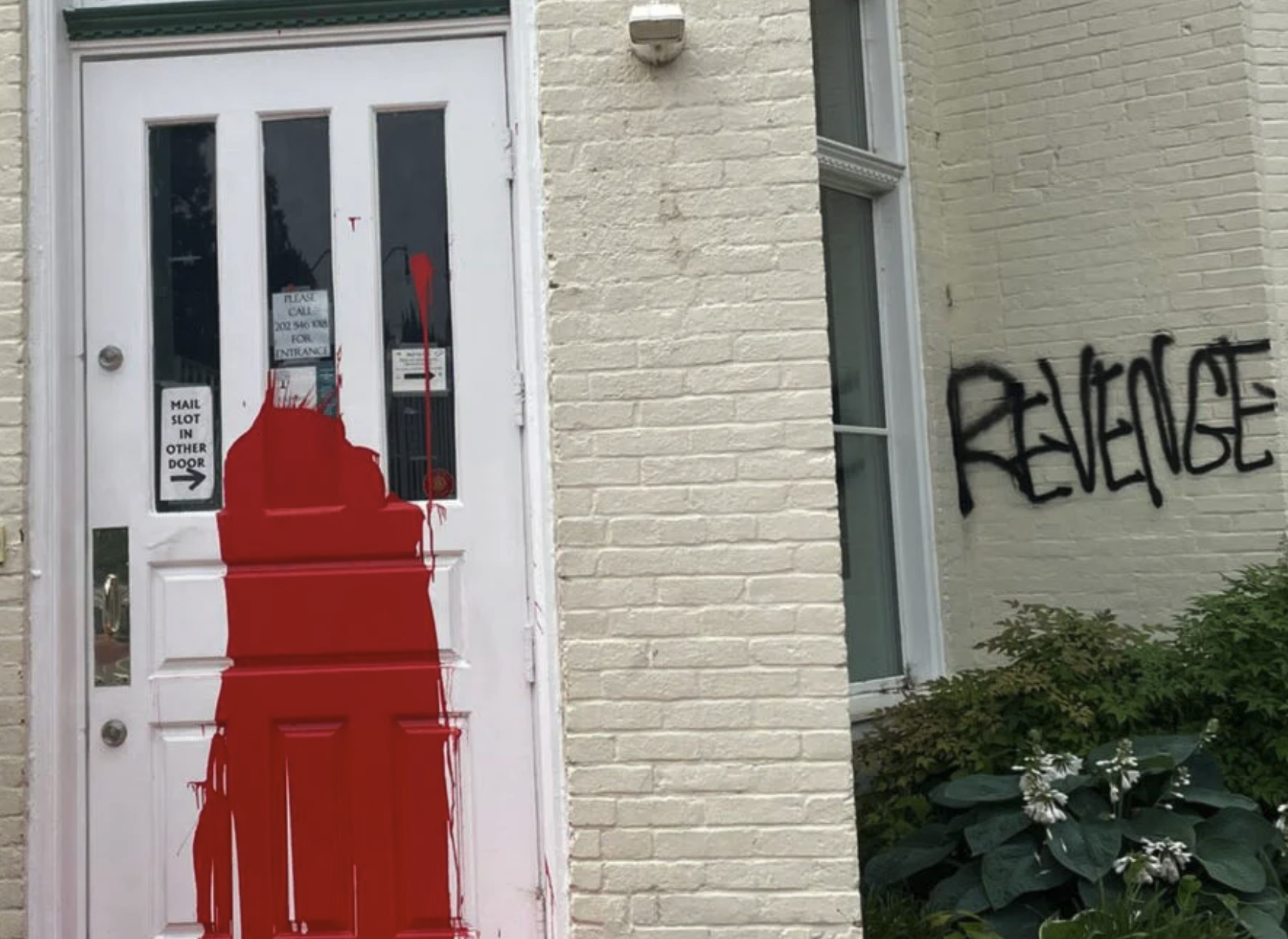
Yes, once again we are looking at a story that is linked to abortion, a topic that mixes politics, religion, law and science. In this case the event that made news (barely) was the vandalism of yet another Catholic church in a blue zip code. Here is the entire report from a local CBS newsroom and note the headline, which inspired that email question: “Catholic Church in Lansing vandalized with pro-choice graffiti.”

(CBS DETROIT) - The Diocese of Lansing released video footage of three people vandalizing the Church of the Resurrection with spray-painted pro-choice graffiti.

The incident happened on Saturday, Oct. 8, between 11:52 p.m. and 11:56 p.m. Video footage shows the three suspects walking up to the church from the area of Jerome and Custer, spay-painting the church, and then leaving the area.

The suspects spray-painted on the doors, signage, and sidewalk of the church, and the messages included: "Restore Roe" and "Is overturning Roe worth your life or democracy?"

Police are reviewing the security footage and searching for the suspects. According to the Diocese of Lansing, the graffiti has been power-washed.

If anyone has any information about this crime, they are urged to contact the Lansing Police Department at 517-483-4600.

The key language: “Is overturning Roe worth your life or democracy?" What are the logical implications of the words “worth your life”?

I realize that some anti-abortion demonstrators use chants claiming (thinking “mortal sin” consequences) that those taking part in abortions are risking their souls. Is that the same thing as saying that the U.S. Supreme Court voting to overturn Roe v. Wade is, addressing Catholic worshippers, “worth your life”?


Please respect our Commenting Policy

Story of 2022 finalists (hello Julia Duin) to speak at Religion News Association awards

Story of 2022 finalists (hello Julia Duin) to speak at Religion News Association awards

The Religion News Association will present its 2022 Awards for Religion Reporting Excellence in a ceremony next week at Columbia Journalism School in New York.

Finalists, for work produced in 2021, were announced in August. See the full list.

Wednesday night’s hybrid in-person and online event will feature a panel discussion by finalists for Religion Story of the Year, including:

• GetReligion’s own Julia Duin, for “The Christian prophets who say Trump is coming again,” for Politico. And click here for a post noting Duin’s work on this topic over the years.

Deepti Hajela (representing a team that included Luis Andres Henao and Mariam Fam), for “Two decades after 9/11, Muslim Americans still fighting bias,” for The Associated Press.

Emily Kaplan, for “The rise of the liberal Latter-day Saints,” for The Washington Post.

Marie-Rose Sheinerman, “‘Second class citizens’: LGBTQ students allege culture of alienation and fear at Yeshiva University,” for The Forward.

I plan to watch the ceremony and report on the winners in next week’s Plug-in. In case you missed it, ReligionUnplugged.com’s own Paul Glader and Michael Ray Smith earned third place for Religion Story of the Year last year for “God and guns: Why American churchgoers are packing heat.”

In other contest news, the American Academy of Religion has announced the recipients of its 2022 journalism awards: Peter Manseau, Dawn Araujo-Hawkins and Ken Chitwood for best in-depth newswriting and Mike Cosper, Monique Parsons and Kylie McGivern for best in-depth multimedia journalism. Read about all the winners.


Please respect our Commenting Policy