Loretta Lynn's reality: Gospel truth mixed with rhinestone feminism in the real world

Loretta Lynn's reality: Gospel truth mixed with rhinestone feminism in the real world

On many Sundays, Loretta Lynn sent her social-media followers a thought for the day from Scripture.

Two days before her death at her ranch in Hurricane Mills, Tenn., the 90-year-old country-music legend posted two verses, repeating the second verse to stress her point.

Lynn's final Instagram post said: "Everyone who does evil hates the light, and will not come into the light for fear that their deeds will be exposed. But whoever lives by the truth comes into the light, so that it may be seen plainly that what they have done has been done in the sight of God. John 3:20-21"

The feisty superstar experienced plenty of darkness and light and shared the gritty details in a career that changed the role of women in Nashville. Lynn was raised poor in the Kentucky hills and spent years in church pews before she started singing in honky-tonks. Her husband Oliver "Dolittle" Lynn struggled with alcoholism, but they stuck together in a union that inspired songs about love and loyalty, as well as break-ups and fist fights, such as "Don't Come Home A-Drinkin' (With Lovin' On Your Mind)."

Lynn vowed to tell the truth about both sides of her life. She loved to sing hymns and gospel music, while critics hailed the rhinestone feminism of her hits such as "You Ain't Woman Enough," "The Pill," "Rated X" and "You're Looking at Country."

In her "Coal Miner's Daughter" memoir, Lynn described her faith journey: "I believed it all, but for some reason, I was never baptized. After I started in music, I got away from going to church and reading the Bible. I believe I was living the way God meant me to, but I wasn't giving God the right attention."

In that same 1976 memoir, she added: "I'm trying to lead a good Christian life, especially since I got baptized two years ago. So there ain't too much spicy to tell about me -- just the truth." Christian Chronicle editor Bobby Ross, Jr., noted that she later added a strong kicker to that: "Nobody's perfect. The only one that ever was, was crucified.”

Anyone who explored the details of Lynn's life and music knew that she wasn't a good fit in the "elite feminist establishment" or among advocates of a "status-quo idea of domesticity," noted Russell Moore, Christianity Today's editor in chief.


Please respect our Commenting Policy

Politicos and Scripture: What does biblical religion teach about forgiving loans?

Politicos and Scripture: What does biblical religion teach about forgiving loans?

THE QUESTION:

What does biblical religion teach about forgiving loan debts?

THE RELIGION GUY’S ANSWER:

President Joe Biden’s pre-election executive order to limit or erase college students’ loan debts is still in the news this week. The non-partisan Congressional Budget Office issued its “highly uncertain” estimate that the plan will cost at least $420 billion, the first federal lawsuits filed against it argued that only Congress can legally enact spending, and the Department of Education scaled back the numbers who get this benefit.

The president claims the power to bypass Congress under the “HEROES Act,” passed after the 9/11/01 attacks, which allows forgiveness in case of a “military operation or national emergency.” Biden interprets the COVID pandemic as such an emergency; critics call that a stretch.

Biden says that now “people can start to finally crawl out from under that mountain of debt to get on top of their rent and their utilities, to finally think about buying a home or starting a family or starting a business.” But a Wall Street Journal editorial considered cancellations “unfair to Americans who repaid their loans or didn’t go to college” and accused Biden of “the biggest executive usurpation of Congress in modern history.”

As all this plays out, does the Bible, which has so long shaped moral judgments on public policy, have anything to say on such matters?

Liberal Protestant blogger John Pavlovitz chided Christians who oppose Biden, saying they ignore that “their entire professed religion is based on the idea of a cancelled debt. Way to lose the plot, kids.”

Podcaster Allie Beth Stuckey responded for World magazine that “the debt is sin, and Jesus, God made flesh, voluntarily paid it on our behalf through his death on a cross” so that “we are reconciled to God forever.”

One wording of history’s most-recited prayer asks God to “forgive us our debts as we forgive our debtors.”


Please respect our Commenting Policy

Podcast: Are (all) evangelicals the only folks tempted to gloss over candidates' sins?

Podcast: Are (all) evangelicals the only folks tempted to gloss over candidates' sins?

Oh my. It appears that editors at the New York Times has veered back into what could be called “evangelical voter monolith mode” once again.

I base that comment on the thesis paragraphs of a recent Times report that ran with the headline, “‘Saved by Grace’: Evangelicals Find a Way Forward With Herschel Walker.” That story was the hook for this week’s “Crossroads” podcast (CLICK HERE to tune that in). I will return to the Walker drama in a minute.

But before we go there, let’s pause and flash back to a Gray Lady report from a few months ago that ran with this headline: “As a ‘Seismic Shift’ Fractures Evangelicals, an Arkansas Pastor Leaves Home.” It’s the first half of that headline that interests us, right now. Here is some of the crucial language:

Across the country, theologically conservative white evangelical churches that were once comfortably united have found themselves at odds over many of the same issues dividing the Republican Party and other institutions. …

Michael O. Emerson, a sociologist at the University of Illinois Chicago, described a “seismic shift” coming, with white evangelical churches dividing into two broad camps: those embracing [Donald] Trump-style messaging and politics, including references to conspiracy theories, and those seeking to navigate a different way.

That’s accurate, of course. Anyone who has followed evangelical debates in the Trump era knows that the big story is rooted in tension, pain and divisions — not monolithic unity about how to approach politics.

At the same time, evangelicals are still facing a crushing binary reality when they approach election-day decisions — trying to decide, in some cases, between what they view as flawed GOP candidates and Democratic candidates whose stances on First Amendment and sanctity-of-life issues put them in a “can’t go there” category.

Evangelicals of various kinds do not agree on how to handle that, falling into camps that resemble the 2016 and 2020 national elections.

Thus, here is a flashback to my Trump-era evangelical voter typology from several years ago. When reading it this time, simply substitute “Walker” for “Trump” and apply these camps to White, Black (they exist) and Latino (they exist) evangelical/charismatic voters in Georgia.


Please respect our Commenting Policy

Under-covered story in tense times: Counseling with transgender Christian believers

Under-covered story in tense times: Counseling with transgender Christian believers

Experts at UCLA estimate that 0.6% of American adults currently identify as transgender.

Like other writers covering religion, politics and culture, The Religion Guy has accumulated a bulging file on recent transgender conflicts, which go far beyond grade-school curriculums or women’s shelters, locker rooms and athletics. The major question facing practitioners, legislators and moral theologians is how the age-old “do no harm” principle applies to the greatly increasing numbers of teens under 18, especially girls, seeking transition via puberty blockers, hormone treatments and surgery.

A planned Memo analyzing those developments has been supplanted by a new book, “Gender Identity and Faith: Clinical Postures, Tools and Case Studies for Client-Centered Care” (InterVarsity Press) by Mark A. Yarhouse and Julia A. Sadusky, who are evangelicals and licensed clinical psychologists. Their work turns journalistic attention from the socio-political debates to the situations of transgender individuals, especially those raised in traditional forms of religious faith.

A blurb from Laura Edwards-Leeper, who chairs the child and adolescent committee of the World Professional Association for Transgender Health, considers this book “essential” for mental health providers. But The Guy thinks it’s equally pertinent for individual clients, parents, pastors and churches (and journalists!) seeking understanding.

Even The Christian Century thinks that though the book “will at times disappoint” fellow religious progressives, it may “prove an important harm-reduction tool and entry point for conservatives who are struggling to join the conversation.”

The bottom line: Considering the timeliness and difficulty of the topic, The Guy sees it as a Book of the Year prospect in religion, and a compelling topic for journalism.


Please respect our Commenting Policy

AP covers the new Pentecost in United Methodist life, without mentioning Ms. Penny Cost

AP covers the new Pentecost in United Methodist life, without mentioning Ms. Penny Cost

As I have stressed many times, I totally understand the challenges that religion-beat professionals face when attempting to do short, balanced, accurate hard-news stories about the 40 years of warfare inside the United Methodist Church over issues of marriage, sex, biblical authority and some core Christian doctrines about salvation and Christology.

I understand because I have been covering this story since my arrival at the old Rocky Mountain News (#RIP) back in 1983, with the church-discipline case of an openly gay UMC pastor, the Rev. Julian Rush. The progressive Rocky Mountain Annual Conference backed Rush and, well, the rest is history.

The biggest challenge in this story is helping readers understand why the Methodists who are defending the UMC Book of Discipline have decided to hit the exit doors, even though they have — for several decades — been winning the key votes at the global level of the denomination.

The problem is that the church establishment here in North America is actually running the show and the center-left leaders want to tweak the Discipline to allow more freedom for doctrinal progressives, while assuring mainstream Methodists that nothing will change at the local level unless their congregation wants it to change. See this recent post: “Why are United Methodists at war? Readers need to know that sexuality isn't the only fault line.”

The Associated Press recently shipped a long feature that tries To Explain It All, and there is much to praise in this piece. Here is the stating-it-mildly headline: “United Methodists are breaking up in a slow-motion schism.” Here is a long, long, essential piece of this feature that shows the complexity of these issues:

In annual regional gatherings across the U.S. earlier this year, United Methodists approved requests of about 300 congregations to quit the denomination, according to United Methodist News Service. Special meetings in the second half of the year are expected to vote on as many as 1,000 more, according to the conservative advocacy group Wesleyan Covenant Association.

Scores of churches in Georgia, and hundreds in Texas, are considering disaffiliation. Some aren’t waiting for permission to leave: More than 100 congregations in Florida and North Carolina have filed or threatened lawsuits to break out.

Those departing are still a fraction of the estimated 30,000 congregations in the United States alone, with nearly 13,000 more abroad, according to recent UMC statistics.

But large United Methodist congregations are moving to the exits, including some of the largest in Arkansas, Georgia, Louisiana, Oklahoma and Texas.

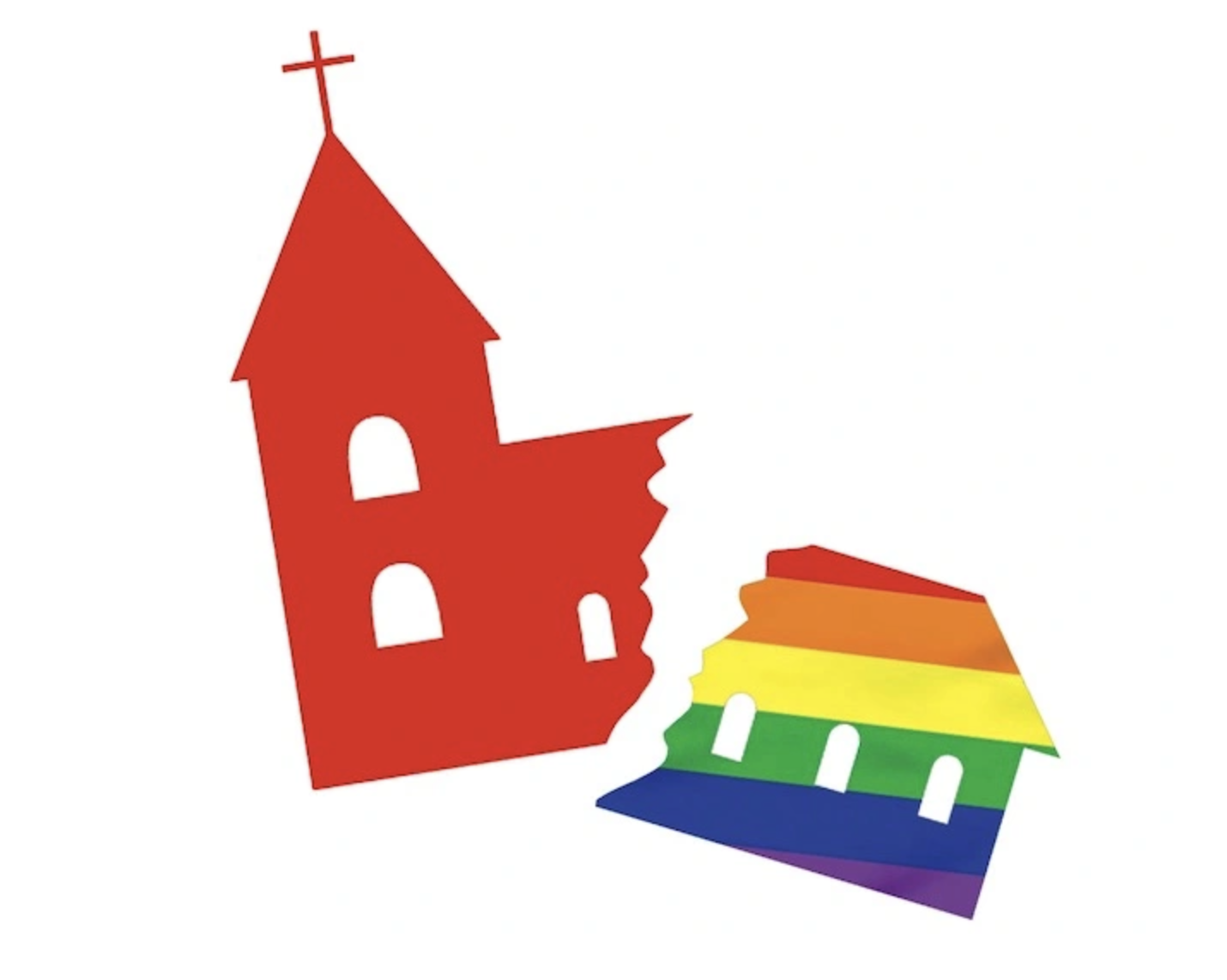
The flashpoints are the denomination’s bans on same-sex marriages and ordaining openly LGBTQ clergy — though many see these as symptoms for deeper differences in views on justice, theology and scriptural authority. The denomination has repeatedly upheld these bans at legislative General Conferences, but some U.S. churches and clergy have defied them.


Please respect our Commenting Policy

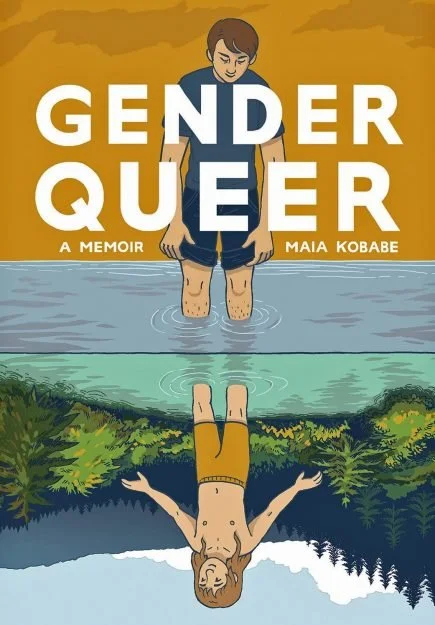
Book bans: Are these fights about a Christian nationalist plot or something else entirely?

Book bans: Are these fights about a Christian nationalist plot or something else entirely?

Ever since the Jan. 6, 2021, attempted takeover of the U.S. Capitol, journalists have been trying to find some kind of national nexus for “White Christian nationalism.”

The term, which I’m putting in quotes because its meaning is all over the map, needed a locale.

About two months ago, national media thought they had one: tiny Bonners Ferry, Idaho, where there was a dust-up between a local library and a cadre of locals who wanted certain books banned. That the locale was — in the popular imagination — is Ground Zero for conservative crazies, was no surprise.

A CNN story made the case for the book burners being newcomers with an agenda:

And who are these newcomers she speaks of? Well, we reached out to a number of the people pushing the recall and demanding that books be banned. None of them would talk to us.

But they have made their feelings known at library board meetings. “Things need to change,” one man told the board at a meeting in late August. “Otherwise, you bring curses upon yourselves. Period. From the Most High.”

Definitely a religion angle there.

And at a meeting in July, Donna Capurso, a local realtor, said this: “My job is to protect our kids from sexual deviants, who will be drawn to our library if inappropriate sexual material is on our library shelves.” Capurso is an occasional contributor to a website called Redoubt News, which caters to a growing group here in northern Idaho of self-described, “God-Fearing, Liberty-Loving Patriots.”

“The American Redoubt” is a term coined in 2011 by a Christian survivalist. The idea is that Christian patriots should retreat here from modern America to live their truth and defend themselves. The Redoubt is a large chunk of land encompassing all of Idaho, Montana and Wyoming as well as eastern slivers of Washington and Oregon.

What’s curious now is that the right-wing banned books movement (as opposed to Big Tech leaders who fight the sales of conservative books) has spread around the country — with some extra PR poured on the flames during the recent Banned Books Week.


Please respect our Commenting Policy

Yes, Southern Baptists are talking about '60 Minutes' (while Ryan Burge keeps doing the math)

Yes, Southern Baptists are talking about '60 Minutes' (while Ryan Burge keeps doing the math)

One thing is certain, if you follow political scientist Ryan Burge on Twitter. You are going to read quite a few things that you agree with and quite a few things with which you will disagree.

Here’s the key to that statement: It really doesn’t matter who “you” are. You can be a liberal mainline Protestant and you will read things that please you and things that infuriate you. Ditto, if you are Southern Baptist Convention leader.

If you are a religious “none,” in Pew Research Center terms, then Burge is mapping your life and beliefs, one chart after another. If you are a nondenominational, independent evangelical/charismatic leader, Burge was one of the first researchers who grasped that your world is now the fastest growing corner of the marketplace of American religion.

Burge makes many Southern Baptists mad. He also makes many Episcopalians and liberal mainliners mad, even though Burge is, himself, a progressive Baptist pastor/thinker as well as a political science professor at a state university. I would imagine, however, that leaders on the right and the left are learning that they are going to have to study the trends shown in all of those Burge charts on Twitter (and in his books).

To be honest with you, I can’t remember when I spotted Burge’s byline and I’m not sharp enough, in terms of computer skills, to spot the oldest item in the nearly 4,000 items that show up in a Google search for “Ryan Burge” and “Terry Mattingly.” I’m guessing 2018 or so. However, Burge has been cooperating with GetReligion for several years now, with me retweeting, oh, hundreds of his tweets with a “Yo. @GetReligion” slug. He also has allowed me to re-publish some of the essays he has written for the Religion in Public weblog (and for Religion Unplugged).

I bring all of this up for two reasons.

(1) Many news consumers who continue to follow legacy media may have seen him featured last night in a “60 Minutes” feature about the Rev. Bart Barber, the new president of the Southern Baptist Convention.

(2) Burge and I recently agreed on the format for a new GetReligion feature that we will call “Do the Math,” in which he will take four or five of his data-backed tweets and then connect them to spotlight trends that journalists need to follow.


Please respect our Commenting Policy

Plug-In: From Loretta Lynn to Aaron Judge, the week's top nine religion newsmakers

Plug-In: From Loretta Lynn to Aaron Judge, the week's top nine religion newsmakers

A country music queen. A home run king.

A former White House press secretary. A current U.S. Supreme Court plaintiff.

They are among nine key religion newsmakers who made headlines this past week (in alphabetical order):

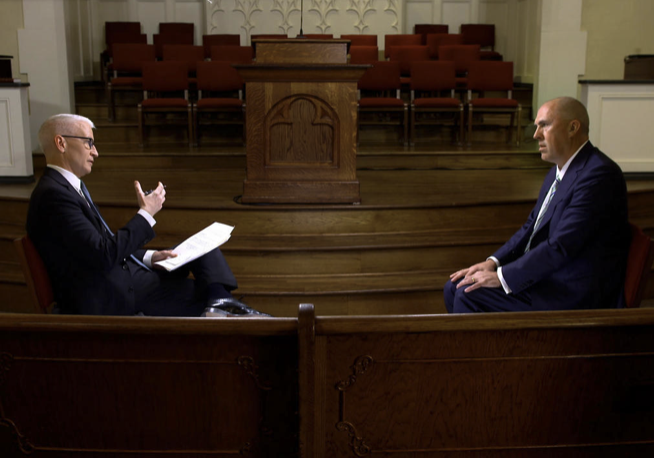
Bart Barber: I’m showing a little bias here because I wrote this week’s Associated Press profile of Barber, a small-town Texas pastor and rancher elected to lead the 13.7 million-member Southern Baptist Convention at a time of major crisis. Barber will be featured Sunday night in a “60 Minutes” interview with Anderson Cooper.

Chris Jones and Sarah Huckabee Sanders: Jones is the Democrat and Sanders the Republican in Arkansas’ gubernatorial race. “With two preachers’ kids and a pastor in the race, Arkansans are poised to elect a governor who can sing hymns by heart and quote Scripture from memory,” the Arkansas Democrat-Gazette’s Frank Lockwood writes as he delves into faith and politics. (Sanders served as former President Donald Trump’s White House press secretary from 2017 to 2019.)

Aaron Judge: The New York Yankees star made history when he hit his 62nd home run of the season Tuesday night. Prayer and faith played a key role during Judge’s chase, reports the Deseret News’ Ryan McDonald.

Loretta Lynn: The country music superstar and Kentucky coal miner’s daughter died Tuesday at age 90. “She really was serious about her faith and a devout member of the church,” retired minister Terry Rush, who maintained a close friendship with Lynn, told me.

John Henry Ramirez: The Texas killer fought all the way to the U.S. Supreme Court to have his pastor lay hands on him and pray during his execution. “Just know that I fought a good fight, and I am ready to go,” Ramirez said before his death by lethal injection Wednesday, as noted by The Associated Press’ Juan A. Lozano and Michael Graczyk.

Lorie Smith and Jack Phillips: The two claim in an opinion piece for USA Today that Colorado is trampling on their First Amendment rights as Christian artists, and they’re fighting back. Website designer Smith’s case is headed to the U.S. Supreme Court, the Deseret News’ Kelsey Dallas reports.


Please respect our Commenting Policy

Will religious groups face questions linked to America's declining marriage stats? (Part II)

Will religious groups face questions linked to America's declining marriage stats? (Part II)

It's a message young people in the Church of Jesus Christ of Latter-day Saints hear early and often: You should get married, because marriage is wonderful and family life is at the heart of the faith.

The problem is that church leaders haven't grasped the power of cultural trends in technology, education and economics that are fueling sharp declines in statistics linked to dating, marriage and fertility, said Brian Willoughby of the Brigham Young University School of Family Life.

"The key word is 'tension,' " he said. Among the Latter-day Saints, these numbers are "not falling as fast" as in other groups, "but our young people are feeling tensions between the patterns they see all around them and what they hear from their parents and religious leaders.

“We are seeing the same changes -- only moving slower. The average age of people getting married is rising. Fertility rates are declining. … We can no longer assume that religious young people are some kind of different species."

It's urgent, he added, for congregations to "start making a more explicit case for marriage and family. Our young people know that marriage is important, but they don't know specific reasons for WHY it's important."

The result is what some researchers call the "marriage paradox." Young people continue to express a strong desire to "get married at some point," but they place an even higher priority on other "life goals," said Willoughby.

"Marriage becomes a transition in which they fear they will lose freedom or success. … They hear everyone saying: 'You go to these schools and get these degrees. You get job one that leads to job two. Don't let anything get in your way or get you off track.' With this kind of head-down approach, serious relationships can be a distraction on the path to success. … The heart isn't as important."

Thus, marriage isn't disappearing, but the population of young adults choosing marriage is shrinking -- especially among those with little or no commitment to religious life.


Please respect our Commenting Policy