Thinking about online temptations: Maybe Catholics should log off now and then?

Thinking about online temptations: Maybe Catholics should log off now and then?

If you know anything about religion and social-media, you know that Catholic Twitter can be a wild place.

Niche digital religion is really something. I mean, if Elon Musk decided to swim the Tiber, all of the Big Tech servers would probably turn to pillars of salt. If he became an evangelical Protestant this White House might resort to nuclear weapons.

The question many Catholic priests, and other mainstream religious folks, have asked is rather basic: Is something like Twitter a good, safe, worthy place to invest their talents? Or should they consider it a dangerous waste of time?

I’ve read some interesting essays on topics related to this question and, this time, I will share one as this weekend’s think piece. The headline at RealClearReligion.org is rather blunt: “Catholics, Log Off.” The author is Jack Butler, an editor at National Review Online and a fellow at the Institute for Human Ecology at the Catholic University in America.

Let’s start with the obvious: What would Satan tweet?

The fight against Lucifer was going pretty well — until the devilish enginery appeared. As John Milton depicts the battle of Satan's rebellious angels against the forces of Heaven in his epic poem "Paradise Lost," the demons were on the backfoot, until they devise "implements of mischief" that will "dash/To pieces, and orewhelm whatever stands/Adverse, that they shall fear we have disarmd/The Thunderer of his only dreaded bolt."

Not all artifices are inherently evil. But if the prayer to St. Michael the Archangel is true and demons "prowl about the world, seeking the ruin of souls," they can show up in our devices, too. William Peter Blatty suggests this in his novel "The Exorcist." The demon Pazuzu, having possessed a young girl, is asked if it minds being recorded. "Not at all," the demon says. "Read your Milton and you'll see that I like infernal engines. They block out all those damned silly messages from him."

But what does it mean for technology to obstruct our path to God?

To put this in small-o “orthodox” theological terms, technology is merely another development in a world that is both glorious and fallen.


Please respect our Commenting Policy

Podcast: Talking fetus scene in 'Blonde' has created another media storm about abortion

Podcast: Talking fetus scene in 'Blonde' has created another media storm about abortion

Ask any pastor about times when Americans tend to take stock of their religious commitments and it’s likely you will hear something like the following.

For most people, but especially for those who are married or/or have children, there are obvious gateways from one stage of life to another and, frequently, there are religious teachings and rites that go with them. Think birth, baptism, marriage, children, aging and, finally, death. In many lives, there are moments of conversion or doubt, as well as life-threatening illnesses and tragedies. Divorce? Broken relationships with children? Yes, more symbolic gates.

Clergy know they will have to help women and men deal with these gates. I have always argued, in discussions with editors, that these gateways are often linked to important trends and news events. Changing a prayerbook or hymnal, for example, may threaten doctrines and symbols that, for the devout, are linked to rites that frame these life events.

This brings us to this week’s “Crossroads” podcast (CLICK HERE to tune that in), which focuses on some news and commentary about the life of one of Hollywood’s greatest superstars — Marilyn Monroe. The problem is that the controversial, lurid new movie “Blonde” includes events and images that clearly link abortion to other life-defining events, especially horrors such as rape and other forms of sexual and emotional abuse.

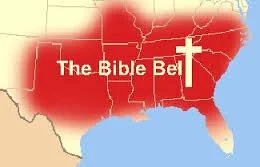
Abortion can lead to grief and may be viewed as a form of violence against women? That pushes several hot buttons at the same time, and not just for right-wing Christians in the Bible Belt. Consider the symbolism of mourners visiting the famous Garden of Unborn Children in Japan.

As always, let me stress that abortion is a topic that, for many, raises religious issues — as well as moral, legal and political questions. This raises challenges for journalists and artists alike.

First, let’s look at the obvious news hook — that Planned Parenthood officials needed to react to this brutal NC-17 movie, a flick that is creating Oscar buzz surrounding the work of actress Ana de Armas.

The headline at The Hollywood Reporter proclaims, “Planned Parenthood: ‘Blonde’ Is “Anti-Abortion Propaganda.”


Please respect our Commenting Policy

Loretta Lynn: A tough, trailblazing woman whose edgy art included doses of grit and faith

Loretta Lynn: A tough, trailblazing woman whose edgy art included doses of grit and faith

If you know Nashville, then you probably know that there is nothing new about major country music stars also being Christian believers. In fact, it’s probably worthy of a headline or two if and when superstars send signals that they’re NOT at home in the Bible Belt.

That being said, I am still amazed when journalists produce stories about country artists and edit out the details in their lives and music that point toward faith. It happens all the time.

I’m not just talking about musicians putting a gospel song or two in their set lists when touring, as a kind of music-history exercise. I’m talking about reporters missing revelations in autobiographies, social-media statements to fans or mini-sermons on stage. I’m talking about passing up chances to talk with pastors who have known performers for years.

This brings me to the death of honky-tonk angel herself, Loretta Lynn — the matriarch for a generation or more of female artists in guitar town. As you would expect, the obits following her death stressed — with good cause, let me stress — her daring hit songs about blue-collar American life, with strong doses of reality about hard times, troubled homes, cracked marriages and lots of other sobering subjects.

Which is why, to cut to the chase, it’s even more important that this legend turned to Christian faith as an adult, in the midst of all that gritty stuff. Hold that thought. Here is a chunk of the Associated Press report that will appear in most American newspapers:

The Country Music Hall of Famer wrote fearlessly about sex and love, cheating husbands, divorce and birth control and sometimes got in trouble with radio programmers for material from which even rock performers once shied away.

Her biggest hits came in the 1960s and ’70s, including “Coal Miner’s Daughter,” “You Ain’t Woman Enough,” “The Pill,” “Don’t Come Home a Drinkin’ (With Lovin’ on Your Mind),” “Rated X” and “You’re Looking at Country.” ...

Lynn knew that her songs were trailblazing, especially for country music, but she was just writing the truth that so many rural women like her experienced.

“I could see that other women was goin’ through the same thing, ‘cause I worked the clubs. I wasn’t the only one that was livin’ that life and I’m not the only one that’s gonna be livin’ today what I’m writin’,” she told The AP in 1995.

All true.


Please respect our Commenting Policy

'Indulgences' for Russian soldiers killed in Ukraine? Remember that Moscow speaks for Moscow

'Indulgences' for Russian soldiers killed in Ukraine? Remember that Moscow speaks for Moscow

Once again, the thought for the day is this: Eastern Orthodoxy is not the Church of Rome. There is no pope at the top of a unified Orthodox ecclesiastical structure that speaks for everyone.

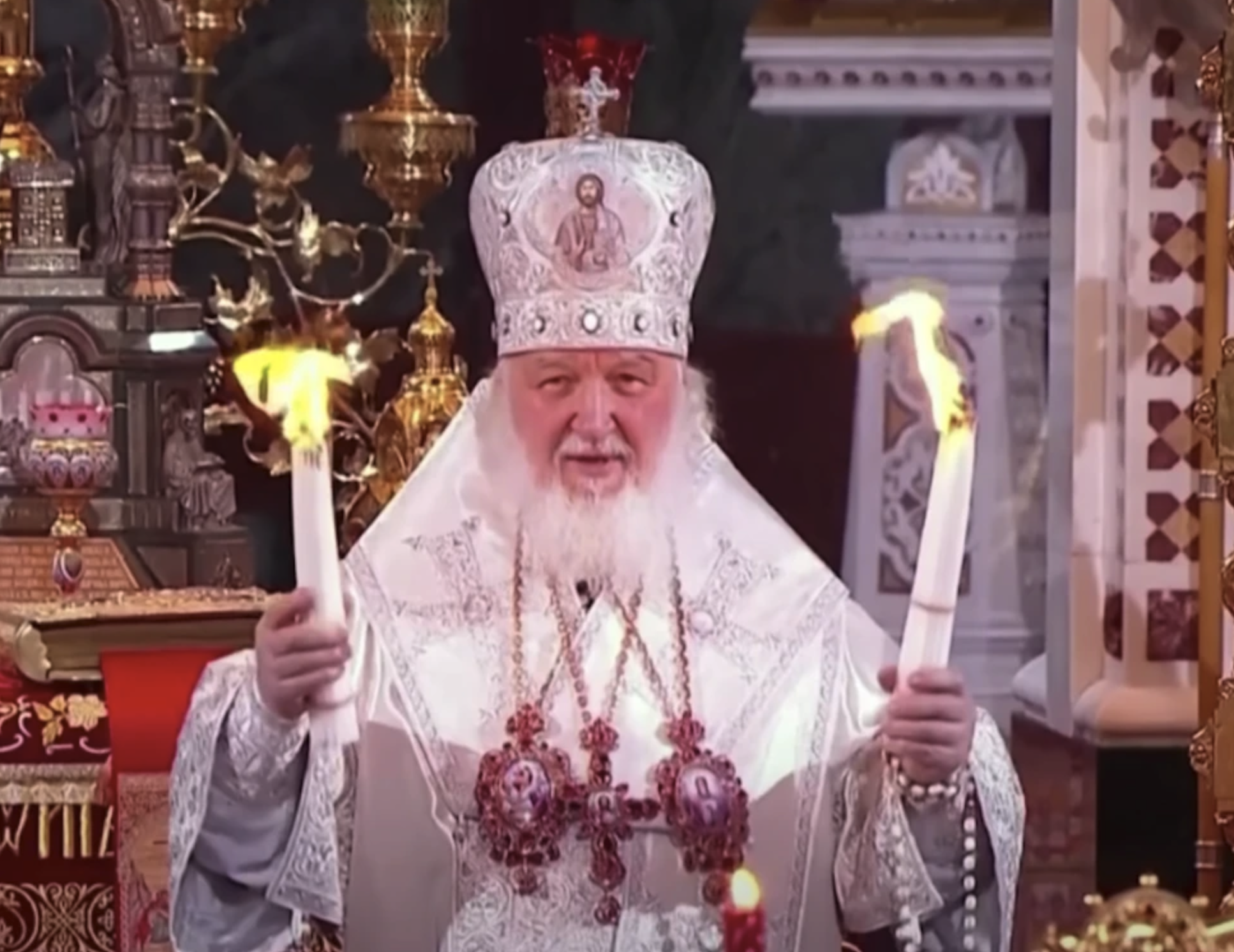
I’m talking, of course, about the most recent controversial — to say the least — comments by the patriarch of Moscow. As one reader asked: “I'm interested to know what the buzz is in the Orthodox world about Patriarch Kirill's recent statements in support of Russia's mobilization. I'm sure you've seen it 100 times.”

I saw it 100 times. But I’ve been traveling for nearly a week, so I apologize for the delay in this post.

What’s up? There was this headline at Reuters, which was typical of several reports: “Orthodox Church leader says Russian soldiers dying in Ukraine will be cleansed of sin.” Here is the top of that:

The head of the Russian Orthodox Church has said that Russian soldiers who die in the war against Ukraine will be cleansed of all their sins, days after President Vladimir Putin ordered the country's first mobilisation since World War Two.

Patriarch Kirill is a key Putin ally and backer of the invasion. He has previously criticised those who oppose the war and called on Russians to rally round the Kremlin.

"Many are dying on the fields of internecine warfare," Kirill, 75, said in his first Sunday address since the mobilisation order. "The Church prays that this battle will end as soon as possible, so that as few brothers as possible will kill each other in this fratricidal war."

"But at the same time, the Church realises that if somebody, driven by a sense of duty and the need to fulfil their oath ... goes to do what their duty calls of them, and if a person dies in the performance of this duty, then they have undoubtedly committed an act equivalent to sacrifice. They will have sacrificed themselves for others. And therefore, we believe that this sacrifice washes away all the sins that a person has committed."

Yes, Patriarch Kirill speaks for Patriarch Kirill and does not speak for all of Eastern Orthodoxy (and may not be speaking for all of his own synod). Meanwhile, the “first among equals” Ecumenical Patriarch in Istanbul does not speak for all Orthodox leaders, even if — at times — it appears that he thinks that he has that authority (such as his intervention in decades of Orthodox divisions in Ukraine).

Will Orthodox leaders speak out against the remarks by Kirill?


Please respect our Commenting Policy

English-language coverage of Italian elections packs lots of Meloni media baloney

English-language coverage of Italian elections packs lots of Meloni media baloney

I have received more texts than usual the past two weeks. Most of them were about a rather unusual subject — Italy’s national elections. I say unusual subject because it’s not every day that this subject is discussed among my American friends.

Many readers of this space may know that I am the son of immigrant parents who moved to the United States from Italy. As a result, I am bilingual (I read Italian news sites almost as voraciously as American ones) and also a dual citizen, meaning I can vote in Italian elections.

But the texts I was getting was coming from a place of fear. They feared that the center-right would win the election (they ultimately did on Sept. 25) and bring Italy back 100 years to an era marked by fascism.

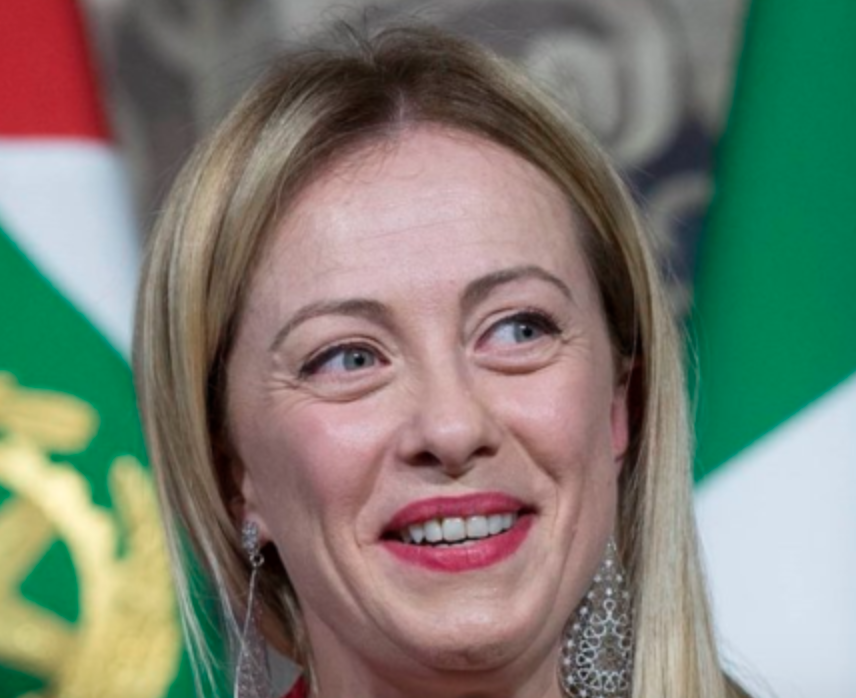
This sentiment came as a result of the English-language press (predominantly the United States and England) that framed the political rise of Giorgia Meloni as threat to democracy. It was this skewed news coverage that got me to write about her twice in pieces for for Religion Unplugged, which included an analysis piece last week on what her election means and the Vatican’s reaction.

Running on a “God, homeland and family” platform, the 45-year-old was labeled a “neo-fascist” and “hard right” by The New York Times largely because of her traditional Catholic views regarding marriage and her anti-abortion views. The Times hailed Meloni’s election this way:

ROME — Italy turned a page of European history on Sunday by electing a hard-right coalition led by Giorgia Meloni, whose long record of bashing the European Union, international bankers and migrants has sown concern about the nation’s reliability in the Western alliance.

Results released early Monday showed that Ms. Meloni, the leader of the nationalist Brothers of Italy, a party descended from the remnants of fascism, had led a right-wing coalition to a majority in Parliament, defeating a fractured left and a resurgent anti-establishment movement.

It will still be weeks before the new Italian Parliament is seated and a new government is formed, leaving plenty of time for political machinations and horse trading in a coalition with major differences. But Ms. Meloni’s strong showing, with about 26 percent of the vote, the highest of any single party, makes her the prohibitive favorite to become the country’s first female prime minister.

The opening of this news story reads more like an opinion piece, loaded with adjectives such as “hard-right coalition.”

This was parroted by other U.S. newspapers as well as major television networks and cable news channels.


Please respect our Commenting Policy

Plug-In: 'Faith-based FEMA' -- religious groups rush to help others after Hurricane Ian

Plug-In: 'Faith-based FEMA' -- religious groups rush to help others after Hurricane Ian

Over the years, I’ve covered the faith-based response to quite a few hurricanes.

I traveled to New Orleans after Katrina, Houston after Harvey, the Florida Panhandle after Michael and Puerto Rico after Irma and Maria. No doubt I’m forgetting a few.

Inevitably, those watching the disturbing images on television or social media want to help immediately. But typically, assessing the needs requires a bit of time.

That leads us to Hurricane Ian, the megastorm setting its sights on South Carolina’s coast after causing catastrophic damage in Florida.

“The best way to help after Hurricane Ian is to give financially to established organizations responding to the disaster,” said Jamie Aten, co-founder of Spiritual First Aid and co-director of the Humanitarian Disaster Institute at Wheaton College in Illinois.

“Reach out to those you know who have been impacted to ask how you might help,” Aten added. “Our research shows that providing spiritual support and attending to basic needs helps reduce distress in the face of disasters.”

At Christianity Today, Aten and Kent Annan provide a “free spiritual and emotional toolkit for Hurricane Ian.”

President Joe Biden on Thursday praised Federal Emergency Management Agency workers mobilizing to help. The federal government’s response is, of course, crucial after a natural disaster.

But so is that of the “faith-based FEMA” — from Mennonite chainsaw crews to Southern Baptist feeding teams to Seventh-day Adventist warehousing experts adept at collecting, organizing and logging relief supplies, as I’ve written previously.


Please respect our Commenting Policy

Faith, family, dating and the looming marriage crisis in America (Part I)

Faith, family, dating and the looming marriage crisis in America (Part I)

For decades, viewers have enjoyed the Japanese reality-TV series "Old Enough!" in which preschool children venture into the streets alone to run errands for their parents.

What if American women asked their live-in boyfriends to stop playing videogames, leave their couches and run errands? In the Saturday Night Life sketch "Old Enough! Longterm Boyfriends!" guest host Selena Gomez asked her helpless boyfriend of three years, played by cast member Mikey Day, to buy her eyeliner and two shallots.

This man-baby ends up in tears with a big bag of onions and "a blush palette for African-American women." The frustrated girlfriend says she may need a mid-morning glass of wine.

There was wisdom in that comedy, for pastors willing to see it, said sociologist W. Bradford Wilcox, director of the National Marriage Project at the University of Virginia.

"There's a whole class of young men who are not flourishing personally and professionally. … The systems have broken down that help raise up attractive, successful men. Churches used to be one of those support systems," he said, reached by telephone.

"The future of the church runs through solid marriages and happy families. The churches that find ways to help men and women prepare for marriage and then encourage them to start families are the churches that will have a future."

The crisis is larger than lonely, under-employed and Internet-addicted men. Rising numbers of young women are anxious, depressed and even choosing self-harm and suicide.

The coronavirus pandemic made things worse, but researchers were already seeing danger signs, noted San Diego State psychology professor Jean Twenge, in a recent Institute for Family Studies essay.


Please respect our Commenting Policy

In Islamic tradition, what is a fatwa? Why the demands to kill novelist Salman Rushdie?

In Islamic tradition, what is a fatwa? Why the demands to kill novelist Salman Rushdie?

THE QUESTION:

In Islam, what is a fatwa? Why the demand to kill novelist Salman Rushdie?

THE RELIGION GUY’S ANSWER:

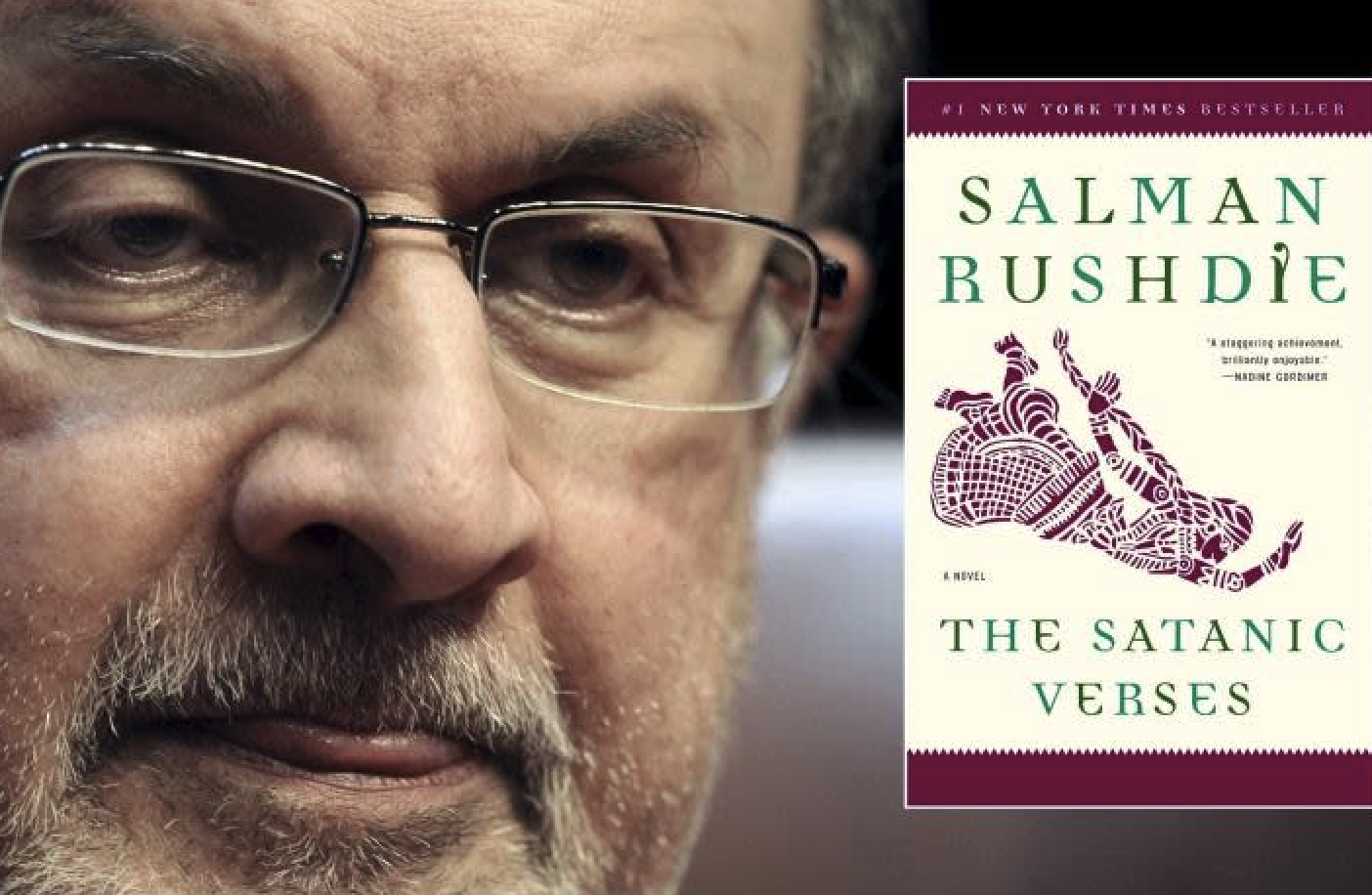
In 1989, the Ayatollah Ruhollah Khomeini, Iran’s theocratic ruler, ordered the assassination “without delay” of novelist Salman Rushdie because of his novel “The Satanic Verses.” Remarkably, this official fatwa imposed the duty of freelance killing in the name of God upon masses of Muslim believers in all nations, and also demanded death for the editors and publishers involved with the book.

Three decades later, a Lebanese-American stands accused of attempting to murder Rushdie by repeated stabbings onstage at New York’s Chautauqua Institution. The author suffered severe injuries but survived. Though the Muslim Council of Britain condemned the attack, the Iranian regime’s Kayhan newspaper dispatched “a thousand bravos” to “the brave and dutiful” assailant while militants in other Muslim lands celebrated. We’ll see what prosecutors and defense attorneys finally say about links between Iran’s fatwa of death and the sensational bloodshed.

Rushdie’s complex fantasy had dream sequences in which depraved enemies of Islam — not the author himself — complain about moral absolutism and treatment of women and demean the Prophet Muhammad’s wives and closest Companions. They also challenge the divine inspiration of the Quran. A Wall Street Journal op-ed correctly noted that the far greater threat to the Quran is the revisionist theorizing on its origins by the late John Wansbrough at the University of London.

The Rushdie novel resulted in book-banning and riots in the Muslim world, and the famous fatwa sent Rushdie into hiding for years. In 1998, Iran’s president declared the case “finished” during diplomatic efforts, but the regime did not actually abolish the fatwa. It was reaffirmed by Khomeini’s successor as Supreme Leader in 2017, and re-published on a government Web site five days before the Chautauqua stabbing. During the past decade, Iranian groups have pledged to pay a $3.9 million bounty to anyone who slays Rushdie.


Please respect our Commenting Policy