Question for journalists to mull: What will America's religious life look like in 50 years?

Question for journalists to mull: What will America's religious life look like in 50 years?

Scribes in the U.S. press snapped to attention last year when the Gallup Poll announced that as of 2020 less than half of Americans held religious memberships for the first time in its eight decades of asking the question. Only 47% of Americans said they belonged to a church, synagogue, mosque or other house of worship, a dramatic loss from the 70% as recently as 1999.

Now comes the Pew Research Center with a related pulse-pounder issued last week.

Pew figures that currently 64% of Americans (including children) identify as Christians in some sense, compared with 6% for other religions and a hefty 30% for “nones” and “nothing in particulars” — those without religious affiliation. Then we’re told that 50 years from now the Christian percentage may well fall to a modest 54% or even to a remarkable 35% in the worst-case scenario, while the non-religious population rises to somewhere between 34% and a slim majority of 52%.

Understandably, the Pew numbers became spot news for, among others, CBS, National Public Radio, the Washington Examiner and Washington Post, both newspapers in faith-focused Salt Lake City, USA Today, Britain’s The Guardian and a host of religious outlets.

This remains a good spot story for media that haven’t yet reported Pew’s basics. But even media that have reported the topline numbers could return to the theme with illustrative anecdotes and reactions from area religious leaders. And for sure journalists and religious analysts will want to give the full report some careful thought.

Pew emphasizes that its numbers are only “possibilities,” not “predictions of what will happen,” and comments that such a future would have “far-reaching consequences for politics, family life and civil society.” For example, also consider the multiple social science surveys that associate religious involvement with psychological and medical well-being and positive life outcomes for youths. Also, there is the impact of religious charity, not only effective huge organizations but private person-to-person interactions. Also, religions strengthen community in our “Bowling Alone” culture.

Pew calculated four future scenarios based largely upon the rates at which Americans may switch in or out of Christian identification and in or out of religious “none” status.

Please respect our Commenting Policy

Reminder to journalists (again): Private schools -- left, right -- can defend their core doctrines

Reminder to journalists (again): Private schools -- left, right -- can defend their core doctrines

Back in the late 1970s, during the cornerstone seminar in Baylor University’s Church-State Studies program, my major professor made an interesting prediction while reviewing some documents that would eventually surface with the Bob Jones University v. United States ruling at the Supreme Court in 1982.

That case pivoted on questions of racism and claims linked to religious doctrine. At some point in the future, my professor said, the high court would face similar cases in which centuries of religious doctrine would clash with beliefs at the heart of the modern Sexual Revolution.

The U.S. Supreme Court would be challenged to equate the facts of racism with the mysteries of sexual identity (or words to that effect). At that point, traditional forms of Christian education would be at risk.

Anyone who has followed American politics in recent decades has watched this conflict march through religious and educational structures and into the headlines. The question, all along, would be if “progressive” thinkers — the word “liberal” is problematic — would find a way for the Sexual Revolution to trump existing legal standards defending free speech, freedom of association and freedom of religion.

Thus, Julia Duin wrote a recent post describing coverage of SCOTUS moves linked to clashes between the modern Orthodox Judaism of Yeshiva University and LGBTQ groups on its New York campus. See this post: “New York Times pursues ultra-Orthodox yeshivas in massive story that raises (some) Jewish ire.

One of the stories she discussed was a Jewish Telegraphic Agency piece with this headline, linked to an earlier stage in this legal struggle: “Yeshiva U can block LGBTQ club for time being, Supreme Court says.” This case provides, Duin noted, an:

… interesting counterweight on what’s happening in Christian colleges across the country. Last week a group called Campus Pride released a list on what it considers “the absolute worst, most unsafe campuses” for LGBTQ students. Not surprisingly, Yeshiva University is one.

She then stressed this crucial passage in the JTA report:

Yeshiva University’s case could be complicated by the fact that it removed religion from its charter, essentially the text that gives it permission to operate in New York State, in 1967 in an effort to secure more state funding.


Please respect our Commenting Policy

DeSantis as 'culture warrior' or theocrat: Coverage depends on a newsroom's worldview

DeSantis as 'culture warrior' or theocrat: Coverage depends on a newsroom's worldview

A Republican politician with presidential aspirations visits a Christian college. What happens next, in terms of the way the event is covered by the mainstream press, is predictable — during this era of niche news, with stories written to appeal to the beliefs of specific political flocks.

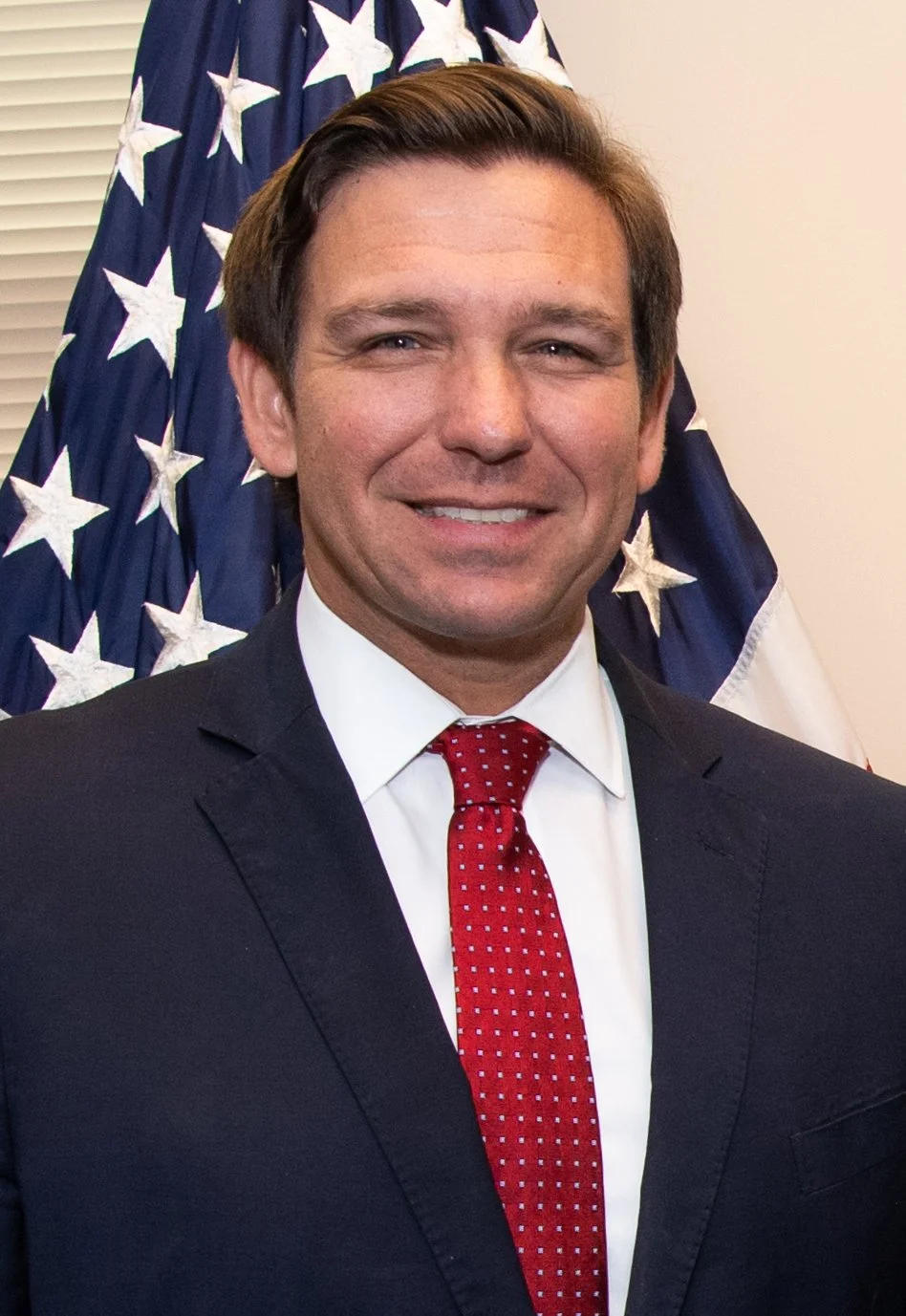
The politician in question is Florida Gov. Ron DeSantis and the school is Hillsdale College in Michigan. The visit took place this past February and was used as an example in a recent Miami Herald article of DeSantis’ mingling of faith and politics.

This is how the paper opens its Sept. 13 piece:

While visiting a private Christian college in southern Michigan that wields influence in national politics, Gov. Ron DeSantis rephrased a biblical passage to deliver a message to conservatives.

“Put on the full armor of God. Stand firm against the left’s schemes. You will face flaming arrows, but if you have the shield of faith, you will overcome them, and in Florida we walk the line here,” DeSantis told the audience at Hillsdale College in February. “And I can tell you this, I have only begun to fight.”

The Republican governor, a strategic politician who is up for reelection in November, is increasingly using biblical references in speeches that cater to those who see policy fights through a morality lens and flirting with those who embrace nationalist ideas that see the true identity of the nation as Christian.

That’s followed by the thesis:

He and other Republicans on the campaign trail are blending elements of Christianity with being American and portraying their battle against their political opponents as one between good and evil. Those dynamics have some political observers and religious leaders worrying that such rhetoric could become dangerous, as it could mobilize fringe groups who could be prone to violence in an attempt to have the government recognize their beliefs.

The article has no problem finding experts who warn of impending danger.


Please respect our Commenting Policy

Role of religion in Leicestershire riots? BBC journalists fell prey to 'word salad' logic

Role of religion in Leicestershire riots? BBC journalists fell prey to 'word salad' logic

I apologize for repeating this sobering anecdote, but — alas — it’s relevant again.

When “Blind Spot: When Journalists Don’t Get Religion” was released in 2008, several of the authors took part in a circle-the-globe trip for events linked to the issues covered in the book. One interesting — or disturbing — forum took place with journalism students at the multi-faith Convergence Institute of Media in Bangalore, India.

The topic, of course, was how to improve religion-news coverage in print and broadcast media. In a previous post — “Life and death (and faith) in India” — I noted:

I was struck by one consistent response from the audience, which I would estimate was about 50 percent Hindu, 25 percent Muslim and 25 percent Christian. When asked what was the greatest obstacle to accurate, mainstream coverage of events and trends in religion, the response of one young Muslim male was blunt. When our media cover religion news, he said, more people end up dead. Other students repeated this theme during our meetings.

In other words, when journalists cover religion stories, this only makes the conflicts worse. It is better to either ignore them or to downplay them, masking the nature of the conflicts behind phrases such as "community conflicts" or saying that the events are caused by disputes about "culture" or "Indian values."

Cover the story WRONG and more people die, they said. But if you cover the story ACCURATELY, even more people will die. As a rule, editors and producers resorted to vague terms — “community violence” was common — to hide bloody sectarian divides. Journalism is not an option when covering religious divides in India.

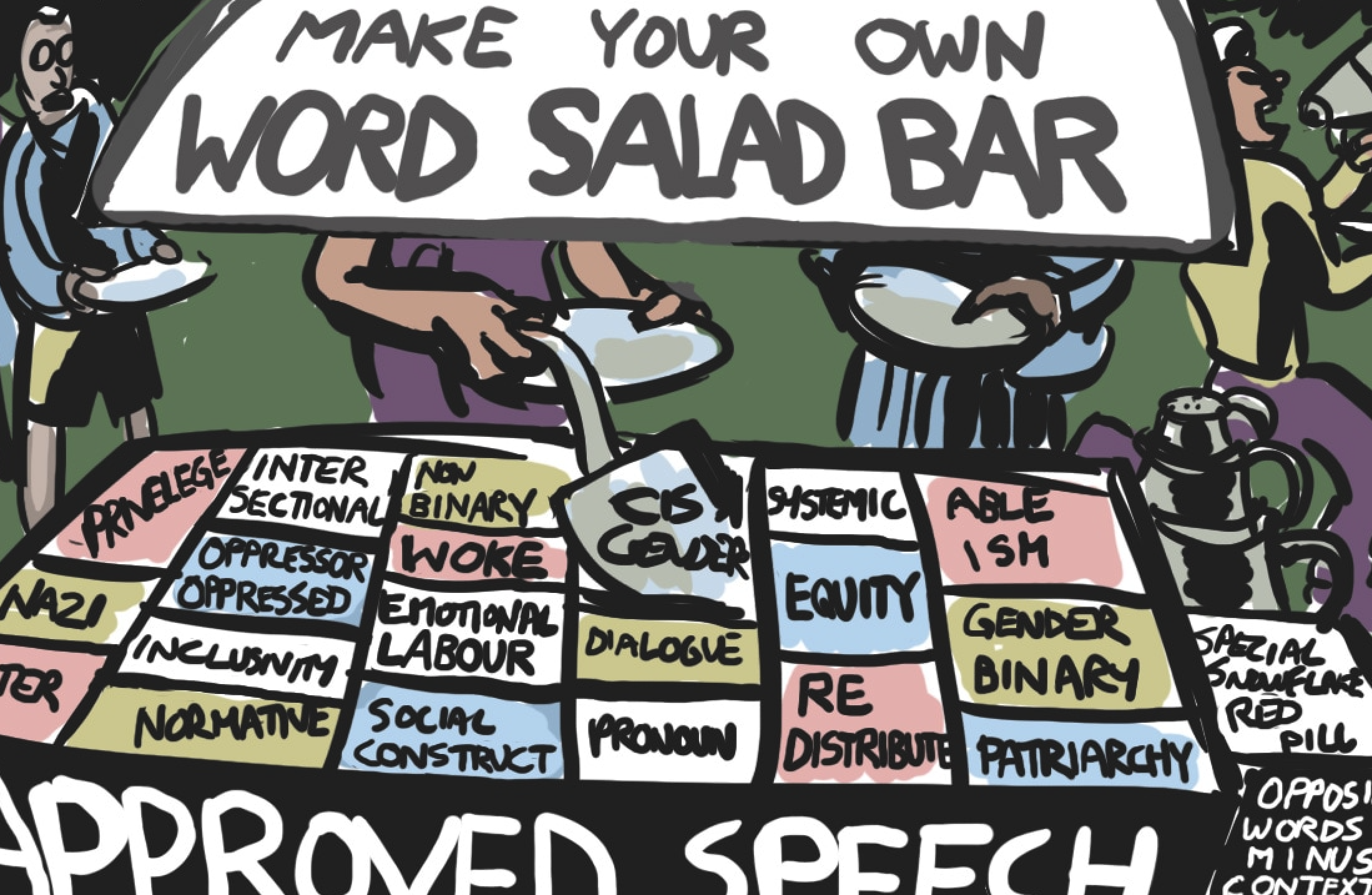
With that in mind, consider the foggy “word salad” language at the top of this recent BBC report about what were clearly sectarian riots in East Leicester. This is from a web archive, since the story was updated later without explanation. The bottom line: The religion angles in this story were too hot to mention.

Police and community leaders have called for calm after large numbers of people became involved in disorder in parts of East Leicester. Footage online shows hundreds of people, mainly men, filling the streets. …

It is the latest in a series of disturbances to have broken out following an India and Pakistan cricket match on 28 August.


Please respect our Commenting Policy

Plug-In: A 50-year TV flashback -- Why 'The Waltons' wasn't afraid of religious faith

Plug-In: A 50-year TV flashback -- Why 'The Waltons' wasn't afraid of religious faith

During the pandemic lockdown, I rediscovered “The Waltons” and watched all 221 episodes.

Somewhere along the way, I learned that the classic TV show about a Depression-era family in rural Virginia made its prime-time debut on Sept. 14, 1972.

That’s 50 years ago.

I started emailing myself notes about religion references in specific episodes — those with titles such as “The Sinner”, “The Sermon” and “The Baptism” — and marked the anniversary date on my calendar. Journalists are always looking for a story, don't you know?

I pitched a piece to The Associated Press. To my delight, Global Religion news director David Crary and news editor Holly Meyer let me write it. This isn’t hard news, but I hope it’s interesting.

Speaking of AP friends, Matt Curry and I worked together in the Dallas bureau from 2003 to 2005. Curry later left journalism and attended Brite Divinity School at Texas Christian University. He's a big fan of “The Waltons,” and his family’s experience became the lede for my feature:

The Rev. Matt Curry’s parents were children of the Great Depression, just like “The Waltons” — the beloved TV family whose prime-time series premiered 50 years ago.

When Curry was growing up on a farm in northern Texas, his carpenter father and teacher mother often argued playfully over who had a poorer childhood.

“The Depression was the seminal time of their lives — the time that was about family and survival and making it through,” said Curry, now a 59-year-old Presbyterian pastor in Owensboro, Kentucky. “My dad used to talk about how his dad would go work out of town and send $5 a week to feed and clothe the family.”

So when “The Waltons,” set in 1932 and running through World War II, debuted on CBS on Sept. 14, 1972, the Currys identified closely with the storylines.

I enjoyed interviewing two stars of “The Waltons”: Richard Thomas (John-Boy Walton) and Kami Cotler (Elizabeth Walton).

The story explores how the series delved into spiritual themes at a time when the TV networks tended to avoid them.


Please respect our Commenting Policy

Memory eternal: The quiet, yet very public faith, of Queen Elizabeth the Great

Memory eternal: The quiet, yet very public faith, of Queen Elizabeth the Great

Before wearing the Imperial State Crown, Queen Elizabeth II knelt at the Westminster Abbey altar for a moment of silent, private prayer.

The three-hour coronation in 1953 contained myriad oaths and symbols, but the most ancient rite -- Archbishop of Canterbury Geoffrey Fisher anointing Elizabeth with holy oil -- sought the highest possible blessing on her life's work and eventually her death.

"Our Lord Jesus Christ, the Son of God," he prayed, "who by his Father was anointed with the oil of gladness … that by the assistance of His heavenly grace you may govern and preserve the people committed to your charge in wealth, peace and godliness; and after a long and glorious course of ruling a temporal kingdom wisely, justly and religiously, you may at last be made partaker of an eternal kingdom."

Televised for the first time, 27 million BBC viewers watched what Oxford don C.S. Lewis called the "tragic splendour" of this drama.

“Over here people did not get that fairy-tale feeling about the coronation. What impressed most who saw it was the fact that the Queen herself appeared to be quite overwhelmed by the sacramental side of it," he noted, writing to an American friend.

It was "a feeling of (one hardly knows how to describe it) -- awe -- pity -- pathos -- mystery. The pressing of that huge, heavy crown on that small, young head becomes a sort of symbol of the situation of humanity itself: humanity called by God to be his vice-regent and high priest on earth, yet feeling so inadequate."

Few could have imagined that the woman many now call "Elizabeth the Great" would reign for 70 years, striving to lead by example after the suffering of World War II and into an age in which humanity would be united by the Internet, terrorism, pandemics and other challenges.


Please respect our Commenting Policy

An old question that's back in the news: Why can’t non-Muslims visit Mecca and Medina?

An old question that's back in the news: Why can’t non-Muslims visit Mecca and Medina?

THE QUESTION:

Why does Islam ban non-Muslims from the holy cities of Mecca and Medina?

THE RELIGION GUY’S ANSWER:

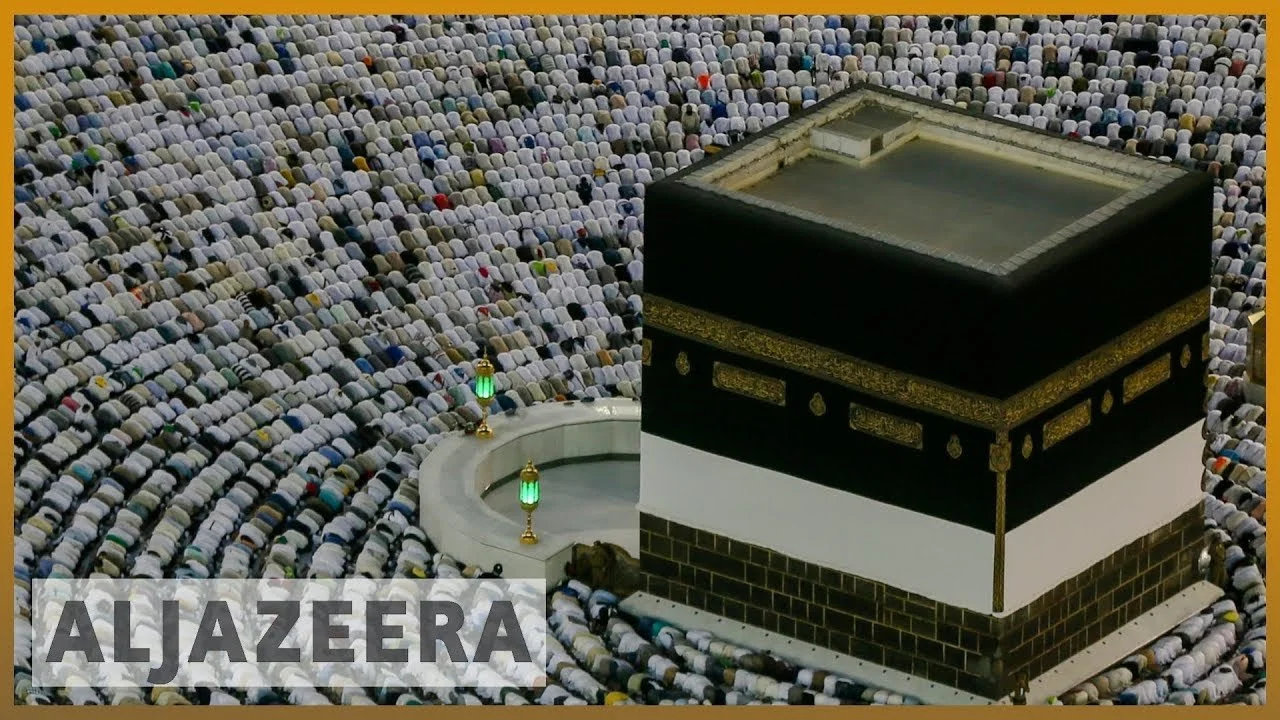
Daniel Pipes of the Middle East Forum is among the last people Saudi Arabians might want to listen to. Yet he penned a Wall Street Journal op-ed last month urging Crown Prince Mohammed bin Salman to end Islam’s long-standing ban against non-Muslims entering the faith’s two holiest locations, Mecca, where the Prophet Muhammad issued the Quran and founded the religion 14 centuries ago, and Medina, where he led the first Muslim regime.

This prohibition hit the news when Gil Tamary, an American Jew and TV journalist in Israel, illicitly slipped into Mecca to record material and broadcast a much-hyped 10-minute travelogue. Muslims have enforced the ban so carefully, Pipes reports, that only 18 non-Muslims are known to have ever entered Mecca, including Tamary and two others in recent decades.

The violation of sacred space provoked an international furor among not only Muslims but Israelis and westerners who feared a rise in hostility. The regime has filed criminal charges against Tamary and his Saudi driver. Tamary apologized and said his intent was to “showcase the importance of Mecca and the beauty of the religion” and thereby foster religious tolerance. Guess again.

But cheerleader Pipes thinks Tamary “boldly challenged an archaic status quo that the world unthinkingly accepts. Bravo to him for breaking a taboo. . . . He deserves respect, not condemnation.” Pipes even wants unspecified international organizations to lobby for open access with the Saudis.

Pipes did not mention another exclusionary policy noted in the U.S. State Department’s 2022 religious freedom report. Saudi Arabia strictly forbids all non-Muslim houses of worship nationwide, though private or secret Christian gatherings are known to occur.


Please respect our Commenting Policy

Podcast: What will Queen Elizabeth II tell the world about her faith with her funeral liturgy?

Podcast: What will Queen Elizabeth II tell the world about her faith with her funeral liturgy?

This week something unexpected happened after I filed my national “On Religion” column, something that I have never seen before in my decades of religion-news work.

What? A retired literature professor responded to my column with a poem.

The topic was easy to predict. Like millions of other people around the world, but especially in Great Britain and the Commonwealth, I have spent many hours watching (primarily on British television) the rites and public drama surrounding the death of Queen Elizabeth II.

I will post the column at GetReligion at the usual time this weekend, after it has run in most newspapers linked to the Universal syndicate. But the podcast team decided to go ahead and use it as the hook for this week’s “Crossroads” (CLICK HERE to tune that in), since so many people are talking about the death of the queen. Here is a short clip from that column:

Throughout her life, Queen Elizabeth II understood the symbolic importance of kneeling, according to former Durham Bishop N.T. Wright. After one Church of England synod, she privately expressed surprise — disappointment, even — that worshippers in Westminster Abbey simply lined up to receive Holy Communion, instead of kneeling.

“Kneeling was important to her,” said the popular author, in a “Premier Christianity” tribute. In his encounters with her, Wright found the queen “very friendly and clearly a very devout, what we would consider ‘old fashioned’ Church of England Christian. I remember thinking during more than one Christmas broadcast, she has just preached the Gospel to the nation in a way that perhaps nobody else could have done.”

In response to the column, a reader raised in Canada — but best known for his work at Baylor University in Texas and at Peking University — wrote a poem and sent it to me.

David Lyle Jeffrey, now a distinguished senior fellow at Baylor’s Institute for Studies in Religion, noted that he has never considered himself a “royalist,” but the queen’s death is certainly a time to explore the “essence of her admirable Christian character and gracious reign.” The former Baylor provost and literature professor entitled the poem “Regina Exemplaris (An exemplary queen).” Here is how it ends:


Please respect our Commenting Policy

NBC News promotes its own Satanism-scare report, which is itself a kind of scare-news device

NBC News promotes its own Satanism-scare report, which is itself a kind of scare-news device

I have always found it interesting when major news organizations conduct a public-relations blitz — primarily with messages to other journalists — promoting one of their own news reports.

Obviously, the message to other journalists is this: We deserve praise for doing this story. The implied message is usually: We were brave to do this story. Now, all you other newsroom folks should follow our courageous example and cover this story, too.

In this case, we are talking about an NBC News press release with this dramatic double-decker headline:

NBC NEWS: SATANIC PANIC IS MAKING A COMEBACK, FUELED BY QANON BELIEVERS AND GOP INFLUENCERS

Baseless Accusations Are Branding People As Satanist Pedophiles At The Speed Of The Internet — Just Ask A GOP Prosecutor Who Recently Lost Re-Election.

There are several levels to This. Big. Story.

(1) There is a totally valid story about Internet-based attacks against a progressive Republican — David Leavitt, the prosecuting attorney for Utah County — attempting to smear him with wild stories about Satanic, cannibalistic attacks on children. Leavitt is active in the Church of Jesus Christ of Latter-day Saints and the younger brother of a former Utah governor, Mike Leavitt.

(2) There is a valid, and by now very familiar, story about QAnon, politicians, pedophiles, cannibalism, pizza and, of course, the work of Satan in one form of another (hold that thought). If you have followed GetReligion, you know that we think the world of QAnon conspiracy theories is important and worthy of tight, fact-based coverage.

(3) There are some, repeat “some,” Republicans on the right fringe who now rush to connect Satanic worship to all kinds of trends in the free-for-all that is modern American culture. These politicos have been known to blur the line between organized, public Satanic religious groups and the secret world (it’s hard to know the size of this phenomenon) of people attempting to practice dark arts of various kinds.

(4) There are many conservative, and very mainstream, religious believers who openly state their beliefs that incarnate evil — as in the biblical Satan — is at work, on one level or another, in activities including child abuse, domestic violence, terrorism, warfare, etc. Yes, some believe that using permanent forms of gender-transition surgery and puberty blockers on children fall into this category.

It’s important to note, however, that someone like Pope Francis saying that he sees Satanic forces at work in our world is not the same thing as people making accusations against, for example, the specific and official Church of Satan. Yes, Pope Francis has probably used more Satan-based language than any pope in several generations, including on some issues linked to the Sexual Revolution.

This NBC News report takes the important story at level (1) and links it to level (2) — which is valid. The problem, from my journalistic point of view, is that NBC News then attempts to take some poll-based information about questions at level (3) and even (4) and then blend that material with (2) Qanon and the (1) attacks on someone like Leavitt, arguing that belief in the reality of incarnate evil (a mainstream Christian belief, as in this Catholic Catechism reference) is creating a wider trend that threatens American democracy, or words to that effect.


Please respect our Commenting Policy