Shia LeBeouf converts to Catholicism: News coverage -- good and bad -- focuses on redemption

Shia LeBeouf converts to Catholicism: News coverage -- good and bad -- focuses on redemption

Celebrity news coverage and religion couldn’t be more polar opposites most of the time. Coverage of actors, models and others in the entertainment industry often resembles a list for the seven deadly sins.

Every so often, the world of celebrity and faith intersect. When they do, the mainstream press doesn’t know what to do with it, creating tone-deaf coverage similar to sports stories containing what GetReligion has long called religion “ghosts.”

Meanwhile, the religious press — I’m referring to Catholic media in this case — love to jump on this kind of story. This has certainly been the case with actor Shia LaBeouf this summer and public statements regarding his conversion to Catholicism.

It’s a textbook case of the mainstream press largely ignoring such an announcement, while the Catholic press can’t get enough of it. When the mainstream press did cover LaBeouf’s interview, it was in the context of his troubled personal life. For some journalists in the Catholic press, he became a poster child for upholding tradition and the Latin Mass against the more progressive forces in the church.

Depending on who and what you read, LeBeouf’s conversion story is either a farce, something to be celebrated or something to be feared.

LaBeouf, like many in his profession, does interviews primarily to promote specific movies and their careers overall. While promoting his new film “Padre Pio,” which premiered at the Venice International Film Festival, LaBeouf announced that he had converted to Catholicism. The movie is based on the life of Padre Pio, an Italian Franciscan Capuchin friar famous for exhibiting stigmata most of his life. He was canonized as a saint by Pope John Paul II in 2002.

The former “Transformers” star made it known that he was now a practicing Catholic during an Aug. 25 appearance on Bishop Robert Barron’s show “Conversations at the Crossroads.” The YouTube link alone has generated over 1.3 million views.

Here is where the celebrity news coverage got interesting.

Please respect our Commenting Policy

Bonus podcast: Return of hot debates about ancient Psalms vs. contemporary praise hits

Bonus podcast: Return of hot debates about ancient Psalms vs. contemporary praise hits

Here is a truth that many religion-beat professionals (a) haven’t really thought through or (b) they totally get it, but their editors do not.

Obviously, churches from coast to coast and around the world are engaged in heated debates, if not outright financial wars, about centuries of church teachings about marriage and sexuality. This makes headlines. These battles often reach the local level (ask United Methodists and, previously, Episcopalians).

Editors like that, since these battles can be framed as “politics.”

But there is another subject that frequently causes divisions in the pews (or megachurch folding chairs) — music. These battles rarely make headlines, even though they stir deep emotions between various generations of believers. In recent decades, this has led to discussions of “worship wars.”

I recently wrote a column — “Open Bible to Psalms: What messages are seen there, but not in modern praise music?” — that was, shall we say, “worship wars” adjacent. This led to me being invited as a guest on the national “Connections” podcast, with hosts Mike Thom and Colleen Houde. If you want to listen to that, CLICK HERE.

During that discussion I mentioned that I had another column coming up that was related to this subject. It later appeared with this headline: “Hillbilly Thomists — Dominicans tracing their roots into Appalachian music and faith.”

But the Psalms column was the hook for the podcast and it didn’t take long to veer into “worship wars” territory and the subject of commercialized music in the modern church. That made me flash back a decade-plus to a column with this headline: “FM radio reality in church.”

Maybe the best way to intro this bonus podcast is simply to reprint that column. So here goes.

The clock is ticking and soon Jeff Crandall while face the challenge of selecting the right music for the Christmas services at High Desert Church.

This will be tricky, because Christmas is what the 70-member staff at this megachurch calls a "federal" event.


Please respect our Commenting Policy

Plug-In: Has Nashville become the 'new frontier' of today's religion news universe?

Plug-In: Has Nashville become the 'new frontier' of today's religion news universe?

Twenty years ago, I moved to Nashville, Tennessee, to work for The Associated Press.

I spent less than a year in Music City before transferring to Dallas, but oh, what a fun 11 months for a religion reporter (and country music fan).

I covered the fight over a proposed Tennessee lottery and a prayer service on the night the Iraq War began, but some of my favorite stories were less weighty:

A profile of a man who paid children $10 each to learn the Ten Commandments (until 15,000 “memorization affidavits” from across the nation flooded his mailbox after my story ran).

A feature on Gospel Music Week, when some of Nashville’s most popular bars and nightspots traded lying-and-cheating songs for hymns about prayer and redemption.

An interview with the 104-year-old widow of a famous Black traveling evangelist.

Blame Liam Adams, The Tennessean’s religion reporter, for this trip down memory lane.

In a fascinating deep dive published this week, Adams and his colleague Cole Villena delve into “Williamson County, the suburban ‘new frontier’ for American evangelical Christianity.”

“An already heavily Christian area is on track to become a capital of evangelicalism in the U.S.,” the story asserts, referring to the fast-growing county south of Nashville.

I pointed out to Adams on Twitter that my family lived in Williamson County — Spring Hill, to be precise — in our brief time in the Nashville area.

“All religion reporting roads lead through greater Nashville apparently,” chimed in Christianity Today’s Kate Shellnutt, herself a former Nashville resident.


Please respect our Commenting Policy

Sam Harris take jab at those who believe in heaven: Maybe listen to some ancient voices?

Sam Harris take jab at those who believe in heaven: Maybe listen to some ancient voices?

When cosmonaut Yuri Gagarin returned to earth in 1961, after the first manned spaceflight, Soviet leaders claimed he said: "I went up to space, but I didn't encounter God."

Venturing into similar territory, superstar atheist Sam Harris rocked cyberspace during a recent Triggernometry YouTube appearance in which he discussed Donald Trump, faith elements in "wokeness" and the flocks of Americans who insist on believing in heaven.

Political Twitter screamed when he said there was "a left-wing conspiracy to deny the presidency to Donald Trump. … Absolutely, but I think it was warranted."

But comedians Konstantin Kisin and Francis Foster pushed back, asking if Harris was justifying moral relativism. Perhaps today's truth wars, the Triggernometry team suggested, were linked to a famous G.K. Chesterton quip: "When men choose not to believe in God, they do not thereafter believe in nothing, they then become capable of believing in anything."

During the ensuing discussion, Harris offered another viral soundbite: "Where is heaven, exactly, given that we have multiple telescopes up there beaming back tens of billions of years' worth of information?" Yet millions of Americans still embrace the supernatural claims of an ancient faith, including that Jesus will return to "raise the living and the dead."

"You'd be surprised by the number of percent of sober, non-Bible-thumping people who would say 'yes' to that question," he said. "They might be Christian, they might be, listen, 'I love the Bible. It gives me a great moral framework. It gives my kids a great moral framework. This is the tradition I'm identified with. This is all super important to me' -- but that's kind of as far as it goes. Right? Like, I'm not going to make magical claims about flying saviors who are literally going to come down from … heaven."

While the Twitter masses raged, the French-Canadian iconographer and writer Jonathan Pageau recorded a video essay on his "The Symbolic World" channel about why materialists and religious believers keep debating the meaning of terms such as "heaven" and "earth."


Please respect our Commenting Policy

Old debates behind the new headlines: What does the Bible teach about abortion?

Old debates behind the new headlines: What does the Bible teach about abortion?

THE QUESTION:

What does the Bible teach about abortion?

THE RELIGION GUY’S ANSWER:

This question is raised by the assertion that the Bible “says nothing about abortion.”

So writes Melanie Howard, a scripture scholar at Fresno Pacific University, a Mennonite Brethren campus self-defined as both “evangelical and ecumenical” that “embodies Christ-centered values.” Her July 25 article titled “What the Bible actually says about abortion may surprise you” for TheConversation.com was widely distributed to Associated Press and Religion News Service clients under the three outlets’ cooperative agreement.

Later in the article, Howard is more precise, explaining correctly that though abortion was known and practiced in biblical times it “is not directly mentioned” in scripture. True, but there’s more to be said about how the Bible views unborn human lives.

The biblical passage that applies most specifically is Exodus 21:22-23, which involves miscarriage but was extended to the abortion issue by ancient rabbis. It states that if a pregnant woman is hit accidentally “when men fight” and “a miscarriage results,” the person responsible pays a negotiated fine. But “if other damage results” (understood to be the woman’s death), then the “life for life” principle requires the death penalty. (This Memo uses the 1999 JPS translation throughout).

The Jewish Study Bible (2nd edition, 2014) presents the faith’s understanding from ancient times that this passage means “abortion is permitted when necessary to save the mother.” Today, even pro-life conservative Christians mostly agree with that. Due to this passage, Judaism also teaches that “feticide is not murder” because the unborn life is not yet regarded as fully a person. Over the centuries, authoritative “responsa” from rabbis issued varied opinions on allowing abortions in specific circumstances.

Otherwise, one Christian website lists 100 Bible passages said to bear on abortion.


Please respect our Commenting Policy

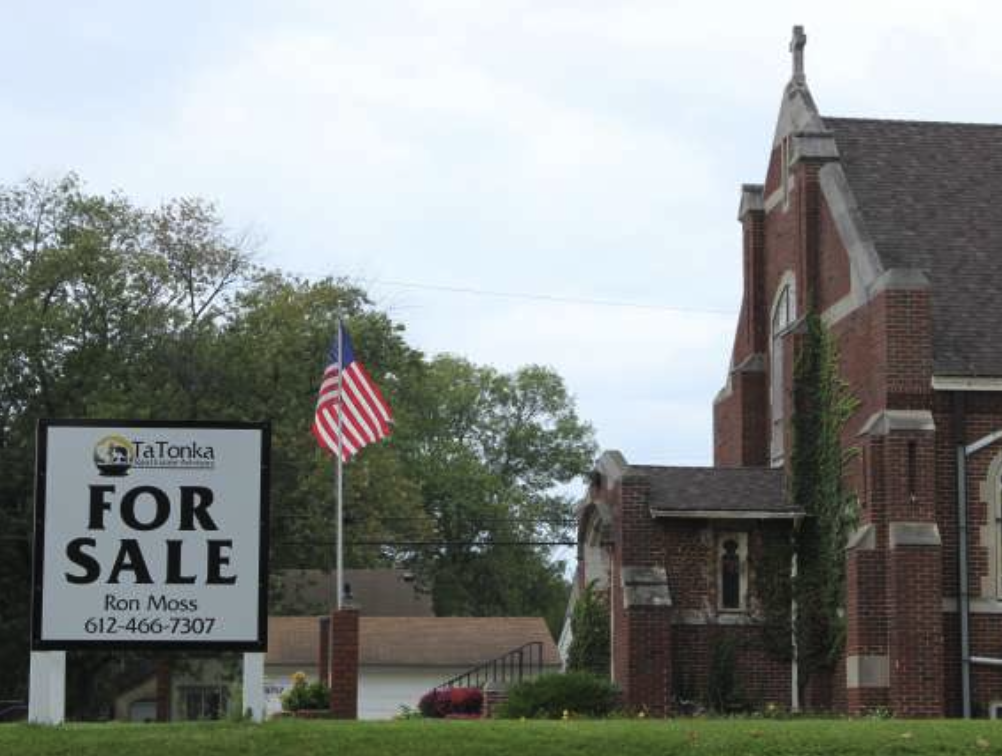
Podcast: Why are churches closing? There are many forces at work, but doctrine still matters

Podcast: Why are churches closing? There are many forces at work, but doctrine still matters

For years, there was a simple answer to the old question: Why do some churches grow, while others shrink?

You simply bought a copy of the 1972 book “Why Conservative Churches Are Growing: A Study in Sociology of Religion” by the late National Council of Churches leader Dean M. Kelley and that provided information answering lots (but not all) of the big questions. It was crucial that this groundbreaking book was written by a mainline Protestant insider, as opposed to a Southern Baptist or Assemblies of God leader.

Of course, everyone knew that some churches grew because of location, location, location. Also, there were always a few liberal churches that grew because of talented preachers or other strengths. Like I said: Kelley answered lots of church-decline questions, but not all of them.

What about 2022 in post-pandemic church life? For starters, many churches will never be post-pandemic — because many congregations (and maybe denominations or communions) were changed forever and we will see more evidence of that in the next few years.

All of this is an overture to this week’s “Crossroads” podcast (CLICK HERE to tune that in) which focuses on a must-read feature story by Godbeat veteran Bob Smietana. The headline at Religion News Service: “For a small Chicago church, closing down was an act of faith.” This was a personal, heartfelt story for Smietana, since this was a congregation that he once called home.

Like so many pastors around the United States, the Rev. Amanda Olson has kept one eye on the Bible and another on the evolving religious landscape.

She knew change was coming to the church in America.

Yet she hoped her congregation might be spared the worst of it.

“Everyone thinks that churches are going to close,” said Olson, the longtime pastor of Grace Evangelical Covenant Church on Chicago’s North Side. “But nobody thinks it is going to be their church.”


Please respect our Commenting Policy

What will American Protestantism look like after the wars inside the 'Seven Sisters' are done?

What will American Protestantism look like after the wars inside the 'Seven Sisters' are done?

Over decades, the map of U.S. Protestantism has been redrawn by splits over the authority and interpretation of the Bible that eventually focused on the LGBT dispute. Now we have a major case study that journalists will need to cover at the local, regional, national and global levels.

A balanced coalition of leaders in the large United Methodist Church (UMC) developed a treaty for mutually respectful separation — the Reconciliation and Grace Through Separation protocol — for that’s currently degenerating into a wasteful fight like other groups have suffered.

Reporters and concerned readers will want to dive into these commentaries and news stories:

* Look at a United Methodist timeline: Why are conservatives going nuclear with lawsuits?

* What happened to United Methodists’ proposal to split the denomination?

* Time is Running Out for Traditionalist United Methodists!

* For United Methodists, the center is not holding

* Special sessions of United Methodist annual conferences 2022

* United Methodist Church bishops mount defense amid conservative attacks (paywall protected)

* Liberal Bishops Have Redefined United Methodist Polity

The current maneuvers by the North American UMC establishment may well limit the number of dropouts joining the Global Methodist Church. Its vision has been to unite a million or more U.S. Methodist evangelicals with the growing Methodist churches in Africa and Asia, creating an effective and innovative international denomination dedicated to defending current Methodist doctrines. This could help counteract some U.S. conservatives’ drift into Christian nationalism. Is that still feasible?


Please respect our Commenting Policy

Fellowship of Christian Athletes wins an 'equal access' case, even if LATimes missed that

Fellowship of Christian Athletes wins an 'equal access' case, even if LATimes missed that

Once upon a time, back in the days of the Bill Clinton White House, there was a strong church-state coalition that stretched, basically, from the Assemblies of God to the Unitarians. The legal activists in this coalition didn’t agree on everything, but they did agree on some basic First Amendment principles that helped defend believers in a wide variety of religious minorities.

If you know the history of that era, you can sense that a few important words are missing from the recent Los Angeles Times report (behind a paywall) that ran at Yahoo!News with this aggressive headline: “Court says San Jose school district must recognize Christian club that excludes LGBTQ kids.”

That headline, of course, could have noted — somehow — that the this victory for the Fellowship of Christian Athletes was based on the same legal principles that defend the First Amendment rights of LGBTQ support groups at the same school.

The key is that there are two crucial words — “equal access” — that are missing from this rather solid story, which includes enough quoted material from voices on both sides for readers to figure out what is going on (if they have a background in church-state studies). Hold that thought.

First, here is the Times overture:

In spring 2019, a teacher at Pioneer High School in San Jose posted a message on his classroom whiteboard questioning a "Sexual Purity" statement that a club for Christian student athletes was requiring its leaders to sign.

The club's statement said sexual relationships should exist only between married, heterosexual couples. The teacher wrote that he was "deeply saddened" that a club on the public school campus made its leaders "affirm" those ideas, and he asked students what they thought.

The resulting firestorm led to the San Jose Unified School District rescinding recognition of the Fellowship of Christian Athletes for excluding LGBTQ students in violation of the district's nondiscrimination policy. In response, the club and its international parent organization sued in federal court, alleging religious discrimination.

On Monday, the Fellowship of Christian Athletes won a major victory when a three-judge panel of the U.S. 9th Circuit Court of Appeals ordered the club be reinstated as an official student group for the current school year while litigation between the parties continues in the lower district court.

Shutting down the FCA violated the “nondiscrimination policy”?


Please respect our Commenting Policy

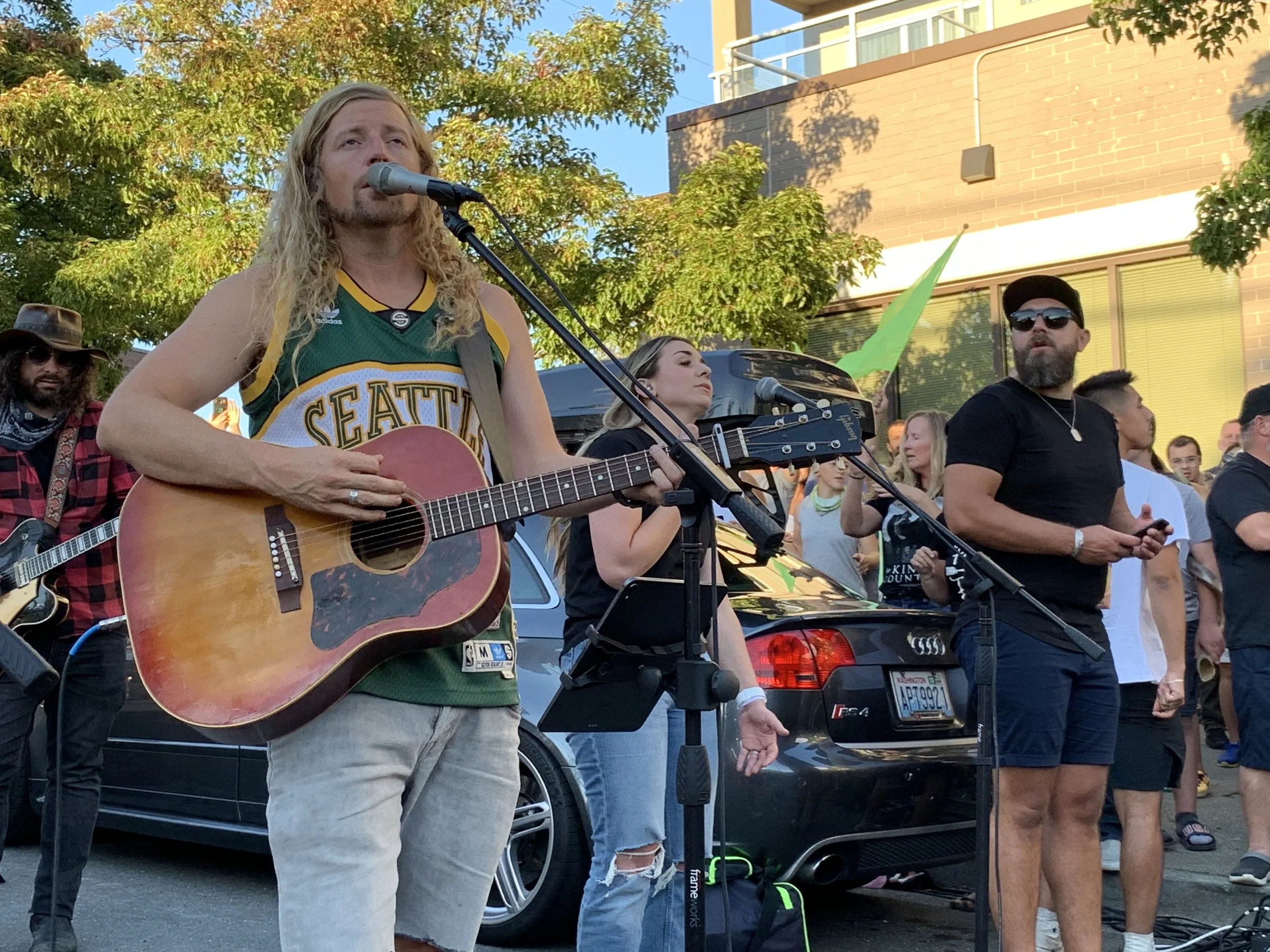
New stories on New Apostolic Reformation, Sean Feucht keep assuming a right-wing takeover

New stories on New Apostolic Reformation, Sean Feucht keep assuming a right-wing takeover

I’ve been complaining for years that journalists aren’t schooling themselves adequately on the prophetic movement (among charismatics) that some call the New Apostolic Reformation (NAR). Since the Jan. 6 uprising, they’ve started writing about it.

But be careful what you wish for. Not all that glitters is gold. I’ve read more than a few stories that sound like something out of a horror flick: An ominous theocratic movement involving millions of people, under uber-controlling leaders with a few White Christian nationalists thrown in.

The two pieces I’ll be addressing is Elle Hardy’s Aug. 23 story in The New Republic: “The Right-Wing Christian Sect Plotting a Political Takeover,” and Rolling Stone’s July 11 story on Sean Feucht. Both typify current Christian trends as scary movements with an end game of sending Donald Trump to the White House in 2024 and sending America back to the Middle Ages.

Hardy’s story had ambitious goals. It began with a summation of this movement starting from 1994 with a revival at a church once known as the Toronto Airport Vineyard. Also known as a “laughing revival” for the odd laughing fits folks had, it made major changes in North American Christianity and swept across the English-speaking world. (Three years later, I was interviewing folks in Iceland who said they were dramatically influenced by Canadian missionaries spreading its benefits.)

All this grew into the NAR, the author says, and (drum roll):

And they have one clear goal in mind — ruling over the United States and, eventually, the world.

NAR, as it’s often called, is a shadowy movement, rather than an organization; many who are considered a part of it deny that it even exists. Broadly, it seeks to return church structures to the fivefold ministry of the Bible (defined roles of apostle, prophet, evangelist, pastor, and teacher). The key roles in this pecking order are prophets, who have the visions, and apostles, the anointed ones who put ideas and networks into practice and, critically, to whom everyone else must submit.

OK. I did my first master’s thesis (in 1992) on authority and submission practices in the charismatic communities that were so popular among evangelicals in the 1960s and 1970s, plus I wrote a 2009 book that deals substantially with this issue. And I can tell you that the NAR folks did learn a thing or two about the mess caused by the 1970s “discipleship movement” which was deeply into one submitting oneself to an elder who was himself (usually this person was male) submitted to a higher elder in a hierarchical line reaching up to a small group of people.

They’re not going that same route today.


Please respect our Commenting Policy