Plug-In: Fear, shock, questions follow fatal Albuquerque shootings of four Muslim men

Plug-In: Fear, shock, questions follow fatal Albuquerque shootings of four Muslim men

First, fear. Then, shock.

Now, questions. Lots of questions.

The Muslim community in Albuquerque, New Mexico — and even nationwide — has dealt with a gamut of emotions since news broke this past weekend of the fatal shootings of four of their own.

“These hateful attacks have no place in America,” President Joe Biden said amid speculation the deaths might be tied to Islamophobia.

After the latest in the string of killings, Albuquerque Police Chief Harold Medina characterized the shootings as “disturbing” and said police had reason to believe they were related.

“We’re in fear for the safety of our children, our families,” Ahmad Assed, the president of the Islamic Center of New Mexico, said Saturday, as reported by the Wall Street Journal’s Sara Randazzo. “This is a very troubling time for all of us.”

Relief then mixed with shock as the Albuquerque Journal’s Elise Kaplan explains: Authorities charged an Afghan refugee named Muhammad Syed — a Muslim himself — in the homicides of Aftab Hussein, 41, on July 26 and Muhammad Afzaal Hussain, 27, on Aug. 1. Also, police called the 51-year-old Syed a prime suspect in the Nov. 7 fatal shooting of Mohammad Ahmadi, 62, and the Aug. 5 fatal shooting of Naeem Hussain, 25. A later story by Kaplan notes:

Officials estimate there are between 5,000 and 10,000 Muslims living in Albuquerque, representing various races, ethnicities and nationalities. Assed guessed about 80% are Sunni and 20% are Shiite. He said it’s common for members of both groups to visit the Islamic Center of New Mexico.

Of the four Muslim men who were killed, three were practicing Shiite Islam. Syed was a Sunni Muslim, as was Muhammad Afzaal Hussain.

At The Associated Press, Stefanie Dazio and Mariam Fam report:

Investigators received a tip from the city’s Muslim community that pointed toward Syed, who has lived in the U.S. for about five years, police said.

Police were looking into possible motives, including an unspecified “interpersonal conflict.”

Please respect our Commenting Policy

At Lambeth 2022, many Anglican bishops could not 'walk together' to the altar

At Lambeth 2022, many Anglican bishops could not 'walk together' to the altar

While Canterbury is urging Anglicans to keep "walking together," the 2022 Lambeth Conference demonstrated that many of the Anglican Communion's bishops can no longer even receive the Eucharist together.

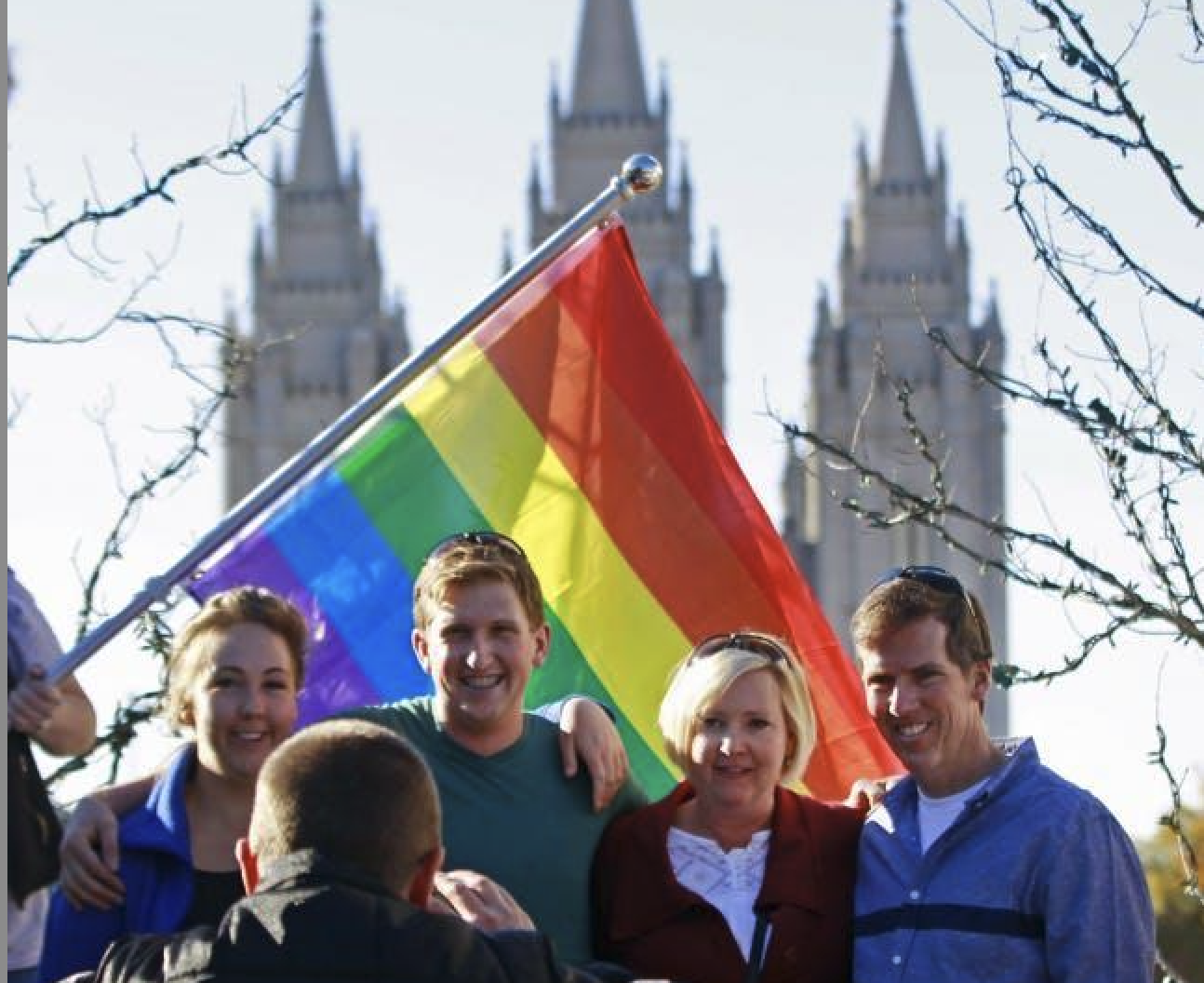
Doctrinal conflicts over biblical authority and sexuality have raged for decades, with growing churches in the Global South clashing with the shrinking, but wealthy, churches in England, America and other Western regions. During this 12-day conference, which ended Sunday (August 8), conservatives from Africa, Asia and elsewhere declined to receive Holy Communion with openly gay and lesbian bishops. Several provinces -- including the massive Church of Nigeria -- boycotted Lambeth 2022 altogether.

"For the large majority of the Anglican Communion the traditional understanding of marriage is something that is understood, accepted, and without question, not only by bishops but their entire church," said Archbishop of Canterbury Justin Welby, in a mid-conference address. "To question this teaching is unthinkable, and in many countries would make the church a victim of derision, contempt and even attack."

Bishops in the Anglican minority, he added, "have not arrived lightly at their ideas. … They are not careless about Scripture. They do not reject Christ. But they have come to a different view on sexuality after long prayer, deep study and reflection on understandings of human nature. For them, to question this different teaching is unthinkable."

Throughout Lambeth 2022, the Global South Fellowship of Anglican Churches -- representing about 75% of Anglican church attendance -- pushed to reaffirm a 1998 Lambeth resolution that "homosexual practice" is "incompatible with Scripture," while also urging Anglicans to "oppose homophobia." It stressed centuries of doctrine that "sexuality is intended by God to find its rightful and full expression between a man and a woman in the covenant of marriage, established by God in creation, and affirmed by our Lord Jesus Christ." That earlier resolution passed with 526 votes in favor, 70 opposed and 45 abstentions.

Writing to Lambeth participants, Welby said the "validity" of that resolution "is not in doubt" and that the "whole resolution is still in existence."

However, the archbishop did not allow a vote on the issue and he said he would not, as requested by Anglican primates in the past, discipline the unorthodox.


Please respect our Commenting Policy

Thinking about missing pieces of Axios report on changes in Latino life, politics and, yes, faith

Thinking about missing pieces of Axios report on changes in Latino life, politics and, yes, faith

GetReligion, as a rule, has never been interested in public-relations features.

So why lead the top of a weekend “think piece” with a Baptist Press story that is obviously the kind of glowing public-relations work that is a stable in church-market, denominational media of all kinds?

That’s easy to explain. You see, this feature — “Church ESL camp preps Hispanic elementary students for school year” — is a perfect example of a trend in the wider evangelical world that is linked to one of the most important political, and religious, stories in America right now.

Why is that?

Read the top of this story and think to yourself: This is an absolutely normal story in Southern Baptist Convention life at this point in time.

Fanny Baltanado planned to spend just six months visiting her new granddaughter in Texas when the unanticipated COVID-19 pandemic thwarted her return to Nicaragua. She would need to find a church home near Humble, Texas.

An adult English as a second language class attracted Baltanado in March to Cross Community Church, where she became a regular attendee and in August, helped the church teach ESL to local Hispanic elementary students in a back-to-school camp.

“For me, this was an amazing experience because we are able to bring the love of Jesus Christ to the people, especially kids,” Baltanado said. “I think they are the base of the society, and we need to help them to be more comfortable, to be more confident with themselves, because they are (in) difficult times.”

ESL classes ranked as a top community need when Del Traffanstedt and his wife Charmaine planted Cross Community Church in the majority Spanish-speaking Eastex-Jensen area of northeast Houston in September 2021. The couple learned of the need for the ESL camp for children after launching their first adult class in March, said Charmaine Traffanstedt, who directs the church’s ESL ministry.

What is the political angle in that local-church story?

Answer: Flash back a few days ago to my post that ran with this headline: “Axios looks at the hot political (of course) trend of Latinos becoming evangelical voters.”

I am returning to that topic again because (a) this truly is a story that news consumers will be hearing about as we head into midterm elections and beyond and (b) because I had an obvious “senior moment” when writing that earlier post.


Please respect our Commenting Policy

Podcast: What's up with this Gray Lady 'mind meld' with readers worried about Biden's faith?

Podcast: What's up with this Gray Lady 'mind meld' with readers worried about Biden's faith?

Popes rarely, in my experience, produce the kinds of five-star news soundbites that go viral.

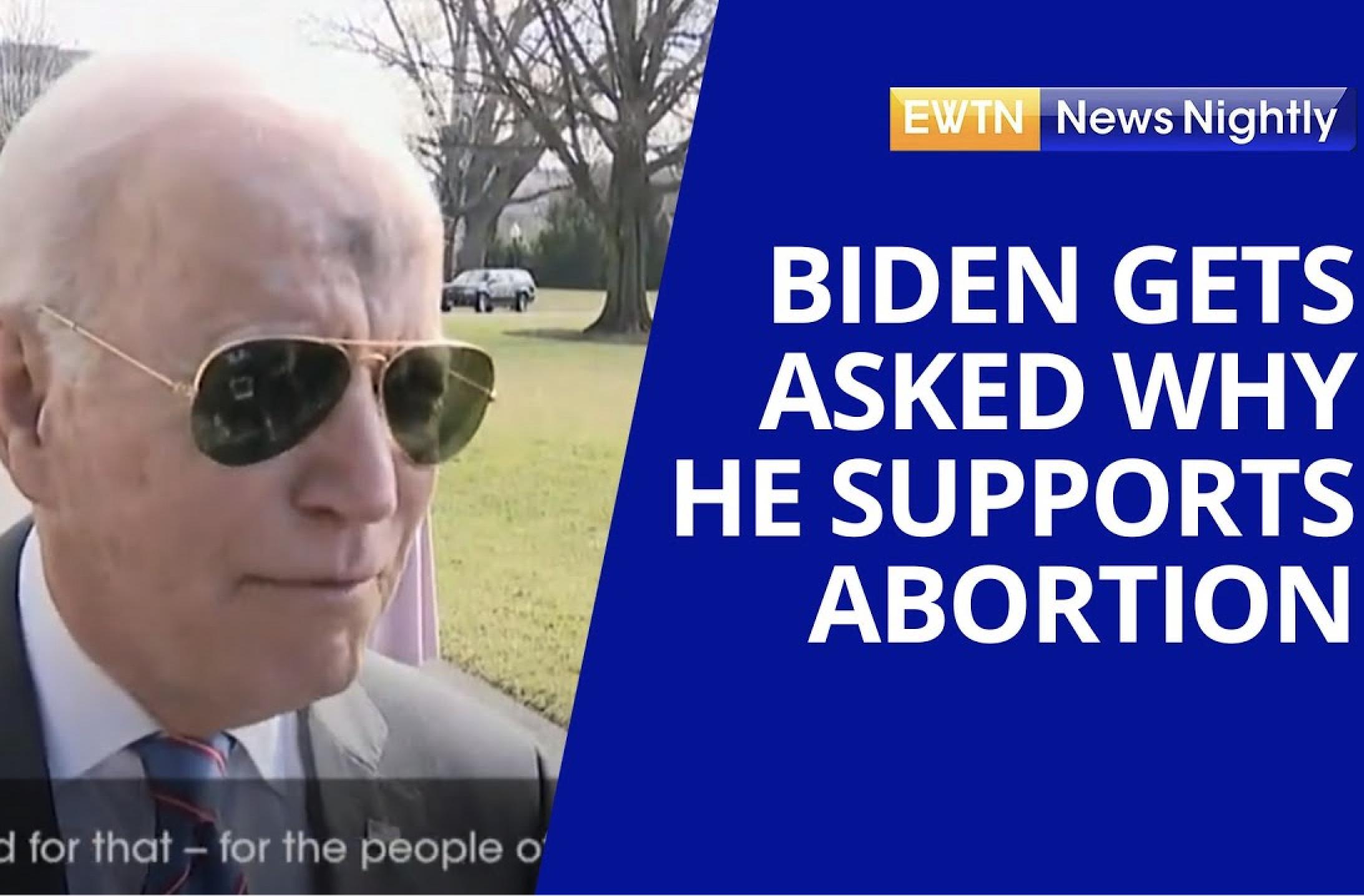
However, Pope Francis has used striking language when addressing one of the hot-button issues of this or any other age — abortion. That was one of several topics woven into this week’s “Crossroads” podcast (CLICK HERE to tune that in), which focused on another elite-media political feature about President Joe Biden’s “devout” approach to practicing the Catholic faith.

Here is that New York Times headline: “Biden Is an Uneasy Champion on Abortion. Can He Lead the Fight in Post-Roe America?” The sub-head is just as provocative: “A practicing Catholic, President Biden has long sought a middle ground on abortion. But activists see the decision to overturn Roe v. Wade as a sign that Democrats have tiptoed too carefully around the issue.”

Back to Pope Francis. Some of his abortion bytes have even made it into news reports. Does anyone remember this one, offering “hitman” imagery he has used many times (even adding Mafia imagery):

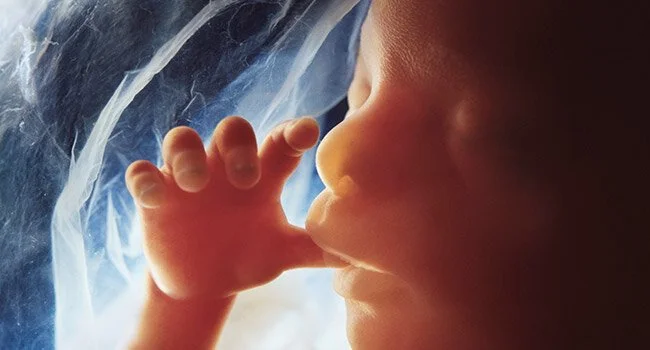
Abortion is more than an issue. Abortion is murder. Abortion, without hinting: whoever performs an abortion kills. … It’s a human life, period. This human life must be respected. This principle is so clear. And to those who can’t understand it I would ask two questions: Is it right, is it fair, to kill a human life to solve a problem? Scientifically it is a human life. Second question: Is it right to hire a hitman to solve a problem?

How about this one?

When I was a boy, the teacher was teaching us history and told us what the Spartans did when a baby was born with deformities: they carried it up the mountain and cast it down, to maintain “the purity of the race.” … Today we do the same thing. Have you ever wondered why you do not see many dwarfs on the streets? Because the protocol of many doctors — many, not all — is to ask the question: “Will it have problems?” It pains me to say this. In the last century the entire world was scandalized over what the Nazis were doing to maintain the purity of the race. Today we do the same thing, but with white gloves.

“White gloves.” Yes, there are many other Francis quotes along these lines. Of course, the pope has also angered Catholic conservatives with words and deeds that seem to downplay church teachings on abortion, especially in high-profile contacts with powerful Catholic politicians.

In other words — President Biden. This brings us to the content of that Times political-desk feature.


Please respect our Commenting Policy

Let the palace intrigue over at Disney+ palace begin

Let the palace intrigue over at Disney+ palace begin

Screenwriter and director Tony Gilroy, showrunner off “Andor” in the Star Wars universe (premiers Sept. 21 on Disney+), spoke recently to a Television Critics Association event.

If even one member of the Religion News Association had been present, we might have an encyclical to discuss.

But let’s give credit where it’s due to Lance Gose of CBR.com (Comic Book Resources). Gose captured a few sound bites from Gilroy, who compared the guardians of Star Wars canon with the Vatican.

“If you think about Star Wars as the Roman Catholic Church, if you think about it as a religion, it has all kinds of factions, groups, and within it, there are all kinds of canon,” Gilroy said.

“We are constantly in touch with the Vatican about what we do, we are constantly checking everything we do,” he added. “We have a very complicated relationship with how we deal with everything that exists. We’re telling a story that we want to tell, and we are not violating the grand canon, let’s put it that way.”

Gilroy’s comparison prompts a few immediate questions for me. These are just for fun, but there may be some perfectly valid religion-beat hooks in here. As people frequently say here at GetReligion: Hold that thought.


Please respect our Commenting Policy

Axios looks at the hot political (of course) trend of Latinos becoming evangelical voters

Axios looks at the hot political (of course) trend of Latinos becoming evangelical voters

It’s the question that I get all the time from frustrated, fair-minded people when I speak to civic or church groups: “Where can I go, these days, for unbiased news?”

There is, of course, no easy answer. We live in an age in which pretty much every news organization — even the Associated Press on moral and cultural issues — is preaching to choirs of believers huddled in digital bunkers on the left and the right.

I recommend that people get on Twitter and follow about 10-20 journalists and public intellectuals who consistently tick off people on both sides of the political spectrum. The goal is follow their tweets and retweets and see who THEY are reading and what articles they have found helpful or horrible. You know, people like David French, Bari Weiss and Andrew Sullivan (and, I would hope, moi).

I also advise listeners to look for newsletters and websites, even if they lean left or right, that provide lots and lots of direct links to other sources of information. This list includes, of course, Axios. This brings me to one of that websites quick-hit pieces with this headline: “Mapped: Power of Latino Protestants.”

One of the stories that everyone missed in 2016 — but we discussed it here at GetReligion (and CNN, for a fleeting moment, on election night) — was that Donald Trump never would have reached the White House without the support of a surprisingly high number of Latino voters in Florida. Many of them were in the Orlando suburbs, an area dotted with evangelical and Pentecostal megachurches popular. Here is the lede on this Axios piece (with its own must-see map):

The Latino exodus from Catholicism and toward more politically conservative evangelical faiths is one important reason for the rightward shift that could shape the future of the electorate.

Pause for a moment. Look at the phrase “politically conservative evangelical faiths.”

Now, name a moral or cultural issue on which the STATED doctrines of evangelicalism are more conservative than the PRINTED contents of the Catholic Catechism.


Please respect our Commenting Policy

Latter-day Saints' incremental changes on doctrine add up to a solid religion story

Latter-day Saints' incremental changes on doctrine add up to a solid religion story

It’s commendable — and all too infrequent — when pundits admit mistakes.

So let’s send a hosanna or two toward Religion News Service columnist Jana Riess, who specializes in her own faith, The Church of Jesus Christ of Latter-day Saints (long nicknamed “Mormons”). Her column reviewing the four years under renowned heart surgeon Russell M. Nelson as LDS president admitted that “if I was guilty of expecting little from a nonagenarian company man, I’ve had cause to repent.” (Everybody else was saying the same.) She’s now “very glad to have been wrong.”

Riess’s latest look — “Oh, now I get it: Purging the word ‘Mormon’ is a bid for the mainstream” — does complain about one move (see below). But she hails 10 developments under Nelson, who turns 96 today. Taken together they form a solid story theme others could pursue. Given the faith’s 21st Century growth alongside setbacks elsewhere in American religion, national and regional media could combine the changes with how the LDS empire has fared during and after the COVID-19 crisis.

A summary of the top 10 items in this change-resistant faith, interpreted in terms of Riess’s policy preferences:

* Though she says “mountains of work” remain, 2019 reversal of a 2015 policy ended automatic excommunication of same-sex couples and allows baptisms and blessings for their children.

* Also in 2019, there was “a little progress” on women. The status of biblical Eve was elevated in the central secret “endowment” ritual, in which wives no longer vow to “hearken” to their husbands. Also, girls and women are now allowed as official witnesses to ordinances.

* Though white Americans continue to dominate global leadership, for the first time in LDS history Nelson’s two newly named apostles were from neither North America nor Europe. Choices for lower ranks are also more diverse.

* Young adult missionaries can contact families weekly rather than twice a year, and their access to mental health services has improved.

* With the demise of Boy Scout ties, the church’s overhauled youth program has equal spending on girls.


Please respect our Commenting Policy

Traditional Latin Mass feud news remains scarce: How reporters can grasp what's at stake

Traditional Latin Mass feud news remains scarce: How reporters can grasp what's at stake

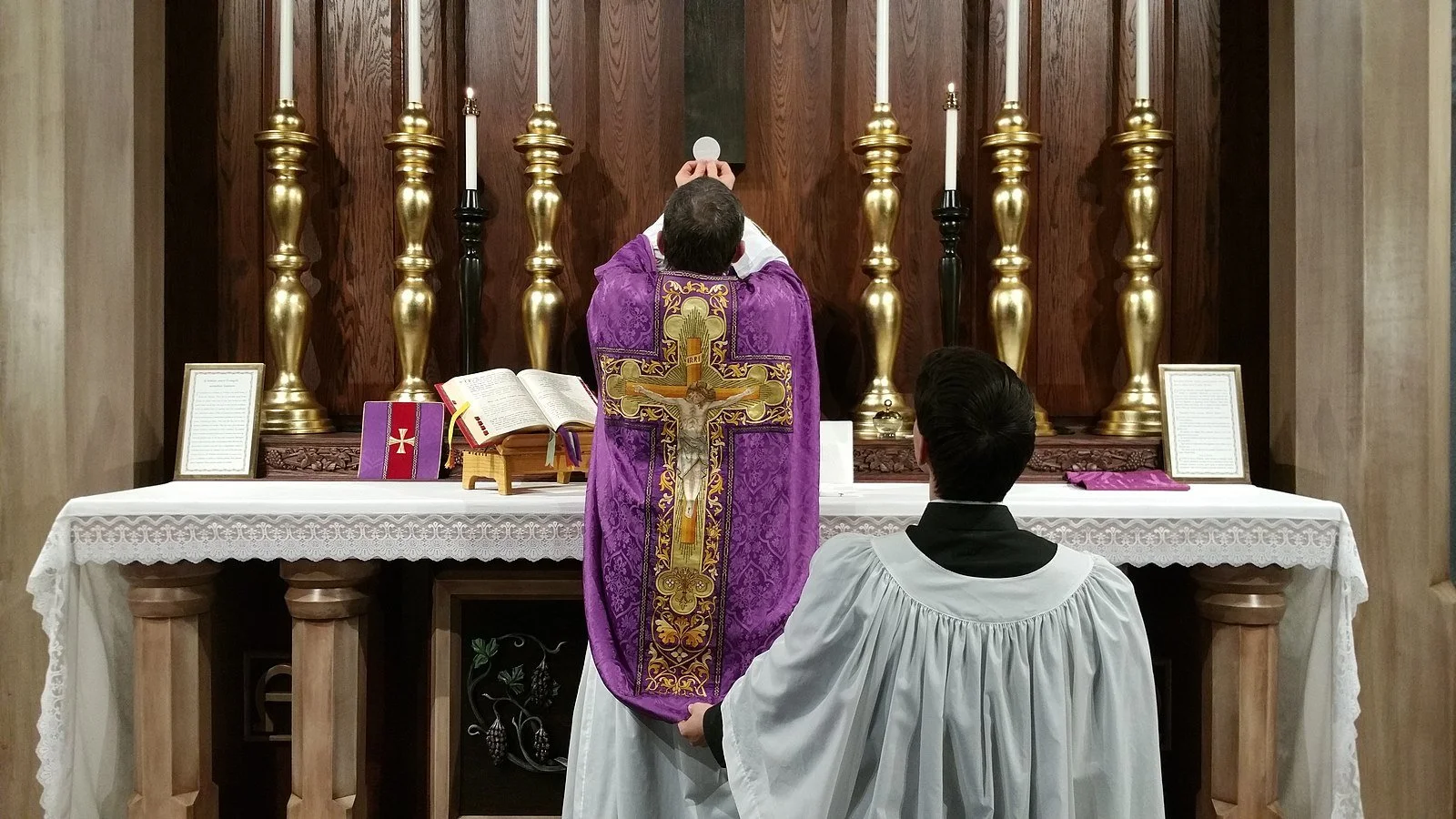
What’s the deal with all the emotional meltdowns about the traditional Latin Mass? I mean, no one speaks Latin anymore.

It sounds like a line that could have come out of the mouth of comedian Jerry Seinfeld during one of his stand-up acts. It isn’t part of his act, but it is a more than symbolic question that Catholics have been pondering over the past year.

It was last summer when Pope Francis signed a motu proprio — Latin for a papal document personally signed by the pope to signify his special interest in a topic — on this very subject. In the July 16, 2021, decree, the pope approved clarifications regarding restrictions on the traditional Latin Mass in an effort to ensure that liturgical reform is “irreversible” and that bishops strive to enforce changes made after the Second Vatican Council.

Specifically, bishops were told to ban ordinations of priests and confirmations using the old rite. They also were instructed to limit the frequency of rites by priests who have managed to receive a dispensation to celebrate Mass in Latin.

What’s the deal with the traditional Latin Mass? It turns out a lot.

The Novus Ordo Mass, which has been celebrated since 1965, is the norm among Catholic churches in this country and around the globe. Coverage, particularly last year, of the Traditional Latin Mass took on a political twinge in the pages of The New York Times. This is how their story from July 16 of last year framed the debate:

Pope Francis took a significant step toward putting the Roman Catholic Church’s liturgy solidly on the side of modernization on Friday by cracking down on the use of the old Latin Mass, essentially reversing a decision by his conservative predecessor.

The move to restrict the use of an old Latin rite in celebrating Mass dealt a blow to conservatives, who have long complained that the pope is diluting the traditions of the church.

Francis placed new restrictions on where and by whom the traditional Latin Mass can be celebrated and required new permissions from local bishops for its use.

The key words to look for in mainstream news reports are “modernization” and “conservative,” as if this pope was doing something positive and that Pope Benedict XVI had been somehow stuck in the past.


Please respect our Commenting Policy

Religious Left returns to RFRA: Washington Post explores a crucial Florida abortion showdown

Religious Left returns to RFRA: Washington Post explores a crucial Florida abortion showdown

For 18 years, GetReligion has argued that mainstream news organizations need to pay more attention to the Religious Left. Yes, I capitalized those words, just like the more familiar Religious Right.

The Religious Right has been at the heart of millions news stories (2,350,000 or so Google hits right now, with about 61,600 in current news). The Religious Left doesn’t get that much ink (322,000 in Google and 2,350 or so in Google News), in part — my theory — because most journalists prefer the word “moderate” when talking about believers in the small, but still media-powerful world of “mainline” religion.

But there is a church-state legal story unfolding in Florida that cries out for coverage of liberal believers — with an emphasis on the details of their doctrines and traditions, as opposed to politics. Doctrines are at the heart of a story that many journalists will be tempted to cover as more post-Roe v. Wade politics.

I suspect, if and when this story hits courts (even the U.S. Supreme Court), journalists will need to do their homework (#FINALLY) on the Religious Freedom Restoration Act of 1993. The big question: What does religious liberty (no “scare quotes”) look like from a Unitarian point of view? Hold that thought.

First, here is the headline on a long Washington Post feature: “Clerics sue over Florida abortion law, saying it violates religious freedom.” Here is the overture:

When the Rev. Laurie Hafner ministers to her Florida congregants about abortion, she looks to the founding values of the United Church of Christ, her lifelong denomination: religious freedom and freedom of thought. She taps into her reading of Genesis, which says “man became a living being” when God breathed “the breath of life” into Adam. She thinks of Jesus promising believers full and abundant life.

“I am pro-choice not in spite of my faith, but because of my faith,” Hafner says.

She is among seven Florida clergy members — two Christians, three Jews, one Unitarian Universalist and a Buddhist — who argue in separate lawsuits … that their ability to live and practice their religious faith is being violated by the state’s new, post-Roe abortion law. The law, which is one of the strictest in the country, making no exceptions for rape or incest, was signed in April by Gov. Ron DeSantis (R), in a Pentecostal church alongside antiabortion lawmakers such as the House speaker, who called life “a gift from God.”

The lawsuits are at the vanguard of a novel legal strategy arguing that new abortion restrictions violate Americans’ religious freedom, including that of clerics who advise pregnant people.


Please respect our Commenting Policy