Return of a Godbeat F-bomb: The 'curse of Ham,' Twelve Tribes history and a Colorado fire

Return of a Godbeat F-bomb: The 'curse of Ham,' Twelve Tribes history and a Colorado fire

Let’s start with a journalism question about the news coming out of Colorado about possible links between the Marshall Fire and a controversial religious group known as the Twelve Tribes.

The New York Times has used that popular journalism F-word — “fundamentalist” — in a major story that ran with this headline: “Colorado Wildfire Inquiry Focuses on Christian Sect.” The read-out under that headline states: “Investigators are looking at the possibility that a fire that destroyed more than 900 homes started on property owned by a fundamentalist Christian sect known as Twelve Tribes.”

Once again, we need to talk about what the word “fundamentalist” means and what it does not mean. Let me ask this question, before we proceed: Is the “Twelve Tribes” movement a “fundamentalist Christian” group in the same sense that Black or White independent Baptist churches found in many or most American cities are accurately described, in doctrinal terms, as “fundamentalist”?

Perhaps the crucial question for journalists covering this story is whether the Twelve Tribes movement is a “sect” or, in sociological terms, an actual “cult”? Hold that thought.

First, here is the overture of the Times story, showing the context for this religion-beat F-bomb:

Investigators looking into the cause of a colossal wildfire in Colorado that forced the evacuation of tens of thousands of people are focusing on a property owned by a Christian fundamentalist sect, after witnesses reported seeing a structure on fire there moments before the blaze spread with astonishing speed across drought-stricken suburbs.

Sheriff Joe Pelle of Boulder County said at a news briefing … that the property owned by Twelve Tribes, which was founded in Tennessee in the 1970s, had become a target of the inquiry after investigators ruled out the possibility that downed power lines might have sparked the fire.

With that in mind, let’s return to the pages of the journalism bible know as the Associated Press Stylebook (h/t to Bobby Ross, Jr., for checking the evolving online edition).

Let us attend.

fundamentalist The word gained usage in an early-20th-century fundamentalist-modernist controversy within Protestantism. In recent years, however, fundamentalist has to a large extent taken on pejorative connotations except when applied to groups that stress strict, literal interpretations of Scripture and separation from other Christians.

In general, do not use fundamentalist unless a group applies the word to itself.


Please respect our Commenting Policy

Despite San Francisco Chronicle sermon, parents oppose teachers hiding LGBTQ evangelism

Despite San Francisco Chronicle sermon, parents oppose teachers hiding LGBTQ evangelism

Some of you may have heard of Abigail Shrier, the Wall Street Journal columnist and author of one of last year’s most controversial books, “Irreversible Damage: The Transgender Craze Seducing Our Daughters.” It discusses the stunning surge in the number of teen-aged girls who are declaring that they are transgender.

The book has done quite well, despite a temporary ban on Amazon.com, and Shrier has become quite the crusader in spreading the message that no one under 18 should try transitioning to an opposite gender without stiff challenges from clinicians. After all, puberty blockers, testosterone treatments and mastectomies are, well, irreversible.

She’s branched out into related subjects. In November, she reported a sensational story: “How Activist Teachers Recruit Kids” on her Substack newsletter, The Truth Fairy. Reaction was swift. More on that in a moment. And by the way, there is a clear religion hook in this story, which is why it is relevant to religion-beat reporters and GetReligion readers, in general.

Shrier’s original story story, which is a must-read no matter what side of the trans debate you’re on, reports on a California Teachers Association conference in October where two presenters bluntly described how they could spy on students’ Google searches and listen in on their conversations to recruit kids into LGBTQ-friendly clubs. They also had tips on how to get LGBTQ material into morning announcements in schools, while making sure parents that don’t know anything about what is happening.

We’re talking middle-schoolers here, not 18-year-olds.

Shrier had the advantage of being sent audio files of the entire conference, so much of her material was verbatim remarks by the presenters. In a recent story, The San Francisco Chronicle offered its version of the event.

Now, tell me, does this headline take a stance or not? It read: “Two California teachers were secretly recorded speaking about LGBTQ student outreach. Now they’re fighting for their jobs.”


Please respect our Commenting Policy

Give the charismatic world's 'new prophets' more ink? Julia Duin still says 'yes' (updated)

Give the charismatic world's 'new prophets' more ink? Julia Duin still says 'yes' (updated)

Surely you’ve heard of the “new prophets” in the rowdy world of charismatic Christianity?

In terms of hooks for news, these folks have everything.

We’re talking about lots of energy and egos, with the kind of on-camera talent that produces megachurches and social-media outbursts that go viral. There are also plenty of links to the powers that be around Donald Trump. This is “charisma” in every sense of that word.

Julia Duin has been sounding this horn here at GetReligion for years, long before the events surrounding January 6th caught the attention of Big Media. Here is a chunk of a 2018 post: “Religion News Service — Movie claims 'red tsunami' will vindicate Donald Trump in November.”

… (S)ecular America doesn’t get how vehemently many people believe that God orchestrated President Trump’s 2016 victory. And what’s more, many of those people believe God has mandated another victory for Trump in 2020.

You’ve not heard this? Folks, you’re not reading the right websites. …

It’s not so much evangelical Protestants who are pushing this idea, but a daughter movement made up of charismatics and Pentecostals (linked up with Liberty University film people). I’ve been amazed over the years how few religion reporters follow these folks, even though this demographic was instrumental in getting Trump elected. Plus, a growing percentage of world Christianity is Pentecostal/charismatic (see this classic major Pew Forum study). Visit Brazil, if you don’t believe me. And much of Africa.

You want more? How about this piece early in 2020: “About Todd Bentley and 2020 prophecies: How are reporters supposed to cover this stuff?

Julia was back with more information and news hooks linked to the this new generation of self-proclaimed prophets (and the people who warned about getting tied up in politics) months later with this piece: “Who's covering this? Are charismatics and Pentecostals behind Trump's refusal to concede?

Everyone remembers that viral “strike and strike and strike” rap from the Rev. Paula White-Cain.


Please respect our Commenting Policy

Religion news 2021: Which story was No. 1? Return of Taliban or Jan. 6 riot at U.S. Capitol?

Religion news 2021: Which story was No. 1? Return of Taliban or Jan. 6 riot at U.S. Capitol?

For journalists who braved the chaos, the Jan. 6th riot on Capitol Hill offered a buffet of the bizarre -- a throng of Proud Boys, QAnon prophets, former U.S. military personnel and radicalized Donald Trump supporters that crashed through security lines and, thus, into history.

Many protestors at Trump’s legal "Save America" rally carried signs, flags and banners with slogans such as "Jesus is my Savior, Trump is my president" or simply "Jesus 2020." In this context, "Jesus saves" took on a whole new meaning.

Some of that symbolism was swept into the illegal attack on the U.S. Capitol.

In its poll addressing major religion events in 2021, members of the Religion News Association offered this description of the top story: "Religion features prominently during the Jan. 6 assault on the U.S. Capitol by pro-Trump insurrectionists. Some voice Christian prayers, while others display Christian or pagan symbols and slogans inside and outside the Capitol."

Consider, for example, Jacob Anthony Chansley -- or Jake "Yellowstone Wolf" Angeli. With his coyote-skin and buffalo-horns headdress, red, white and blue face paint and Norse torso tattoos, the self-proclaimed QAnon shaman, UFO expert and metaphysical healer became the instant superstar of this mash-up of politics, religion and digital conspiracy theories.

"Thank you, Heavenly Father … for this opportunity to stand up for our God-given inalienable rights," he said, in a video of his U.S. Senate remarks from the vice president's chair. "Thank you, divine, omniscient, omnipotent, omnipresent Creator God for filling this chamber with your white light and love. Thank you for filling this chamber with patriots that love you and that love Christ. …

“Thank you for allowing the United States of America to be reborn. Thank you for allowing us to get rid of the communists, the globalists and the traitors within our government."

That was one loud voice. A big question that must be answered, in future trials and the U.S. House investigation, is whether it's true -- as claimed by the New York Times -- that the "most extreme corners of support for Mr. Trump have become inextricable from some parts of white evangelical power in America."


Please respect our Commenting Policy

Sikhs, Santas and prophets: Do beards symbolize good or bad character?

Sikhs, Santas and prophets: Do beards symbolize good or bad character?

THE QUESTION:

Santa take note: Do beards symbolize good or bad character?

THE RELIGION GUY'S ANSWER:

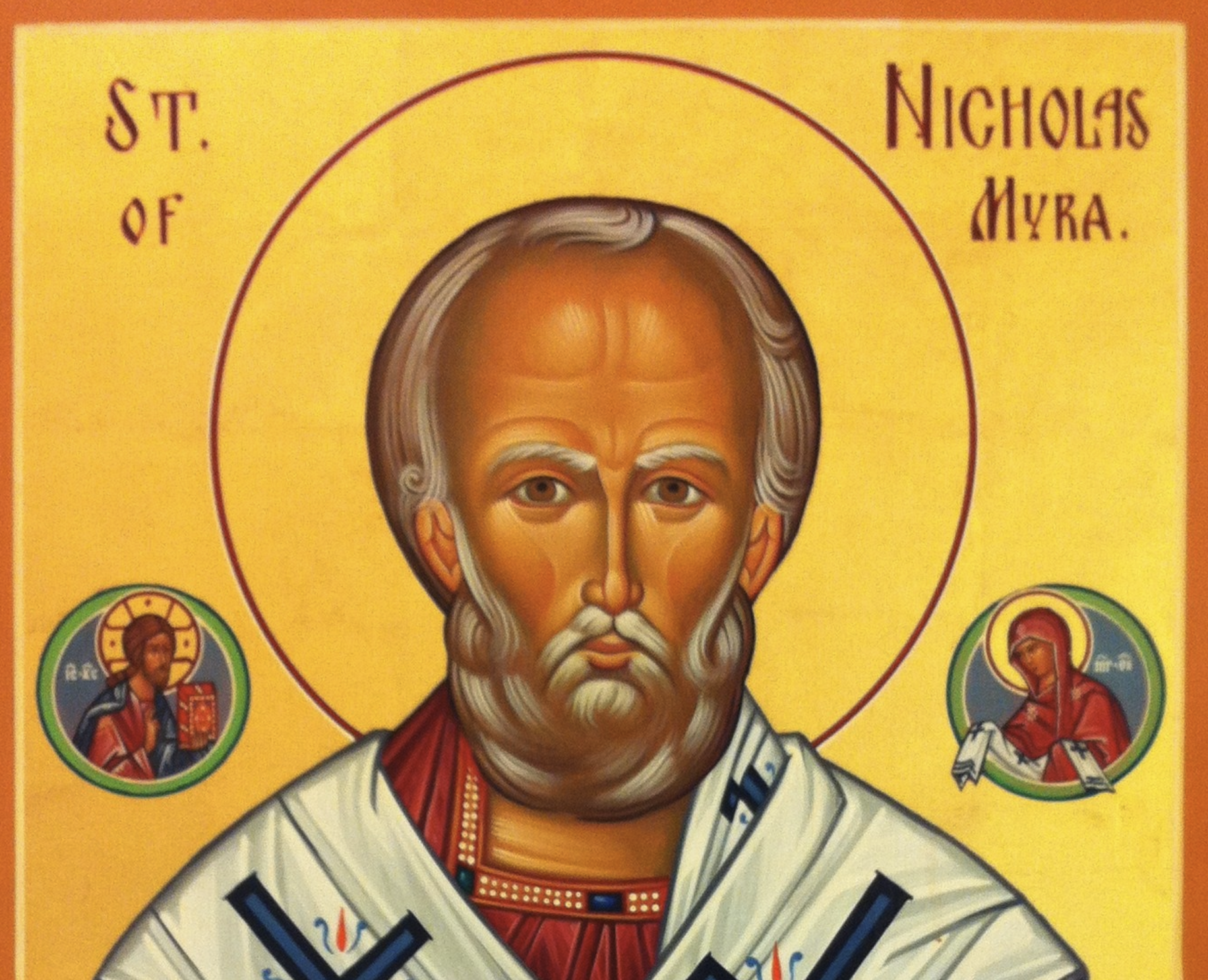
Any self-respecting Santa Claus will have actual or artificial paunch, a red suit and, perhaps most important, that luxuriant white beard. Yet notwithstanding shopping-mall Santas and St. Nicholas, as well as St. Nicholas of Myra, the bearded but monk-skinny 4th Century original, some fear that beards symbolize questionable character.

Take the New York Yankees. Please. In 1973, boss George Steinbrenner was perturbed by a player's sloppy appearance during the National Anthem and ever since no player or other employee has been allowed to have a beard or long hair "except for religious reasons." The Yankees presumably borrowed their famed appearance code from the U.S. military and police departments.

And yet. Jesus Christ is portrayed with a beard, since in the 1st Century mostly the upper crust had the time and money to bother with shaving. As for revered secular figures, Abraham Lincoln decided to become America's first bearded president for unknown reasons just after his 1860 victory (though predecessors John Quincy Adams and Martin Van Buren sported serious sideburns).

A cloud of suspicion hovers over chin whiskers in the U.S.-based Church of Jesus Christ of Latter-day Saints (nicknamed LDS and, formerly, "Mormon"). Headquarters personnel are almost always clean-shaven, and the same for young male missionary duos unless their district leader happens to allow beards.

This is not, however, a matter of doctrine.


Please respect our Commenting Policy

Here we go again: With Catholic news, reporters should be careful with this word -- 'reform'

Here we go again: With Catholic news, reporters should be careful with this word -- 'reform'

Let’s pause for a moment and reconsider a very loaded and tricky word that shows up all the time religion-news coverage (as well as political coverage, of course).

That word is “reform.”

For really, really, loyal GetReligion readers, I will admit that I am, in part, flashing back to this 2008 GetReligion post: “Who gets to "reform" what?” Once again, let’s look at some of the language that shows up in online dictionaries when you search for that term. To “reform” an institution or a law means to:

* make changes for improvement in order to remove abuse and injustices; "reform a political system" * bring, lead, or force to abandon a wrong or evil course of life, conduct, and adopt a right one; "The Church reformed me"; "reform your conduct" ... * a change for the better as a result of correcting abuses; "justice was for sale before the reform of the law courts" ... * improve by alteration or correction of errors or defects and put into a better condition; "reform the health system in this country" * a campaign aimed to correct abuses or malpractices. ...

The key words in that digital cloud are these: “improve by alteration or correction of errors or defects …”

Also, let me remind readers that I am not a Roman Catholic. Some people seem to be confused about that. My views on this topic are based on decades of reporting (and a graduate-school readings class focusing on the church before and after Vatican II) about the very complex world of Catholic life and thought.

With that in mind, let’s look at the top of a recent Religion News Service story that ran with this headline: “Can Pope Francis make real change for women? Vatican women leaders assess his chances.

VATICAN CITY (RNS) — A panel of women who have attained leadership positions in the Catholic Church met … to discuss Pope Francis’ ambitious plan to reform the power structures in the church, raising questions about female ordination, the role of bishops and the need for women theologians.


Please respect our Commenting Policy

Old, nagging conflicts will continue to dominate religion news in the coming year

Old, nagging conflicts will continue to dominate religion news in the coming year

Yes, there will be a hotly contested U.S. election in 2022. And pretty much every secular and religious faction is keyed up awaiting the U.S. Supreme Court's decision on whether to revise or revoke its rulings that legalized abortion.

Big decisions like this typically land in late June.

Other lingering disputes on the news coverage agenda include the following.

* As the U.S. Senate struggles with a rewrite of the Catholic President Joe Biden's elephantine social-spending bill, the Catholic bishops' conference vehemently opposes any inclusion of abortion funding.

The bishops, along with Orthodox Judaism's synagogue union, also fear (.pdf here) this law will cripple funding for widespread religious preschools. In yet another church-state debate, Biden hopes to end religious exemption from anti-discrimination rules, which went into effect in January.

* Inside the world of Mainline Protestantism, the unending dispute over the Bible and LGBTQ+ issues may produce the biggest U.S. church split since the Civil War at the United Methodist Church's General Conference. Early in 2022, a commission must decide whether the twice-postponed conference, now scheduled for August 29-September 6 in Minneapolis, can finally occur despite two years of COVID-related snarls and, some say, stalling by the UMC establishment.

* The T in LGBTQ won new Methodist attention as just-retired Pennsylvania Bishop Peggy Johnson and her husband, a Methodist pastor, publicized the latter's gender transition while identifying publicly as a "cisgender" male.

Last March, a sizable body of U.S. conservatives announced plans to leave the denomination and unite with former mission churches overseas — primarily in Africa and Asia — to form the "Global Methodist Church," led temporarily by Virginia Pastor Keith Boyette (540-898-4960).


Please respect our Commenting Policy

Painting or icon? That big hole in New York Times report on Catholic University controversy

Painting or icon? That big hole in New York Times report on Catholic University controversy

Let’s start here: There is nothing new about artists painting images of Jesus as a Black man.

A few of these images may have been controversial at the time of their creation, in part because of the political motivations of some (repeat “some”) artists. But the vast majority are clearly works of Christian devotion showing reverence for the Incarnation of Jesus Christ. For many Christians, these images are way less problematic than the omnipresent Warner Sallman “Head of Christ” painting from 1940, depicting Jesus with light, wavy hair and very European features.

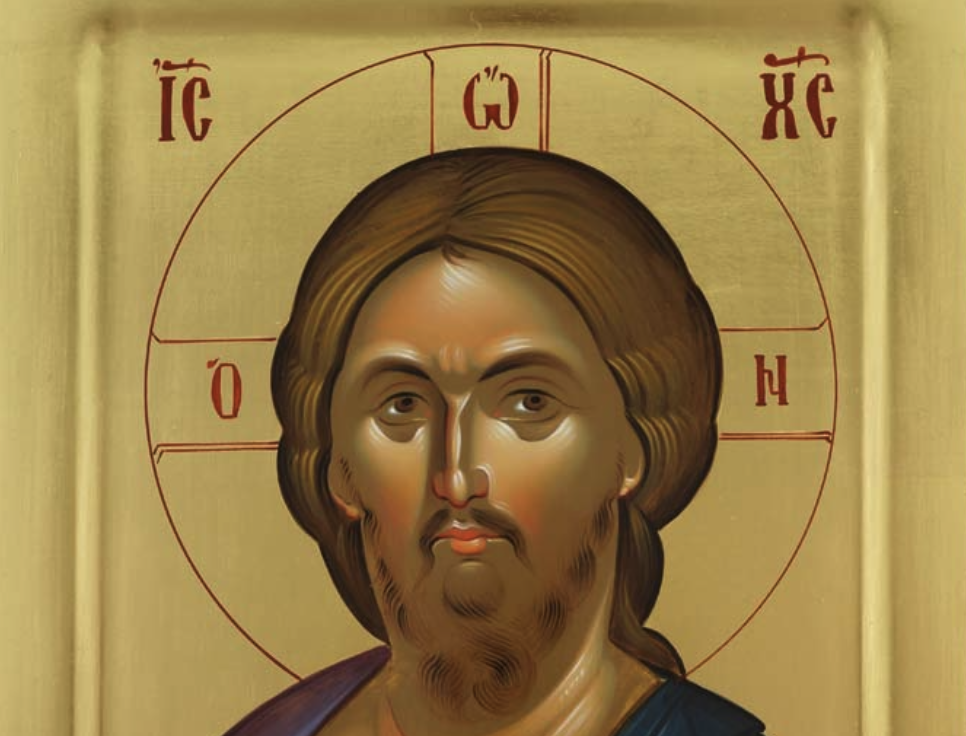
As an Eastern Orthodox Christian, the image of Jesus that I know best is the ancient Christ Pantocrator icon from St. Catherine’s Monastery at Mt. Sinai. It is a complex icon of Jesus that, well, would be hard to label as one of the “surfer Jesus” images in some contemporary churches.

This brings me to that New York Times story that ran the other day with this dramatic double-decker headline:

A Painting of George Floyd Roils Catholic University

At the Catholic University of America in Washington, conservative students called for a campus ban on further displays of an artwork that depicts Floyd as Jesus.

This story does a pretty good job of describing the timeline of this controversy — which is described as yet another clash over race, art and religion. It’s clear that, for the leaders of private schools, controversies of this kind are especially complex.

The problem, for me, is that the image in question — “Mama,” by Kelly Latimore — is consistently described as a painting based on the famous Pieta statue by Michelangelo.

Thus, what we have here is a “painting,” based on one of the most famous statues in Western Christian art, but is clearly meant to be interpreted as a holy icon in the Eastern Orthodox tradition.

Did you follow that? The journalism question here is whether the Times team did an adequate job of describing why the term “icon” — which does not appear in the story — is so important, if the goal is to understand the thinking of some of the Catholics (the story contains zero input from the Orthodox) who believe that this painting is blasphemous. Here is the overture:


Please respect our Commenting Policy

Five big Catholic news angles that journalists will need to cover during 2022

Five big Catholic news angles that journalists will need to cover during 2022

As 2021 comes to a close, everyone is looking towards 2022. The news cycle over the last two years has been dominated by COVID-19 and that doesn’t seem to be subsiding — given the rash of infections the past few weeks as a result of the Omicron variant.

The Catholic world, meanwhile, had in 2021 one of its busiest years. The election of Joe Biden as president — this January will officially mark his first year in office — also dominated news coverage. That Biden was also a Catholic (only second after John F. Kennedy in 1960) thrust Catholicism into the political news coverage. Politics plus religion equals news. It’s a familiar formula.

Biden, a practicing Catholic who attends Mass on Sundays, was at odds this year with many U.S. bishops — setting up a year-long debate over whether he (and other pro-abortion politicians) should receive Holy Communion. In the end, the bishops offered more clarification in the importance of the Eucharist without singling out Biden. Truth is, no one knows if the bishops actually considered mentioning Biden or other pro-abortion-rights Catholics.

Issues around politics and religion will likely dominate once again in 2022. The abortion issue and a pending Supreme Court decision regarding access to it will be a big story in the coming year. The Catholic church, a major part of the abortion debate in this country for decades, will play a major role in news stories that will be written over the coming months.

At the same time, Pope Francis, who recently turned 85, will again be surrounded by rumors that he will either resign or die. Whether this pope — the most polarizing in centuries — can chip away at his agenda to change the church in the 21st century will continue to pit traditionalists versus progressives.

Here are the five big news trends and stories journalists need to keep an eye on in the new year:

(5) Pope Francis and his focus on a progressive agenda

This coming year could be the one where the battle between this pontiff and doctrinal traditionalists intensifies even further. A Dec. 17 Associated Press story set the stage for such a confrontation in what will be Francis’ ninth year as head of the Catholic church.


Please respect our Commenting Policy