Plug-In: Best religion-news writing of 2021, as volunteered by scribes coast to coast

Plug-In: Best religion-news writing of 2021, as volunteered by scribes coast to coast

This week, I’m sipping hot chocolate and watching Christmas movies.

Rather than pick the best reads and top headlines in the world of faith, as I normally do, I asked some of the nation’s top religion writers to share the favorite story they wrote during 2021.

It’s a holiday week, so I didn’t catch up with everybody. But I sure appreciate my Godbeat colleagues who responded.

P.S. The Religion News Association announced its top religion stories of 2021 this week. Check out the RNA list.

Power Up: The Year’s Best Reads

Journalists who write about religion pick their top story of 2020.

Liam Adams, The Tennessean: Inside the Southern Baptist Convention's battle over critical race theory and what it says about the denomination, published Dec. 13.

Sarah Pulliam Bailey, Washington Post: Caught in a culture war, this multiracial family navigates a predominantly White evangelical world, published June 1.

Cheryl Mann Bacon, Christian Chronicle: Afghan mission becomes a race to save lives, published Sept. 14.

Adelle M. Banks, Religion News Service: 9/11 became a catalyst for interfaith relations and cooperation, published Sept. 9.

Deepa Bharath, Orange County Register: ‘It’s about finding a way,’ mourners say as they’re forced to change rituals amid coronavirus pandemic, published Jan. 29.
Please respect our Commenting Policy

Still thinking about Latin Mass wars: With help from The Pillar and America magazine

Still thinking about Latin Mass wars: With help from The Pillar and America magazine

The Latin Mass story is not going away.

At this point, the question is where this emotional and more than symbolic conflict is going.

It’s clear that there is a small flock of traditional Catholics who view the familiar cadences of the Tridentine Rite Mass as an escape from the reforms — some would say modernization efforts — of the Second Vatican Council. But it also obvious that many bishops believe that this is not the case for the majority of the Catholics (especially young Catholics) who prefer the beauty of the Latin Mass.

Meanwhile, it’s clear that many powerful Vatican leaders, including Pope Francis, see use of the traditional Latin Mass as a powerful wedge issue that divides Catholics and they want to see it go away.

The question: Will the renewed efforts to crush the Tridentine create more dissenters, instead of smothering them?

This brings me to this weekend’s “think pieces” — drawn from two very different sources — the progressive Jesuit magazine America and The Pillar, a more conservative news and commentary site.

First, consider this essay at America: “I love Pope Francis’ commitment to dialogue — which is why his Latin Mass restrictions confuse me.”

Author Gregory Hillis begins by praising the Pope Francis encyclical “Fratelli Tutti,” focusing on its call for unity — built on “genuine dialogue rooted in love.”

The big question: Where is the loving dialogue about use of the Latin Mass?

We cannot be closed to others, Pope Francis taught, whether they be political or ideological opponents or whether they be people yearning to find a new life as immigrants. A “healthy openness never threatens one’s identity,” he wrote (FT 148). Too often we deny “the right of others to exist or to have an opinion,” and as a result, “their share of the truth and their values are rejected” (No. 15). Instead, Pope Francis urged us “to give way to a dialogic realism on the part of men and women who remain faithful to their own principles while recognizing that others also have the right to do likewise.” This, he continued, “is the genuine acknowledgment of the other that is made possible by love alone.”


Please respect our Commenting Policy

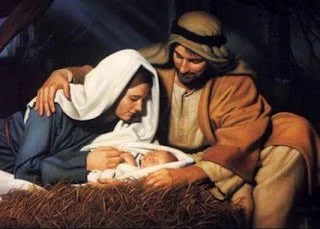
This is actually a doctrinal question: Did the infant Jesus cry?

This is actually a doctrinal question: Did the infant Jesus cry?

MARY (the appropriate name for person asking this question) ASKS: Did the infant Jesus cry?

THE RELIGION GUY'S ANSWER:

That’s a good one. A beloved Christmas carol says “the little Lord Jesus no crying he makes,” which would have been a tiny miracle.

But newborn reality -- and Christian doctrine -- are better expressed by Jesus' "tears" in “Once in Royal David’s City.” This charming children’s carol always begins the majestic “Festival of Nine Lessons & Carols" in King's College Chapel at Britain’s Cambridge University, sung by a choir of men and boys. As always, this service will be heard live at 10 a.m. (Eastern) Christmas Eve over U.S. public radio stations and internationally on the BBC.

Cecil Alexander's words:

For He is our childhood’s pattern; / Day by day, like us, He grew. / He was little, weak, and helpless; / Tears and smiles, like us, he knew. / And he feeleth for our sadness, / And He shareth in our gladness. …

The New Testament Gospels of Matthew and of Luke, which provide the earliest accounts of Jesus’ birth, tell us nothing about what his infancy or childhood were like, except for the incident of teaching in the Jerusalem Temple at age 12. But if pondered in terms of what Christianity has always believed, there’s every reason to assume the Babe of Bethlehem cried just like all other infants, and for the same physiological and emotional reasons.

That’s a solid inference from the faith’s central and mysterious belief that Jesus was God incarnate and at the same time fully a human being (“yet without sin”). The New Testament reports that just like everyone else the adult Jesus could be tired, hungry and perturbed, and experienced pain, grief and death.

In other words, truly and fully human, not inhuman.


Please respect our Commenting Policy

New podcast: Top Godbeat story of 2021? Look for Jan. 6 religion hooks (#DUH)

New podcast: Top Godbeat story of 2021? Look for Jan. 6 religion hooks (#DUH)

beat stories.

Trust me, I understand that preparing the ballot for this poll is a thankless job. One of the hardest tasks is finding a way to describe some of the broader trends during any given year. It’s easier — most of the time — to describe singular events.

During this week’s “Crossroads” podcast (CLICK HERE to tune that in), host Todd Wilken asked me to describe some of the patterns that I have seen in the RNA poll results through the decades.

Trend No. 1 is clear: Name the biggest political story of the year and look for a religion angle. After all, politics is the true religion of many folks who run newsrooms.

Trend No. 2 works about 76% of the time: What did the pope do this year, especially if it has any implications for U.S. political fights over moral and social issues (see trend No. 1).

Trend No. 3 comes and goes: What did liberal leaders of the Seven Sisters of Mainline Protestantism proclaim about sex and did it cause new revolts that might split their churches? Every now and then, the Southern Baptists slip in with battles over sex, race or politics (newsworthy topics, in other words).

In light of these trends, it was easy to predict that the RNA poll’s top story for 2021 would be:

Religion features prominently during the Jan. 6 assault on the U.S. Capitol by pro-Trump insurrectionists. Some voice Christian prayers, while others display Christian or pagan symbols and slogans inside and outside the Capitol.

That’s actually a careful wording and, in particular, note that the RNA leaders refrained (this must have been hard) from including a reference to “white evangelicals.”

The key, in this description, is the tension between “prominently” and “some,” as in the folks saying “Christian” prayers. It’s safe to assume that this is the rebel that they had in mind (as quoted in one of my “On Religion” columns):


Please respect our Commenting Policy

When is the Midnight Mass? All humor aside, there's history (and news) linked to this rite

When is the Midnight Mass? All humor aside, there's history (and news) linked to this rite

Once upon a time, before the creation of the Internet, there were these very, very powerful and all-knowing professionals known as “church secretaries.” Yes, I know that they have evolved into office managers and web czarinas.

But, long ago, if anyone needed to know something about church life, or really needed to reach the pastor (this is before smartphones, too), they called the “church secretary,” who basically served as an air-traffic-controller for everything happing in the church family.

Back in the 1980s, I wrote a news piece for The Rocky Mountain News (#RIP) about the question that church secretaries in Catholic parishes used to dread hearing over and over during the three or four days ahead of Christmas Eve. That question, of course, was: “When is the Midnight Mass?”

Honest. People would ask that and, truth be told, the Midnight Mass, in some parishes, doesn’t start at midnight. Hold that thought, because we will come back to it.

But this post, in the week before Christmas (for most Christians in America), is about the importance of the Midnight Mass and other Christmas Eve and Christmas services. You see, there are potential news stories here. Let’s discuss several of them, briefly.

First, there is an interesting fact that I learned long ago from the late Lyle Schaller, a Mainline Protestant maven who was an often-quoted expert on church growth and, as the Mainline world imploded, church survival. The easiest way to sum up the Christmas news angle that I learned from him is to share the top of a 2015 tribute column that I wrote about his work (“Lyle Schaller, the church fix-it man in rapidly changing times”):

All pastors know that there are legions of "Easter Christians" who make it their tradition to dress up once a year and touch base with God.

What can pastors do? Not much, said the late, great church-management guru Lyle Schaller, while discussing these red-letter days on the calendar. Rather than worrying about that Easter crowd, he urged church leaders to look for new faces at Christmas.


Please respect our Commenting Policy

Can someone write a decent article about Rob Bell? That LA Magazine piece wasn't it

Can someone write a decent article about Rob Bell? That LA Magazine piece wasn't it

It’s been awhile since we heard from Rob Bell, the Grand Rapids, Mich., superstar pastor whose 2011 book asking if hell is truly real got him booted out of evangelical Christian circles. He was quite the phenomenon a decade ago and then he disappeared for a time.

Turns out that, like many folks who live in the northern half of the country, Bell wanted to escape to a better climate — so it was off to California he went.

Los Angeles Magazine just ran a long piece on what Bell is up to now as he lives near the tony Venice Beach section of Los Angeles. The soulful photos look like, as one Twitter poster remarked, “like he delivers sandwiches for a hipster restaurant in Portland.”

Bingo.

The story begins with a casual mention about Bell having surfed that morning in Malibu. But (cue the flashback) 10 years ago:

… Bell was among the most prominent Evangelical pastors in America. His Michigan megachurch, Mars Hill, attracted over 10,000 worshippers a weekend. His debut book, 2005’s Velvet Elvis: Repainting the Christian Faith, sold half a million copies. And he performed annual speaking tours to packed theaters around the world. One newspaper called him “The next Billy Graham.” But that was before Bell went to hell.

In his fourth book, 2011’s Love Wins: A Book About Heaven, Hell, and the Fate of Every Person Who Ever Lived, Bell wondered aloud whether a loving God would really condemn billions of nonbelievers to eternal torment. The book sold half a million copies and landed him on the cover of Time. It led to friendships with the likes of Oprah Winfrey. But it also led conservative pastors to label him a heretic and a false teacher; it led to him leaving not just his church, but the church; it led to him questioning the faith that had made him famous. And it led him to Los Angeles.

Then he began a podcast in 2015.

More than 300 episodes and tens of millions of downloads later, the Robcast has helped to resurrect Bell’s career.


Please respect our Commenting Policy

Religion's impact on global migrant crisis: RNS concludes that it's Gordian Knot complicated

Religion's impact on global migrant crisis: RNS concludes that it's Gordian Knot complicated

Globalization has been a decidedly mixed bag.

On the plus side, it’s managed to knit diverse people together economically and, to a lesser degree, culturally. But it’s also further divided others along religious, political, race, and class lines.

It’s introduced us to a myriad of once exotic consumer products at relatively cheaper prices (cheaper for many Westerners, that is). Globalization has also brought us fresh ideas and life choices that — while I certainly don’t agree with every new view put forth — has enormously enriched my own life experience.

On the negative side — and this is huge — it’s allowed multi-national corporate boards (and shareholders) to escape the full weight of responsibility for the enormous environmental degradation their decisions have produced in exploited regions thousands of miles distant from their posh corporate headquarters.

Also, let’s not forget the foreign workers, including child laborers, exploited by unscrupulous employers trying to satisfy their Western customers insatiable demands for rock bottom prices.

For the United States and other Western nations, globalization’s complex outcomes has produced still another key Gordian Knot dilemma. I’m referring to the vast numbers of desperate human refugees heading, most often without proper documentation, to the United States, Europe, Australia — and even to neighboring countries that may be only relatively better off.

The latter group includes situations American news media rarely cover. They include Nicaraguans fleeing to Costa Rica and South Africa’s burgeoning refugee population comprised of hopeful immigrants from a variety of sub-Saharan African nations.

Is it any surprise to anyone with a working knowledge of Homo sapiens that we demand globalization’s creature comforts without us wanting to deal with those actual Homo sapiens that globalization has negatively impacted.


Please respect our Commenting Policy

Yet another theodicy news story: Where was God in the Mayfield tornado disaster?

Yet another theodicy news story: Where was God in the Mayfield tornado disaster?

Words fail to convey the emotions in Mayfield, Kentucky, after last weekend’s devastating tornado.

Let’s try anyway, directly from the mouths of those relying on their faith in the EF4 twister’s aftermath.

It’s another “theodicy” story: It would appear that God is on trial.

“My little girl asked me, ‘Why would God let this happen?’ … I had to look at my little 8-year-old girl, who looks to me for answers, and I had to say … ‘I don’t know. I don’t know.’” — the Rev. Wes Fowler, senior pastor of First Baptist Church in Mayfield (via Associated Press story by Holly Meyer)

"Thanks be to God the parts of the building that came down didn’t come down on us. I realized it might be the last few moments of my life on this earth. … All I care about is the fact that the most valuable possessions in my life, my wife’s life, my children, they’re all safe. Everything else is replaceable." — the Rev. Joey Reed, lead pastor of First United Methodist Church in Mayfield (via Louisville Courier-Journal story by Christopher Kuhagen)

"As a parent, it's like there's only so much you can say or do to take the fear out of your children. The girls' room was — I say 'was' because, obviously, if you come in here and look around, there's no walls anymore; there's no ceiling. I mean, they know how much of it's in our hands and how much of it's, you know, up to the storm and up to God. ... We lost everything, but we didn't lose everything. I mean, everything that we have that is worth anything was in that closet." — Joseph Tyler, Mayfield resident who survived with his family in the closet and worships at His House, a local church (via CNN story)

“God is not in the devastation. He’s not in the destruction. He was not in the storm. But he’s in the response, and that’s where we are. That’s what we’re trying to be. We’re trying to amplify the response that is happening from the survivors and victims of the tornado.” — Susan Montalvo-Gesser, director of Catholic Charities of the Diocese of Owensboro, Kentucky (via America magazine story by Michael J. O’Loughlin)

"It's awful. It's tragic. People who have lost loved ones, there is no way to take that pain away. I think you just have to embrace the pain and pray that God will guide you as you overcome it." — the Rev. Milton West, senior minister of First Christian Church in Mayfield (via WLKY story by Marvis Herring)


Please respect our Commenting Policy

So what is 'Christmas,' anyway? These days, Siri knows more than many believers

So what is 'Christmas,' anyway? These days, Siri knows more than many believers

This question rocks the Internet year after year: Is "Die Hard" a "Christmas movie"?

How about "Frosty the Snowman," "Home Alone," "Elf" or "A Bad Moms Christmas"? Is "A Christmas Story" really a "Christmas" story? What about those Hallmark Channel visions of romance, complicated families and wall-to-wall holiday decorations?

The answer to these questions, and many others, hinges on how Americans answer another question: What is "Christmas"?

Ask that question to an iPhone and Siri will quote Wikipedia: "Christmas is an annual festival commemorating the birth of Jesus Christ, observed primarily on December 25 as a religious and cultural celebration among billions of people around the world."

Most people know that much of the story, according to a new survey by Lifeway Research in Nashville. Nearly 75% of Americans say Jesus was born more than 2,000 years ago in Bethlehem and even more believe that Jesus is the Son of God the Father.

After that, things get fuzzy.

"Lots of people celebrate Christmas, but some have no interest in celebrating the birth of Jesus Christ," said Scott McConnell, executive director of Lifeway. "But even some of the people who do take the Christmas message seriously don't understand what it means. …

"This is a story that hasn't changed for 2,000 years, yet many people struggle to tell the story and get the details right. Many don't know why Jesus was born."


Please respect our Commenting Policy