New podcast: Are news reports 'dunking' on the late religious broadcaster Marcus Lamb?

New podcast: Are news reports 'dunking' on the late religious broadcaster Marcus Lamb?

If you search for the word “posterized” in up-to-date online dictionaries, this is what you find: “A slang term depicting a play in basketball. In said play, a player dunks the ball over top or in front of another player, making a play so picturesque that it may appear on a poster, hence the term, posterized.”

Clearly, this is linked to another term frequently used in the nasty verbal wars that are common on social-media sites, with Twitter — dominated by liberal and conservative voices in elite zip codes — being the best example.

That term is “dunking.”

“Dunking” is relevant to the main topic discussed in this week’s “Crossroads” podcast (click here to tune that in) about media coverage of the death of religious broadcaster Marcus Lamb, who died of COVID-19 after using his Daystar Television Network to criticize vaccine mandates and other anti-pandemic rules and guidelines, while advocating alternative treatments.

“Dunking” is defined, sort of, in this Slate article: “ ‘Dunking’ Is Delicious Sport — But it might be making Twitter even more terrible.” Here is a relevant passage:

Since Twitter rolled out the feature a couple of years ago, the quote-tweet has evolved into something like a pair of magic high-tops dispensed to every user on the service: Anyone can botch a tweet, and anyone can leap over him or her to score a couple of points—or a couple thousand likes and retweets.

The basketball term is apt: In a Twitter dunking, someone has made his point or said her piece, and instead of responding to it with a direct reply, perhaps in the spirit of equal-footed debate, the dunker seizes it like an alley-oop on his or her way to the basket. Maybe another player gets the unwitting assist, but the point is yours to be liked and retweeted not just as a reply but as a worthier tweet in its own right.

What does this look like in practice? Consider this example from the blitz of tweets about Lamb’s death. This dunk comes from the creator of the “America’s Best Christian” brand:
Please respect our Commenting Policy

Finally, another Overby Center program: Why religion was one big factor in vaccine wars

Finally, another Overby Center program: Why religion was one big factor in vaccine wars

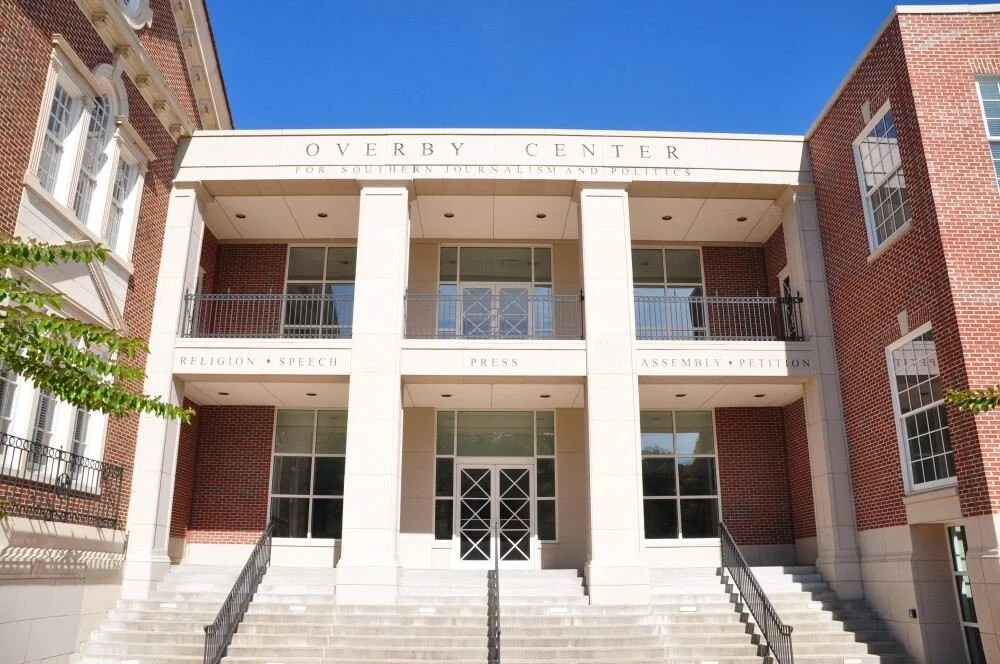
I have strong memories, to say the least, of the first Overby Center program in which I was able to participate, as a senior fellow for the center and as editor of GetReligion.

The topic was the role that religion would play in the 2020 presidential election. Religion-beat patriarch Richard Ostling was there and both of us stressed that, while journalists were pouring oceans of ink into coverage of (#TriggerWarning) white evangelicals, Catholic voters would play the pivotal role in swing states. I also noted the little-covered 2016 impact of Latino evangelicals and, especially, Pentecostal believers in Florida. I didn’t think to predict a starring 2020 role these Latino voters in Texas.

When was that program? Here’s a clue. As I drove home, I stopped for lunch in Jackson, Tenn. As I pulled back onto the interstate headed east, I heard a radio report noting that the mysterious virus that was causing havoc in Wuhan, China, had now been detected in Europe and, perhaps, in New York City.

Days later, the whole world turned upside down.

With social-distancing, masks and vaccines in mind, we recently gathered in Oxford for a forum addressing a logical topic — why religion was a key factor (but not the only one or even the dominant one) in America’s wars over COVID-19 vaccines. Click here to watch the event on YouTube.

In addition to Center founder Charles Overby, I was joined by three logical voices on this subject.

First, political scientist (and GetReligion contributor) Ryan Burge Zoomed in with several crucial charts full of relevant info. Take this post, for example: “Thinking about white evangelicals, COVID-19 vaccines and VERY popular headlines.” Then there was Marquita Smith of the University of Mississippi faculty, a journalist I came to know while she was teaching at John Brown University on the edge of the Ozarks. She is now the assistant dean of graduate programs at the Ole Miss J-school.

The final panelist was the Rev. Daniel Darling, who was recently named director of the Land Center for Cultural Engagement at Southwestern Baptist Theological Seminary in Fort Worth, Texas.

Then again, Darling may be better known in religion-beat circles because of this New York Times headline: “Fired After Endorsing Vaccines, Evangelical Insider Takes a Leadership Role.”


Please respect our Commenting Policy

Modernized New Revised Standard Bible is surefire news, landing amid today's language wars

Modernized New Revised Standard Bible is surefire news, landing amid today's language wars

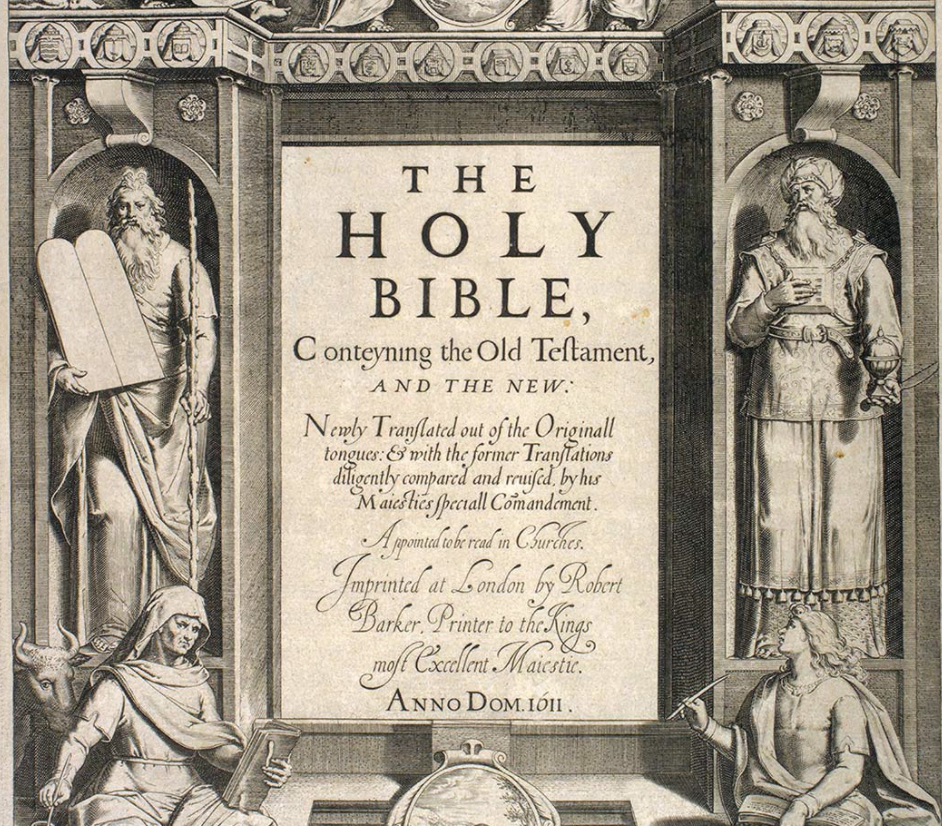
As religion writers (and historians) know, the 1611 King James Version of the Bible begat the 1952 Revised Standard Version, which begat the 1989 New Revised Standard Version which now begets the new "Updated Edition" of the NRSV.

It’s the "NRSVue" — a surefire news topic. This Bible will be available in ebook format by Christmas and in print around next May 1.

Media might issue advance articles about this production or wait for reactions to the complete text from reviewers or local clergy and parishioners. A 36-page media memo provides an advance look, accessible here. For further queries contact Friendship Press at info@friendshippress.org or CEO Joseph Crockett at joseph@frienshippress.org.

The NRSV copyright is held by the National Council of Churches, a cooperative body of the “Mainline” Protestant and Orthodox denominations. It assigned this rewrite to the Society of Biblical Literature, a professional guild of university and seminary scholars, whose 63-member team made approximately 12,000 "substantive" changes and thousands more that are trivial. The team consulted African-American church leaders, a group said to be "historically excluded" from prior Bible translation projects.

The result "improves" upon the original NRSV policy "to eliminate masculine-oriented language when it can be done without altering passages that reflect the historical situation of ancient patriarchal culture." The church council says both of its versions seek to be "as free as possible from the gender bias inherent in the English language."

A typical example is saying "brothers and sisters" when the original Greek literally said only "brothers" but was referring generally to people of both genders. The update omits footnotes that specify what the Greek said. Plural pronouns will abound, which depending on the translation can occasionally make the antecedent unclear or miss the direct force of a singular pronoun. In the rewrite, the Bethlehem "wise men" are now "magi."

Both the 1989 and 2021 renditions leave language about God undisturbed. "He" is still permitted and He remains the "Lord" and "Father."


Please respect our Commenting Policy

As Mississippi abortion case arrives, key religion stories vote views of Jews, evangelicals

As Mississippi abortion case arrives, key religion stories vote views of Jews, evangelicals

Let’s start with the basics, for those who have not been following weeks of heated commentary in the mainstream press.

On today’s docket at the U.S. Supreme Court is Dobbs v. Jackson Women’s Health Organization, a case out of Mississippi some say is designed to overturn Roe v. Wade, the 1973 landmark case that legalized abortion.

It involves a 2018 Mississippi law that bans most abortions after 15 weeks, with few exceptions. If decided favorably, states with more restrictive laws (i.e. Texas) would be able to enforce them. Abortion would not be outlawed, but it would be greatly limited — which is why it’s annoying to hear broadcasts, such as the Fox TV item featured at the top of this post, saying the case could “end Roe v. Wade.”

Well, not quite. Because of its new “heartbeat” law, abortions in Texas are down 50% from what they were this time last year, to give you an idea of what may lie ahead.

As for me, I’d like to think that SCOTUS would actually make a decisive ruling on something that has divided the American public for 48 years and resulted in 60 million abortions. These justices have dithered a lot in similar cases and I’m guessing they will bail on this case as well — as they did with Masterpiece Cakeshop case in 2017 in refusing to rule on the merits of the case. I do realize the makeup of the high court has shifted since then. I’m guessing they’ll refuse to give Dobbs a definitive ruling and base their decision on some technicality.

So yes, I’m a pessimist. Key members of this court appear to shun clarity. But at least abortion is on the table again in terms of public discussion, with religion as one of its many permutations, which makes covering this case important for religion reporters.

On the left, this Slate piece argues that abortion rights are in dire peril:

On the eve of Dobbs — before a tsunami of protesters descend upon the court, before nerve-racking oral arguments before a partly empty courtroom, before months of tense deliberations behind the velvet curtains — the smart money counts five votes to gut Roe. …


Please respect our Commenting Policy

Notre Dame's 'woke' rebuild plan: Why the glaring lack of mainstream news coverage?

Notre Dame's 'woke' rebuild plan: Why the glaring lack of mainstream news coverage?

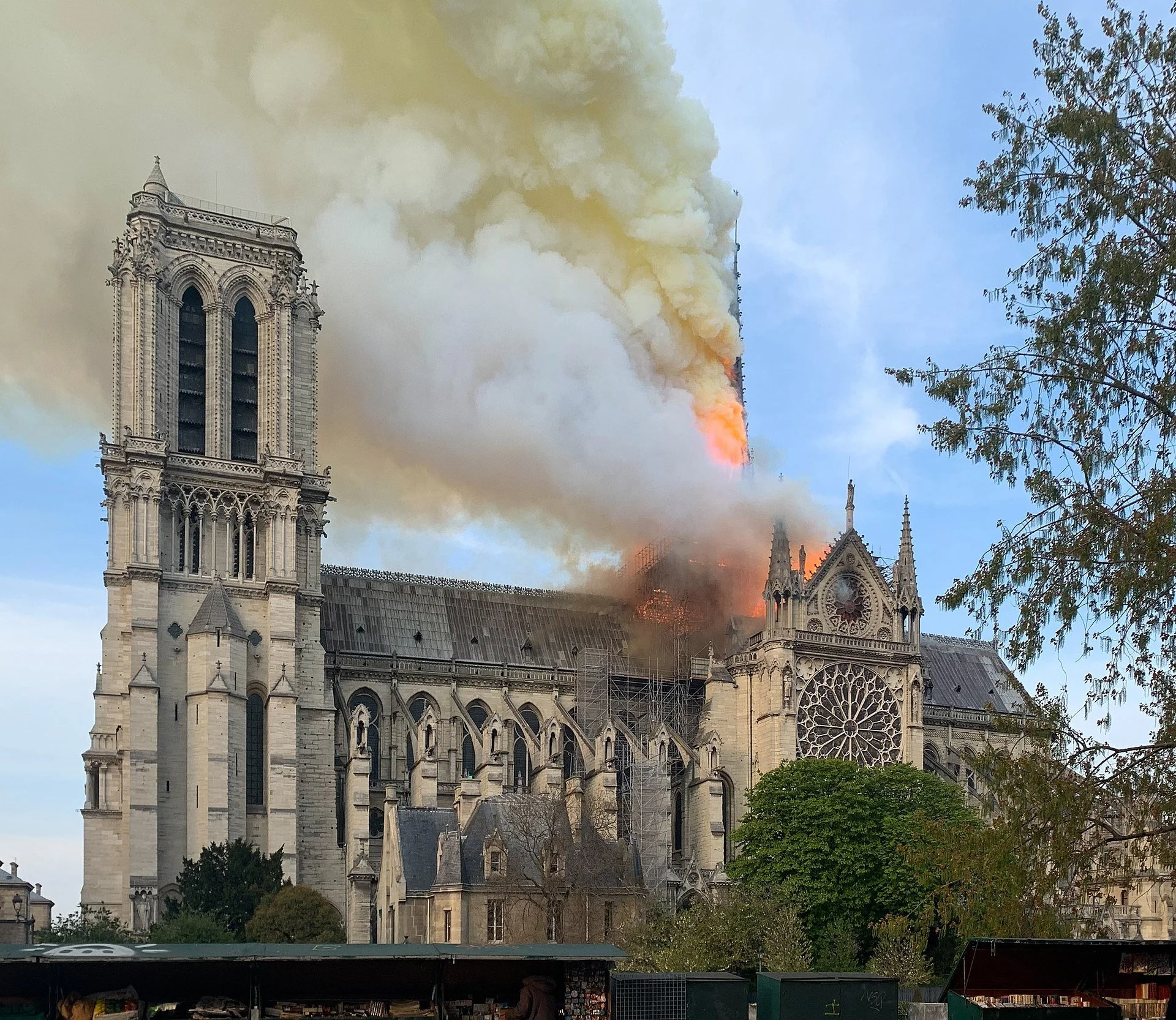
Before the pandemic dominated the news cycle starting in 2020 (and continues to do so), the fire that ravaged Notre Dame in Paris in 2019 was among that year’s biggest stories.

Over the Thanksgiving weekend, the famed cathedral was once again catapulted into the news cycle — despite it being a busy few days thanks largely to the Omicron coronavirus variant — after The Telegraph, based in London, reported a scoop under the headline “Notre Dame interior faces ‘woke’ Disney revamp.”

What followed was an amazing lack of mainstream news coverage.

Here’s how the Telegraph story (behind a paywall) opened. The following is a meaty excerpt since so many of you do not have a subscription to the British newspaper:

Paris’ fire-ravaged Notre-Dame cathedral risks resembling a “politically correct Disneyland” under controversial plans for its renovation seen by the Daily Telegraph.

Critics have warned that the world-famous cathedral will be turned into an “experimental showroom” under plans to dramatically change the inside of the medieval building.

Under the proposed changes, confessional boxes, altars and classical sculptures will be replaced with modern art murals, and new sound and light effects to create “emotional spaces”.

There will be themed chapels on a “discovery trail”, with an emphasis on Africa and Asia, while quotes from the Bible will be projected onto chapel walls in various languages, including Mandarin.

The final chapel on the trail will have a strong environmental emphasis.

“It’s as if Disney were entering Notre-Dame,” said Maurice Culot, a prize-winning Paris-based architect, urbanist, theorist and critic who has seen the plans.

“What they are proposing to do to Notre-Dame would never be done to Westminster Abbey or Saint Peter’s in Rome. It’s a kind of theme park and very childish and trivial given the grandeur of the place,” he told The Telegraph.


Please respect our Commenting Policy

Tough question? Some obits included how priestly sexual abuse shook Phil Saviano's faith

Tough question? Some obits included how priestly sexual abuse shook Phil Saviano's faith

If you have seen the movie “Spotlight” — especially if you are a journalist — you know that it’s one of the two or three best films ever made about the picky, high-stakes work involved in investigative journalism.

But there was another layer to this film that I found especially powerful.

Obviously, the subject of clergy sexual abuse is painful and divisive. Every now and then, I still hear from angry readers who believe this whole hellish scandal — which began creeping into headlines in 1984 with the Gilbert Gauthe case in Louisiana — was a media plot against the Church of Rome. It’s important to note that there were conservative Catholics who dug down to the roots of this scandal (see the scathing book “Sacrilege” by Leon Podles), along with the efforts of many Catholic liberals and many ex-Catholics.

The scandal affected many people in different ways. The movie “Spotlight” stressed how the shock and anger unleashed by this scandal affected the faith of some of the Boston Globe journalists. Then there were the shattered victims. It’s amazing that any of them emerged with their faith intact. Some did. Many did not.

This brings me to some of the major-media obituaries for Phil Saviano, a victim who became one of the most important activists who tirelessly worked for justice. Saviano served as a consultant for the “Spotlight” screenwriters and his character appeared in the movie, played by actor Neal Huff.

As I read the coverage, I kept wondering: Would anyone include information about Saviano’s faith? Did he leave Catholicism? Did he convert to another faith?

As you would expect, the Globe obituary is long and detailed. I thought this detail was exceptionally powerful:

When the advent of protease inhibitors to treat HIV/AIDS prolonged Mr. Saviano’s life, he kept speaking out until the end through a series of health issues. Not least among them was a crisis on that night in 2016 when “Spotlight,” the movie based on the Globe’s clergy sex abuse coverage, won the Academy Award for best picture.


Please respect our Commenting Policy

Queen Elizabeth II offers clear, personal sermon -- even while absent from public stage

Queen Elizabeth II offers clear, personal sermon -- even while absent from public stage

Close watchers of the British Monarchy have recently become concerned about two words describing life in Windsor Castle -- "new stage."

First there was Queen Elizabeth II's unexplained overnight hospital stay in October for "tests." Then the 95-year-old monarch missed the recent National Day of Remembrance service for Britain's war dead. She did, however, attend christening rites at All Saints Chapel for her two newest great-grandsons.

All of this represents a "new stage" in her very public life.

"She's alright, thank you very much," said Prince Charles, responding to a Sky News enquiry. "Once you get to 95, it's not quite as easy as it used to be."

The Queen has not, however, been silent. Her recent message to Church of England's General Synod -- her first absence from this gathering -- was strong and personal. It was read by her youngest son, Prince Edward, the Earl of Wessex, who rarely seeks the public spotlight.

"It is hard to believe that it is over 50 years since Prince Philip and I attended the very first meeting of the General Synod," said the prince, reading the Queen's words. "None of us can slow the passage of time; and while we often focus on all that has changed in the intervening years, much remains unchanged, including the Gospel of Christ and his teachings.

"The list of tasks facing that first General Synod may sound familiar to many of you -- Christian education, Christian unity, the better distribution of the ordained ministry. … But one stands out supreme: 'To bring the people of this country to the knowledge and the love of God.' "


Please respect our Commenting Policy

Thinking about a newsy mystery: Why are Gideon Bibles vanishing from hotel nightstands?

Thinking about a newsy mystery: Why are Gideon Bibles vanishing from hotel nightstands?

Thanksgiving is once again upon us and with it the official start of the busy holiday travel season that extends through Christmas.

As Americans continue to cope with the ongoing pandemic, travel has seen a steady increase once again. That means packed airports and bumper-to-bumper traffic on most major highways starting Wednesday. It also means more people will be staying in hotels.

This brings us to an interesting and highly symbolic news story, one that deserves coverage.

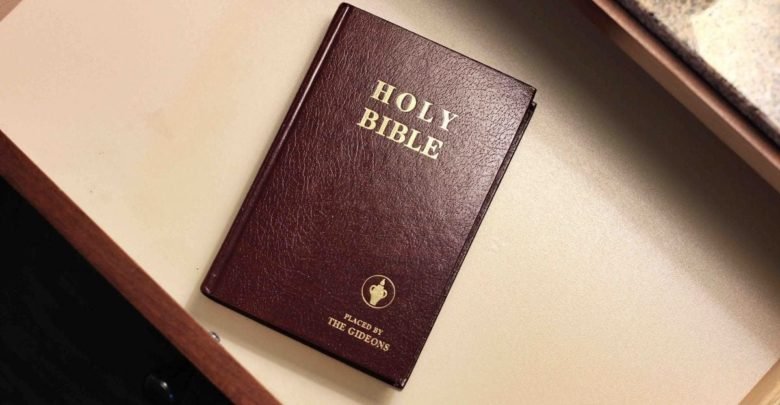
I have done my share of travel — both in the United States and internationally — over my two decades working as a journalist. The few things you could always count on for much of that time was a newspaper at the front desk, usually USA Today, and a Bible in your nightstand.

Not anymore. Print is slowly dying, and newspaper readers have migrated to the internet in recent years.

What about those Bibles?

They, too, seem to be slowly disappearing. I noticed this past summer, while on a trip to Washington, D.C., that there was no Bible in my hotel room.

The phasing out of Bibles in hotel rooms is actually part of a steady trend across the country over the past few years. In 2016, Marriott International, the world’s largest hotel chain, typically supplied both a Bible and Book of Mormon in its rooms. But the company decided that forgoing religious materials was the way to go at two of its hipper hotel brands such as Moxy and Edition. Note that both of these chains target younger guests.


Please respect our Commenting Policy

Podcast: It's time to pay attention to debates about girls, Instagram and mental-health woes

Podcast: It's time to pay attention to debates about girls, Instagram and mental-health woes

If you have followed GetReligion for a decade or so, you know that our religion-beat patriarch Richard Ostling writes a “Memo” post every week in which he focuses on religion trends and future events to which journalists should be paying attention.

This week’s Memo focused on why religious and secular debates about Death with Dignity laws will not be fading away anytime soon. As always, Ostling’s Memo posts are packed with links to relevant interest groups, experts and online resources to aid reporters.

This brings me to this week’s “Crossroads,” which — for a change — does not focus on a religion-news story in the mainstream press (click here to listen to the podcast). Instead, you can think of this feature as a kind of Mattingly Memo, in which host Todd Wilken and I discussed the news (and religious) implications of a new Atlantic Monthly essay by Jonathan Haidt that ran with this dramatic double-decker headline:

The Dangerous Experiment on Teen Girls

The preponderance of the evidence suggests that social media is causing real damage to adolescents

On its face, this essay was not a “religion news” piece at all. From my point of view, that was kind of the point.

One of the themes Haidt stressed was that teen-aged girls are pretty much alone, when it comes to wrestling with the moral, emotional and even medical side effects of addiction to social media — the invasive visual-image wonderland of Instagram, in particular. The article includes a depressing file of research slides on this mental-health issue from the Wall Street Journal (click here for that .pdf). Note, in particular, that teens believe their parents have next to zero understanding of what is going on.

If parents are tuned out, where does that put clergy? Should religious leaders be playing some kind of role in public-square (and personal) discussions of this issue?

These questions made me think of an “On Religion” column that I wrote in 2017 about the efforts of some Colorado teens — reacting to several suicides linked to cyber-bullying — to help their friends examine the impact of social-media programs on their lives.


Please respect our Commenting Policy