Plug-In: As COVID-19 vaccine wars rage, press focuses on religious-exemption claims

Plug-In: As COVID-19 vaccine wars rage, press focuses on religious-exemption claims

Back in March, I wrote a column about the joy and hope the COVID-19 vaccines had brought my family after more than a year of pandemic disruption.

I prayed that those skeptical of the vaccines eventually would recognize the benefits of protecting themselves — and their loved ones — from potential serious illness and death.

Yet here we are six months later, with coronavirus infections and deaths at “levels not seen since last winter” and religion often at the center of the vaccine war.

Colleen Long and Andrew DeMillo of The Associated Press report:

An estimated 2,600 Los Angeles Police Department employees are citing religious objections to try to get out of the required COVID-19 vaccination. In Washington state, thousands of state workers are seeking similar exemptions.

And in Arkansas, a hospital has been swamped with so many such requests from employees that it is apparently calling their bluff.

Religious objections, once used sparingly around the country to get exempted from various required vaccines, are becoming a much more widely used loophole against the COVID-19 shot.

And it is only likely to grow following President Joe Biden’s sweeping new vaccine mandates covering more than 100 million Americans, including executive branch employees and workers at businesses with more than 100 people on the payroll.

In a front-page report, New York Times religion writer Ruth Graham notes:

Major religious traditions, denominations and institutions are essentially unanimous in their support of the vaccines against Covid-19. But as more employers across the country begin requiring Covid vaccinations for workers, they are butting up against the nation’s sizable population of vaccine holdouts who nonetheless see their resistance in religious terms — or at least see an opportunity.


Please respect our Commenting Policy

Lisa Beamer on the hard spiritual lessons learned in a media spotlight after 9/11

Lisa Beamer on the hard spiritual lessons learned in a media spotlight after 9/11

For those who lived through Sept. 11, 2001, the drama of Todd Beamer and the heroes of Flight 93 has become an essential part of many anniversary rites.

Everyone remembers the final act, with Beamer aboard the hijacked plane, patched through to a telephone operator for a clandestine13-minute call. After learning about the World Trade Center attacks, Beamer and other passengers decided to try to seize control of the plane.

Finally, Beamer said: "Let's roll." That was the end of the call, moments before the plane -- now believed to have been headed to the U.S. Capitol -- crashed into a rural field near Shanksville, Pa.

That wasn't the whole story, of course. The young software salesman had also asked operator Lisa Jefferson if he could be connected to his wife, Lisa Beamer, and, if not, he shared a final message to her and their two sons.

"I was trying to get as much information from him as I could, and he told me to say the Lord's Prayer with him," said Jefferson, in a transcript of her talk days later with Beamer's wife.

"He wanted you to say the Lord's Prayer with him? … And you guys completed it?", asked Lisa Beamer.

"Top to bottom," said Jefferson. "He just said, 'Oh God, help me. Jesus could you please help me.' … He wasn't upset at all. He was very peaceful."

The details of the Flight 93 passenger revolt were soon made public -- a story of courage and sacrifice welcomed by a stunned nation.


Please respect our Commenting Policy

Thinking with Ryan Burge (and one of his critics) about abortion and evangelical voting

Thinking with Ryan Burge (and one of his critics) about abortion and evangelical voting

If you follow political scientist Ryan Burge on Twitter (which you should do, of course), then you know that he sends out waves of poll information, creatively sifted, in the form of charts.

From time to time, people have been known to bounce questions back to him, seeking clarification or more specific numbers on some strange angle of the topic at hand. I confess that I have been known to do that.

Burge is relentlessly helpful in that online setting. However — imagine this — there are people who argue with him? On Twitter, of all places! Some disagree with his interpretations. On Twitter!

I’m being sarcastic, to make a point linked to this weekend’s pair of “think pieces.” I’m one of those guys who disagrees with Burge from time to time. That happens, when someone is delivering and then interpretting lots of information in a public forum. The difference with Burge is that he is relentlessly candid, even when dealing with numbers and trends that challenge lots of common news templates.

Recently, Burge wrote a commentary piece — backed with some of his charts — for Religion News Service, flashing back to some polling from 2018. The piece ran with this double-decker headline:

Abortion just isn’t the motivating issue for evangelicals it once was

Studies show white evangelicals, by and large, do not have a hard-line approach to abortion — other issues like immigration and race are taking priority over advocating for the unborn.

Whatever your stance on “life” issues, don’t you want to read more about that claim? Here is a key (and quite long) section of that:


Please respect our Commenting Policy

New podcast: Did a religious search help shape Norm Macdonald's haunting humor?

New podcast: Did a religious search help shape Norm Macdonald's haunting humor?

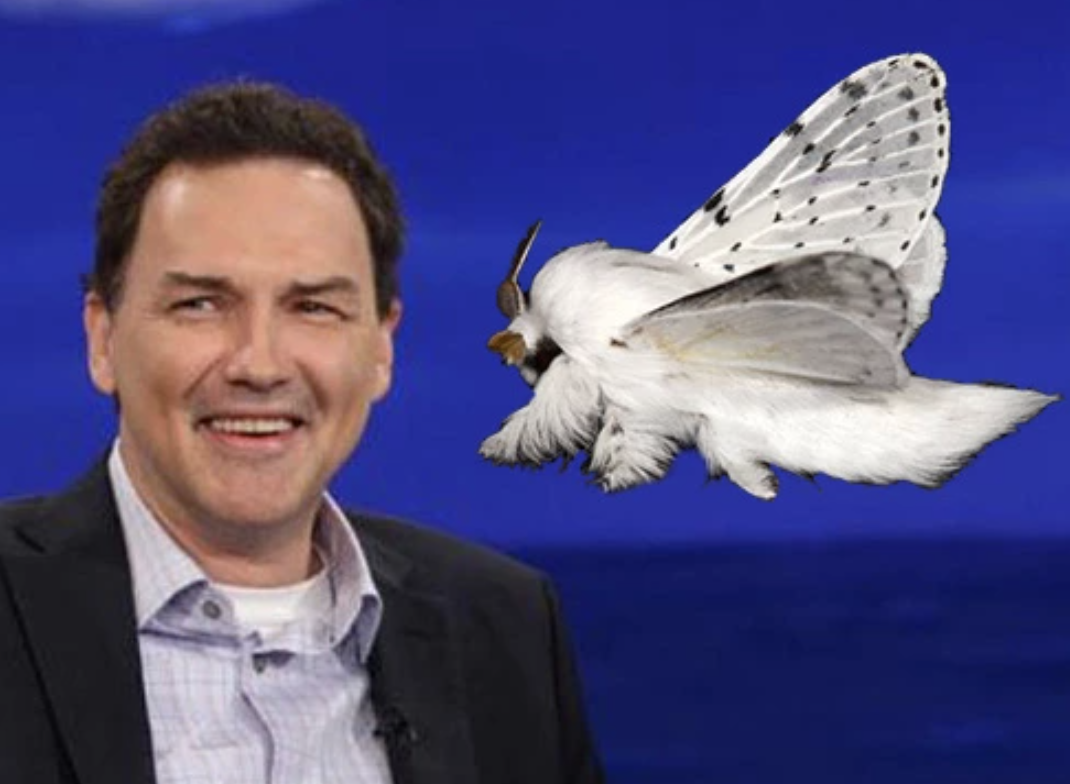
While it may sound strange, I would argue that there are theological “ghosts” hiding inside the great comic Norm Macdonald’s most famous joke. This was the “moth” story, of course.

Right. This joke wasn’t a Saturday Night Live shot at O.J. Simpson or Bill Clinton. It was a long, twisting, bizarre story about a nihilistic moth who was afraid of eternity. It was the kind of joke that fit with the summary of Macdonald’s life and work that opened this Ricochet tribute by Jon Gabriel: “Norm Macdonald — Dostoyevsky in Front of a Red Brick Wall.

The smartest comedians portray themselves as the dumbest; Norm Macdonald was the best at this sleight of hand. He graduated high school at 14, read Russian literature in his downtime, and had long philosophical discussions with clergy. … Macdonald was a student of human nature first, comedy second.

Macdonald was also a self-identified Christian, yet he made it clear that he didn’t consider himself a very good one.

The question raised during this week’s “Crossroads” episode (click here to tune that in) was whether news consumers had any right to expect journalists to mention that reality in their obits of this brilliant, courageous, edgy, mysterious comedian.

The more I read about him — following some really simple online searches — the more I hoped that someone would spot the religion “ghost” in his death-and-virtue haunted work. It also, at least to me, became obvious that many of his spiritual and religious questions were linked to his secret 10-year battle with the cancer that took his life. Cue up these two YouTube clips (here and here).

So this brings us to a crucial text: The actual “moth story” as it unfolded on on Conan.

Read carefully and keep thinking — Russian literature and maybe even a glimpse of a sacred icon.

Yes, I know that this is long. That’s the point:


Please respect our Commenting Policy

What's next in Afghanistan? Press will have to face issues of religion, culture and gender

What's next in Afghanistan? Press will have to face issues of religion, culture and gender

The headline on the National Catholic Register story is simple and timely: “Trapped by the Taliban, Praying for Escape from Afghanistan.

The reporting is simple, as well, as long as the journalists involved have established contacts with people inside Kabul who have smartphones and there are functioning cell towers and satellites. The story is built on people describing what they claim is going on around them, especially events affecting their families and friends.

These people are U.S. citizens, Afghans with U.S. “green cards” and others who cooperated with Western governments and agencies, including religious groups, during the 20 years of “nation building” in the war-torn land of Afghanistan.

The question is whether the contents of this story remain newsworthy, since Afghanistan has, for now, moved off the front burner in elite newsrooms. What happened? Clearly, Republicans and centrist Democrats had “pounced” on the topic while blasting President Joe Biden and his White House team.

But is this NCR piece news? Yes, it is. Also, this is a story journalists can study while looking for clues about realities, and news, at ground level in the Taliban’s new-old Afghanistan. Here is the overture:

For two decades, Sher Shah had worked alongside U.S. and Afghans to build a democratic country free from the Taliban and war. He had established a new life with his family in the U.S. with the help of Catholic Charities and a Catholic sponsor family, but briefly returned to Afghanistan this summer to attend his father’s funeral.

Now, he’s a man trying to escape the Taliban and get back home to the U.S.

More? Here is a claim — let me stress this is a CLAIM — coming from this source. But the Register report has other anonymous voices making similar statements in what appear to be telephone interviews or contacts via email.

U.S. Secretary of State Anthony Blinken has stated approximately 100 U.S. citizens and lawful permanent residents remain in Afghanistan. …

But Sher Shah said he has heard nothing from the State Department since Aug. 26 — and he made use of the State Department’s information posted on its website for U.S. citizens and lawful permanent residents stuck in Afghanistan.

“There are thousands of Americans still in Afghanistan,” he said. “And I’m one of them.”

The reality that emerges, in this stories and others, is that the United States and other Western forces were not engaged in 20 years of “nation building,” as in building an Afghanistan government that looked to the nation’s past — its monarchy, for example. It would be more accurate to say the goal was building a new culture, one that incorporated elements of modernity and even postmodernity in America and Europe.


Please respect our Commenting Policy

Bishop is transgender, but where's the reporting on Megan Rohrer as a 'Lutheran'?

Bishop is transgender, but where's the reporting on Megan Rohrer as a  'Lutheran'?

The news of the recent installation of the Evangelical Lutheran Church in America’s first transgender bishop has been leading me to wonder what makes a culture Lutheran and what impact Lutherans have on the cultures of the countries they live in.

Here’s the context. For the past week, I’ve been traveling about Iceland and Greenland, two countries where the Lutheran Church put down roots centuries ago as the national church. In fact, 2021 marks the 300th year of Christianity being introduced to Greenland via the Danish missionary Hans Egede.

Oddly, Greenland chose not to celebrate the anniversary in July, which is when Egede came in 1721.

Iceland has notorious rates of church non-attendance — in one of the world’s seven officially Lutheran countries, Iceland’s adherence rate may be the lowest at 10 percent. (One of the fastest-growing groups in that Nordic country are the pagans, a phenomenon about which I’ll be reporting on next week for my new gig at Newsweek).

I am no expert on religion in Greenland, but I do know this inaccurate piece put out in 2019 by the World Council of Churches is quite wrong in saying there’s only two churches in Nuuk, the country’s capital. Maybe there are only two Lutheran churches, but I stumbled upon a very lively Pentecostal assembly in the center of town during the Sunday morning I was there.

Which brings me to there being a Lutheran culture in these two countries, church attendance rates notwithstanding. There is a prominent church in the center of each Greenlandic town of any size. Confirmation day remains a big deal for teen-agers there. The Icelanders have made their futuristic looking churches a matter of national pride, whether or not people go inside them and even though some media call the church “irrelevant.”

And being that Greenland has some of the world’s highest suicide rates, does that make the church there is “irrelevant” as well? Hard to say. But these are countries where Lutheranism is part of the air they breathe.

Here in the USA, the ELCA is slated for statistical oblivion by the 2040s. No joke, read about it here. In view of how many of the world’s growing denominations are the ones that trend conservative, the denomination’s 2009 vote to allow same-sex marriages among its clergy and, now, non-gender-specific bishops is rather symbolic. Lutheran conservatives would call it a death wish.


Please respect our Commenting Policy

Are we finally witnessing the long-anticipated (by journalists) evangelical crack-up? 

Are we finally witnessing the long-anticipated (by journalists) evangelical crack-up? 

Those impossible-to-ignore and hard-to-define white " evangelicals" have, for decades, been the largest and most dynamic sector in U.S. religion. Are we finally witnessing an evangelical crack-up as so long anticipated -- and desired -- by liberal critics?

That's a big theme for the media to affirm or deny.

To begin, The Religion Guy is well aware that millions of these conservative Protestants quietly attend weekly worship, join Bible and prayer groups, try to help those in need, fund national and foreign missions and are oblivious to discussions of this sort on the national level.

For years we've seen a telltale slide of membership and baptisms in the Southern Baptist Convention, that massive and stereotypical evangelical denomination. At the same time, it’s clear (follow the work of Ryan Burge for background) that many of those Southern Baptists have simply moved to independent, nondenominational evangelical megachurches of various kinds.

But more than numbers, analysts are pondering insults to cultural stature, which greatly affect any movement's legitimacy, respect, impact and appeal to potential converts, especially with younger adults.

The Scopes Trial to forbid teaching of Darwinian evolution nearly a century ago continues to shape perceptions of evangelicalism and its fundamentalist wing, especially due to the fictionalized 1955 play and 1960 movie "Inherit the Wind." No doubt ongoing evangelical enthusiasm for Donald Trump has a similar negative impact among his critics, but this is not merely a political story but involves evangelicalism's internal dynamics. The Trump era exacerbates divisions that already existed despite unity in belief.

Turn to former GetReligion writer Mark Kellner, who is already making his mark (pun intended) as the new "faith and family" reporter for the Washington Times. Here is an essential recent read: “After scandals, is evangelical Christianity's image damaged?"

The immediate cause behind the question was an odd little incident that spoke volumes, the sacking of Daniel Darling as spokesman for National Religious Broadcasters (NRB).


Please respect our Commenting Policy

My Orthodox flashback to 9/11: When will St. Nicholas truly return to Ground Zero?

My Orthodox flashback to 9/11: When will St. Nicholas truly return to Ground Zero?

On one of my first visits to New York City to teach journalism — I spent 8-10 weeks a year in lower Manhattan — I went to the window of my room high in a long-stay hotel.

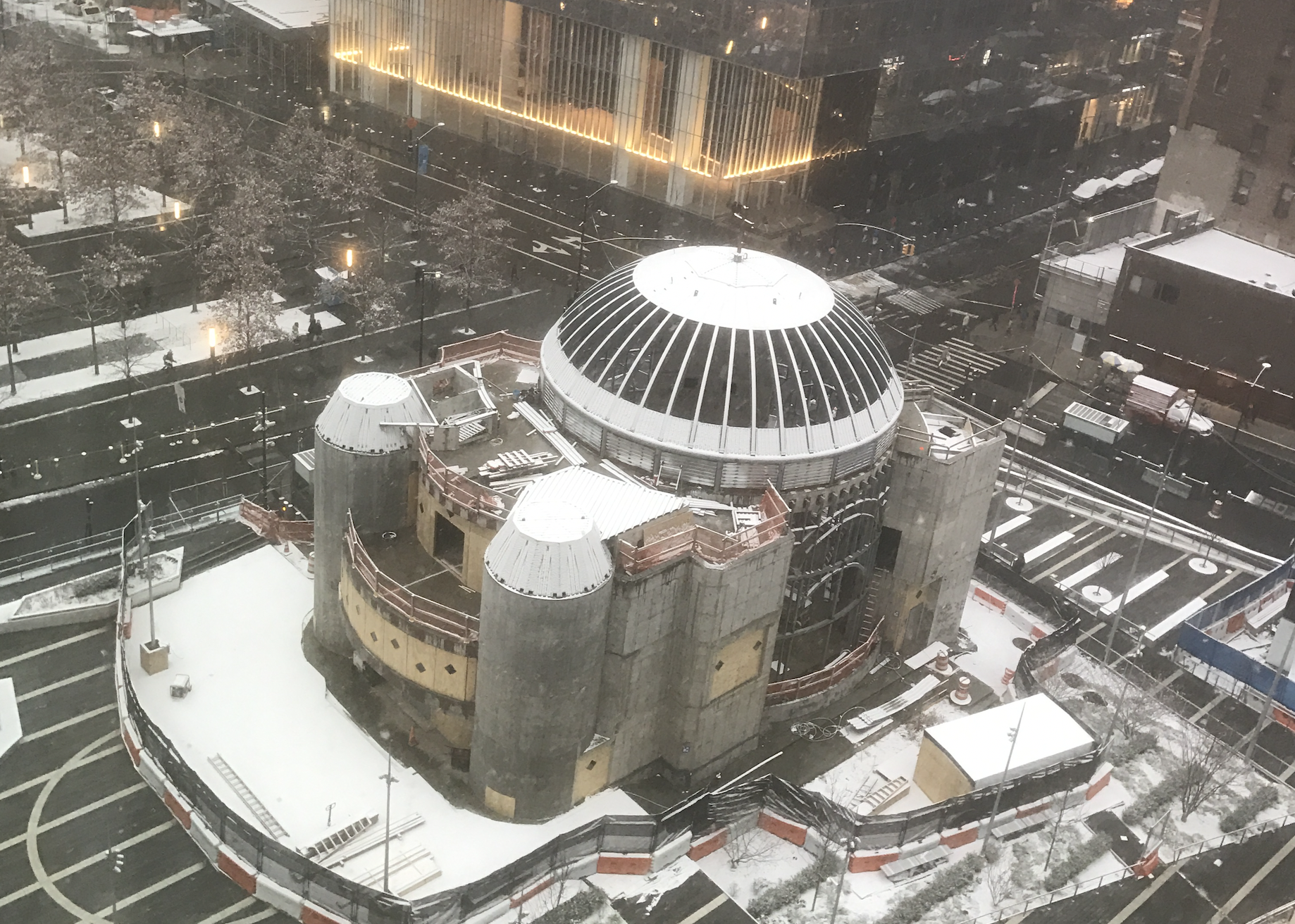
I was looking straight down on the construction project to rebuild St. Nicholas Greek Orthodox Church, the tiny sanctuary that was crushed by the 9/11 collapse of the south tower of the World Trade Center. It hit me at that moment that, at some point, my “neighborhood” Orthodox parish would be the shrine at Ground Zero.

I walked past that construction project for five years, including several years in which the work was stalled by a complex mix of mismanagement, exploding costs and, some would say, fraud. The sanctuary still isn’t finished, but it’s getting closer.

Let me stress — I was not in New York City on 9/11. I was, however, in West Palm Beach, surrounded by New Yorkers in the heart of the Seinfeldian “sixth borough” of South Florida. My family attended an Orthodox parish in which 80% of the members were Arab Christians of various kinds. My Palm Beach Atlantic University office was next to the Trump Plaza towers, the mini-World Trade Center used as a symbolic target during the training flights of Mohamed Atta and other 9/11 terrorists who spent time in South Florida.

My first 9/11-related national column was about the destruction of St. Nicholas Orthodox parish, build on an interview with its priest, Father John Romas. As an Orthodox believer, I was immediately struck by these details:

The members of St. Nicholas do not think that any parishioners died when the towers, a mere 250 feet away, fell onto their small sanctuary in an avalanche of concrete, glass, steel and fire.

Nevertheless, the Orthodox believers want to search in the two-story mound of debris for the remains of three loved ones who died long ago — the relics of St. Nicholas, St. Katherine and St. Sava. Small pieces of their skeletons were kept in a gold-plated box marked with an image of Christ. This ossuary was stored in a 700-pound, fireproof safe.


Please respect our Commenting Policy

Plug-In: At 20th anniversary of 9/11, faith remains big part of this world-shaking story

Plug-In: At 20th anniversary of 9/11, faith remains big part of this world-shaking story

Like everybody alive then, I remember what I was doing the morning of Sept. 11, 2001.

At the time, I was religion editor for The Oklahoman, the metro daily in Oklahoma City. I was running a few minutes late that Tuesday because I stopped at Walmart to buy a new pair of cleats for a company softball team starting the fall season that night. As it turned out, we didn't play.

As I flashed my company ID at the security guard outside the newspaper building, he asked if I'd heard about a plane crashing into the World Trade Center in New York. I had not. Minutes later, after I arrived in the ninth-floor newsroom, my colleagues and I watched on television as a second plane hit the twin towers. Almost immediately, ABC anchor Peter Jennings likened the attack to Pearl Harbor.

That's when I grasped the significance.

The rest of that day is a blur. Like my reporter colleagues all over the nation, I immediately put aside any personal feelings and operated on journalistic adrenaline. I wrote four bylined stories for the next day's paper: one on the religious community's response, one on Muslim fears of a backlash, one on Oklahoma City bombing victims' reactions and one on an eyewitness account by an Oklahoma professor's daughter.

Like many (most?) Americans, I tossed and turned that night.

In the days and weeks after 9/11, I recall interviewing religious leaders and ordinary congregants as they looked to God and sought to explain the seemingly unexplainable.

Twenty years later, faith remains a big part of the story. Here is some of the must-read coverage:

Eastern Orthodox shrine to replace church destroyed on 9/11 nears completion (by Peter Smith, Associated Press)

Generation 9/11 (by Emily Belz, World)

Young Sikhs still struggle with post-Sept. 11 discrimination (by Anita Snow and Noreen Nasir, AP)


Please respect our Commenting Policy