Facebook decides -- following clicks and $$$ -- that it should encourage online prayer

Facebook decides -- following clicks and $$$ -- that it should encourage online prayer

There are 2.4 billion Christians in the world today, according to most estimates.

Then again, nearly 3 billion people have Facebook accounts. Nearly 70% of U.S. adults use this social-media platform, which recently passed $1 trillion in market capitalization.

"I will use Facebook to reach people, because you almost have to do that," Father Andrew Stephen Damick, chief content officer for Ancient Faith Ministries, a 24-hour source for online radio channels, podcasts, weblogs, forums and more. The ministry was born in 2004 and is now part of the North American archdiocese of the ancient Orthodox Patriarchate of Antioch.

Facebook remains, he noted, "the No. 1 social-media platform in the world -- by a lot. You can't ignore all those people. … We knew this before COVID, but the pandemic made it impossible to deny the obvious. Everyone had to go online, one way or another."

Facebook Live became a way to stream worship services online, even if all a pastor could do was mount a smartphone on a stand. Even small congregations began holding online religious-education classes, support groups and leadership meetings.

As for worship, it was one thing for Protestant megachurches to stream TV-friendly services built on pop-rock Christian music and charismatic preaching. The online options were more problematic for faiths in which worship centered on the smells, bells, images and tastes of ancient liturgies.

Then, in early June, images began circulating of a Twitter message introducing "Prayer Posts" allowing Facebook users to "enable group members to ask for and respond to prayers" with a few clicks in a page's control settings. Participation could be as simple as a user clicking an "I prayed" button linked to a prayer.

This isn't a totally new idea. The Facebook "Prayer Warriors" group already has 865,700 active members, a flock larger than the average of 518,000 Episcopalians that attended services on an average Sunday in 2019, according to the denomination's statistics.

Please respect our Commenting Policy

This story has been hot for about 50 years: Religion do's and don'ts in public schools

This story has been hot for about 50 years: Religion do's and don'ts in public schools

THE QUESTION:

What are the do's and don'ts on religion in U.S. public schools?

THE RELIGION GUY'S ANSWER:

As U.S. public schools cope with in-person learning in the midst of another COVID-19 upsurge and argue about "critical race theory," let's remember some good news. Divisive past disputes about how schools handle religion have been substantially settled. Debates continue on certain church-and-state issues but most deal with religious schools and taxpayer funding, not public education.

There's widespread agreement on what federal court rulings require, and on what common sense commends in light of today's pluralistic student bodies. A remarkably broad alliance of groups has joined in a series of policy statements brokered by Senior Fellow Charles Haynes at the First Amendment Center. Click here to read the full texts for yourself or print them out.

The lists of those endorsing the policies vary somewhat but typically they involve all the relevant public school associations alongside major "mainline" and "evangelical" Protestant organizations; Reform, Orthodox and "communal" Jewish groups; religious liberty advocates; and the Council on Islamic Education. Though most lack official backing from the U.S. Catholic bishops' conference, no conflicts with church thinking have been raised.

Especially significant is "A Teacher’s Guide to Religion in Public Schools," issued in 2004. Others are "A Parent's Guide to Religion in the Public Schools," "The Equal Access Act: Questions and Answers," "Religion in the Public School Curriculum: Questions and Answers," "Religious Holidays in the Public Schools: Questions and Answers," "The Bible and Public Schools: A First Amendment Guide" and "Public Schools and Religious Communities: A First Amendment Guide."

The overriding agreed principle: "The First Amendment prohibits public-school teachers from either inculcating or inhibiting religion. Teachers must remain neutral concerning religion, neutral among religions and neutral between religion and non-religion."

Thus, schools are neither "religion-free zones" nor platforms for worship or evangelism.


Please respect our Commenting Policy

New podcast: Where is the elite news coverage of tensions between Pelosi and her bishop?

New podcast: Where is the elite news coverage of tensions between Pelosi and her bishop?

Here is a political science question for you, but it’s relevant to an important religion-beat story.

The vice president of the United States is No. 2, in terms of the presidential line of succession, just ahead of the Speaker of the House of Representatives. But in terms of real, day-by-day power, who has more clout in America’s system of government, the vice president or the speaker?

If you have lived and worked on Capitol Hill (as I did for a decade or more), I think you would agree the speaker has more dollars-and-cents clout, as opposed to the largely symbolic “one heartbeat away” status given to the vice president.

With that in mind, let’s turn to an important news story that ran in July at Crux, under this headline: “SF Archbishop says Pelosi can’t call herself a ‘devout Catholic’.” This story was at the heart of the discussion during this week’s “Crossroads” podcast (click here to tune that in). Here is the overture of that piece:

NEW YORK – Archbishop Salvatore Cordileone of San Francisco, the home archdiocese of House Speaker Nancy Pelosi, has insisted that “devout Catholics” can’t support abortion, just after Pelosi had described herself in precisely those terms.

“Let me repeat: No one can claim to be a devout Catholic and condone the killing of innocent human life, let alone have the government pay for it,” Cordileone said in a statement. “The right to life is a fundamental — the most fundamental ­— human right, and Catholics do not oppose fundamental human rights.”

Hours earlier, at her weekly press conference, Pelosi stated her support for repealing the Hyde Amendment, which prohibits federal funding of abortion, “because it’s an issue of health for many women in America,” and she also emphasized her Catholic faith.

“As a devout Catholic and mother of five in six years, I feel that God has blessed my husband and me with our beautiful family,” Pelosi said. “But it’s not up to me to dictate that’s what other people should do, and it’s an issue of fairness and justice for poor women in our country.”

This leads us to that op-ed by Cordileone that ran the other day at The Washington Post, with this headline: “Our duty to challenge Catholic politicians who support abortion rights.

Here is the top of that piece. Read carefully and look for an important term that is showing up in more and more statements by some, repeat “some,” U.S. Catholic bishops:


Please respect our Commenting Policy

Pope Francis isn't resigning this summer: Here's a case study on media speculation

Pope Francis isn't resigning this summer: Here's a case study on media speculation

The U.S. mainstream press covers the Vatican very much like it does Washington, D.C. The parallels are similar, but there is a pope instead of a president, a College of Cardinals rather than Congress and believers, not voters.

The three — pope, cardinals and believers — are not political entities. Although there is overlap with politics, there is a lot more nuance to the Catholic church that many reporters often miss. As we say here at GetReligion, politics is the true faith in most newsrooms. Politics is real. Religion? Not really.

The press also gets very, very, very excited when it comes to the election of a new pope. It is, after all, a global news event and a type of power struggle the press thinks that it can cover like it does a political election. That’s something the press understands better than complicated things such as doctrine, tradition and history.

The big difference is that you never know when a pope will either die or, as of late, resign. In 2013, Benedict XVI did just that and gave up his post. It was a surprise, but not one that caught everyone off guard.

For example, U.S. newspapers and TV networks plan years ahead for a papal election. I wrote a feature that ran in the New York Post in 2001 on just that topic. Here’s how that story opened:

Ghoulish as it may sound, TV is already making elaborate – and expensive – plans for covering the funeral of Pope John Paul II and the selection of his successor.

The pontiff’s frail health was apparent during Easter Sunday services eight days ago – and it has pushed news organizations around the world to renew preparations for the inevitable.

Apartment-building roofs and hotel terraces surrounding the Holy See are suddenly a battle ground as dozens of news organizations try to outbid each other for places where they can be first to capture on camera the historic puff of white smoke from the Sistine Chapel – signaling the election of a new pope.

Italians are calling the jockeying for space the “War of the Terraces.”

Pope Francis’ colon surgery in July fueled speculation that he could be near death or contemplating to resign. Much of this speculation — indeed most of it when it comes to the papacy — comes from Italian newspapers.


Please respect our Commenting Policy

Mexico's high court backs abortion rights: Who did the Washington Post choose to interview?

Mexico's high court backs abortion rights: Who did the Washington Post choose to interview?

The trend started a decade ago, or even earlier, about the time when social media took over and many elite newsrooms began caring less about seeking out qualified, informed voices on both sides of hot stories.

The result was a kind of fail-safe method for spotting media bias, especially with stories located at the intersection of politics, religion and the cultural changes, especially those linked to the Sexual Revolution.

First, readers can print a copy of the story in question and then, with a highlighter pen, mark quotes from people who appear to have been interviewed by the reporters — the sources whose voices provide the framing anecdotes and quotations that provide crucial facts and material that interpret the facts.

Then, with a second highlighter, mark the quotes from experts, activists and citizens on the other side of the issue. The key question: How many of these quotes came from actual interviews and how many were taken from online press releases and statements?

Compare and contrast. The big question: What sources were shown respect — with personal interviews — and which sources were demoted to PR release status? (Personal comment: As a columnist, I have found that quoting personal weblogs — Twitter as well — can offer a kind of neutral ground, with more information and authentic “voices” than mere press releases.)

In my experience, 99% of the time the people who are quoted from interviews represent the viewpoints that are favored and respected by the journalists who produced the story. With that in mind, let’s look at the sourcing in an international-desk story that ran in The Washington Post with this headline: “Mexico decriminalizes abortion, a dramatic step in world’s second-biggest Catholic country.

The Catholic angle is crucial, of course. Who would be interviewed? Activists in ministries to pregnant women? Canon lawyers? Perhaps a Catholic priest or historian who knows why “life” issues are so crucial in the church’s theology? I will also ask: Was anyone from the religion-desk allowed input into the sourcing?

Let’s start with the overture:

MEXICO CITY — Mexico’s supreme court voted Tuesday to decriminalize abortion, a striking step in a country with one of the world’s largest Catholic populations and a decision that contrasts with tighter restrictions introduced across the border in Texas.


Please respect our Commenting Policy

Possible clues for reporters seeking religion angles in 2022 and 2024 elections

Possible clues for reporters seeking religion angles in 2022 and 2024 elections

A year from now the Supreme Court will have ruled on its lollapalooza Dobbs abortion case, we'll know how much permanent damage Afghanistan dealt to the Biden-Harris Administration and -- we can hope -- COVID-19 and Delta may finally be under control.

Also, journalists will be in the thick of covering a red-hot election for the U.S. House and Senate and the state legislatures.

How will religion play into the outcome? Though church numbers are sliding, reporters shouldn't forget that more than with many other factors, religious participants by the millions provide readily organized activists and voting blocs.

There could be clues in Pew Research Center's report last week offering the last word on religious voters in 2020, with some comparative information from its 2016 post-election report. Rather than exit polling, Pew analyzed responses from 9,668 members of its ongoing, randomly selected American Trends Panel who were verified as having actually voted by checking commercially available lists.

White evangelical Protestants went 84% for Donald Trump's re-election, which is not surprising but remains significant for Republican strategists (and for this movement's own societal and outreach prospects). Pew says they gave Trump "only" 77% in 2016, slightly less than was shown in exit polls and a bit below Mitt Romney's 2012 support.

But evangelicals always go Republican. That’s no surprise.


Please respect our Commenting Policy

In the news media storm about the Texas abortion bill: Outrage -- 1, objectivity -- 0

In the news media storm about the Texas abortion bill: Outrage -- 1, objectivity -- 0

If I had to sum up last week’s media maelstrom on Texas’ new abortion regulations, it’s this: 95 percent of the quotes was from those who opposed it. Maybe 5 percent was from those who favored it. And of that 5 percent, how many of them were inserted near the top of the piece rather than strung together near the end?

We’re talking about the Texas Heartbeat Act, aka S.B. 8, which bans abortions after a fetal heartbeat can be detected (usually around six weeks). Individuals who learn of violations can sue the clinics involved and anyone who helps women get abortions.

Which could your friendly Uber or Lyft driver, which is why both companies, according to CNBC, have offered to cover legal fees for any driver caught transporting a woman to a clinic.

Probably the most thoughtful dispatch was Emma Green’s piece in The Atlantic. It was a Q&A more than an essay, but at least it was an interview with the Other Side, which has been lambasted everywhere else for introducing a real-life Handmaid’s Tale situation into the Lone Star state. The lead sentence began:

Sometimes, the Supreme Court does the most when it does nothing. Last night, the justices denied an emergency petition by abortion providers in Texas seeking to block S.B. 8, a law banning pregnancy terminations after roughly six weeks’ gestation.

A 5–4 majority of the justices argued that they had no power to stop the law from going into effect, since none of the citizens who are now empowered under the law to sue abortion clinics for providing the procedure has yet attempted to do so.

Hold that thought. What’s new in Texas is something called “private enforcement,” by which any citizen -– and I mean anyone –- can report -– or sue -– someone trying to sneak an abortion past them. It’s a stunning legal strategy that evades the lawsuits that groups like Planned Parenthood use to quash their opponents.

Some on the pro-life side, like conservative pundit David French, aren’t happy with it at all, feeling that it’s bad law that will end up biting pro-lifers in the end. He is not the only abortion opponent who feels this way but there was zero reporting out there on the mixed feelings in his camp. Back to The Atlantic:

Legal challenges likely lie ahead. But abortion opponents see this as a victory, however temporary. For now, at least, abortion clinics in Texas are largely suspending their work and abiding by the ban.

The article continues as an interview with John Seago, the legislative director of Texas Right to Life who, more than anyone, contributed to the success of this law. Right away, Green jumped to the crux of the law; people reporting on other people. His answer:

There are two main motivations. The first one is lawless district attorneys that the pro-life movement has dealt with for years. In October, district attorneys from around the country publicly signed a letter saying they will not enforce pro-life laws. They said that even if Roe v. Wade is overturned, they are not going to use resources holding the abortion industry to account. That shows that the best way to get a pro-life policy into effect is not by imposing criminal penalties, but civil liability.

The second is that the pro-life movement is extremely frustrated with activist judges at the district level who are not doing their job to adjudicate conflicts between parties, but who in fact go out of their way to score ideological points—blocking pro-life laws because they think they violate the Constitution or pose undue burdens.

For anyone wishing to understand why Texans went to this “private enforcement” stratagem is because they’ve tried everything else for the 48 years that Roe v. Wade has been in effect. And with a legal system set against them no matter what they do, it was time to come up with something else. And they did.


Please respect our Commenting Policy

After Hurricane Ida: Prayers, tears, light, miracles and donations from somewhere ...

After Hurricane Ida: Prayers, tears, light, miracles and donations from somewhere ...

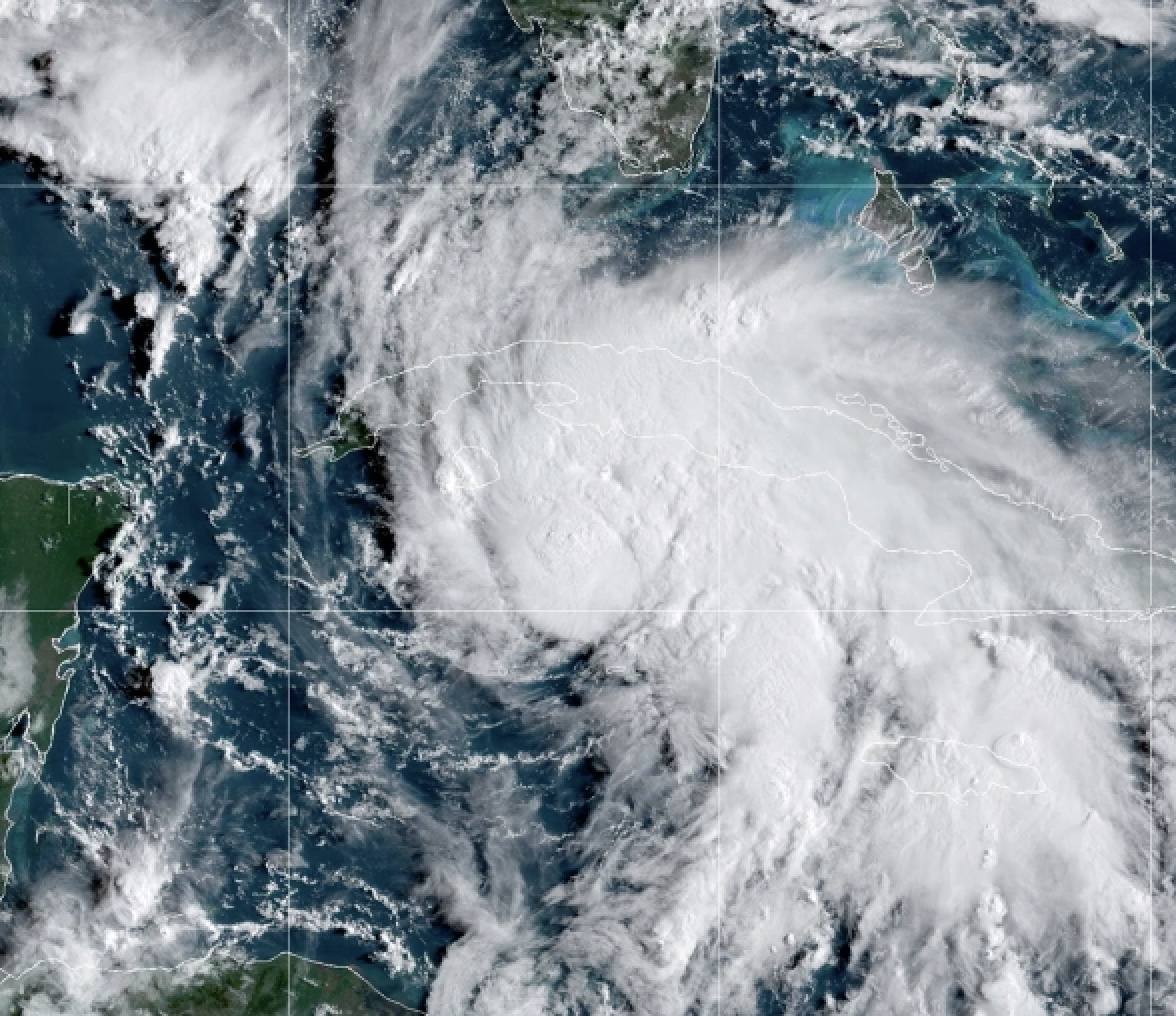
If you have ever lived in a major hurricane zone — Port Arthur, Texas, and West Palm Beach, Fla., for me — then you know that after the winds die down, the electric trucks (from all over) roll into town, from all over. The same thing is true with relief efforts from major religious groups. We’re talking Southern Baptists, Church of Jesus Christ of Latter-day Saints, World Vision, Churches of Christ and more.

The second half of that equation usually gets lots of ink the the religious press.

The elite newsrooms? Sometimes, yes. Lots of times, no.

So let’s look at a very interesting Hurricane Ida story from the Associated Press that provided all kinds of religion details about the locals and the people striving to help them: “Louisiana residents thankful for small miracles after Ida.” As a longtime GetReligion reader said, in an email:

This isn't profound, I guess it's just an example of "there, was that so hard?" . ... to report intimately about believers and clergy worshipping after a catastrophe. Frankly I've been kind of overwhelmed by the enormity of the loss in Louisiana — I joined a church relief team to help in Slidell and New Orleans a month after Katrina — and this story brought tears.

But note: This story focuses — with good cause — on the locals and government efforts post-hurricane. That’s a great story. But maybe this needed a word about the other big religion hook in post-storm news?

Meanwhile, here’s the overture:

MARRERO, La. (AP) — Amid the devastation caused by Hurricane Ida, there was at least one bright light Sunday: Parishioners found that electricity had been restored to their church outside of New Orleans, a small improvement as residents of Louisiana struggle to regain some aspects of normal life.

In Jefferson Parish, the Rev. G. Amaldoss expected to celebrate Mass at St. Joachim Catholic Church in the parking lot, which was dotted with downed limbs. But when he swung open the doors of the church early Sunday, the sanctuary was bathed in light.


Please respect our Commenting Policy

Plug-In: Ida, abortion and Afghanistan: The best religion reads in stunning news week

Plug-In: Ida, abortion and Afghanistan: The best religion reads in stunning news week

I was in Waverly, Tenn., reporting on the aftermath of historic flooding that claimed 20 lives as Hurricane Ida — “one of the most powerful storms ever to hit the U.S.” — made landfall in Louisiana on Sunday.

On Monday afternoon, as I was boarding a flight in Atlanta to return home to Oklahoma City, The Associated Press sent a “flash” — its designation for “a breaking story of transcendent importance” — about the chaotic end of America’s 20 years of war in Afghanistan.

Guess what?

The big news week was just getting started.

By midnight Wednesday, a divided U.S. Supreme Court had provided “a momentous development in the decades-long judicial battle over abortion rights.” The court declined, at least for now, to overrule a new Texas law that bans most abortions in the state, raising hope among abortion opponents and concern among abortion-rights supporters that Roe v. Wade could be jeopardy.

Also, Ida’s “weakened remnants tore into the Northeast and claimed at least 43 lives across New York, New Jersey and two other states in an onslaught that ended Thursday and served as an ominous sign of climate change’s capacity to wreak new kinds of havoc.”

The news just keeps coming, and I haven’t even mentioned COVID-19 — which continues to rage with cases and hospitalizations “at their highest level since last winter.”

Mercy.

Power Up: The Week’s Best Reads

1. Afghanistan’s arc from 9/11 to today: once hopeful, now sad: This is a powerful read by Kathy Gannon, Afghanistan and Pakistan news director for The Associated Press.

“A country of 36 million, Afghanistan is filled with conservative people, many of whom live in the countryside,” Gannon explains. “But even they do not adhere to the strict interpretation of Islam that the Taliban imposed when last they ruled.”


Please respect our Commenting Policy