Catholic worship wars rage on: Pope Francis decides Latin Mass is too divisive to embrace

Catholic worship wars rage on: Pope Francis decides Latin Mass is too divisive to embrace

The message to Catholic traditionalists in Southwest England was blunt, yet pointed.

Because of the new Traditionis Custodes ("Guardians of the tradition") document from Pope Francis, and the wishes of Bishop Declan Lang of the Diocese of Clifton, the upcoming "Latin Mass at Glastonbury will be the final Latin Mass here."

The message delivered to another circle of believers there was quite different. As a "Clifton Diocese Initiative," the "LGBT+ Mass" series at a Bristol church would continue because the bishop "wishes to express pastoral care and concern for our Catholic LGBT+ community."

Thus, the Catholic worship wars rage on.

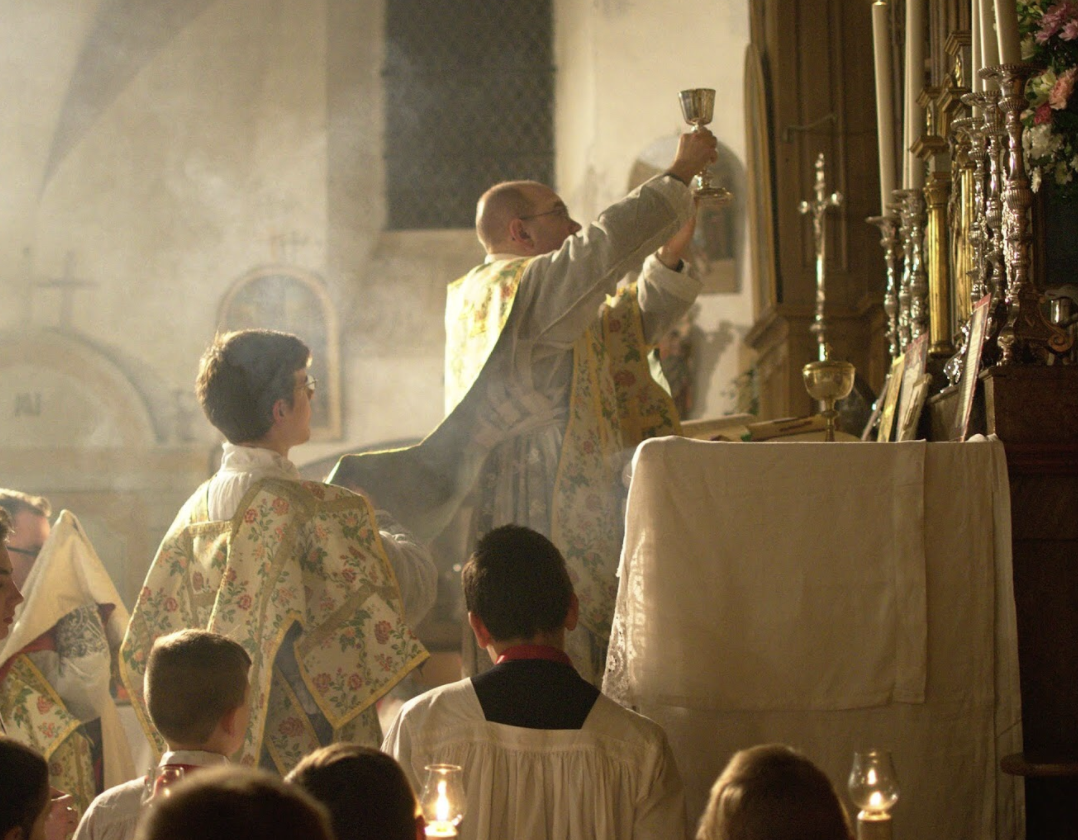
This bolt of liturgical lightning from Pope Francis struck one of his predecessor's signature achievements. In his 2007 apostolic letter Summorum Pontificum ("Of the Supreme Pontiffs"), the now retired Pope Benedict XVI declared that the post-Vatican II rite was the "ordinary form" for the church, but that the older Latin Mass was an "extraordinary form" and could be encouraged when requested by the faithful.

While Benedict said these rites could coexist, Pope Francis argued -- in a letter accompanying Traditionis Custodes -- that the old Latin Mass has become too divisive.

Benedict was "comforted" by his belief that the "two forms of the … Roman Rite would enrich one another," wrote Pope Francis, but some bishops now believe the Latin Mass has been "exploited to widen the gaps, reinforce the divergences, and encourage disagreements that injure the Church."

Thus, Francis declared, bishops must guarantee that any priests and laity they allow to celebrate the old rite have accepted the validity of Vatican II and its "Novus Ordo" Mass. Bishops may "designate one or more locations where the faithful adherents of these groups may gather" for approved Latin Masses, but these services may not be held in "parochial churches" and there should be no new parishes created for the extraordinary rite.


Please respect our Commenting Policy

Does this ancient document have authority in modern debates about moral theology?

Does this ancient document have authority in modern debates about moral theology?

THE QUESTION:

What was the ancient Didache and what is its to moral controversies relevance today?

THE RELIGION GUY'S ANSWER:

Except for the Bible or Quran, ancient writings rarely pop up in 21st Century public disputes. So it was rather interesting to see that happen with the Didache, whose importance rests on its likely status as the oldest surviving text from Christianity's earliest days other than the New Testament itself. Certain scholars think it was written even before the Gospels, between A.D. 50 and 70, but more common dating puts it in the early 2nd Century A.D.

This text's sudden media appearance involved the unending abortion debate, which is hotter than ever in the U.S. with the Supreme Court set to re-examine the law next term in the Dobbs case and the Catholic bishops' conference considering whether to endorse denial of Communion to "pro-choice" office-holders, President Biden included.

Garry Wills, the Northwestern University historian and renegade Catholic, recently sought to convince New York Times readers that "the cult of the fetus" embraced by Catholic bishops (also evangelical Protestants) is off-base because, among other things, Jesus and the New Testament authors never condemn abortion as sinful.

A blistering response by National Review's Michael Brendan Dougherty cited the Didache as prime evidence in contending that Christianity from its earliest phase opposed abortion. The document's second chapter forbids "grave sins," listed as follows:

"You shall not commit murder, you shall not commit adultery, you shall not commit pederasty, you shall not commit fornication, you shall not steal, you shall not practice magic, you shall not practice witchcraft, you shall not murder a child by abortion nor kill that which is born. You shall not covet the things of your neighbor, you shall not swear, you shall not bear false witness, you shall not speak evil, you shall bear no grudge . . . (Roberts-Donaldson translation).

A later section targets "murderers of children, destroyers of the handiwork of God" in a catalogue of people who are living out "the way of death."


Please respect our Commenting Policy

New podcast: What kinds of Catholic fears are hiding in these Latin Mass wars?

New podcast: What kinds of Catholic fears are hiding in these Latin Mass wars?

Over the past 40 years or so, I have learned this lesson: If you are covering a controversial story and you find a key point where an activist or two in the clashing armies agree with one another, that’s probably something worth noting.

That happened this week while reading a couple of thousand words of commentary about the decision by Pope Francis to all but crush some of the growing communities of priests and traditional Catholics who choose to celebrate the old Latin Mass. To catch up on that, see: “'Where there is incense there is fire.' True, but reporters can seek voices in middle of that war.” And check out this one, too: “Ties that bind? Concerning journalism, Grindr, secrecy, homophobia and the Latin Mass.”

While recording this week’s “Crossroads” podcast (click here to check that out), I read two quotations — one from the Catholic right and one from the left. They offer two completely different takes on what’s happening in the Latin Mass wars, except that they seem to agree on one crucial reality.

The goal is to spot that common ground. Ready?

Quote No. 1 comes from conservative Amy Welborn, writing at her “Charlotte was Both” weblog:

Let’s do an Occam’s Razor on this new Motu Proprio.

It seems pretty simple to me: A number of bishops wanted the tools to restrict celebration of the Traditional Latin Mass, and Pope Francis gave it to them.

There you go.

I mean, we can talk history, ecclesiology, theology and liturgy all day long, but that’s about as basic as it gets or needs to be. I was there. Well, not literally, but I can tell you that this generation of clergy and church activists – now maybe from their late 60’s on up – were formed in a way that they cannot envision a healthy Church in which the TLM is still a part. At all.

What we see here is a papacy, backed by strategically placed cardinals loyal to this pope, that:

… in words, emphasizes synodality, accompaniment, listening, dialogue outreach to the margins and consistently condemns “clericalism” — has issued a document that embodies a rigid approach to the issue, and then restricts, limits and directs more power, ultimately, to Rome. And shows no evidence of actually “listening” to anyone except bishops who are annoyed by the TLM and TLM adherents who conveniently fit the “divisive” narrative.

Now, let’s contrast and compare that view of the conflict with the contents of quote No. 2.


Please respect our Commenting Policy

Step back from digital news blitz with deeply layered religion pieces about China and India

Step back from digital news blitz with deeply layered religion pieces about China and India

The web has seduced us — and by us I mean me — into a life of 24-7 journalistic overload. For me, that can mean running out of bandwidth before getting to a story that actually deserves close attention. My limited brain can digest only so much before it shorts out.

Even a strung-out news junkie such as myself needs to log off every so often. Self-styled media literacy is as addictive as blissful ignorance.

Religion coverage has suffered greatly in this new journalistic reality. We’re provided an abundance of attention-grabbing stories about clergy hypocrisy, largely involving sexual, material or political excess. We get too few stories that connect the data points of everyday religious complexity that allows us to understand issues more deeply.

Here are two recent stories that struck me as worthy of the attention that’s too often withheld. One involves China, the other India. The only connection between them is that they both reveal deep truths about the religious reality of the societies they report on.

Let’s start with China, the more straightforward of the two stories.

It comes from Foreign Policy and ran under the intriguing, but incomplete, headline: “The Chinese Communist Party Is Scared of Christianity.”

Why incomplete? Because as the writer notes, it’s not just Christianity that scares China’s totalitarians rulers. It’s all unauthorized official thinking, religious or otherwise.

Did the headline mention Christianity alone because editors figured that would play best with their mostly western readership? Is this another example of algorithmic journalism?


Please respect our Commenting Policy

Ties that bind? Concerning journalism, Grindr, secrecy, homophobia and the Latin Mass

Ties that bind? Concerning journalism, Grindr, secrecy, homophobia and the Latin Mass

Early in my religion-beat career, a veteran Catholic leader gave me wise advice about the challenges reporters would face covering the emerging national scandals about sexual abuse by bishops and priests.

Never forget, he said, that these scandals are not about “left vs. right.” Plenty of people, across the whole spectrum of Catholic life, have secrets in the past and some in the present.

Soon after that, I heard almost exactly the same take from the late A.W. Richard Sipe, the former Benedictine monk, priest and psychotherapist who spent more than a half-century studying the sexual secrets of Catholic clergy. A strong voice for progressive Catholic causes, he served as a witness or consultant in at least 250 civil legal actions. As I wrote in an “On Religion” column, soon after Sipe’s death:

"Sooner or later it will become broadly obvious that there is a systemic connection between the sexual activity by, among and between clerics in positions of authority and control, and the abuse of children," he wrote, in a 2016 letter to his local shepherd, San Diego Bishop Robert McElroy.

"When men in authority — cardinals, bishops, rectors, abbots, confessors, professors — are having or have had an unacknowledged secret-active-sex-life under the guise of celibacy an atmosphere of tolerance of behaviors within the system is made operative."

Once again, the key is secrecy, because a fog of secrecy, sin and shame can be use to hide all kinds of painful issues.

I bring this up, of course, because of the firestorm that has greeted an investigative report from The Pillar that ran with this headline: “USCCB gen sec Burrill resigns after sexual misconduct allegations.” Here is the overture:

Monsignor Jeffrey Burrill, former general secretary of the U.S. bishops’ conference, announced his resignation Tuesday, after The Pillar found evidence the priest engaged in serial sexual misconduct, while he held a critical oversight role in the Catholic Church’s response to the recent spate of sexual abuse and misconduct scandals.

“It is with sadness that I inform you that Msgr. Jeffrey Burrill has resigned as General Secretary of the Conference,” Archbishop Jose Gomez wrote July 20 in a memo to U.S. bishops.

The key evidence was information drawn from signals on the hookup app Grindr, which a Vanity Fair feature once called “The World’s Biggest, Scariest Gay Bar.


Please respect our Commenting Policy

Did January 6 attack on Capitol highlight 'D.I.Y. Christianity' as decade's next big thing? 

Did January 6 attack on Capitol highlight 'D.I.Y. Christianity' as decade's next big thing? 

As investigations of the January 6 U.S. Capitol riot proceed, there's an intriguing religion angle for the media to explore. Welcome to the emerging prominence of "D.I.Y. Christianity" (that is, Do It Yourself).

After some of the Capitol rioters uttered odd prayers and waved religious placards, The New York Times reported that they demonstrated "some parts of white evangelical power." GetReligion boss tmatt then asked whether the mob included any representatives of actual "power" seen in the denominations, megachurches, parachurch ministries, schools or even the flocks of well-publicized Trumpite preachers.

(Despite the absence of evangelical leaders, freelancer Steve Rabey reports that several obscure Protestant pastors do face charges over January 6.)

Washington Post stalwart Michelle Boorstein revisited January 6 as a religious phenomenon and caught the moment by applying the D.I.Y. label not just for certain Capitol rioters but a broader trend emphasized by Adam Greenway, president of Southwestern Baptist Theological Seminary.

The D.I.Y. phenomenon could become the decade's next big thing in religion, a sizable groundswell of extremely individualistic or eccentric Americans who identify as Christians but are disconnected from conventional churches or even any definable religious fellowship or tradition.

Such radical individualism follows, of course, years of significant growth for non-denominational local congregations that are rigidly independent and lack ties or accountability with other Christians. This growing segment of U.S. evangelical Protestantism is nearly impossible to count accurately and thus its significance has often been neglected by journalists and scholars. GetReligion has been underlining the importance of this trend for years.

The Post cited analysts who believe one element on January 6 was that "institutional religion is breaking apart, becoming more individualized and more disconnected from denominations, theological credentials and oversight."


Please respect our Commenting Policy

When the FBI infiltrates a Bible study, why does CNN say it was a fake 'Bible study'?

When the FBI infiltrates a Bible study, why does CNN say it was a fake 'Bible study'?

Every so often, one comes across a news story that’s beyond odd.

Ever since the Jan. 6 attack on the U.S. Capitol, law enforcement has been trying to get to the bottom as to who and what were the planners for all this. We all know that. But this time around, the FBI infiltrated something new — a Bible study in Alexandria.

Or, as many media are saying, a “Bible study.”

Look at this part of a CNN piece. The key is to try to find some information on a specific religious institution or movement linked to this activity:

The FBI has infiltrated a "Bible study" group in Virginia that after the January 6 riot had members discussing surveilling the US Capitol and their wish for secession from the US, and investigators closely followed one member's plans to build and test Molotov cocktails, according to recently unsealed court records.

The newly disclosed criminal case against Virginia man Fi Duong -- who also goes by "Monkey King" and "Jim," according to the court record -- arose after Duong interacted with undercover law enforcement officers several times on January 6 and into recent months, when the FBI ultimately gained access to his group in Virginia then accompanied him to an old jail as Duong allegedly pursued bomb-building.

Looks like an FBI agent befriended Duong and began hanging out with him and his friends.

Duong told the FBI agent that his group tried to be "cloak and dagger" and wanted to "build resistances," according to court records. The agent then attended what the group members called a "Bible study" meeting at an Alexandria, Virginia, house in February, where the group members discussed the Bible and secession, weaponry and combat training, and using methods to make their communications private, according to court records.

One person in the group commented at the meeting about creating "a semi-autonomous region" for Virginia. "I like the Constitution; I don't like the Democratic sh*t this region keeps voting for," the person said, according to the FBI.

I’m curious why the scare quotes are put around this Bible study group when it’s obvious there really was discussion about the Bible at this gathering. I listened to CNN’s video alongside the article and the reporter called the gathering “a so-called Bible study meeting.”


Please respect our Commenting Policy

'Where there is incense there is fire.' True, but reporters can seek voices in middle of that war

'Where there is incense there is fire.' True, but reporters can seek voices in middle of that war

Raise your hand if you are old enough to remember the Vietnam era.

That may sound like a strange question to ask after a weekend of reading the tsunami of online reactions to the decision by Pope Francis to all but crush the 2007 Summorum Pontificum apostolic letter by the now retired Pope Benedict XVI, the document defending the use of the old Latin Mass, now called the Extraordinary Form of the Roman Rite.

Now the fighting — another sign of real divisions between Catholic bishops almost everywhere — will almost certainly be turned up to 11. As Father Raymond J. de Souza of the National Catholic Register put it: “Where there is incense there is fire.”

This brings me back to Vietnam. Here’s the phrase that jumped into my mind, about an hour or two into watching the firestorm on Catholic Twitter: “We had to burn the village in order to save it,” the popular paraphrase of a line in an Associated Press report from that era stating, “It became necessary to destroy the town to save it.”

There appear to be people on both side of the Latin Mass war who are ready to do something like that. Pope Francis has clearly stated that he believes the “ordinary” modern form of the Vatican II Mass cannot live peacefully with rules allowing many Catholics to embrace the faith’s earlier liturgical traditions.

This is an unbelievably complex story and I feel only compassion for the wire-service reporters who had to write short hard-news stories about this action by Pope Francis.

Why? At one point, I started listing some basic facts built into the foundations of this story.

Truth be told, there are:

* Latin Mass activists who reject Vatican II and, from time to time, refer to this pope simply as “Bergoglio,” meaning they still consider him to be Cardinal Jorge Mario Bergoglio of Argentina — not the real pope. They reject Vatican II, period. Pope Benedict XVI has never been in this camp.

* Progressive Catholics whose hatred of the traditional Mass and its proponents is so fierce that they are willing to roll the dice on schism. They believe the “spirit,” not the actual teachings, of Vatican II must be defended at all costs. Some of these liberal Catholics are openly sympathetic to the doctrinal “reforms” sought by German bishops, which could lead to schism in some form.


Please respect our Commenting Policy

Hot Takes: Ryan Burge on return of debates about evangelicals and QAnon (etc.)

Hot Takes: Ryan Burge on return of debates about evangelicals and QAnon (etc.)

Well, Bobby Ross, Jr., is taking the week off.

Thus, I went looking for another list of religion-news material featuring short punchy takes on lots and lots of different topics.

I settled on this VICE News chat with GetReligion contributor Ryan Burge — that must-follow guy on Twitter who is also well known for his work at the Religion in Public weblog.

To say that this punchy little video report includes some Hot Takes is an understatement. Yes, there is a flashback to the whole QAnon and evangelicalism wars.

However, let me stress that there are some producers at VICE News who are sincerely interested in the complex world of American evangelicalism and they are doing their homework. I know this because I sent about three hours with one of their production teams several months ago and I know the wide range of materials that we covered.

That video is still in a vault somewhere. It would be interesting if they turned bites of it into a bullet-list collection of takes similar to this one with the always quotable Burge.

So what shows up in this Burge blast? He put this list out on social media:

Things I discuss in this Vice News video:

QAnon

John Darby

Dispensationalism

Thomas Jefferson as the anti-Christ


Please respect our Commenting Policy