Worship

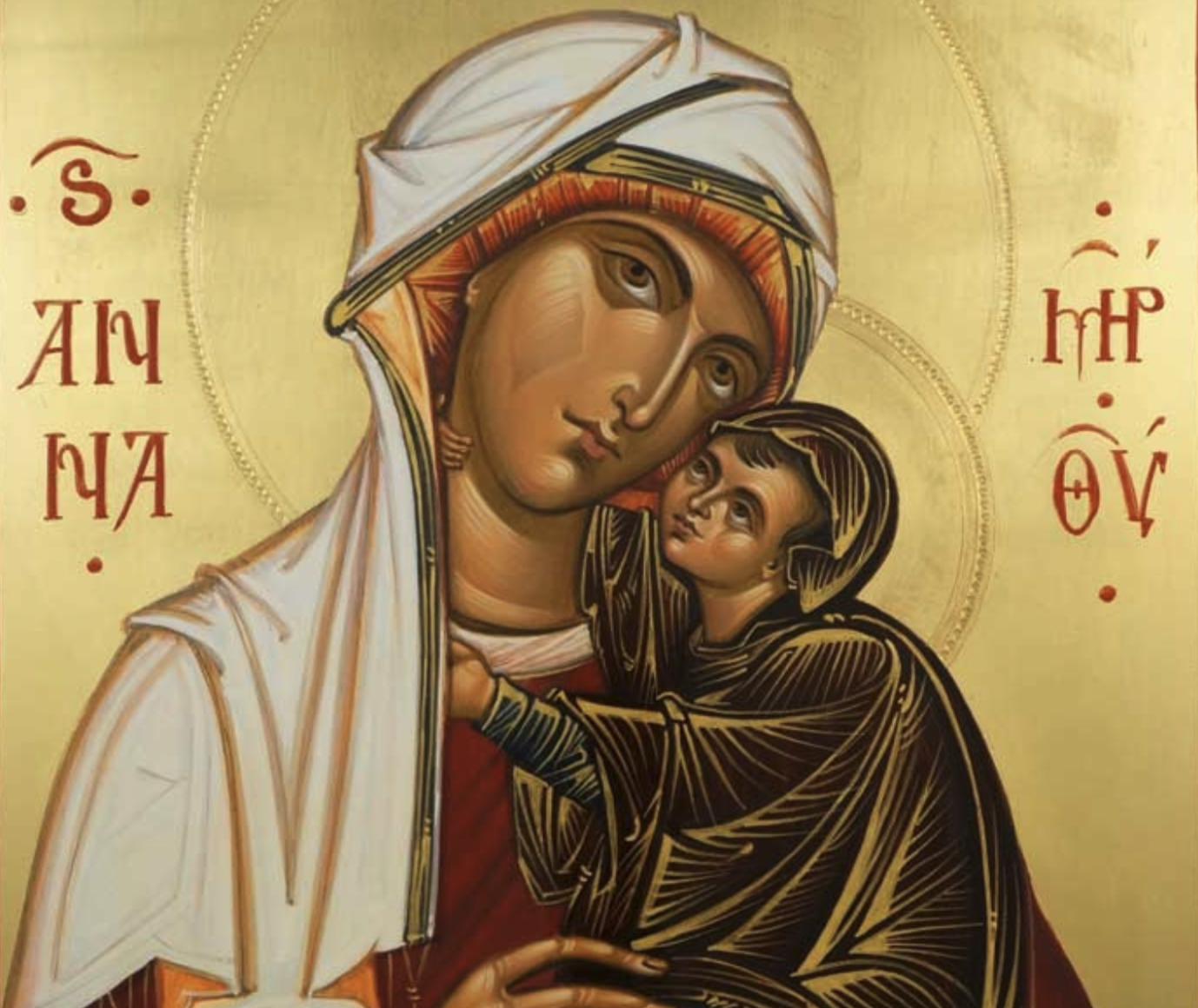
St. Anne plays a major role in papal visit to Canada: Is she important to Catholics, alone?

St. Anne plays a major role in papal visit to Canada: Is she important to Catholics, alone?

Long ago, I had a strategic and symbolic on-deadline argument with Rocky Mountain News (#RIP) editor.

Holy Week loomed on the horizon, on the Western calendar, and I was asked to fill out a form requesting quick Ash Wednesday feature art. I suggested — thinking beauty and diversity — a visit to an Episcopal parish in the heart of Denver’s most prominent Black neighborhood, a congregation known for the beauty of its high-church, Anglo-Catholic rites.

The editor said the photo needed to be in a Catholic church, since Holy Week is a Catholic story. I said that was a logical way to think about it, since the Catholic church is so prominent. However, I noted that Holy Week is an ancient Christian tradition observed in many Christian churches and denominations. It would be good to remind readers of that fact. I won that debate and the result was a stunning photograph.

I thought of that debate when reading a timely Religion News Service piece that ran with this headline: “Who is St. Anne and why is she so important to Indigenous peoples?” Let me stress that this is a good story and a valid angle during the Pope Francis pilgrimage to Canada. I urge readers to check it out. Here is the top of that report:

When Pope Francis met with a delegation of First Nations, Métis and Inuit people in April at the Vatican, he told them he wanted to visit them in Canada this year. And not just at any time of the year, but during the Feast of St. Anne (July 26).

“I think with joy, for example, of the great veneration that many of you have for Saint Anne, the grandmother of Jesus,” Pope Francis told the Indigenous delegation to the Vatican. “This year I would like to be with you on those days.”

As the pope visits Canada through Friday (July 29), he will indeed celebrate the Feast of St. Anne in the country. He also will visit several sites dedicated to the saint, whom Catholics believe to be the mother of Mary and the grandmother of Jesus.

That last sentence includes a classic example of a statement — “whom Catholics believe to be the mother of Mary and the grandmother of Jesus” — that is certainly accurate, but it would still cause some readers to think, “Wait a minute. Aren’t there millions of other Christians who honor St. Anne for the same reasons?”

Please respect our Commenting Policy

AP visits a small circle of Dominicans in Greece -- a lovely story with some missing details

AP visits a small circle of Dominicans in Greece -- a lovely story with some missing details

Contrary to popular belief, there are more than a few GetReligion readers who haven’t given up on the mainstream press.

I know this because, every now and then, I will get emails that praise the same news story or feature. Often these missives come from readers who have been known to send me the URLs of news reports that contain errors or are radically unbalanced in how they approach covering complex issues.

In other words, these readers are reading the news and looking for “good” journalism — defined as work built on an old-liberal American Model of the Press approach seeking accuracy and some sense of balance (maybe even respect for diverse voice) when covering complex debates.

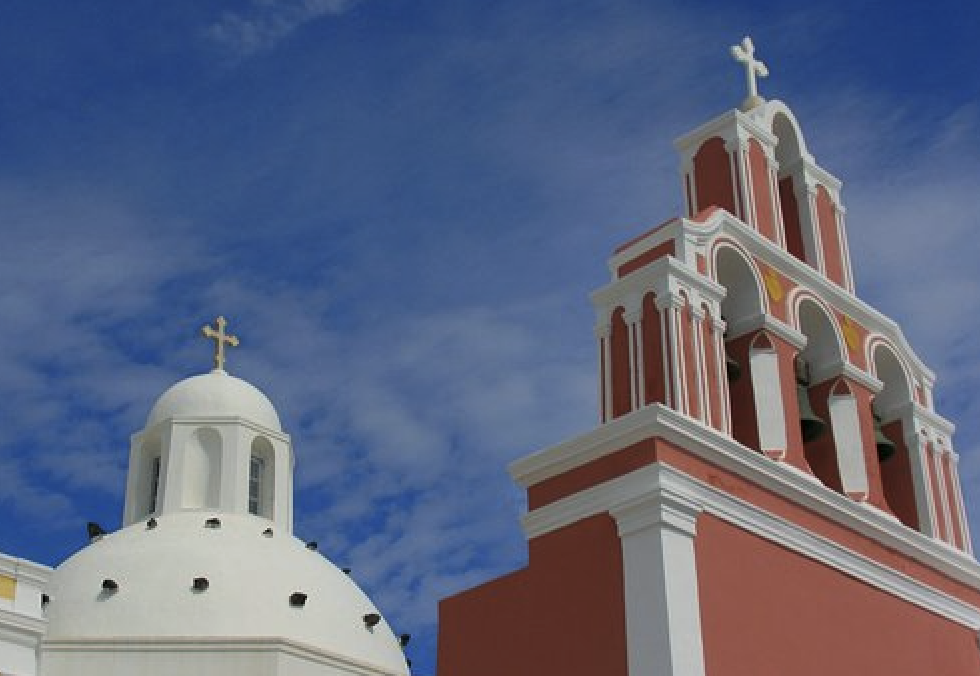
With all of this in mind, let’s look at a recent Associated Press report that several readers have written me to praise: “On Greece’s Santorini, 13 cloistered nuns pray for the world.” This is an unusually beautiful feature — the photography is stunning (please check that out) — written by Giovanna Dell'Orto, a journalism professor at the University of Minnesota who does freelance work for AP.

How did this piece come about, since it clearly involved a travel budget for in-depth religion work (rare in this thin-budget age), research time and a commitment to a detailed feature with strong photography? The credit line offers this: “Associated Press religion coverage receives support through the AP’s collaboration with The Conversation US, with funding from Lilly Endowment Inc.”

What is right with this piece? A regular reader noted, via email:

… I guess I submit this because a story that focuses so much on the joy of cloistered contemplatives is not what you expect to see in most newsfeeds. By letting the community speak for itself and by bringing nothing but honest curiosity to the story, look how even this short article opens a door on a whole other world. I'm reading "Desert Fathers: Sayings of the Early Christian Monks" at the moment, and this news story brought an ancient practice to vivid life.

I agree with all of that and, in this post, I will stress the positive — because it’s there.

At the same time, let me note that it was rather strange that this story focuses exclusively on “God” language and doesn’t contain a single reference to, well, Jesus (other than the name of one of the sisters). This is strange when writing about women religious whose Dominican vows joyfully declare them to be the Brides of Christ.


Please respect our Commenting Policy

Plug-In: Pope Francis in Canada -- five key facts to look for in the news coverage

Plug-In: Pope Francis in Canada -- five key facts to look for in the news coverage

Pope Francis traveled to Canada this weekend.

The purpose of the Catholic leader’s seven-day trip: to apologize to Indigenous peoples for abuses at church-run residential schools.

In advance of his visit, which started Sunday, here are five key facts:

1. It’s a “one-of-a-kind” papal trip.

Christopher White, the National Catholic Reporter’s Vatican correspondent, reports:

When he touches down in Edmonton, Alberta, Francis will find a dramatically altered scene than that of past airport arrivals. Gone will be the jubilant sights and sounds of marching bands and cheering crowds.

When he arrives on the ground — almost certainly via hydraulic lift, given that his limited physical mobility has added another layer of complication to this difficult trip — the first hands he will shake will be that of Indigenous elders and survivors of residential schools. Indigenous drummers will provide background percussion and there will be no customary meetings with the head of state or speeches to civic authorities on his first day in the country.

2. Francis will find a nation where Catholicism is in decline.

Jessica Mundie, a fellow for the National Post, explains:

The role of the Catholic Church in society is not what it once was. What used to be a pillar in the social and political life of communities has now, for some, become the building they pass on the way to the grocery store. Its reputation has been tarnished by sex abuse scandals in Canada and around the world, and after last summer, when hundreds of suspected unmarked graves were discovered on the sites of past residential schools, many were reminded of the church’s role in this country’s controversial history.

Canadian Catholics are hoping that a visit from the Pope, which includes stops in Quebec City and Iqaluit, and meetings with First Nations, can begin to address past wrongs.


Please respect our Commenting Policy

What messages do the Psalms contain about faith that are missing in this praise-song age?

What messages do the Psalms contain about faith that are missing in this praise-song age?

It's hard to read the Psalms without encountering one of the 65 references to the Hebrew word "mishpat," which is usually translated as "judgments" or "justice."

The term appears 23 times in Psalm 119, in passages worshipers have sung for centuries, such as: "I will praise You with uprightness of heart, when I learn Your righteous judgments. I will keep Your statutes; Oh, do not forsake me utterly!"

But when Old Testament scholar Michael J. Rhodes dug into the Top 25 worship songs listed by Christian Copyright Licensing International, he found symbolic trends in the lyrics. For starters, "justice" was mentioned one time, in one song.

"The poor are completely absent in the top 25. By contrast, the Psalter uses varied language to describe the poor on nearly every page," he wrote, in a Twitter thread. "The widow, refugee, oppressed are completely absent from the top 25. …

“Whereas 'enemies' are the third most common character in the Psalms, they rarely show up in the Top 25. When they do, they appear to be enemies only in a spiritual sense. Maybe most devastatingly … not a SINGLE question is ever posed to God. The Top 25 never ask God anything. Prick the Psalter and it bleeds the cries of the oppressed pleading with God to act."

That's a long way from a Vespers Psalm promising: "The Lord sets the prisoners free; the Lord opens the eyes of the blind. The Lord lifts up those who are bowed down; the Lord loves the righteous. The Lord watches over the sojourners, he upholds the widow and the fatherless; but the way of the wicked he brings to ruin. … Praise the Lord."

When these issues surface in social media they often veer into debates about politics and social justice, noted Craig Greenfield, author of "Urban Halo" and "Subversive Jesus." A former dot-com entrepreneur, he leads the global youth ministry "Alongsiders International," based in Phnom Penh, Cambodia.

The question, he said, is why so many worship songs focus on personal experience and feelings -- alone. This has been true with new hymns for several generations.

"We, in the West, tend to be very individualistic. … The whole approach to worship music uses a Jesus-is-my-boyfriend metaphor," said Greenfield, reached by telephone.


Please respect our Commenting Policy

Podcast: Are many Bible Belt military families losing faith in the U.S. armed services?

Podcast: Are many Bible Belt military families losing faith in the U.S. armed services?

On Feb. 1, 2004, GetReligion co-founder Doug Leblanc opened the digital doors here at GetReligion and our first post went live. The headline: “What we do, why we do it.

I tweaked that post a bit in 2019, but left the main point intact. The key was that GetReligion was going to try to spot what I called religion “ghosts” in hard-news stories in the mainstream press. What, precisely, was a religion “ghost”? I raise this issue once again because this week’s “Crossroads” podcast (CLICK HERE to tune that in) focused on a “ghost” question in a very important topic in the news. Hold that thought.

That first post opened with Americans sitting down to read their newspapers or watch television news.

They read stories that are important to their lives, yet they seem to catch fleeting glimpses of other characters or other plots between the lines. …

One minute they are there. The next they are gone. There are ghosts in there, hiding in the ink and the pixels. Something is missing in the basic facts or perhaps most of the key facts are there, yet some are twisted. Perhaps there are sins of omission, rather than commission.

A lot of these ghosts are, well, holy ghosts. They are facts and stories and faces linked to the power of religious faith. Now you see them. Now you don’t.

This brings us to a recent Associated Press report with this headline: “Army cuts force size amid unprecedented battle for recruits.” There are zero references to religion in this report, which is kind of the point.

Is there a religion “ghost” somewhere in this story? Here are some crucial paragraphs:

With just two and a half months to go in the fiscal year, the Army has achieved just 50% of its recruiting goal of 60,000 soldiers, according to Lt. Col. Randee Farrell, spokeswoman for Army Secretary Christine Wormuth. Based on those numbers and trends, it is likely the Army will miss the goal by nearly 25% as of Oct. 1. …


Please respect our Commenting Policy

Why are United Methodists at war? Readers need to know that sexuality isn't the only fault line

Why are United Methodists at war? Readers need to know that sexuality isn't the only fault line

If you read most of the mainstream news coverage about chaos inside the United Methodist Church, then you know that this war centers on LGBTQ issues.

Readers who use niche websites offering the views of conservative United Methodists, in the United States and around the world, will learn that the war is about sex, salvation, biblical authority and core doctrines in ancient Christian creeds. Hold that thought.

Before we look at recent events in the divided United Methodist Church, let’s consider an important political-science term — “condensation symbol” — that journalists may want to ponder. In a 2021 post (“Queer Santa As A Condensed Symbol Of Progressivism”) — blogger Rod “Live Not By Lies” Dreher offered this material from a reader:

A condensation symbol is “a name, word, phrase, or maxim which stirs vivid impressions involving the listener’s most basic values and readies the listener for action,” as defined by political scientist Doris Graber. Short words or phrases such as “my country,” “old glory” “American Dream,” “family values,” are all condensation symbols because they conjure a specific image within the listener and carry “intense emotional and effective power.” … Graber identified three main characteristics of condensation symbols, as they: (1) Have the tendency to evoke rich and vivid images in an audience. (2) Possess the capacity to arouse emotions. (3) Supply instant categorizations and evaluations.

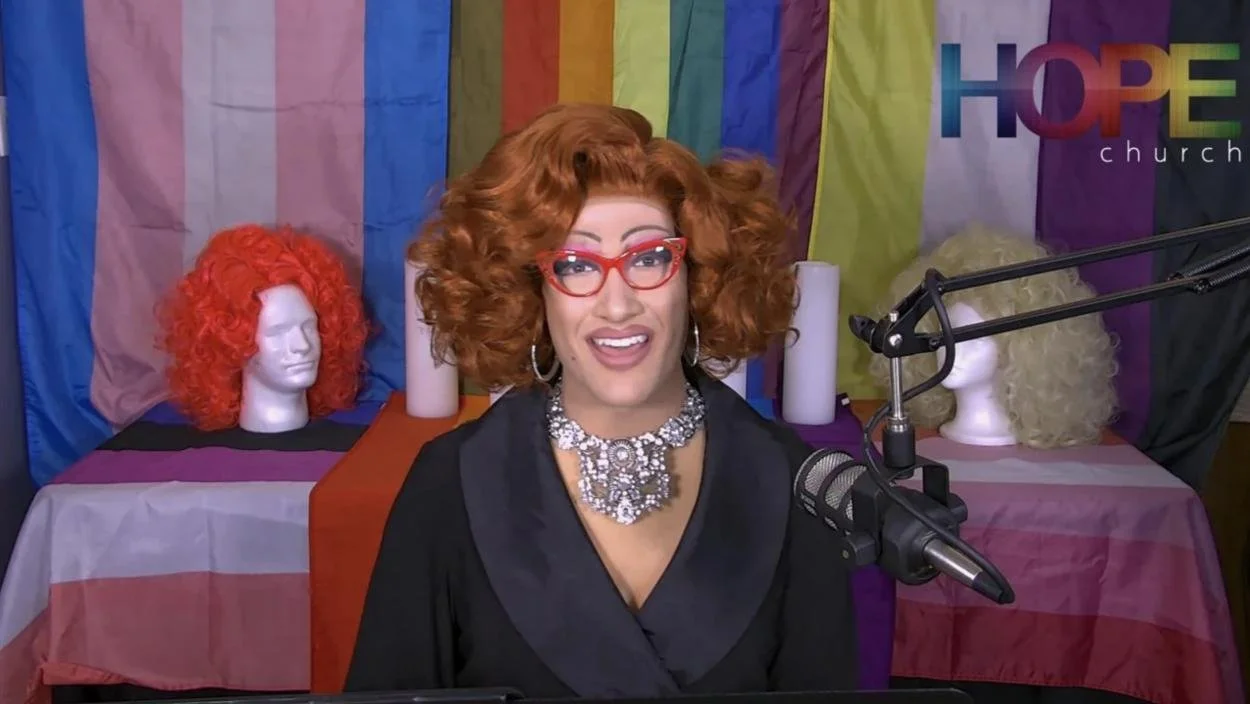
With that in mind, consider the ministry of Isaac Simmons — currently associate pastor at Hope United Methodist Church in Bloomington, Ill. — who has been accepted as a candidate for UMC ordination. Simmons (they/them) is best known as the drag-queen preacher Penny Cost.

At first glance, it would appear that Penny Cost is a perfect example of the LGBTQ issues causing the UMC split. However, I would argue that Simmons is a “condensed symbol” of the wider concerns of the global United Methodist coalition that wants to retain and defend the denomination’s current doctrines on a host of issues.

Consider the following from The American Spectator piece with this headline: “Methodist Church’s First Drag Queen Pastor: ‘God Is Nothing’.” This is, of course, a conservative publication. However, the following passage focuses on direct quotes from a new slam poem posted online by Penny Cost:

“God is nothing,” the self-described “dragavangelist” repeats throughout the poem, adding, “the Bible is nothing” and “religion is nothing.” In the end, he concludes God and the Bible are nothing “unless we wield it into something.”

“God must be f***ing nothing,” he says, “if her boundaryless, transubstantiated bodies of color are run down, beaten, and strewn in the streets of America instead of ruling the runways of life.”


Please respect our Commenting Policy

Pew gap in blue America? David French and Ryan Burge offer much to think about

Pew gap in blue America? David French and Ryan Burge offer much to think about

If you have followed GetReligion over the past decade or two then you have probably spotted some common themes linked to ongoing news trends (and I’m not talking about the musings of one Bill “Kellerism” Keller).

Here is a quick refresher with a few big ones:

* The press tends to ignore the RELIGION side of liberal faith groups, focusing only on their political stands.

* One of the biggest news stories of the late 20th century was the demographic implosion of Mainline Protestantism, leaving a public-square void filled, for the most part, by evangelicals.

* The rise of nondenominational evangelicals, with zero ties to existing evangelical power structures, has really confused lots of political reporters.

* It’s hard to do accurate, balanced, fair-minded journalism in an age when the technology pushes people into concrete media silos full of true believers. Preaching to the choir, alas, is good for business (but not for America).

* Newsroom managers need to hire experienced, trained religion-beat pros. That helps prevent lots of tone-deaf mistakes.

Here is one more. The political “pew gap” is real. Citizens who are committed members of traditional faiths tend to have radically different beliefs than those who are not. All together now: “Blue Movie.

This brings me to a rare business-week “think piece” built on a remarkable David French piece at The Dispatch that will be helpful to journalists who are — to name one trend GetReligion jumped on in 2016 — trying to make sense of the changing choices of Latino (as opposed to Latinx) voters. After watching the chatter on Twitter, I have added two relevant tweet-charts from Ryan Burge, a helpful scholar who cooperates with GetReligion. That French headline:

The God Gap Helps Explain a 'Seismic Shift' in American Politics

The most important religious divide isn't between right and left, but between left and left

The Big Idea: A funny thing happened on the way to that Democratic dream of dominating the future with a multiethnic coalition fighting a lily-white GOP.


Please respect our Commenting Policy

Pride meets Father's Day: Gay dads preach the 'radical inclusivity' of their Chicago parish

Pride meets Father's Day: Gay dads preach the 'radical inclusivity' of their Chicago parish

Landon Duyka and Alex Shingleton had almost given up on Catholicism.

Then they found Old St. Patrick's Church in Chicago, where their family was welcomed because the parish practices what its clergy call "radical inclusivity." This year, the two husbands created an online buzz when, after a decade in these pews, they shared the pulpit during a symbolic Sunday Mass.

“Chicago is celebrating Pride and, of course, today is Father's Day and, conveniently, we tick both of those boxes," said Duyka. "In all honesty, if you had told us as young boys who wasted countless hours of our lives in church trying to 'pray the gay away' that we someday would be standing in front of all of you in our Catholic church talking about our family on Father's Day, we would never have believed you."

At this historic parish, their adopted daughters are thriving. The youngest was baptized with no complications, unlike the "secret ceremony" for their first daughter at a previous church. In 2016, the Old St. Pat's altar featured -- for a month -- photos of victims from Orlando's Pulse nightclub massacre. Parishioners shook their hands during the Sign of the Peace. There was no need to worry about sermons opposing gay marriage or seeing conversion-therapy pamphlets.

The Father's Day "reflection" by Duyka and Singleton filled the homily slot in the Mass, following the Gospel reading. There was no homily, even though Canon law requires a "priest of deacon" to deliver one during Sunday Masses with a congregation.

The details of this Pride-season Mass inspired online debates since it occurred in the powerful Archdiocese of Chicago, led by Cardinal Blase Cupich.

Pope Francis recently named Cupich to the Vatican's Dicastery for Divine Worship and the Discipline of the Sacraments. The Chicago cardinal has been a fierce defender of the pope's Traditionis Custodes ("Guardians of the Tradition") document limiting use of the Tridentine Latin Mass. With its authority, Cupich has also restricted other worship traditions favored by Catholic conservatives, such as priests celebrating Mass "ad orientem," as opposed to the modern "versus populum" stance in which, when at the altar, they face their congregations.

On LGBTQ issues, Cupich made news with his response to a 2021 Congregation for the Doctrine of the Faith text forbidding blessings for same-sex couples.


Please respect our Commenting Policy

Big story? American (at this point) archbishop baptises famous gay couple's children in Greece

Big story? American (at this point) archbishop baptises famous gay couple's children in Greece

I think that I will write this post before I start getting emails (one or two from inside the wider circle of current and former GetReligionistas) asking whether or not I will write this post.

But first, before I get to the journalism question for this post, allow me to pause and discuss the meaning of a key term — “Byzantine.” Here is the word in context: To understand the following news story, journalists will need to enter the Byzantine world of Eastern Orthodox polity in North America.

The word “Byzantine,” when used as an adjective, has two definitions. First there is this:

… relating to Byzantium (now Istanbul), the Byzantine Empire, or the Eastern Orthodox Church

Now, that meaning is — sort of — relevant in this case. But this second definition is the one that we need:

… (of a system or situation) excessively complicated, and typically involving a great deal of administrative detail.

When people ask questions about Eastern Orthodox “news,” I frequently have to remind them that Eastern Orthodoxy is not the Church of Rome. We do not have a pope, even if, from time to time, the ecumenical patriarch in Istanbul has tried to promote (with the help of many elite newsrooms) a papal vision of his “first among equals” role among Orthodox patriarchs, stressing “first” instead of “equals.” See: Ukraine.

With that in mind, let’s look at the GreekReporter.com story that ran with this headline: “First Greek Orthodox Baptism for Child of Gay Couple in Greece.” The question: Is this an important “news” story worthy of complex, balanced, accurate coverage in, let’s say, a mainstream publication such as The New York Times? Jumping ahead, my answer is “yes,” but with a heavy emphasis on “complex, balanced, accurate coverage.” Here is the whole story from Greece:

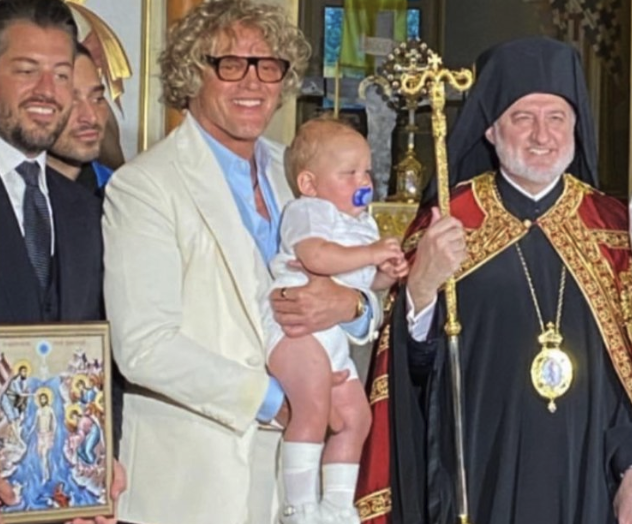
Evanggelos Bousis and Peter Dundas, both of Greek descent, became the first gay couple to hold a Greek Orthodox Baptism for their children in Greece. …

The couple’s children, Alexios and Eleni, were baptized by his Eminence Archbishop Elpidophoros of America at the Panagia Faneromeni Church in the southern Athenian suburb of Vouliagmeni.


Please respect our Commenting Policy