Worship

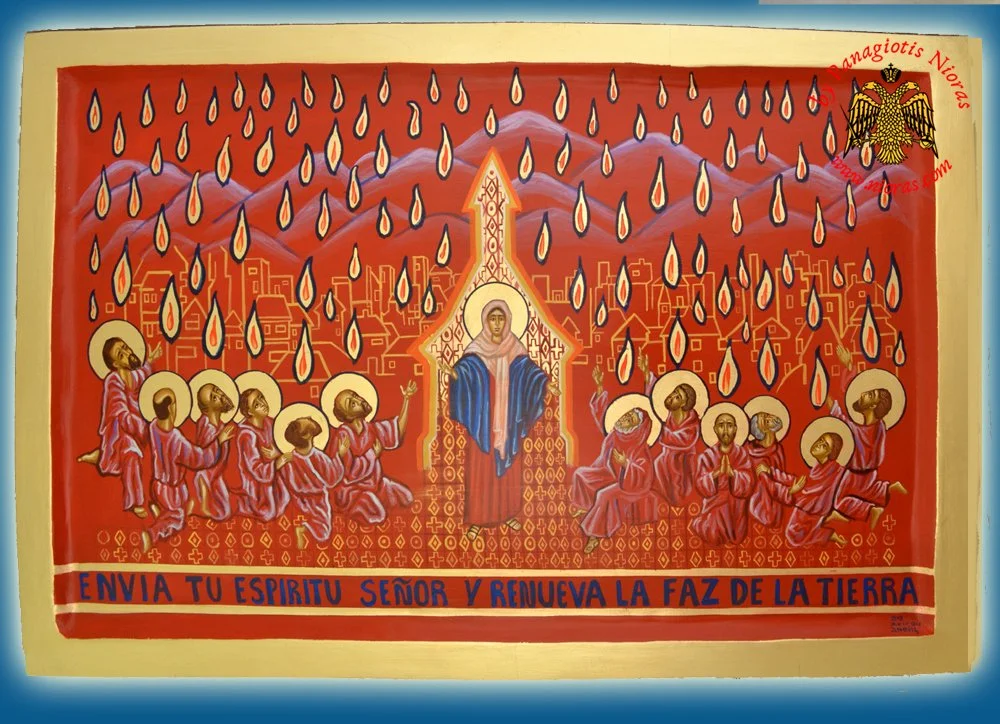
Latest massacre of Nigerian Christians? It would help to know this was the Feast of Pentecost

Latest massacre of Nigerian Christians? It would help to know this was the Feast of Pentecost

In my experience, if you ask most newsroom managers and copy-desk pros to name the most important Christian holy day, the majority will say “Christmas.”

Actually, that’s the biggest holiday, from the perspective of the surrounding culture. The correct answer is Easter, the feast of the Resurrection of Jesus Christ.

Now, here is a tricky question — one linked to yet another hellish massacre of Christians in the tense land of Nigeria. What holy day would be ranked No. 2 in the calendar of ancient Christianity?

There may some debates about this, but many historians will say it is the joyous Feast of Pentecost (click here for background material), which closes the great season of Easter. Hold that thought, because we will come back to it. Meanwhile, something very important is missing from the top of this Reuters report: “At least 50 killed in massacre at Catholic church in southwest Nigeria.”

LAGOS, June 5 (Reuters) — Gunmen attacked a Catholic church in southwest Nigeria during mass on Sunday, killing at least 50 people including women and children, according to a hospital doctor and media reports.

The gunmen shot at people outside and inside the church building, killing and injuries worshippers, said Funmilayo Ibukun Odunlami, police spokesperson for Ondo state. She did not say how many people were killed or injured at St Francis Catholic Church in the town of Owo but added police were investigating the cause of the attack.

Ondo state Governor Arakunrin Oluwarotimi Akeredolu, who visited the scene of the attack and injured persons in hospital, described Sunday's incident as "a great massacre" that should not be allowed to happen again. The identity and motive of the attackers was not immediately clear.

The motive was unclear?


Please respect our Commenting Policy

Plug-In: Faith in Uvalde, even as national media attention focuses on police and guns

Plug-In: Faith in Uvalde, even as national media attention focuses on police and guns

In the 10 days since a gunman killed 19 children and two teachers at an elementary school in Uvalde, Texas, questions about the incompetent police response have dominated the headlines.

So, too, has the political debate over gun violence, specifically the assault-style weapons used in Uvalde as well as recent mass shootings in Buffalo, New York, and — just this week — Tulsa, Oklahoma.

Rightly so.

But faith, too, has emerged as a vital part of the story, as we first highlighted last Friday. Once again this week, that is where we start.

Check out this must-read coverage:

A church, a gathering place for generations, becomes a hub for Uvalde’s grief (by Rick Rojas, New York Times).

Funeral after funeral, Uvalde’s only Catholic priest leans on faith (by Teo Armus, Washington Post).

Meet the first minister of gun violence prevention (by Emily McFarlan Miller, Religion News Service).

In Uvalde, a ministry of listening and silence (by Addie Michaelian, World).

‘This is wailing, weeping, heartfelt grief. This is what this town is feeling’ (by Audrey Jackson, Christian Chronicle).

The arrow in America’s heart (by Elizabeth Dias, New York Times).

A former pastor grieves the loss of his great-granddaughter in Uvalde (by John Burnett and Marisa Peñaloza, NPR).

On Texas shooting, Vatican Academy for Life says just laws ‘protect all citizens’ (by Elise Ann Allen, Crux).


Please respect our Commenting Policy

Should religion influence U.S. public policy? It always has, on both the left and right

Should religion influence U.S. public policy? It always has, on both the left and right

THE QUESTION:

Should religion influence U.S. public policy? For instance, look at Protestants.

THE RELIGION GUY’S ANSWER:

The media occasionally press this question upon us as, as with a timely May article by Religion News Service columnist Jeffrey Salkin titled “Should religion influence abortion policy?

He thinks not. Salkin acknowledges that “religious ideas are part of the public discourse” but even so “those ideas cannot determine policy. Public policy must be open to rational discourse, with provable data, and not merely rely on beliefs, however sacred their sources.” (Naturally, pro-lifers would reply that they rely on “rational discourse” and “provable data” from biology.)

He continues, “America does not allow you to turn your own religion’s theological ideas into public policy. ... This way lies chaos, and worse — holy wars between religious groups. This way lies a return to the Middle Ages. It is time for all religious people to call: Time out.” For Salkin, this approach is required by freedom of religion — or perhaps should we say freedom from religion?

Salkin champions the pro-choice public policy advocated by this own faith, Reform Judaism, which puts this among 17 causes on the agenda of its Washington lobby.

The pro-lifers believe laws should protect the tiny human life growing in the womb. Faiths such as Reform Judaism oppose such protection, believing that women must exercise unimpeded abortion choice. To a journalist, religious alliances on both sides seek to impose their belief as public policy.

Whether America’s religious groups should try to influence policy, they’ve in fact done so since Plymouth Rock and will continue to under the Bill of Rights. Reminders. As much as anything it was Christian zeal that led to abolition of slavery — and 620,000 Civil War deaths. Similarly with the colonists’ rebellion against Britain, women’s vote and, in a remarkable demonstration of Protestant power now mostly regretted, nationwide alcohol Prohibition written into the Constitution.

Which brings us to very important but oft-neglected history depicted convincingly in the new book “Before the Religious Right: Liberal Protestants, Human Rights, and the Polarization of the United States” (University of Pennsylvania Press) by University at Buffalo historian Gene Zubovich.


Please respect our Commenting Policy

Podcast: Americans have long been divided (and often confused) on abortion issues

Podcast: Americans have long been divided (and often confused) on abortion issues

When people ask me to list some must-read books — if the goal is understanding religion and the news — the first one I mention is “Culture Wars: The Struggle to Define America” by sociologist James Davison Hunter.

Pundits love to toss “culture wars” around as a kind of journalism hand grenade, but few bother to flash back to this 1991 classic and note how Hunter defined that term. In 1998 I wrote a column — “Ten years of reporting on a fault line” — in which I noted Davison’s description of America’s ongoing legal and political wars about religion, morality and culture.

The key: Americans were no longer debating specific religious beliefs or traditions. Instead, he said they were fighting about “something even more basic — the nature of truth and moral authority.”

… America now contains two basic worldviews, which he called "orthodox" and "progressive." The orthodox believe it's possible to follow transcendent, revealed truths. Progressives disagree and put their trust in personal experience, even if that requires them to “resymbolize historic faiths according to the prevailing assumptions of contemporary life."

The book Hunter wrote in 1994, right after “Culture Wars”? It was called “Before the Shooting Begins: Searching for Democracy in America's Culture Wars.” Hold that thought.

All of this brings me to this week’s “Crossroads” podcast (CLICK HERE to tune that in) focusing on a new Lifeway Research study — on behalf of the Land Center for Cultural Engagement at Southwestern Baptist Theological Seminary — probing how religious faith and practice affect what Americans believe about abortion. The survey took place days before the leak of the draft opinion by Justice Samuel Alito indicating that the U.S. Supreme Court is poised to overturn Roe v. Wade.

The survey results are complex and will provide little comfort for those committed to a consistent pro-life stance or. on the other side, the defense of America’s pro-abortion-rights legal structures built on Roe.

In the podcast, I argued that this survey deserves mainstream media coverage — but I sincerely doubt that this will happen. Why?


Please respect our Commenting Policy

Yes, the Gray Lady made a somewhat understandable error in its stolen-tabernacle story

Yes, the Gray Lady made a somewhat understandable error in its stolen-tabernacle story

Let’s face it, liturgical traditions in ancient Christian flocks are complicated.

With that in mind, let me respond to an error in an otherwise solid story in The New York Times — the latest in what seems like an endless river of news reports about attacks on sanctuaries around the world. Our own Clemente Lisi has written many posts on this topic and, alas, it seems that journalists will be writing more crime stories of this kind in the future.

Here is the dramatic double-decker headline on this latest tragic story:

Theft of a Church’s Tabernacle Leaves More Than a Physical Void

A Brooklyn congregation condemned the desecration of their sacred sanctuary in a burglary that the pastor called “one more blow” to a struggling church.

As I said, this Times story does contain an error that I think is worth a correction.

However, I will have to admit that I read right past this error when I first saw this story and I can understand why it might have slipped past copy-desk professionals (unless a traditional Catholic was in the mix). Why would I have missed it? I’ll deal with that in a moment. First, here is the overture, which contains the error:

Deflated, Father Frank Tumino stepped into the pulpit at St. Francis Xavier Church in Brooklyn on Tuesday morning. Six blocks away, St. Augustine’s, the other church where he serves as pastor, was closed and cordoned off with police tape. At its center was a literal and figurative hole.

“This is just one more blow,” Father Tumino said after presiding over Mass. He was referring to the theft of St. Augustine’s tabernacle, a $2 million gold treasure that was separated from its 19th-century foundation last week with a power saw before presumably vanishing into the murky underground of stolen artifacts.

The ornate tabernacle box that held the eucharist — the wine and consecrated wafers that the faithful believe embody Jesus Christ — disappeared from the Park Slope church’s sanctuary sometime between last Thursday evening and Saturday afternoon, the police said.

The error?


Please respect our Commenting Policy

Mainstream coverage of Pelosi-Communion story mangled doctrine, ignored canon law

Mainstream coverage of Pelosi-Communion story mangled doctrine, ignored canon law

Too often in the mainstream press there is a tendency for newsrooms to parrot the taking points of progressive activists. It’s due to a number of factors.

One is the type of schools most present-day journalists attend. The other is that they mostly grew up, live and work in blue zip codes along the New York-DC Acela corridor. Those values often come into direct conflict with reality, and that’s when journalism often fails to report facts and context that matter to news coverage. And always remember this GetReligion theme — politics is “real.” Religion? Not so much.

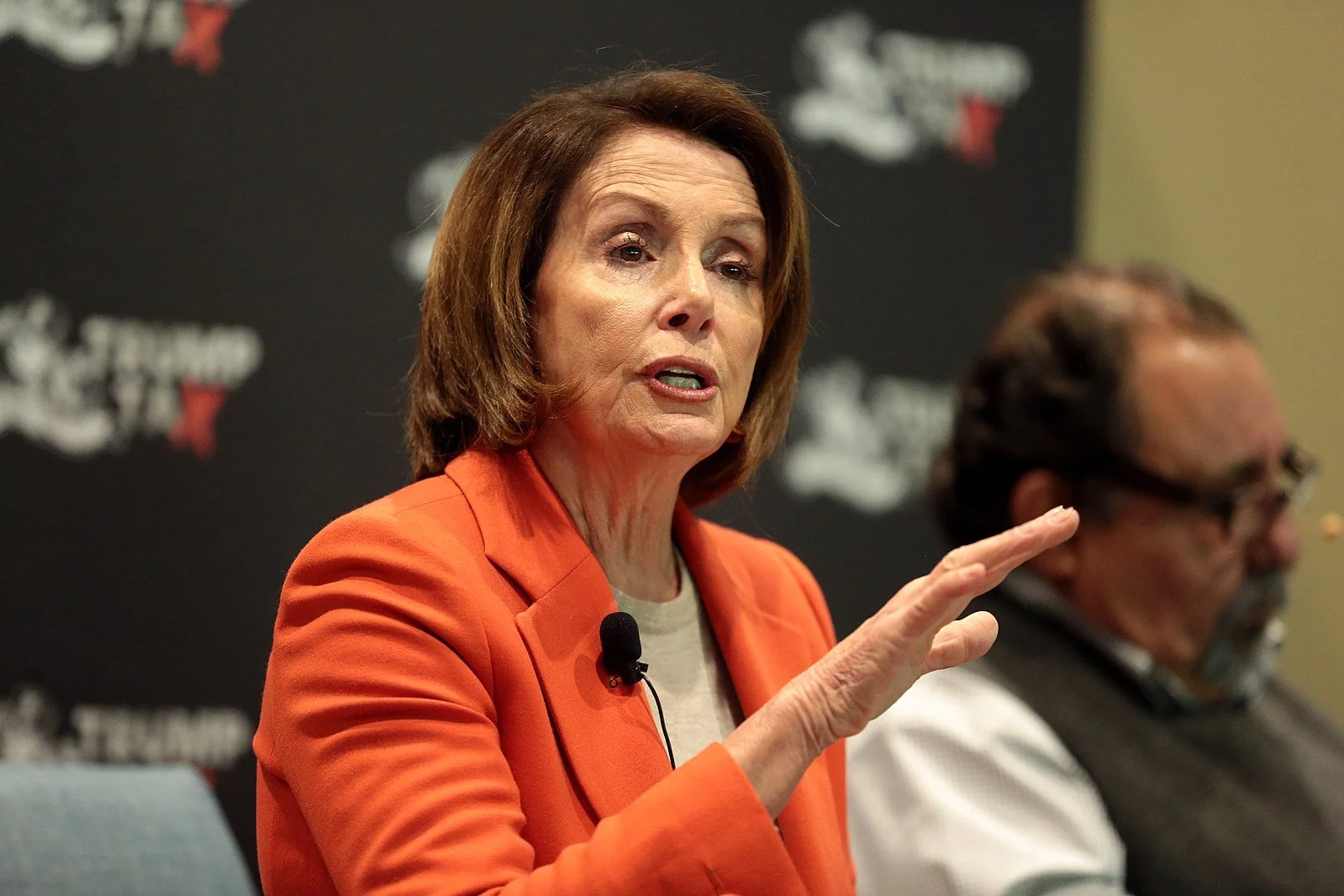
This brings us to the national news story regarding House Speaker Nancy Pelosi being banned by San Francisco Archbishop Salvatore Cordileone from taking Holy Communion because of her continued support — in words and deeds — for abortion rights.

The ensuing coverage, depending on what sources you read, spanned from very good (especially in Catholic news sources such as America magazine and The Pillar) to baffling and very poor.

These last two traits were mostly found in mainstream secular outlets where the focus was predominantly on politics rather than religion. It also highlighted the blind spots of today’s journalists, where a lack of religion knowledge — or even understanding that religious voices need to be included in their coverage — was on full display in the Pelosi-Holy Communion story.

As a result, some of the news coverage surrounding Pelosi and the archbishop denying her the Eucharist openly attempted to rewrite Catholic doctrine on this issue. Since most news coverage has a good guy-bad guy quality to it, omitting what the church teaches on this particular issue helped cast the California Democrat as the aggrieved party and Cordileone as a MAGA-loving prelate (who does not deserve the red hat of a cardinal).

It really didn’t matter whether it was a news story, editorial or opinion piece — centuries of Catholic doctrine on who should receive the Eucharist and the authority of a bishop was swept to the side.

The San Francisco Examiner, in a May 23 editorial, called for Pope Francis to replace Cordelione.


Please respect our Commenting Policy

Ukraine's oldest Orthodox Church seeks independence, while the Lavra monastery is at risk

Ukraine's oldest Orthodox Church seeks independence, while the Lavra monastery is at risk

This was a very important weekend in the history of Eastern Orthodox Christianity in Ukraine and Russia — for those (including journalists) who believe that religious traditions and symbols matter as much as statements by government officials and headlines in Western media.

At the center of the drama, of course, was the city of Kiev, as it is known in to Russians and many Ukrainians, and Kyiv, as it is known to many Ukrainians, as well as officials in the United States and the European Union.

Here’s the quotation I keep thinking about, drawn from a historian (and Orthodox priest) I interviewed for a 2018 column that ran with this headline: “A thousand years of Orthodox history loom over today’s Moscow-Istanbul clash.” That quote: "Kiev is the Russian Orthodox Church, and the Russian Orthodox Church is Kiev." From this point of view, the churches of Ukraine and Russia are brothers, connected by centuries of shared history — good and bad — and Orthodox tradition.

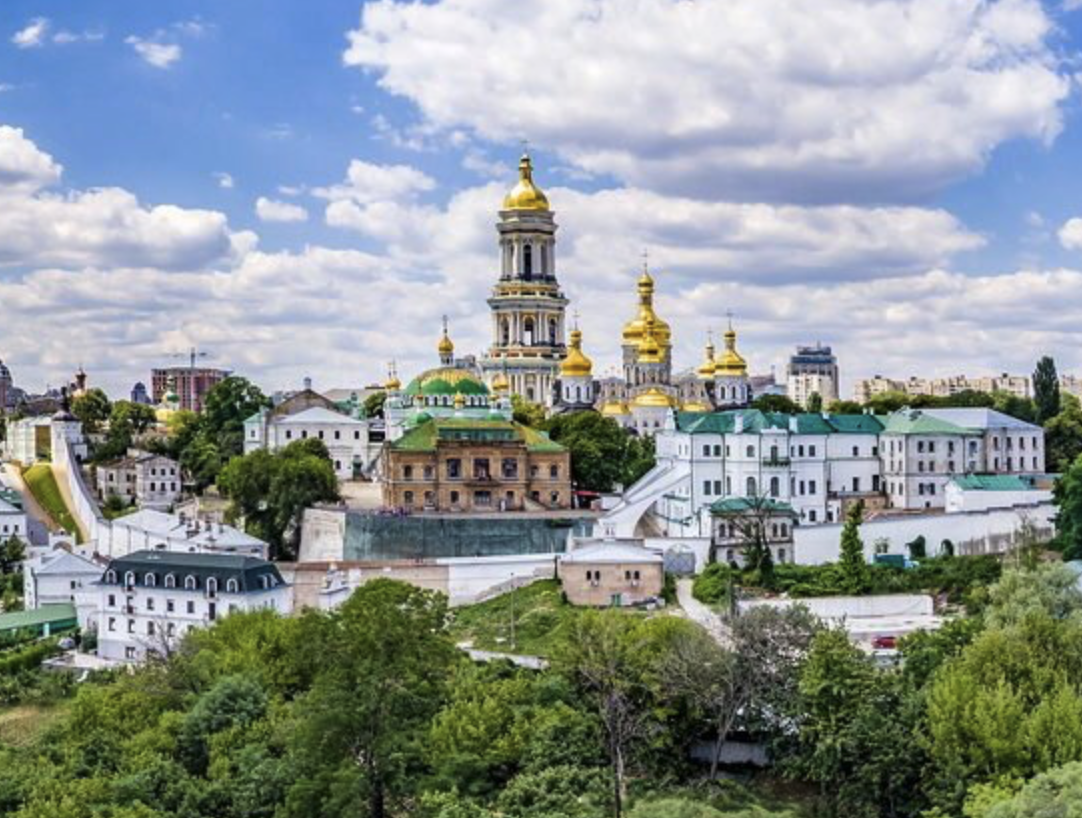
The crucial issue, in many ways, is one the press seems to think is secondary — the future of the Kiev Pechersk Lavra, the font of Orthodox spirituality in the Slavic world.

Let’s start with two short wire-service reports and, along the way, I will point readers to some crucial documents that add more depth and clues as to what is happening. First, from the Associated Press:

KYIV, Ukraine — The leaders of the Orthodox churches in Ukraine that were affiliated with the Russian Orthodox Church have adopted measures declaring the church’s full independence and criticizing the Russian church’s leader for his support of Russia’s invasion of Ukraine.

Orthodoxy, the largest religious denomination in Ukraine, is divided between churches that had been loyal to the Moscow Patriarchate and those under a separate ecclesiastical body.

The council of the Moscow-connected body, the Ukrainian Orthodox Church, on Friday said it “condemns the war as a violation of God’s commandment ‘Thou shalt not kill!’ ... and expresses disagreement with the position of Patriarch Kirill of Moscow and All Russia regarding the war in Ukraine.”

It also adopted charter changes “indicating the full self-sufficiency and independence of the Ukrainian Orthodox Church.”

Note, in the lede, the assumption that simply saying that this has happened means that it has happened, as in the “leaders of the Orthodox churches in Ukraine that were affiliated with the Russian Orthodox Church.”

Now, the official declarations (click here for details) made by the leaders of the oldest Orthodox body in Ukraine — usually called the Ukrainian Orthodox Church (Moscow Patriarchate) — are very serious and they were accompanied by changes in WORSHIP that, for the Orthodox, are even more important than words on paper.


Please respect our Commenting Policy

Prayers and laments in Uvalde: 'May God heal their little hearts, their little souls'

Prayers and laments in Uvalde: 'May God heal their little hearts, their little souls'

Another week.

Another mass shooting — this time at an elementary school in Uvalde, Texas.

I lack the words to convey the enormity of this tragedy. Instead, as we mourn the 19 innocent children and two teachers slain Tuesday, let’s reflect on these expressions of faith and lament:

“We don’t know what to pray. … We just know we’re hurting, and our God hurts with us.” — Zach Young, worship pastor for Crossroads Community Church in San Antonio (via San Antonio Express-News story by Jacob Beltran)

“We’re just trying to encourage each other and trying to get through this.” — John Juhasz, outreach minister for Getty Street Church of Christ in Uvalde (via story by Washington Post team)

“The only way we can fix this country is to get down on our knees and humble ourselves before God. I am here to support this community and to ask God to heal our land.” — Jennifer Fry, mother of two young children, interviewed at a prayer vigil in Uvalde (via story by Wall Street Journal team)

“We may not understand what happened … but we seek the Lord, as best we can.” — Carlos Contreras, minister at Primera Iglesia Bautista (First Baptist Church) in Uvalde (via Texas Tribune story by Erin Douglas and Jason Beeferman)

“Prayer should be where we start, not where we finish. If we were praying genuine prayers about gun violence, we would see a lot more genuine action.” — Taylor Schumann, author of ”When Thoughts and Prayers Aren’t Enough: A Shooting Survivor’s Journey Into the Realities of Gun Violence” (via Religion News Service story by Emily McFarlan Miller)

“The Catholic Church consistently calls for the protection of all life; and these mass shootings are a most pressing life issue on which all in society must act — elected leaders and citizens alike.” — Catholic Archbishop Gustavo Garcia-Siller of San Antonio (via America story by Michael O’Loughlin).


Please respect our Commenting Policy

Yes, NPR editors, Holy Communion isn't a semi-Baptist 'symbolic' rite for Catholic believers

Yes, NPR editors, Holy Communion isn't a semi-Baptist 'symbolic' rite for Catholic believers

If you read an early version of the National Public Radio story with this headline — “An archbishop bars Pelosi from Communion over her support for abortion rights” — you may have done a spit take of whatever beverage you were drinking and, thus, damaged your computer keyboard. How much damage does this do to smartphones and iPads? Beats me.

Clearly, some personnel in the NPR newsroom — perhaps pros at the politics desk — need refresher courses on church-history basics. It appears that someone at NPR thinks that Catholic doctrines about the mysteries of Holy Communion are very similar to Baptist beliefs about the ordinance that is usually called the Lord’s Supper.

Let’s start at the beginning.

The Catholic archbishop of San Francisco says that U.S. House Speaker Nancy Pelosi is no longer allowed to receive Communion because of her vocal support for abortion rights.

Salvatore Cordileone, the conservative archbishop, said he'd previously made his concerns known to Pelosi, D-Calif., in an April 7 letter after she promised to codify into federal law the right to abortion established by the Supreme Court in Roe v. Wade. Cordileone said he never received a response from Pelosi.

Here comes the crucial language that launched quite a few tweets, along with several heated emails to GetReligion:

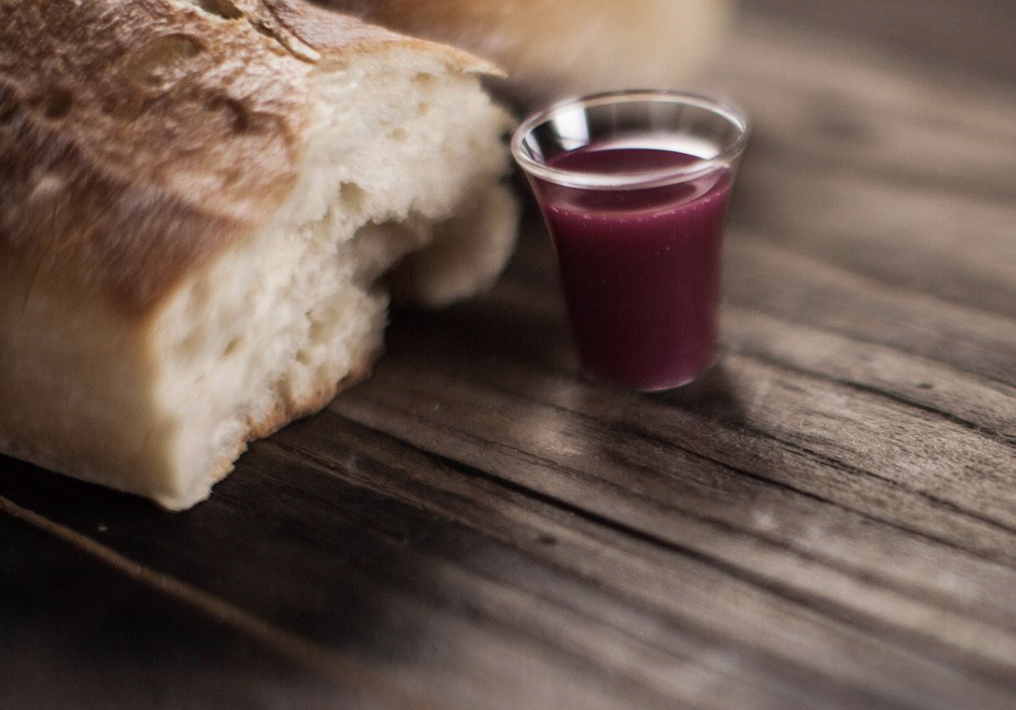
Cordileone notified members of the archdiocese in a letter on Friday that Pelosi must publicly repudiate her support for abortion rights in order to take Holy Communion — a ritual practiced in Catholic churches to memorialize the death of Christ, in part by consuming a symbolic meal of bread and wine.

The key word there is “symbolic.”

That’s a very low-church Protestant word in this context. Ditto for the word “memorialize.”


Please respect our Commenting Policy