Worship

If the big goal is racial reconciliation, pastors may want to start by breaking bread

If the big goal is racial reconciliation, pastors may want to start by breaking bread

The Rev. Martin Luther King, Jr., faced a barrage of questions about race and politics during his landmark 1960 appearance on NBC News' "Meet the Press," but one of the most memorable exchanges concerned a blunt question about church life.

"How many white people are members of your church in Atlanta?", asked a reporter from Nashville.

"I think it is one of the tragedies of our nation, one of the shameful tragedies, that 11 o'clock on Sunday morning is one of the most segregated hours, if not the most segregated hour, in Christian America," King replied. Any church that has "a segregated body is standing against the spirit and the teachings of Jesus Christ, and it fails to be a true witness," he added.

Millions of Americans are still wrestling with this Sunday morning divide.

But another practical question emerged during a recent Southern Baptist Convention program entitled "Pursuing Unity: A Discussion of Racial Reconciliation Efforts and the SBC." Can Black and White church folks find gaps in their jammed schedules and start breaking bread together?

"It doesn't matter how many panel discussions you watch. It doesn't matter how many books you read, how many conferences you go to. None of that will do better than dinner table ministry," said the Rev. Jon Kelly of Chicago West Bible Church.

If people want progress, he said, they need to consider their circle of friends and ask "why everyone looks like me, votes like me, thinks like me. … When we talk about racial reconciliation, we want the fruit of reconciliation without the relationships. Until our dinner tables become diversified, … until we eat bread together and fellowship together, we won't make any progress."

Fellowship meals will not make headlines or ignite rhetorical fireworks in social media, and that's a good thing, said the Rev. Ed Litton, who recently said he wouldn't seek a second term as SBC president. He plans to focus on racial-reconciliation projects linked to his own church near Mobile, Ala.

Years ago, he said, Black and White pastors began sharing meals while discussing the "deep wounds" in that racially divided community. The key was focusing on faith and the ties that bind, until basic bonds of trust were in place.

"We hashed out why we were there," said Litton. "We weren't there to bring about some kind of social change.
Please respect our Commenting Policy

Americans think highly of Jesus: But modern Christians get rather harsh reviews

Americans think highly of Jesus: But modern Christians get rather harsh reviews

When it comes to exploring what Americans think about Jesus, a new study offers Christian leaders both good news and bad news.

The good news is that 76% of Americans affirm the "historical existence" of "Jesus of Nazareth," although it's also interesting to note that if 89% of self-identified Christians embraced that statement, the implication is that 11% are not sure.

Meanwhile, 84% of participants in a new "Jesus in America" study -- conducted by the global Ipsos research company for the Episcopal Church -- agreed that "Jesus was an important spiritual figure."

The bad news? While 50% of "not religious" Americans accepted this "important spiritual figure" language, they were much less impressed with the believers who represent Jesus.

When asked, "What characteristics do you associate with Christians in general?", the nonreligious selected these words from the poll's options -- "hypocritical" (55%), "judgmental" (54%) and "self-righteous" (50%). Next up: "arrogant," "unforgiving" and "disrespectful."

It appears that one of the goals of this poll -- with questions about racism, social justice and last year's attack on the U.S. Capitol -- was to see if nonbelievers have different attitudes about liberal and conservative Christians, said political scientist Ryan Burge of Eastern Illinois University, author of the new book "20 Myths about Religion and Politics in America." He is co-founder of the Religion in Public website and a contributor at GetReligion.org, which I have led since 2004.

"This is the million-dollar question," said Burge, who is also a pastor in the progressive American Baptist Church. "If non-religious people are turned off by what they see as the stricter faith of many Christians, evangelicals in particular, then wouldn't it make sense for them to seek more flexible alternatives?

"If there's all kinds of room in mainline Protestant churches these days, and that's putting it mildly, then why aren't these kinds of people filling up some of those pews?"


Please respect our Commenting Policy

Thinking about world Christianity, as Crux digs deep into many overlooked Catholic details

Thinking about world Christianity, as Crux digs deep into many overlooked Catholic details

It’s hard to believe that it has been two decades since historian Philip Jenkins published his groundbreaking essay “The Next Christianity” in The Atlantic Monthly.

It contained key material from the first of three books that Jenkins published on the future of world Christianity and, thus, of the changing face of world religion — period. The first book was entitled: “The Next Christendom: The Coming of Global Christianity.

This piece of the Atlantic subtitle is crucial: “We stand at a historical turning point, the author argues — one that is as epochal for the Christian world as the original Reformation. Around the globe Christianity is growing and mutating in ways that observers in the West tend not to see.”

Sure enough, many reporters didn’t see what Jenkins was describing, even though clashes between the chilly, declining Christian West and the blooming Christian South and East are easy to see looming in the background of many major stories. As the Anglicans and United Methodists about that.

Understanding Jenkins’ work is a crucial first step to understanding the importance of a new Crux think piece by the omnipresent John L. Allen, Jr. The headline: “In new Catholic numbers, an ‘imponderable’ movement shaping history.”

First, consider this from Jenkins:

If we look beyond the liberal West, we see that another Christian revolution, quite different from the one being called for in affluent American suburbs and upscale urban parishes, is already in progress. Worldwide, Christianity is actually moving toward supernaturalism and neo-orthodoxy, and in many ways toward the ancient worldview expressed in the New Testament: a vision of Jesus as the embodiment of divine power, who overcomes the evil forces that inflict calamity and sickness upon the human race. In the global South (the areas that we often think of primarily as the Third World) huge and growing Christian populations — currently 480 million in Latin America, 360 million in Africa, and 313 million in Asia, compared with 260 million in North America — now make up what the Catholic scholar Walbert Buhlmann has called the Third Church, a form of Christianity as distinct as Protestantism or Orthodoxy, and one that is likely to become dominant in the faith.


Please respect our Commenting Policy

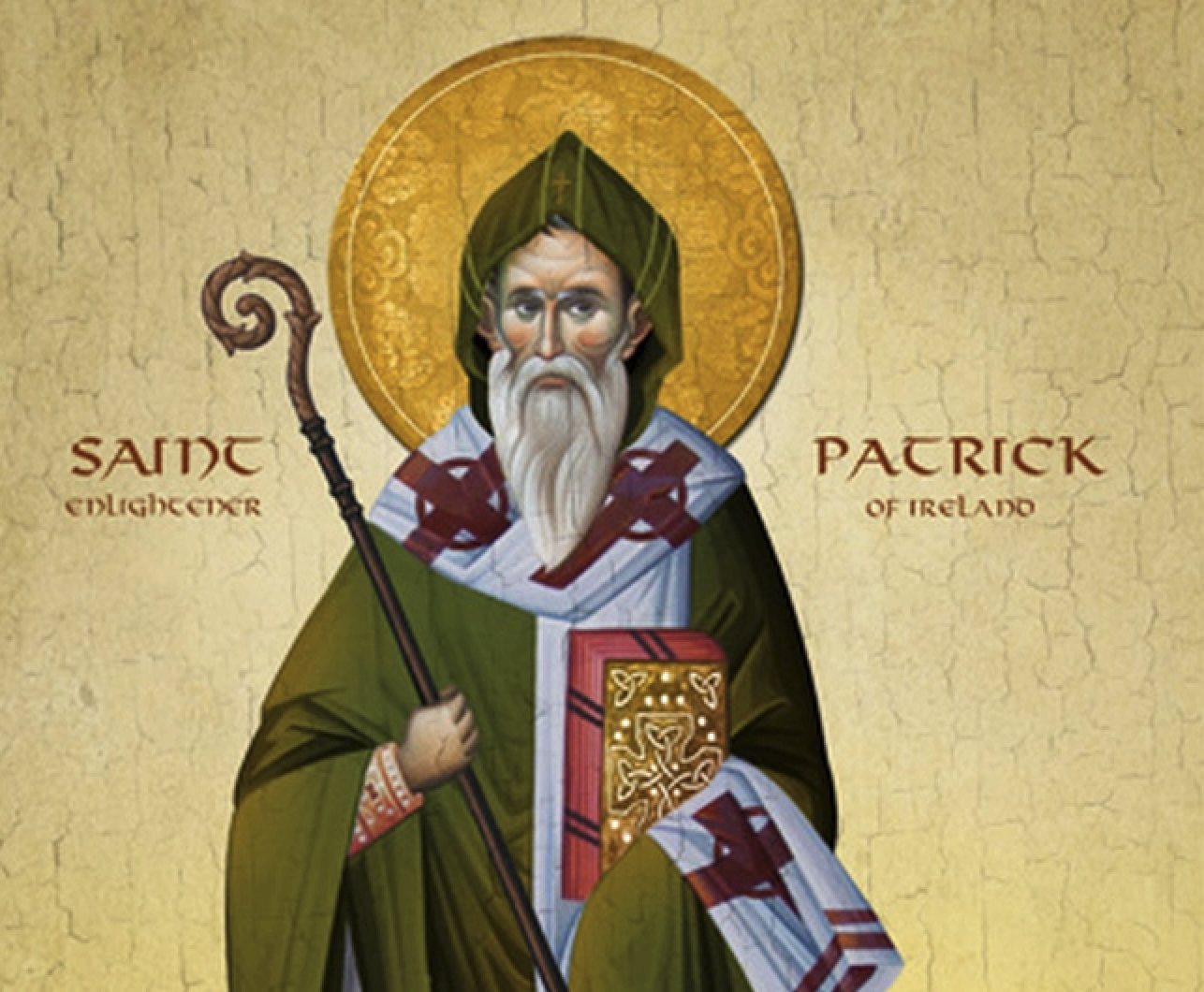
Podcast: Why would journalists want to edit St. Patrick's voice out of stories about his feast?

Podcast: Why would journalists want to edit St. Patrick's voice out of stories about his feast?

When you think of St. Patrick’s Day, what leaps to mind?

Maybe I should ask the question like this: When you think about mainstream-press news coverage of St. Patrick’s Day, what leaps to mind?

Green beer? Corned beef and cabbage (during Lent)?

Great masses of people — primarily in big cities in the Acela Zone and the Rustbelt — going more than a little crazy? Politicians trying to march next to the Catholic archbishop of New York, when they disagree with him on most hot-button issues? Lawsuits about LGBTQ groups demanding to march in a parade that, once upon a time, had something to do with Christian hero?

Questions like these were at the heart of this week’s “Crossroads” podcast (CLICK HERE to tune that in), which got rather personal — since my family embraced the Celtic saints when we converted to Orthodox Christianity. My patron saint is St. Brendan and my daughter’s is St. Brigid (more on this later).

The Big Idea of this podcast was quite simple: It is totally valid for journalists to focus on civic celebrations of St. Patrick’s Day and other modern variations on the veneration (not worship) of the great Celtic saints. The problem is when they leave readers in the dark about the details in the lives of these saints (along with debates about those details), along with the prayers and rites linked to them.

For example, when you think about St. Patrick do these words come to mind?

My name is Patrick. I am a sinner, a simple country person, and the least of all believers. I am looked down upon by many. My father was Calpornius. He was a deacon; his father was Potitus, a priest, who lived at Bannavem Taburniae. ... His home was near there, and that is where I was taken prisoner. I was about sixteen at the time. At that time, I did not know the true God. I was taken into captivity in Ireland, along with thousands of others.

That’s the first few lines of the Confession of St. Patrick, a document that historians take quite seriously — in part because it focuses on the faith and history of this great missionary bishop, while ignoring all kinds mythological details that came later.


Please respect our Commenting Policy

Never forget: There are more than two strategic camps in the global United Methodist war

Never forget: There are more than two strategic camps in the global United Methodist war

It’s time for another religion-beat journey beyond “whataboutism” and the basic assumption that all controversial subjects have “two sides,” and that’s basically that.

Of course, we live in an age in which many elite newsrooms decline to cover “one side” of a story if, according to newsroom doctrines, it’s already obvious which side is good and which side is bad. Here at GetReligion we have a term for this — “Kellerism,” a nod to candid remarks once made, on the record, by former New York Times editor Bill Keller.

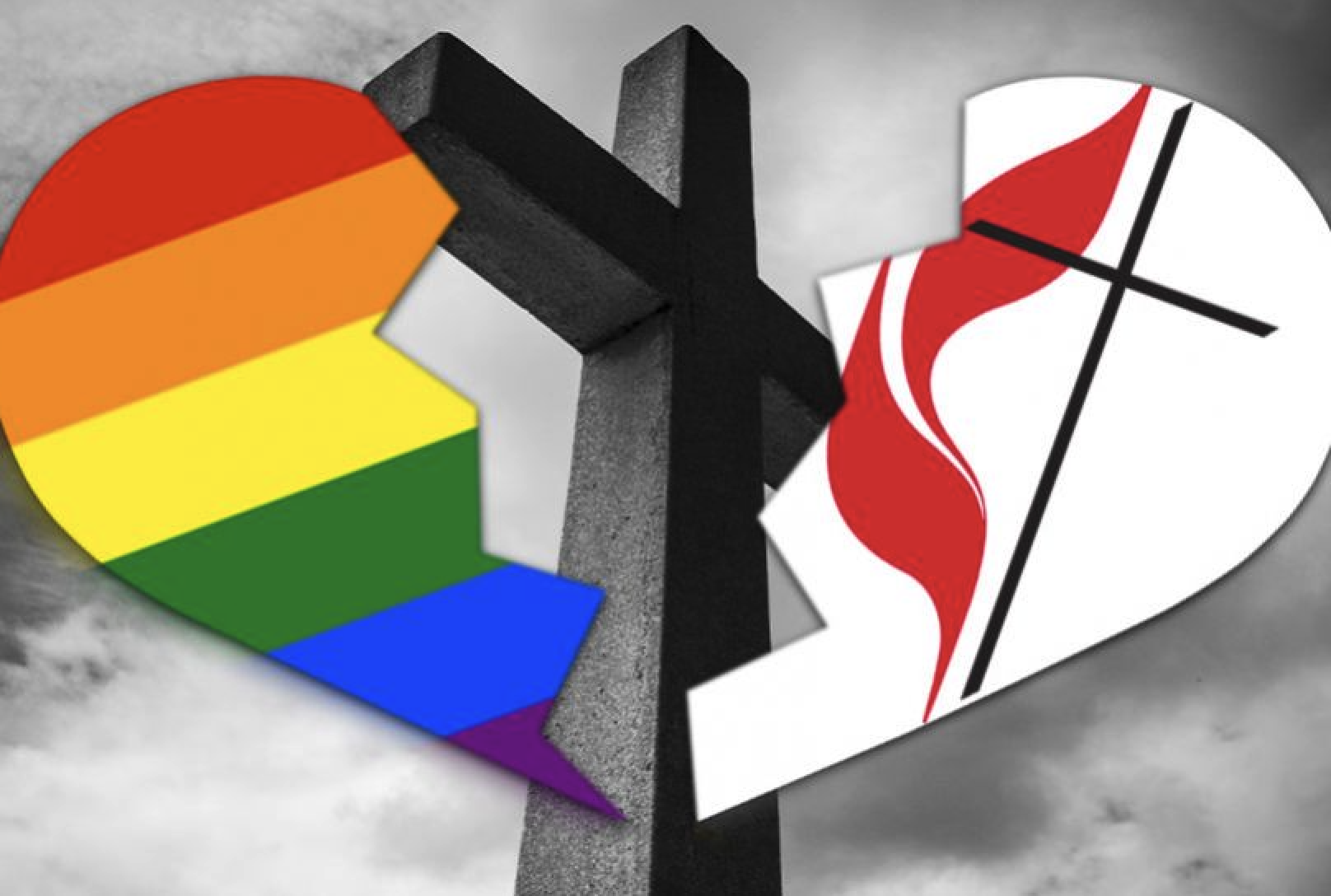
In this case, we are looking at a religion-beat superstory at the local, regional, national and global levels — the break-up of the United Methodist Church, the second largest Protestant denomination in America.

To get the big picture, please see this recent GetReligion post by Richard Ostling: “The latest United Methodist bombshell will create news throughout 2022 and beyond.” To see how long this battle has been going on, check out this “On Religion” column that I wrote in 1998: “United Methodists — Breaking up is hard to do” and two more on a related topic, “Old fault lines can be seen in the ‘seven churches’ of divided Methodism” (and then part II).

Here are Three Big Ideas for today. Remember that I have, as a reporter, been wrestling with this ongoing story since the early 1980s.

(I) Never forget the unique element of this story, which is that the United Methodist Church has a GLOBAL structure that includes the growing churches of Africa and Asia, as well as the splintering (and usually shrinking) congregations in the United States. Readers should question news reports that fail to mention — or even stress — the racial and cultural diversity of the global conservative United Methodism coalition.

(II) While fights about LGBTQ issues make headlines, the United Methodist wars have — behind the scenes — included clear divisions on basic, even credal, issues in Christian theology. In addition to clashing views of biblical authority, we’re talking about splits on salvation, sin, heaven, hell, the Resurrection and the very nature of Jesus Christ. Reporters need to ask questions about issues other than sex.

(III) There are, at the very least, three major groups involved in this story. Let’s call them the “candid left,” the “establishment left” and then the “traditional” United Methodists, as in the defenders of the existing laws and doctrines in the United Methodist Book of Discipline. However, there are subgroups on the right. Never assume that the global conservatives have precisely the same views as their American counterparts.

To see that these issues look like “in the wild,” consider this recent Religion News Service story: “Vote delayed again, some United Methodists say they quit. Now what?”


Please respect our Commenting Policy

There goes that Ryan Burge guy, again: Myths about evangelicals, Catholics and others

There goes that Ryan Burge guy, again: Myths about evangelicals, Catholics and others

During my years as a journalism professor (now over), I must have told my students the following a thousand times: Pay close attention when one of your sources consistently offers information and insights that (a) fit the actual facts on the ground, yet (b) anger (or at least puzzle) people on both sides of the hot-button issues that make headlines.

For several decades, my classic example of this phenomenon has been political scientist John C. Green of the University of Akron, best known for years of consulting work with the Pew Forum team. A few years ago, I added religious-liberty specialist David French to that list. Sociologist James Davison Hunter, author of that “Culture Wars” classic? Ditto. How about the notorious scholar Karen Swallow Prior?

Then that Ryan Burge guy (@RyanBurge) started lighting up Twitter with chart after chart backed with data on religion and public life. He’s been a GetReligion contributor, in a variety of ways, for several years now and was a big hit when he Zoomed into a December religion-news program at the Overby Center at Ole Miss.

If you agree with Burge on everything, then you aren’t paying attention. That’s a compliment. Like Green, Burge is a man of the mainline-church world, but he’s consistently candid about the trends that he sees on left and right.

How he has another book out — “20 Myths about Religion and Politics in America” — and readers are sure to disagree with one or more of his myths. But the numbers he spotlights are always worthy of attention, especially for journalists who cover religion, culture and politics.

I’ll note some new Burge appearances on audio and video podcasts, as they roll out in the weeks ahead — starting with the one at the top of this post. He also did a Religion News Service Q&A the other day with Jana Riess that ran with this provocative headline: “Evangelicalism isn’t dying, and Catholics are going Republican.”

The first question is exactly what you’d expect, if you’ve been following Burge in recent years:

Your first chapter says that rumors of evangelicalism’s death are premature. Could you talk about that?


Please respect our Commenting Policy

Are Southern Baptists bracing for another civil war? Well, today isn't 1979 ...

Are Southern Baptists bracing for another civil war? Well, today isn't 1979 ...

Once upon a time, Southern Baptists in Bible Belt communities knew how to talk to people who didn't go to church.

"We were dealing with people who were, for the most part, like us," said Baptist historian Nathan Finn, the provost of North Greenville University, located in the South Carolina hills near the North Carolina border. "Everyone understood sweet tea, fried chicken and SEC football. It was easier to talk to those people about Jesus."

Things changed, as the greater Greenville-Spartanburg welcomed waves of high-tech firms and industries with global brands such as BMW, Bosch, Fluor, Hitachi and many others. Today's newcomers speak German or Japanese.

"It's not Black folks and White folks from the South. We're past that. The Sunbelt has gone global and we're more urban. We don't know how to talk to the new people," said Finn. "The cultural gaps are bigger. … Southern Baptists are better at handling these kinds of issues in foreign missions than in our own communities."

Finn has been studying this trend and others for years, which led him to write a series of articles in 2009 for Southeastern Baptist Theological Seminary entitled "Fifteen Factors that have Changed the SBC since 1979."

Anyone who knows Southern Baptist Convention history gets that 1979 reference. That was when activists backing "biblical inerrancy" attacked establishment leaders of America's largest Protestant flock, while also supporting causes favored by the surging Religious Right. Electing one SBC president after another during the 1980s, this "conservative resurgence" helped change the face of evangelicalism.

There are signs a second Baptist civil war may be ahead.


Please respect our Commenting Policy

Podcast: What's next for Russian priests who asked if Putin will be damned for invading Ukraine?

Podcast: What's next for Russian priests who asked if Putin will be damned for invading Ukraine?

Warning: The following is not a “whataboutism” comparison between Joe Biden and Vladimir Putin or an attempt to find some kind of moral equivalence between their policies and actions.

What I am doing is making a comment about what journalists can and cannot know about a leader’s public and private religious convictions. This is a key theme in this week’s “Crossroads” podcast (CLICK HERE to tune that in) about religious issues linked to Putin’s invasion of Ukraine. The big idea is that politicians in a variety of cultures are skilled, when it comes to using religious themes and symbols.

First, what do we know about Biden’s Catholic beliefs?

We know that he carries a rosary, knows how to use it and frequently attends Mass, almost always in parishes sympathetic to him. We know that ancient doctrines in Catholic moral theology are important to him when it comes to immigration and social justice issues, but not when it comes to marriage, abortion, sexual ethics and, until recently, the death penalty.

What does this tell us about what he does or does not say during Confession and other crucial issues about the content of his faith? Next to nothing. Thus, his actions are crucial.

Now, what do we know about Putin’s Orthodox beliefs?

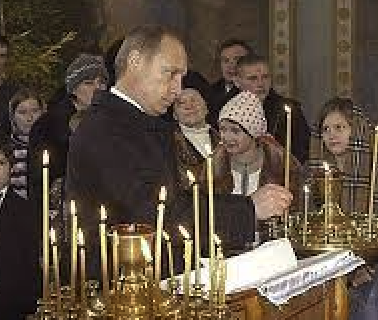
We know that he built a chapel near his office, that he knows how to make the sign of the cross and light prayer candles. We know that he believes that Orthodox Christianity is a crucial part of Russian history and that “Holy Mother Russia” is an important concept in Russian identity and nationalism. We know that issues such as abortion and marriage formation were not important to him — until it became clear that Russia is in a state of demographic collapse. Putin has, of course, used major themes from Orthodox history to justify his actions in Ukraine.

We also know that his government and his supporters have poured oceans of money into the rebuilding of Orthodox churches in the post-Soviet era, believing that this is in the national interest. This matters in a nation that endured the most sweeping wave of martyrdom in Christian history, with the closing of 98% of the land’s churches, the murder of 200,000 bishops, priests and nuns and millions of others in death camps, purges, planned famines (in Ukraine, especially) and other forms of persecution. We know that some clergy were crucified on the doors of their churches, slaughtered on their altars or stripped naked, doused with water and left outdoors in winter.

What does this tell us about what Putin does or does not say during Confession and other crucial issues about the content of his faith? Next to nothing. Thus, his actions are crucial.


Please respect our Commenting Policy

Vatican 'Synod on Synodality': Why the press has largely ignored this big Catholic story

Vatican 'Synod on Synodality': Why the press has largely ignored this big Catholic story

We interrupt your reading about the war in Ukraine with a very important post about the global Catholic Synod on Synodality.

Synod on synodality? Say that three times fast. For some Catholics it’s kind of a Zen thing.

The Synod of Synodality is a two-year process that Pope Francis began last October. Officially known as “Synod 2021-2023: For a Synodal Church,” it is a process that allows bishops to consult with Catholics — from parishioners all the way up to priests — in a spirit of collaboration and openness. This includes official dialogue with some activists who actively dissent from church teachings.

Why should anyone care? Is this a news story that editors will care about?

A phrase like Synod on Synodality certainly won’t ever make it into a punchy headline, not even at The New York Post.

The secular press isn’t all that interested in doctrinal issues that don’t appeal to a larger audience or lack a political connection. It’s the reason why the pope going after the Latin Mass got little mainstream news attention while bishops batting President Joe Biden about receiving Holy Communion got tons of coverage. Then again, the synod will almost certainly contain strong LGBTQ news hooks.

It was in March 2020, on the eve of the pandemic, that Pope Francis announced the synod. It was quickly forgotten as the world battled the outbreak of COVID-19. The Vatican even set up a Twitter account for the synod.

Last October, when the pope launched the start of this process, the Catholic press did a very good job explaining what the Synod of Synodality is. For example, Catholic News Agency explained this global synod and its purpose this way:

The pope acknowledged that learning to listen was “a slow and perhaps tiring exercise” for bishops, priests, religious, and laity.


Please respect our Commenting Policy