Worship

Podcast: Religion News Service offers new story about an old trend called 'Sheilaism'

Podcast: Religion News Service offers new story about an old trend called 'Sheilaism'

One of the problems with covering the same religion-beat topics for multiple decades (in other words, I am old) is that you tend to see many “new” news stories as pieces of puzzles that are actually quite old.

Consider, for example, the Religion News Service feature that was the hook for this week’s “Crossroads” podcast (CLICK HERE to tune that in).

The headline on that RNS piece stated: “A 300-year-old church hopes to connect with spiritual but not religious neighbors.” Here is the overture from this story by religion-beat veteran Bob Smietana:

For three centuries, Trinity Episcopal Church has tried to meet the spiritual needs of the small community of Southport, Connecticut, about an hour and a half outside of New York.

As more and more of the church’s neighbors ditch organized religion but not faith, leaders at Trinity hope a new initiative will help them find meaning and purpose in life even if they never attend a Sunday service.

The church recently launched the Trinity Spiritual Center, which offers lectures, classes on meditation and contemplation, and a sense of community during a trying time, said the Rev. Margaret Hodgkins, the rector of Trinity Church.

We will come back to some of the specifics of this piece — details that link it to several trends that are (#SIGH) decades old in the aging, shrinking world of mainline Protestantism and, to a lesser extent, parts of Roman Catholicism, Eastern Orthodoxy, liberal Judaism and other established religious “brands.”

The Big Idea in this RNS piece is that an Episcopal parish that has some resources to spend has decided to help spiritual seekers find their own paths to the top of Mt. Eternity without proclaiming any of those narrow, tacky doctrines linked to 2,000 years of Christian faith and practice. You know, all that stuff about the Resurrection of Jesus, eternal salvation or moral theology (warning: veiled reference to the “tmatt trio”).

In other words, the goal appears to be a sort-of parish in honor of St. Sheila, the patron saint of “Sheilaism.”


Please respect our Commenting Policy

Cooper Kupp's spiritual vision: Well, it's hard not to pay attention to the Super Bowl MVP

Cooper Kupp's spiritual vision: Well, it's hard not to pay attention to the Super Bowl MVP

It’s hard not to pay attention to what the winner of the Most Valuable Player award has to say after the Super Bowl.

Thus, a few mainstream media features after the Los Angeles Rams’ victory focused on a bit of very personal testimony by superstar wide receiver Cooper Kupp. In a way, what he said resembled the kind of stereotypical Godtalk that filters into the news when believers are asked to express their first reactions after a major event — glorious or tragic — in their lives.

Long ago (pre-Internet), I interviewed the late, great Dallas Cowboys coach Tom Landry about all of this. People tend to think that believers pray to win football Games and either God hears them or not, he said. The reality is more complex than that and, most of the time, players and coaches are trying to make sense of these events — wins and loses — in the context of how God is working in their lives.

In the case of Kupp, this win in The Big Game linked into what he claimed was a vision after a Super Bowl loss. Here is the top of a story from The Athletic: “How the Rams’ Cooper Kupp’s quiet vision became reality in front of the whole world.” This is long, but essential:

INGLEWOOD, Calif. — The vision arrived with unbelievable clarity. Cooper Kupp long ago saw an unmistakable image of himself not only playing in and winning a Super Bowl but also earning the Most Valuable Player award.

But what was notable about this visualization was its peculiar timing. It came as Kupp was walking off the field at Mercedes-Benz Stadium in Atlanta after watching — not playing in — the Rams’ Super Bowl LIII loss to the Patriots. Kupp missed that game with a knee injury, but he says he received confirmation that night that he’d be back.

“What it was is just this vision that God revealed to me that we were going to come back and we were going to win it and somehow I was going to be the MVP of the game,” Kupp said. “I shared that with my wife because I couldn’t tell anyone else, obviously. But from the moment that this postseason started, there was such a belief in every game. It was written already, and I just had to play free knowing that I got to play from victory, not for victory.”

Kupp finally shared his vision with the world Sunday night. By then, the world had already seen the manifestation of it all. It was no longer was a vision. It was Kupp’s incredible reality.

Note this phrase: “I couldn’t tell anyone else, obviously.”


Please respect our Commenting Policy

Plug-In: No nostalgia -- some pandemic-weary souls want to reclaim Sunday as day of rest

Plug-In: No nostalgia -- some pandemic-weary souls want to reclaim Sunday as day of rest

In a hit song two decades ago, country music group Rascal Flatts offered banjo-tinged commentary on “the world spinning faster than it did in the old days.”

“Sunday was a day of rest,” the group proclaimed in its ode to a bygone era. “Now, it’s one more day for progress.”

Some of us are old enough to remember when most businesses — not just Chick-fil-A — closed on Sundays. It seems quaint now, but I did an Associated Press story in 2003 on Family Christian Stores — then the nation’s largest Christian retail chain — deciding to open on Sundays.

But in 2016, I was surprised during a reporting trip to North Dakota when I found an empty parking lot at a Bismarck Walmart — and then at Super Target — while looking to buy a few snacks and supplies before Sunday morning church.

I learned that for more than a century, the state had required most retailers to close from midnight to noon on Sundays. North Dakota finally became the last state to lift that ban in 2019.

I bring up this subject not just for nostalgia but because the day of rest — or the lack of it — is drawing renewed consideration nationally.

In a recent piece, Deseret News religion reporter Kelsey Dallas explains “why some political commentators and legal scholars are tweeting their support for taking a Sabbath”:

Even before the COVID-19 pandemic began, Americans were overworked and tightly wound. In the past two years, the situation’s only gotten worse.

Pandemic-related stress and a widespread desire for more time to rest are among the factors fueling the “Great Resignation.” They also help explain why some political commentators and legal scholars spent the weekend debating the Sabbath. …


Please respect our Commenting Policy

What role will religion play in current U.S. Supreme Court nomination intrigue?

What role will religion play in current U.S. Supreme Court nomination intrigue?

When President Biden soon chooses a successor to Supreme Court Justice Stephen Breyer, journalists will need to keep in mind highly contentious religious issues, not just on matters like abortion but over how much to limit First Amendment claims of religious freedom, as in same-sex disputes, and where to draw lines on church-state separation.

Liberal, secularist and separationist voices are quick out of the gate with warnings to Biden about the Court's 6-3 conservative majority. Americans United for Separation of Church and State wants a new justice who'll be "a bulwark against the court's ultra-conservative majority, who seem set on redefining religious freedom as a sword to harm others instead of a shield to protect all of us." This lobby asserts that "our democracy depends on it."

A must-read from the cry-of-alarm forces is the analysis of numerous recent Supreme Court religion rulings from Ian Millhiser — Vox.com's specialist covering law and "the decline of liberal democracy." He asserts that a religion "revolution" is the "highest priority" of the Court's six Republican appointees, who are "rapidly changing the rules of the game to benefit" religious interests.

However, Kelsey Dallas at Salt Lake City's Deseret News tabulates that Breyer, in tandem with fellow liberal Justice Elena Kagan, voted with conservative justices in nine out of the 13 Court's decisions from 2006 to 2020 that backed religious-freedom claims.

The most illustrative example of the Jewish justice's thinking came in 2005 with two apparently contradictory rulings about Ten Commandments displays on public property. Beyer formed a 5-4 majority to permit the display on the Texas state Capitol grounds (Van Orden v. Perry) but then switched to create a 5-4 majority that outlawed displays in two Kentucky courtrooms (McCready County v. A.C.L.U.)

How come? Breyer advocated the "fullest possible" religious liberty and tolerance to avoid societal conflict.


Please respect our Commenting Policy

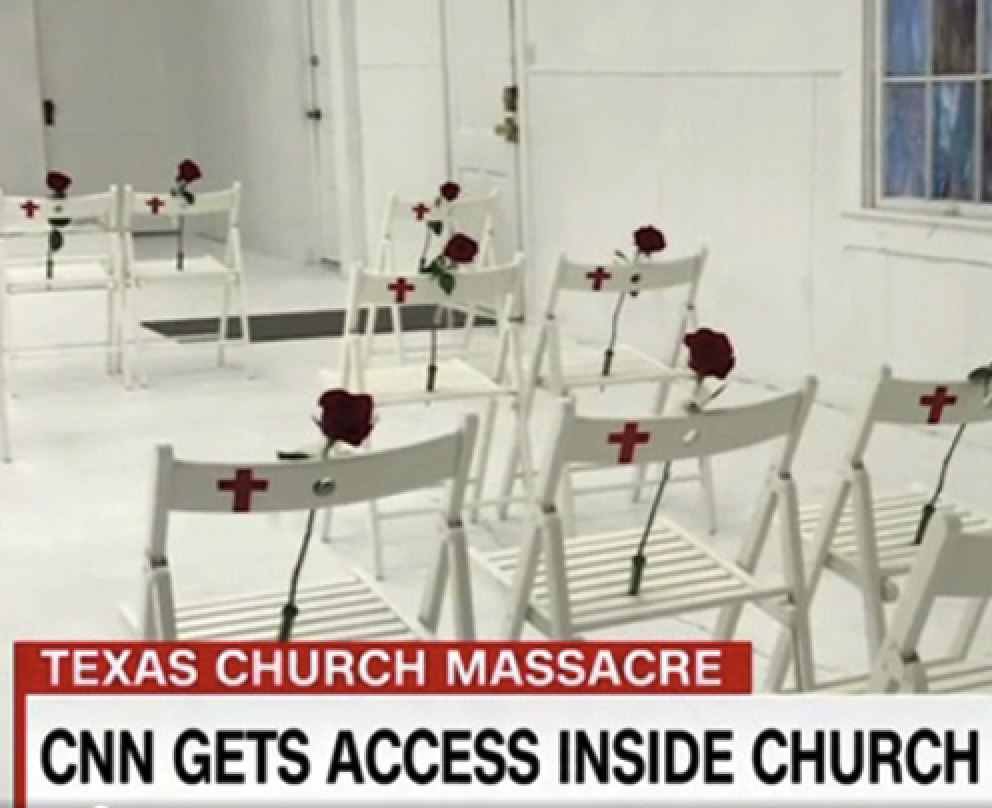
Once again, why avoid religious questions in the 2017 Sutherland Springs church massacre?

Once again, why avoid religious questions in the 2017 Sutherland Springs church massacre?

Consider, for a moment, a hypothetical case in which an angry anti-abortion activist massacres worshippers gathered at a liberal church known for its advocacy of abortion rights.

What about a radicalized Muslim attacking a synagogue? A gunman decked out in Make America Great Again clothing attacking a mosque?

Would facts about the identities of these shooters, as well as their previous statements and actions, be considered relevant in follow-up stories? We are, of course, wrestling — again — with the “Why?” component in the journalism mantra, "Who," "What," "When," "Where," "Why" and "How."

In this case, we are dealing with background materials in media coverage of a development in the 2017 massacre at the First Baptist Church in Sutherland Springs, Texas. Here’s the New York Times headline: “Air Force Ordered to Pay $230 Million to Victims of 2017 Church Shooting.” The overture states:

A federal judge ordered the U.S. Air Force … to pay more than $230 million to the survivors and the families of the victims of a 2017 shooting at a Texas church because the Air Force had failed to report the gunman’s criminal history.

In his ruling, Judge Xavier Rodriguez of the U.S. District Court for the Western District of Texas wrote that the Air Force could have blocked the gunman, Devin P. Kelley, who had served on an Air Force base in New Mexico, from buying the rifle he used to kill 26 people on Nov. 5, 2017, at the First Baptist Church in Sutherland Springs, Texas.

For its failure to report Mr. Kelley’s 2012 conviction for domestic assault, the Air Force must pay damages to the victims for their “pain and suffering, mental anguish, disfigurement, impairment and loss of companionship,” the judge wrote. He added that the case was “unprecedented in kind and scope.”

After previous commentary on this massacre, some readers noted that — reacting to detailed coverage in European newspapers — it wasn’t automatically relevant that Kelley was an outspoken atheist.

That is a valid point. However, my question is whether it is worthy of discussion (perhaps one or two sentences in news reports) that he had, in arguments on social media, expressed virulently anti-Christian beliefs and made remarks that suggested he was unstable.


Please respect our Commenting Policy

Plug-In: Online churches and virtual spirituality. Can we have a Wordle, please?

Plug-In: Online churches and virtual spirituality. Can we have a Wordle, please?

Is online church good for your soul?

Can real fellowship be attained through virtual reality?

Amid a global pandemic, why has Wordle — yes, the online game — become a ritual for so many?

Compelling questions tied to faith and technology top this week’s religion headlines.

Check out these high-tech must-reads:

1. Streaming online has been a boon for churches, a godsend for isolated: “There’s been a lot of bad news about churches in recent years,” Religion News Service’s Bob Smietana reports. “Online church has been one bright spot.”

Smietana’s piece follows Anglican priest Tish Harrison Warren making the case in a viral New York Times column that churches should drop their online services.

“Online church, while it was necessary for a season, diminishes worship and us as people,” Warren argued, igniting debate on social media and drawing rebuttals from writers such as Religion Dispatches’ Daniel Schultz.

For more insight, see this Wall Street Journal column from last October, asking, “Are internet services as good as church?” Read a more in-depth version here at ReligionUnplugged.com.

2. Faith in the metaverse: A VR quest for community, fellowship: The Associated Press’ Luis Andres Henao writes about “many Americans — some traditionally religious, some religiously unaffiliated — who are increasingly communing spiritually through virtual reality, one of the many evolving spaces in the metaverse that have grown in popularity during the coronavirus pandemic.

“Ranging from spiritual meditations in fantasy worlds to traditional Christian worship services with virtual sacraments in hyperrealistic, churchlike environments,” Henao reports, “their devotees say the experience offers a version of fellowship that’s just as genuine as what can be found at a brick-and-mortar temple.”


Please respect our Commenting Policy

In Afghanistan, believers in religious minorities have every reason to go underground

In Afghanistan, believers in religious minorities have every reason to go underground

There's a logical reason that Taliban forces have not been accused of destroying any churches in Afghanistan.

"That's the dirty little secret. There were no churches before the Taliban returned to power," said Nina Shea, director of the Hudson Institute's Center for Religious Freedom and a human-rights activist for 30 years. "Christians were already underground because of the constant threats to their lives, so they didn't have any church buildings to blow up."

Everyone remembers the shocking videos when desperate Afghans chased a U.S. military plane on a Kabul runway, pleading to be among those evacuated. At least two people fell to their deaths after clinging to a plane during takeoff.

Ever since, there have been reports about the dangers faced by those left behind, especially Afghans with ties to the U.S. military, the fallen government or workers in secular or religious non-profit groups that remained behind to continue humanitarian work.

Christians, Hindus, Sikhs, Ahmadis, Shia Muslims and members of other religious minorities are also living in fear.

"They are all on the run. They are all in hiding," said Shea, reached by telephone. "People are being hunted down and beaten and are threatened with death if they don't betray members of their families who are considered apostates" by the Taliban.

It's impossible not to discuss religious freedom during this crisis, she added. "Everything the Taliban does is about religion. Religion is involved when they hang people for violating their approach to Islamic law or when they attack women and girls who want to go to school. For the Taliban, this is all connected."

The problem is that religious freedom concerns are often drowned out during debates about politics, economics, climate change and other issues in violent flashpoints around the world.


Please respect our Commenting Policy

In reportage on Russia and Ukraine, don't neglect the importance of two rival churches 

In reportage on Russia and Ukraine, don't neglect the importance of two rival churches 

On top of the 2014 seizure of Crimea and years of infiltration in eastern borderlands, Russia now poses a more severe threat to neighboring Ukraine.

Whether the nation faces a military invasion, or even a World War 2.5, or less bloody subversion and hoped-for domination, journalists these next few years will need to understand and depict the religious aspect of Ukraine's rising nationalism and resistance against Russian expansionism.

Here are some basics. Russia and Ukraine contain by far the two largest national populations in Eastern Orthodox Christianity. The new World Christian Encyclopedia edition (which belongs in every media and academic library) counts 114 million Orthodox in Russia for 79% of the population, and 32 million in Ukraine for 73%.

Terminology note for writers: "Eastern Orthodox" is the precise designation for such churches, related historically to the Ecumenical Patriarchate based in Turkey, that affirm the definition of Jesus Christ's divinity by the Council of Chalcedon (A.D. 451). The separate branch of so-called "Oriental Orthodox" is non-Chalcedonian; its largest national church is in Ethiopia.

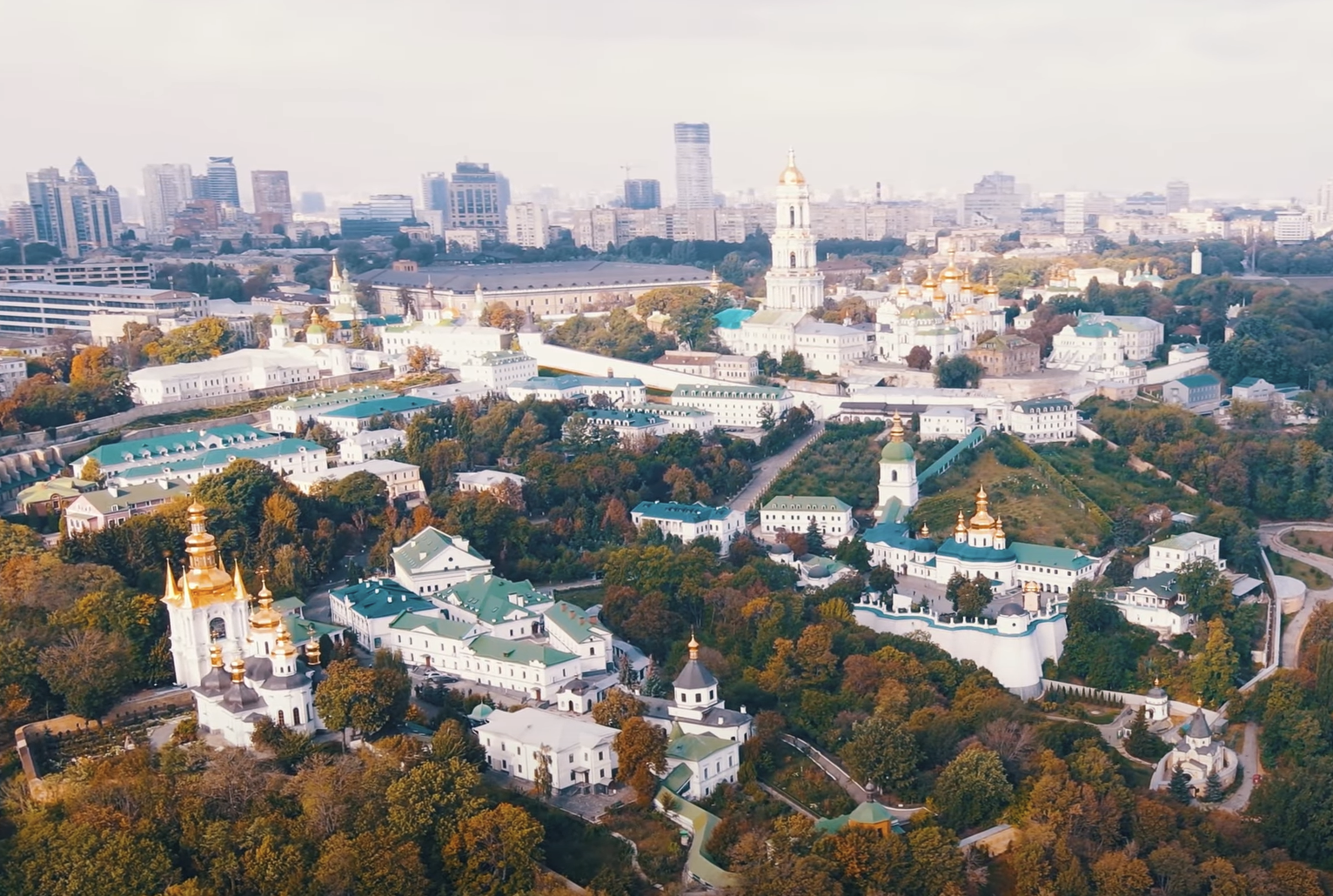
Ukraine's ecclesiastical history, like its political history, is highly complex. The saga began with the A.D. 988 "baptism of Rus" in Kyiv (Russians prefer "Kiev") when Prince Vladimir proclaimed Orthodoxy the religion of his realm and urged the masses to join him in conversion and baptism.

Russians see Christendom's entry into Eastern Europe as the origin of their homeland and the Russian Orthodox Church. Russian President Vladimir Putin cites this history to support his claim for Ukraine as a client area within greater Russia instead of a validly independent nation. His post-Soviet Kremlin maintains close bonds with the Russian Church's Moscow Patriarchate, which in turn has centuries of ecclesiastical authority within Ukraine.


Please respect our Commenting Policy

Saving urban churches: Associated Press feature dances around several important issues

Saving urban churches: Associated Press feature dances around several important issues

When I arrived at The Rocky Mountain News (RIP) in the fall of 1984, one of the first things I did was take a long walk in downtown Denver — taking notes about the religious sanctuaries that were nearby.

Most of the urban churches were, as you would expect in a Western city, linked to Mainline Protestant denominations and there were several Roman Catholic parishes, as well.

All of the mainline churches were in decline, with shrinking and aging congregations housed inside large buildings dating back to the glory days of previous decades. The one exception was a United Methodist congregation led by an evangelical pastor who was reaching out to families, single adults and all kinds of people in nearby neighborhoods — Blacks, Latinos, Asians, etc.

Meanwhile, conservative churches were growing in the suburbs, with a mixture of nondenominational, Baptist, Pentecostal and alternative Presbyterian flocks leading the way.

My point is that there were several stories going on in downtown Denver at the same time. But it was already clear — four decades ago — that lots of those old, big churches would eventually be empty or up for sale. It was also obvious that some of them would seek income from other sources to help keep their doors open, renting space to other flocks or social ministries.

Major news organizations keep bumping into stories linked to these trends, in part because big newsrooms tend to be in central urban zones and, in my experience, quite a few journalists (religion-beat pro included) have liberal Protestant or Catholic backgrounds or remain active in those traditions. Thus, here at GetReligion, it’s common to see posts with headlines such as these: “More news about old churches being sold and flipped: Does it matter why this is happening?”, “Churches for sale: New York Times visits a sexy former Catholic sanctuary in Quebec” and “Wait just a minute: Fading Lutherans (ELCA) in Waco sold their lovely building to Anglicans?” Or how about this one? “Why is a church shrinking or closing? Reporters: Brace for complex and heated debates.”

This brings me to a new Associated Press report about this old topic: “Historic city churches find new life as neighborhood centers.” Once again, there are glimpses of the trends behind this news hook, but very little information examining the larger issues looming in the background.


Please respect our Commenting Policy