Worship

Catholics for Choice boldly projects its own credo before the 2022 March for Life

Catholics for Choice boldly projects its own credo before the 2022 March for Life

When progressive Catholics list their heroes in the church hierarchy most would include Cardinal Wilton Gregory of Washington, D.C.

When preparing their own lists, most conservative Catholics would include Archbishop Salvatore J. Cordileone of San Francisco.

Thus, it's important to note how these two shepherds reacted to the spectacular protest staged by Catholics for Choice during the 2022 Vigil for Life inside the Basilica of the National Shrine of the Immaculate Conception.

While worshippers gathered for overnight rites and prayers before the Jan. 21st March for Life, pro-abortion-rights Catholics -- using a nearby projector -- displayed their own beliefs on the 329-foot tower and facade of America's largest Catholic sanctuary. "Catholics for Choice" appeared inside a glowing cross, accompanied by a litany of slogans, such as "Stop stigmatizing; Start listening," "Mi cuerpo, mi decision (my body, my decision in Spanish)" and "Pro-choice Catholics you are not alone."

Archbishop Cordileone released this response, via Twitter, using language implying the actions of Satan: "The attempted desecration is enormous. Diabolical. Mother Mary, pray for them, now and at the hour of death. Amen."

Cardinal Gregory's press statement pointed readers to a specific scripture to find the context for his words: "The true voice of the Church was only to be found within The Basilica. … There, people prayed and offered the Eucharist asking God to restore a true reverence for all human life. Those whose antics projected words on the outside of the church building demonstrated by those pranks that they really are external to the Church and they did so at night -- John 13:30."

That verse describes the moment when Judas exits the Last Supper to betray Jesus: "So … he immediately went out; and it was night."

Catholics for Choice offered no apologies on Twitter: "Our faith teaches us that EVERY person, including the 1 in 4 abortion patients who are Catholic, should be able to make their own decisions about their lives and bodies without interference from the church or the state. #AbortionIsEssential!!" The group's communications director, Ashley Wilson, added: "I am tired of feeling shame and stigma for being a pro-choice Catholic. And I'm not here for people to judge my own personal relationship with God."
Please respect our Commenting Policy

In post-pandemic America, will sagging church health damage public health? 

In post-pandemic America, will sagging church health damage public health? 

America's religious congregations have, over all, suffered steady erosion in attendance, membership and vitality since around 2000.

Analysts fret that worse may occur after the current COVID-19 emergency finally subsides because myriads of members are now accustomed to worshiping online rather than in person or they may skip services altogether.

At the same time, there is evidence that, while decline is common, a majority of congregations report that they have survived or even grown during the past two years. This is a complex subject. As a recent Associated Press story noted:

Gifts to religious organizations grew by 1% to just over $131 billion in 2020, a year when Americans also donated a record $471 billion overall to charity, according to an annual report by GivingUSA. Separately, a September survey of 1,000 protestant pastors by the evangelical firm Lifeway Research found about half of congregations received roughly what they budgeted for last year, with 27% getting less than anticipated and 22% getting more.

This is an important news topic, no matter what. Even secularized news consumers should be interested when social science researchers tell us that sagging participation could not just damage religious institutions but create a public health "crisis." In our age of solitary, do-it-yourself forms of spirituality, research indicates, regular in-person attendance at worship services is central to the well-being of children, adults and society.

This important assertion does not come from religious propagandists but Harvard's Institute for Quantitative Social Science. Building upon two decades of scholarship, the institute in 2016 launched its distinctive "Human Flourishing Project" to focus on the impact the family, workplace, education and religion have on peoples' well-being. Their survey samples are large and they say their methodology improves upon past research.

Key findings document differences between Americans who regularly attend worship versus those who never attend.


Please respect our Commenting Policy

Visiting the monks at Christ in the Desert monastery, during a pandemic that closed its gates

Visiting the monks at Christ in the Desert monastery, during a pandemic that closed its gates

Religion-beat work is complicated, in part because of the many different ways that believers use the same words when describing their lives. The word “charismatic” has a rather different meaning in a Pentecostal flock than when Baptists — or maybe most Baptists — use it to describe preachers.

Here at GetReligion, we frequently note the challenges faced when journalists from other beats cover complex stories that are baptized in religious language and imagery.

That brings me to a feature that ran the other day at The Washington Post with this headline: “Monks in New Mexico desert dedicated to hospitality reflect on two years without guests.”

There is much to praise in this piece, along with a few word choices that would be challenged by insiders in specific religious traditions. Also, I should note that the author of this piece is Chris Moody, a CNN veteran who is a former student of mine at both Palm Beach Atlantic University and the Washington Journalism Center.

It’s rather hard to critique and praise the work of a talented former student! However, I know that many GetReligion readers will want to see this feature. Plus, I love New Mexico and, early in my religion-beat work, I wrote similar pieces about monasteries in North Carolina and later Colorado.

Let’s start with the overture, which is long, but shows the larger context of this COVID-tide story:

CHAMA RIVER CANYON, N.M. — Hidden in this canyon of crimson sandstone cliffs encompassed by miles of federally protected wilderness, the Monastery of Christ in the Desert seems like an ideal place to ride out a pandemic.

For more than 50 years, a small community of Benedictine monks has quietly lived, worked and worshiped here in a cluster of off-grid adobe buildings along the banks of northern New Mexico’s Chama River. Considered the most remote Catholic monastery in the hemisphere, it can be reached only by a 13-mile single-lane earthen road that winds through the canyon. Abiquiú, the closest village — population 151 — is 25 miles away. Groves of cottonwood and willows line the river where bald eagles hunt for rainbow trout. Black bears, coyotes and cougars prowl the pinyon- and sage-scented Santa Fe National Forest, which surrounds the monastery.

Despite the difficult journey, outsiders have flocked to this serene abbey for decades in search of spiritual renewal.


Please respect our Commenting Policy

Texas synagogue attack highlights press failure to consistently cover attacks against sanctuaries

Texas synagogue attack highlights press failure to consistently cover attacks against sanctuaries

The many cases of anti-Catholic vandalism have been documented by me here at GetReligion in recent years. Also well-documented have been how many professionals in the mainstream media keep overlooking such criminal activities.

These incidents — even as 2021 came to an end and now weeks into 2022 — just keep happening, yet they continue to be given little to no mainstream news coverage. It seems, at times, as if violence against religious groups — be they Catholics or otherwise — is a subject that isn’t worthy of coverage. This trend is also a lesson on how the press uses language, what terms journalists use to describe crimes and whether the story lasts just a day or for weeks and months.

Journalists also need to start asking: What are the motivations for these kinds of attacks?

A Catholic priest, parishioners and Catholic schoolchildren were among the dozens injured on Nov. 21 when authorities said Darrell E. Brook, driving an SUV, allegedly plowed into marchers during a Christmas parade in Waukesha, Wisc. Six people were killed.

The incident would get additional attention for its inability to get widespread national media coverage. Accusations quickly emerged that key facts didn’t fit the dominant media narrative.

Truth is, not all hate crimes are created equal. Crimes against Catholic churches are routinely ignored by national news outlets. We can also see a troubling journalism trend at work in coverage of the recent anti-Semitic attack against a Texas house of worship.

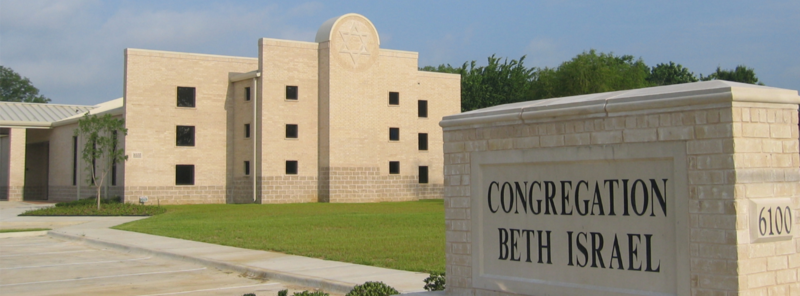
The gun-wielding suspect in that Jan. 15 synagogue attack, British citizen Malik Faisal Akram, took Rabbi Charlie Cytron-Walker and three other congregants hostage at the Congregation Beth Israel in Colleyville, Texas.

The standoff with FBI agents was an act of terrorism and resulted in Akram’s death. National news coverage was intense during the standoff — but soon evaporated.


Please respect our Commenting Policy

Plug-In: Five key story angles linked to Texas synagogue where hostages were taken

Plug-In: Five key story angles linked to Texas synagogue where hostages were taken

When I first saw news on social media of a ranting man taking hostages at a Texas synagogue Saturday, I immediately clicked the link to an Associated Press report.

To my shock, I discovered that the standoff involved Congregation Beth Israel in Colleyville, Texas.

I first wrote about that suburban congregation nearly two decades ago when I covered religion for AP in Dallas.

In 2004, I did a national feature on “frequent-flier rabbis” filling a need at then-fledgling Congregation Beth Israel and other small Jewish congregations across the nation. That same year, I wrote about Anna Salton Eisen, one of the congregation’s founders, and her Holocaust survivor father, George Lucius Salton.

Just this past October — 17 years later — Eisen trusted me to tell her family’s story again. I wrote a follow-up piece for AP on a surprising “reunion” between Eisen and the children of several Holocaust survivors who were in concentration camps together.

“I started this synagogue with two other families and am heartbroken and fearful,” Eisen wrote on Facebook on Saturday. “What has become of the world?”

I shared her status on my page and asked my friends to pray for a peaceful end. I was so relieved when Rabbi Charlie Cytron-Walker and two other hostages escaped unharmed Saturday night. A fourth hostage was released earlier. The FBI hostage rescue team shot the gunman.


Please respect our Commenting Policy

Anglicans are wrestling with 'climate change' in their pews: Will they adapt and survive?

Anglicans are wrestling with 'climate change' in their pews: Will they adapt and survive?

Journalist Michael Kinsley famously added a twist to American politics when he redefined a "gaffe" as when "a politician tells the truth -- some obvious truth he isn't supposed to say."

As the Rev. Neil Elliot of the Anglican Church of Canada discovered, this term also applies to religious leaders.

After seeing 2018 General Synod reports, the denomination's research and statistics expert produced an analysis that included this: "Projections from our data indicate that there will be no members, attenders or givers in the Anglican Church of Canada by approximately 2040."

Reactions to his candor varied, to say the least.

"I think of it very much like … people's responses to climate change," said Elliot, updating his earlier remarks in a video posted by Global News in Canada.

Signs of church "climate" change? In the early 1960s, Anglican parishes in Canada had nearly 1.4 million members. But that 2018 report found 357,123 members, with an average Sunday attendance of 97,421. The church had 1,997 new members that year, while holding 9,074 burials or funerals.

Canada's national statistics agency reported that 10.4% of all Canadians were Anglicans in 1996, but that number fell to 3.8% in 2019.

People have one of three reactions when faced with these kinds of numbers. The first "is denial. People are saying, 'We're, we're … It's not happening,' " said Elliot, while counting the options on one hand. "Then there's people who say, 'We can stop it.' And then there's people who say, 'We can adapt.'

"The adapt language is much more rare and I'm only starting to hear it on the media in the last few months. … That's what I'm trying to get us to do within the Anglican church. It's, 'How do we adapt to it?' not, 'How do we stop it?' or … people burying their heads in the sand."


Please respect our Commenting Policy

Ask this: Why did many flocks survive or thrive in pandemic, while others were hit hard?

Ask this: Why did many flocks survive or thrive in pandemic, while others were hit hard?

Does anyone remember typewriters?

Long ago, I took my very first reporting class at Baylor University. The legendary Jprof David McHam ran this lab as a mini-newsroom. McHam would sit in the “slot” of a U-shaped desk, working with students as we turned in our rough drafts.

I heard him say this many times: “The story is all here, but you wrote it in the wrong order,” or words to that effect. McHam would take his copy-desk pica pole (the birthday cake cutter of choice in newsrooms) and rip our typewriter copy into multiple horizontal pieces, before putting them in a new order, secured with a long strip of clear tape. Then he would say: “Go write the story in that order.”

More often than not, the wise Jprof found crucial information and pulled it higher in the story — if not into the lede itself. In many cases, this was information that created a tension with a simple version of the “news” in the lede. In other words, he was pushing us to acknowledge that many stories were more complex than we wanted to think they were.

With that in mind, let’s look at an important COVID-tide story from the Associated Press: “At many churches, pandemic hits collection plates, budgets.”

Note the word “many” in that headline. I think many readers would assume that the coronavirus pandemic has caused disasters in pews and pulpits and that is that. The evidence, in this story, is more complex than that — especially with a little bit of cutting and pasting. Here is the overture:

Biltmore United Methodist Church of Asheville, North Carolina, is for sale.

Already financially strapped because of shrinking membership and a struggling preschool, the congregation was dealt a crushing blow by the coronavirus. Attendance plummeted, with many staying home or switching to other churches that stayed open the whole time. Gone, too, is the revenue the church formerly got from renting its space for events and meetings.


Please respect our Commenting Policy

Is America really threatened by civil war? What is religion's role in these tensions?

Is America really threatened by civil war? What is religion's role in these tensions?

American Civil War talk is all the rage this New Year.

No, not that war, the one that cost 620,000 lives and was evoked by President Biden to castigate Senate Democrats and Republicans who are blocking passage of new election-ballot rules. Rather, The Guy refers to the drumbeat of warnings that the disunited United States may in the near future face an internal legal and economic cold war or some kind of hot war.

National Public Radio's Ron Elving reports that "not long ago the idea of another American Civil War seemed outlandish. These days, the notion has not only gone mainstream, it seems to suddenly be everywhere." He summarized anxiety-producing polls that show a polarized nation, and noted that 434,000,000 firearms are in civilian hands.

Then there's New Yorker Editor David Remnick's article "Is a Civil War Ahead?" New York Times columnist Michelle Goldberg likewise wonders, "Are We Really Facing a Second Civil War?" A Times op-ed by former National Security Council staffers Jonathan Stevenson and Steven Simon offers "the worst case scenario" in which "the United States as we know it could come apart at the seams" with "insurrection, secession, insurgency and civil war."

New January books include "The Next Civil War: Dispatches From the American Future" by novelist Stephen Marche, who sees virtually inevitable doom, and the slightly more upbeat "How Civil Wars Start and How to Stop Them" by Barbara F. Walter of the University of California San Diego. (Is it mere coincidence that The Atlantic's London writer Tom McTague is just out with "How Britain Falls Apart"?)

One typical forecaster is all the more interesting because he's Canadian. Thomas Homer-Dixon of Royal Roads University issued a New Year's Eve alarm in the influential Globe and Mail. He believes that as soon as 2025 "American democracy could collapse, causing extreme domestic political instability, including widespread civil violence. By 2030, if not sooner, the country could be governed by a right-wing dictatorship."

Outlandish?


Please respect our Commenting Policy