Worship

In search of the elusive liberal evangelical: Is this tiny flock worthy of big news coverage?

In search of the elusive liberal evangelical: Is this tiny flock worthy of big news coverage?

I was listening to a podcast the other day and the host asked a guest a question that I have heard way too many times over the last year — “Why did you decide to focus only on conservative evangelicals?”

I fully admit that a lot of my work does focus on conservative evangelicals. Why? Because, in the current political landscape, there’s not a more important force in American politics. The nones are too disorganized at this juncture to have a systemic impact. Catholics and Mainline Protestants are too politically divided to be considered anything close to a coherent voting bloc.

The fact is simply this: 13% of all American adults in 2020 were white evangelical Republicans.

No other group comes even close to that size. Nine percent of Americans are nothing in particular Democrats — but that’s not an easy group to wrap your arms around. There are twice as many white evangelical Republicans as there are white Catholic Republicans. For every Democratic atheist, there are 2.5 white evangelical Republicans.

But, I wanted to devote some time trying to look at the other side of the evangelical coin: those who describe themselves as politically liberal. Because the Cooperative Election Study is so large, even if that group is a relatively small percentage of the population, it’s still possible to do in-depth statistical analysis of liberal evangelicals.

Of all self-identified evangelicals, 58% describe themselves as conservative, 29% indicate they are moderate, while 13% say they are liberal. If that is restricted to just white evangelicals: 8% are liberal, 24% are moderate, and 68% say they are conservative.

That’s obviously much different than the general population. In 2020, 30% of all Americans said they were liberal, along with 28% of just white respondents.

Please respect our Commenting Policy

New podcast: Are some SCOTUS justices asking, 'Are all religious schools equal in Maine?'

New podcast: Are some SCOTUS justices asking, 'Are all religious schools equal in Maine?'

Let’s say that, in the state of Maine, there are two very different “Lutheran” schools. You could, in this hypothetical case, also say “Episcopal,” or “Presbyterian” or “Congregational.”

Leaders at one of these schools insist that their school is in “the Lutheran tradition,” and it may retain ties to a doctrinally liberal flock. The school has a chapel, but attendance is optional since its students (it may be an elite boarding school) come from all kinds of religious faiths or have no stated faith at all. Classes on hot-button moral issues — sexuality, for example — stress this church’s progressive doctrines.

Academic life is very different at the other Lutheran school, which draws most of its students and financial support from a conservative Lutheran body. Chapel attendance is required and classes linked to moral theology are quite countercultural — defending 2,000 years of Christian tradition.

The question, in the latest church-state case at the U.S. Supreme Court, is whether the state of Maine has the power to say that the first school is eligible for tuition support — using tax dollars — because it’s policies do not clash with those in public schools. Students at the conservative school are not eligible, because its beliefs are “sectarian.”

This is tricky territory and church-state experts on the Religious Right would certainly disagree with experts from the Religious Left and secular think tanks. The question discussed in this week’s “Crossroads” podcast (click here to tune that in) is whether journalists covering this case allowed readers a chance to understand the views of activists on both sides.

Let me state, right up front, that my dueling Lutherans illustration is based on “equal access” church-state principles that emerged from a left-right coalition during the Bill Clinton administration. The big idea: If state officials create policies that affect nonprofits, they cannot back secular groups while discriminating against religious organizations. States could, however, deny aid to both. In other words, religious faith is not a uniquely dangerous form of speech or activity.

Let me state this another way. Under the separation of church and state, officials are not supposed to use tax dollars to back state-approved forms of religion. Ah! But what if some religious groups have doctrines that are consistent with state policies, while others clash with the doctrines of the state?


Please respect our Commenting Policy

Behold! The New York Times dared to explore the spiritual 'fire' inside Denzel Washington

Behold! The New York Times dared to explore the spiritual 'fire' inside Denzel Washington

Behold. It is time for me to praise — at great length — something published in The New York Times. It was even written by Maureen Dowd, of all people.

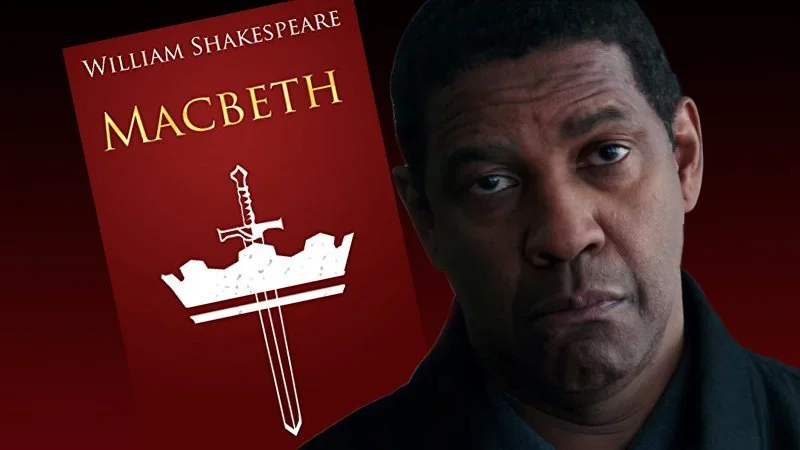
The headline on this length first-person feature: “Denzel Washington, Man on Fire.” No, this story isn’t about the stunningly violent, but at times quite biblical, 2004 movie entitled “Man on Fire.” It’s about the new film — “The Tragedy of Macbeth” — that combines the Oscar-level talents of Washington, director Joel Coen and producer-actress Frances McDormand, who is married to Coen. For Washington, playing the lead role represented a return to his theater roots with Shakespeare.

As you would expect, a Times piece by Dowd is going to include quotes from Hollywood A-listers such as Ethan Hawke, Liev Schreiber, Melissa Leo and Meryl Streep. Tom Hanks has this to say about Washington: ““He is our Brando. Nicholson. Olivier.”

However, the key to this feature is that the “fire” in the headline is both artistic and spiritual. It is, literally, a reference to Washington’s Pentecostal Christian upbringing and the Christian faith that he is not afraid to discuss in the context of his talent and his vocation.

It’s hard to know what to quote from this piece — since it covers so many bases. If you want insights into filmmaking and the complex minds of Coen and McDormand, you will find it. This isn’t a religion story. However, it’s a story that is willing to let Washington speak his mind.

The faith element enters with one of those “here I am talking to Denzel Washington” scenes that are far too common in arts and entertainment journalism. But, in this case, this tired device works. This passage is long, long, long, but essential. I will break it up, just a bit:

[Washington] said he had gotten very little sleep. He had just put the final touches on a film he directed, “A Journal for Jordan,” the true story of the romance between Dana Canedy, a former New York Times reporter and editor, and Sgt. Charles Monroe King, a soldier who was killed by a roadside bomb in Iraq, after meeting their infant son only once. It stars Michael B. Jordan and Chanté Adams and also opens widely on Christmas Day.

“It’s just a beautiful story of loss and love,” Mr. Washington said, “a story about real heroes and sacrificing, men and women who have given their lives so that we have the freedom to complain.”


Please respect our Commenting Policy

Just how big is the Mississippi abortion case at U.S. Supreme Court? Well, THIS BIG

Just how big is the Mississippi abortion case at U.S. Supreme Court? Well, THIS BIG

“The most important abortion case in decades” is how the New York Times’ Adam Liptak describes it.

“The most significant abortion case in a generation,” agree the Wall Street Journal’s Jess Bravin and Brent Kendall.

“The biggest challenge to abortion rights in decades,” echo The Associated Press’ Mark Sherman and Jessica Gresko.

It’s not hyperbole: Roe v. Wade, the 1973 U.S. Supreme Court decision that legalized abortion nationwide, faces its biggest test yet. The Washington Post’s Robert Barnes explains:

The Supreme Court on Wednesday signaled it is on the verge of a major curtailment of abortion rights in the United States, and appeared likely to uphold a Mississippi law that violates one of the essential holdings of Roe v. Wade established nearly 50 years ago.

Whether the court would eventually overrule Roe and its finding that women have a fundamental right to end their pregnancies was unclear.

But none of the six conservatives who make up the court’s majority expressed support for maintaining its rule that states may not prohibit abortion before the point of fetal viability, which is generally estimated to be between 22 and 24 weeks of pregnancy.

At Christianity Today, Kate Shellnutt reports that “pro-life evangelicals who had rallied for the cause for decades were encouraged that the conservative-leaning court appeared willing to uphold a contentious Mississippi law that bans abortion after 15 weeks.”

Other helpful religion coverage:

How faith groups feel about this major abortion case (by Kelsey Dallas, Deseret News)

Before there was Roe: Religious debate before high court’s historic ruling on abortion (by Adelle M. Banks, Religion News Service)

Religion abortion rights supporters fight for access (by Holly Meyer, The Associated Press)


Please respect our Commenting Policy

Progress for American Jews? Tis the season for lots and lots of Hanukkah junk

Progress for American Jews? Tis the season for lots and lots of Hanukkah junk

It's hard to do justice to ancient holy days in throw-pillow slogans.

Consider the Zazzle item offering a menorah with an un-orthodox number of candles, along with: "Imagine if your cellphone was at 10% but lasted 8 days. Now you understand Hanukkah."

Maybe not. Or how about the Bed, Bath & Beyond pillow stating: "Why is this night different from all other nights? Happy Hanukkah."

Actually, that's the most famous question from rites during a Passover Seder dinner.

"There's no quality control with any of this stuff. No one's being careful with decisions about what's good and what's bad," said journalist Mira Fox of the Forward, a progressive Jewish website. "The point is to sell stuff. It doesn't need to be good stuff. It's just stuff.

"Basically, it's a lot of people saying, 'We can find a way to sell stuff to Jews during the holidays, along with selling lots of stuff to everybody else.' "

Hanukkah began rather early this year, starting at sundown this past Sunday (November 28) and extending for eight days. This placed the "Festival of Lights" closer to Thanksgiving -- near the start of the merchandizing frenzy known as The Holidays.

The story at the heart of this home-centered season dates to 165 B.C., when Jews, led by the Maccabee family, defeated Greek and Syrian oppressors. When the victors reentered their temple, only one container of ritually pure oil could be found for its eternal flame. Tradition says this one-day supply burned for eight days. Thus, Jews light menorah candles during Hanukkah, one on the first night, increasing to eight.

"It's not a biblical holiday. Hanukkah is not in the Hebrew Bible. … God is not a huge part of this story," said Fox. "Honestly, I don't think a lot of people understand what this holiday is about."

That's certainly true in the American marketplace.


Please respect our Commenting Policy

Modernized New Revised Standard Bible is surefire news, landing amid today's language wars

Modernized New Revised Standard Bible is surefire news, landing amid today's language wars

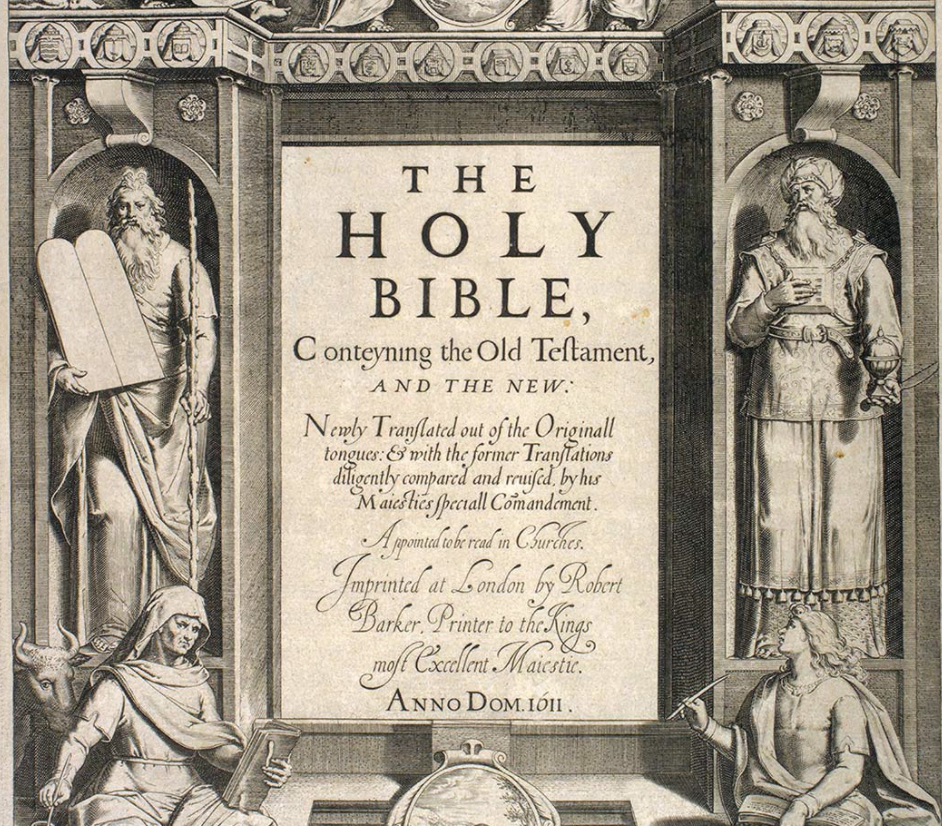
As religion writers (and historians) know, the 1611 King James Version of the Bible begat the 1952 Revised Standard Version, which begat the 1989 New Revised Standard Version which now begets the new "Updated Edition" of the NRSV.

It’s the "NRSVue" — a surefire news topic. This Bible will be available in ebook format by Christmas and in print around next May 1.

Media might issue advance articles about this production or wait for reactions to the complete text from reviewers or local clergy and parishioners. A 36-page media memo provides an advance look, accessible here. For further queries contact Friendship Press at info@friendshippress.org or CEO Joseph Crockett at joseph@frienshippress.org.

The NRSV copyright is held by the National Council of Churches, a cooperative body of the “Mainline” Protestant and Orthodox denominations. It assigned this rewrite to the Society of Biblical Literature, a professional guild of university and seminary scholars, whose 63-member team made approximately 12,000 "substantive" changes and thousands more that are trivial. The team consulted African-American church leaders, a group said to be "historically excluded" from prior Bible translation projects.

The result "improves" upon the original NRSV policy "to eliminate masculine-oriented language when it can be done without altering passages that reflect the historical situation of ancient patriarchal culture." The church council says both of its versions seek to be "as free as possible from the gender bias inherent in the English language."

A typical example is saying "brothers and sisters" when the original Greek literally said only "brothers" but was referring generally to people of both genders. The update omits footnotes that specify what the Greek said. Plural pronouns will abound, which depending on the translation can occasionally make the antecedent unclear or miss the direct force of a singular pronoun. In the rewrite, the Bethlehem "wise men" are now "magi."

Both the 1989 and 2021 renditions leave language about God undisturbed. "He" is still permitted and He remains the "Lord" and "Father."


Please respect our Commenting Policy

Notre Dame's 'woke' rebuild plan: Why the glaring lack of mainstream news coverage?

Notre Dame's 'woke' rebuild plan: Why the glaring lack of mainstream news coverage?

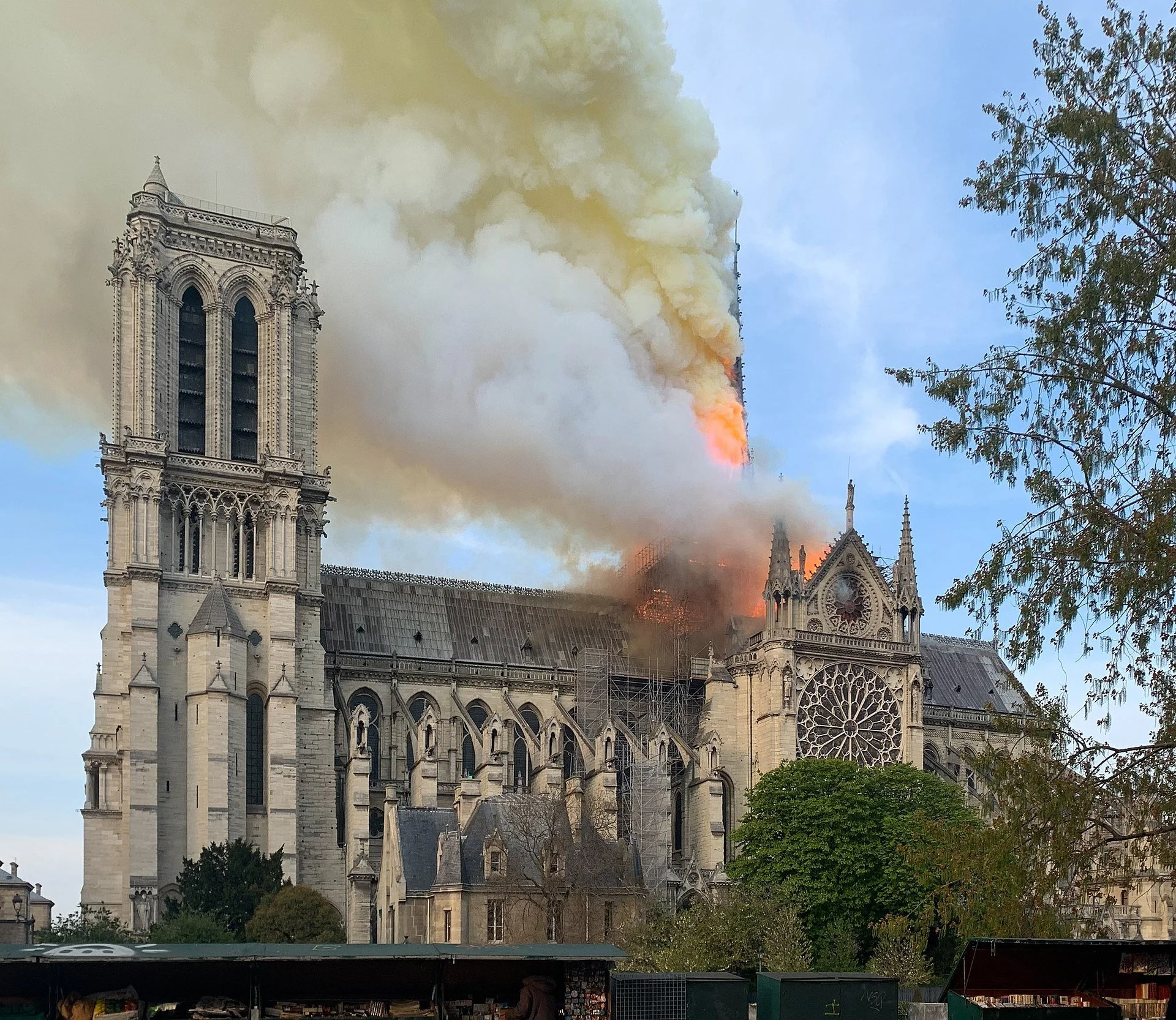
Before the pandemic dominated the news cycle starting in 2020 (and continues to do so), the fire that ravaged Notre Dame in Paris in 2019 was among that year’s biggest stories.

Over the Thanksgiving weekend, the famed cathedral was once again catapulted into the news cycle — despite it being a busy few days thanks largely to the Omicron coronavirus variant — after The Telegraph, based in London, reported a scoop under the headline “Notre Dame interior faces ‘woke’ Disney revamp.”

What followed was an amazing lack of mainstream news coverage.

Here’s how the Telegraph story (behind a paywall) opened. The following is a meaty excerpt since so many of you do not have a subscription to the British newspaper:

Paris’ fire-ravaged Notre-Dame cathedral risks resembling a “politically correct Disneyland” under controversial plans for its renovation seen by the Daily Telegraph.

Critics have warned that the world-famous cathedral will be turned into an “experimental showroom” under plans to dramatically change the inside of the medieval building.

Under the proposed changes, confessional boxes, altars and classical sculptures will be replaced with modern art murals, and new sound and light effects to create “emotional spaces”.

There will be themed chapels on a “discovery trail”, with an emphasis on Africa and Asia, while quotes from the Bible will be projected onto chapel walls in various languages, including Mandarin.

The final chapel on the trail will have a strong environmental emphasis.

“It’s as if Disney were entering Notre-Dame,” said Maurice Culot, a prize-winning Paris-based architect, urbanist, theorist and critic who has seen the plans.

“What they are proposing to do to Notre-Dame would never be done to Westminster Abbey or Saint Peter’s in Rome. It’s a kind of theme park and very childish and trivial given the grandeur of the place,” he told The Telegraph.


Please respect our Commenting Policy

Tough question? Some obits included how priestly sexual abuse shook Phil Saviano's faith

Tough question? Some obits included how priestly sexual abuse shook Phil Saviano's faith

If you have seen the movie “Spotlight” — especially if you are a journalist — you know that it’s one of the two or three best films ever made about the picky, high-stakes work involved in investigative journalism.

But there was another layer to this film that I found especially powerful.

Obviously, the subject of clergy sexual abuse is painful and divisive. Every now and then, I still hear from angry readers who believe this whole hellish scandal — which began creeping into headlines in 1984 with the Gilbert Gauthe case in Louisiana — was a media plot against the Church of Rome. It’s important to note that there were conservative Catholics who dug down to the roots of this scandal (see the scathing book “Sacrilege” by Leon Podles), along with the efforts of many Catholic liberals and many ex-Catholics.

The scandal affected many people in different ways. The movie “Spotlight” stressed how the shock and anger unleashed by this scandal affected the faith of some of the Boston Globe journalists. Then there were the shattered victims. It’s amazing that any of them emerged with their faith intact. Some did. Many did not.

This brings me to some of the major-media obituaries for Phil Saviano, a victim who became one of the most important activists who tirelessly worked for justice. Saviano served as a consultant for the “Spotlight” screenwriters and his character appeared in the movie, played by actor Neal Huff.

As I read the coverage, I kept wondering: Would anyone include information about Saviano’s faith? Did he leave Catholicism? Did he convert to another faith?

As you would expect, the Globe obituary is long and detailed. I thought this detail was exceptionally powerful:

When the advent of protease inhibitors to treat HIV/AIDS prolonged Mr. Saviano’s life, he kept speaking out until the end through a series of health issues. Not least among them was a crisis on that night in 2016 when “Spotlight,” the movie based on the Globe’s clergy sex abuse coverage, won the Academy Award for best picture.


Please respect our Commenting Policy

Queen Elizabeth II offers clear, personal sermon -- even while absent from public stage

Queen Elizabeth II offers clear, personal sermon -- even while absent from public stage

Close watchers of the British Monarchy have recently become concerned about two words describing life in Windsor Castle -- "new stage."

First there was Queen Elizabeth II's unexplained overnight hospital stay in October for "tests." Then the 95-year-old monarch missed the recent National Day of Remembrance service for Britain's war dead. She did, however, attend christening rites at All Saints Chapel for her two newest great-grandsons.

All of this represents a "new stage" in her very public life.

"She's alright, thank you very much," said Prince Charles, responding to a Sky News enquiry. "Once you get to 95, it's not quite as easy as it used to be."

The Queen has not, however, been silent. Her recent message to Church of England's General Synod -- her first absence from this gathering -- was strong and personal. It was read by her youngest son, Prince Edward, the Earl of Wessex, who rarely seeks the public spotlight.

"It is hard to believe that it is over 50 years since Prince Philip and I attended the very first meeting of the General Synod," said the prince, reading the Queen's words. "None of us can slow the passage of time; and while we often focus on all that has changed in the intervening years, much remains unchanged, including the Gospel of Christ and his teachings.

"The list of tasks facing that first General Synod may sound familiar to many of you -- Christian education, Christian unity, the better distribution of the ordained ministry. … But one stands out supreme: 'To bring the people of this country to the knowledge and the love of God.' "


Please respect our Commenting Policy