Worship

Abortion-rights groups planning 'Hail Mary' efforts to block Texas law? #REALLY

Abortion-rights groups planning 'Hail Mary' efforts to block Texas law? #REALLY

Faithful followers of this website know that many, many of the news reports we critique are based on tips from readers.

These emails are important to me because, frankly, there is no way for us to follow as many media sources as our readers do, combined. This is especially true now that our team, due to finances, is smaller than it was for the previous decade or so.

From time to time, readers will react to something as simple as a horrible headline or a single rage-inducing phrase in a news report. There’s no way that I can respond to all of these, but here is a recent case that I think deserves a mention.

Read the top of this CNN piece (“The Justice Department's uphill battle against Texas' abortion ban“) and try to spot the issue that ticked off a reader:

In its lawsuit challenging Texas six-week abortion ban, the Justice Department is throwing a Hail Mary pass to get over the procedural stumbling blocks that have thwarted other attempts to block the ban in court.

The lawsuit, filed … in a federal court in Austin, relies on a novel strategy in seeking to halt enforcement of the ban, which was designed specifically with the goal of evading review of federal courts.

The arguments that the Justice Department is presenting on the merits -- that the law violates Supreme Court constitutional precedent on abortion rights -- are on solid ground. But the question is whether its lawsuit can get around the same procedural issues that doomed the earlier federal lawsuit brought by abortion clinics.

What’s the problem?


Please respect our Commenting Policy

Elephant in sanctuary: Spot the news hooks in shocking changes facing Cincinnati Catholics

Elephant in sanctuary: Spot the news hooks in shocking changes facing Cincinnati Catholics

Let’s do the math. When discussing the future of the American Catholic Church, Joe Biden isn’t the biggest issue on the table. Biden’s liberal Catholicism may be a symptom of larger issues — and since it’s political, it’s easier to cover — but it isn’t the issue that’s going to lock the doors of many parishes from coast to coast, but especially in blue culture zones.

The big issue? Actually, it’s several connected issues — and the elephant in the living room (or sanctuary) is that links them. Hold that thought.

The obvious issues? The priest shortage. Declining enrollment rates in Catholic schools. Closed parishes. You can also add declining Mass attendance numbers in many, but clearly not all, parishes. I would add the collapse in the number of Catholics going to Confession.

This brings us to a very important Cincinnati Enquirer story with this headline: “'Change is difficult': Cincinnati Archdiocese launches shakeup that reaches almost every parish.” Here’s the overture:

The Archdiocese of Cincinnati … launched one of the most ambitious reorganizations in its 200-year history, potentially changing when and where almost a half-million Catholics attend Mass, school and other activities connected to their faith.

Known as Beacons of Light, the restructuring process will combine the archdiocese’s 208 parishes into 60 “families of parishes,” which will begin sharing priests and resources as early as next year.

Unlike past attempts to remake the archdiocese, which rarely got out of the planning stages, Beacons of Light is backed by Archbishop Dennis Schnurr and will in some way touch almost every Catholic and priest in the archdiocese’s 19 counties.

The goal, church officials say, is to eventually unite the 60 new parish families into single parishes.

So, the goal is 60 parishes instead of 208?


Please respect our Commenting Policy

Does church attendance reduce political polarization? Not among White conservatives

Does church attendance reduce political polarization? Not among White conservatives

There are some concepts in political science that have just become impossible to ignore. Whether it’s leading a classroom discussion, talking to a member of the media, or just chatting with friends about the current state of the world, I can’t help but bring it all back to political polarization.

Put simply, it’s the idea that American society has become more politically tribalized, with Democrats huddled in the far left corner of the political spectrum and Republicans doing the same on the right side of the scale with a huge chasm between the two. And, the two parties loathe each other — not just disagreeing, but believing that if the other party wins an election, it will lead to the end of the Republic.

Compromise becomes impossible in a world in which you see the other side not only as wrong, but also as the enemy. The inherent problem is that our democratic processes grind to a halt without a level of bi-partisan support.

There’s been a ton of great research done on measuring the level of polarization in the United States Congress by using DW-NOMINATE scores. The results indicate that both parties have moved away from the center, but that is more pronounced among the GOP than among the Democrats. This visual (it comes from this paper) is one I use in class to show just how bad it’s gotten.

But, I wanted to take a different approach here. I wanted to see just how much polarization is perceived by the average American, how that has changed over time, and how religion plays a role in that perception.

Here’s how I did it.

Since 2012, the CCES has asked respondents a battery of questions that require them to place the Democratic Party, the Republican Party, and themselves on an ideology scale running from 1 (very liberal) to 7 (very conservative), with the moderate option described as “middle of the road.” For my purposes someone has a polarized view of the world if they describe either the Democrats as “very liberal” or the Republicans as “very conservative.” In essence, they are saying: “that political party can’t get any more extreme.”


Please respect our Commenting Policy

Bonus podcast: 'What's next in Afghanistan?' Warning: this news topic involves religion

Bonus podcast: 'What's next in Afghanistan?' Warning: this news topic involves religion

Here is a truth claim that, over the years, I have heard (or seen) stated in a number of ways by journalists and mass-media professors: Without strong, or at least adequate, visual images a story doesn’t exist in television news.

Yes, there are exceptions. But the exceptions almost always take place when big stories break in print media and television producers are highly committed to getting them on air — somehow.

Now, in the smartphone era, there are lots of ways for visual images to emerge (ask Hunter Biden). However, in our era of partisan, niche news, it may not matter if images exist. What citizens cannot see (or read) will not hurt them?

This brings me back to a subject I addressed in this recent GetReligion essay: “What's next in Afghanistan? Press will have to face issues of religion, culture and gender.”

The big question: Where does the Afghanistan story go next and, frankly, will elite American media cover the religion elements of this story?

That question was at the heart of a recent Religion Unplugged podcast discussion that I had with a friend and, long ago, a former religion-beat colleague — Roberta Green. In recent decades, she is better known as the philanthropist and fine arts-maven Roberta Green Ahmanson (click here for a typical arts lecture).

This new podcast is entitled, “How Will Afghanistan's Next Chapter be Written?” Click here to head over to iTunes to tune that in. Meanwhile, here is a key chunk of the GetReligion essay linked to our discussion about religion, journalism, culture, politics and “nation building”:

Viewed through the narrow lens of Taliban doctrine, it doesn’t matter if Western governments were forcing open doors for the work of Planned Parenthood or Christian missionary/relief groups, the work of LGBTQ think tanks (or the American corporations that back them) or Islamic thinkers and clerics whose approach to the faith clashed with their own.


Please respect our Commenting Policy

Thinking about prayers at executions: These stories offer glimpses of an old church-state unity

Thinking about prayers at executions: These stories offer glimpses of an old church-state unity

This is a “feeling guilty” post. For quite some time now, I have been planning to examine the coverage of some important religious-liberty cases that have been unfolding in the death-row units of prisons.

The decisions are worthy of coverage, in and of themselves. At the same time, these cases have demonstrated that it is still possible, in this day and age, for church-state activists on the left and right to agree on something. Maybe I should have put a TRIGGER WARNING notice at the start of that sentence.

Like I said the other day in this podcast and post — “Covering a so-called 'religious liberty' story? Dig into religious liberty history” — this kind of unity in defending religious freedom has become tragically rare (from my point of view as an old-guard First Amendment liberal). Indeed, to repeat myself, “America has come a long way since that 97-3 U.S. Senate vote to approve the Religious Freedom Restoration Act of 1993.”

The problem is that you rarely, if ever, see reporters catch this church-state angle in these decisions. The key is to look at who filed legal briefs in support of the religious liberty rights of the prisoners.

This brings me to an important Elizabeth Bruenig essay that ran the other day at The Atlantic, under this dramatic double-decker headline:

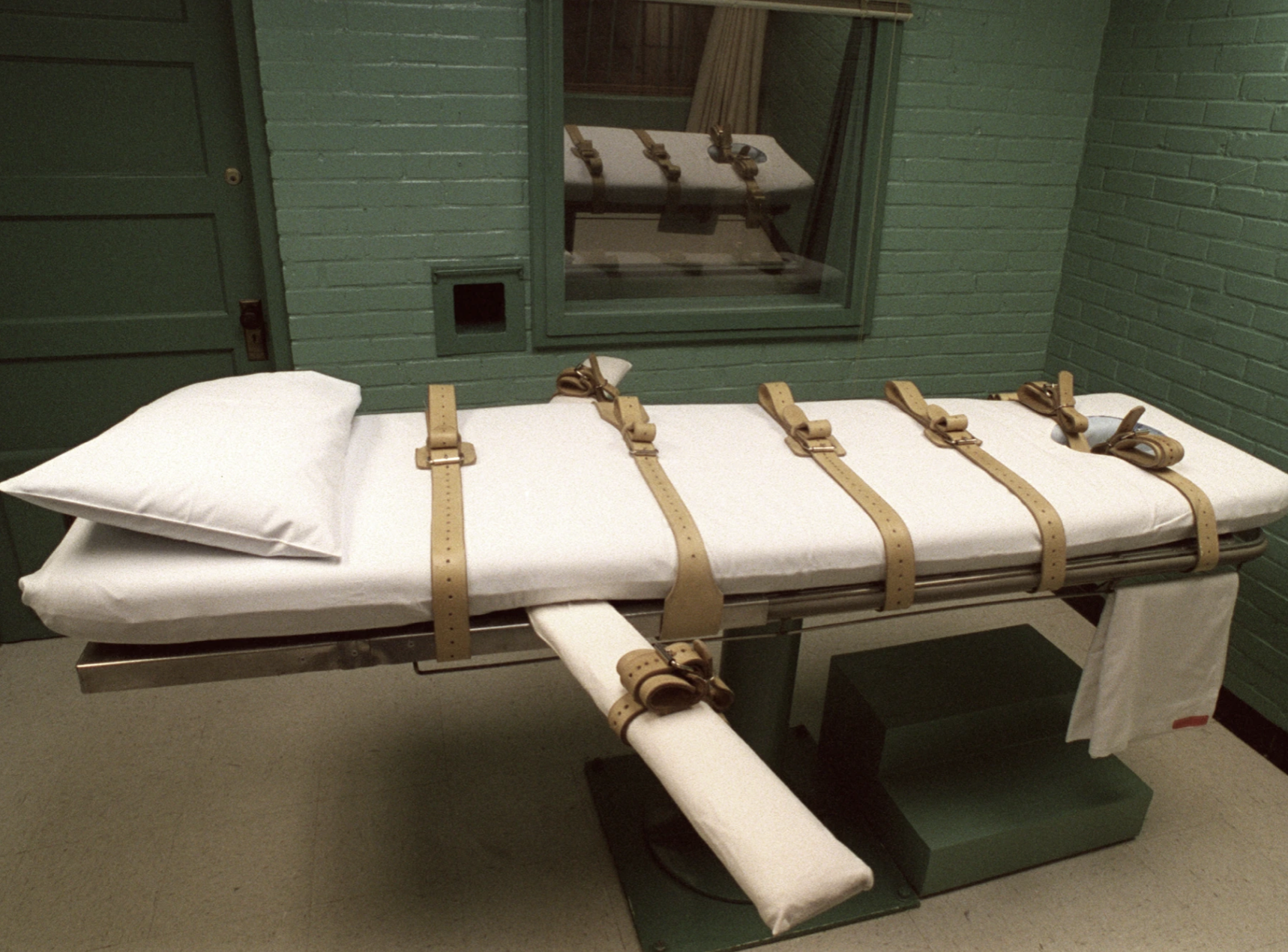
The State of Texas v. Jesus Christ

Texas’s refusal to allow a pastor to pray while holding a dying man’s hand is an offense to basic Christian values.

Here is the meaty overture:

Devotees to the cause of religious liberty may be startled to discover during the Supreme Court’s upcoming term that the latest legal-theological dispute finds the state of Texas locked in conflict with traditional Christian practice, where rites for the sick, condemned, and dying disrupt the preferences of executioners.


Please respect our Commenting Policy

Latest angles on Trump-era 'evangelicals,' including questions about the vague label itself

Latest angles on Trump-era 'evangelicals,' including questions about the vague label itself

This Memo concerns not some breaking story but a potential scenario about U.S. "evangelical" Protestants that reporters on both the politics and religion beats should be watching.

For the umpteenth time we revisit the definition of this vibrant but challenged movement and its relation to a Republican Party that the secularized Donald Trump continues to dominate.

(See The Guy's effort at defining evangelicalism here, and remember that most media discussions involve White evangelicals only, since Black and Hispanic evangelicals are very different politically. And click here for a wave of tmatt posts on this topic.)

GetReligion team member Ryan Burge, an energetic political scientist who posts interesting data most days of the week, tweeted this chart on Sept. 16th showing how self-identified evangelicals described their own church attendance over a dozen years in Cooperative Election Study polling.

There's a clear developing trend. As recently as 2008, 58.6% of self-identified evangelicals said they worshiped weekly or more often, but less than half (49.9%) by 2020.

Over the same years, evangelicals who "seldom" or "never" attended grew from 16.1% to 26.7%. The slide did not begin with the Trump presidency but was already at work, since in 2016 the weekly-or-mores were down to 52.9% and seldom-or-nevers up to 22.6%.

The Guy considers attendance a good barometer of devotion, as a historically central value inside the evangelical subculture. We can speculate that similar downward slides might be occurring with other bonding activities in the evangelical tradition such as adult Bible classes, prayer meetings, small groups, daily devotions, evangelistic revivals and charity projects.

The numbers surely reflect the nation's 21st Century secularization. But Burge reaches the provocative conclusion that they mean evangelical "is not a religious term anymore." (What substitute word would suffice? There's a story theme for you.) Certain movement insiders have argued that a different label is needed because the term has taken on such a heavy Republican -- and Trumpublican -- flavor


Please respect our Commenting Policy

What's next in Afghanistan? Press will have to face issues of religion, culture and gender

What's next in Afghanistan? Press will have to face issues of religion, culture and gender

The headline on the National Catholic Register story is simple and timely: “Trapped by the Taliban, Praying for Escape from Afghanistan.

The reporting is simple, as well, as long as the journalists involved have established contacts with people inside Kabul who have smartphones and there are functioning cell towers and satellites. The story is built on people describing what they claim is going on around them, especially events affecting their families and friends.

These people are U.S. citizens, Afghans with U.S. “green cards” and others who cooperated with Western governments and agencies, including religious groups, during the 20 years of “nation building” in the war-torn land of Afghanistan.

The question is whether the contents of this story remain newsworthy, since Afghanistan has, for now, moved off the front burner in elite newsrooms. What happened? Clearly, Republicans and centrist Democrats had “pounced” on the topic while blasting President Joe Biden and his White House team.

But is this NCR piece news? Yes, it is. Also, this is a story journalists can study while looking for clues about realities, and news, at ground level in the Taliban’s new-old Afghanistan. Here is the overture:

For two decades, Sher Shah had worked alongside U.S. and Afghans to build a democratic country free from the Taliban and war. He had established a new life with his family in the U.S. with the help of Catholic Charities and a Catholic sponsor family, but briefly returned to Afghanistan this summer to attend his father’s funeral.

Now, he’s a man trying to escape the Taliban and get back home to the U.S.

More? Here is a claim — let me stress this is a CLAIM — coming from this source. But the Register report has other anonymous voices making similar statements in what appear to be telephone interviews or contacts via email.

U.S. Secretary of State Anthony Blinken has stated approximately 100 U.S. citizens and lawful permanent residents remain in Afghanistan. …

But Sher Shah said he has heard nothing from the State Department since Aug. 26 — and he made use of the State Department’s information posted on its website for U.S. citizens and lawful permanent residents stuck in Afghanistan.

“There are thousands of Americans still in Afghanistan,” he said. “And I’m one of them.”

The reality that emerges, in this stories and others, is that the United States and other Western forces were not engaged in 20 years of “nation building,” as in building an Afghanistan government that looked to the nation’s past — its monarchy, for example. It would be more accurate to say the goal was building a new culture, one that incorporated elements of modernity and even postmodernity in America and Europe.


Please respect our Commenting Policy

Are we finally witnessing the long-anticipated (by journalists) evangelical crack-up? 

Are we finally witnessing the long-anticipated (by journalists) evangelical crack-up? 

Those impossible-to-ignore and hard-to-define white " evangelicals" have, for decades, been the largest and most dynamic sector in U.S. religion. Are we finally witnessing an evangelical crack-up as so long anticipated -- and desired -- by liberal critics?

That's a big theme for the media to affirm or deny.

To begin, The Religion Guy is well aware that millions of these conservative Protestants quietly attend weekly worship, join Bible and prayer groups, try to help those in need, fund national and foreign missions and are oblivious to discussions of this sort on the national level.

For years we've seen a telltale slide of membership and baptisms in the Southern Baptist Convention, that massive and stereotypical evangelical denomination. At the same time, it’s clear (follow the work of Ryan Burge for background) that many of those Southern Baptists have simply moved to independent, nondenominational evangelical megachurches of various kinds.

But more than numbers, analysts are pondering insults to cultural stature, which greatly affect any movement's legitimacy, respect, impact and appeal to potential converts, especially with younger adults.

The Scopes Trial to forbid teaching of Darwinian evolution nearly a century ago continues to shape perceptions of evangelicalism and its fundamentalist wing, especially due to the fictionalized 1955 play and 1960 movie "Inherit the Wind." No doubt ongoing evangelical enthusiasm for Donald Trump has a similar negative impact among his critics, but this is not merely a political story but involves evangelicalism's internal dynamics. The Trump era exacerbates divisions that already existed despite unity in belief.

Turn to former GetReligion writer Mark Kellner, who is already making his mark (pun intended) as the new "faith and family" reporter for the Washington Times. Here is an essential recent read: “After scandals, is evangelical Christianity's image damaged?"

The immediate cause behind the question was an odd little incident that spoke volumes, the sacking of Daniel Darling as spokesman for National Religious Broadcasters (NRB).


Please respect our Commenting Policy

My Orthodox flashback to 9/11: When will St. Nicholas truly return to Ground Zero?

My Orthodox flashback to 9/11: When will St. Nicholas truly return to Ground Zero?

On one of my first visits to New York City to teach journalism — I spent 8-10 weeks a year in lower Manhattan — I went to the window of my room high in a long-stay hotel.

I was looking straight down on the construction project to rebuild St. Nicholas Greek Orthodox Church, the tiny sanctuary that was crushed by the 9/11 collapse of the south tower of the World Trade Center. It hit me at that moment that, at some point, my “neighborhood” Orthodox parish would be the shrine at Ground Zero.

I walked past that construction project for five years, including several years in which the work was stalled by a complex mix of mismanagement, exploding costs and, some would say, fraud. The sanctuary still isn’t finished, but it’s getting closer.

Let me stress — I was not in New York City on 9/11. I was, however, in West Palm Beach, surrounded by New Yorkers in the heart of the Seinfeldian “sixth borough” of South Florida. My family attended an Orthodox parish in which 80% of the members were Arab Christians of various kinds. My Palm Beach Atlantic University office was next to the Trump Plaza towers, the mini-World Trade Center used as a symbolic target during the training flights of Mohamed Atta and other 9/11 terrorists who spent time in South Florida.

My first 9/11-related national column was about the destruction of St. Nicholas Orthodox parish, build on an interview with its priest, Father John Romas. As an Orthodox believer, I was immediately struck by these details:

The members of St. Nicholas do not think that any parishioners died when the towers, a mere 250 feet away, fell onto their small sanctuary in an avalanche of concrete, glass, steel and fire.

Nevertheless, the Orthodox believers want to search in the two-story mound of debris for the remains of three loved ones who died long ago — the relics of St. Nicholas, St. Katherine and St. Sava. Small pieces of their skeletons were kept in a gold-plated box marked with an image of Christ. This ossuary was stored in a 700-pound, fireproof safe.


Please respect our Commenting Policy