Worship

Facebook decides -- following clicks and $$$ -- that it should encourage online prayer

Facebook decides -- following clicks and $$$ -- that it should encourage online prayer

There are 2.4 billion Christians in the world today, according to most estimates.

Then again, nearly 3 billion people have Facebook accounts. Nearly 70% of U.S. adults use this social-media platform, which recently passed $1 trillion in market capitalization.

"I will use Facebook to reach people, because you almost have to do that," Father Andrew Stephen Damick, chief content officer for Ancient Faith Ministries, a 24-hour source for online radio channels, podcasts, weblogs, forums and more. The ministry was born in 2004 and is now part of the North American archdiocese of the ancient Orthodox Patriarchate of Antioch.

Facebook remains, he noted, "the No. 1 social-media platform in the world -- by a lot. You can't ignore all those people. … We knew this before COVID, but the pandemic made it impossible to deny the obvious. Everyone had to go online, one way or another."

Facebook Live became a way to stream worship services online, even if all a pastor could do was mount a smartphone on a stand. Even small congregations began holding online religious-education classes, support groups and leadership meetings.

As for worship, it was one thing for Protestant megachurches to stream TV-friendly services built on pop-rock Christian music and charismatic preaching. The online options were more problematic for faiths in which worship centered on the smells, bells, images and tastes of ancient liturgies.

Then, in early June, images began circulating of a Twitter message introducing "Prayer Posts" allowing Facebook users to "enable group members to ask for and respond to prayers" with a few clicks in a page's control settings. Participation could be as simple as a user clicking an "I prayed" button linked to a prayer.

This isn't a totally new idea. The Facebook "Prayer Warriors" group already has 865,700 active members, a flock larger than the average of 518,000 Episcopalians that attended services on an average Sunday in 2019, according to the denomination's statistics.
Please respect our Commenting Policy

After Hurricane Ida: Prayers, tears, light, miracles and donations from somewhere ...

After Hurricane Ida: Prayers, tears, light, miracles and donations from somewhere ...

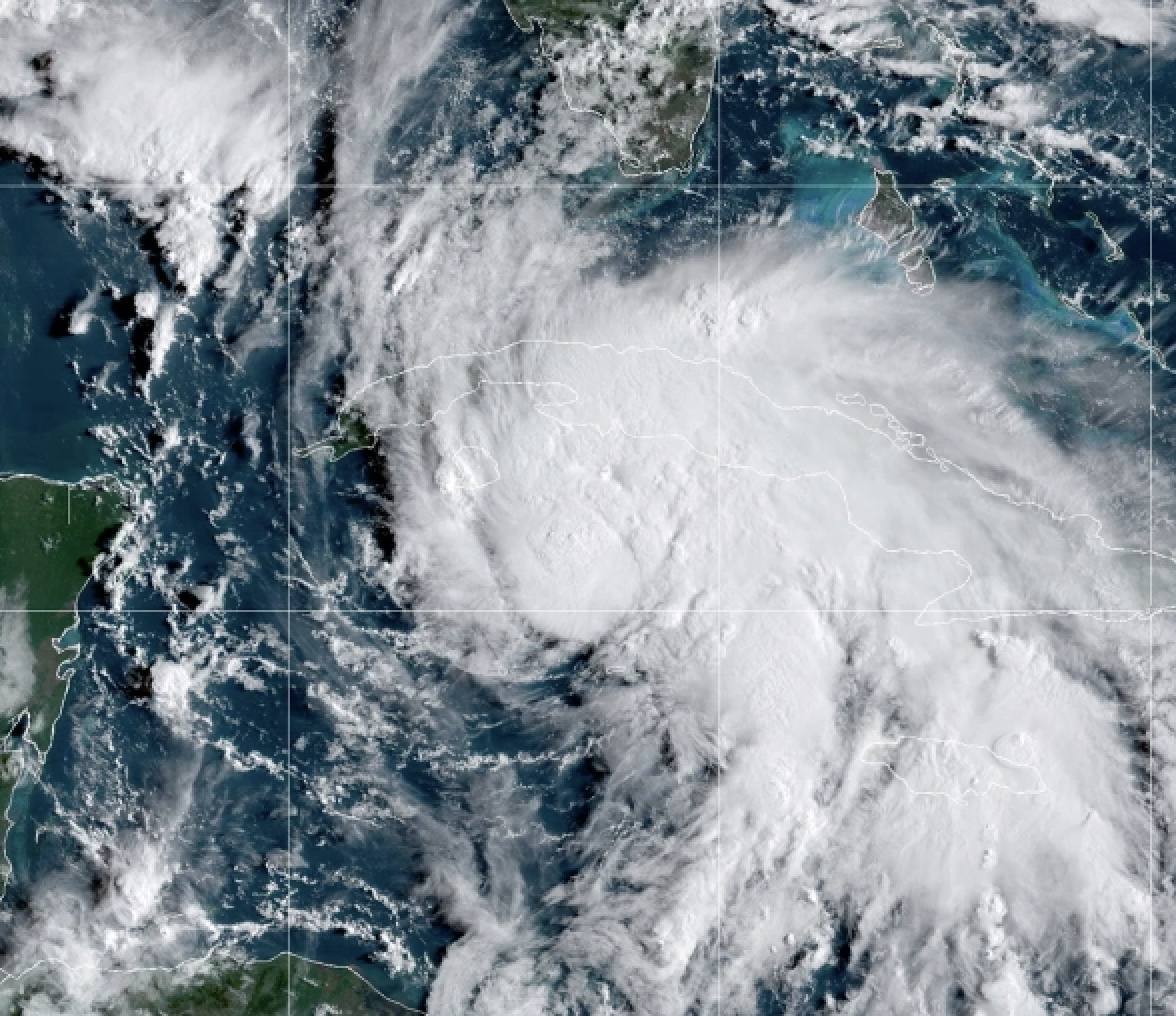
If you have ever lived in a major hurricane zone — Port Arthur, Texas, and West Palm Beach, Fla., for me — then you know that after the winds die down, the electric trucks (from all over) roll into town, from all over. The same thing is true with relief efforts from major religious groups. We’re talking Southern Baptists, Church of Jesus Christ of Latter-day Saints, World Vision, Churches of Christ and more.

The second half of that equation usually gets lots of ink the the religious press.

The elite newsrooms? Sometimes, yes. Lots of times, no.

So let’s look at a very interesting Hurricane Ida story from the Associated Press that provided all kinds of religion details about the locals and the people striving to help them: “Louisiana residents thankful for small miracles after Ida.” As a longtime GetReligion reader said, in an email:

This isn't profound, I guess it's just an example of "there, was that so hard?" . ... to report intimately about believers and clergy worshipping after a catastrophe. Frankly I've been kind of overwhelmed by the enormity of the loss in Louisiana — I joined a church relief team to help in Slidell and New Orleans a month after Katrina — and this story brought tears.

But note: This story focuses — with good cause — on the locals and government efforts post-hurricane. That’s a great story. But maybe this needed a word about the other big religion hook in post-storm news?

Meanwhile, here’s the overture:

MARRERO, La. (AP) — Amid the devastation caused by Hurricane Ida, there was at least one bright light Sunday: Parishioners found that electricity had been restored to their church outside of New Orleans, a small improvement as residents of Louisiana struggle to regain some aspects of normal life.

In Jefferson Parish, the Rev. G. Amaldoss expected to celebrate Mass at St. Joachim Catholic Church in the parking lot, which was dotted with downed limbs. But when he swung open the doors of the church early Sunday, the sanctuary was bathed in light.


Please respect our Commenting Policy

Do Christian 'conservatives' have different beliefs than secular 'conservatives'?

Do Christian 'conservatives' have different beliefs than secular 'conservatives'?

I very much enjoy when other people share my work, especially when they have an audience as large as Rod Dreher’s over at the American Conservative.

Dreher recently picked up on a piece that I wrote laying out the most recent data that we have on the religiosity of Generation Z. In short, about 45% of them do not identify with a religious tradition. But, where a lot of that growth is coming from is through young people who identify as politically conservative.

Dreher writes:

“I would like to know what separates conservative Nones from political conservatives who are religious. That is, on what political points they differ. Are the Nones pro-choice, for example? I’m guessing they are probably fine with gay rights, though I don’t know what they think about trans; maybe they’re for it. What, exactly, makes them conservative?”

Well, I can make an attempt at documenting whether politically conservative Christians look like politically conservative nones using the same data sources that were included in my post.

Let’s start very broadly, by assessing just what percentage of Christians (regardless of age) identify as conservatives compared to those who are atheists, agnostics, or nothing in particular.

Just a bit less than 50% of Christians (of all races) identify as politically conservative. That’s been basically true dating back to 2008. The share has never dropped below 45% and vacillates very little from year to year. It’s fair to say that 47-48% of Christians are conservatives. The share of nothing in particulars who are conservative is much lower. In 2008, it was just 21% but that slowly crept up to 27% by 2011, but has stuck around 25% in the last few years.

Political conservatives represent a very small portion of atheists and agnostics. In 2008, just one in 10 atheists and agnostics were conservative. By 2014, that had increased to 15% for agnostics, and maybe had jumped a single point for atheists. By 2020, 11% of agnostics were conservative and 9% of atheists.

But looked at holistically, it’s important to note that about three quarters of all conservatives identify as Christians, 17% are secular and the remainder come from smaller religious groups like Jews, Hindus, Muslims, etc.


Please respect our Commenting Policy

Everything the media will cover about Afghanistan is bound up with a rigid form of Islam

Everything the media will cover about Afghanistan is bound up with a rigid form of Islam

Two weeks ago, the Religion Guy looked at the future of world Islam and the media after Afghanistan's Taliban takeover. Herewith a look backward with a bit of historical and cultural perspective for writers covering this turbulent and tormented land.

As University of Washington political scientist Anthony Gill commented in the Wall Street Journal, "Despite the seeming irrelevance of religion in the secular West, policy-makers and military strategists would do well to understand its power elsewhere in the world." In the case of Afghanistan, one good source for that is "Holy Wars: The Rise of Islamic Fundamentalism" (Routledge, 1989, reissued 2014) by British journalist Dilip Hiro, a native of Pakistan.

A big theme emerges: Anything and everything that has occurred and will occur is bound up with an especially rigid form of Islam that dominates Afghan culture. In rural villages across the countryside, where most live, mullahs with rudimentary schooling are part of the influential elite establishment.

Time and again over the past century, monarchs tried to tame the clergy and impose a somewhat flexible form of Islam only to be defeated by populist rancor. Among the issues: whether to educate girls, child marriage, modern dress vs. the veil and burqa, whether women can leave their houses without male chaperones or hold down jobs, women voting, alcohol prohibition, polygamy rules and whether to permit banks when the religion bans charging of interest.

Hiro writes that Afghanistan was "a landlocked society which clung to medieval Islam and tenaciously resisted modernization well into the last quarter of the 20th Century." The media have well and amply surveyed the following eruptions since a 1973 military coup abolished the monarchy.

Soviet troops invaded to prop up a Marxist regime and produced the militant Muslim movement (1979). U.S.-aided Mujahideen forces won Soviet withdrawal (1989). The Taliban emerged from the resulting confusion to impose harsh theocracy (1996). Western powers and Afghan allies expelled Taliban rulers for harboring the 9/11 plotters (2001). The Taliban rapidly regain power (August, 2021).


Please respect our Commenting Policy

Reporting on faith-based investment guru Cathie Wood? Do your homework (better)

Reporting on faith-based investment guru Cathie Wood? Do your homework (better)

Investments aren’t my specialty at all, but I was lured to a New York Times business story recently that was headlined: “God, Money, YOLO: How Cathie Wood Found Her Flock.” (YOLO means “you only live once.”)

Hmm, I thought, an article about Christian investing? After all, this woman manages some $85 billion in assets. A superstar in the world of investing, she is known for her risky moves and appeal to the Reddit/Millennial crowd.

So, after 20 paragraphs describing the CEO of Ark Invest, we finally got to the God part.

It happened in the 21st paragraph, just after a mention about Wood speaking to business and religious groups about her late-career decision to start her own investment shop.

It began, she says, with a head-on encounter with the Holy Spirit.

On a gorgeous day in August 2012, Ms. Wood — a fund manager struggling through a rough quarter at AllianceBernstein — was struck by the silence inside her stately home in Wilton, Conn.

Her three children were gone, off to camp and other activities for the summer. She was facing two full weeks alone in the nearly 6,000-square-foot house she bought with her ex-husband in the 1990s.

Then she felt it.

“Wham,” Ms. Wood said last year on the “Jesus Calling” podcast, which is centered on the devotional writings of the best-selling Christian author Sarah Young. “I really feel like that was the Holy Spirit just saying to me, ‘OK, this is the plan.’”

“Jesus Calling,” for those of you who’ve lived on Pluto for the past few decades and have never heard of it, is one of the most successful devotional aids of all time. Thirty million units of this book -– and associated products –- have sold since 2004, when the one-time reclusive missionary to Australia (now living near Nashville) first published a devotional with words allegedly from Jesus himself.

Its fans claim that its words are what Jesus would sound like today if living in the 21st century. Its detractors call it theologically shallow and New Agey.


Please respect our Commenting Policy

Plug-In: Is Afghanistan a religion story? If so, it may be the year's biggest religion story

Plug-In: Is Afghanistan a religion story? If so, it may be the year's biggest religion story

A few weeks ago, realizing how quickly 2021 was racing toward 2022, I made a mental note of the year’s top religion stories so far.

On my quick list: Christian nationalism at the Jan. 6 Capitol riot. Battles over pandemic-era worship restrictions. Faith’s role in vaccine hesitancy. The biggest Southern Baptist Convention annual meeting in many years. The Communion drama between President Joe Biden and U.S. Catholic bishops. Jewish connections to the Florida condo collapse.

Nowhere in my mind: Afghanistan.

But now — especially after the suicide bombings in Kabul on Thursday — it’s looking as if news (much of it tied to religion) in that war-torn nation will dominate headlines for weeks and even months.

As I noted last week, it’s impossible to keep up with all the rapid-fire developments, but these stories delve into compelling religion angles:

Stranded at the airport (by Mindy Belz, World)

Taliban follow strict Islamic creed that doesn’t change with the times, scholars say (by Mark A. Kellner, Washington Times)

Taliban’s religious ideology has roots in colonial India (by Sohel Rana and Sumit Ganguly, ReligionUnplugged.com)

Who is ISIS-K, the group officials blame for the Kabul airport bombings? (by Jack Jenkins, Religion News Service)

Desperate Afghan Christians turned away at airport, aid groups say (by Alejandro Bermudez, Shannon Mullen and Matt Hadro, Catholic News Agency)

Kabul airport attacks strand Afghan contacts of Christian humanitarians (by Cheryl Mann Bacon, Christian Chronicle)


Please respect our Commenting Policy

New podcast: When the Taliban cracks down, will all the victims be worthy of news coverage?

New podcast: When the Taliban cracks down, will all the victims be worthy of news coverage?

There’s no question that the botched U.S. efforts to evacuate at-risk people in Afghanistan is the big story of the hour, the day, the week and for the foreseeable future — especially if this turns into a grand-scale hostage nightmare.

But who is at risk? What kinds of people are trapped inside the new kingdom of the Taliban?

That was the subject that dominated this week’s “Crossroads” podcast (click here to tune that in). And as you would expect, host Todd Wilken and I were especially interested in the role that religion has been playing in this story — if journalists are willing to cover that angle.

So who is at risk? Here is a typical wording, care of an Associated Press update:

The Kabul airport has been the focus of intense international efforts to get out foreigners, Afghan allies and other Afghans most at risk of reprisal from the Taliban insurgents.

With the Taliban controlling the Afghan capital, including the airport’s outer perimeter, White House national security adviser Jake Sullivan said that U.S. citizens are able to reach the airport, but were often met by large crowds at the airport gates.

But, wait. What about the news reports that U.S. forces cannot help U.S. citizens avoid Taliban checkpoints in order to reach the airport, while British and French military personnel are doing precisely that for their own people? That’s a very hot story right now, with U.S. diplomats and the White House saying that the can work with the Taliban to ensure safety.

So let’s pause and flesh out some of the details in that AP phrase about who is at risk, as in “foreigners, Afghan allies and other Afghans most at risk.” Who is most at risk, right now?

* Obviously, American journalists have every right to focus on risks to American citizens.

* In particular, we can assume that Taliban activists are tracing Americans who have led or worked with NGOs, religious aid groups, churches. Then there are the Western-style think tanks, schools, medical groups, etc.

* Obviously, there are the thousands of Afghans who cooperated with and even worked for the U.S. government, U.S.-backed Afghan military units and the kinds of “foreign” organizations mentioned in the previous item.


Please respect our Commenting Policy

When pinning wild COVID-19 quotes on a cardinal, it helps to be precise about fine details

When pinning wild COVID-19 quotes on a cardinal, it helps to be precise about fine details

If you’re the kind of person who likes to explore the wretched underbelly of Twitter, then you need to pay close attention to the waves of snarky messages that follow announcements that famous vaccine skeptics have been hospitalized with COVID-19.

Some of these skeptics are politicians, of course. Others are religious leaders.

That brings us to the Associated Press coverage of a prominent conservative Catholic who, for journalists, is best known as a frequent critic of liberal Catholic politicians and also of some — not all — actions taken by Pope Francis. Here is the overture on one of these updates:

MADISON, Wis. (AP) — Cardinal Raymond Burke, one of the Catholic Church’s most outspoken conservatives and a vaccine skeptic, said he has COVID-19 and his staff said he is breathing through a ventilator.

Burke tweeted Aug. 10 that he had caught the virus, was resting comfortably and was receiving excellent medical care.

“Please pray for me as I begin my recovery,” the 73-year-old Burke said in the tweet. “Let us trust in Divine Providence. God bless you.”

As you would expect, the AP report — in addition to offering a litany of examples of Burke criticizing liberal Catholics — eventually provided some information about the cardinal’s views on the coronavirus pandemic. Here are the crucial paragraphs:

Burke … has criticized how governments have handled the pandemic, referring to the virus in a homily last December as the “Wuhan virus,” a derogatory term used by former President Donald Trump to describe the coronavirus and warning people that governments were manipulating them. In May 2020, he spoke out against mandatory vaccinations, saying some in society want to implant microchips in people.

He said in March 2020 that the best weapon for battling “the evil of the coronavirus” is a relationship with Jesus Christ.

The most inflammatory material, of course, is the reference to implanting “microchips.” It would really help to know more about what Burke is alleged to have said and where and when he said it.


Please respect our Commenting Policy

Return to 'catacomb' Masses after Pope Francis issues tight rules for the Latin Mass?

Return to 'catacomb' Masses after Pope Francis issues tight rules for the Latin Mass?

It's easy for religious leaders to create new laws, but it's harder to convince believers to follow them.

At least, that's what the Benediction monk Gratian -- a canon law pioneer -- argued in the 12th century: "Laws are established when they are promulgated. … They are confirmed when they have been approved by the long term and reasoned acceptance of those who observe them."

Anyone doubting this wisdom should study Catholic social media, noted Cardinal Walter Brandmuller, the 92-year-old former leader of the Pontifical Committee for Historical Sciences. There has been a "hurricane" in the "blogger scene and other media" in response to Traditionis Custodes ("Guardians of the tradition"), the effort by Pope Francis to bind those who celebrate the traditional Latin Mass.

When confusion surrounds a new "ecclesiastical law" -- as opposed to scripture and "natural law" doctrines -- it's important to remember that its "validity … ultimately depends on the consent of those affected by it," wrote Brandmuller, at Kath.net in Germany.

"The law must serve the good of the community, and not vice versa. … If a law is not observed, or is no longer observed, whether from the beginning or after a time, it loses its binding force and becomes obsolete."

The pope's declaration has unleased waves of grief among supporters of the now retired Pope Benedict XVI and his apostolic letter Summorum Pontificum ("Of the Supreme Pontiffs"), which claimed the post-Vatican II Novus Ordo was the "ordinary form" for the modern Mass, but that the older Tridentine rite was an "extraordinary form" that could be encouraged.

This fight is "not really about rites at all, wrote Father Raymond J. de Souza, at First Things. It's about Catholic life in the age of the Internet. The Mass is the message."


Please respect our Commenting Policy