
Women

Creative ways to cover abortion stories near Roe v. Wade anniversary: Here's a few ideas

Creative ways to cover abortion stories near Roe v. Wade anniversary: Here's a few ideas

I always get frustrated with the lack of original thought when it comes to covering abortion stories connected to the anniversaries of Roe v. Wade. Last week’s reporting for the 48th anniversary was no exception.

There was the predictable updates (which I am not criticizing), such as President Joe Biden’s intent to codify Roe v. Wade, which the Catholic-news website Crux covered here. And Fox News ran a piece about a restrictive abortion law passed by the state of Tennessee last summer , and how that has become ensnared in the courts.

Now I know that, with the inauguration on the same week and all, there wasn’t a lot of energy out there to come up with Roe v. Wade stories that covered new ground. But the stories are out there, folks. It’s just that many of those in the media don’t feel like ferreting them out. Let’s suggest a few:

(1) Since Black Lives Matter has been a major newsmaker this past year, how about a revisit on black abortion rates? About a year ago, the Arizona Capital Times ran this opinion piece by a black member of the state house of representatives. I’ll pull out one paragraph:

The impacts on our black communities are hard to fathom. According to the Guttmacher Institute, which generally supports abortion, in 2011 360,000 black babies were aborted. CDC statistics for 2011 show that 287,072 black deaths occurred from all other causes excluding abortion. By these numbers, abortion is the leading cause of death among blacks.

Shouldn’t there be more reporting on something that kills more black children than police brutality ever has? Can’t say I’ve seen a whole lot. This story is also linked to debates in the Black church about politics, social issues, family, etc.

(2) Personality profiles. The pro-choicers get loads of them, such as this 2018 Washington Post piece about a black gynecologist who went from being anti-abortion to pro-abortion rights — and why. This was Willie Parker. The Atlantic, however, went more creative and much deeper in a feature about a war in the abortion movement where Parker is being accused of sexual assault, and the nasty infighting that’s resulted from that. Insider politics is always an interesting read, must say.

But where are the profiles of folks like Lila Rose and Joan Andrews Bell and many other lesser-known folks?
Please respect our Commenting Policy

'Hamilton,' the prophets and liberal Catholicism: Poet Amanda Gorman took her shot

'Hamilton,' the prophets and liberal Catholicism: Poet Amanda Gorman took her shot

After Inauguration Day, everyone was buzzing -- obviously -- about weary Sen. Bernie Sanders and his mittens, as well as Lady Gaga's massive social-distance enforcing dress. Commentators explored the socio-political importance of the various shades of purple worn by female Democrats, while Garth Brooks raised eyebrows with blue jeans and maskless-hugs of assorted presidents.

Oh, and President Joe Biden belted out an address that was Bill Clinton-esque in terms of length.

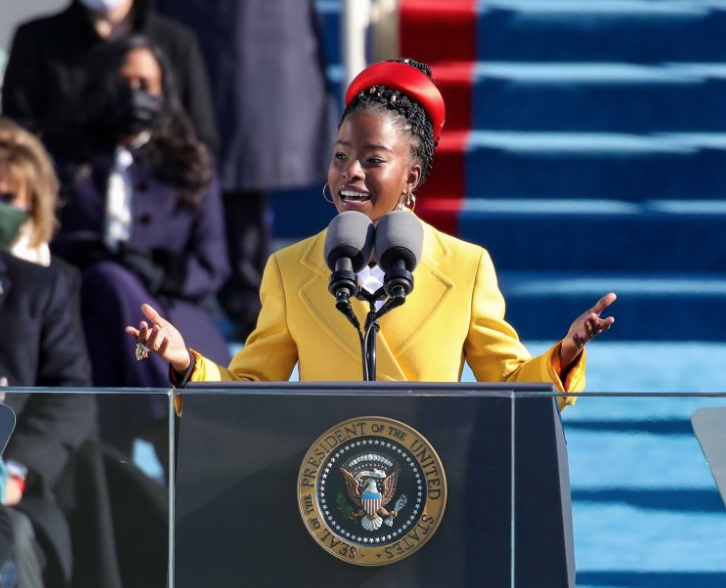
But there was no question that the day’s rising star was Amanda Gorman, the young poet in the canary-yellow coat who certainly didn’t throw away her shot. The question, for GetReligion readers, was whether there was a religion angle in her work that meshed with the rest of the Inauguration Day celebration of the Gospel according to the Religious Left.

Anyone with a computer-based device and a search engine could easily learn that the answer was, “Yes.”

As one would expect, the New York Times offered the definitive faith-free story: “Amanda Gorman Captures the Moment, in Verse.” Now, it was totally valid that the overture underlined the role that the January 6th conspiracy-theory apocalypse played in the creation of the poem. The question is whether this young Catholic woman’s faith was part of her response to it.

Two weeks ago, the poet Amanda Gorman was struggling to finish a new work titled “The Hill We Climb.” She was feeling exhausted, and she worried she wasn’t up to the monumental task she faced: composing a poem about national unity to recite at President-elect Joseph R. Biden Jr.’s inauguration.

“I had this huge thing, probably one of the most important things I’ll ever do in my career,” she said in an interview. “It was like, if I try to climb this mountain all at once, I’m just going to pass out.”

Gorman managed to write a few lines a day and was about halfway through the poem on Jan. 6, when pro-Trump rioters stormed into the halls of Congress, some bearing weapons and Confederate flags. She stayed awake late into the night and finished the poem, adding verses about the apocalyptic scene that unfolded at the Capitol. …

At one point, this Times piece came close to exploring the DNA of key passages in her poem. Of course, the “Hamilton” influence was relevant (hold that thought). Then there was this:


Please respect our Commenting Policy

Big symbols, big story: Pope Francis changes church law to put women 'on the altar' in robes

Big symbols, big story: Pope Francis changes church law to put women 'on the altar' in robes

It’s not every day that the pope changes canon law. Pope Francis did just that in allowing women a larger role during Mass.

The pope said, using a powerful phrase in Catholic thought, that this headline-grabbing change was based on “a doctrinal development” seen in the recent life of the church.

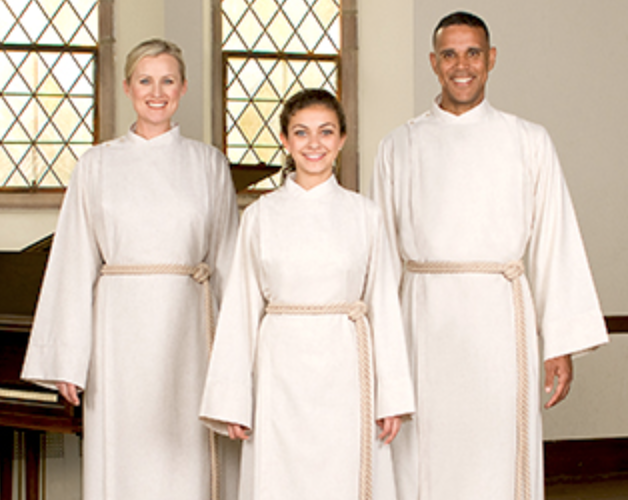
The move — in the wake of a decades-old priest shortage — will grant “non-ordained ministers” the chance to serve as lectors, read scripture, act as eucharistic ministers and, in a crucial symbolic change, wear robes while serving in the sacred space around the altar. The changes, however, will continue to forbid women from being made deacons or ordained priests.

The pope changed canon law to read: “Lay people who have the age and skills determined by decree of the Episcopal Conference, they can be permanently assumed, through the established liturgical rite, to the ministries of lectors and of acolytes; however this contribution does not give them the right to support or to remuneration by the church.”

For the sake of comparison, the law had previously read: “Lay men who possess the age and qualifications established by decree of the conference of bishops can be admitted on a stable basis through the prescribed liturgical rite to the ministries of lector and acolyte.”

In other words, this codifies into the canon the role of women as part of Roman liturgical rite. The announcement, however, caused lots of confusion, especially among many Catholics who have already witnessed women in some of these roles for decades.

The Associated Press headline on the story read, “Pope says women can read at Mass, but still can’t be priests.” That vague language didn’t clarify matters.

In a letter that accompanied the changes, the pontiff said he wanted to bring “stability” and “public recognition” to women already serving during the Mass. Beyond the headline, the AP, in its reporting of the announcement, said that the pope had “amended” church law “to formalize and institutionalize what is common practice in many parts of the world: Women can be installed as lectors, to read Scripture, and serve on the altar as eucharistic ministers. Previously, such roles were officially reserved to men even though exceptions were made.”

The original AP story caused even more confusion when it initially reported that women could read the Gospel during Mass.


Please respect our Commenting Policy

Asking CNN: When is a hijab not really a hijab? Clue: This could be a faith-based question

There was a curious story on CNN’s web site the other day about a Somali Muslim supermodel who has been the first woman — on several platforms — to wear her hijab as she modeled some very modest clothes.

Some of us look awful wearing close-fitting scarves but Halima Aden is one of those blessed individuals with gorgeous facial features who’d stand out in a gunny sack. She exemplifies “modesty culture,” which is portrayed in mass media as repressive when it occurs in a Christian context, but becomes high fashion when a svelte Muslim takes it on.

But then this Muslim called a halt to it all for religious reasons that are never really explained by the fashion reporters who covered her story.

CNN began its piece as follows:

Muslim model Halima Aden is stepping back from fashion and quitting runway shows entirely after feeling pressured to compromise her religious beliefs, she announced Wednesday.

Aden, the first model to wear a hijab and burkini in the Sports Illustrated swimsuit issue, posted a series of Instagram Stories describing the difficulties she has faced in the "toxic mess called fashion." In the posts, she recounted skipping prayers, wearing clothes she wasn't comfortable in and styling her hijab in ways she felt betrayed her values.

"They could call me tomorrow and not even for $10 million would I ever risk compromising my hijab ever again," she wrote. Aden also pledged to never take part in runway shows or travel for fashion months again, adding that "that's where all the bad energy came from."

As I read the rest of the CNN story, I could not figure out what “styling her hijab in ways that betrayed her values” meant.

Fortunately, this BBC story explained it some.

She says she's compromised her religion many times as part of her job — including missing prayer times set out in the Islamic faith or agreeing to model without a hijab on, using another item of clothing to cover her head.


Please respect our Commenting Policy

2020 vote again: Various religion factors still baffle news-media pros and the Democrats

Against all odds -- and against the information in polls -- Donald Trump-era Republicans had a pretty good year in ballot boxes.

A norm-bashing president won 47.6% of the popular vote, came fairly close in the Electoral College, and apparently carried 24 of the 50 states. The GOP has a good shot at a Senate majority, with the two Georgia runoffs on Jan. 5. Gains in the U.S. House give it 48% of the seats. The party added to its majority among governors and its crucial grass-roots advantage in chambers and seats in state legislatures.

Pondering such results, New York Times columnist Frank Bruni confessed that mainstream media colleagues "keep being blinded by our own arrogance" while "extrapolating from our own perceptions."

You think? Among the varied factors shaping U.S. politics, Democrats and the media often muff religion's influence in the flyover turf between the Delaware River and Sierra Nevada mountains and reaching south to the border.

Job One for pundits and political consultants will be figuring why Joe Biden carried 63% of Hispanics as a whole, but Trumpublicans ate into their Democratic margins in Florida and Texas.

A Washington Post 1,800-worder depicted the remarkable red shift along the Texas border with Mexico — but merely hinted at the impact of religious networking and such issues as abortion, including Protestants as well as Catholics. GetReligion has been covering that trend for four years of more. Here’s two sample posts: “Concerning Hispanic evangelicals, secret Trump voters and white evangelical women in Georgia” and “New podcast: Whoa! An old religion-beat story heated up the politics of Florida in 2020.

One MSM figure who gets it is Richard Just, editor of the Washington Post Magazine, who has been exploring his Reform Judaism more seriously in recent years. He wrote Oct. 28 that "religion is fundamentally a mystery" and a profound source of "existential uncertainty" that can "value, even celebrate, contradictions" and thereby overcome the nasty divisiveness that imperils American democracy.


Please respect our Commenting Policy

Who's covering this? Are charismatics and Pentecostals behind Trump's refusal to concede?

On Saturday night, while Joe Biden and Kamala Harris were acknowledging the cheers of a nation, a spiritual battle was going on in Apopka, Fla.

The crowd gathered at Paula White-Cain’s City of Destiny Church was clearly dispirited at the events of the day; a day that various segments of the Pentecostal/charismatic world had declared would never happen because God would make sure that His chosen instrument, President Donald Trump, would get a second term.

“Keep on believing,” White told the crowd. “There are processes at work. …Don’t get distracted by the voices of the media. Prayer brings the will of God to pass. This is a day of rejoicing. Whenever God is moving, it’s a day of rejoicing.

“We break every spirit of mockery right now. What matters is not what man says, but what God says.”

It was her fourth day of prayer meetings since Election Day to “decree” Trump’s coming victory. At one point, her son, Bradley Knight, said he will quit the ministry if Trump is not elected.

White, as many of you know, is Trump’s highest profile pastor, so we’re not talking about a minor personality here. She is arguably America’s most powerful female religious figure. She is — acting as the spiritual force behind Trump — a key figure who is refusing to concede the election to Biden.

In social media, people are talking about this like crazy. In the news?

Her first stab at praying Trump into a second term got treated as a joke by media who hadn’t a clue of what she was trying to do. They did listen to her words, which is why she’s quoted as accusing demons of rigging the election.

Yep, she did say that.

It all started when RightWingWatch posted a video of White shouting “the Lord says it is done” on Nov. 5 about Trump’s reelection. A sample of her prayers, which read like battle orders asking God to take down Biden votes, are as follows. She prayed that:

“… every demonic confederacy against the election…against who You have declared to be in the White House … we come against people working in high levels right now.

Let your hand establish the outcome of this income … for I hear the sound of victory, I hear the sound of victory. I hear the sound of victory. I hear the sound of victory. I hear the sound of victory.


Please respect our Commenting Policy

Election 2020: It ain't over 'til it's over, but familiar religion-news hooks are already obvious

The political recriminations will be flowing in coming weeks, months and years.

Why was the Joe Biden campaign effort so astonishingly (yes) "sleepy"? How could Donald Trump do so well when so many people kept telling pollsters they find him unnerving if not repellent, and bemoan his handling of the COVID-19 crisis? And speaking of polls, why did the nation’s elite media — once again — let them slant coverage, and can their distortions ever be remedied?

With control of the White House and U.S. Senate still undecided as this is written, The Religion Guy underscores a quote: "There's something going on out there that most of the media have been missing." That's from Jim VandeHei, the savvy co-founder of both Politico.com and then Axios.com, speaking on devoutly Democratic MSNBC Wednesday morning. He added, "Obviously Donald Trump and the Republicans are the big beneficiaries of that as we sit here today, even if Trump loses the presidency."

The Guy chimes in with the related observation that Democrats and sectors of the media continue to miss or misplay the religion factor in America’s cultural divide. This will require careful reconsideration following the recounts, legal games, Electoral College vote December 14 and state certifications of Senate winners.

Newswriters' analysis of religion and what happened should note data the experts at Pew Research Center posted October 26 and on October 13. Note well that Pew echoed many others in giving Biden a healthy 52- 42 margin over Trump among registered voters.

Pew found predictable pre-election enthusiasm for Democrat Biden among Black Protestants (by 90 percent), Jews (70 percent, though less among regular worshippers while the Orthodox minority leaned GOP), and Hispanic Catholics (67 percent, but hold that thought).

Then there's the big new constituency of "nones" with no religious identification (71 percent). That’s another theme GetReligion has been stressing for a decade. Democratic dependence on non-religious citizens presumably affects the party's lack of affinity for religious interests. The 2020 returns may tell reporters whether that is a mistake.

Trump's coalition per Pew consisted of white "evangelical" Protestants (78 percent support), non-evangelical white (i.e. "mainline") Protestants (53 percent) and white Catholics (52 percent). The Guy figured it would be hard for Trump to eke out a win unless he could do somewhat better with that last group. Repeat after me: Arizona, Florida, Iowa, Michigan, Nevada, New Hampshire, Ohio, Pennsylvania, Wisconsin.


Please respect our Commenting Policy

Concerning Hispanic evangelicals, secret Trump voters and white evangelical women in Georgia

Life is strange. When I chose the “Groundhog Day” graphic for our 2020 election posts, I did so because I was trying to capture the numbing, “here we go again” nature of the day.

I had no idea that the 2020 results — whether President Donald Trump wins or not — would end up resembling the 2016 race to this degree.

Take Florida. As you may know, everyone in cable-news land last night was talking about Florida as the point of a spear — symbolizing the surprising numbers of Hispanics voting for Trump. It turned into one of the stories of the night. This was part of a rise (small, but significant) in Trump voters in a number of different categories linked to race.

Yes, note the Latino numbers. There may be several layers to that story.

For example, if you read GetReligion, then you know that we were convinced that the rise of Latino evangelicals (and Pentecostal believers) was one of the most important stories of the 2016 race, giving Trump crucial votes that put him in the White House.

Cue the “Groundhog Day” clock. Again.

But let’s note that political-beat journalists would have noticed this trend quicker if they had paid attention, not only to GetReligion (#DUH) but to some important religion-beat reporting elsewhere. Remember that New York Times story that we praised recently? See the post with this headline, “New York Times listens to Latino evangelicals: 'Politically homeless' voters pushed toward Trump.” That post includes a flashback to my 2016 thoughts on Latino evangelicals in Florida.

If you want more input on that issue, and others, please see this new piece by Clemente Lisi: “Election 2020: 3 Things We Learned About Faith And Voting” (at Religion Unplugged). He noted a crucial fact on the Trump campaign calendar:

It’s true that Latinos in general did help Trump (for example, Cuban-Americans in Miami-Dade County), the Hispanic evangelical vote mattered, as GetReligion recently pointed out. NBC News exit polling revealed that 55% of the state’s Cuban-American vote went to Trump, while 30% of Puerto Ricans and 48% of “other Latinos” backed the president.


Please respect our Commenting Policy

Here we go again, 2020 version: Five revealing questions to ask on Election Night

In Tuesday’s big vote, politics matter.

So, too, does religion.

On Election Night, here are five revealing questions that Godbeat pros will be asking:

1. Was President Donald Trump able to maintain his overwhelming level of support — roughly 80% in 2016 — among White evangelicals?

“If that number is significantly lower, I would think it has to do with younger evangelicals and maybe women evangelicals getting fed up,” said Kimberly Winston, an award-winning religion reporter based in California.

The pre-election outlook? Trump is “losing ground with some — but not all — White Christians,” reports FiveThirtyEight’s Amelia Thomson-DeVeaux.

On the flip side, Christianity Today’s Kate Shellnutt highlights evangelical voters who express “more faith in Trump” than they did four years ago.

2. What difference did Catholic voters make, particularly in all-important swing states?

NPR religion correspondent Tom Gjelten notes that in 2016 “it was not the evangelicals who carried Trump to victory but Catholics, a group he had rarely mentioned in his speeches.”

Gjelten explains:

Despite losing the popular vote, Trump reached the presidency in large part because he won traditionally Democratic Pennsylvania, Michigan and Wisconsin, all states in which Catholics outnumber evangelicals by significant margins.

Religion Unplugged’s Clemente Lisi, The Atlantic’s Emma Green and the Columbus Dispatch’s Danae King offer more insight on this key voting bloc. This is has also been a major topic in GetReligion coverage of American politics for more than a decade, especially in the work of Richard Ostling and Terry Mattingly.

3. How did various subgroups — Mormons, Muslims and even the Amish among them — influence the outcome?

Trump’s campaign has made a “concerted effort” to expand support among Arizona and Nevada members of the Church of Jesus Christ of Latter-day Saints, the Salt Lake Tribune’s Lee Davidson reports.


Please respect our Commenting Policy