Terry Mattingly

Podcast: What would happen if GetReligion provided 'hot' GOP debate questions?

Podcast: What would happen if GetReligion provided 'hot' GOP debate questions?

I’m not a fan of the cable-television festivals called “presidential debates,” because they rarely feature any substantial debates and the candidates don’t act presidential.

Maybe this is more evidence that I am what I am, a journalist who is a registered third-party person who doesn’t fit in America’s Republican-Democrat binary vise (rather like Megyn Kelly’s take here).

However, the producers at Lutheran Public Radio had an interesting idea for this week’s “Crossroads” podcast (CLICK HERE to tune that in). They asked me to prepare questions — thinking religion-beat, GetReligion-oriented stuff — that I would ask if (#ducking) I was the moderator at last night’s GOP presidential debate at the Ronald Reagan Library.

I came up with 10 or so questions and I’ll share some of those shortly. However, I knew that the subjects that most interest me — as an old-school First Amendment liberal — would not be on this debate’s menu.

First, let’s deal with the orange elephant in the room. The New York Post, in it’s “exclusive drinking game for the second Republican presidential debate,” reminded viewers to:

Take a sip of WATER …

… every time Donald Trump is mentioned. This will keep you hydrated.

Later, the Post team offered these style points:

Take a sip of your drink …

… every time a candidate says “woke”

… when a candidate calls another candidate by an unflattering nickname

… when someone references the Biden Crime Family

… when a candidate uses a 3-letter acronym (think FBI, IRS, DEI, CDC)

… when a candidate tries to deflect when asked if they think the election was rigged

… when a candidate says they support Trump’s movement (but think they’re the one to finish the job)
Please respect our Commenting Policy

Film legend Martin Scorsese -- no surprise -- talks about his latest movie (and Jesus)

Film legend Martin Scorsese -- no surprise -- talks about his latest movie (and Jesus)

Since Day 1 — almost 20 years ago — your GetReligionistas have talked about the religion “ghosts” that haunt many mainstream news stories.

The basic idea is that journalists without religion-beat skills often omit religious facts, history and beliefs when writing many stories in which it’s almost impossible to understand what is going on without reporting these religion angles. Thus, we say these stories are “haunted” by religion “ghosts.”

From time to time, we hear from critics who claim that we want journalists to “force” religion into stories in the arts, sports, politics, business, etc. In the vast majority of cases, these critics are not arguing with us — but with easily available information about the lives of the people involved in these stories. Remember that classic 2016 case with mainstream news coverage (hello ESPN) of NBA superstar Kevin Durant?

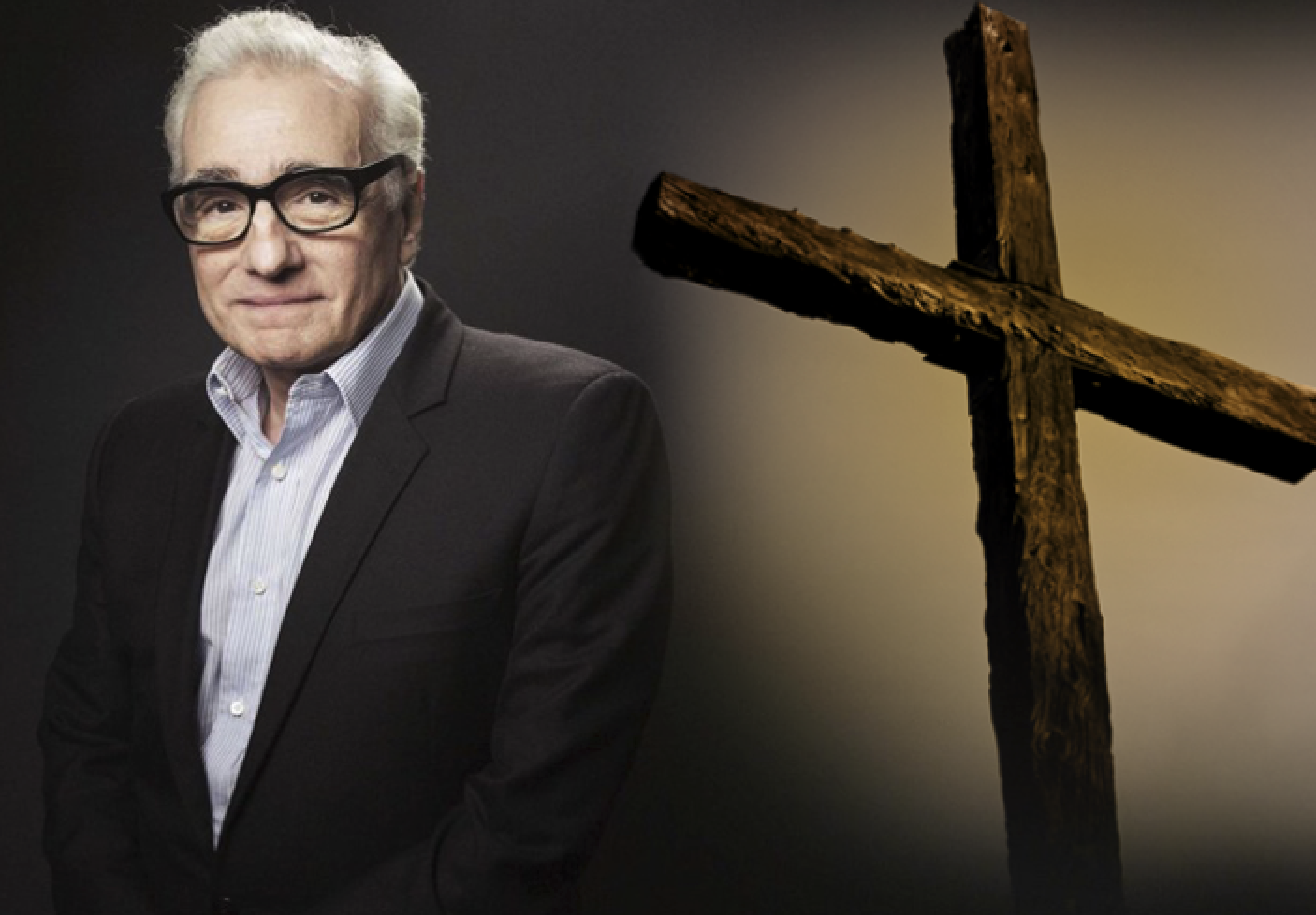
This brings me to a recent Time magazine feature that ran with this headline: “Martin Scorsese Still Has Stories to Tell.” On one level, reporter Stephanie Zacharek faced a familiar entertainment-beat story, as in doing a junket-related feature with a Hollywood player who is promoting his or her new movie.

However, what we ended up with is a positive example of a journalist weaving accurate, valid, material about a newsmaker’s religious history into a mainstream news report.

Let me note that, in terms of film-studies doctrine, there is no such thing as an “orthodox” view of the role Catholic faith plays in this superstar director’s life and work. That’s fine. There’s way more to this man’s story than ongoing (in my view valid) arguments about “The Last Temptation of Christ.

Catholics can, and do, argue about what “kind” of Catholic he is, in terms of beliefs and practice of the faith. Film scholars can debate which of his movies are “Catholic,” which ones have faith soaked into the images and which ones seem to clash with Catholicism.

But everyone agrees on one thing: It’s impossible to talk about Scorsese and leave his Catholicism out of the mix.

Thus, Zacharek’s feature is not an example of a journalist “forcing” religion into a story about a mainstream artist. It’s an example of a story that asks relevant questions about Scorsese and then let’s him talk about his life and art. Thus, it contains quite a bit of valid Godtalk.

At first this is a rather normal arts-beat feature. For example, near the top:

Scorsese’s encyclopedic knowledge of film has made him the patron saint of film bros, and though it’s a title he most certainly never asked for, he’s happy to talk about movies for as long as you like.


Please respect our Commenting Policy

Hey, Tennessean folks: Has SBC President Bart Barber changed theologically? Yes or no?

Hey, Tennessean folks: Has SBC President Bart Barber changed theologically? Yes or no?

This is a strange one. In a recent profile of the Rev. Bart Barber — the current president of the Southern Baptist Convention — the Nashville Tennessean team did something that was both unusual and totally predictable.

Unusual? My state’s dominant newspaper used a theological term when it needed to find an accurate political term, of some kind. Yes, you read that right. I just urged some journalists — in this case — to use accurate “political” language instead of mangled doctrinal language.

Predictable? The abused theological term was “fundamentalist.”

To make matters even more complicated, the Tennessean used an ACCURATE historical-political reference in the headline — “Bart Barber defied the Conservative Resurgence. How it is now shaping his SBC leadership” — and then turned around and used “fundamentalist” in the overture.

Dang it! (I will also ask: Is the pronoun “it” in the headline a reference to Barber’s decisive act of defiance or to the Conservative Resurgence itself?) Here’s that flawed overture:

Bart Barber defied the top brass.

In May 2018, the Texas pastor and his fellow trustees at Southwestern Baptist Theological Seminary in Fort Worth fired seminary president Paige Patterson, the architect of the fundamentalist takeover of the Southern Baptist Convention. Following years of financial-related controversies, revelations about Patterson mishandling reports of sexual abuse pushed Southwestern’s board past a point of no return.

Barber, once a loyal foot soldier in Patterson’s movement, was a decisive vote in Patterson’s dismissal, thereby severing his allegiance. 

The emphasis on the “Conservative Resurgence” as a movement inside the SBC is accurate, since that is a commonly used term among historians. The Tennessean kind of explained that term later in the story, and we will get to that.

After making that wise choice, why use the church-history term “fundamentalist” at the top of the story? That’s a word that fit with some Southern Baptists who supported (as opposed to leading) the “Conservative Resurgence,” but not to all. Using that term also suggested that Barber has changed some of his theological beliefs, as opposed to his stance on crucial issues in SBC politics.

I see zero evidence in this news report that Barber has changed theologically. It that is the case, then ask him hard questions about that and then report the answers.


Please respect our Commenting Policy

A United Methodist bishop faces the big questions surrounding his own terminal cancer

A United Methodist bishop faces the big questions surrounding his own terminal cancer

There was nothing unusual, in the early 1970s, about a student hearing one of his professors preach during chapel.

But one sermon – "How Would You Like to Die?" -- impressed the seminarian who would later become United Methodist Bishop Timothy Whitaker of Florida. Theologian Claude H. Thompson had terminal cancer and, a few months later, his funeral was held in the same chapel at the Candler School of Theology in Atlanta.

"What hit me was that he calmly preached on that subject -- even while facing his own death," said Whitaker, reached by telephone. "It hit me that that, if death is one of the great mysteries of life, then that needs to be something that the church openly discusses. …

"Yes, we live in a culture that is reluctant to talk about death. But I decided that it's important for us to hear from our elders who are facing this issue, head on."

Thus, soon after doctors informed him that his own cancer is terminal, Whitaker wrote a lengthy online meditation, "Learning to Die." The 74-year-old bishop is retired and receiving hospice care, while living in Keller, a small town near the Virginia coast.

"Being a pastor, I considered it a privilege and also an education to linger beside many deathbeds. I have tried to never forget that, unless I die abruptly in an accident or with a heart attack or stroke, sooner or later the subject of death will feel very personal to me," he wrote. Now, "in the time that remains for me I have one more thing to learn in life, which is to die. … I had always hoped that I would be aware of the imminence of my death so that I could face it consciously, and I am grateful that I have the knowledge that I am going to die soon."

Certainly, Whitaker noted, the Orthodox theologian Father Thomas Hopko was correct when he quipped, while facing a terminal disease: "This dying is very interesting."

Dying is also complicated -- raising myriad theological questions about eternity, salvation and the mysteries of the life to come, he noted. The Bible, from cover to cover, is packed with relevant stories, passages and images. The same is true of the writings of early church leaders who preached eternal hope, even when suffering persecution and martyrdom.


Please respect our Commenting Policy

Podcast: Another sexy version of the old New Age arrives, with the 'Secular Sabbath'

Podcast: Another sexy version of the old New Age arrives, with the 'Secular Sabbath'

This podcast post really needs a soundtrack. So, please click on this Secular Sabbath video and leave it running. Then open the GetReligion post in a second browser window and start reading. This will help with the content — I promise.

This week’s “Crossroads” discussion (CLICK HERE to tune that in) focused on a timely, solid feature at The Free Press with this catchy headline: “Can You Find God in a Bikini?” The story was timely because, in many ways, this is a news story that has been with us for decades (if not for centuries, viewed from a theological, pre-electronic-trance-music point of view).

To understand my thinking here, it helps to follow a timeline linking a few books on this topic.

Let’s start here, with “Understanding the New Age,” which was researched in the late 1980s by the great religion-beat pro Russell Chandler. The key to this vague New Age thing, he said, is the movement’s “view of the nature of reality, which admits to no absolutes” and, thus, all “standards of morality” are “relative.”

In the mid-1990s, linked to another burst of New Age media buzz, I interviewed Chandler and the resulting “On Religion” column included this thesis:

A few years ago, most generic bookstores had a "New Age" section. Today, this is rare. But this doesn't mean that the wave of religious trends that crested in the 1980s simply vanished. Truth is, it soaked in.

"You don't see New Age shelves anymore because you can find New Age books in almost every part of the store," said Russell Chandler, an award-winning religion writer best known for his 18 years at the Los Angeles Times. "They're in the psychology section and over on the women's shelf. You'll find them under self-help, stress, holistic health and the environmental, too."

The day of New Age cover stories in news magazines may have passed, but that's beside the point. New Age faith, said Chandler, has "become so visible that it's now all but invisible."

Reading Chandler led me to New Age preachers such as Marianne Williamson (yes, she is seeking — again — the White House as a Democrat) and her bestselling book “A Return to Love: Reflections on the Principles of A Course in Miracles.


Please respect our Commenting Policy

Here we go again: Did Coco Gauff have a prayer after her U.S. Open triumph?

Here we go again: Did Coco Gauff have a prayer after her U.S. Open triumph?

Enquiring tennis fans (may) want to know: Is the young U.S. Open champion Coco Gauff a “good” religious believer or some kind of “bad” conservative Christian whose beliefs should be avoided in the mainstream press?

I am getting to this story late, because I have been on the road for more than a week for pressing family reasons. However, it’s clear that Gauff is going to be one of the more inspiring sports figures of 2023, and in this case “inspiring” can have several valid meanings.

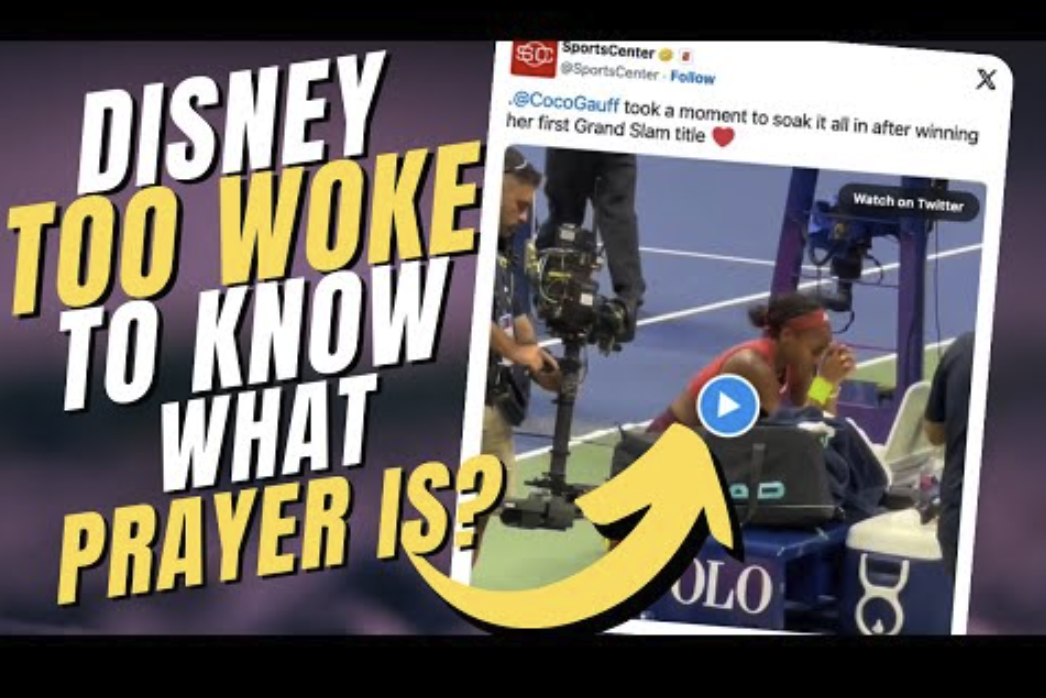
So let’s start with the obvious hot-button image from social media, as in that ESPN SportsCenter post on X containing a video clip that showed the new champion kneeling, with her head bowed and her hands against her forehead in a rather obvious symbolic position.

The ESPN tweet said (all together now): “@CocoGauff took a moment to soak it all in after winning her first Grand Slam title (heart emoji)”

Pro Football Hall of Fame coach Tony Dungy — one of the most outspoken Black Christians in mainstream media — wasn’t amused by this faith-free language and responded on X. This, in turn, was picked up by “conservative” media, since religious faith is often viewed as a “conservative” thing. Here’s a major chunk of the New York Post coverage:

“I hate to break this to you SportsCenter but Coco Gauff was not ‘soaking it all in’ at this moment. She was praying. She has been very open about her Christian faith in the past. It seems pretty obvious what she is doing here,” Dungy wrote.

Gauff spoke about her faith after winning the first Grand Slam title of her career after she was asked what it meant to her to win the title on home soil.

“Oh my goodness. It means so much to me. I feel like I’m a little bit in shock in this moment,” Gauff said. “That French Open loss was a heartbreak for me. I realized God puts you through tribulations and trials. This makes this moment even more sweeter than I could imagine.

“I don’t pray for results. I just ask that I get the strength to give it my all. Whatever happens, happens. I’m so blessed in this life. I’m just thankful for this moment. I don’t have any words for it, to be honest.”

Let’s stress the obvious journalism point, once again.


Please respect our Commenting Policy

What do seminaries do, in an age in which many believers are afraid of 'theology'?

What do seminaries do, in an age in which many believers are afraid of 'theology'?

During the 1970s and '80s, the flocks gathered in conservative Protestant pews kept growing and growing -- until a third of the U.S. population could be defined as "evangelical."

Times were already getting tough for leaders of progressive Mainline churches, with sharp declines in budgets and worship attendance. But the waters were smooth for evangelicals.

"One might be considered a very capable kayaker if the river currents are moving along at only a few miles per hour," said theologian David Dockery, during the recent convocation rites at Southwestern Baptist Theological Seminary in Ft. Worth, Texas, after he was inaugurated as its 10th president.

But the currents changed, while many contented evangelical leaders didn't spot the dangerous waves around them. "I fear that the waters of our cultural context have become much choppier and are moving evermore rapidly with each passing year," said Dockery, who noted that he was beginning his 40th year working in Christian higher education.

Consider a sobering new study -- "The Great Dechurching. Who's Leaving, Why Are They Going, and What Will It Take to Bring Them Back" -- by researchers Jim Davis, Michel Graham and Ryan Burge. Their numbers indicate that evangelicalism has backslid to where it was 50 years ago.

The big question is, "Why?" Dockery said he accepts the study's thesis that many boom-era evangelicals lacked "deep roots in their understanding of the Christian faith." Many evangelicals failed to teach practical discipleship in daily life and seemed reluctant to defend the truths "delivered to the saints" through the ages. This fear of theology has proven to be a disaster as America "has become more secularized, polarized and confused," he said.

Thus, the "Dechurching" trend leads straight to hard questions about seminaries, noted Burge, in his "Graphs about Religion" newsletter. He teaches political science at Eastern Illinois University and is one of my GetReligion.org colleagues.

Seminaries help define religious denominations and are "an incredibly important part of the religious economy. In many ways they are the canary in the coal mine for the health of American religion," he wrote.


Please respect our Commenting Policy

Podcast: God knows, there's more to rising tensions in country music than politics

Podcast: God knows, there's more to rising tensions in country music than politics

Gentle readers, here is the GetReligion question for this week.

Here we go: Who would you trust to know more about the complex cultural, moral, religious and, yes, political world of country music — the editors of Rolling Stone magazine or the late, great Johnny Cash?

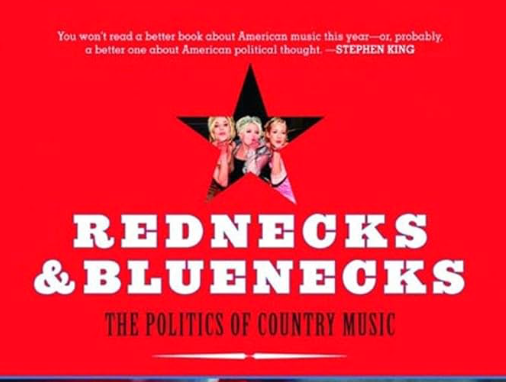
I asked this question during this week’s “Crossroads” podcast (CLICK HERE to tune that in), which focused on a Rolling Stone feature with this headline: “The Culture Wars Are Tearing the Close-Knit Country Music Community Apart.”

To cut to the chase, these country music fights are all about politics — of course. And also, it’s totally new (#NOT) for country stars to speak out on issues of culture, morality, family, politics, economics, race, etc. Forget that Hank Williams guy, Jimmie Rodgers, Merle Haggard, Loretta Lynn and lots of other superstars.

People like Cash. It helps to read this next quote slowly and imagine the Man in Black’s voice-of-God singing and speaking tones

:… When asked to describe his musical values, Cash preached country gospel: "I love songs about horses, railroads, land, judgment day, family, hard times, whiskey, courtship, marriage, adultery, separation, murder, war, prison, rambling, damnation, home, salvation, death, pride, humor, piety, rebellion, patriotism, larceny, determination, tragedy, rowdiness, heartbreak and love. And mother. And God."

Yes. there’s some politics in there — along with some other important topics.


Please respect our Commenting Policy

Reuters should correct a correction? Polish rite to beatify family of nine killed by Nazis

Reuters should correct a correction? Polish rite to beatify family of nine killed by Nazis

Does anyone remember newspaper “corrections”?

Let me explain the concept to younger GetReligion readers. Back in the days of ink-on-paper news, if a news organization made a mistake, the editors used to print an actual correction, noting the error and providing the correct information. Then, early in the online era, they would add a “correction” blurb at the top of a story and then insert a detailed correction at the end (or some variation on these items).

Then some, not all, news organizations simply started correcting mistakes — in the never-ending flow of online copy — without admitting that they made these mistakes in the first place. Thus, savvy news readers began making screenshots of errors they spotted, knowing that this was the only definitive way to prove the error ever existed.

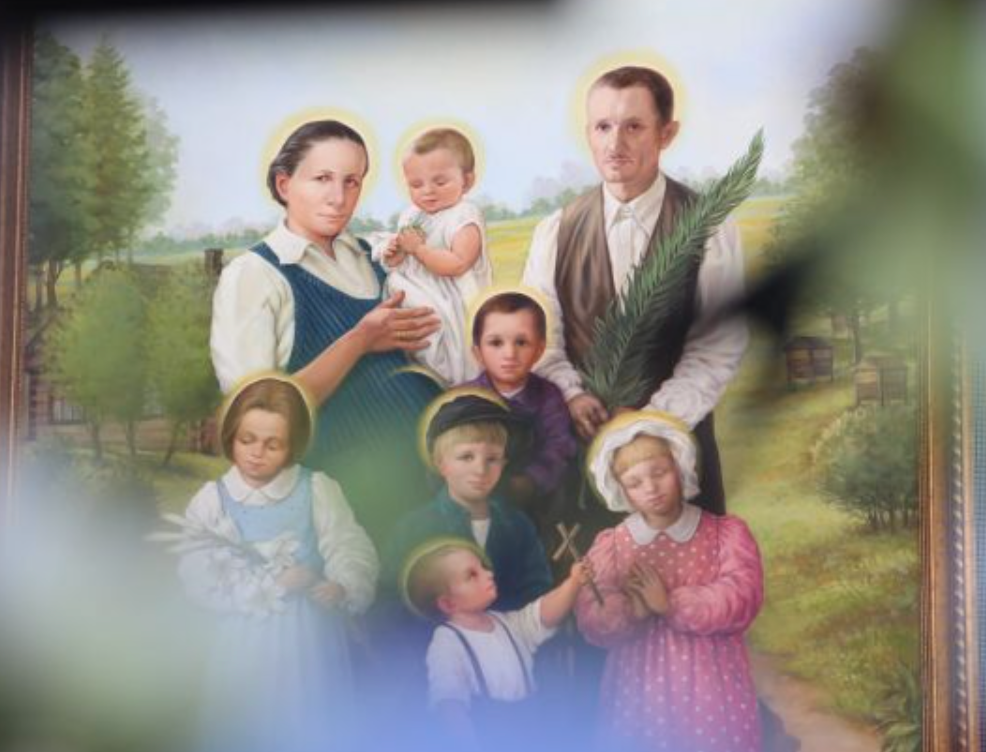
Now, we have something really strange going on in the following Reuters news report: “Catholic Church to beatify Polish family, including new-born baby, killed by Nazis.”

If you follow Catholic Twitter, it appears that there were errors in an earlier version of this story.

Maybe. It’s hard to tell.

Then again, the current version of the story (as I wrote this) appears to contain a clash between two different accounts of this beatification story.

Start here: Note the “including new-born baby” reference in the headline.Then, let’s work through this, starting with the lede from several days ago:

VATICAN CITY, Sept 5 (Reuters) — The Catholic Church is to beatify a Polish family of nine including a new-born baby who died at the hands of the Nazis during World War Two, the Vatican's saint-making department said.


Please respect our Commenting Policy