Terry Mattingly

New take on culture wars? American Muslims clash with the Sexual Revolution

New take on culture wars? American Muslims clash with the Sexual Revolution

In terms of Islamic doctrine, alcohol is "haram," or forbidden, and the Quran is blunt: "O ye who believe! Strong drink and games of chance and idols and divining arrows are only an infamy of Satan's handiwork."

But it isn't hard to find Muslims that never boarded that bandwagon.

"There are Muslims who drink and get drunk. That's a fact, but that doesn't mean they can change what Islam teaches," said Yasir Qadhi, dean of the Islamic Seminary of America, near Dallas. "That's a sin. We all sin. But we cannot change our faith to fit the new norms in society."

Under normal circumstances, it wouldn't be controversial for Islamic leaders to affirm that their faith teaches absolute, unchanging truths about moral issues -- including subjects linked to sexuality, marriage and family life.

But Muslims in America never expected to be called "ignorant and intolerant" because they want public-school leaders to allow children to opt out of academic work that clashes with their faith. But that's what is happening in Montgomery County, Maryland, and a few other parts of the U.S. and Canada, where Muslim parents have been accused of cooperating with the cultural right, said Qadhi.

"That is so painful. … Truth is, we are not aligning with the political left or right," he added. "You cannot put Islam into a two-party world, where you have to choose the Democrats or the Republicans and that is that."

On the legal front, a Maryland district court recently ruled that parents do not have "a fundamental right" to avoid school activities that challenge their faith. The legal team for a coalition of Muslims, Jews, Orthodox Christians, evangelicals and others quickly asked the Fourth Circuit Court of Appeals to reconsider the Mahmoud v. McKnight decision.

At the same time, Muslim leaders are debating a May 23 statement -- "Navigating Differences: Clarifying Sexual and Gender Ethics in Islam" -- signed by more than 200 Muslim leaders and scholars, representing a variety of Islamic traditions.


Please respect our Commenting Policy

Thinking just a little bit about Jimmy Buffett, the laid back Catholic troubadour?

Thinking just a little bit about Jimmy Buffett, the laid back Catholic troubadour?

I wrote this short “think piece” just before heading out the door on a trip to our old stomping grounds in South Florida.

The timing is a coincidence, with zero connections to some follow-up reflections on my recent post — “New York Times offers flashback to sacraments offered by the priest of the Parrotheads” — about some religion “ghosts” linked to coverage of the late singer-songwriter Jimmy Buffett.

I had no idea that there would be some Catholic-press coverage pointing to some faith-centered threads in his music. Hold that thought. Here is a small chunk of my GetReligion post noting the Big Idea in the Times story:

The basic idea is that the singer-songwriter was a kind of guru-priest who was looking at the humdrum lives being lived by millions of Americans. He saw this and, looking out from the center microphone on stage during his never-ending tours, he had compassion on them.

After all, he had seen this relationship before. When fans sang along in the crowd, it created, as noted in the Times feature, a “unified hum, reminding Mr. Buffett of the recitation of prayers in church during his altar boy days.”

Was there more to the theological content of Buffett’s lyrics than that? The Catholic News Agency offered a feature with the headline, “Jimmy Buffett: more Catholic than you think?”

While admitting that there was little overt Catholic content in the singer’s public life and remarks, this new piece dug back to earlier interpretive work by Stephen M. Metzger, writing for the Church Life Journal at Notre Dame University.

“[I]t is clear that Catholicism left an indelible mark on his imagination,” wrote Stephen M. Metzger, a scriptor (cataloguer of Latin manuscripts) and graduate of the University of Notre Dames Medieval Institute. … Buffett attended St. Ignatius Catholic School and went on to graduate from McGill-Toolen Catholic High School, which remains the most prominent Catholic high school in Mobile, Alabama. 

Metzger said evidence of Buffett’s Catholic upbringing shone through in his work, even if his songs weren’t explicitly Catholic.


Please respect our Commenting Policy

Podcast: Attention Gray Lady folks! Latter-day Saints are not the only skilled fantasy scribes

Podcast: Attention Gray Lady folks! Latter-day Saints are not the only skilled fantasy scribes

Two decades ago, I attended Nimbus 2003, the first global Harry Potter studies convention.

This colorful event, at a Disney hotel in Orlando, drew a capacity crowd of about 600 participants — about 90% of which were female — from the United States, England and Australia.

What kinds of people showed up and what does this flashback have to do with this week’s “Crossroads” podcast (CLICK HERE to tune that in)? Hold that thought. Here’s a bite of the “On Religion” column that I wrote about that event, one of many Harry Potter-related columns I have written over the years.

In hotel hallways, witch wannabes raised their expensive, professionally carved wands and fought imaginary duels with tickling spells and other incantations. In the lecture halls, others heard papers on everything from Harry Potter and the First Amendment to "Greenhouses are for Girls, Beasts are for Boys? Gender Characterizations in Harry Potter." …

Organizers also dedicated an entire track of lectures and panels to spiritual issues, addressing topics such as "Seven Deadly Sins, Seven Heavenly Virtues: Moral Development in Harry Potter" and "Can Any Wisdom Come From Wizardry?"

I was not surprised that a large number of the participants mentioned, in registration, that they were Wiccans or interested in other forms of neo-paganism. However, it was clear that at least half of the crowd of readers with marked-up Harry Potter books were mothers — often homeschool enthusiasts — who were Catholics, evangelical Protestants or members of the Church of Jesus Christ of Latter-day Saints.

It was important, some said, that author J.K. Rowling had outed herself, early on, as a communicant in the progressive Scottish Episcopal Church. She told a Canadian newspaper: "Every time I've been asked if I believe in God, I've said, 'yes,' because I do. … If I talk too freely about that, I think the intelligent reader — whether 10 or 60 — will be able to guess what is coming in the books."

Now, this brings us to that fascinating New York Times feature that ran with this double-decker headline:

An Unexpected Hotbed of Y.A. Authors: Utah

A tight-knit community of young-adult writers who belong to the Church of Jesus Christ of Latter-day Saints has yielded smashes like “Twilight.” But religious doctrine can clash with creative freedoms

Yes, it’s interesting that Mormons play a major role in the world of fantasy fiction for children, teenagers and family-reading circles. I also thought it was interesting that editors at the world’s most prestigious newspaper have never heard of some other religious believers who have excelled as fantasy stars.

Can you say “Narnia”? How about “The Hobbit”? How about “A Wrinkle in Time”?


Please respect our Commenting Policy

Religion News Service does a fine job of interviewing LGBTQ+ critics of BYU honor code

Religion News Service does a fine job of interviewing LGBTQ+ critics of BYU honor code

First things first: Religion News Service deserves praise for publishing a story about the doctrinal code at a private religious university that actually discusses the contents of said code.

Here is the shocking part. This long news feature about Brigham Young University even mentions, near the end, that students who disagree with the school’s teachings actually have their own reasons to choose to live and study on this campus. Is free will involved? This is a mystery. Hold that thought.

However, I would note that this recent RNS report — “BYU officially restores honor code ban on ‘same-sex romantic behavior’” — leaves a crucial, related question unanswered: Do students actually SIGN the doctrinal code as part of enrollment? In other words, do they pledge to follow, or not to openly oppose, the contents of the code?

That’s a logical question, since this story makes it clear that students living in a voluntary community defined by these doctrines are still free to oppose them in public media.

In fact, the RNS story does not include material from an interview with a single student, faculty member, parent or trustee who defends the doctrinal code. This could be a statement about RNS journalism doctrines (Why quote people who are wrong?) or it may reflect the reality that it is now more controversial to openly support the teachings of the Church of Jesus Christ of Latter-day Saints than it is to oppose them. Here is the story’s overture:

LGBTQ students at Brigham Young University celebrated three years ago when The Church of Jesus Christ of Latter-day Saints’ flagship school quietly deleted from the honor code a ban on “homosexual behavior.” For the first time, many students began holding hands or kissing in public. Others took the moment to come out as queer.

Then, a month later, the Church Educational System administrators who oversee BYU’s campuses issued a statement clarifying that despite the deleted language, “same-sex romantic behavior” wasn’t compatible with the honor code.

Last week, the Church Educational System restored language to the code explicitly prohibiting LGBTQ affection — now called “same-sex romantic behavior.”


Please respect our Commenting Policy

New York Times offers flashback to sacraments offered by the priest of the Parrotheads

New York Times offers flashback to sacraments offered by the priest of the Parrotheads

Although I have lived in West Palm Beach, and I once saw Jimmy Buffett riding his bike near the ocean on Palm Beach Island, I claim absolutely zero personal insights into the philosophy and lifestyle of Parrotheads.

However, I saw a tweet by Ross Douthat pointing readers to an excellent New York Times profile of Buffett linked to the 2018 success of the jukebox Broadway musical celebrating his life. The headline: “Jimmy Buffett Does Not Live the Jimmy Buffett Lifestyle.” In a way, this feature by Taffy Brodesser-Akner can be read — I think this is what Douthat had in mind — as a kind of meditation on the long, warm Buffett obituaries that are running wherever Baby Boomers get their news.

At first glance, there is next to zero religious content in this feature. Then I took off my journalism-commentary glasses and read this feature through the eyes of the Denver Seminary professor that I was, briefly, in the early 1990s. Hold that thought, because we will come back to it.

Now, read this large chunk of the Times feature and start looking for hints at the role that Buffett played in the lives of his, well, disciples.

One day he realized that even if you were the supply, you could also be the supply chain. “It’s up to you to figure out how to take advantage or to manage whatever you’re going to do,” he said. “Margaritaville” was a hit in 1977. But more important, on that day, Margaritaville® was born.

He established Mailboat Records, his record label, in 1999. He went from making $2.20 per album to making $6 an album, he told me. He built his own tour buses, because it costs five times more to rent equipment than to own it yourself. He then rented out that equipment to other acts. And he took charge of his merchandise. He didn’t do it because he was greedy. He did it because he could do it better than the people who were ripping him off with concert T-shirts that spelled his name as Buffet.

He sold his fans quality, spell-checked T-shirts. He played clubs all over the country, but it was the crowds in landlocked areas that seemed to love him most. In Pittsburgh, he and his Coral Reefer band mates noticed that fans had started wearing Hawaiian shirts, just like they did, to the shows. One night, in Cincinnati, his bass player Timothy B. Schmit (also of the Eagles) likened them to Deadheads, the way Grateful Dead fans would follow that band. And so they were christened Parrotheads, just as a joke, but then fans began to wear feathers and beak masks to shows. “In their minds they wanted to go to the ocean,” he said. He understood he was bringing the ocean to them. He was no longer just a singer. Now he was a guru.


Please respect our Commenting Policy

True or false: Angry Muslim parents in Maryland have joined the Religious Right?

True or false: Angry Muslim parents in Maryland have joined the Religious Right?

Faced with a throng of worried parents, Montgomery County Councilmember Kristin Mink met with a few Muslim protestors to hear their objections to the "LGBTQ+ inclusive texts" that school teachers would be using with their children.

The Maryland Democrat was not amused by what she heard.

"This issue has unfortunately put … some, not all of course, Muslim families on the same side of an issue as white supremacists and outright bigots," said Mink, in early June. "The folks I have talked with here today, I would not put in the same category as those folks, although, you know, it's … complicated."

Public-school efforts to promote equity, she added, are "not an infringement on, you know, particular religious freedoms."

This public statement stunned a coalition of Muslims, Orthodox Christians, evangelicals, Jews and others committed to a Maryland policy that allowed students to avoid some activities focusing on family life, gender change and same-sex relationships. These parents, for starters, objected to the use of books such as "Born Ready: The True Story of a Boy Named Penelope," "Rainbow Revolutionaries: Fifty LGBTQ+ People Who Made History" and "Pride Puppy!", an ABC book familiarizing preschool and kindergarten children with the sights and sounds encountered when attending Pride marches.

In the spring, Montgomery County officials limited use of the opt-out policy, while releasing a notice stating that "teachers will not send home letters to inform families when inclusive books are read in the future."

Council on American-Islamic Relations leaders -- citing documents from an open-records request -- noted that officials also encouraged teachers to "scold, debate or 'disrupt the either/or thinking' of … students who express traditional viewpoints" on gender, family life and sexuality. Also, students should be instructed not to use "hurtful," "negative" words.

This parental rights battle has now moved to courtrooms, like so many other religious liberty cases that have recently reached the U.S. Supreme Court.


Please respect our Commenting Policy

Podcast: Let's play, 'Name that pope!' The Pope Francis vs. St. Pope John Paul II edition

Podcast: Let's play, 'Name that pope!' The Pope Francis vs. St. Pope John Paul II edition

Nearly a decade ago, I wrote my “On Religion” anniversary column (No. 26 at that time) about a game that Catholics seemed to be playing in cyberspace.

Some called this game, “Name that pope!” At this stage of Catholic life, early in the Pope Francis era, quite a few Catholics were frustrated with the many journalists who claimed there were striking differences — on social justice, poverty, the environment and peace — between the new pope and the previous two occupants of the Throne of St. Peter.

Pope Benedict XVI and St. Pope John Paul II were, you see, stern conservatives obsessed with clashes between centuries of Catholic moral theology and the Sexual Revolution. Pope Francis offered a kinder, more compassion vision focusing (all together now) on social justice, poverty, the environment and peace.

That old “Name that pope!” game played a pivotal role in this week’s “Crossroads” podcast (CLICK HERE to tune that in). We were talking about a new Associated Press story that ran with this headline: “Pope says some ‘backward’ conservatives in US Catholic Church have replaced faith with ideology.

Hold that thought, as we return to the earlier edition of “Name that pope!” Let’s run through this unedited chunk of that column:

Start with this quotation: "The reservation of the priesthood to males, as a sign of Christ the Spouse who gives himself in the Eucharist, is not a question open to discussion."

Name that pope: That's Pope Francis, believe it or not.

Round two: "It is deplorable that homosexual persons have been and are the object of violent malice in speech or in action. Such treatment deserves condemnation from the church's pastors wherever it occurs."

Name that pope: That's Pope Benedict XVI.

Round three: "If we refuse to share what we have with the hungry and the poor, we make of our possessions a false god. How many voices in our materialist society tell us that happiness is to be found by acquiring as many possessions and luxuries as we can! ... Instead of bringing life, they bring death."


Please respect our Commenting Policy

New York Times offers a fascinating look at France's painful religion and immigration puzzle

New York Times offers a fascinating look at France's painful religion and immigration puzzle

Religion is very complicated in France. It’s almost as complicated as anti-religion traditions in France.

This makes it very hard for journalists to draw a line between the “good” religious believers and the “bad” religious believers, as well as the “good” anti-religion leaders and the “bad” anti-religious leaders.

For example, if a politician opposes public displays of religious tradition by Muslims, is that “good” anti-religion or “bad” anti-religion? After all, it could be see as logical after generations of French opposition to similar symbolic gestures by Catholics, Jews, etc. Ah, but what this action can be seen as opposition to European Union support for welcoming immigrants, no matter what?

Those seeking a quick glance at recent scenes in this complicated drama can surf through these GetReligion posts — “France's high court clears up burkini's legality; mainstream media still muddy the waters” and “More secular attacks on burkinis: The New York Times explains why this is not about religion.”

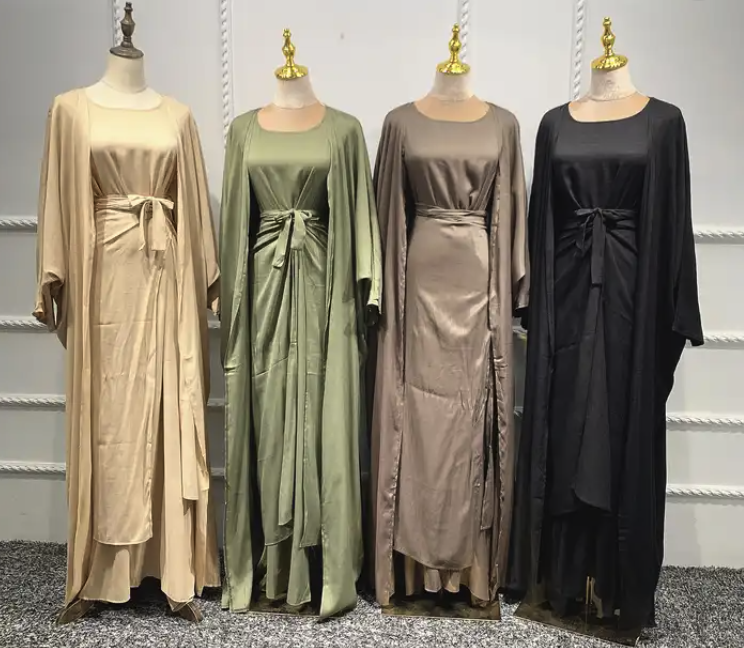
As with the burkini battles, France is now wrestling with another conflict about women, especially school girls, who choose to be modest for bad reasons. The New York Times has published a solid, fascinating report that ran with this complicated (which is fitting) double-decker headline:

France to Ban Full-Length Muslim Robes in Public Schools

Religious symbols are already banned in French schools, but the abaya — a loosefitting robe worn by some Muslim women — was in a gray area. Critics called the measure discriminatory

Ah, but what if there is nothing distinctively or historically Muslim about a particular garment?

What is the difference between a “good” evening gown that is dramatic (and modest) and a “bad” everyday gown that is dramatic and modest? The issue, of course, is whether the gown is worn for religious reasons. In this overture, note the distinction between an “abaya” and the “niqab,” which covers the face. (Oh, and note “children” in the lede, as opposed to “girls.”)

France will bar children in public schools from wearing the abaya, a loosefitting, full-length robe worn by some Muslim women, the government said this week. It said the measure was necessary to stem a growing number of disputes in its secular school system.


Please respect our Commenting Policy

Religion News Service offers the poignant story of Amarillo's few good United Methodists

Religion News Service offers the poignant story of Amarillo's few good United Methodists

Here we go again. This time around, we are dealing with a completely valid news story linked to the local, regional, national and global divorce that’s unfolding in the United Methodist Church. While news headlines insist that this drama is about LGBTQ+ issues, alone, decades of debates show that it’s rooted in differences over core doctrines, such as biblical authority, salvation, the identity of Jesus, marriage, the Resurrection, etc.

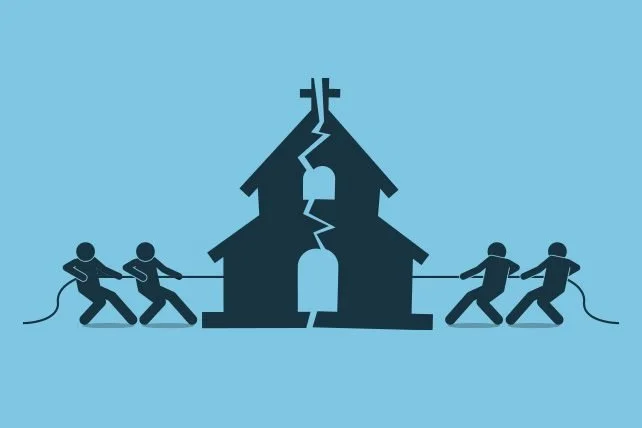
At the local level, the divorce is causing pain in lots of pews, especially when local churches vote — either to defend the existing UMC Book of Discipline or to align with a church establishment that wants to change it — creating divided flocks.

When this happens, journalists will need to talk to people on both sides of the split to find out why they have made the decisions that they have made. Correct?

Well, apparently not, according to this Religion News Service feature: “Left behind by disaffiliations, Texas town’s United Methodists charter a new church.” In this case, it appears that there are “good,” evolving United Methodists and then there are “bad” Methodists, who want to leave church doctrines as they are.

The “good,” evolving believers are offered a chance to offer their views about the new realities in disunited Methodism — as they should. They are a crucial part of the story. However, what about those “bad” believers who disagree with efforts to change the denomination’s doctrines? Alas, there is no need to talk to the “bad” Methodists.

Let’s walk through this, starting with the overture:

AMARILLO, Texas (RNS) — Earlier this year, the seven United Methodist churches in this city in the Texas Panhandle voted to leave the country’s second-largest Protestant denomination over theological questions about homosexuality and gender identity.

This is, of course, the viewpoint of the UMC establishment here in the United States — that this divorce is about LGBTQ+ issues, period. There are millions of Methodists in America, Africa, Asia, etc., who say the tensions are more complex than that.

Oh well. Whatever. Nevermind.


Please respect our Commenting Policy