Terry Mattingly

That timely AP interview: What, precisely, did Pope Francis say about homosexual 'sin'?

That timely AP interview: What, precisely, did Pope Francis say about homosexual 'sin'?

Let’s say that Pope Francis decides to sit down for an Associated Press interview, thus guaranteeing coverage that will appear in the maximum number of mainstream publications around the world.

The basic headline is generic, but points to newsworthy topics: “Pope discusses his health, critics and future papacy.” As you would expect, editors just love a papal interview addressing the potential for a political horse race before a Vatican election (with armies of dangerous right-wing “critics” in the wings).

Now, what angle of this interview would you expect to immediately jump into headlines and social media? Maybe something like, “The AP Interview: Pope says homosexuality not a crime.”

Obviously, the reaction have been different if AP editors had used this accurate headline (written by me), based on this interview: “The AP interview — Pope says homosexual acts are sins, not crimes.”

Hold that thought. First of all, I would like to know more about the backstory for this interview. The timing is interesting, in light of recent news linked to the death of Pope Benedict XVI (“Pope Francis meets Benedict's top aide as memoir rattles Vatican") and yet another powerful conservative leader (“Cardinal Pell authored controversial memo critical of Pope Francis, journalist reveals”).

It is also possible that the timing of this interview is linked to headlines such as this one, at The Telegraph: “ ‘Gay clubs’ run in seminaries, says Pope Benedict in posthumous attack on Francis: New book by the late pontiff makes extraordinary claims about the Catholic Church under his progressive successor.”

Say what? You haven’t seen coverage of this story in your local newspapers or on evening newscasts? Here is a sample of that report:

In a blistering attack on the state of the Catholic Church under his successor’s papacy, Benedict, who died on Dec 31 at the age of 95, said that the vocational training of the next generation of priests is on the verge of “collapse”.

He claimed that some bishops allow trainee priests to watch pornographic films as an outlet for their sexual urges.



Please respect our Commenting Policy

Gay Pride vs. Russian Orthodoxy: NHL star takes stand and journalists pounce in social media

Gay Pride vs. Russian Orthodoxy: NHL star takes stand and journalists pounce in social media

Let’s face it, the Ivan Provorov story had everything that Big Tech-era social warriors could have wanted — Gay Pride, religion, big-time sports, Russia and waves of hot-headed social-media commentary by journalists covering the story.

What it didn’t have, unless I missed it in my reading and search-engine work, was journalists connecting a few dots and spotting a possible role for a true villain — as in Russian ruler Vladimir Putin. Hold that thought.

If you missed this drama, here is the top of the Associated Press story what probably made it into many local newspapers with a headline something like this: “Flyers’ Provorov cites religion for boycott on Pride night.”

Flyers defenseman Ivan Provorov cited his Russian Orthodox religion as the reason he did not participate in pregame warmups when the team wore Pride-themed jerseys and used sticks wrapped in rainbow Pride tape.

The 26-year-old Provorov didn’t take part in the pregame skate with his teammates before their game against Anaheim … , when the Flyers celebrated their annual Pride night in celebration and support of the LGBTQ community. He played nearly 23 minutes in Philadelphia’s 5-2 victory.

“I respect everybody’s choices,” Provorov said after the game. “My choice is to stay true to myself and my religion. That’s all I’m going to say.”

Provorov declined to answer follow-up questions about his decision.

Flyers coach John Tortorella said Provorov “was true to himself and to his religion.”

“It’s one thing I respect about Provy, he’s always true to himself,” Tortorella said.

The AP story, quoting Flyers player Scott Laughton, hinted that the story probably wasn’t over.

Laughton said there would be more conversations ahead with Provorov, who moved from Russia to the United States as a teenager. He signed a six-year, $40.5 million contract before the 2019 season and won the Barry Ashbee Trophy as the Flyers’ outstanding defenseman in his rookie season, the youngest Philadelphia player to receive the honor.

Yes, Eastern Orthodoxy (I am a convert to this ancient Christian communion) defends centuries of Christian teachings and tradition when it comes to the sacrament of marriage and all forms of sex outside of marriage. This frequently creates clashes with the ever-evolving doctrines of the Sexual Revolutions.

These clashes draw relatively little ink, in part because Orthodoxy isn’t a major player, yet, in the marketplace of American religion news. However, Putin’s hellish invasion of Ukraine has changed that to some degree.


Please respect our Commenting Policy

Holy water and Orthodox memories of a mysterious vase of fresh flowers

Holy water and Orthodox memories of a mysterious vase of fresh flowers

After the Christmas season and before Lent, Orthodox priests have -- for centuries -- rushed to visit church-members' homes to bless them with prayers and splashes of holy water flung about with a foot-long brush or handfuls of basil.

Droplets of blessed water end up on beds and bookshelves, TVs and toys, potted plants and paintings, along with everything else.

"It's a chance to start over," said Father John Karcher of St. Nicholas Orthodox Church in Portland, Oregon. "We clean out the cobwebs of sin. … Then we make mistakes and muck it all up again. But we do this every year because God doesn't give up on us."

These rites flow out of the Feast of Theophany, which many Orthodox churches in America celebrate on January 6, or on January 19th for those using the ancient Julian calendar year-round. In addition to house blessings and liturgies, Orthodox clergy bless bodies of water -- rivers, lakes and oceans. In some parts of the world this requires man-sized holes cut into ice.

The feast's central message, said Karcher, is that "when Christ was baptized, he went into the waters and the waters didn't cleanse him -- it was the other way around. He blessed the waters and through them all of creation. … It's a beautiful thing. God responds to our prayers that he sanctifies the waters -- again."

In one rite, priests pray that the blessed water will provide "a fountain of incorruption, a gift of sanctification, a loosing of sins, a healing of sicknesses, a destruction of demons" so that worshippers will experience "the cleansing of souls and bodies, for the healing of sufferings, for the sanctification of homes and for every useful purpose."

The mysterious nature of these rites hit home a decade ago when Karcher led St. Innocent Orthodox Church in the Bay Area in northern California.


Please respect our Commenting Policy

Thinking about persecution in Nigeria: It isn't news (#SIGH), but why is the Vatican so quiet?

Thinking about persecution in Nigeria: It isn't news (#SIGH), but why is the Vatican so quiet?

Tragically, I could have written a “think piece” post about the following topic during every week over the past few years and it would have been relevant in terms of debates about politics, human rights, religious freedom and the practice of journalism.

I am talking about religious conflict in Nigeria, which often escalates into ISIS-level outbreaks of violence and persecution. But Nigeria is only one example of a wider problem in international news, at the moment. For more background, see the recent Richard Ostling religion-beat Memo with this title: “Buried story of 2022? The persecution of Christians keeps surging around the world.”

But let’s start with this new Reuters headline: “Catholic priest burned to death, another shot in north Nigeria.

Actually, there is testimony that Father Isaac Achi was already dead, from gunshot wounds, when his attackers set fire to his home. There is some chance, however, that he was burned alive. Here’s the overture of the Reuters piece, which may be the only mainstream media coverage that has been done of this latest hellish vision of religious life in Nigeria:

Gunmen burned a Catholic priest to death and shot and injured his colleague in northwest Nigeria on Sunday, police said, the latest violence raising concerns about security ahead of an election next month.

Nigerians will vote for a new president on Feb. 25 but kidnappings for ransom and killings by armed gangs in the north have lead to fears that polls may not be held in some areas.

The motive for the latest attack was not immediately clear but gunmen have previously targeted priests in the largely Muslim north.

Once again, we see a phenomenon that I have written about many times here at GetReligion.

This kind of international story, in the context of America’s niche-media realities, is now seen as a merely religious, Catholic or even “conservative” story. Click here to see a Google News file illustrating this, in the case of the murder of this particular priest. There are the major, trend-defining newsrooms in this picture? That is, of course, the question.

But you can find more details (#DUH) in Catholic media.


Please respect our Commenting Policy

Podcast: Let's play 'spot the sound bite' with Joe Biden's sermon at Ebenezer Baptist

Podcast: Let's play 'spot the sound bite' with Joe Biden's sermon at Ebenezer Baptist

Communications specialists inside the D.C. Beltway — journalists, PR pros, everybody — used to have a game they would play when watching major speeches. Check out the Michael Keaton and Geena Davis flick “Speechless,” about two dueling speechwriters whose romance causes complications.

The goal: Watch the speech and predict the sound bite that would make it into news reports. The key was “buzz,” that mysterious factor linked to quotes — positive or negative — that grab editors and producers and, hurrah, affect whatever political war or horse race was in the headlines.

I offered a variation on this process during this week’s “Crossroads” podcast broadcast (CLICK HERE to tune that in), only I applied it, at first, to the pope.

My editors always thought the most important part of a papal speech was whatever he said that was linked to “real news,” as in American politics. I argued that it helped to figure out what the pope was trying to say to millions of Catholics around the world and this (#TriggerWarning) usually had something to do with faith, worship and, well, Catholicism. You know, Jesus stuff.

The goal in this podcast was to apply this process to the elite press coverage of President Joe Biden’s Sunday morning appearance in the pulpit of the historic Ebenezer Baptist Church in Atlanta, where the Rev. Martin Luther King, Jr., was once pastor. This was, according to most of the mainstream press, a “sermon,” as opposed to a political speech of some kind (click here to read the White House transcript).

As you would imagine, conservative media focused on Biden remarks that may or may not have had some connection to real events or even his own life. Was it accurate, for example, for Biden to say he was active, as a young man, in the Civil Rights Movement and highly influenced by the Black church?

The mainstream press mainly went with political sound-bites, but stressed the ones that contained references to Biden’s liberal Catholic faith, biblical social-justice language or muted jabs at Republicans. In other words, the MSM focused on the messages that Biden wanted to deliver. Hold that thought.


Please respect our Commenting Policy

Concerning Prince Harry, Episcopalians and the choices faced by millions of 'nones'

Concerning Prince Harry, Episcopalians and the choices faced by millions of 'nones'

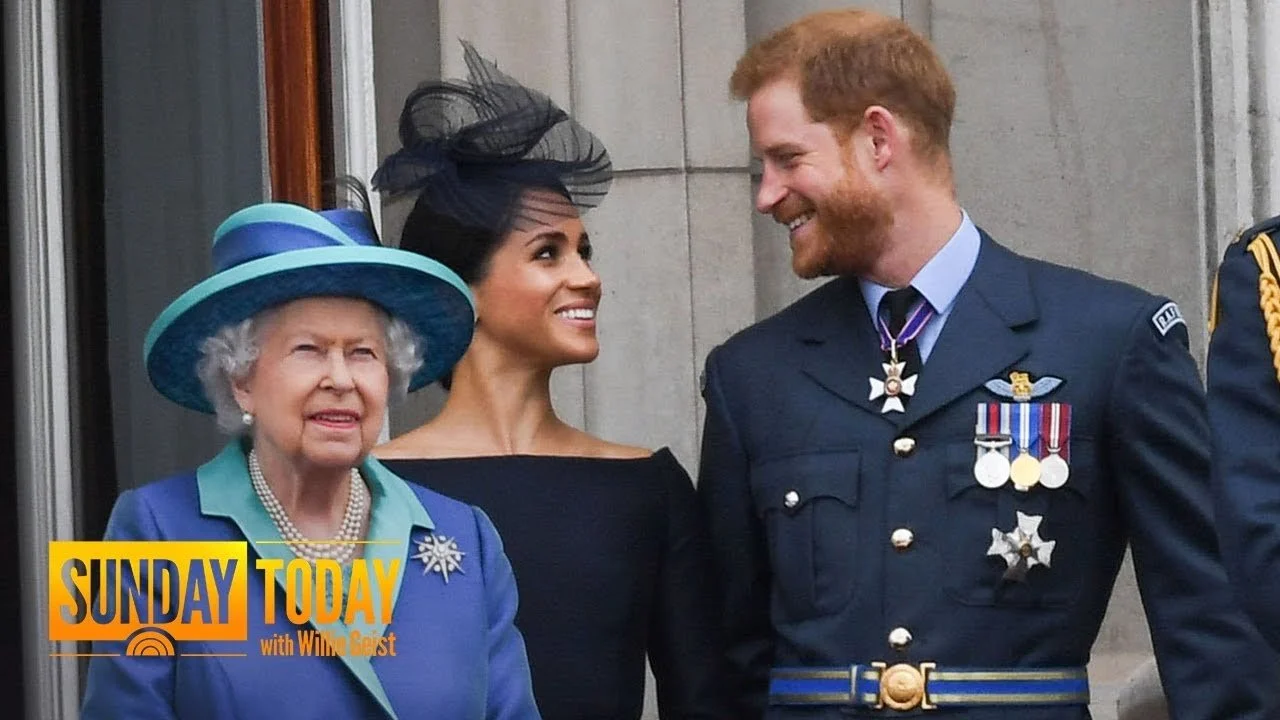
If low-church Anglican evangelicals were active in the whole naming-saints thing, you know that the process would already be in motion to honor Queen Elizabeth II. The quiet dignity of her Christian faith was at the heart of her long life of service.

This brings us to what I would argue is a valid religion-angle story linked to “Spare,” the tell-all confessional memoir Prince Harry has released from the media-friendly alternative palace that he is creating with Meghan Markle here in America.

Here is the basic question: In what church will Harry and Meghan raise their children?

This points, of course, to broader questions about the seismic changes inside England’s Royal Family after the passing of Elizabeth the Great. Yes, some of these questions are linked to the complex ecumenical history of King Charles III (see “The Religion of King Charles III” at The National Catholic Register). But it’s pretty clear that there is another divide — in style and content — between the king and Prince Harry.

This brings us to a good news-bad news situation for one of America’s most symbolic denominations.

The good news: Prince Harry would make a great Episcopalian.

The bad news: Prince Harry would make a great Episcopalian, or he could be another “none” or “nothing in particular.”

In a way, Prince Spare faces choices about faith — even liberal Protestant faith — linked to the great exodus of Americans from established religion and, in particular, from the fading “Seven Sisters” of liberal Protestantism. Will the Duke of Sussex and his family become active, vocal Episcopalians or will they become examples of trends described in the book “Nonverts: The Making of Ex-Christian America,” by Stephen Bullivant.

Think about this for a minute. If you sort through the 17,900,000 or so stories in a Google News file about “Spare,” it’s hard to find a better high-point in this drama than the 2018 wedding of Prince Harry and Meghan Markle. And who was the rock star of that media circus? It was the preacher — the leader of the Episcopal Church in the United States. You can hear the hosannas in the overture of this celebratory New York Times feature:


Please respect our Commenting Policy

Another day, another RNS First Amendment story with zero focus on the First Amendment

Another day, another RNS First Amendment story with zero focus on the First Amendment

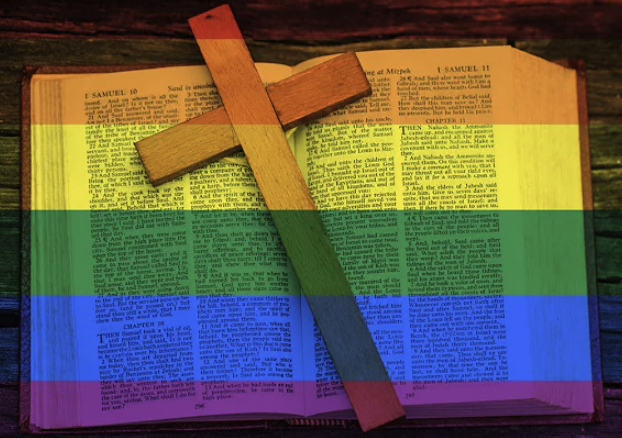
Another day, another Religion News Service report about clashes between the First Amendment and the doctrines of the Sexual Revolution.

As is the norm, this news story about a crucial First Amendment issue does not include the term “First Amendment.”

As is the norm, this RNS story does not include material about how many, not all, private faith-based schools — they exist on left and the right — require students, faculty and staff to sign covenants in which they choose to join a community that is defined by a set of core doctrines that members promise to follow or, at the very least, not to attack.

It is always crucial for journalists, when covering these stories, to ask if a private school has a covenant of this kind. If one does not exist, then this radically strengthens the case of students who argue that the school is discriminating against them.

As is the norm, the RNS story includes one tiny bite of information from the bad-religion people, while framing the conflict in the arguments of the good-religion people. In this case, alas, the bad-religion people won. The headline: “Federal court dismisses LGBTQ students’ class-action discrimination lawsuit.

As always, let me stress that there is an important story here. Some Christian schools do a bad job — when recruiting and orienting students — of being honest about their covenants or handbooks. As I said, there are schools that do not have covenants, which means students (and parents) may not know what they are getting into when they choose to enroll at one of these private schools that are“voluntary associations” under the First Amendment. Hold that thought. Here’s the overture:

There is no legal remedy for LGBTQ students who claim they were discriminated against at their religious universities, an Oregon federal district court ruled in a high-profile case late Thursday (Jan. 12).

The judge dismissed the class-action lawsuit filed in March 2021 on behalf of about 40 students and former students at religious schools nationwide. The case, Hunter v. the U.S. Department of Education, claimed that the department failed to protect LGBTQ+ students at religious schools from discrimination.


Please respect our Commenting Policy

Before reaching Rome, Cardinal Ratzinger put modern Europe in the rear-view mirror

Before reaching Rome, Cardinal Ratzinger put modern Europe in the rear-view mirror

In a rite before the funeral of Pope Emeritus Benedict XVI, Vatican officials placed unique symbols of his pontificate inside his cypress casket, along with a scroll in Latin describing his ascent to the Chair of St. Peter.

"His faith and family upbringing prepared him for the harsh experience of the problems connected with the Nazi regime, aware of the climate of strong hostility towards the Catholic Church," said the English translation of this "rogito," or deed. "In this complex situation, he discovered the beauty and truth of faith in Christ."

After deserting the German army without firing a shot, Josef Ratzinger began his theology studies and, in 1951, was ordained a priest. He emerged as an intellectual voice preaching hope, as opposed to mere optimism. The future pope's sobering views on modern Europe would affect his entire career -- as well as debates about his legacy when he died.

"This so-called Christian Europe … has become the birthplace of a new paganism, which is growing steadily in the heart of the Church, and threatens to undermine her from within," said Ratzinger, in a 1958 lecture. This modern church "is no longer, as she once was, a Church composed of pagans who have become Christians, but a Church of pagans, who still call themselves Christians."

Four years later, the 35-year-old priest advised Cardinal Joseph Frings of Cologne during the historic Second Vatican Council, emerging as a "progressive" on reform issues, yet one who saw painful challenges ahead.

"From the crisis of today the church of tomorrow will emerge – a church that has lost much," he warned, on German radio in 1969. "As the number of her adherents diminishes, so it will lose many of her social privileges. In contrast to an earlier age, it will be seen much more as a voluntary society, entered only by free decision. As a small society, it will make much bigger demands on the initiative of her individual members."

Ratzinger envisioned a "more spiritual church" with no political mandate, "flirting as little with the left as with the right. … It will make her poor and cause her to become the church of the meek."


Please respect our Commenting Policy

Podcast: Prayers and NFL life? That's old news -- but the Damar Hamlin drama was on live TV

Podcast: Prayers and NFL life? That's old news -- but the Damar Hamlin drama was on live TV

Hello, old folks who are National Football League fans.

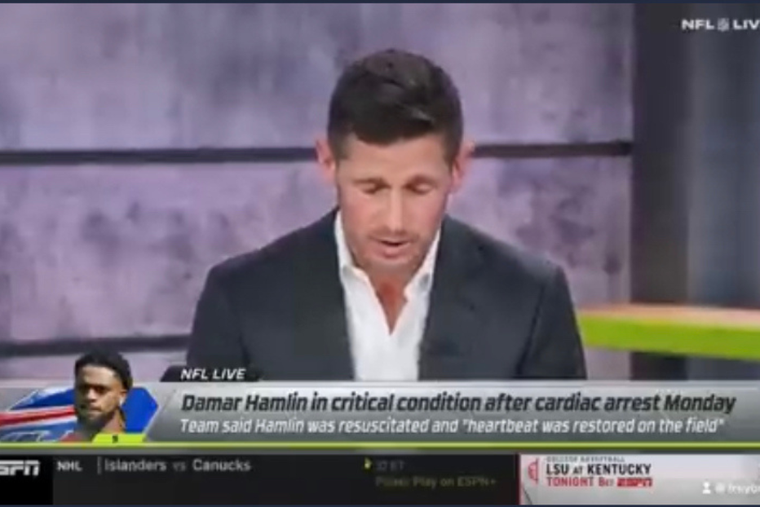
If you are a young reader and podcast listener, hang in there with me. I am going to work my way into a discussion of the fascinating and poignant explosion of public prayer and mass-media Godtalk that surrounded the stunning injury and recovery of defensive back Damar Hamlin of the Buffalo Bills. This was the hook for this week’s “Crossroads” podcast (CLICK HERE to tune that in).

The Big Idea? The “Pray For Damar” story got “out of control” because it happened on live TV. Hold that thought, as we begin a newsy flashback.

Back in the 1980s, NFL fans regularly saw something symbolic at the end of games, something so obvious that it even appeared in the background of sideline interviews on telecasts. What was happening? Players from both teams formed circles — often at the midfield logo — on their knees. Mostly, they offered prayers of thanksgiving for a safe game or prayers for anyone who was injured.

I remember that because I tried to write about this phenomenon during my Rocky Mountain News (#RIP) days. Team chaplains and parachurch leaders linked to this movement asked me, quite candidly, not to write about this subject — because it was so controversial with NFL officials.

Soon, TV images of the kneeling players vanished, although I believe that these rites continue to this day. But NFL fans no longer see them, unless they have tickets to the actual games.

In 1988, this topic broke into headlines during the media circus surrounding the Super Bowl. That was the year when I — prophetically, if I say so myself — wrote a memo to my editors detailing why I should be included in the Super Bowl coverage team. To be blunt, I argued that devotion to the Denver Broncos was so intense that it functioned as an organized religion.

Lo and behold, that was the year when the head coaches for the two teams, both outspoken Christians, unleashed a media storm by planning a two-team prayer meeting the day before the contest. I ended up assisting in the coverage — long distance, of course. The New York Times shock headline: “SUPER BOWL XXII; Rivals Will Pray Before They Play.

Oh. My. God. Here’s the overture:

Most of the Denver Broncos and the Washington Redskins will join Saturday in a prayer meeting that is believed to be the first to bring together National Football League players from opposing teams on the eve of any game — much less a Super Bowl.


Please respect our Commenting Policy