Terry Mattingly

Americans think highly of Jesus: But modern Christians get rather harsh reviews

Americans think highly of Jesus: But modern Christians get rather harsh reviews

When it comes to exploring what Americans think about Jesus, a new study offers Christian leaders both good news and bad news.

The good news is that 76% of Americans affirm the "historical existence" of "Jesus of Nazareth," although it's also interesting to note that if 89% of self-identified Christians embraced that statement, the implication is that 11% are not sure.

Meanwhile, 84% of participants in a new "Jesus in America" study -- conducted by the global Ipsos research company for the Episcopal Church -- agreed that "Jesus was an important spiritual figure."

The bad news? While 50% of "not religious" Americans accepted this "important spiritual figure" language, they were much less impressed with the believers who represent Jesus.

When asked, "What characteristics do you associate with Christians in general?", the nonreligious selected these words from the poll's options -- "hypocritical" (55%), "judgmental" (54%) and "self-righteous" (50%). Next up: "arrogant," "unforgiving" and "disrespectful."

It appears that one of the goals of this poll -- with questions about racism, social justice and last year's attack on the U.S. Capitol -- was to see if nonbelievers have different attitudes about liberal and conservative Christians, said political scientist Ryan Burge of Eastern Illinois University, author of the new book "20 Myths about Religion and Politics in America." He is co-founder of the Religion in Public website and a contributor at GetReligion.org, which I have led since 2004.

"This is the million-dollar question," said Burge, who is also a pastor in the progressive American Baptist Church. "If non-religious people are turned off by what they see as the stricter faith of many Christians, evangelicals in particular, then wouldn't it make sense for them to seek more flexible alternatives?

"If there's all kinds of room in mainline Protestant churches these days, and that's putting it mildly, then why aren't these kinds of people filling up some of those pews?"
Please respect our Commenting Policy

Thinking about world Christianity, as Crux digs deep into many overlooked Catholic details

Thinking about world Christianity, as Crux digs deep into many overlooked Catholic details

It’s hard to believe that it has been two decades since historian Philip Jenkins published his groundbreaking essay “The Next Christianity” in The Atlantic Monthly.

It contained key material from the first of three books that Jenkins published on the future of world Christianity and, thus, of the changing face of world religion — period. The first book was entitled: “The Next Christendom: The Coming of Global Christianity.

This piece of the Atlantic subtitle is crucial: “We stand at a historical turning point, the author argues — one that is as epochal for the Christian world as the original Reformation. Around the globe Christianity is growing and mutating in ways that observers in the West tend not to see.”

Sure enough, many reporters didn’t see what Jenkins was describing, even though clashes between the chilly, declining Christian West and the blooming Christian South and East are easy to see looming in the background of many major stories. As the Anglicans and United Methodists about that.

Understanding Jenkins’ work is a crucial first step to understanding the importance of a new Crux think piece by the omnipresent John L. Allen, Jr. The headline: “In new Catholic numbers, an ‘imponderable’ movement shaping history.”

First, consider this from Jenkins:

If we look beyond the liberal West, we see that another Christian revolution, quite different from the one being called for in affluent American suburbs and upscale urban parishes, is already in progress. Worldwide, Christianity is actually moving toward supernaturalism and neo-orthodoxy, and in many ways toward the ancient worldview expressed in the New Testament: a vision of Jesus as the embodiment of divine power, who overcomes the evil forces that inflict calamity and sickness upon the human race. In the global South (the areas that we often think of primarily as the Third World) huge and growing Christian populations — currently 480 million in Latin America, 360 million in Africa, and 313 million in Asia, compared with 260 million in North America — now make up what the Catholic scholar Walbert Buhlmann has called the Third Church, a form of Christianity as distinct as Protestantism or Orthodoxy, and one that is likely to become dominant in the faith.


Please respect our Commenting Policy

Podcast: Why would journalists want to edit St. Patrick's voice out of stories about his feast?

Podcast: Why would journalists want to edit St. Patrick's voice out of stories about his feast?

When you think of St. Patrick’s Day, what leaps to mind?

Maybe I should ask the question like this: When you think about mainstream-press news coverage of St. Patrick’s Day, what leaps to mind?

Green beer? Corned beef and cabbage (during Lent)?

Great masses of people — primarily in big cities in the Acela Zone and the Rustbelt — going more than a little crazy? Politicians trying to march next to the Catholic archbishop of New York, when they disagree with him on most hot-button issues? Lawsuits about LGBTQ groups demanding to march in a parade that, once upon a time, had something to do with Christian hero?

Questions like these were at the heart of this week’s “Crossroads” podcast (CLICK HERE to tune that in), which got rather personal — since my family embraced the Celtic saints when we converted to Orthodox Christianity. My patron saint is St. Brendan and my daughter’s is St. Brigid (more on this later).

The Big Idea of this podcast was quite simple: It is totally valid for journalists to focus on civic celebrations of St. Patrick’s Day and other modern variations on the veneration (not worship) of the great Celtic saints. The problem is when they leave readers in the dark about the details in the lives of these saints (along with debates about those details), along with the prayers and rites linked to them.

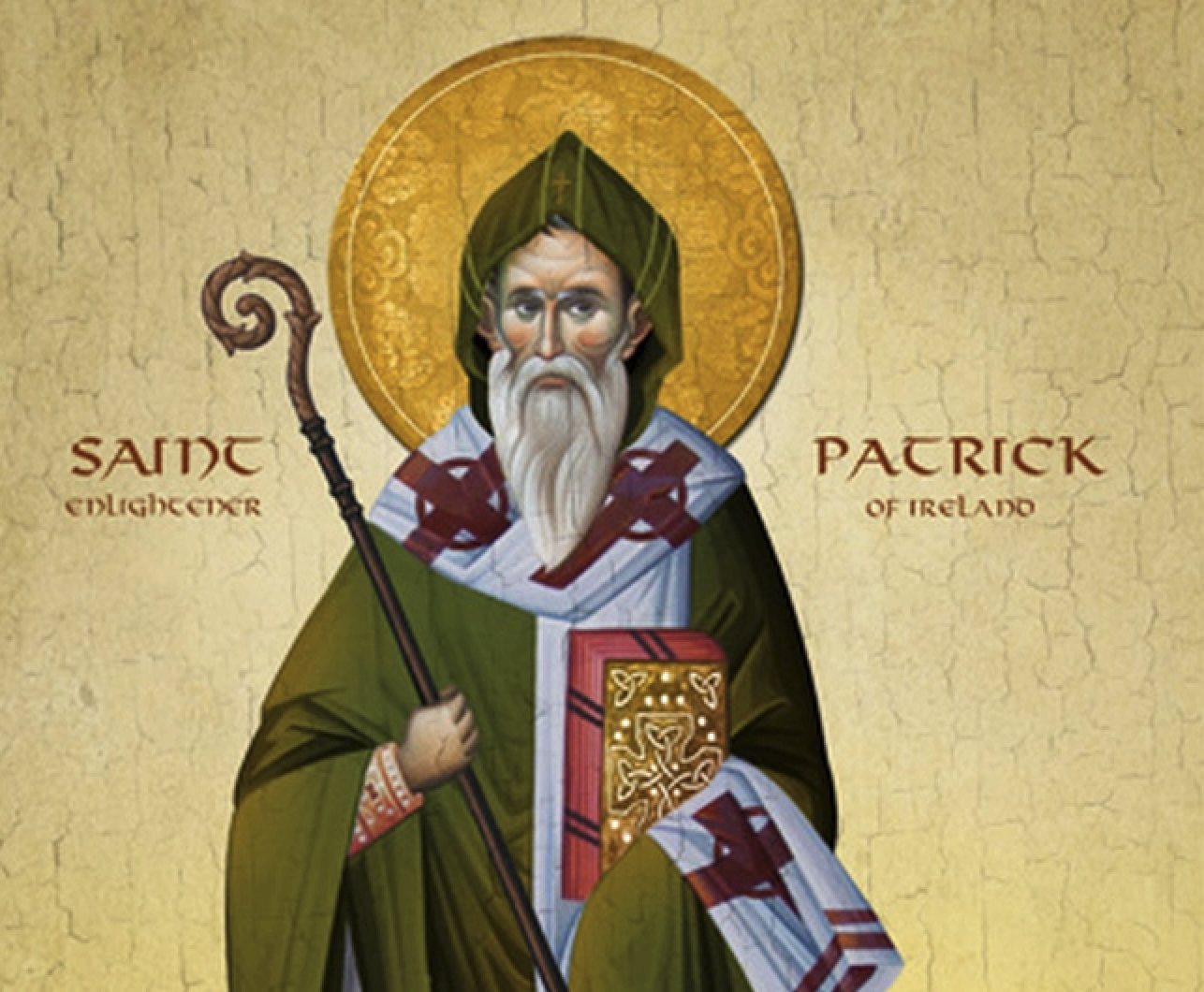
For example, when you think about St. Patrick do these words come to mind?

My name is Patrick. I am a sinner, a simple country person, and the least of all believers. I am looked down upon by many. My father was Calpornius. He was a deacon; his father was Potitus, a priest, who lived at Bannavem Taburniae. ... His home was near there, and that is where I was taken prisoner. I was about sixteen at the time. At that time, I did not know the true God. I was taken into captivity in Ireland, along with thousands of others.

That’s the first few lines of the Confession of St. Patrick, a document that historians take quite seriously — in part because it focuses on the faith and history of this great missionary bishop, while ignoring all kinds mythological details that came later.


Please respect our Commenting Policy

Never forget: There are more than two strategic camps in the global United Methodist war

Never forget: There are more than two strategic camps in the global United Methodist war

It’s time for another religion-beat journey beyond “whataboutism” and the basic assumption that all controversial subjects have “two sides,” and that’s basically that.

Of course, we live in an age in which many elite newsrooms decline to cover “one side” of a story if, according to newsroom doctrines, it’s already obvious which side is good and which side is bad. Here at GetReligion we have a term for this — “Kellerism,” a nod to candid remarks once made, on the record, by former New York Times editor Bill Keller.

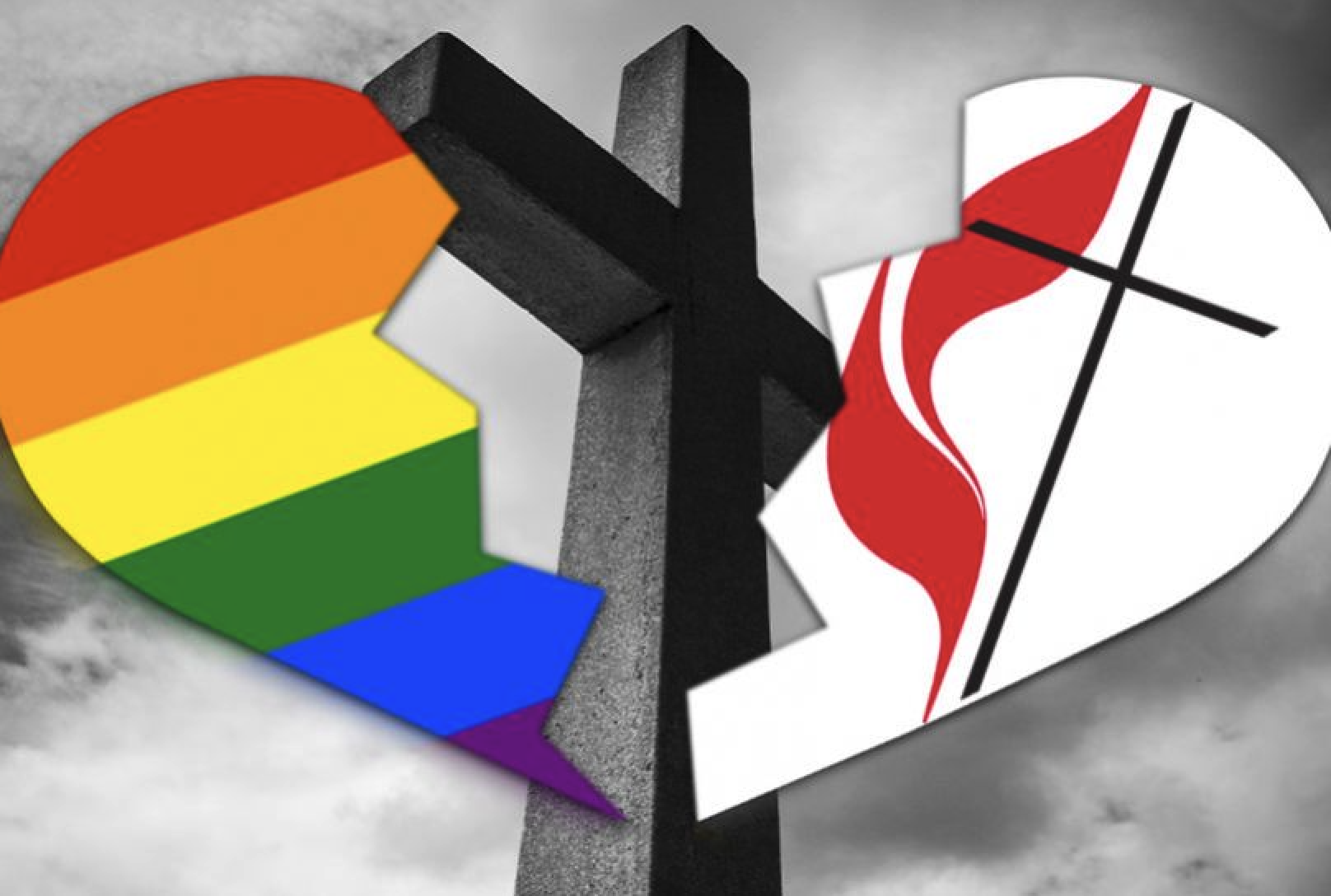
In this case, we are looking at a religion-beat superstory at the local, regional, national and global levels — the break-up of the United Methodist Church, the second largest Protestant denomination in America.

To get the big picture, please see this recent GetReligion post by Richard Ostling: “The latest United Methodist bombshell will create news throughout 2022 and beyond.” To see how long this battle has been going on, check out this “On Religion” column that I wrote in 1998: “United Methodists — Breaking up is hard to do” and two more on a related topic, “Old fault lines can be seen in the ‘seven churches’ of divided Methodism” (and then part II).

Here are Three Big Ideas for today. Remember that I have, as a reporter, been wrestling with this ongoing story since the early 1980s.

(I) Never forget the unique element of this story, which is that the United Methodist Church has a GLOBAL structure that includes the growing churches of Africa and Asia, as well as the splintering (and usually shrinking) congregations in the United States. Readers should question news reports that fail to mention — or even stress — the racial and cultural diversity of the global conservative United Methodism coalition.

(II) While fights about LGBTQ issues make headlines, the United Methodist wars have — behind the scenes — included clear divisions on basic, even credal, issues in Christian theology. In addition to clashing views of biblical authority, we’re talking about splits on salvation, sin, heaven, hell, the Resurrection and the very nature of Jesus Christ. Reporters need to ask questions about issues other than sex.

(III) There are, at the very least, three major groups involved in this story. Let’s call them the “candid left,” the “establishment left” and then the “traditional” United Methodists, as in the defenders of the existing laws and doctrines in the United Methodist Book of Discipline. However, there are subgroups on the right. Never assume that the global conservatives have precisely the same views as their American counterparts.

To see that these issues look like “in the wild,” consider this recent Religion News Service story: “Vote delayed again, some United Methodists say they quit. Now what?”


Please respect our Commenting Policy

There goes that Ryan Burge guy, again: Myths about evangelicals, Catholics and others

There goes that Ryan Burge guy, again: Myths about evangelicals, Catholics and others

During my years as a journalism professor (now over), I must have told my students the following a thousand times: Pay close attention when one of your sources consistently offers information and insights that (a) fit the actual facts on the ground, yet (b) anger (or at least puzzle) people on both sides of the hot-button issues that make headlines.

For several decades, my classic example of this phenomenon has been political scientist John C. Green of the University of Akron, best known for years of consulting work with the Pew Forum team. A few years ago, I added religious-liberty specialist David French to that list. Sociologist James Davison Hunter, author of that “Culture Wars” classic? Ditto. How about the notorious scholar Karen Swallow Prior?

Then that Ryan Burge guy (@RyanBurge) started lighting up Twitter with chart after chart backed with data on religion and public life. He’s been a GetReligion contributor, in a variety of ways, for several years now and was a big hit when he Zoomed into a December religion-news program at the Overby Center at Ole Miss.

If you agree with Burge on everything, then you aren’t paying attention. That’s a compliment. Like Green, Burge is a man of the mainline-church world, but he’s consistently candid about the trends that he sees on left and right.

How he has another book out — “20 Myths about Religion and Politics in America” — and readers are sure to disagree with one or more of his myths. But the numbers he spotlights are always worthy of attention, especially for journalists who cover religion, culture and politics.

I’ll note some new Burge appearances on audio and video podcasts, as they roll out in the weeks ahead — starting with the one at the top of this post. He also did a Religion News Service Q&A the other day with Jana Riess that ran with this provocative headline: “Evangelicalism isn’t dying, and Catholics are going Republican.”

The first question is exactly what you’d expect, if you’ve been following Burge in recent years:

Your first chapter says that rumors of evangelicalism’s death are premature. Could you talk about that?


Please respect our Commenting Policy

Are Southern Baptists bracing for another civil war? Well, today isn't 1979 ...

Are Southern Baptists bracing for another civil war? Well, today isn't 1979 ...

Once upon a time, Southern Baptists in Bible Belt communities knew how to talk to people who didn't go to church.

"We were dealing with people who were, for the most part, like us," said Baptist historian Nathan Finn, the provost of North Greenville University, located in the South Carolina hills near the North Carolina border. "Everyone understood sweet tea, fried chicken and SEC football. It was easier to talk to those people about Jesus."

Things changed, as the greater Greenville-Spartanburg welcomed waves of high-tech firms and industries with global brands such as BMW, Bosch, Fluor, Hitachi and many others. Today's newcomers speak German or Japanese.

"It's not Black folks and White folks from the South. We're past that. The Sunbelt has gone global and we're more urban. We don't know how to talk to the new people," said Finn. "The cultural gaps are bigger. … Southern Baptists are better at handling these kinds of issues in foreign missions than in our own communities."

Finn has been studying this trend and others for years, which led him to write a series of articles in 2009 for Southeastern Baptist Theological Seminary entitled "Fifteen Factors that have Changed the SBC since 1979."

Anyone who knows Southern Baptist Convention history gets that 1979 reference. That was when activists backing "biblical inerrancy" attacked establishment leaders of America's largest Protestant flock, while also supporting causes favored by the surging Religious Right. Electing one SBC president after another during the 1980s, this "conservative resurgence" helped change the face of evangelicalism.

There are signs a second Baptist civil war may be ahead.


Please respect our Commenting Policy

Podcast: What's next for Russian priests who asked if Putin will be damned for invading Ukraine?

Podcast: What's next for Russian priests who asked if Putin will be damned for invading Ukraine?

Warning: The following is not a “whataboutism” comparison between Joe Biden and Vladimir Putin or an attempt to find some kind of moral equivalence between their policies and actions.

What I am doing is making a comment about what journalists can and cannot know about a leader’s public and private religious convictions. This is a key theme in this week’s “Crossroads” podcast (CLICK HERE to tune that in) about religious issues linked to Putin’s invasion of Ukraine. The big idea is that politicians in a variety of cultures are skilled, when it comes to using religious themes and symbols.

First, what do we know about Biden’s Catholic beliefs?

We know that he carries a rosary, knows how to use it and frequently attends Mass, almost always in parishes sympathetic to him. We know that ancient doctrines in Catholic moral theology are important to him when it comes to immigration and social justice issues, but not when it comes to marriage, abortion, sexual ethics and, until recently, the death penalty.

What does this tell us about what he does or does not say during Confession and other crucial issues about the content of his faith? Next to nothing. Thus, his actions are crucial.

Now, what do we know about Putin’s Orthodox beliefs?

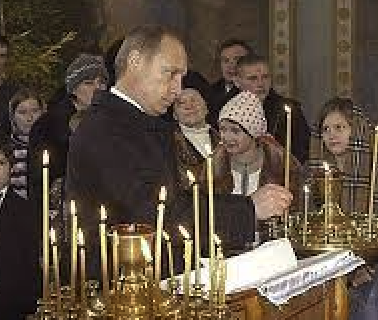
We know that he built a chapel near his office, that he knows how to make the sign of the cross and light prayer candles. We know that he believes that Orthodox Christianity is a crucial part of Russian history and that “Holy Mother Russia” is an important concept in Russian identity and nationalism. We know that issues such as abortion and marriage formation were not important to him — until it became clear that Russia is in a state of demographic collapse. Putin has, of course, used major themes from Orthodox history to justify his actions in Ukraine.

We also know that his government and his supporters have poured oceans of money into the rebuilding of Orthodox churches in the post-Soviet era, believing that this is in the national interest. This matters in a nation that endured the most sweeping wave of martyrdom in Christian history, with the closing of 98% of the land’s churches, the murder of 200,000 bishops, priests and nuns and millions of others in death camps, purges, planned famines (in Ukraine, especially) and other forms of persecution. We know that some clergy were crucified on the doors of their churches, slaughtered on their altars or stripped naked, doused with water and left outdoors in winter.

What does this tell us about what Putin does or does not say during Confession and other crucial issues about the content of his faith? Next to nothing. Thus, his actions are crucial.


Please respect our Commenting Policy

Question for New York Times scribes and others: Did Vladimir Putin dream up the Kievan Rus?

Question for New York Times scribes and others: Did Vladimir Putin dream up the Kievan Rus?

If you know anything about the New Testament, then you know that St. Paul spend a lot of time and energy in the great cities of Greece.

It would seem logical for one of the ancient patriarchates of Eastern Orthodoxy to be located in Greece, perhaps in Athens, Corinth or Thessaloniki. So who is the patriarch of the Greek Orthodox Church? Why are the great churches of Greece led by archbishops, instead of their own patriarch?

That’s a complicated question (click here for Orthodox Wiki timeline) and, as always, the Orthodox will argue about many historical twists and turns. But the big idea is that over the centuries Constantinople grew to become the great city of the wider Greek world and, thus, the leader of Greek Orthodoxy remains in Istanbul. That’s where the Ecumenical Patriarch’s few remaining churches have faced crushing persecution by the Turks. Consider the plight of Turkey’s only seminary, in Halki, which has been shuttered for half a century. Halki is a tragic and sad place. I’ve been there.

Thus, the archbishops in Greece are powerless and without influence? Tell that to the Greeks.

What does this have to do with a simplistic, laugh-to-keep-from-crying paragraph of unattributed information — written in classic “omniscient anonymous" voice — in another New York Times story about the religious tensions in Ukraine? Here is that paragraph:

The Russian church … has made no secret of its desire to unite the branches under a single patriarch in Moscow, which would allow it to control the holiest sites of Orthodoxy in the Slavic world and millions of believers in Ukraine. The Ukrainian Orthodox Church, for its part, has been slowly asserting itself under its own patriarch, reviving a separate and independent branch of Eastern Orthodoxy, after the independence of Ukraine in 1991.

Where to begin?

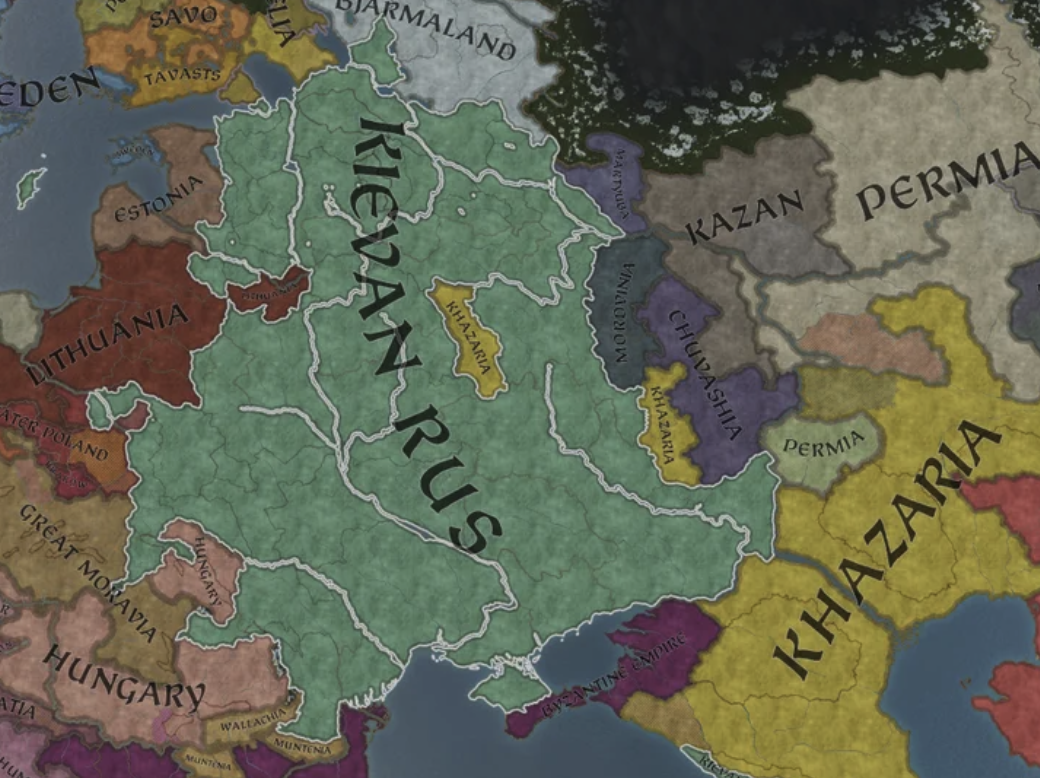
If you know anything about Orthodox Christianity in the Slavic world, you know that the story begins in Kiev in 988 with the “Baptism of Rus“ in the waters of the Dnieper River, after Prince Vladimir embraced Orthodox Christianity as the faith of his lands. The famous Lavra of the Kievan Caves was founded in 1051, marking the birth of monasticism in what would become the Russian world.

Kiev was the key city in Slavic Orthodoxy. However, Moscow grew in importance and, eventually, became the base for the Russian Orthodox Church, much as Constantinople became the great city of the wider Greek world.


Please respect our Commenting Policy

Will Russia listen to Orthodox voices praying for ceasefire? How about journalists?

Will Russia listen to Orthodox voices praying for ceasefire? How about journalists?

During Sunday rites, worshippers in the Orthodox Church in America are led through a tour of the faith's music, with hymns from Russia, Romania, Georgia, Bulgaria and beyond.

The faithful know many by heart, including the ancient Trisagion hymn -- "Holy God, Holy Mighty, Holy Immortal, have mercy on us" -- in a haunting setting that for centuries has simply been called "Kievan Chant."

With Great Lent approaching, Archbishop Alexander Golitzin of the Diocese of Dallas and the South instructed parishes (including my own in East Tennessee) to add prayers for Ukraine in every Divine Liturgy: "Again, we ask Thy great mercy on our brothers and sisters who are presently involved in conflict. Remove from their midst all hostility, confusion and hatred. Lead everyone along the path of reconciliation and peace."

The OCA's Metropolitan Tikhon, leader of a church that began with Russian missionary work in 1794, has urged that "hostilities be ceased immediately and that President Putin put an end to the military operations. As Orthodox Christians, we condemn violence and aggression."

In Slavic Orthodox history, all roads lead to Kiev, now called Kyiv in the West.

Orthodox leaders with ties to the European Union and highly European Western Ukraine have issued fierce statements after the Russian invasion. Metropolitan Epiphanius I of the independent Ukrainian Orthodox Church, launched in 2018 by Ecumenical Patriarch Bartholomew of Istanbul, has said the "spirit of the Antichrist operates in the leader of Russia."

However, it's significant that leaders of many Orthodox churches with roots in Russian Orthodoxy have also condemned the invasion and urged a ceasefire. The leader of Ukraine's oldest Orthodox body -- one with centuries of ecclesiastical ties to Moscow -- condemned the invasion in a statement addressed directly to Vladimir Putin.

"Defending the sovereignty and integrity of Ukraine, we appeal to the President of Russia and ask him to immediately stop the fratricidal war," said Metropolitan Onuphry, primate of Kiev and all Ukraine. "The Ukrainian and Russian peoples came out of the Dnieper Baptismal font, and the war between these peoples is a repetition of the sin of Cain, who killed his own brother out of envy. Such a war has no justification either from God or from people."


Please respect our Commenting Policy