Terry Mattingly

New podcast: Covering a so-called 'religious liberty' story? Dig into religious liberty history

New podcast:  Covering a so-called 'religious liberty' story? Dig into religious liberty history

Believe it or not, America’s commitment to the First Amendment and religious liberty wasn’t dreamed up by the Religious Right.

However, at some point — mainly during press coverage of clashes between the Sexual Revolution and traditional forms of religion — religious liberty turned into “religious liberty” or even “so called ‘religious liberty’ ” and other language to that effect. America has come a long way since that 97-3 U.S. Senate vote to approve the Religious Freedom Restoration Act of 1993.

Now we are seeing waves of valid news coverage of religious liberty disputes linked to people seeking exemptions from mandates requiring COVID-19 vaccines. During this week’s “Crossroads” podcast (CLICK HERE to tune that in) I suggested that it would help for journalists to dig into the details of how courts have handled earlier religious liberty cases.

Consider this recent Washington Post headline, involving a White evangelical leader in Oklahoma: “This pastor will sign a religious exemption for vaccines if you donate to his church.” Here’s the overture:

A pastor is encouraging people to donate to his Tulsa church so they can become an online member and get his signature on a religious exemption from coronavirus vaccine mandates. The pastor, Jackson Lahmeyer, is a 29-year-old small-business owner running in the Republican primary challenge to Sen. James Lankford in 2022.

Lahmeyer, who leads Sheridan Church with his wife, Kendra, said Tuesday that in the past two days, about 30,000 people have downloaded the religious exemption form he created.

“It’s beautiful,” he said. “My phone and my emails have blown up.”

This minister isn’t alone in thinking this way. Here is a New York Daily News story about an African-American Pentecostal leader: “A Brooklyn preacher’s blessing is a pox upon his flock.”
Please respect our Commenting Policy

Southern Baptist sexual-abuse puzzle: Can Executive Committee act on its own legal authority?

Southern Baptist sexual-abuse puzzle: Can Executive Committee act on its own legal authority?

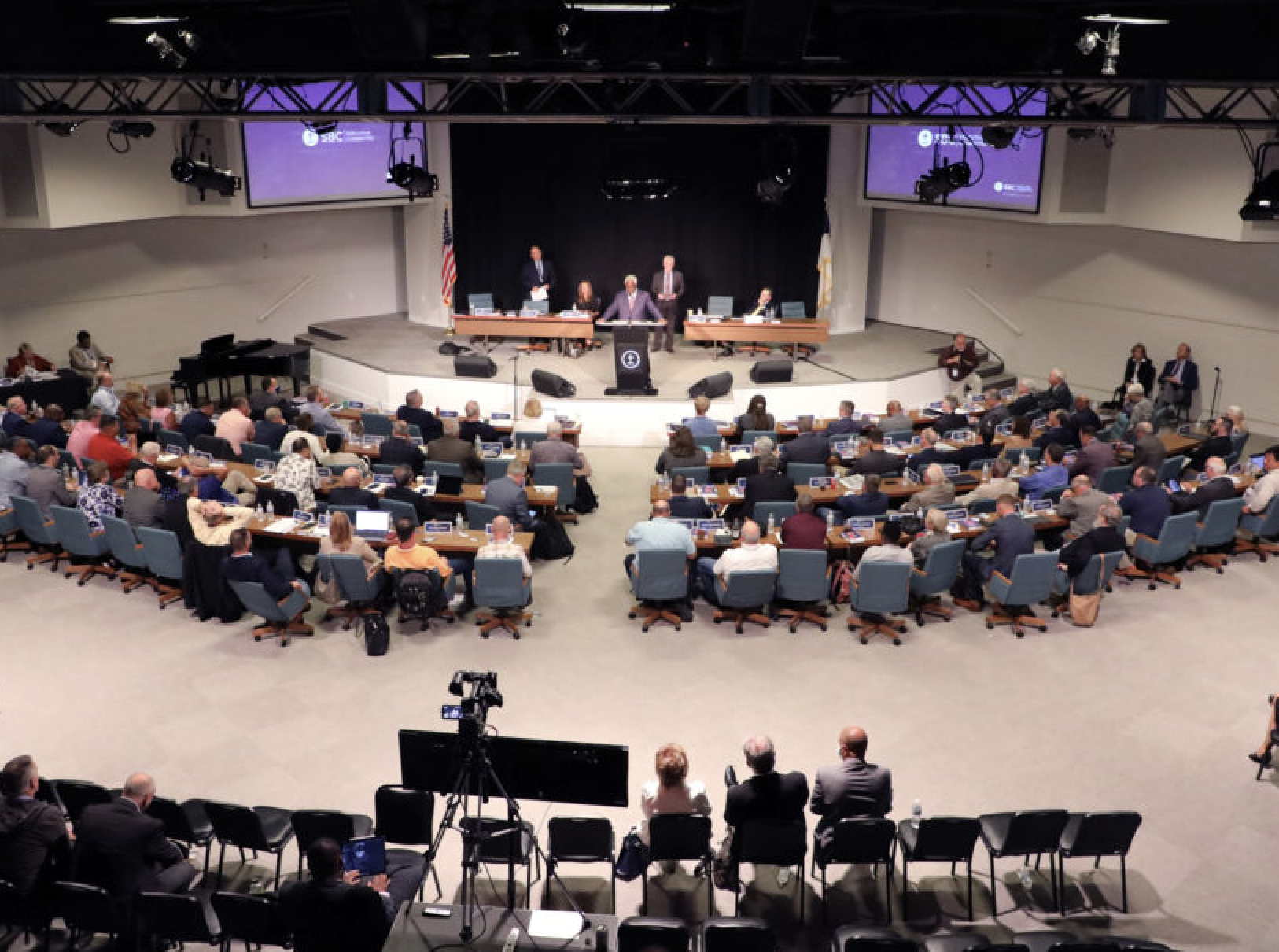
I do not envy the journalists who are attempting to cover the current meetings of the Southern Baptist Convention’s Executive Committee.

The financial and moral stakes are huge. Many of the questions being debated have, from a congregational polity point of view, theological as well as legal implications. You have some activists who want the SBC to take steps that, under its system of governance, it can’t really take. You also have SBC leaders who don’t appear willing to take the actions that they can take, in order to be transparent on sexual-abuse cases.

This may sound strange, but I think it may help to look at the top of the Baptist Press report covering the opening day of the meetings in Nashville. Yes, Baptist Press is an SBC operation and its leaders report directly to the Executive Committee. That makes one statement here even more important:

NASHVILLE (BP) — In its first meeting since messengers to the June 2021 Southern Baptist Convention Annual Meeting called for an independent, third-party review of the SBC Executive Committee, the EC responded to several routine motions and moved to fund the independent review but declined to waive attorney-client privilege for the time being.

After a three-hour extra session Tuesday afternoon, the Executive Committee ultimately rejected a proposal from its officers and instead adopted a temporary measure to move the sexual abuse review forward leaving the details to be hashed out between the officers and the Sex Abuse Task Force within seven days. One of the most significant undecided details was whether or not the EC will agree to waive attorney-client privilege as Guidepost Solutions, the independent firm chosen by the task force to conduct the review, has requested. In the motion passed SBC messengers in June, the EC was instructed to abide by the recommendations of the third-party firm, up to and including the waiver of attorney-client privilege.

Did you catch that last sentence? That’s one of the most important facts in this standoff. The Executive Committee is charged with carrying on the work of the SBC when the national convention is not in session. However, in terms of authority, the EC’s powers come from the local church “messengers” attending the annual SBC national convention.

It appears that a majority of the Executive Committee think they get to debate whether or not to approve the waiver of attorney-client privilege as part of a third-party investigation of how the EC, or some of its leaders, handled accusations of sexual abuse. However, “messengers” at the national convention already voted to approve that step.


Please respect our Commenting Policy

Francis tacks again: Did press catch pope's whole message on abortion and Eucharist?

Francis tacks again: Did press catch pope's whole message on abortion and Eucharist?

How does a ship’s captain sail against a headwind?

The maneuver is called “tacking” and it consists of steering the ship back and forth, at roughly 45 degree angles across the chosen course. The question — with all the left and right turns — is this: What is the course that runs through the middle? Where is the captain trying to go?

It’s impossible to figure that out by studying only the turns to the left or to the right. Dare I say that this task is even more difficult if the captain of the ship is a modern Jesuit?

So what was the course Pope Francis was trying to sail the other day during his in-flight Shepherd One press conference about abortion, Communion and the pastoral needs of Catholics (including, perhaps, powerful politicians)? In the mainstream press, the big turns were all to the left, with the pope warning U.S. bishops not to meddle in the state of President Joe Biden’s soul. Readers had to turn to Catholic publications to find any hint that Pope Francis was, perhaps, seeking a middle course.

This was best seen in the piece that ran in the “Politics Section” (#DUH) of the New York Times. The headline stated the basics:

Pope Weighs In on Calls to Deny Communion to Biden Over Abortion

“What must the pastor do?” Francis said when a reporter asked him about the subject. “Be a pastor, don’t go condemning.”

Everything readers needed to know, from the doctrinal point of view of the Times, was right up top:

ROME — Pope Francis weighed in on Wednesday on a debate roiling the Roman Catholic Church in the United States, where conservative bishops are pushing for guidelines that would deny communion to politicians, like President Biden, who support abortion rights.

“I have never refused the eucharist to anyone,” Francis said, though he added that he did not know of any instance when such a politician had come to him for communion.

Later, there was this:

“What must the pastor do?” he asked. “Be a pastor, don’t go condemning. Be a pastor, because he is a pastor also for the excommunicated.”


Please respect our Commenting Policy

Lisa Beamer on the hard spiritual lessons learned in a media spotlight after 9/11

Lisa Beamer on the hard spiritual lessons learned in a media spotlight after 9/11

For those who lived through Sept. 11, 2001, the drama of Todd Beamer and the heroes of Flight 93 has become an essential part of many anniversary rites.

Everyone remembers the final act, with Beamer aboard the hijacked plane, patched through to a telephone operator for a clandestine13-minute call. After learning about the World Trade Center attacks, Beamer and other passengers decided to try to seize control of the plane.

Finally, Beamer said: "Let's roll." That was the end of the call, moments before the plane -- now believed to have been headed to the U.S. Capitol -- crashed into a rural field near Shanksville, Pa.

That wasn't the whole story, of course. The young software salesman had also asked operator Lisa Jefferson if he could be connected to his wife, Lisa Beamer, and, if not, he shared a final message to her and their two sons.

"I was trying to get as much information from him as I could, and he told me to say the Lord's Prayer with him," said Jefferson, in a transcript of her talk days later with Beamer's wife.

"He wanted you to say the Lord's Prayer with him? … And you guys completed it?", asked Lisa Beamer.

"Top to bottom," said Jefferson. "He just said, 'Oh God, help me. Jesus could you please help me.' … He wasn't upset at all. He was very peaceful."

The details of the Flight 93 passenger revolt were soon made public -- a story of courage and sacrifice welcomed by a stunned nation.


Please respect our Commenting Policy

Thinking with Ryan Burge (and one of his critics) about abortion and evangelical voting

Thinking with Ryan Burge (and one of his critics) about abortion and evangelical voting

If you follow political scientist Ryan Burge on Twitter (which you should do, of course), then you know that he sends out waves of poll information, creatively sifted, in the form of charts.

From time to time, people have been known to bounce questions back to him, seeking clarification or more specific numbers on some strange angle of the topic at hand. I confess that I have been known to do that.

Burge is relentlessly helpful in that online setting. However — imagine this — there are people who argue with him? On Twitter, of all places! Some disagree with his interpretations. On Twitter!

I’m being sarcastic, to make a point linked to this weekend’s pair of “think pieces.” I’m one of those guys who disagrees with Burge from time to time. That happens, when someone is delivering and then interpretting lots of information in a public forum. The difference with Burge is that he is relentlessly candid, even when dealing with numbers and trends that challenge lots of common news templates.

Recently, Burge wrote a commentary piece — backed with some of his charts — for Religion News Service, flashing back to some polling from 2018. The piece ran with this double-decker headline:

Abortion just isn’t the motivating issue for evangelicals it once was

Studies show white evangelicals, by and large, do not have a hard-line approach to abortion — other issues like immigration and race are taking priority over advocating for the unborn.

Whatever your stance on “life” issues, don’t you want to read more about that claim? Here is a key (and quite long) section of that:


Please respect our Commenting Policy

New podcast: Did a religious search help shape Norm Macdonald's haunting humor?

New podcast: Did a religious search help shape Norm Macdonald's haunting humor?

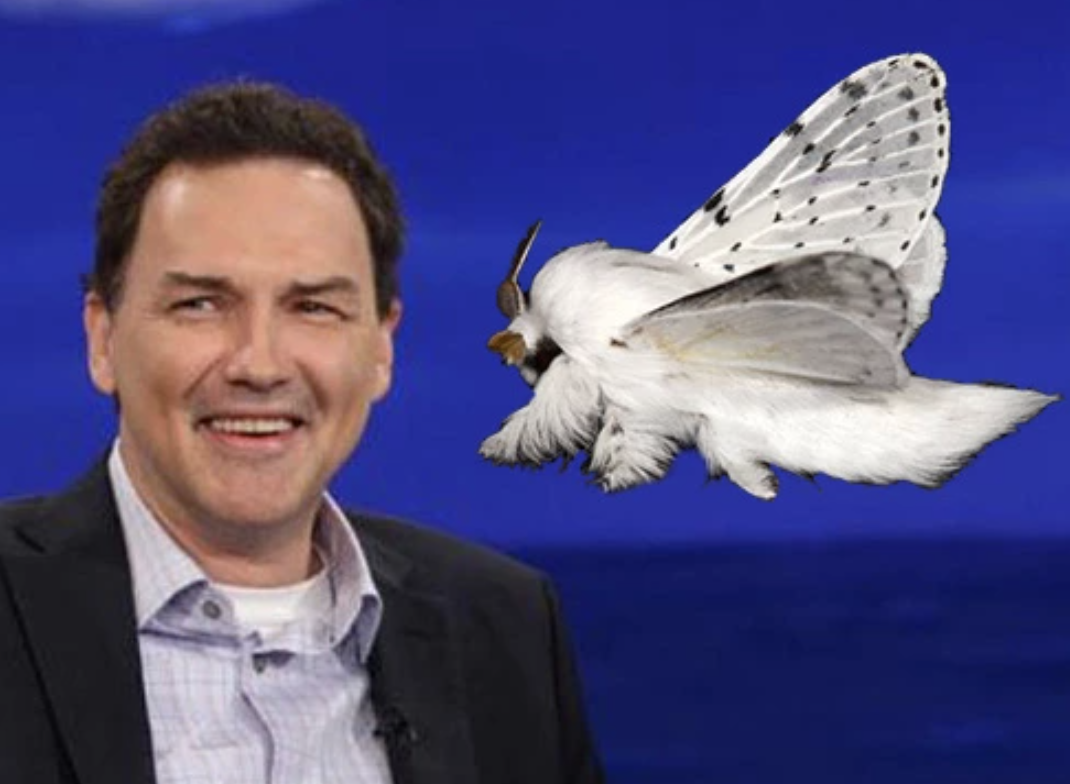
While it may sound strange, I would argue that there are theological “ghosts” hiding inside the great comic Norm Macdonald’s most famous joke. This was the “moth” story, of course.

Right. This joke wasn’t a Saturday Night Live shot at O.J. Simpson or Bill Clinton. It was a long, twisting, bizarre story about a nihilistic moth who was afraid of eternity. It was the kind of joke that fit with the summary of Macdonald’s life and work that opened this Ricochet tribute by Jon Gabriel: “Norm Macdonald — Dostoyevsky in Front of a Red Brick Wall.

The smartest comedians portray themselves as the dumbest; Norm Macdonald was the best at this sleight of hand. He graduated high school at 14, read Russian literature in his downtime, and had long philosophical discussions with clergy. … Macdonald was a student of human nature first, comedy second.

Macdonald was also a self-identified Christian, yet he made it clear that he didn’t consider himself a very good one.

The question raised during this week’s “Crossroads” episode (click here to tune that in) was whether news consumers had any right to expect journalists to mention that reality in their obits of this brilliant, courageous, edgy, mysterious comedian.

The more I read about him — following some really simple online searches — the more I hoped that someone would spot the religion “ghost” in his death-and-virtue haunted work. It also, at least to me, became obvious that many of his spiritual and religious questions were linked to his secret 10-year battle with the cancer that took his life. Cue up these two YouTube clips (here and here).

So this brings us to a crucial text: The actual “moth story” as it unfolded on on Conan.

Read carefully and keep thinking — Russian literature and maybe even a glimpse of a sacred icon.

Yes, I know that this is long. That’s the point:


Please respect our Commenting Policy

What's next in Afghanistan? Press will have to face issues of religion, culture and gender

What's next in Afghanistan? Press will have to face issues of religion, culture and gender

The headline on the National Catholic Register story is simple and timely: “Trapped by the Taliban, Praying for Escape from Afghanistan.

The reporting is simple, as well, as long as the journalists involved have established contacts with people inside Kabul who have smartphones and there are functioning cell towers and satellites. The story is built on people describing what they claim is going on around them, especially events affecting their families and friends.

These people are U.S. citizens, Afghans with U.S. “green cards” and others who cooperated with Western governments and agencies, including religious groups, during the 20 years of “nation building” in the war-torn land of Afghanistan.

The question is whether the contents of this story remain newsworthy, since Afghanistan has, for now, moved off the front burner in elite newsrooms. What happened? Clearly, Republicans and centrist Democrats had “pounced” on the topic while blasting President Joe Biden and his White House team.

But is this NCR piece news? Yes, it is. Also, this is a story journalists can study while looking for clues about realities, and news, at ground level in the Taliban’s new-old Afghanistan. Here is the overture:

For two decades, Sher Shah had worked alongside U.S. and Afghans to build a democratic country free from the Taliban and war. He had established a new life with his family in the U.S. with the help of Catholic Charities and a Catholic sponsor family, but briefly returned to Afghanistan this summer to attend his father’s funeral.

Now, he’s a man trying to escape the Taliban and get back home to the U.S.

More? Here is a claim — let me stress this is a CLAIM — coming from this source. But the Register report has other anonymous voices making similar statements in what appear to be telephone interviews or contacts via email.

U.S. Secretary of State Anthony Blinken has stated approximately 100 U.S. citizens and lawful permanent residents remain in Afghanistan. …

But Sher Shah said he has heard nothing from the State Department since Aug. 26 — and he made use of the State Department’s information posted on its website for U.S. citizens and lawful permanent residents stuck in Afghanistan.

“There are thousands of Americans still in Afghanistan,” he said. “And I’m one of them.”

The reality that emerges, in this stories and others, is that the United States and other Western forces were not engaged in 20 years of “nation building,” as in building an Afghanistan government that looked to the nation’s past — its monarchy, for example. It would be more accurate to say the goal was building a new culture, one that incorporated elements of modernity and even postmodernity in America and Europe.


Please respect our Commenting Policy

My Orthodox flashback to 9/11: When will St. Nicholas truly return to Ground Zero?

My Orthodox flashback to 9/11: When will St. Nicholas truly return to Ground Zero?

On one of my first visits to New York City to teach journalism — I spent 8-10 weeks a year in lower Manhattan — I went to the window of my room high in a long-stay hotel.

I was looking straight down on the construction project to rebuild St. Nicholas Greek Orthodox Church, the tiny sanctuary that was crushed by the 9/11 collapse of the south tower of the World Trade Center. It hit me at that moment that, at some point, my “neighborhood” Orthodox parish would be the shrine at Ground Zero.

I walked past that construction project for five years, including several years in which the work was stalled by a complex mix of mismanagement, exploding costs and, some would say, fraud. The sanctuary still isn’t finished, but it’s getting closer.

Let me stress — I was not in New York City on 9/11. I was, however, in West Palm Beach, surrounded by New Yorkers in the heart of the Seinfeldian “sixth borough” of South Florida. My family attended an Orthodox parish in which 80% of the members were Arab Christians of various kinds. My Palm Beach Atlantic University office was next to the Trump Plaza towers, the mini-World Trade Center used as a symbolic target during the training flights of Mohamed Atta and other 9/11 terrorists who spent time in South Florida.

My first 9/11-related national column was about the destruction of St. Nicholas Orthodox parish, build on an interview with its priest, Father John Romas. As an Orthodox believer, I was immediately struck by these details:

The members of St. Nicholas do not think that any parishioners died when the towers, a mere 250 feet away, fell onto their small sanctuary in an avalanche of concrete, glass, steel and fire.

Nevertheless, the Orthodox believers want to search in the two-story mound of debris for the remains of three loved ones who died long ago — the relics of St. Nicholas, St. Katherine and St. Sava. Small pieces of their skeletons were kept in a gold-plated box marked with an image of Christ. This ossuary was stored in a 700-pound, fireproof safe.


Please respect our Commenting Policy

Facebook decides -- following clicks and $$$ -- that it should encourage online prayer

Facebook decides -- following clicks and $$$ -- that it should encourage online prayer

There are 2.4 billion Christians in the world today, according to most estimates.

Then again, nearly 3 billion people have Facebook accounts. Nearly 70% of U.S. adults use this social-media platform, which recently passed $1 trillion in market capitalization.

"I will use Facebook to reach people, because you almost have to do that," Father Andrew Stephen Damick, chief content officer for Ancient Faith Ministries, a 24-hour source for online radio channels, podcasts, weblogs, forums and more. The ministry was born in 2004 and is now part of the North American archdiocese of the ancient Orthodox Patriarchate of Antioch.

Facebook remains, he noted, "the No. 1 social-media platform in the world -- by a lot. You can't ignore all those people. … We knew this before COVID, but the pandemic made it impossible to deny the obvious. Everyone had to go online, one way or another."

Facebook Live became a way to stream worship services online, even if all a pastor could do was mount a smartphone on a stand. Even small congregations began holding online religious-education classes, support groups and leadership meetings.

As for worship, it was one thing for Protestant megachurches to stream TV-friendly services built on pop-rock Christian music and charismatic preaching. The online options were more problematic for faiths in which worship centered on the smells, bells, images and tastes of ancient liturgies.

Then, in early June, images began circulating of a Twitter message introducing "Prayer Posts" allowing Facebook users to "enable group members to ask for and respond to prayers" with a few clicks in a page's control settings. Participation could be as simple as a user clicking an "I prayed" button linked to a prayer.

This isn't a totally new idea. The Facebook "Prayer Warriors" group already has 865,700 active members, a flock larger than the average of 518,000 Episcopalians that attended services on an average Sunday in 2019, according to the denomination's statistics.


Please respect our Commenting Policy